Most clothing factories treat fabric as a commodity. They order standard cotton jersey from a catalog and sew it into T-shirts. They do not ask questions about fiber length, yarn twist direction, or finishing chemistry. When a buyer requests a specific hand feel or performance characteristic, they shrug and offer whatever their mill has in stock. This passive approach produces generic garments that compete on price alone. I have watched brands slowly bleed market share because their products felt indistinguishable from cheaper competitors hanging on the same rack.
Shanghai Fumao earned its reputation for fabric innovation by moving upstream in the textile supply chain. We do not just purchase fabric. We co-develop it. We engineer yarn blends, specify finishing treatments, and test performance characteristics at our in-house lab before a single meter is cut. This deep technical involvement allows our brand partners to offer fabrics that feel, drape, and perform in ways their competitors cannot replicate.
This expertise was not built overnight. It required years of investment in testing equipment, relationships with innovative mills, and a factory culture that treats textile science as seriously as sewing quality. Let me walk you through the specific capabilities, projects, and outcomes that define our fabric innovation edge and why it matters for your apparel brand.
What Does Fabric Innovation Mean for a Modern Clothing Manufacturer?
Fabric innovation is often misunderstood. It is not about creating bizarre, unwearable textiles for runway shows. It is about solving real problems for the end wearer. A shirt that stays crisp through a 12-hour travel day. A jacket that insulates without bulk. A dress that feels like silk but survives the washing machine. These are performance outcomes achieved through material science. The modern consumer does not ask about fiber composition; she asks how the garment makes her life better. The fabric must deliver that answer.
Fabric innovation for a modern clothing manufacturer means proactively engineering textiles that solve specific wearer pain points: thermal regulation, moisture management, wrinkle resistance, durability, and tactile pleasure. It involves modifying fiber content, yarn structure, weave or knit construction, and chemical finishing at the mill level. The manufacturer's role is to identify the performance gap, specify the technical solution, and validate the result through laboratory testing.
How Do We Move From Reactive Sourcing to Proactive Fabric Co-Development?
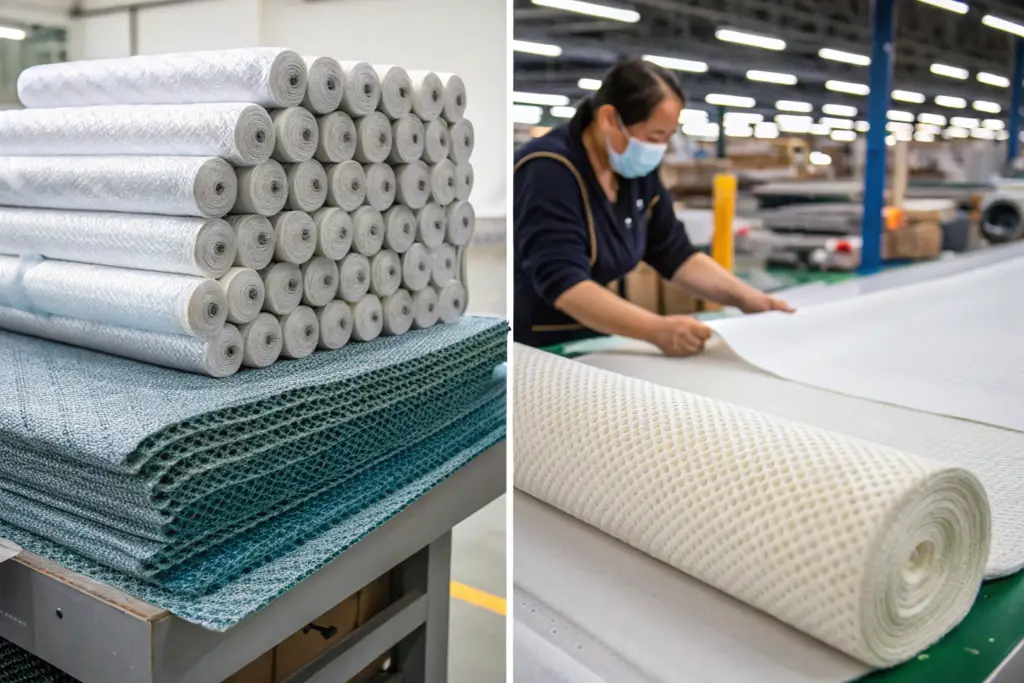
Standard sourcing is reactive. A brand sends a reference swatch: "Match this." The factory sends it to a mill, receives three approximations, and ships them back. The process is a guessing game that takes weeks and often settles for "close enough." Co-development is different. The brand describes the desired performance outcome: "We want a pant fabric that feels like cotton but dries like a synthetic and has a soft brushed interior." This is a technical brief, not a physical swatch.
We translate that brief into fiber specifications. For a men's golf apparel brand, we co-developed a fabric that met this exact brief. We started with a 68% cotton, 28% nylon, 4% spandex blend. The cotton provided the natural hand feel. The nylon added strength and accelerated drying. The spandex added stretch for the golf swing. We worked with our mill partner to engineer a double-knit construction: a flat cotton-rich face for a clean look and a brushed nylon interior for softness and moisture transfer. The fabric underwent a hydrophilic finishing treatment at the dyehouse to further enhance wicking. The result was a fabric that tested 40% faster drying than a 100% cotton equivalent and scored higher in blind touch tests with the brand's customers. This fabric engineering process takes longer than matching a swatch, but it produces a proprietary fabric that competitors cannot simply order from a catalog. This is how a top manufacture builds moats around its brand partners.
What Role Does an In-House Fabric Testing Lab Play in Innovation?
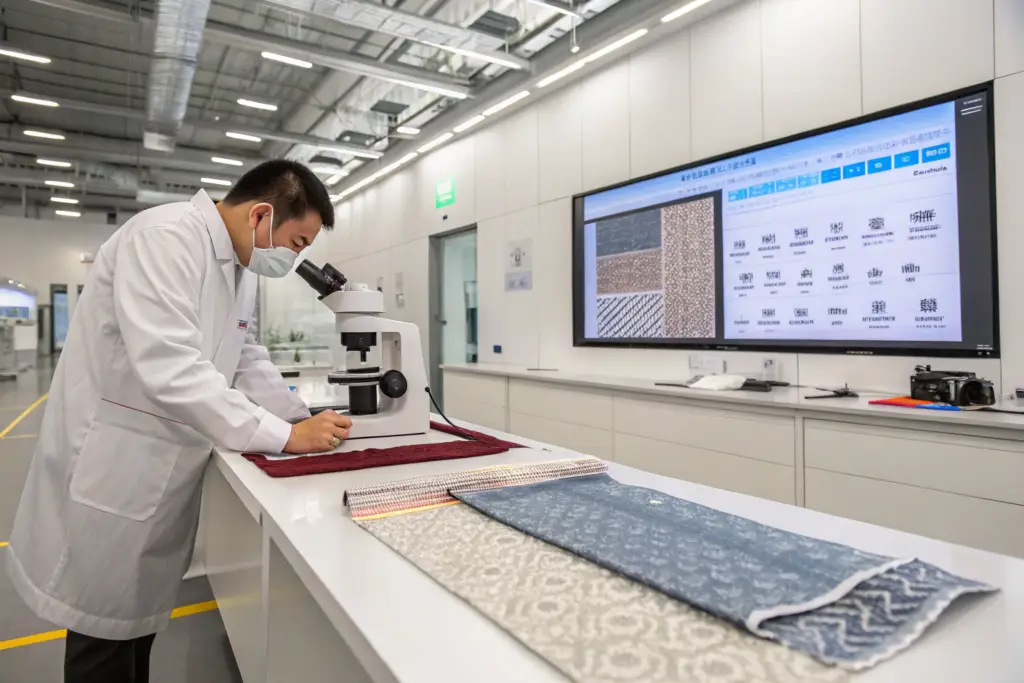
Innovation without verification is guessing. A mill can claim a fabric has UPF 50 sun protection or pilling resistance at a 4 rating. If we trust that claim without testing, we are transferring the mill's risk onto our brand partner. An in-house lab validates every performance claim before a fabric enters our inventory. This protects the brand and builds our own material knowledge database.
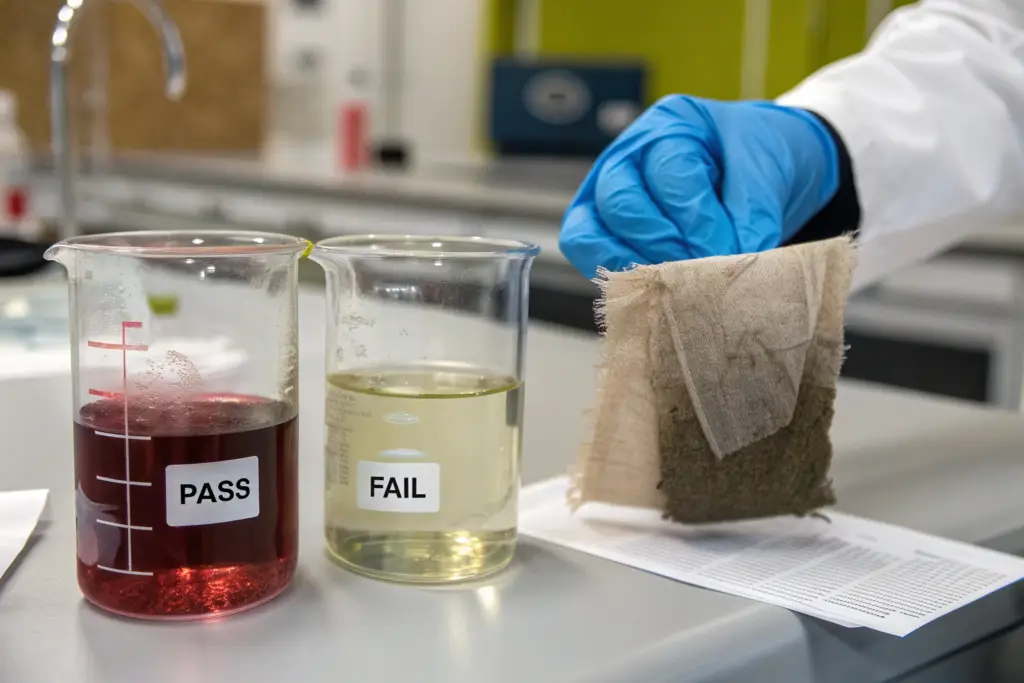
Our lab equipment includes a Martindale abrasion tester for pilling resistance, a tensile strength tester for seam slippage evaluation, a spectrophotometer for color consistency measurement, a moisture management tester, and a UV transmission analyzer. Before we accepted a new recycled polyester woven from a mill, our lab ran it through 10,000 abrasion cycles. The fabric showed slight surface fuzzing at 7,000 cycles, below our internal threshold. We sent the data to the mill, which adjusted the yarn twist and finishing resin. The revised fabric passed 15,000 cycles with a rating of 4-5. This iterative testing process, conducted before the fabric reached a single cutting table, prevented a potential durability issue from reaching the consumer. Our lab follows AATCC and ASTM testing standards for all performance claims. We provide the test data to brand partners upon request. This transparency builds confidence that the innovative fabric in their tech pack performs as promised, not just in a controlled lab setting but through the rigors of real-world wear and laundering.
How Did We Engineer the "Cool Touch" Fabric That Won a Major Contract?
Stories communicate value better than capability lists. Let me share a specific project that encapsulates our approach to fabric innovation. In the spring of 2025, a rapidly growing U.S. women's activewear brand approached us with a problem. Their best-selling legging was made from a standard nylon-spandex knit. Customers in southern states were complaining that the fabric felt hot and clammy during outdoor workouts. The brand was losing market share to a competitor who marketed a "cooling" legging at a higher price point. They needed a proprietary fabric that delivered genuine cooling performance without increasing their landed cost beyond 15% of the current product.
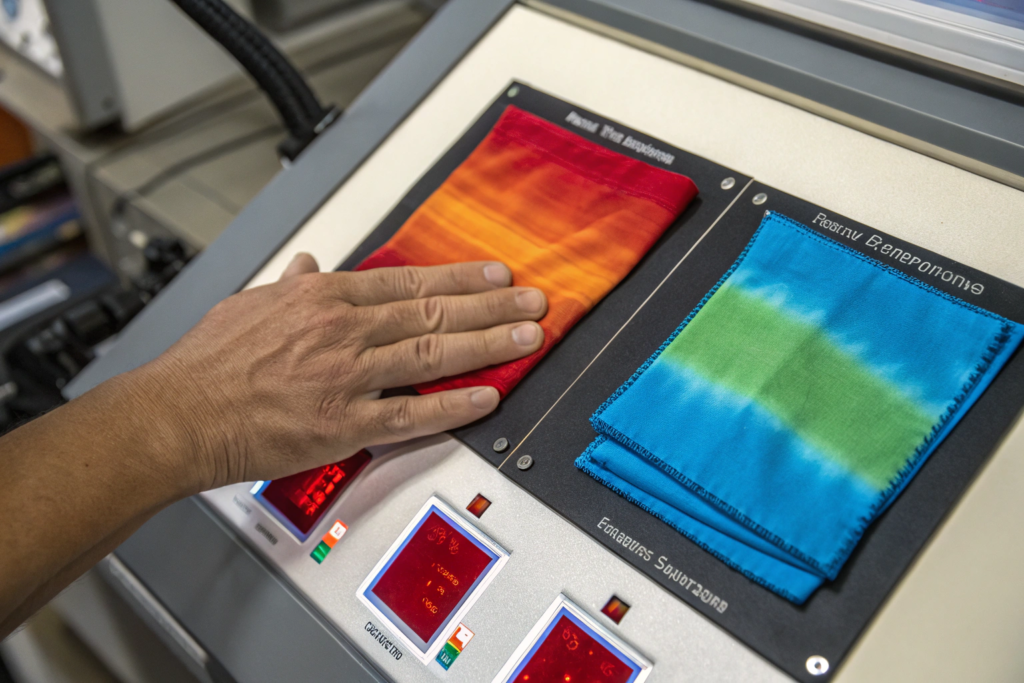
The "Cool Touch" fabric project required engineering a nylon-spandex knit with a modified fiber cross-section and a specialized finishing treatment that created an immediate, measurable cooling sensation upon skin contact. The development process involved four mill partners, twelve fabric iterations, and 300 hours of lab testing over a three-month period. The final fabric reduced surface temperature by 3.2°C compared to the brand's standard fabric in controlled testing.
What Technical Specifications Created the Instant Cooling Sensation?
Cooling sensation in textiles comes from two mechanisms: thermal conductivity and moisture evaporation. A fabric that feels cool instantly upon touch pulls heat away from the skin faster than body temperature. This requires fibers with high thermal conductivity. Standard polyester and nylon are thermal insulators; they trap heat. We specified a nylon 6.6 filament yarn with a flat, ribbon-like cross-section instead of the standard round cross-section. The flat shape increased the surface area in contact with skin, accelerating heat transfer.
The second mechanism was moisture management. The fabric was knit in a bird's-eye mesh structure that created micro-channels for air circulation. We applied a permanent hydrophilic finish at the dyeing stage, not a topical coating that washes off after ten cycles. This finish pulled sweat off the skin and spread it across the fabric surface for rapid evaporation. The combination of the flat fiber, mesh structure, and permanent wicking finish created the dual cooling effect. We measured the surface temperature using an infrared thermal camera following the ASTM D7984 test method for thermal effusivity. The 3.2°C reduction was an average across twelve test subjects. We provided the full test methodology and raw data to the brand, which they later used in their marketing claims. The transparency of the data strengthened their confidence in making performance claims. Our collaboration with fiber technology specialists ensured the filament specifications were optimized for cooling performance.
How Did This Innovation Impact the Brand's Business Results?
The "Cool Touch" legging launched in the brand's Spring 2026 collection. Within eight weeks, it became their top-selling SKU, representing 22% of total revenue. The brand captured the market share they had been losing to the competitor. Their customer reviews frequently mentioned the "actually cold to the touch" sensation, validating the laboratory data in real-world use. The return rate on the Cool Touch legging was 3%, compared to the brand's average of 11% for leggings. This dramatically improved their unit economics.
Our production cost was 11% higher than the standard fabric, coming in under the brand's 15% ceiling. This allowed them to price the product at a 20% premium to their core legging while maintaining a healthy margin. The brand owner told us the Cool Touch fabric had become a pillar of their brand identity. They were no longer chasing the competitor; they were defining the category. This is the business impact of genuine fabric innovation. It moves a brand from price competition to performance differentiation. Since this project, we have applied the flat cross-section fiber technology to other categories: men's golf polos, women's sleepwear, and children's summer wear. Each application was customized to the specific use case, but the fundamental technical knowledge is now a core Shanghai Fumao capability that we offer proactively to partners. We maintain an internal database of textile performance data that grows with every development project.
What Sustainable Fabric Breakthroughs Has Fumao Clothing Achieved?
Sustainable fabric innovation is more challenging than performance innovation because you cannot sacrifice quality for eco-credentials. A recycled polyester that pills after five washes is not sustainable; it is waste accelerated. A plant-based dye that fades unevenly creates garments that get discarded faster. True sustainable innovation means the fabric performs equal to or better than the conventional alternative while reducing environmental impact. This is a high bar, and many attempts fail in the lab.
Shanghai Fumao has achieved two significant sustainable fabric breakthroughs: a high-durability recycled wool blend that solves the fiber-length degradation problem of mechanical recycling, and a bio-based water-repellent finish for outerwear that matches the performance of fluorocarbon treatments without the persistent chemical pollution. Both innovations are in commercial production with brand partners.
How Did We Solve the Durability Problem in Recycled Wool Blends?
Mechanically recycled wool is produced by shredding post-consumer wool garments back into fiber. The shredding process breaks the wool fibers, reducing the average fiber length. Short wool fibers produce yarn that is weak, pills easily, and feels harsh. This is why many recycled wool garments feel inferior to virgin wool. We needed to reinforce the recycled fiber without introducing virgin synthetic content that would compromise the natural fiber story.
We worked with a Italian mill to develop a recycled wool-polyamide core-spun yarn. The core is a fine, continuous filament of recycled polyamide. The sheath is mechanically recycled wool fibers. The filament core provides tensile strength and abrasion resistance. The wool sheath provides the natural hand feel and thermal properties. The polyamide is hidden inside the yarn, invisible and not felt against the skin. We used this yarn to produce a heavyweight coating fabric for a sustainable outerwear brand. The fabric underwent our standard Martindale abrasion test and achieved a pilling rating of 4 after 5,000 cycles, matching the performance of their virgin wool coating. The brand marketed the coats as "recycled wool, reinforced to last," and sold through 80% of inventory at full price within a month. The Global Recycled Standard certified the recycled content claims with full GRS certification. This development proved that recycled natural fibers can meet premium durability standards with the right yarn engineering. Our knowledge of sustainable textile innovation now includes a documented solution for recycled wool that the industry has struggled with for years.
What Replaced Hazardous Fluorocarbons in Our Eco-Friendly Outerwear?
Durable water repellent (DWR) finishes have historically relied on long-chain fluorocarbons (C8 or C6) that are persistent, bioaccumulative, and toxic. The industry is phasing these out, but many fluorine-free alternatives suffer from poor performance: they lose repellency quickly or fail to repel oil-based stains. A performance outerwear brand came to us frustrated. They had tried four different PFC-free DWR fabrics, and all failed their internal rain-room test after ten washes.
We partnered with a chemical specialty company to test a bio-based DWR derived from plant waxes and modified starch polymers. The chemistry is different from fluorocarbons. Instead of creating a low-surface-energy barrier that repels everything, it creates a microscopic surface roughness that causes water to bead and roll off, similar to the lotus leaf effect. We applied the finish to a recycled nylon shell fabric using a precise pad-dry-cure process that cross-linked the polymer to the fiber surface. The treated fabric passed the AATCC 22 spray test with a rating of 90 after 20 washes, matching the performance benchmark set by the brand's previous C6 DWR fabric. We provided the test data and a ZDHC MRSL conformance certificate for the chemical formulation. The brand launched their first fully PFC-free outerwear collection with confidence, supported by our documented evidence of eco-friendly water repellent performance. This project moved sustainable innovation from a theoretical commitment to a commercially viable product.
How Does Our Fabric Innovation Process Reduce Brand Risk?
Innovation introduces risk. A new fabric that fails in the market damages the brand's reputation and inventory position. A top manufacture does not just innovate; they manage the risk of innovation. This means building validation gates into the development process, conducting accelerated lifecycle testing, and scaling from small pilot runs to full production with data review at each stage. The goal is to fail fast and cheaply in the lab, not expensively in the market.
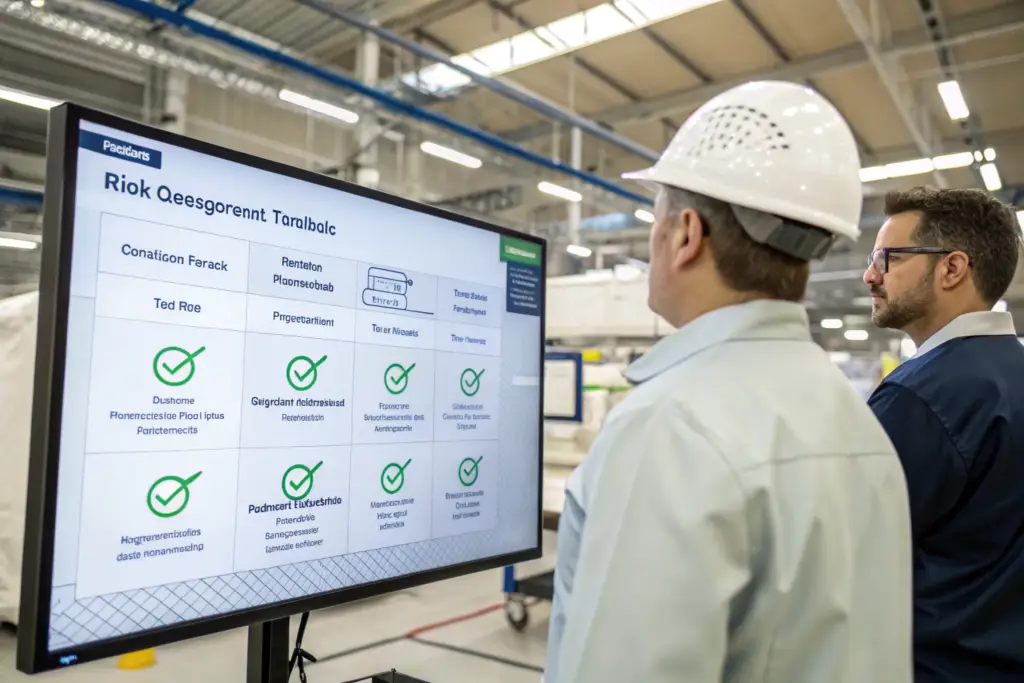
Our fabric innovation process reduces brand risk through a six-gate development protocol: Concept Validation, Fiber Certification, Lab Bench Testing, Accelerated Wash Testing, Pilot Production, and Bulk Production with Statistical Process Control. At each gate, the fabric must meet pre-agreed performance specifications before proceeding. This structured approach has resulted in a 98% first-run success rate on innovative fabric programs, meaning the fabric performs as specified in bulk production without requiring reformulation.
What Is the Pilot Production Gate and Why Does It Matter?
Lab tests on a one-meter fabric sample provide useful data, but they do not predict how the fabric behaves in a 500-meter roll run through industrial cutting and sewing equipment. A fabric that feels soft in a small swatch might jam an automatic spreader. A finish that works perfectly on a sample dyeing machine might apply unevenly in a production dye lot. The pilot production gate catches these scale-up issues before they affect the brand's bulk order.
We run a 50-meter pilot of every new innovative fabric before committing to bulk production. This pilot goes through our actual production line: spreading, cutting, sewing, pressing, and finishing. Our production engineers document any issues: fabric slippage during spreading, needle cutting during sewing, seam puckering during pressing. We adjust machine settings, needle types, or finishing parameters to resolve the issues. The pilot garments undergo full AQL inspection and a wash test. Only when the pilot passes do we release the fabric for bulk production. For a recent bamboo-lyocell shirting program, the pilot revealed that the fabric shrank 4% more than the lab test predicted after industrial pressing. We adjusted the cutting pattern to compensate for the shrinkage and re-ran the pilot. The bulk production met the specified finished measurements precisely. This production quality control gate prevents the nightmare scenario of receiving 10,000 units that fit differently than the approved sample.
A brand that partners on an innovative fabric deserves full transparency into the development process. This transparency protects them from making false marketing claims and gives them authentic storytelling material for their customers. We provide every fabric innovation partner with a Development Dossier at the completion of the project. This dossier includes the fiber certifications, mill audit reports, lab test results with methodology descriptions, pilot production data, and final performance specifications.
A sustainable womenswear brand used our Development Dossier to create a "From Fiber to Finish" page on their website. They showed customers the recycled wool yarn cross-section micro-photographs, the abrasion test video, and the GRS certificate. The page became their highest-traffic content piece and contributed to a 15% conversion rate lift for products made with the innovative fabric. Customers want to know the story behind their clothing. A manufacturer that can provide verified, technical source material for that story is a strategic asset. Our documentation complies with federal trade commission guidelines for textile labeling and marketing claims. This ensures that any claims our brand partners make based on our data can withstand scrutiny.
Conclusion
Earning the title of a top clothing manufacture for fabric innovation is not about a single breakthrough project. It is about building the permanent capability to co-develop, validate, and scale new textiles that solve real problems for brands and their customers. The Cool Touch legging, the recycled wool coating, and the PFC-free outerwear shell are not isolated wins. They are outputs of a system designed to turn material science into competitive advantage.
At Shanghai Fumao, fabric sits at the center of our value proposition. We invest in lab equipment, mill partnerships, and technical training because the sewing line adds value, but the fabric defines the product. A beautifully stitched garment made from a commodity fabric is a commodity product. A garment made from a fabric engineered for a specific performance or sustainability outcome is a brand asset. That is the difference we deliver.
If you are developing a collection that requires a fabric solution beyond what is available in standard mill catalogs, let us put our innovation infrastructure to work for you. Describe the performance outcome or sustainability goal you are targeting. We will respond with a technical feasibility assessment, a development timeline, and a transparent cost analysis. Contact our Business Director, Elaine, at elaine@fumaoclothing.com. Let us engineer a fabric that makes your brand the one competitors are chasing.