Scrolling through endless Alibaba listings feels like gambling. One supplier promises premium Egyptian cotton but ships scratchy poly-blend. Another claims low minimums but disappears when you ask about custom woven labels. You are not buying trinkets; you are building a brand. One bad batch of men's shirts can destroy the trust you spent years building with your customers. I have heard this frustration from countless new partners walking through our doors at Shanghai Fumao, exhausted from trial and error.
The best place to find a top clothing manufacture for wholesale men's wear with custom branding is not a generic B2B platform. It is a specialized, full-package factory that offers transparent production lines, in-house label creation, and a proven track record with U.S. brands. You need a partner who treats your logo as seriously as you do.
But finding this partner requires knowing where to look and what questions to ask. Generic directories hide the real capabilities of a factory. You need to dig deeper. Let me walk you through the specific channels and verification methods that separate a reliable men's wear manufacturer from a risky middleman. This is how successful brand owners secure consistent quality and true customization.
What Defines a True Full-Package Men’s Wear Manufacturer?
Many factories claim to offer customization. Then you find out their idea of branding is a generic polybag with a sticker. That is not branding; that is an afterthought. A real full-package partner handles everything from fabric sourcing to folding the finished garment into your custom-designed box. When you shake hands with a true manufacturer, you are tapping into a single supply chain that owns the entire process.
A true full-package manufacturer controls the four critical stages of production: raw material procurement, pattern making and grading, bulk cutting and sewing, and finishing and packaging. Ownership of these stages means the factory takes full responsibility for quality, lead times, and the precise execution of your custom branding, without blaming subcontractors.
How Do I Verify a Factory Owns Its Production Lines Instead of Outsourcing?
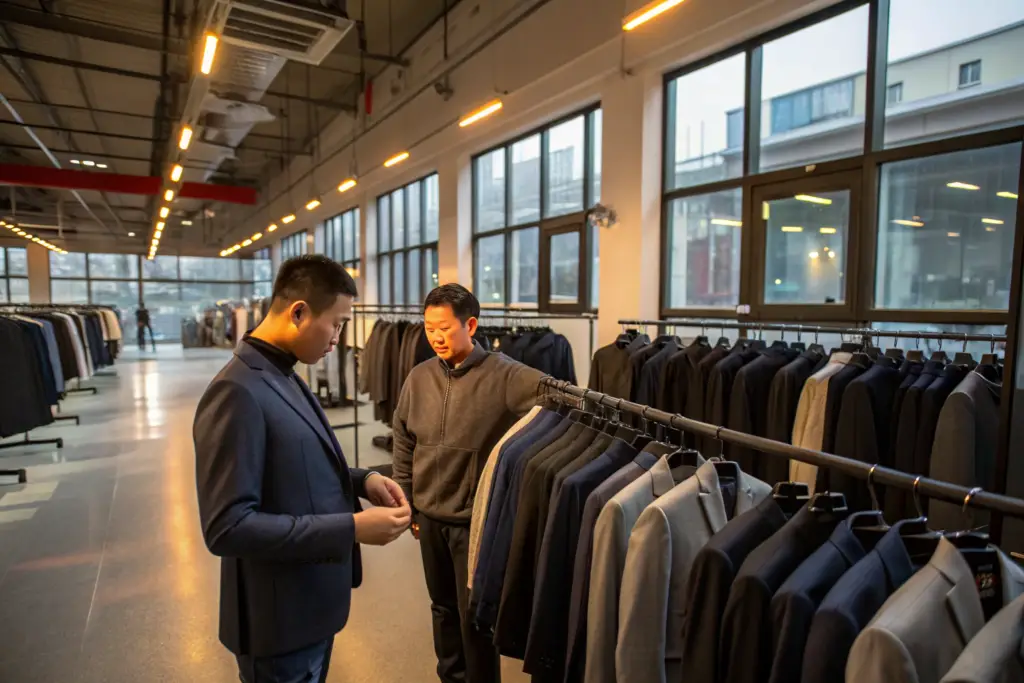
You cannot afford a subcontracting loop where your order gets lost in a village workshop. We run 5 dedicated production lines under one roof. When a buyer visits us, they walk the entire floor. To verify this yourself, ask for a video call at a specific time, not a pre-recorded tour. Request to see the cutting tables and the washing facility. Last fall, a menswear brand owner from Miami asked to see the raw fabric storage. We walked him through our racks of Japanese denim and Turkish cotton. He saw the exact rolls tagged with his order number.
Subcontractors usually show you a clean sample room but no bulk inventory. Real factories have organized chaos—bundles of cut panels, trim carts for each style, and a maintenance corner for sewing machines. Check if they have dedicated industrial sewing machines for specific tasks like overlocking or buttonholing. A factory investing in specialized equipment owns its process. Ask where the printing happens. We have an in-house screen printing unit for custom logos, but if the factory sends it out, add 3-5 days to your timeline and a layer of quality risk from a third-party decorator.
What Specific Custom Branding Options Should a Top Manufacturer Offer?
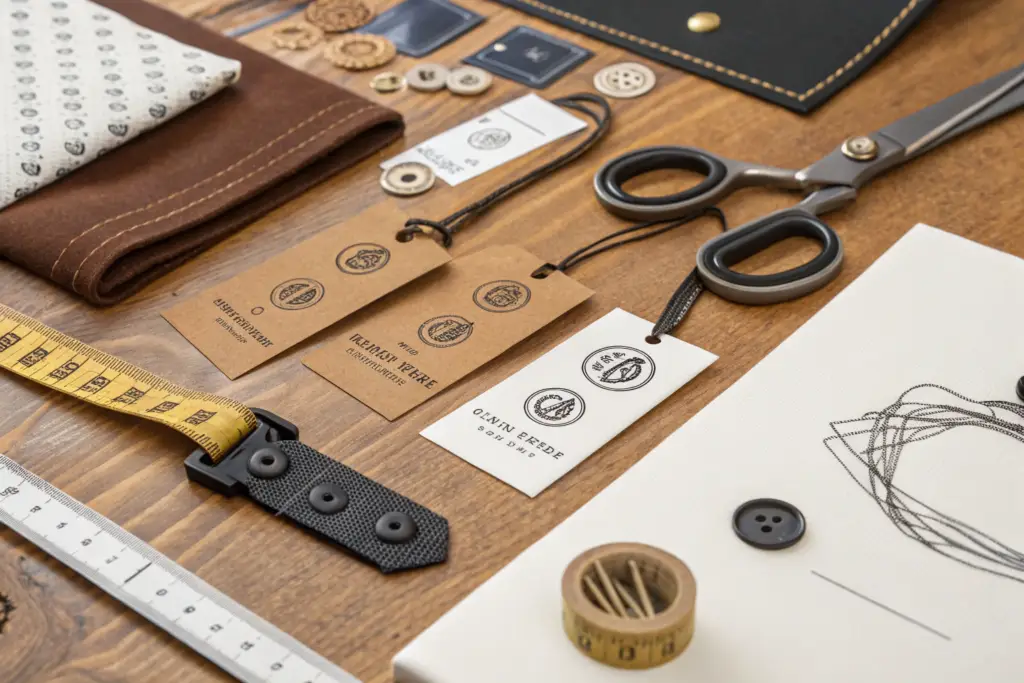
Branding is your signature. It needs to scream quality. We categorize branding into three tiers: basic, advanced, and luxury. Basic covers custom hang tags and care labels. Advanced adds woven neck labels, printed inner neck transfers, and heat-sealed size tabs. Luxury touches include engraved metal buttons, leather zipper pulls, and embroidered chest logos with exact stitch counts. I remember a premium streetwear client from Los Angeles who wanted a subtle, embossed logo on a jacket's cuff snap. We sourced a metal supplier who could hold that fine detail on a 15mm snap. The result looked custom because it was custom.
The key is material compatibility. A heavy embroidered patch on a lightweight linen shirt will pucker. We advise on technique based on fabric weight. For knitted polos, high-density embroidery using a backing stabilizer prevents distortion. For performance tees, heat transfer labels remain soft against skin and don't crack after fifty washes. Ask your factory to provide a branding durability report. We test label adhesion and button attachment strength using certified pull-testers before bulk production starts. A client once challenged us to make a custom hang tag that looked like aged leather. We developed a pressed-paper composite that matched the rustic aesthetic perfectly while staying budget-friendly.
How to Source Premium Men’s Fabrics Without Blowing Your Budget?
Fabric cost eats up 60% of your garment price. Choose wrong, and you either lose your margin or you sell a shirt that feels cheap. The secret is not just about buying polyester versus cotton. It is about buying yarn specifications. As a factory owner, I negotiate directly with mills. We don't buy "cotton fabric"; we specify yarn count, fiber length, and gsm. This granular approach lets us engineer the feel without overspending.
Sourcing premium fabrics on a budget requires substituting fiber origins, not fiber quality. By shifting from expensive geographical labels to functionally identical technical specifications, we deliver the identical drape and hand-feel at a significantly lower landing cost. This is technical sourcing, not brand-name sourcing.
Which Fabric Blends Offer High Perceived Value for Wholesale Menswear?
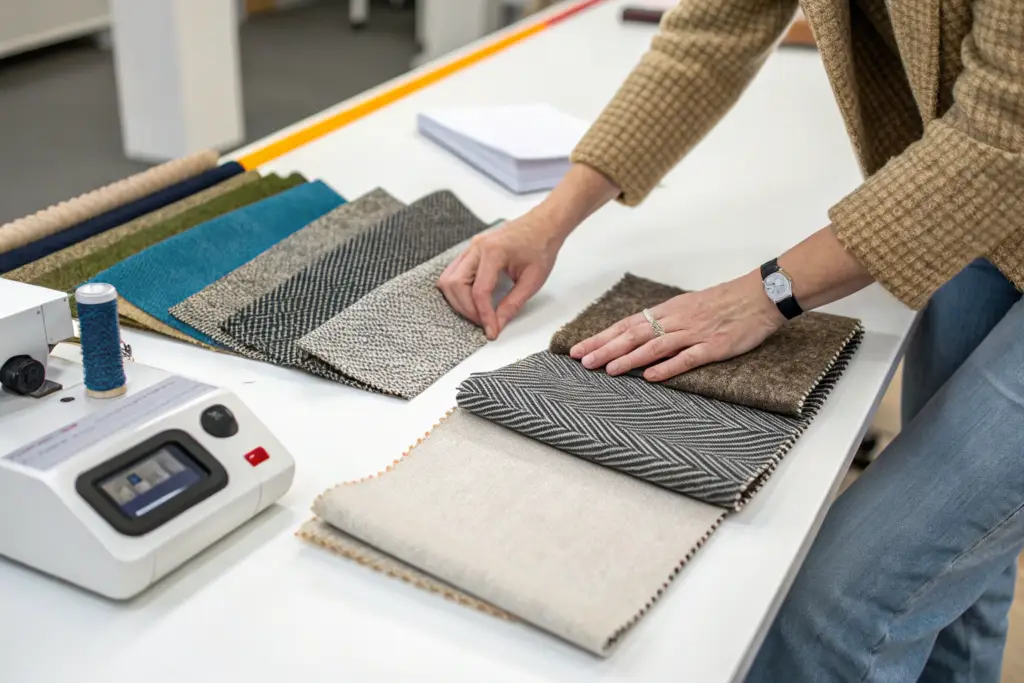
Perception is reality in retail. A fabric that feels heavy and drapes cleanly reads as expensive. We often recommend a high-twist cotton-poly blend for dress shirts. It resists wrinkles better than 100% cotton and offers a crisp paper-touch hand feel that photographs well. For a workwear brand in Texas, we developed a 65% cotton, 33% polyester, 2% spandex canvas for chinos. The stretch component added functional comfort, while the dense weave looked rugged and premium. They sold these at a competitive mid-tier price point.
The magic is in the finishing. A simple brushed finish on a cotton-poly fleece gives a soft, premium interior on a hoodie at a fraction of the cost of organic cotton fleece. For summer blazers, a polyester-viscose-linen tri-blend mimics the slub texture of pure linen but holds shape better and costs half as much to import. We present our clients with a cost-per-meter analysis comparing the blend to the 100% version. This data-driven approach shows exactly how much they save while maintaining the desired fabric aesthetics. The key is to focus on end-user experience. If the fabric breathes well, resists pilling, and keeps its color, the customer never asks about the exact fiber percentage.
How Do Factories Secure Better Prices on High-End Base Materials?
We lock in prices through futures buying. When we forecast a large volume of pima cotton for polo shirts, we contract with the mill months in advance. This hedges against market spikes. I recall a specific instance in early 2025 when cotton futures fluctuated wildly. We had already secured a six-month supply at a fixed rate for our classic men's tee program. While competitors adjusted their quotes upward by 8%, our partners kept their retail margins intact. We pass this stability on to large volume buyers.
Another strategy is deadstock sourcing for exclusive small batches. We maintain relationships with top-tier mills that overproduce high-end fabrics for luxury houses. We can legally purchase this premium deadstock—often Italian wool or Japanese selvedge denim—at a steep discount. For a boutique menswear label looking for a unique, rare style without the 2000-meter minimum, this is gold. We recently sourced a batch of fine-gauge merino wool originally destined for a European luxury brand. A client turned it into a limited run of polo sweaters that sold out online in two weeks. This requires deep connections and a factory that has the agility to switch yarns quickly. Our team constantly monitors these opportunities through established global textile networks.
Where Are the Most Reliable Geographic Sourcing Hubs for US Brands?
Geography still matters. Shipping from a port with chronic congestion adds hidden costs. Labor skill varies by region. Not all countries specialize in the same product categories. You might find a cheap price in one country, but the logistics, communication, and finishing quality could fail you. We are based in Shanghai, but we understand the global landscape because we compete in it daily. Choosing the right hub is a strategic decision that affects every aspect of your supply chain.
The most reliable sourcing hub balances specialized manufacturing clusters, political stability, and direct container routes. China remains the leader in men's tailored and complex outerwear due to its clustered supply chains, while Vietnam excels in basic knits, and India leads in high-end embroidered shirts. Your product type dictates the optimal geography.
Why Does Shanghai Maintain an Edge for Men’s Outerwear and Tailoring?
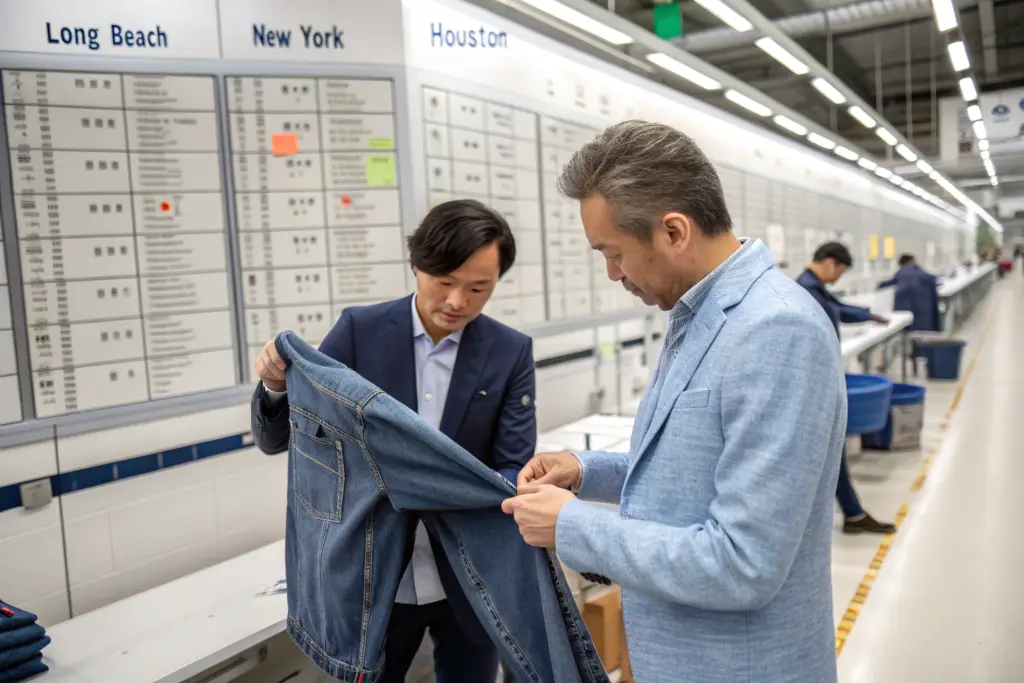
Shanghai is not just a port; it is a knowledge cluster. The neighboring provinces specialize in particular materials. For a wool overcoat, we source the wool from a mill two hours away. The interlining comes from a specialist 30 minutes in the opposite direction. The zippers arrive within a day. This density means speed. A menswear distributor from Chicago needed a complex bomber jacket with custom embroidery. We assembled all components within a 100-mile radius. The entire sampling process took seven days. In a fragmented supply base, gathering those components could take a month.
This cluster creates a deep labor pool. Tailoring requires skilled hands. Sewing a structured shoulder on a suit jacket is an art. These artisans are concentrated here. We employ master tailors who have been setting sleeves for twenty years. They spot a tension issue instantly, something a newly trained operator might miss. This experience translates to higher consistency on formal men’s wear. Our logistics advantage also matters. Shanghai port offers frequent, direct sailings to Los Angeles. We utilize both the Yantian Express and Matson services for priority routing, easily coordinating with global carriers. The infrastructure is mature; cargo moves smoothly from factory floor to container terminal, minimizing drayage delays.
Is Near-Sourcing a Viable Option for Quick-Turn Men’s Reorders?
Mexico and CAFTA regions are gaining traction for speed. But they lack the deep raw material base. For basic replenishment of blank T-shirts, near-sourcing works. But if you need a custom-woven plaid for a button-down, the textile mills are simply not there. We advise a hybrid model. Keep your complex core program in Asia for cost and detail, and test a rapid reorder program for basic tees closer to home. This mitigates risk and covers seasonal demand spikes.
However, we have adapted to compete with near-sourcing timelines. For high-priority reorders, we offer an express service using a dedicated line. Instead of the standard 30-day production, we schedule a compact 15-day turnaround for repeat styles where the fabric is on standby. We communicate through instant channels and share real-time production tracking links. A brand that runs out of best-selling chinos in October cannot wait for a new order from scratch. We keep their approved trim and labels in stock. We reserve a portion of our cutting capacity for these "silver bullet" runs. This agility, paired with the detailed decorative options available in Asia, gives our clients the best of both worlds.
How Do You Negotiate Minimum Order Quantities Without Sacrificing Custom Details?
The dreaded three-letter acronym: MOQ. You want to test a new bomber jacket design, but the factory demands 500 pieces per color. If the style flops, you are stuck with dead stock. This fear kills innovation. I understand why factories set high MOQs—the setup time for cutting and sewing is fixed, and sourcing small amounts of custom fabric is expensive. But a rigid MOQ is a sign of a factory that lacks flexible manufacturing.
Negotiating a lower MOQ is possible when you offer a compensating value to the factory: longer lead times, higher margin on the initial run, shared raw material costs, or a commitment to a larger "reorder" program. It is a risk-sharing conversation, not a price war.
What Is the "Test Run" Strategy for Launching a New Menswear Brand?
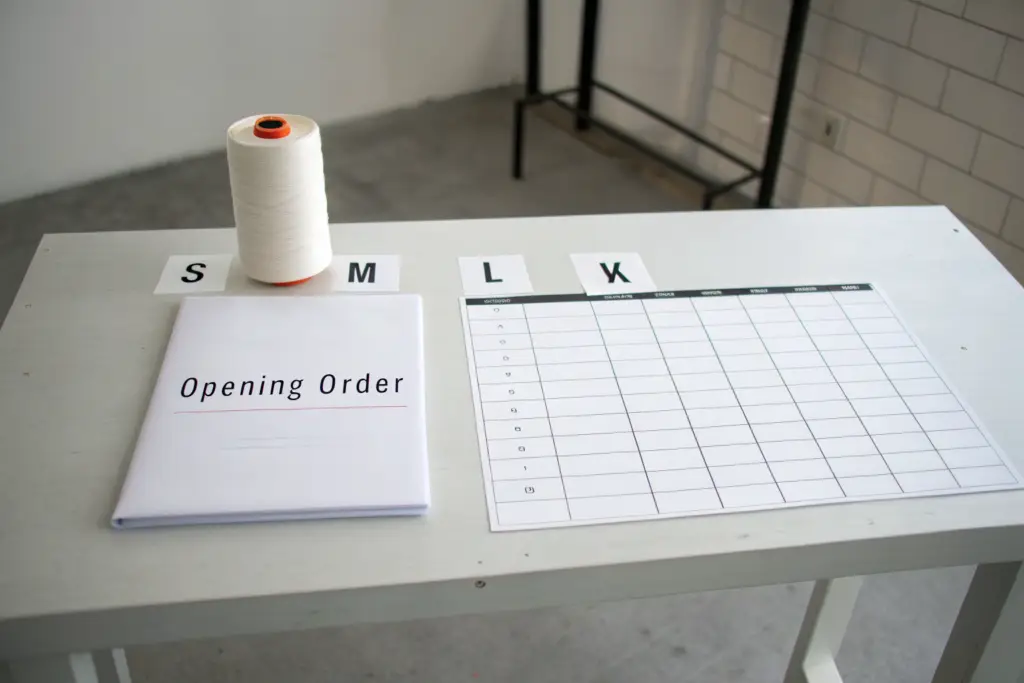
We structure opening orders as "test runs." If a new streetwear brand wants 50 custom-printed hoodies with a distinct puff print, 50 units is a low volume. But we treat it as a product development partnership. We charge a slightly higher CMT (cut, make, trim) rate to cover the inefficiency of running a small batch. We are transparent about this markup. The client accepts this because the alternative—ordering 500 units of an untested design—is far riskier.
We then analyze the sell-through data with them. If the 50 units sell out on their Shopify store in a week, the factory production line is already prepped. The screens for the puff print are filed. The fabric is booked. We can turn a reorder of 200 units in 15 days. This strategy requires honesty about production costs. Last April, a menswear entrepreneur approached us with ten complex SKUs. We advised him to launch with just three. We pooled the fabric across the three styles to meet mill minimums, reducing his upfront risk by 60%. He now runs a successful recurring order with us across all ten SKUs, benefiting from high-volume pricing. This step-by-step approach builds trust and proves the viability of your designs. A strong initial partnership often leads to bulk manufacturing opportunities.
How Can You Pool Colors or Styles to Meet Fabric Minimums Efficiently?
Mills require a minimum yarn dyeing lot. If you want six colors in a custom striped oxford shirt, but each color only has 100 units, no mill will dye 50 meters of each color. The solution is style pooling. We design a capsule collection where multiple styles share the same base fabric. A button-down shirt, a workwear overshirt, and a pair of elastic-waist shorts can all use the same custom cotton-linen blend.
We present the factory order as a single batch of 500 meters of the base fabric, then cut it differently. The branding remains unique to each style—different labels, buttons, and fit. This works exceptionally well for "coord sets" or seasonal drops. Another trick is open-width greige goods inventory. We often stock greige (un-dyed) high-quality cotton fabrics. If your MOQ is low, we take from this stock and piece-dye it to your specific Pantone shade. This avoids the minimum lot charge for weaving but still gives you a custom color. It is these manufacturing loopholes that a standard trading company cannot offer because they do not own the production process. We continuously look for ways to make custom details accessible without forcing you to warehouse unsold inventory.
Conclusion
Finding a top clothing manufacture for wholesale men's wear with custom branding is not a search query; it is a partnership test. You are not looking for a needle in a haystack. You are looking for a factory that has the right needles, the right thread, and the right hands to sew your vision exactly as you imagined it. This industry is filled with pretenders who talk fast and deliver slowly. The real partners are the ones who open their production floor to you, explain their fabric sourcing strategies, and walk you through the logistics of your branding placement with genuine excitement.
At Shanghai Fumao, we have built our reputation on this transparency. We handle everything from the weight of the interlining in your suit jacket to the shade of ink on your hang tag. Our 5 production lines are configured to shift seamlessly between structured tailoring and relaxed streetwear, always keeping your brand's identity at the forefront. We look at a tech pack and see the potential product on a store shelf, not just a piece of paper.
Stop gambling with anonymous online listings. If you are a CEO or a brand owner ready to source men's wear that reflects the quality you demand, let's map out your production plan. Reach out to our Business Director, Elaine, at elaine@fumaoclothing.com. Let's create a collection that proves your brand belongs at the top.