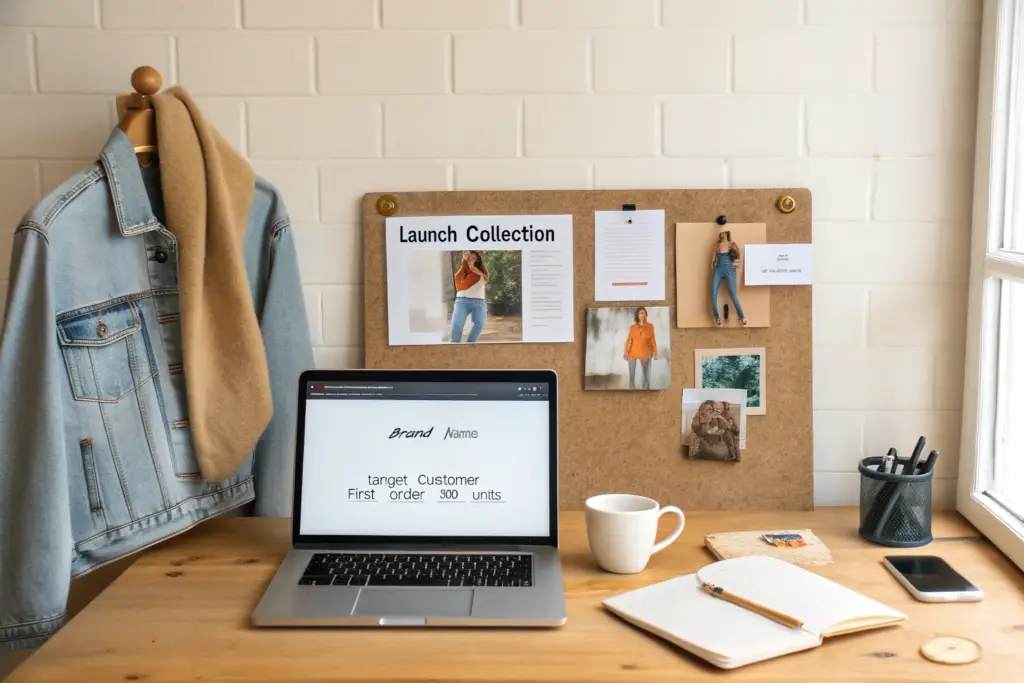
You are sitting at your kitchen table. You have a laptop, a brand name you love, and a vision for denim shorts that do not exist yet. You do not have a fashion degree. You do not have a warehouse. You do not have a factory. You do not have $100,000 in startup capital. You just have the belief that you can create a brand people will pay for. And you are right. I have watched people build six-figure apparel businesses from a spare bedroom. I have also watched people lose their life savings on a container of shorts that arrived with broken zippers and the wrong wash. The difference between those two outcomes is not talent. It is the sequence of steps they took and the factory partner they chose.
You build a private label denim shorts empire from your laptop by following a five-phase sequence. Phase one, define your brand niche and target customer with obsessive specificity. Phase two, develop your product with a factory that has R&D capability, not just production lines, starting with a paid sample, not a free sample. Phase three, set up your e-commerce infrastructure, Shopify store, product photography, size guide, before your inventory arrives. Phase four, launch with a small-batch pre-order or a 300-unit minimum order and use the sales data to refine your next order. Phase five, scale by reinvesting profit into larger orders, broader size ranges, and additional washes, using DDP shipping so logistics never distract you from marketing.
I run Shanghai Fumao. My factory makes denim shorts for brands that started exactly where you are now. Some of them are now ordering 5,000 units at a time. Some started with 300. This article is the guide I wish every new brand owner had before they contacted a factory. It is based on the mistakes I have seen, the successes I have watched, and the specific, actionable steps that separate the brands that survive from the brands that thrive.
How Do You Define a Winning Brand Niche for Denim Shorts?
The most common mistake new brand owners make is trying to sell to everyone. "Our shorts are for men and women, ages 18 to 55, who like quality and style." That is not a niche. That is a recipe for invisibility. The denim shorts market is crowded. You cannot out-spend Levi's on marketing. You cannot out-price Amazon Basics. The only competitive advantage available to a new brand is specificity. You serve a specific customer with a specific need that the big brands ignore.
A winning niche is narrow enough that you can dominate it and deep enough that there are enough customers to build a business. "Denim shorts for tall women" is too narrow. "Denim shorts for women over 5'10" who want a 5-inch inseam that actually covers their thighs" is a niche with a real pain point, a searchable keyword, and a passionate customer base. "Sustainable denim shorts for eco-conscious consumers" is too broad. "GOTS-certified organic denim shorts for minimalist moms who want a capsule wardrobe for their kids" is a niche you can own.
Let me help you define your niche and validate it before you spend money on samples.
What Questions Should You Answer Before Designing Your First Short?
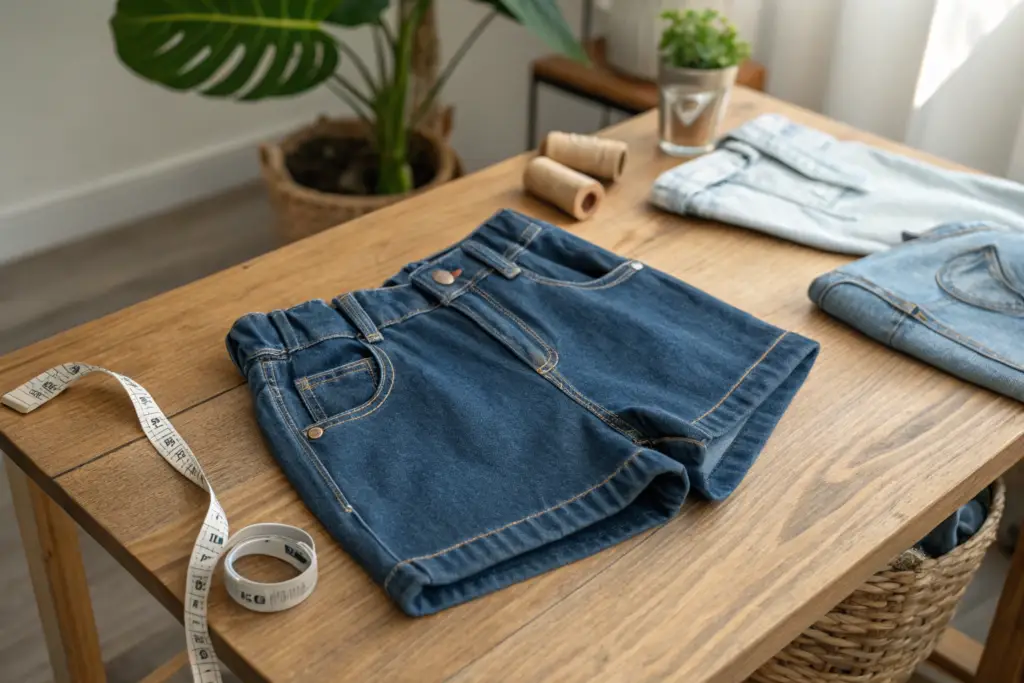
Before you sketch a single design, answer these seven questions with written, specific answers. Question one: who is your single ideal customer? Give them a name, an age, a job, a city, a weekend activity. "Sarah, 32, graphic designer in Austin, shops at farmers markets on Saturdays." Question two: what problem does she have with the denim shorts currently available? "The waistband gaps at the back because her waist is much smaller than her hips." Question three: what is she willing to pay for shorts that solve this problem? "$68 to $88, because she has wasted money on cheaper shorts that do not fit." Question four: where does she discover new brands? "Instagram and Pinterest, following sustainable fashion influencers." Question five: what brand aesthetic does she gravitate toward? "Minimal, neutral-toned, high-quality materials, no visible logos." Question six: what are three keywords she would type into Google to find shorts like yours? "Curvy fit denim shorts, sustainable denim shorts no waist gap, ethical denim brands." Question seven: what would make her tell a friend about your shorts? "The moment she put them on and the waistband sat perfectly flat against her lower back for the first time in her life."
These answers become your design brief, your marketing copy, and your keyword strategy. If you cannot answer them clearly, you are not ready to contact a factory. The brand positioning strategy for direct-to-consumer brands starts with customer specificity. The brands that win are the brands that know exactly who they are for.
How Can You Validate Demand Before Placing a Bulk Order?
Do not order 3,000 units of an untested design. Validate demand with minimal investment. There are three ways to do this from your laptop.
First, create a pre-order page. Build a simple Shopify landing page with mockup images of your shorts, the brand story, the price, and a "Pre-Order Now" button. Drive traffic to the page with $200 in targeted Instagram or TikTok ads aimed at your ideal customer profile. Measure the conversion rate. If 3% to 5% of visitors pre-order, you have demand. If nobody buys, iterate on the offer or the targeting before you manufacture anything.
Second, test with a small batch. Order 300 units, our minimum order quantity, in a single wash and a limited size run. Sell through them. Collect reviews. Learn what your customers love and what they want changed. Use that data to inform your next, larger order. This is how many of our most successful clients started. A 300-unit test order. A sell-out in six weeks. A reorder of 1,000 units with two additional washes.
Third, use social media content to gauge interest. Post your design sketches, fabric swatches, and fit samples on Instagram or TikTok. Talk about the problem you are solving. Ask your audience what they think. The engagement, comments, shares, saves, is a free demand signal. If your content resonates, you have an audience. If it gets no response, your positioning or your offer needs work. The pre-order validation strategy is a capital-efficient way to launch a physical product brand. Do not buy inventory hoping demand will appear. Create demand signals first.
How Do You Develop Your First Denim Short Product with a Factory?
You have your niche defined. You know your customer. You know your price point. Now you need to turn your vision into a physical product. This is the stage where most new brand owners get stuck. They send an inquiry to a factory. The factory asks for a tech pack. They do not have a tech pack. The conversation stalls. Or they send a sketch and receive a sample that looks nothing like what they imagined. They do not know how to give feedback. The project dies.
Developing your first product with a factory requires a structured collaboration. You bring the brand vision and the customer understanding. The factory brings the technical expertise, the fabric knowledge, the pattern making, and the wash development. You communicate your vision clearly. The factory translates it into a spec sheet and a sample. You evaluate the sample and provide specific, actionable feedback. The process repeats until the sample matches your vision.
Let me walk you through the development process step by step, from first contact to approved sample.
What Information Should You Send to the Factory in Your First Inquiry?
Your first inquiry should communicate that you are a serious brand, even if you are brand new. Do not send a one-line email saying "How much for denim shorts?" That message tells the factory you are a price shopper, not a brand builder. The factory will send a generic price list and move on.
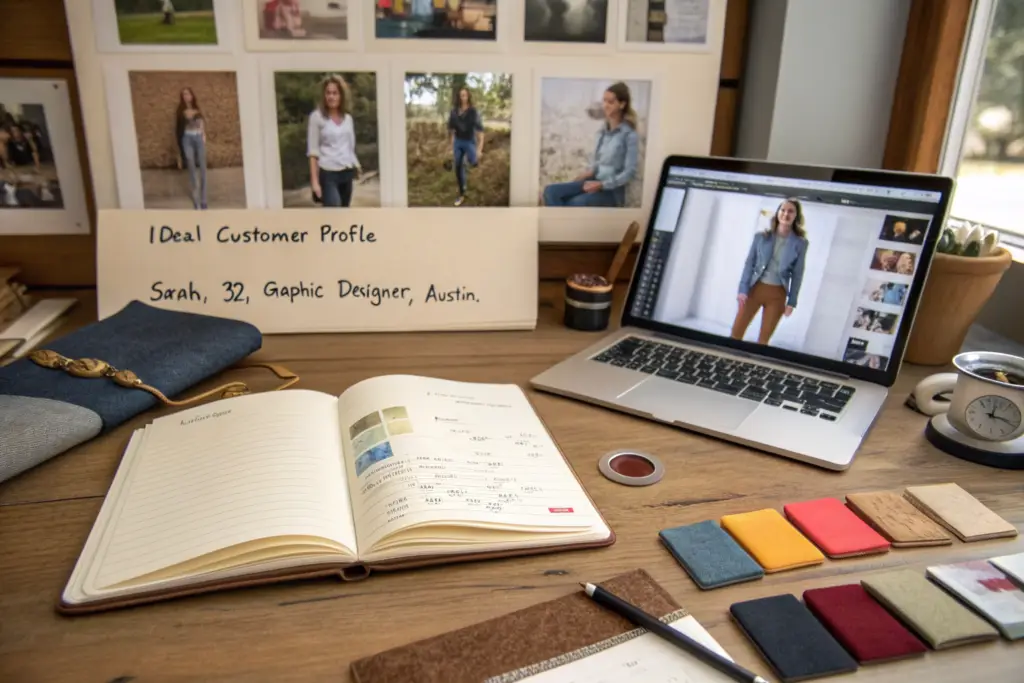
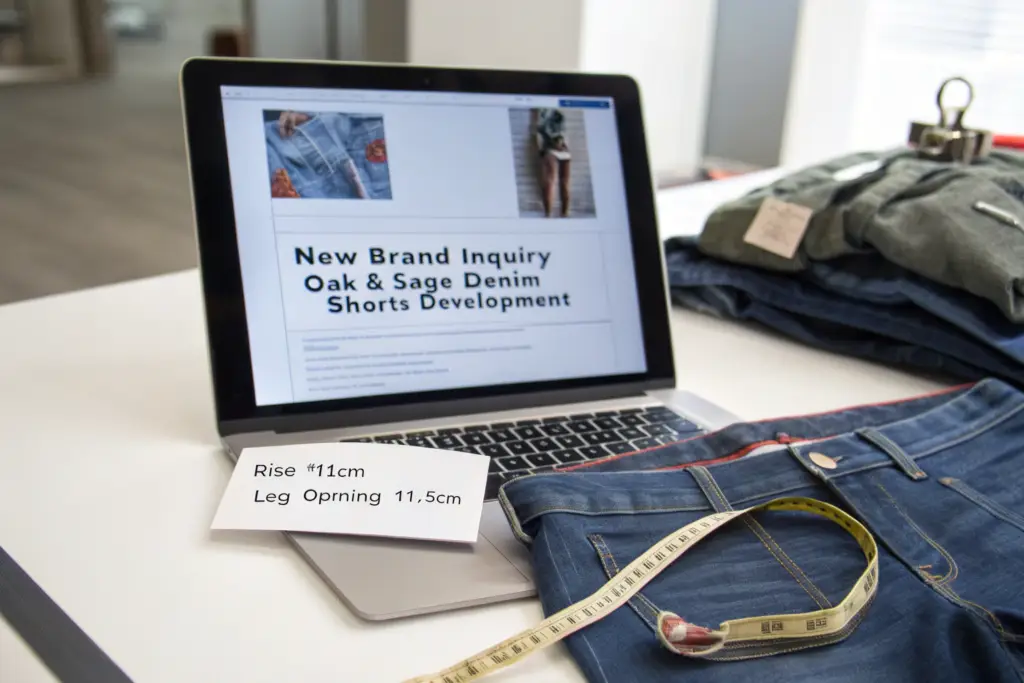
Send a structured inquiry with the following elements. First, introduce your brand. One paragraph. What is your brand name? Who is your customer? What is your brand aesthetic? "We are Oak & Sage, a sustainable denim brand for women who want premium fit without compromising on environmental values. Our customer is a 28 to 38-year-old professional who shops thoughtfully and values quality over quantity." Second, describe your product. What type of denim short? High-rise, relaxed fit, 4-inch inseam. What fabric? 10.5 oz rigid denim, 100% organic cotton. What wash? A medium vintage wash with subtle whiskering, no heavy distressing. What branding? A minimal leather patch on the back waistband with our debossed logo. Third, state your timeline and budget. "We are looking to launch in March 2026. Our target retail price is $78. We need a factory partner who can help us develop the fit and wash from our reference images." Fourth, attach visual references. Photos of shorts that have a similar fit, similar wash, similar vibe. Annotate the photos. "We like the rise on this short. We like the leg opening on this short. We like the wash color on this short." The factory inquiry best practices guide recommends providing as much visual information as possible. Images cross language barriers.
How Many Sampling Rounds Are Typical and What Do They Cost?
A new design typically requires two to three sampling rounds. The first round is the proto sample. This tests the basic fit, the pattern, and the construction. It is made from a similar fabric, not necessarily the exact production fabric. The cost is typically $100 to $200, including shipping. You evaluate the proto on a fit model. You send specific feedback. "The front rise needs to be 1 cm higher. The waistband is too tight by 2 cm. The leg opening needs to be 1.5 cm wider." Photos with annotations are essential.
The second round is the fit sample. The pattern adjustments from the proto feedback are incorporated. The fit sample is made from the actual production fabric. The cost is another $100 to $200. In most cases, the fit sample is approved. Sometimes a third round is needed for minor tweaks. The third round is the pre-production sample, which is the exact short you will receive in bulk, correct fabric, correct wash, correct hardware, correct labels. This sample is the sealed standard for the bulk production order. The total sampling cost for a new design is typically $300 to $600 and takes 6 to 9 weeks including shipping time. This investment is not optional. A brand that skips sampling and goes straight to bulk production is gambling with their entire inventory investment. The apparel sampling process is the quality gate between your idea and your inventory. Do not skip it.
How Do You Launch and Scale Without Holding Inventory?
The traditional model of launching an apparel brand required buying a large inventory upfront. You ordered 3,000 units. You stored them in your garage or a fulfillment center. You hoped they would sell. If they did not, you were stuck with dead stock and a depleted bank account. This model is unnecessarily risky for a new brand.
The modern model uses pre-orders and lean inventory management to launch with minimal risk. You sell the product before you manufacture it, or you manufacture a small batch, sell through it, and use the profit to fund the next, slightly larger batch. You never hold more inventory than you can sell in a reasonable timeframe. Your laptop is your storefront, your marketing channel, and your inventory management system.
Let me explain the launch and scale sequence that our most successful small-brand clients have used.
What Is the Pre-Order Model and How Does It Reduce Your Risk?
The pre-order model works like this. You develop your sample and get it approved. You produce professional product photography using the sample. You build a Shopify store with the product page, the brand story, the size guide, and high-quality images. You set a shipping date that is 8 to 10 weeks in the future, which allows time for bulk production and shipping after the pre-order campaign closes.
You run a pre-order campaign, usually for two to four weeks. You drive traffic with social media marketing, influencer partnerships, and email list building. Customers pay full price upfront, or a deposit, to reserve their shorts. At the end of the campaign, you count the orders. You place your bulk production order for the exact quantity sold, plus a small buffer of 10% to 15% for exchanges and late buyers.
The risk reduction is enormous. You do not buy inventory that may not sell. You manufacture only what is already sold. Your working capital is provided by your customers, not your savings account. The downside is that your customers wait 8 to 10 weeks for delivery, which requires clear communication and brand trust. The upside is that you can launch a brand with very little capital. One of our clients launched a denim short brand with a $3,000 investment. She spent $600 on sampling, $1,500 on photography and website setup, and $900 on initial social media ads. Her pre-order campaign sold 340 units. She used the customer payments to fund the bulk production. She was profitable from day one. The pre-order business model is well-established in direct-to-consumer apparel. It is the most capital-efficient way to launch a physical product brand.
How Do You Reinvest Profits to Scale to Larger Orders and More Styles?
Your first order, whether 300 units or 500 units, is a learning tool. It teaches you about your customer's size distribution, their wash preferences, their price sensitivity, and their feedback on fit. You reinvest the profit and the data into the next order.
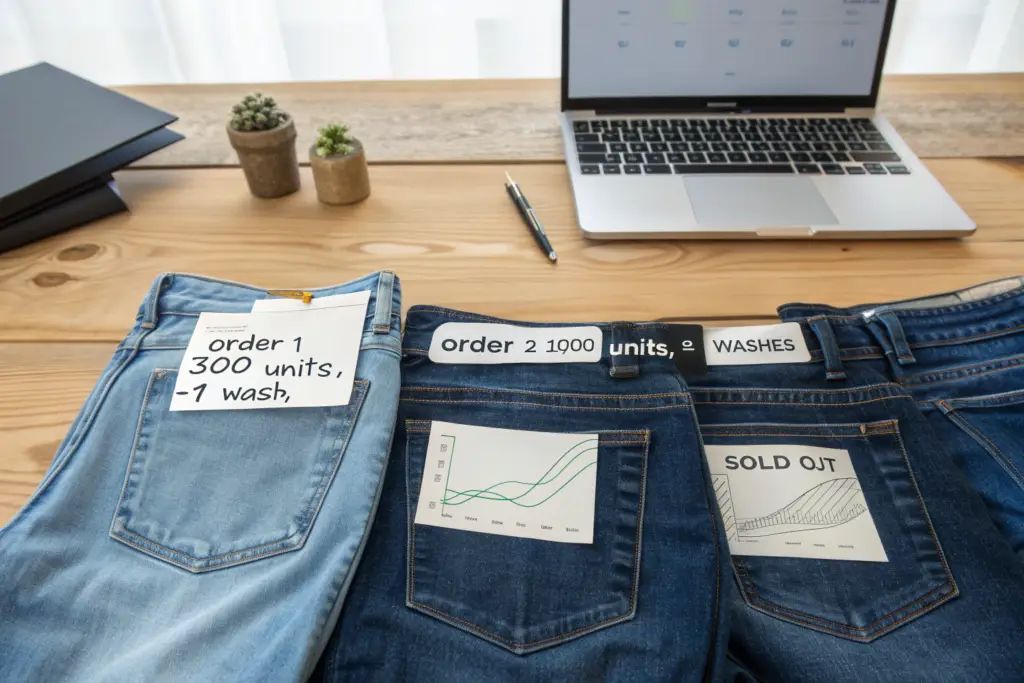
The typical scaling sequence looks like this. Order one is 300 to 500 units in one wash, sizes XS to XL. You sell through, collect data, and generate profit. Order two is 800 to 1,200 units in two washes, sizes XS to XXL, informed by the size sell-through data from order one. You introduce a new wash based on customer requests. Order three is 2,000 to 3,000 units in three washes, with a broader size range and possibly a new silhouette, a different rise or inseam, based on customer feedback. By order four or five, you are at 5,000-plus units, multiple styles, and a well-established brand.
At each stage, your unit cost decreases as your volume increases. The factory can negotiate better fabric prices. The production efficiency improves. You also have more leverage to negotiate payment terms. A brand that has placed four orders and paid on time is a valued client. The direct-to-consumer brand scaling path is a series of small, validated steps. Do not try to jump from a 300-unit first order to a 10,000-unit third order. Grow in proportion to your proven demand. Let your customers fund your growth.
How Does DDP Shipping Let You Focus on Brand Building Instead of Logistics?
When you are building a brand from your laptop, your time is your most valuable asset. Every hour you spend researching freight forwarders, comparing customs broker quotes, or tracking a container is an hour you are not spending on marketing, customer service, or product development. Logistics is necessary, but it should not be your job.
DDP shipping makes logistics the factory's job. You pay one price per unit, delivered to your door, or directly to your fulfillment center. The factory handles everything from the factory floor to the final delivery. You track a single link. You receive one invoice. You focus on selling shorts, not shipping them.
Let me explain how DDP works for a small brand and how it simplifies your operations.
What Does DDP Shipping Mean for a Small Brand Owner?
DDP stands for Delivered Duty Paid. For a small brand owner with no logistics team, no customs bond, and no freight forwarder relationship, DDP is the difference between importing being a stressful mystery and importing being a simple purchase.
Under DDP, we handle the export packaging, the ocean freight, the marine insurance, the U.S. customs clearance, the import duties, the customs bond, and the inland trucking to your specified address. Your fulfillment center, your 3PL warehouse, or your garage if you are self-fulfilling. You receive one commercial invoice with one price per unit, delivered. You do not need to register as an importer. You do not need to obtain a customs bond. You do not need to learn the HTS code for cotton denim shorts. You do not need to negotiate with a trucking company.
The per-unit DDP cost for a small order, say 300 units, is higher than the per-unit DDP cost for a 5,000-unit order because the fixed logistics costs are spread over fewer units. But the time savings and risk elimination are even more valuable for a small brand because a single logistics mistake, a customs hold, a surprise demurrage bill, is proportionally more damaging. The DDP shipping for small importers model is the most accessible way for a new brand to import products from China without building logistics expertise.
How Can You Set Up a Fulfillment Center to Receive DDP Shipments?
If you do not want to receive pallets of denim shorts at your apartment, which most people do not, you can have your DDP shipment delivered directly to a third-party logistics provider, a 3PL, or a fulfillment center. The 3PL receives the shipment, checks the carton count, stores your inventory, picks and packs individual orders as they come in from your Shopify store, and ships them to your customers.
To set this up, you choose a 3PL. Companies like ShipBob, Deliverr, and Red Stag Fulfillment specialize in e-commerce fulfillment for small to medium brands. You create an account. You set up your products in their system with SKU codes, weights, and dimensions. You provide our delivery address as the 3PL's warehouse address on your DDP order. The shipment arrives. The 3PL checks it in. Inventory is live on your store.
The 3PL charges per-unit storage fees, typically $0.50 to $2.00 per unit per month, and per-order pick and pack fees, typically $3.00 to $7.00 per order. These costs are deducted from your sales revenue. You never touch the inventory. Your laptop manages the entire operation. The e-commerce 3PL fulfillment setup is the standard operating model for direct-to-consumer apparel brands. It allows you to scale to thousands of orders per month without ever leasing a warehouse or hiring a pick-and-pack team.
Conclusion
Building a private label denim shorts empire from your laptop is not a fantasy. It is a proven path that many of our clients have walked. The path starts with obsessive niche definition. Know your customer better than the big brands do. Validate demand with a pre-order page or a small test batch before you commit to inventory. Develop your product with a factory that has R&D capability and is willing to guide a first-time brand owner through the sampling process. Launch lean, with a pre-order campaign or a 300-unit minimum order, and use the sales data to refine your next move. Scale by reinvesting profit into larger orders, more washes, and broader size ranges. Use DDP shipping to eliminate logistics from your mental load and a 3PL fulfillment center to handle the physical product so you never need to rent a warehouse.
The most important decision in this process is not your logo design or your Instagram aesthetic. It is your factory partner. The right factory will help you develop a product that fits your customer perfectly, delivers on time so you hit your launch date, and handles the logistics so you can focus on building your brand. The wrong factory will deliver a container of shorts that do not match the sample, three months late, with a stack of surprise invoices.
I run a factory that works with brand owners at every stage, from first-time founders ordering 300 units to established brands ordering 10,000. If you are ready to start the conversation, contact our Business Director, Elaine. She will answer your initial questions, help you define your product specifications, and provide a sample development timeline and a DDP price estimate for your order size. Her email is elaine@fumaoclothing.com. Your denim shorts empire is waiting to be built. At Shanghai Fumao, we build the shorts. You build the brand.