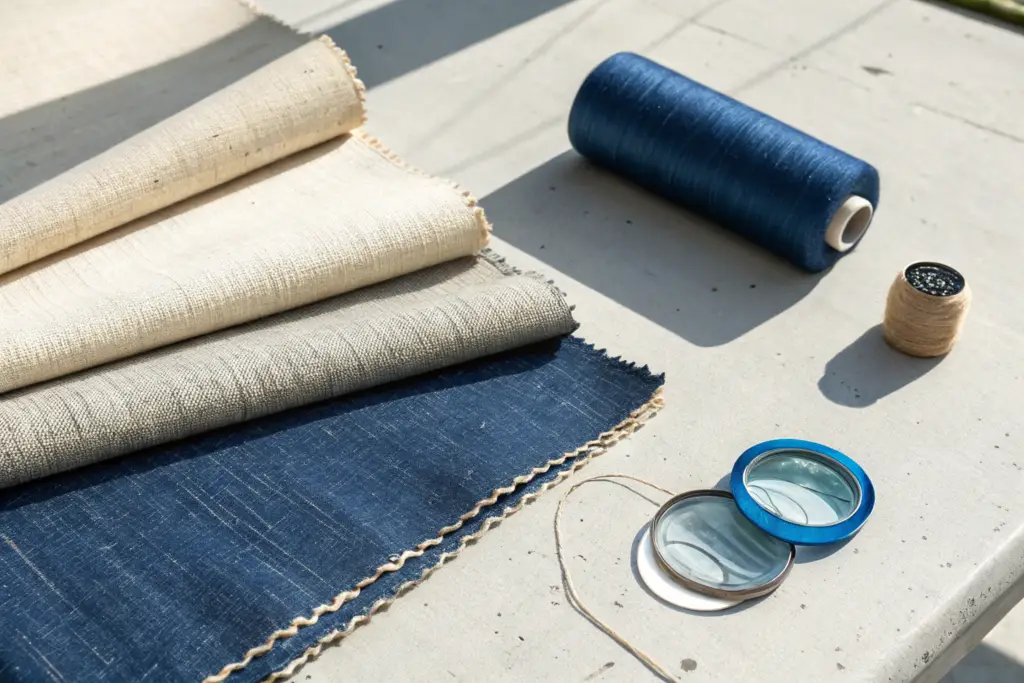
I want to start with a roll of fabric that arrived at my factory in March. It looked like standard 12-ounce indigo denim. Dark blue, clean surface, nothing unusual. But when I touched it, I knew something was different. The hand feel was softer than any raw denim I'd handled in twenty years. The fabric stretched across the bias with a recovery that felt almost mechanical. And when I held it under the light, there was a subtle depth to the indigo—a slight green-blue shift at the edges—that I'd only ever seen on denim that had been worn for five years. This fabric was fresh off the loom. It was a development sample from one of our partner mills, and it incorporated three separate innovations in fiber, dye, and finishing. I stood in the warehouse for ten minutes just handling it, bending it, rubbing it between my fingers. Then I walked into the design room and said, "This is 2026." I'm Richard, the owner of Shanghai Fumao. This article is about the fabric innovations we're building into our denim shorts this year, the ones that will define what your customers feel when they pick up your product.
How Is Sustainable Denim Innovation Changing Wholesale Shorts in 2026?
Sustainable denim used to mean one thing: organic cotton. It was a checkbox. You paid a premium for GOTS-certified fiber, you put a hangtag on the short, and you felt good about your environmental story. That model is no longer sufficient. In 2026, the conversation has shifted from input substitution to process transformation. The brands we work with are asking harder questions: not just "Is this cotton organic?" but "How much water did this fabric consume? What happens to the short at the end of its life? Can the entire production cycle be verified and quantified?"
This shift is being driven by regulation and by consumer expectation. The European Union's Digital Product Passport legislation, which is phasing in requirements for textile products sold in the EU, will demand unprecedented transparency about a garment's material composition, manufacturing footprint, and recyclability. Even brands focused exclusively on the North American market are feeling the pull, because the same consumers who demand supply chain transparency from European brands will soon demand it from American brands. The denim shorts you sell in 2026 will need an environmental story that goes deeper than a green hangtag.
At Shanghai Fumao, we've responded by investing in three sustainable denim innovation streams. The first is fiber innovation: moving beyond organic cotton into recycled cotton blends, hemp-cotton hybrids, and bio-based synthetic fibers that reduce petroleum dependence. The second is dyeing innovation: adopting natural indigo fermentation processes, low-water dye application technologies, and closed-loop dye bath recovery systems that slash chemical and water consumption. The third is finishing innovation: the near-waterless laser-and-ozone wash system that I described in an earlier article on rare wash development, which is moving from prototype to production capability this year.
These innovations are not marketing talking points. They are measurable changes to the physical product and the manufacturing footprint. A 2026 denim short from our sustainable line uses a measurable percentage less water, a measurable percentage less energy, and a measurable percentage less virgin petroleum than a 2024 equivalent. I'll provide those measurements in the sections that follow.
The wholesale market is responding. Our distribution clients report that retail buyers are increasingly asking for quantified sustainability data, not just certifications. A buyer for a major department store recently asked one of our brand partners for the water footprint per pair of shorts, expressed in liters. The brand was able to provide the number because we track that data at the factory level. The order was placed. The brand that couldn't provide the number wasn't.
What Is Cold-Water Enzyme Wash Denim and Why Does It Matter?
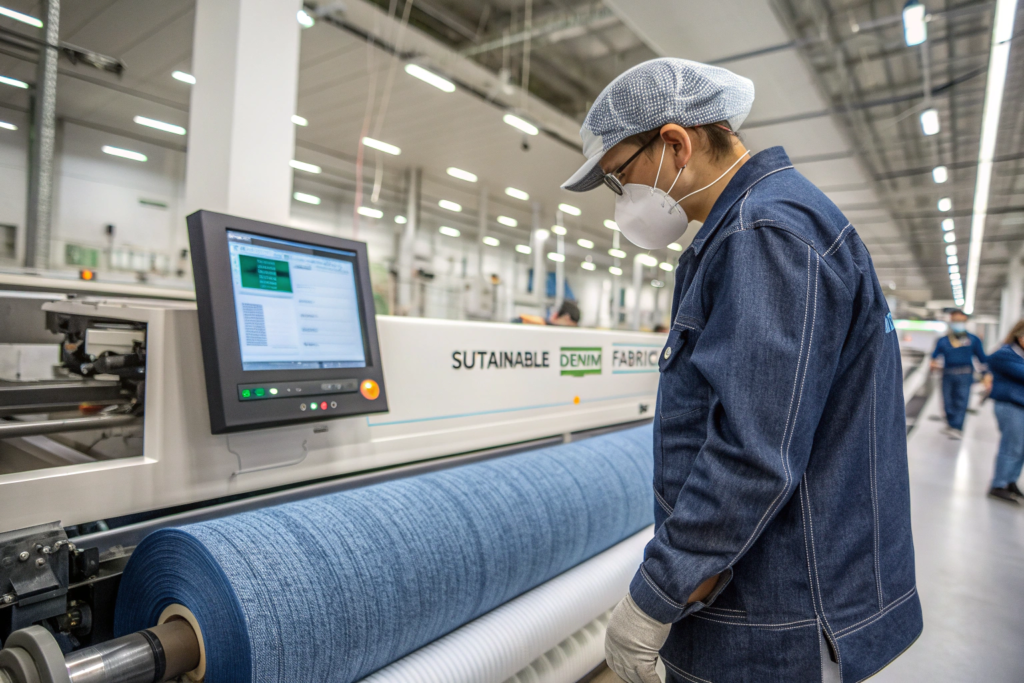
Cold-water enzyme wash denim is a fabric innovation that reduces the energy consumption of the wash process by eliminating the need to heat water. Traditional denim washing requires water heated to 40 to 60 degrees Celsius to activate the enzymes and chemicals that create the faded, softened finish. Heating that water consumes significant energy, which adds cost and carbon footprint to every pair of shorts.
The innovation is a new generation of cellulase enzymes that are active at ambient water temperatures—essentially, room temperature water that hasn't been heated at all. These enzymes were developed by biotechnology companies over the past three years, and they've reached a maturity and cost point that makes them viable for commercial production. They digest the surface cellulose on the cotton yarn at 20 to 25 degrees Celsius just as effectively as traditional enzymes do at 50 degrees.
The energy savings are substantial. Heating wash water accounts for roughly 30% of the total energy consumption of a denim laundry. By eliminating that heating entirely, the carbon footprint of the wash stage drops by nearly a third. For a factory processing 50,000 units per month, that's a meaningful reduction in both environmental impact and energy cost. The savings on the energy bill partially offset the higher cost of the specialized enzymes, making the overall cost per unit roughly neutral.
For the brand owner, the benefit is twofold. First, the cold-water wash process is a quantifiable sustainability claim that resonates with consumers. "This short was finished without heated water" is specific, verifiable, and easy to understand. Second, the cold-water enzymes produce a subtly different visual finish than traditional enzymes. The fade is softer, more diffuse, with less surface hairiness. The resulting short has a cleaner, more refined appearance that photographs well for e-commerce.
We're running our first full production batches with cold-water enzyme finishing this season. The initial client feedback has been positive, particularly on the hand feel—the cold-water process leaves the denim feeling noticeably smoother than hot-water enzyme washing. I expect this to become our standard enzyme wash process by the end of 2026.
How Are Recycled Polyester Cores Changing Stretch Denim?
Stretch denim has been a staple of the denim shorts market for years, but it has a sustainability problem. The stretch comes from elastane or spandex filaments wrapped in a polyester sheath, and both the spandex and the polyester are petroleum-derived synthetic fibers. A pair of stretch denim shorts typically contains 2% to 5% virgin synthetic content. When those shorts reach the end of their life, the synthetic fibers don't biodegrade. They persist in landfills or shed microplastics into the environment.
The innovation in 2026 is the replacement of virgin polyester with recycled polyester in the core-spun yarn that creates the stretch. Recycled polyester, typically made from post-consumer plastic bottles, has been used in fleece and knit fabrics for years. Using it in the fine-denier core of a stretch denim yarn is technically more challenging. The recycled polyester filament must be extremely fine, consistent in diameter, and strong enough to survive the weaving and washing processes without breaking.
Our partner mills have solved this challenge. They're now producing core-spun stretch yarns where the polyester sheath is 100% post-consumer recycled polyester, certified to the Global Recycled Standard. The performance characteristics are indistinguishable from virgin polyester stretch denim. The stretch percentage, the recovery, the durability—all are equivalent. The difference is in the material footprint.
For a pair of shorts with 3% stretch content, switching to recycled polyester eliminates roughly 0.04 pounds of virgin petroleum-based material per pair. Across a 10,000-unit order, that's 400 pounds of virgin plastic that wasn't extracted and processed. It's not a world-changing number on its own, but it's part of a broader shift toward circular material flows.
The recycled polyester core also gives the brand a credible circularity story. The hangtag can state: "Stretch fiber made from recycled plastic bottles." That's a claim that consumers understand and, increasingly, seek out. Our brand clients who have adopted recycled polyester stretch denim report that the claim performs well in consumer testing, particularly with the under-35 demographic that prioritizes environmental impact in purchasing decisions.
What Performance Fibers Are Being Blended Into Denim for 2026?
Denim used to be simple. It was 100% cotton. The end. That simplicity was its identity. But in 2026, the definition of denim is expanding. Blends that were once considered niche or experimental are now mainstream, and they're solving real performance problems that 100% cotton cannot address. The modern consumer expects their denim shorts to do more than just look good. They expect moisture management for hot summer days. They expect odor resistance for multi-day wear. They expect durability that justifies a premium price. Pure cotton denim, for all its virtues, struggles to deliver on these performance expectations.
The performance fiber blends we're incorporating into our 2026 denim shorts fall into three functional categories. The first is moisture management, using fibers like Tencel lyocell and hemp to wick sweat and speed drying. The second is thermal regulation, using phase-change materials and mineral-infused fibers to keep the wearer cooler in direct sunlight. The third is durability enhancement, using high-tenacity synthetic or natural fibers to reinforce high-stress areas without making the shorts heavy and stiff.
These blends are not about turning denim shorts into athletic wear. They're about making denim shorts perform better in the conditions they're actually worn in. A pair of denim shorts worn at a summer barbecue in Austin, Texas, in 100-degree heat, needs to manage moisture differently than a pair of denim jeans worn in an air-conditioned office. The 2026 denim short should be engineered for its actual use case, not borrowed from a jean designed in the 1950s.
The key to successful performance blending is maintaining the denim identity. The fabric still needs to look, feel, and fade like denim. If the performance fibers make the shorts feel like yoga pants, the customer rejects them. The blend percentages are typically modest—10% to 30% performance fiber, 70% to 90% cotton—enough to deliver the functional benefit without compromising the denim character.
Why Is Hemp Becoming a Key Component in Premium Denim?
Hemp is having a renaissance in denim, and it's not just a sustainability story. Hemp is genuinely a superior fiber for warm-weather denim in several measurable ways. It breathes better than cotton. It wicks moisture faster. It has natural antimicrobial properties that resist odor. And it's one of the most environmentally friendly fiber crops, requiring minimal water, no pesticides, and actually improving soil health through phytoremediation.
The hemp used in modern denim is not the coarse, scratchy fiber that people associate with old-school hemp rope. Modern processing techniques—steam explosion, enzyme retting, mechanical cottonization—break the long hemp bast fibers into soft, cotton-like staple fibers that can be blended with cotton and spun on standard cotton spinning equipment. The resulting yarn has the softness of cotton with the performance characteristics of hemp.
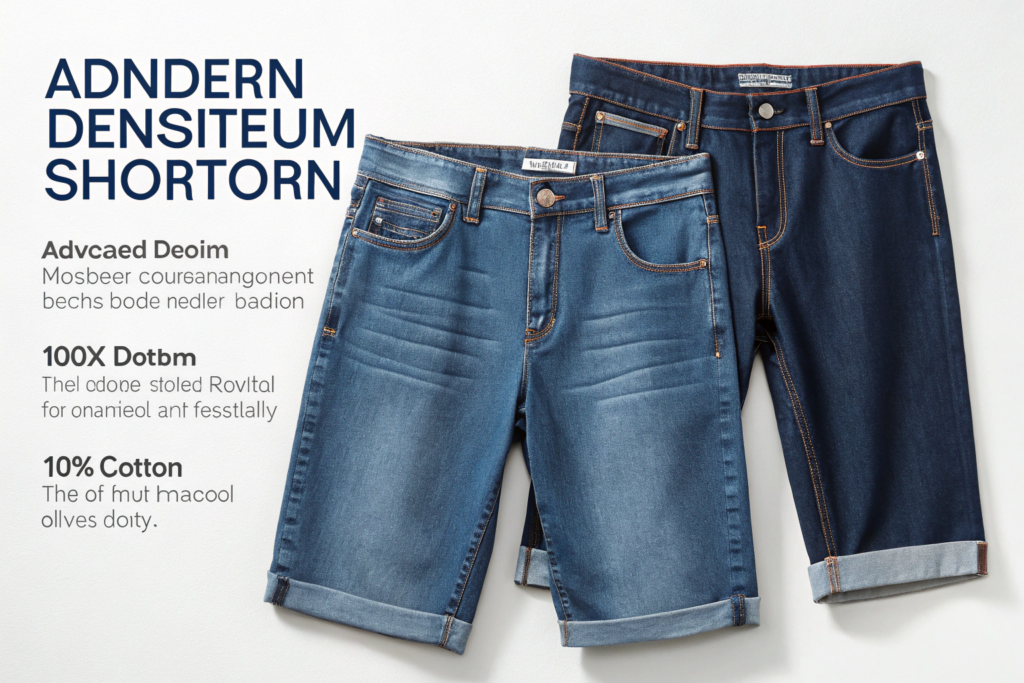
The blend ratio is critical. Too much hemp, above 30%, and the fabric loses the drape and fade character that denim customers expect. Too little hemp, below 10%, and the performance benefits are negligible. Our sweet spot for summer denim shorts is a 20% hemp, 80% cotton blend. At this ratio, the fabric breathes noticeably better than 100% cotton, dries faster after washing or sweating, and develops a subtle, attractive slub texture that adds visual interest to the denim surface.
The fade behavior of hemp-cotton denim is different from pure cotton denim, and this is something brands need to understand before committing to a hemp blend. Hemp fibers don't absorb indigo dye as deeply as cotton fibers. In a hemp-cotton blend, the hemp fibers create a subtle, natural marling effect—lighter streaks against the darker cotton background. This marling becomes more pronounced as the shorts fade, creating a unique vintage character that pure cotton cannot replicate. For brands seeking a point of differentiation, hemp-blend denim offers a fade story that is genuinely distinct.
A client from Vancouver built their entire Summer 2026 collection around a 20% hemp denim we developed together. They marketed the breathability and the sustainability in equal measure. The shorts sold at a $78 retail price, a $15 premium over their cotton equivalents, and the sell-through rate was higher. The customer feedback praised the "airy" feel and the "natural texture." The hemp blend had created a tangible product difference that justified the premium.
How Does Tencel Improve the Feel of Heavyweight Summer Shorts?
Tencel, which is the brand name for lyocell fiber produced by Lenzing, is a regenerated cellulose fiber made from sustainably harvested wood pulp. It's technically a semi-synthetic fiber, but it behaves more like a natural fiber—it breathes, it absorbs moisture, it biodegrades. What makes Tencel interesting for denim is its hand feel. Tencel is exceptionally smooth, with a silky, cool touch that cotton cannot match.
In a heavyweight denim short—13 ounces and above—Tencel solves a specific problem. Heavyweight denim has structure, durability, and premium presence, but it can feel stiff, hot, and heavy against the skin in summer conditions. A small percentage of Tencel, typically 10% to 15%, transforms the hand feel dramatically. The Tencel fibers, which are smoother and more flexible than cotton fibers, create a fabric that feels softer and cooler to the touch, without sacrificing the weight and substance that the premium customer wants.
The Tencel also improves the drape of heavyweight denim. Pure heavyweight cotton denim can stand almost on its own, which gives a rigid, architectural silhouette. Some customers want that. Others want the weight without the stiffness. Tencel introduces a subtle fluidity to the drape that makes the shorts move more naturally with the body. The shorts feel broken in from day one.
The moisture management is another benefit. Tencel absorbs moisture 50% more efficiently than cotton, and it releases it faster. A Tencel-blend denim short worn on a hot day will wick sweat away from the skin and dry quickly, keeping the wearer more comfortable. This is a performance feature that the customer may not consciously identify but will definitely feel.
We're using a 15% Tencel blend in our premium heavyweight anchor style for 2026. The fabric is a 14-ounce denim that feels more like 11 ounces against the skin. The initial samples have been extremely well received by our brand partners. One buyer described the hand feel as "cashmere denim," which is an exaggeration but captures the direction of the innovation. Heavyweight denim that feels luxurious, not punishing.
What Is the Future of Smart Temperature-Regulating Denim Fabrics?
Temperature-regulating denim sounds like science fiction, but the technology exists and it's entering the commercial market in 2026. The concept is straightforward: integrate materials into the denim that actively manage the microclimate between the fabric and the skin, keeping the wearer cooler in hot conditions and warmer in cool conditions. For a summer denim short, the cooling function is obviously the priority.
There are two main technological approaches to temperature regulation in textiles. The first is passive regulation using phase-change materials, or PCMs. These are microscopic capsules embedded in the fabric or applied as a coating that absorb, store, and release heat. When the wearer's body temperature rises, the PCM capsules absorb the excess heat and melt, pulling heat away from the skin. When the body temperature drops, the capsules solidify and release the stored heat back. The effect is a buffering of temperature fluctuations.
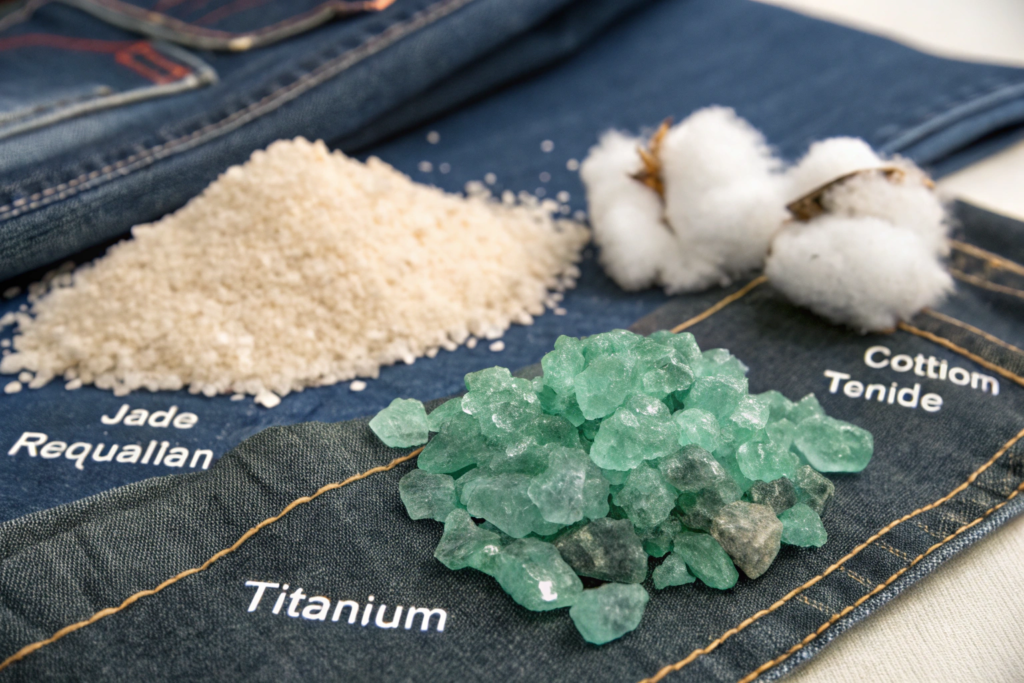
The second approach is active regulation using mineral-infused fibers. Certain minerals, particularly jade, tourmaline, and titanium dioxide, have natural thermal conductivity properties. When these minerals are ground into fine particles and embedded into synthetic fibers or applied as a denim coating, they conduct heat away from the body more efficiently than standard cotton. Some formulations also claim to reflect infrared radiation, reducing the heat load from direct sunlight.
Both technologies are expensive relative to standard denim, and both face durability challenges. The PCM capsules can degrade over repeated wash cycles, losing their thermal buffering capacity. The mineral particles can abrade and wash out. The technology is improving rapidly, and by 2026, the leading formulations are warrantied for the expected lifespan of a denim short.
I should be candid about where this technology stands in mid-2026. Temperature-regulating denim is at the early adopter stage. It's not yet a volume product, and the cost premium is significant. We're running trials with PCM-infused denim from a Japanese mill and mineral-coated denim from a Taiwanese supplier. The initial results are promising. In controlled wear tests, subjects reported noticeably greater comfort in high-heat conditions wearing the PCM shorts versus standard denim shorts of the same weight. The quantitative data—skin temperature measurements, sweat rate monitoring—supports the subjective reports.
For brands targeting the premium active-lifestyle segment, temperature-regulating denim is a genuine differentiator for 2026. The customer who golfs in denim shorts, or attends outdoor summer festivals, or lives in a hot climate, will pay a premium for demonstrable cooling performance. I expect this technology to move from niche to mainstream over the next three years, following the trajectory that stretch denim followed in the 2000s.
How Do Phase-Change Materials Work in Heavyweight Denim?
Phase-change materials are the most scientifically elegant approach to temperature regulation in textiles. The basic physics is the same as ice melting in a glass of water. When ice melts, it absorbs heat from the surrounding water without increasing its own temperature. The water stays cold as long as there is ice to melt. PCMs in textiles work on the same principle, but the phase change happens at a temperature closer to human skin—typically around 28 to 32 degrees Celsius—rather than at 0 degrees.
The PCM is encapsulated in microscopic polymer spheres, typically 5 to 10 microns in diameter, which are embedded into the denim. The encapsulation methods vary. Some mills mix the PCM microcapsules into a coating that is applied to the fabric surface. Others incorporate them into the spinning dope of synthetic fibers that are then blended with cotton. The coating approach is less expensive but less durable. The fiber-embedded approach is more durable but more expensive and limits the application to synthetic blend denims.
When a wearer puts on a pair of PCM-treated denim shorts and steps into a hot environment, their skin temperature begins to rise. When the temperature in the microclimate between the skin and the fabric reaches the melting point of the PCM, the capsules absorb heat and liquefy. This absorption buffers the temperature rise, keeping the wearer feeling cooler for a period of time. The buffering capacity depends on the amount of PCM in the fabric, which is measured in joules of heat absorption per square meter.
The effect is not infinite. Once all the PCM capsules have melted, the buffering stops, and the wearer feels the full ambient heat. But during the initial transition from a cool to a hot environment—leaving an air-conditioned building and walking into a summer street, for example—the PCM provides a window of thermal comfort that standard denim does not. The capsules recharge when the wearer returns to a cooler environment and the PCM solidifies.
The technology adds roughly $1.50 to $2.50 per yard to the fabric cost, which translates to a significant premium at the wholesale level. For a premium short retailing above $85, this is absorbable. For a mid-market short retailing at $45, it's not. The market segmentation is clear: PCM denim is a premium-tier innovation for 2026, with the expectation that costs will decline as production scales.
Can Mineral-Infused Coatings Really Keep You Cooler?
Mineral-infused cooling coatings are a different approach that has gained traction faster than PCMs because they're less expensive and easier to apply to existing denim fabrics. The concept is based on the thermal properties of specific minerals that are naturally cool to the touch. Jade, for example, has a high thermal effusivity—it conducts heat away from the skin quickly, creating the sensation of coolness.
The mineral is ground into a fine powder, mixed with a binder, and applied to the denim surface as a finishing treatment. When the wearer's skin contacts the treated fabric, the mineral particles conduct heat away from the skin more rapidly than untreated cotton fibers. The effect is a perceptible cooling sensation upon contact. Some formulations also include titanium dioxide particles that reflect a portion of infrared radiation, reducing the heat load from direct sunlight on the fabric.
The cooling sensation from mineral coatings is immediate and noticeable. It's the same principle as touching a piece of jade or marble on a warm day—the stone feels cool not because it's cold, but because it conducts heat away from your skin efficiently. The treated denim feels cool to the touch, and it maintains that sensation as long as the fabric temperature is lower than the skin temperature.
The limitations are wash durability and the nature of the sensation. The mineral coating degrades with repeated washing; most current formulations are warrantied for 20 to 30 home wash cycles, which is roughly a season of wear for a pair of denim shorts. The coating also changes the hand feel of the denim slightly, giving it a marginally slicker surface texture. Some customers like this; others feel it compromises the authentic denim feel.
For 2026, mineral-cooled denim is positioned as a seasonal performance feature for hot-climate markets. A brand targeting the Southwest U.S., Florida, or tropical resort wear can market the cooling sensation as a tangible, feel-it-immediately benefit. The cost premium is modest—about $0.50 to $1.00 per yard—making it accessible to mid-market brands. We've run trials with mineral-cooled denim from two suppliers, and the early feedback is that the cooling sensation is genuine and noticeable, particularly in direct comparison to untreated denim of the same weight.
What Dyeing Technologies Are Reducing Water and Chemical Use?
The indigo dyeing process is the dirtiest secret of the denim industry. Conventional synthetic indigo dyeing consumes vast amounts of water and chemicals. The indigo is not water-soluble, so it must be chemically reduced using sodium hydrosulfite, a harsh reducing agent, to make it soluble enough to penetrate the cotton yarn. The dyed yarn is then oxidized to fix the indigo, and the residual chemicals, along with unfixed indigo, are discharged in the wastewater. A conventional denim dye house can consume 50 to 100 liters of water per yard of fabric and discharge a cocktail of sulfites, sulfates, and unexhausted dye.
The industry has been working on cleaner dyeing technologies for decades, and 2026 is the year when several of these technologies are reaching commercial viability at scale. The innovations fall into three categories: foam dyeing, which replaces most of the water with air; electrochemical reduction, which eliminates the chemical reducing agent; and natural indigo fermentation, which replaces synthetic indigo with biologically produced indigo and natural reducing agents.
Each of these technologies reduces the environmental footprint of denim dyeing dramatically, and each produces a slightly different indigo character on the fabric. A brand that adopts one of these dye technologies isn't just making an environmental claim; they're also accessing a unique visual signature that distinguishes their product from conventionally dyed denim.
How Is Foam Dyeing Transforming the Indigo Process?
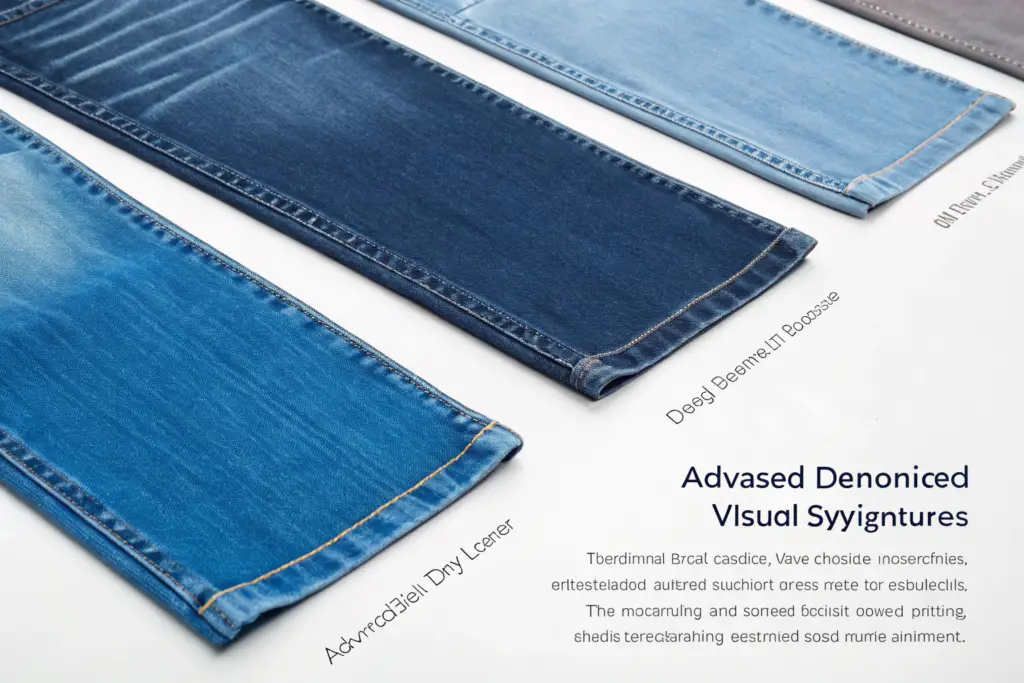
Foam dyeing is the most radical of the new dye technologies, and it's the one I'm most excited about for 2026. Instead of immersing the yarn in a liquid indigo bath, foam dyeing applies the indigo as a foam—a dispersion of indigo particles, reducing agent, and water, whipped into a foam with air. The foam is applied to the yarn in a controlled, metered process, and the indigo penetrates the yarn surface from the foam.
The water savings are dramatic. Foam dyeing uses approximately 5% to 10% of the water consumed by conventional liquid dyeing. The chemical consumption is also reduced because the foam carrier is more efficient at delivering the indigo to the yarn. Less indigo is wasted in the bath, and less reducing agent is needed.
The visual character of foam-dyed indigo is subtly different from conventionally dyed indigo. The foam application creates a slightly more surface-level dye penetration, which means the denim fades faster and with more contrast. For a vintage-inspired short that's designed to develop character quickly with wear, foam-dyed denim is ideal. The fade pattern develops in months rather than years.
Foam dyeing equipment is currently being installed at several major denim mills, and the first commercial foam-dyed fabrics are available for the 2026 season. The cost is at a small premium to conventional dyeing—roughly 5% to 8%—which is expected to decline as the technology scales. For brands that want to make a credible water-reduction claim, foam-dyed denim provides the data to back it up.
We've sourced foam-dyed denim from a mill in China for a brand partner's Summer 2026 capsule. The brand is marketing the water savings on the hangtag: "This short was dyed with 90% less water than conventional denim." The consumer response in pre-launch testing has been strongly positive. Water conservation is an environmental message that consumers understand intuitively.
What Is Natural Indigo Fermentation and Can It Scale?
Natural indigo fermentation is the oldest indigo dyeing technology, predating synthetic indigo by millennia. It uses the indigo precursor molecule indican, which is extracted from indigo-bearing plants, and natural bacteria to perform the reduction that makes the indigo soluble. The process is slow, biological, and produces a unique indigo shade that synthetic indigo cannot perfectly replicate.
Natural indigo has a greener, more complex undertone than the pure blue of synthetic indigo. Under magnification, natural indigo-dyed yarn shows a color variation—subtle shifts from blue to green-blue to purple-blue—that synthetic indigo lacks. This complexity is what gives vintage denim from the pre-synthetic era its distinctive, coveted color.
The challenge with natural indigo has always been scale and cost. Natural indigo production is measured in kilograms per acre of indigo plants, while synthetic indigo production is measured in tons per petrochemical batch. Natural indigo is inherently more expensive—roughly five to ten times the cost of synthetic indigo—and the global supply of high-quality natural indigo is limited.
In 2026, natural indigo is scaling through two mechanisms. The first is improved agricultural yields, with indigo plantations in India, Japan, and China expanding and adopting better cultivation practices. The second is biosynthetic indigo, where the indigo molecule is produced by engineered microorganisms in fermentation tanks, identical to plant-derived indigo but produced at industrial scale. Biosynthetic indigo is chemically indistinguishable from plant-derived indigo and can be produced in much larger quantities.
Natural indigo denim remains a premium, small-batch product for 2026. It's not going to replace synthetic indigo in volume production. But for a brand's top-tier heritage piece—the $150-plus retail short that anchors the premium end of the collection—natural indigo is a genuine point of difference. The color complexity is visible. The story is authentic. And the supply chain, while limited, is real and growing.
We've worked with a small mill in Okayama, Japan, that produces natural indigo denim using a centuries-old fermentation process. The fabric is expensive, beautiful, and slow to produce. A brand partner of ours uses it for a limited-edition short released once a year. The shorts sell out within days at a $225 retail price. The customers are denim enthusiasts who understand exactly what they're buying. That's the natural indigo market in 2026: small, passionate, and premium.
Conclusion
The denim shorts we're producing in 2026 are not your father's cutoffs. They're engineered garments that incorporate innovations across the entire material lifecycle, from fiber to dye to finish. The sustainable denim stream is reducing water and carbon footprint through cold-water enzyme washing, recycled polyester stretch cores, and foam-dyed indigo that slashes water consumption by 90%. The performance fiber stream is introducing hemp for breathability and moisture management, Tencel for luxurious hand feel in heavyweight fabrics, and phase-change materials and mineral coatings that actively cool the wearer in hot conditions. And the niche innovations, like natural indigo fermentation and biosynthetic dyes, are creating premium products with color depth and stories that cannot be replicated by conventional manufacturing.
These innovations are not laboratory curiosities. They are in our fabric library, available for sampling, and moving into commercial production. A brand owner who visits our showroom in 2026 can handle these fabrics, feel the difference, and decide which innovations align with their customer base and price point.
The challenge for brand owners is navigating this expanded option set. Not every innovation is right for every brand. Cold-water enzyme wash is a cost-neutral sustainability win that fits any program. Hemp blends are ideal for outdoor and lifestyle brands targeting warm-climate consumers. PCM denim is a premium-tier differentiator for brands with the price point to absorb it. Natural indigo is a heritage statement for limited editions. The art is in selecting the innovations that reinforce your brand identity and deliver value your customer will pay for.
If you're interested in exploring these fabric innovations for your next denim shorts program, I invite you to have that conversation with our Business Director, Elaine. She can send you our current fabric innovation swatch deck, discuss the cost and performance characteristics of each option, and help you build a fabric strategy that differentiates your brand in the 2026 market. You can contact her directly at elaine@fumaoclothing.com. The future of denim is in our sample room. Come feel it for yourself.