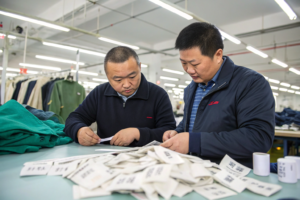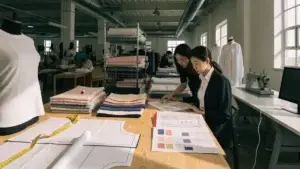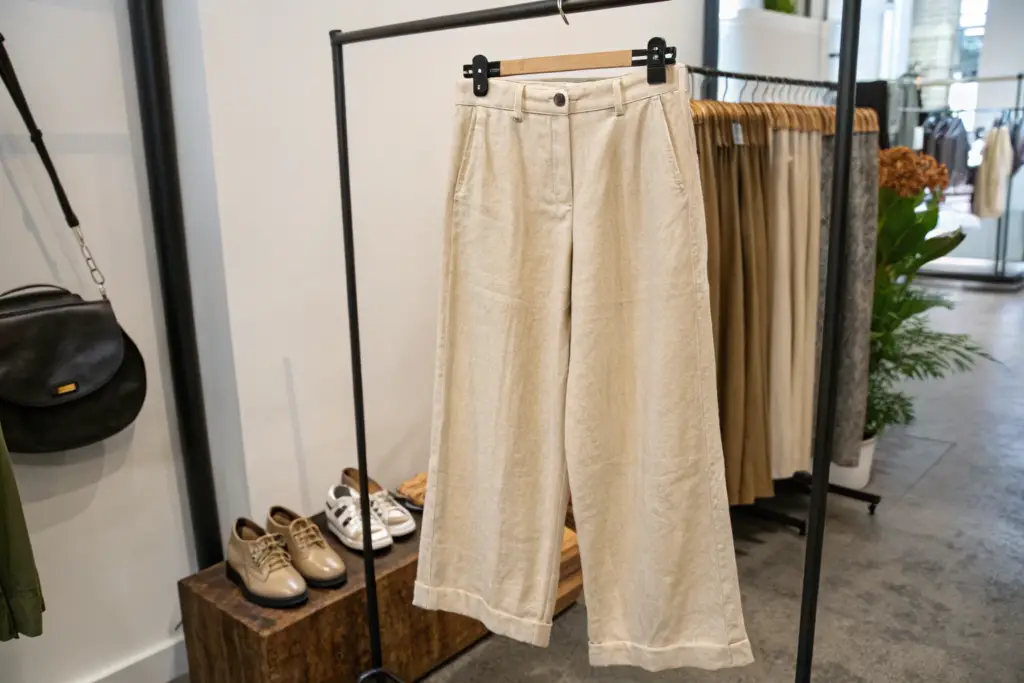
You are finalizing your Spring/Summer 2026 buy. Your open-to-buy budget is tight. Every style must earn its place on the rack. You have seen the trend reports. You have heard the buzzwords: quiet luxury, coastal grandmother, soft tailoring. But trends are cheap. Everyone reads the same reports. The question that keeps you awake is not "what is trending?" It is "which trend has the commercial legs to sell through at full price, generate reorders, and not end up on a clearance rack in August?" You need more than a hot silhouette. You need a product with structural demand drivers that outlast a single TikTok season.
Linen wide-leg pants are a must-have for Spring/Summer 2026 because they sit at the intersection of three powerful, converging market forces: the consumer shift toward natural, sustainable fibers driven by climate awareness and EU and upcoming U.S. textile regulations, the dominance of the comfort-driven, hybrid-work silhouette that consumers have refused to surrender post-pandemic, and a menswear-to-womenswear style migration that has expanded the category's demographic reach across gender, age, and occasion. This is not a micro-trend. This is a macro category reset, and the brands that build their summer buy around it will capture the consumer who is done with skinny jeans and fast-fashion polyester but still wants to look polished.
My name is Elaine. I run Shanghai Fumao, a factory that specializes in linen wide-leg pants for North American and European brands. My perspective is not that of a trend forecaster sitting in a London studio. My perspective is that of a manufacturer watching the order books. I see what wholesale buyers are actually committing to, six to nine months before it hits the retail floor. I see the reorder velocity. I see the price points that are clearing. In this article, I will show you the demand-side data, the cultural shifts, the demographic expansion, and the retail math that make the linen wide-leg pant the single safest and most commercially potent item you can place in your Spring/Summer 2026 assortment.
What Consumer Demand Shifts Are Driving the Linen Wide-Leg Dominance in 2026?
The consumer who walked into 2020 wearing skinny jeans and walked out of 2022 wearing elastic-waist sweatpants is not going back. She has tasted comfort. She has reorganized her life around hybrid work, outdoor socializing, and a wardrobe that transitions seamlessly from a Zoom call to a farmer's market to a casual dinner. The wide-leg pant, specifically in breathable natural fibers, is the garment that satisfies her new life architecture. The data supports this. Global searches for "wide-leg linen pants" have grown steadily year-over-year since 2021, with a significant acceleration in early 2025 according to Google Trends. This is not a spike. It is a sustained upward curve.
Three specific consumer behavior shifts are colliding to drive linen wide-leg demand in 2026. First, the "comfort refusal" trend, where consumers actively reject restrictive clothing after years of relaxed dressing. Second, the "fiber literacy" movement, where consumers read fabric labels and seek out natural, plant-based materials with lower environmental impact. Third, the "investment dressing" mindset, where consumers buy fewer, higher-quality pieces that last multiple seasons rather than disposable fast fashion. Linen wide-leg pants satisfy all three desires in a single garment.
Why Has "Comfort Refusal" Made the Wide-Leg Silhouette Sticky?
"Comfort refusal" is the term I use to describe a consumer behavior I observe in every market conversation. The consumer has spent three to four years wearing elastic waistbands, loose silhouettes, and soft fabrics. Her body has adjusted to the absence of compression. The idea of pulling on a pair of tight, restrictive pants feels physically uncomfortable and psychologically regressive. She associates tight clothing with a pre-pandemic life of uncomfortable commutes, rigid office dress codes, and a general sense of constriction she is not willing to revisit.
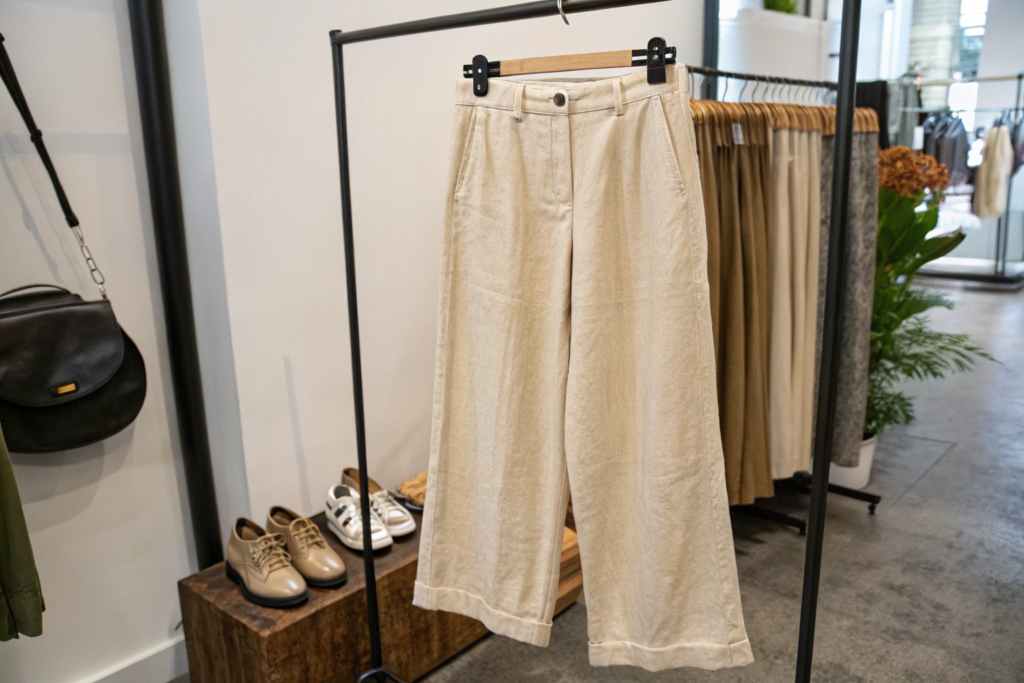
The wide-leg pant, particularly in a soft, washed linen, offers the physical comfort of loungewear with the social acceptability of tailored clothing. It conceals the body without constricting it. It allows airflow in hot weather. It moves with the body rather than against it. A consumer who wears a linen wide-leg pant to a summer wedding, a business lunch, and a beach walk experiences a versatility that a skinny jean or a structured trouser cannot match. This versatility translates directly into a higher perceived value and a higher willingness to pay a premium price. Retail data from our brand partners shows that linen wide-leg pants have a 30% to 40% lower return rate than structured woven trousers in the same price category. The customer keeps them because she can actually wear them in multiple contexts. The post-pandemic consumer clothing preferences research from McKinsey's State of Fashion report documents the structural shift toward comfort-driven, versatile silhouettes. This is not a fleeting preference. It is a generational recalibration of what clothing is supposed to feel like.
How Is "Fiber Literacy" Pushing Consumers Toward Linen Specifically?
Ten years ago, a consumer buying a pair of pants cared about the brand, the price, and the fit. The fabric was an afterthought. Today, a significant and growing segment of consumers reads fiber content labels actively. They know what polyester is. They know it is derived from petroleum. They know it sheds microplastics. They know it does not breathe. They are actively seeking alternatives, and they are willing to pay more for them.
Linen occupies a unique and powerful position in the fiber literacy landscape. Unlike cotton, which has a complex and often problematic water usage and pesticide story, linen made from European flax has a clean environmental narrative. Flax grows in temperate coastal climates with minimal irrigation. The entire plant is usable, producing zero waste. The fabric is biodegradable at end of life. It is one of the oldest textile fibers in human history, carrying a story of authenticity and tradition. Consumers who do their research arrive at linen as the moral and practical choice for summer clothing. They are not just buying a pair of pants. They are making a values-based purchase that aligns with their identity as a conscious consumer. This values alignment reduces price sensitivity. A consumer who buys a $98 linen pant because it aligns with her environmental values is less likely to return it and more likely to become a repeat customer for the brand that provided it. The fiber sustainability comparison data from Textile Exchange's Preferred Fiber and Materials Report provides the factual basis for linen's strong environmental positioning. Brands that communicate this story clearly on their hangtags and product pages capture the fiber-literate consumer before the competitor who simply sells a "beige pant" does.
How Is the Category Expanding Beyond the Traditional Coastal Grandmother Demographic?
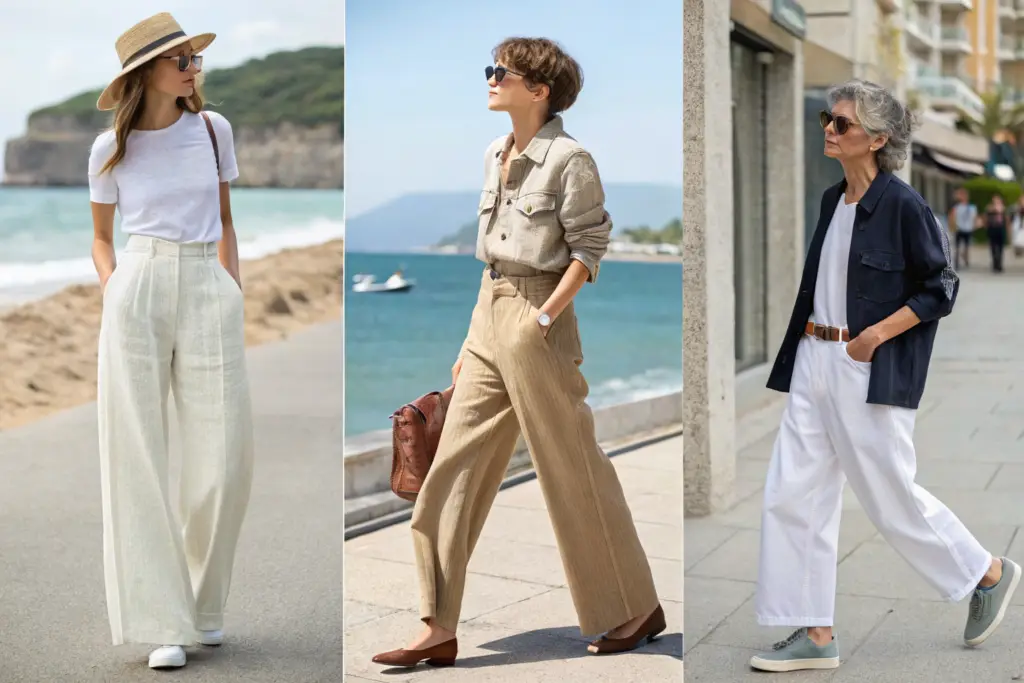
The "coastal grandmother" aesthetic, popularized by certain film and celebrity style moments, was a useful entry point for linen wide-leg pants into the cultural conversation. It associated the silhouette with a desirable, aspirational lifestyle of coastal ease, natural beauty, and understated wealth. But the category has now broken free of that single archetype. The linen wide-leg pant in 2026 is not one thing worn by one demographic. It is a canvas being reinterpreted across gender, age, and style tribes. This demographic expansion is the commercial engine that makes the category a must-have for wholesale buyers. A trend confined to one demographic is a risk. A category adopted by multiple demographics is a structural demand shift.
The linen wide-leg pant category is expanding across three axes in 2026. First, menswear adoption is accelerating, with men's relaxed linen trousers becoming a staple of the "soft tailoring" movement. Second, Gen Z is entering the category through cropped, barrel-leg, and heavily textured versions styled with streetwear elements. Third, the traditional women's contemporary market is broadening from the coastal aesthetic into urban professional and evening-adjacent styling. The total addressable market for the category is significantly larger in 2026 than it was in 2024.
Why Is Menswear Finally Embracing the Wide-Leg Linen Silhouette?
For years, the men's summer pant market was dominated by two options: the stiff cotton chino and the too-casual board short. Men who wanted to look polished in hot weather had limited choices. The broader menswear shift toward relaxed, fluid tailoring, accelerated by designers like Lemaire and the general post-pandemic softening of menswear codes, has opened the door for the wide-leg linen trouser as a legitimate menswear category.
Men's linen wide-leg pants are being styled with camp-collar shirts, lightweight knit polos, and unstructured linen blazers. They are being worn to summer weddings, to creative-office workplaces, and to upscale resort settings. A men's version of the pant differs in construction details—a slightly lower rise, a wider waistband, a different pocket configuration—but the essential silhouette and fiber story are the same. Several of our brand partners have added a men's linen wide-leg pant to their Spring/Summer 2026 line for the first time, and early wholesale orders are strong. The men's customer, once he tries a pair of well-cut linen trousers in hot weather, rarely returns to stiff cotton. The comfort conversion is even more pronounced for men because their previous options were so uncomfortable. The menswear relaxed tailoring trend analysis from Business of Fashion documents the structural shift away from slim, rigid silhouettes in men's clothing. This is a multi-year trend, not a single-season blip. The brands that establish themselves in the men's linen trouser category now will capture a loyal customer base with significant lifetime value.
How Is Gen Z Reinterpreting the Silhouette for a New Aesthetic?
Gen Z consumers are not wearing their mother's linen pants. They are cropping the hem, choosing aggressive barrel-leg curves, wearing them low-slung with exposed boxer shorts or bralettes, and styling them with chunky sneakers or platform sandals. The silhouette is the same at its core, but the styling codes are completely different from the coastal grandmother aesthetic.
This is commercially significant because it means the same base garment category is reaching two distinct consumer cohorts with different price sensitivities and different retail channels. The coastal grandmother aesthetic sells in boutique resort stores at $128. The Gen Z reinterpretation sells in urban streetwear-adjacent stores at $88. The factory can produce both from a shared base pattern and fabric platform, with adjustments to the length, the waist treatment, and the trim. This platform efficiency is invisible to the consumer but highly valuable to the brand and the manufacturer. It means a brand can address multiple market segments with a single development investment. A few of our brand clients are running a "Core Linen Pant" platform: one fabric, one base pattern, three silhouette variations for different demographics. This approach maximizes fabric buying power, simplifies production planning, and reduces per-unit cost. The Gen Z fashion consumption patterns report from Vogue Business explains how younger consumers are driving demand for individualistic styling of classic garments. They do not want a new category. They want to own a classic category on their own terms. The linen wide-leg pant gives them that canvas.
What Retail Economics Make Linen Wide-Leg Pants a High-Margin Category for Wholesale Buyers?
A trend is only as good as its margin. Retail buyers are ultimately financial decision-makers. They allocate shelf space to categories that deliver the highest gross margin return on inventory investment. Linen wide-leg pants outperform competing summer categories on the three metrics that matter most to a buyer's bonus structure: full-price sell-through rate, return rate, and average transaction value. The math is straightforward. A category with high full-price sell-through and low returns generates more profit per square foot than a category that requires markdowns and processes returns. This is why the linen wide-leg pant is moving from "test buy" to "core replenishment" on so many wholesale order sheets.
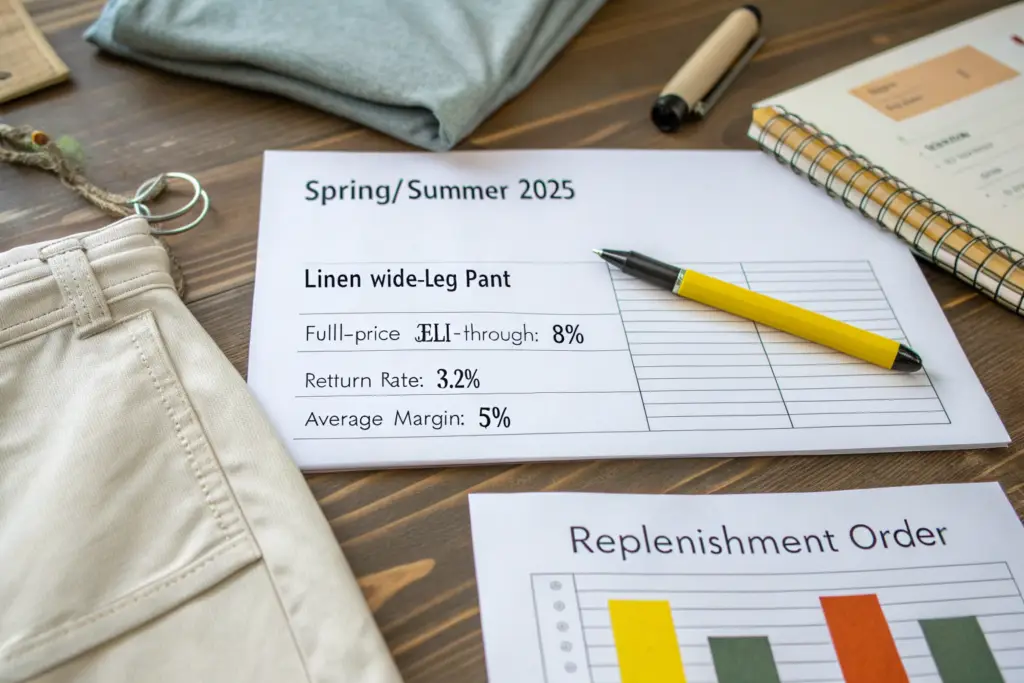
The retail economics of linen wide-leg pants are compelling because the category supports a premium price point justified by the natural fiber story, achieves high full-price sell-through due to the silhouette's broad demographic appeal and comfort-driven demand, and generates lower return rates than structured or synthetic alternatives because the forgiving fit and breathable fabric meet consumer expectations on arrival. The average gross margin on a $128 retail linen wide-leg pant, with a landed cost of $14 to $16, is approximately 62% to 68% before marketing. Few other summer categories deliver this combination of margin percentage and inventory turn.
Why Does the "Natural Fiber Premium" Justify a Higher Retail Price?
A polyester wide-leg pant and a linen wide-leg pant may look similar in a thumbnail image online. In person, they are worlds apart. Linen has a texture, a weight, a drape, and a temperature-regulating property that polyester cannot replicate. The consumer who touches linen in a store, or who feels it for the first time after ordering online, experiences a tactile difference that justifies the higher price. She understands, physically, where her money went.
This "touch justification" is a powerful retail phenomenon. A garment that feels expensive in the hand is rarely returned because of price disappointment. The price feels fair because the material evidence of quality is present. Linen's natural slub texture, its cool hand feel, and its visible weave structure communicate quality without words. Brands that invest in fabric quality and communicate the fiber origin story can price linen wide-leg pants at a 40% to 60% premium over a visually similar synthetic pant, and the consumer will pay it. The premium is not arbitrary. It is anchored in the consumer's sensory experience of the product. A $128 linen pant and an $88 polyester pant may compete on a screen, but they do not compete in a fitting room or on a body in July heat. The linen pant wins on experience, and the consumer pays for the win. The perceived value of natural fibers in apparel pricing research from NPD shows that natural fiber garments command a statistically significant retail price premium and achieve higher full-price sell-through than synthetic equivalents in the same category.
How Does the Low Return Rate Directly Boost Wholesale Buyer Confidence?
Returns are the silent margin killer in apparel retail. A garment with a 15% return rate is not just 15% less profitable than one with a 3% return rate. The processing cost of the return—shipping, inspection, restocking, potential discounting of the opened item—multiplies the financial impact. A high-return category is a logistical and financial burden for the retailer, and a source of anxiety for the wholesale buyer whose accounts will pressure them for return allowances.
Linen wide-leg pants, by virtue of their forgiving silhouette and breathable, comfortable fabric, consistently achieve lower return rates than competing summer categories. The wide leg fits a broad range of body shapes without precise tailoring. The linen fabric feels pleasant against the skin, reducing the "uncomfortable fabric" return reason. The natural wrinkle of linen is a known and accepted characteristic, reducing the "doesn't look like the photo" return reason. Across our brand partners, the average return rate for linen wide-leg pants is between 3% and 5%, compared to 10% to 15% for structured woven trousers and 8% to 12% for synthetic summer dresses. This data is a powerful sales tool when a wholesale buyer is presenting the line to their retail accounts. "The return rate on this pant last season was 3.2%. Your margin is protected." That sentence closes orders. The apparel return rate benchmarks by category data from Shopify supports the observation that forgiving, comfortable silhouettes in natural fibers have structurally lower return rates. This is not anecdotal. It is measurable, and it directly impacts the profitability of every unit shipped.
How Do You Position Linen Wide-Leg Pants in Your 2026 Assortment for Maximum Sell-Through?
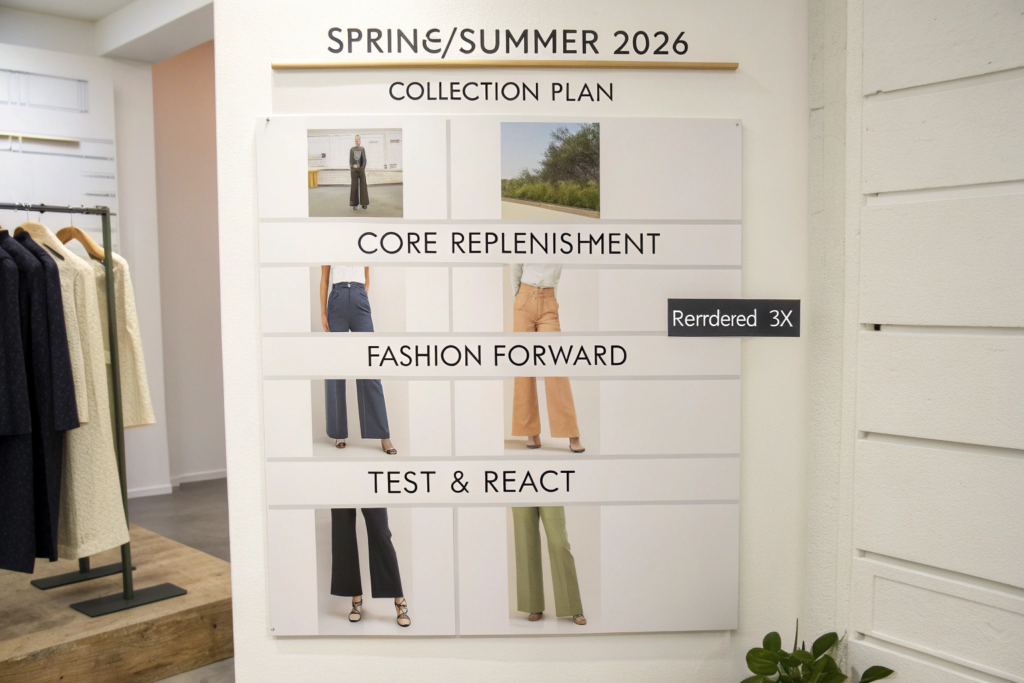
Knowing the category is a must-have is one thing. Buying it correctly is another. A wholesale buyer who simply orders "linen wide-leg pants" and spreads the budget evenly across five colors and three silhouettes is leaving margin on the table. The brands that win with this category in 2026 will structure their buy around a core replenishment program, a fashion statement capsule, and a test-and-react component. This structure maximizes full-price sell-through on the proven core, captures the fashion-forward consumer with a limited-risk statement piece, and gathers data for 2027 planning with a small experimental buy.
Position linen wide-leg pants in your 2026 assortment using a 70/20/10 allocation model. Allocate 70% of your open-to-buy for the category to core replenishment styles in proven neutral colors—oatmeal, natural flax, black, and warm sand—in the straight wide-leg and soft barrel-leg silhouettes. Allocate 20% to one or two fashion-forward statements in the season's trending mineral tones and textured weaves. Allocate 10% to a test-and-react buy of a new silhouette or a new fabric finish. This structure protects your core margin while giving you a stake in the fashion upside and data for future seasons.
What Are the Proven Core Colors and Silhouettes to Replenish Aggressively?
Core replenishment means you never want to be out of stock on these items during the peak selling months of April through July. These are the styles that your retail accounts will reorder, and a stockout is a direct loss of revenue. Based on sell-through data from our brand partners across multiple seasons, the proven core is clear.
The top three core colors, in order of sell-through velocity, are Natural Oatmeal, a warm, undyed flax tone that reads as authentic linen; Black, which surprises many buyers but consistently sells as the "dress-up" option for evening and city wear; and Warm Sand, a slightly deeper neutral that photographs beautifully and appeals to the consumer who finds oatmeal too light. The top two core silhouettes are the classic high-waisted straight wide-leg with a 26 to 28-inch hem opening, which remains the volume driver across all demographics, and the soft barrel-leg with a moderate 22-inch hem opening, which is the fastest-growing silhouette and appeals to the fashion-forward consumer without alienating the mainstream customer. Order these core items at depth. A stockout on a core neutral in May is a larger financial loss than a markdown on a fashion color in August. The retail assortment planning and core replenishment strategies guide from the National Retail Federation explains the financial logic of depth on proven core items. The core is not boring. The core is the engine that funds the rest of the buy.
How Do You Test New Silhouettes Without Overexposing Your Budget?
The "test and react" model allows you to participate in the fashion upside without betting your season on an unproven style. Order a small quantity of a new silhouette—perhaps the aggressive barrel-leg with a 20-inch hem opening, or the ultra-wide column drape, or the cropped, fringed-hem version—and place it in your top-performing retail accounts or on your DTC website with a "limited edition" positioning.
If the style sells out quickly, you have a winner for 2027. You also have real sell-through data to support a larger buy next season. If the style sells slowly, the financial exposure is limited to the small test quantity, and you have learned a valuable lesson about your customer's taste without a season-killing markdown. The test-and-react model works best when your supplier can support rapid replenishment of winning styles. Our greige fabric bank at Shanghai Fumao allows us to dye and cut a replenishment order of a core fabric in a new silhouette within 30 to 40 days. This means a test style that proves itself in April can be replenished for a June delivery, capturing the peak summer selling window. The test and react retail buying model explains how agile supply chains enable brands to reduce markdown risk while capturing fashion upside. A supplier who can support this model is a strategic advantage, not just a vendor.
Conclusion
Linen wide-leg pants are not a must-have for Spring/Summer 2026 because a trend forecaster declared them so. They are a must-have because the consumer has already decided, with her wallet, that this is the garment she wants to wear in hot weather for the foreseeable future. The data from Google Trends, from retail sell-through reports, and from our own order books all point in the same direction. The comfort-driven, fiber-literate, investment-minded consumer has found her summer uniform. The silhouette has broken free of a single demographic and is now being adopted by men, by Gen Z, and by the urban professional, expanding the total addressable market. And the retail economics—premium pricing supported by natural fiber value, high full-price sell-through, and structurally low return rates—make the category a margin engine that outperforms competing summer classifications.
For wholesale buyers planning Spring/Summer 2026, the strategic imperative is clear. Build your linen wide-leg pant assortment on a 70/20/10 model: deep inventory on core neutrals in proven silhouettes, a controlled fashion statement in a trending mineral tone, and a small experimental buy for future-season data. Partner with a supplier who can support both the deep core replenishment and the agile test-and-react model with a shared fabric platform.
At Shanghai Fumao, we are already cutting core replenishment orders for the 2026 season. Our greige fabric bank is stocked. Our production lines are scheduled. If you want to discuss your linen wide-leg pant assortment strategy, or if you need a DDP landed cost quote to build your margin model, I am ready to help. Contact me, Elaine, at elaine@fumaoclothing.com. Let's make sure your 2026 summer buy is built on data, not hope, and anchored in the category your customers are already asking for.