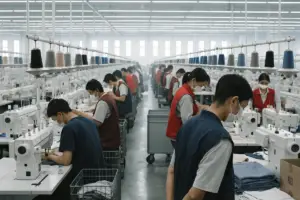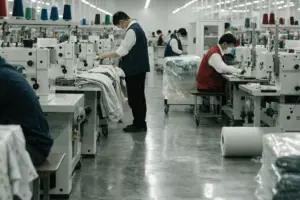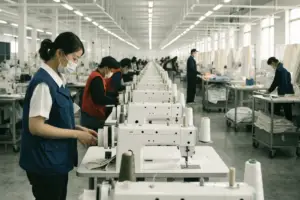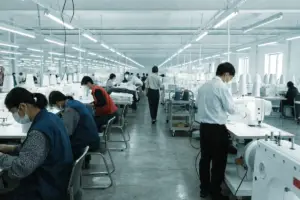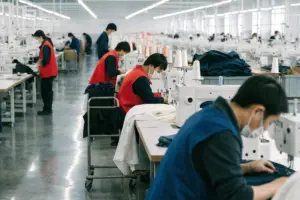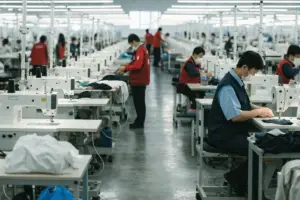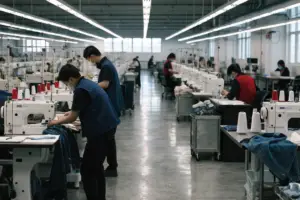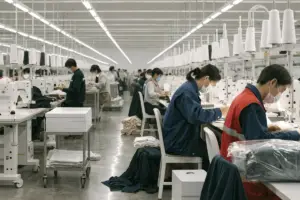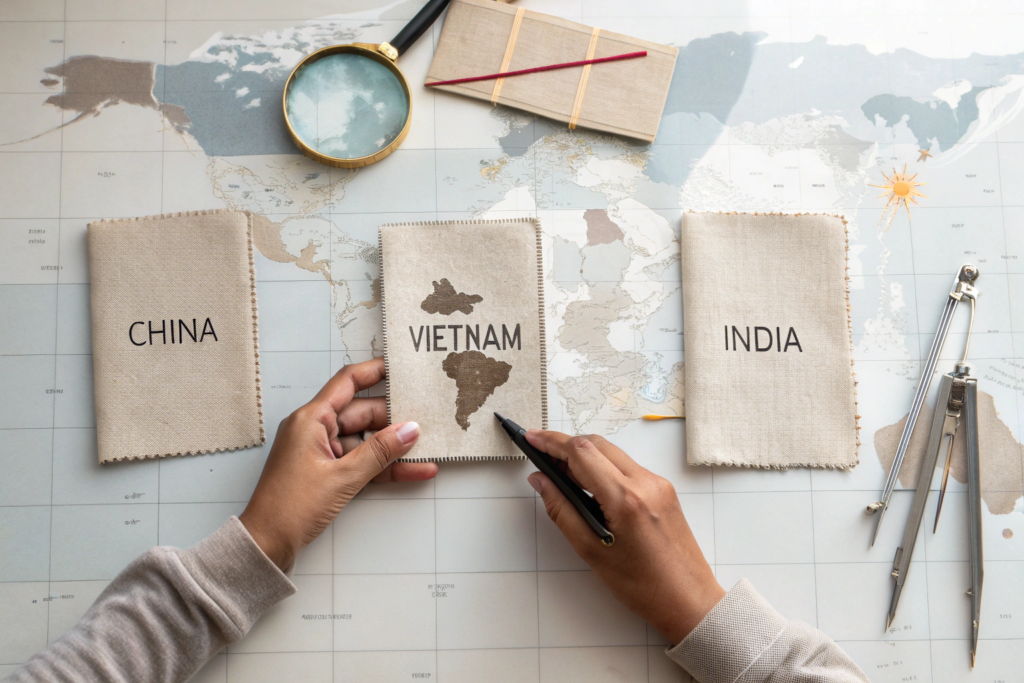
A brand owner in Los Angeles spent six months sourcing linen wide-leg pants. He got quotes from a factory in China, one in Vietnam, and one in India. The prices were different. The fabric hand feel was different. The lead times were different. He called me, overwhelmed. He said, "Ron, I have three good options. I don’t know how to pick." He was afraid of making a $30,000 mistake. The fear was not of the wrong product. It was of the wrong partnership. This is the real sourcing question. It is not "Who is cheapest?" It is "Who is the right fit for my specific brand?"
Comparing linen pants suppliers across China, Vietnam, and India requires evaluating five dimensions: price and cost structure, fabric quality and flax origin, production speed and logistics, communication ease, and social compliance transparency. China leads in speed, supply chain integration, and communication. Vietnam offers duty advantages for certain markets. India has a historic linen tradition but faces consistency challenges. The "best" country depends on your brand’s priority: speed, cost, or story.
I have manufactured in China for over 15 years. I have visited factories in Vietnam and worked with fabric mills in India. I can give you an honest, ground-level comparison without the sales pitch. The goal is to help you make a confident decision, whatever country you choose.
What Are the Real Cost Differences Between the Three Countries?
Cost is usually the first question. It is also the most misleading. An FOB price from India might look 20% cheaper than China. Then you add the logistics, the communication delays, the rework on a bad batch. The "cheap" price becomes very expensive. You must compare the total cost of ownership, not the initial quote.
China’s FOB prices are 10% to 20% higher than Vietnam and India on paper, but China’s logistics costs, production speed, and lower defect rates often make the total landed cost equal or lower. Vietnam’s costs are rising rapidly and are now close to China’s mid-tier. India offers the lowest labor costs, but this is offset by higher fabric inconsistency and much longer lead times.
Let me break down the real numbers I see in the market.

How Do Labor and Fabric Costs Stack Up?
Labor is the biggest variable. Here is a current market snapshot of average monthly wages for a skilled garment sewer.
| Country | Average Monthly Wage (USD) | Labor Cost per Pant (Est.) | Fabric Cost (Linen, per meter) |
|---|---|---|---|
| China (Shanghai region) | $550 – $700 | $2.20 – $2.80 | $3.50 – $5.00 |
| Vietnam (Ho Chi Minh) | $300 – $400 | $1.60 – $2.10 | $4.00 – $5.50 |
| India (Tirupur/Gujarat) | $150 – $250 | $0.90 – $1.40 | $2.80 – $4.50 |
India looks the cheapest on paper. But look at the fabric cost. India grows its own flax and has a domestic linen industry. The fabric can be cheaper. However, Vietnamese factories often import their linen from China or Europe, which pushes the fabric cost higher than China. China weaves its own linen but also imports high-end flax from France and Belgium for premium lines. The fabric cost advantage shifts depending on the quality tier you are targeting. A budget linen pant is cheaper to make in India. A premium, long-staple linen pant is equally cost-effective in China because the supply chain for premium trims, zippers, and buttons is far more developed.
A brand owner I work with in Portland sourced from India for two years. The FOB was $6.80 for a basic linen pant. It was almost $2 cheaper than my quote. But he had to hire a full-time agent in India to manage quality. The agent cost him $18,000 a year. He had two shipments rejected for inconsistent fabric weight. The rework and air freight ate the two-dollar saving. He moved the production to Shanghai Fumao last year. The FOB is higher. His total annual cost is lower.
What About Duty and Tariff Advantages?
This is where the country choice gets strategic. If you are selling primarily to the European Union, Vietnam has a massive advantage. The EU-Vietnam Free Trade Agreement has reduced duties on Vietnamese garments to 0% over a phase-in period. A linen pant from Vietnam into Germany might pay 0% duty. From China, it pays 12%. This is a real cost difference.
If you are selling to the US market, the duty rates are more similar. China and Vietnam both face standard Most Favored Nation rates, around 2.8% for linen trousers. India also falls under the same general rate structure. The duty advantage for Vietnam is primarily an EU story. If your main market is North America, the duty difference is small enough that it should not dictate your sourcing decision. Logistics speed and reliability matter more.
How Does Linen Fabric Quality Compare by Sourcing Origin?
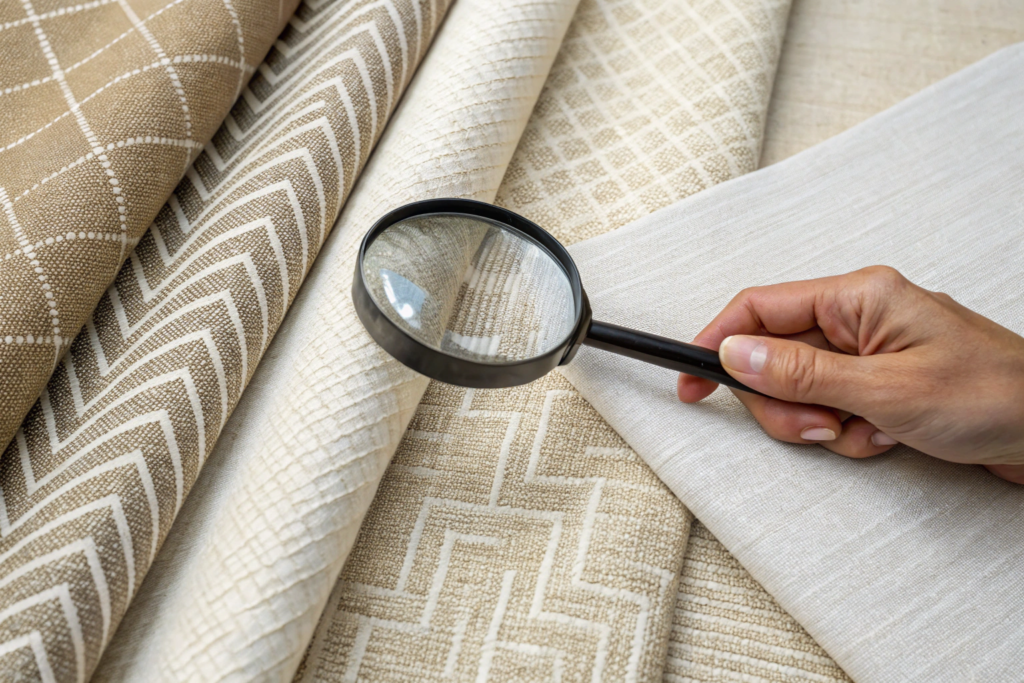
Linen is not a commodity. The flax plant, the retting process, the spinning, and the weaving all change the final fabric. A linen pant from India does not feel the same as a linen pant from China or Vietnam. The difference is in the fiber length, the yarn twist, and the finishing. You can feel it. Your customer can feel it.
China offers the widest quality range, from basic short-staple linen to premium long-staple European flax linen, with sophisticated enzyme washes and soft finishes. Vietnam specializes in mid-range linen and linen blends, often with a focus on activewear textures. India produces authentic, rustic, hand-feel linen with a strong tradition, but batch-to-batch color and weight consistency can be a significant challenge.
The origin of the flax is often different from the origin of the garment. A Chinese factory can sew a pant using French flax. An Indian factory can sew a pant using Indian flax. The question is transparency.
What Is the "Flax Origin" and Why Does It Matter for Premium Pricing?
The best flax in the world grows in a coastal belt from Northern France through Belgium and the Netherlands. The climate, with its cool nights and moist soil, produces long, fine fibers. This is the gold standard. It yields a linen that is soft, strong, and ages beautifully.
Chinese factories like Shanghai Fumao import European flax directly. I have a standing relationship with a mill in Normandy that ships flax yarn to our weaving partners in China. We weave it. We finish it. The fabric has the DNA of European flax and the cost efficiency of Chinese manufacturing. Indian factories typically use domestic flax grown in the Himalayan foothills or Gujarat. This flax is shorter and coarser. It has a rustic, earthy feel. Some brands love this. It is "authentic Indian linen." Others find it too rough and prone to shedding.
I ask every new client: "What do you want the customer to feel?" Soft and buttery? Choose European flax, sewn in China. Rustic and textured? Indian flax has a unique character. The story you tell on your website must match the fabric in the pant. If you market "French Flax" but your pants are made of short-staple Indian linen, you are committing a marketing fraud. A client from Vancouver built her whole brand on "European Linen." We provide her with the mill certificates from our French flax supplier. She prints them on her hangtag. Her customers trust her because she can prove the claim.
How Does Finishing Technology Affect the Final Product?
The weaving is one part. The finishing is the other. A linen fabric fresh off the loom is stiff and scratchy. It needs to be washed, softened, and stabilized. China has invested heavily in textile finishing technology. We have access to enzyme washes that soften the fiber without chemicals. We have tumble-drying facilities that create a "lived-in" softness. We can pre-shrink the fabric precisely to 2% tolerance.
Vietnam’s finishing capabilities are good but still developing. They often use simpler washes. India’s finishing varies enormously. Some high-end Indian mills have world-class finishing. Many smaller mills use basic water washes. The result is a fabric that can shrink unpredictably. I tested an Indian linen sample for a client last year. The shrinkage after one wash was 7%. The Indian supplier had not pre-shrunk the fabric. The pant would have been unwearable after one laundry cycle. This is not a criticism of India. It is a call to verify. No matter what country you choose, demand the shrinkage test report.
What Are the Lead Time and Logistics Advantages?
Time is money. A linen pant that arrives in June is worth half as much as the same pant arriving in April. The supply chain speed from factory door to your warehouse door is not the same across these three countries. Geography, port infrastructure, and manufacturing speed all play a role.
China has the fastest and most reliable lead time of the three, typically 30 to 45 days for production and 15 to 20 days for sea freight to the US West Coast. Vietnam adds 5 to 10 days to the transit time. India adds 10 to 20 days to the transit time and has a more variable production schedule due to monsoon seasons, holidays, and domestic logistics bottlenecks.
Speed is China’s strongest advantage. Here is a real-world comparison for a 3,000-unit linen wide-leg pant order.

How Do Production and Transit Times Compare?
This table assumes a standard order with pre-approved fabric and trims. Transit is to Los Angeles, USA.
| Country | Production Time | Port-to-Port Transit | Total Lead Time |
|---|---|---|---|
| China | 30 – 40 days | 15 – 18 days (Shanghai to LA) | 45 – 58 days |
| Vietnam | 35 – 50 days | 20 – 25 days (Ho Chi Minh to LA) | 55 – 75 days |
| India | 45 – 60 days | 25 – 35 days (Mundra/Nhava Sheva to LA) | 70 – 95 days |
The difference between China and India can be a full month. In the fashion calendar, a month is a season. A month is the difference between a full-price sellout and a 40% markdown rack. Indian factories also face seasonal disruptions. The monsoon season from June to September can flood roads and delay trucking from inland factories to the port. Diwali in October-November shuts down factories for a week. Chinese New Year in January-February is a known, planned event. The monsoon is less predictable.
This is why brands that operate on a tight, trend-driven calendar tend to stick with China. The extra 20 to 30 days of buffer time that India requires means you must design and approve your collection much earlier. If you are a startup moving fast, that buffer is a luxury you may not have. Shanghai Fumao’s lead time is one of our most frequently complimented features. A client in Texas told me, "You are the only factory that has never made me miss a launch date." Reliability is part of the cost.
What About Air Freight for Urgent Orders?
Air freight is the emergency button. It costs 5 to 8 times more than sea freight. But sometimes you need it. The availability of air cargo capacity also varies by country. China has massive air cargo capacity from Shanghai, Guangzhou, and Hong Kong. Space is readily available and rates are competitive. Vietnam has fewer direct flights to the US, and air freight space is tighter. India’s air freight infrastructure is improving but still lags China in speed and reliability.
If your business model relies on occasional air freight for hot-selling restocks, China offers the most flexibility. I air-freighted 500 pairs of linen pants for a client in Miami last June. They left Shanghai on Monday. They were in her hands on Thursday. That speed of response is hard to replicate from other sourcing countries. The infrastructure is simply more mature.
How Do Communication and Business Culture Impact Sourcing?
The best price in the world is useless if you cannot communicate your design intent. A miscommunication on a pocket placement can ruin an entire order. Language, time zones, and business culture are not soft factors. They are hard operational risks.
China offers the strongest English-language communication in the apparel industry, with many factories employing dedicated English-speaking sales teams. Vietnam’s English proficiency in the garment sector is growing but still limited. India has strong English skills at the management level, but communication can be less direct and more relationship-dependent. Time zone overlap with North America is best from India, manageable from China, and worst from Vietnam.
I communicate with my US clients every day on WhatsApp and email. The response time is usually within 12 hours. That is the China standard.

How Does "Directness" Differ in Business Communication?
In China, I speak directly. If a design is too complex for the cost target, I say, "This button will add $0.20. Can we choose a simpler one?" I give you a clear choice. The communication style is transactional and problem-solving focused. This can feel blunt to some cultures, but it is very efficient for apparel sourcing.
In India, the business culture is often more relationship-driven. "Yes" can mean "I will try" or "I understand" rather than "I agree." A supplier might say the order is on track even when there is a delay, because they don’t want to disappoint you or cause conflict. This requires a buyer to ask very specific, repeated questions and demand photographic proof of progress. I have heard this from multiple clients who sourced from India. They loved the relationship. They struggled with the execution certainty.
Vietnam’s business culture is a mix. The factory level may have limited direct communication with the buyer. Often, you communicate through a trading company or an agent. This adds a layer. It can slow down decisions and muddy the design feedback. Direct factory communication is a strong advantage of the Chinese model. At Shanghai Fumao, when you talk to me, you talk to the person who walks onto the factory floor and talks to the cutting master. There is no agent in between.
What Time Zone Challenges Exist?
India is 9.5 to 10.5 hours ahead of US Eastern Time. A morning email from New York arrives in the evening in India. The reply comes overnight. The communication rhythm is a 24-hour cycle. China is 12 hours ahead of the US East Coast. A morning email arrives in the evening. A reply can come the same night. Vietnam is 11 hours ahead, similar to China but with a slightly shorter workday overlap.
The real issue is real-time communication. If you need a video call to discuss a fit sample, the window with India is narrow. The window with China is more flexible because many Chinese factories operate with a late schedule to overlap with US afternoon hours. I often take calls at 8 PM Shanghai time, which is 8 AM in New York. This real-time availability is critical during the sample approval stage. A week of back-and-forth emails to resolve a pocket placement can be replaced by a 5-minute video call. The time zone friction is lowest with China and highest with India for US-based brands.
Conclusion
Comparing suppliers across China, Vietnam, and India is a decision about your brand’s priorities. Choose China if speed, communication clarity, and supply chain integration are your top values. China is the premium execution market, with a higher FOB price that is often offset by lower hidden costs and faster time-to-market. Choose Vietnam if you are selling primarily into the European Union and want to leverage the duty-free access under the EVFTA. Vietnam is a strong, growing option for EU-focused brands willing to accept slightly longer lead times. Choose India if your brand story is built on an authentic, rustic linen heritage and you are willing to invest in a local agent or quality control team to manage consistency and timeline variability.
There is no one "best" country. There is a best country for your specific brand stage, your target market, and your risk tolerance. I have built my factory in China because I believe the combination of premium European flax, advanced finishing, fast logistics, and direct communication delivers the highest value for North American brands. But I respect the other markets for their unique strengths.
If you are comparing quotes and want a transparent benchmark from the China side, I am happy to provide one. Reach out to our Business Director, Elaine, at elaine@fumaoclothing.com. Send her your design brief and your target FOB. She will send you our quote, our lead time, and our quality certifications within one business day. Use our proposal as your China benchmark as you evaluate your global options. Wherever you choose to produce, go in with eyes open and questions sharp. That is the sign of a professional buyer.