A young brand owner from Brooklyn emailed me six months ago. She had a beautiful design. She had a strong Instagram following. She had $8,000 in pre-order sales. She needed 200 pairs of linen wide-leg pants. The first five factories she contacted said "MOQ is 500 units." She was stuck. Her business model didn’t fit the traditional bulk factory mold. She almost gave up. Then she found Shanghai Fumao. We figured it out. Her 200 units shipped in four weeks. She sold out. She reordered 400. She is now a growing brand, not a failed one.
The standard MOQ for high-quality linen wide-leg pants at Shanghai Fumao is 300 units per style per color. However, we also offer a flexible startup program for 100 to 200 units with a small MOQ surcharge, and we can go as low as 50 units for a completely stock-fabric design. Our MOQ is a conversation, not a locked door.
MOQ is the most stressful question in apparel sourcing. You have a vision. I have a production line. Somewhere in the middle, there is a number that works for both of us. Let me explain exactly how our MOQ works, why it exists, and how you can work with it even if you are a small brand.
What Is the Standard MOQ and Why Does It Exist?
A factory is not a retail store. You cannot buy one meter of custom-dyed linen. You cannot ask a sewing line to make three pants. The machines, the labor, the fabric supply chain—they are built for batches. An MOQ is the smallest batch that the system can absorb without losing money. I want you to understand the "why" behind the number. Once you understand it, you can negotiate it intelligently.
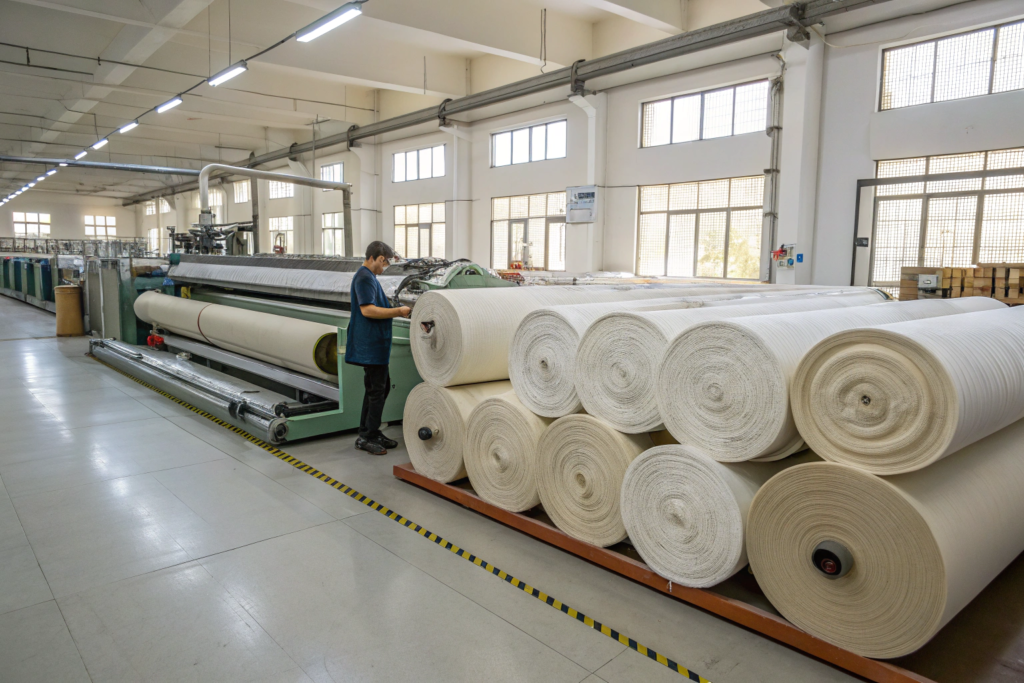
The MOQ exists because of three fixed cost barriers: the fabric mill’s minimum dye lot, the cutting room’s minimum lay, and the sewing line’s minimum setup time. For custom-dyed linen fabric, the mill requires about 300 meters per color. This yields roughly 250 to 300 pants, which is why 300 units per color is our standard MOQ.
If you order 50 pants, the mill still dyes 300 meters. The extra 250 meters of fabric is wasted unless someone else orders the same color. That cost has to go somewhere. Let me break down each barrier.
How Does the Fabric Mill’s Dye Lot Minimum Affect Your Order?
Linen fabric is dyed in large vats. A standard dye lot for a mid-weight 190gsm linen is 300 to 500 meters. The mill cannot dye 50 meters. The chemistry doesn’t work in small quantities. The color consistency suffers. The cost per meter skyrockets. If I order a custom color for you—say, a specific shade of sage green—I must order at least one full dye lot.
This is the single biggest driver of MOQ. If you choose a stock fabric color that we already have on our shelf, the MOQ drops immediately. We keep stock colors in natural flax, optic white, black, and a navy blue. For these colors, the fabric is already dyed and sitting in our warehouse. You can order as few as 100 pants in a stock color. The fabric cost is slightly higher per meter because I have to cut a smaller batch, but the dye lot barrier is gone. A client in Austin wanted a very specific terracotta color for her first order of 150 units. The mill MOQ was 300 meters. I suggested she choose our stock rust color instead, which was 90% close to her vision. She agreed. The MOQ was met. She launched on time. The following season, with proven sales, she ordered 500 units in her exact custom terracotta. The MOQ conversation is about timing and growth.
Why Can’t the Cutting Room Handle a 50-Unit Order Efficiently?
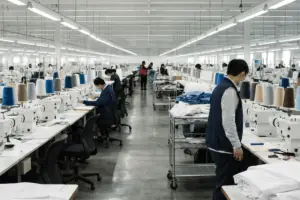
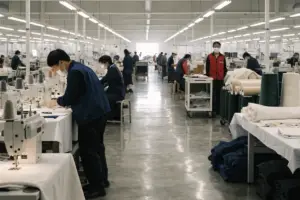
The cutting room spreads fabric in layers on a long table. An automatic cutter or a skilled hand cuts through the stack. This is called a "lay." A standard lay for linen is 50 to 80 layers thick. If you only need 50 pants, the cutter still has to spread the fabric, program the machine, and cut. The setup time is identical whether the lay has 10 layers or 70 layers. The labor cost per unit on a 10-layer lay is much higher.
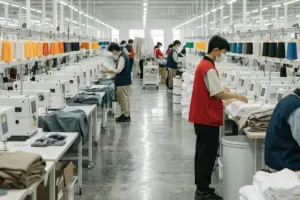
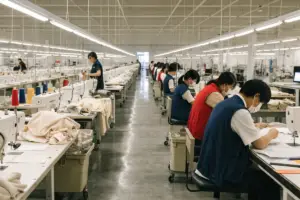
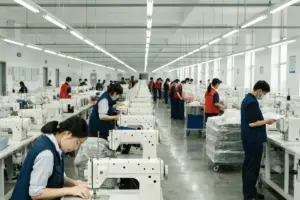
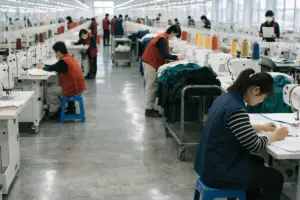
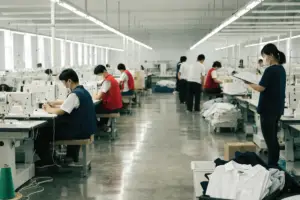
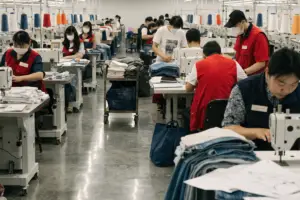
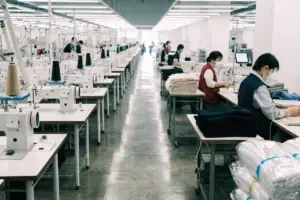
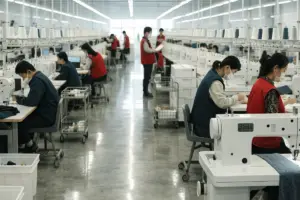
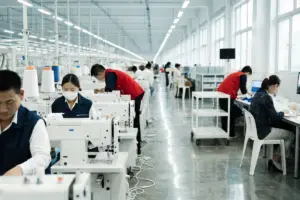
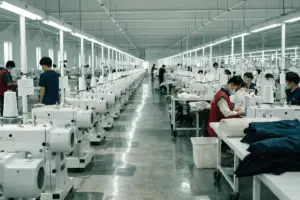
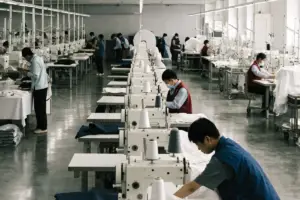
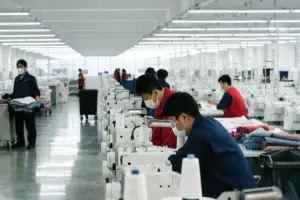
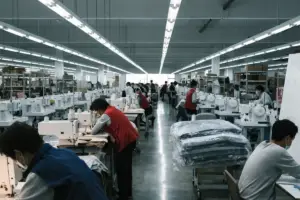
This is why a small order has a surcharge. The sewing line also has a setup cost. The mechanics adjust the machines for your specific thread, your specific seam type, and your specific pocket bag. This takes time. For 300 units, the setup time is spread across 300 garments. For 50 units, the setup time per garment is six times higher. The work is the same. The math is different. I explain this to every new brand owner. It is not a penalty for being small. It is the reality of industrial production. A shared production line at Shanghai Fumao allows us to batch smaller orders from different clients onto the same line, which reduces the setup cost. This is how we can offer more flexible MOQs than a factory that only runs single-brand, single-style production.
Can You Start with 100 Units for a Market Test?
I believe in market tests. You should not bet $30,000 on a pant you have never sold. A smart brand tests the market with a small batch. They sell it. They gather customer feedback on the fit, the color, the drape. They adjust. Then they scale. This is the lean startup model applied to fashion. A factory that refuses to support a market test is a factory that does not understand modern brands.
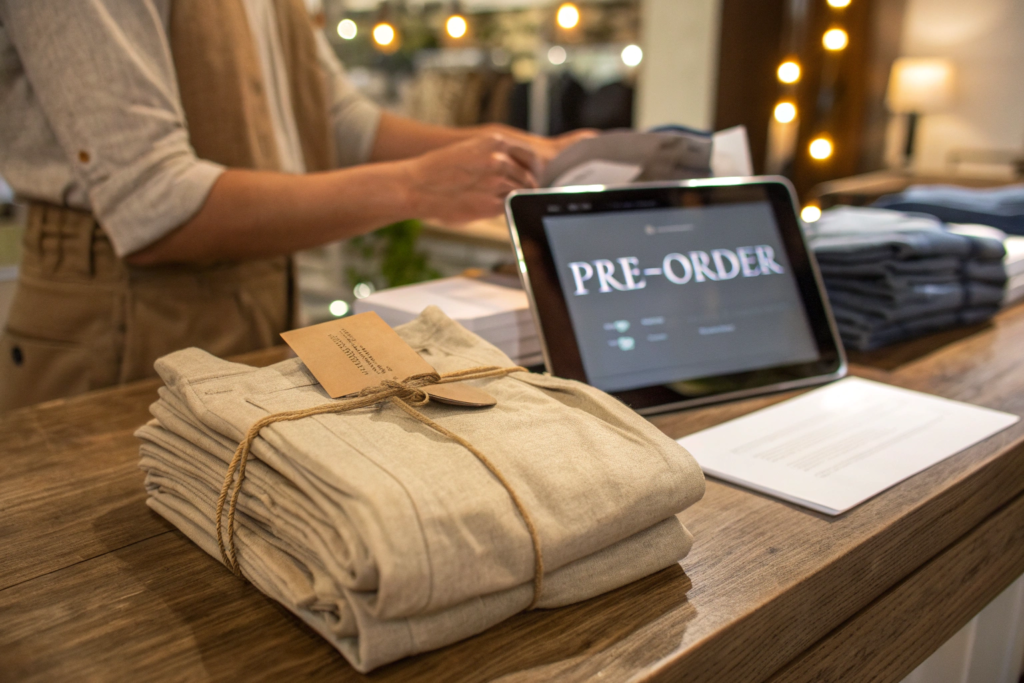
Yes, we offer a "First Batch Market Test" program with an MOQ of 100 to 200 units per style. The trade-off is a 15% to 20% surcharge on the FOB price per unit to cover the smaller fabric cutting and the dedicated sample development time. This allows a new brand to validate their design with real customers before committing to a full production run.
I have seen this program launch dozens of successful brands. It is a partnership model.
What Is the Cost Difference Between a 100-Unit Test and a 300-Unit Bulk Order?
Let me give you a real-world comparison. We will use a 190gsm washed linen wide-leg pant with an elastic waist and side pockets, stock color in natural flax.
| Order Quantity | Production Approach | FOB Cost Per Unit | Total Order Cost |
|---|---|---|---|
| 100 units | Market Test Program, shared cutting, small batch sewing | $12.50 | $1,250 |
| 300 units | Standard MOQ, dedicated cutting lay, bulk sewing | $9.80 | $2,940 |
| 500 units | Bulk production, automated spreading, full dye lot | $8.50 | $4,250 |
The 100-unit test costs 28% more per unit. But your total cash outlay is only $1,250, not $2,940 or $4,250. You can test the market with less than $2,000 in inventory cost. If the pant sells, you reorder at the 300-unit price. If it doesn’t sell, your loss is small. A brand in Vancouver used this program for her first order. She tested 120 pairs in two colors. The natural flax sold out in two weeks. The olive green moved slower. She reordered 400 natural and dropped the olive. Her second order was profitable. Her first order was a learning experience that cost her very little. This is smart business.
How Does the Sample Approval Process Work for a Small-Batch Order?
The sample process is the same whether you order 100 units or 10,000 units. You still get a pre-production sample. You still get to fit it on a model. You still get to approve the fabric and the trims. Quality does not scale down just because the quantity is small. I apply the same QC gates to a 100-unit order as I do to a 5,000-unit order. The only difference is the sampling fee.
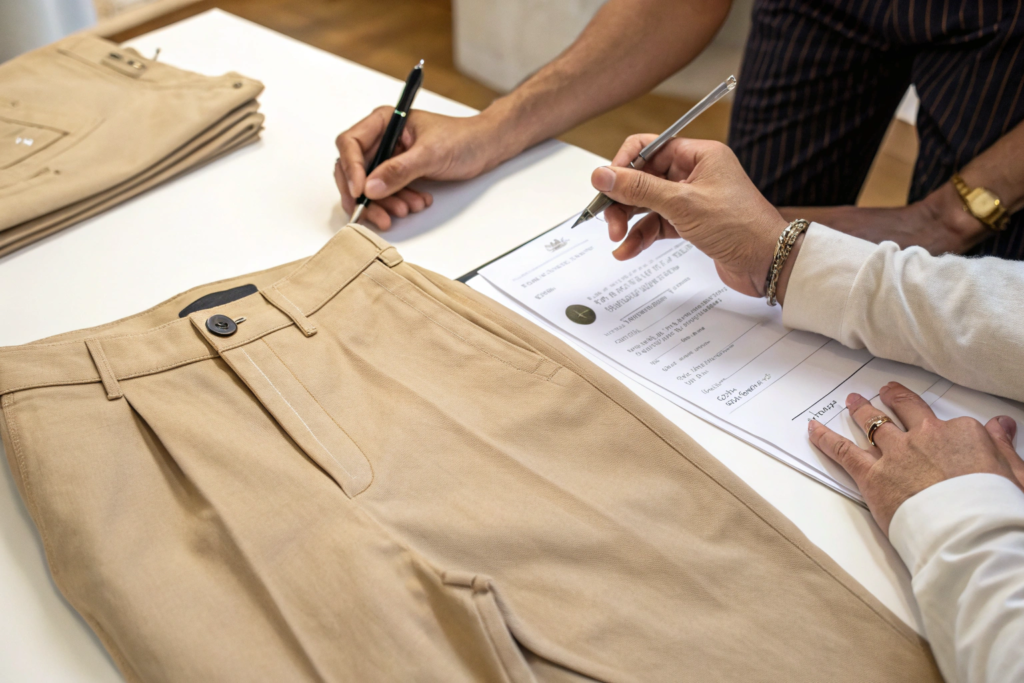
For a full bulk order, the sampling cost is absorbed into the production. For a 100-unit market test, I charge a small sampling fee of $150 to $250. This covers the pattern making, the fabric sourcing, and the sample sewing. If you proceed to a bulk reorder of 300 units or more, I credit the sampling fee back to your invoice. It is a deposit on our future relationship. A client in Miami paid $200 for her initial sample. She placed a 500-unit reorder two months later. The $200 was deducted from the final invoice. The sample was effectively free. I do this because I want to earn the long-term business. A market test is a first date. The sampling fee is a gesture of seriousness from both sides.
Can You Go Below 100 Units with a Stock-Fabric Program?
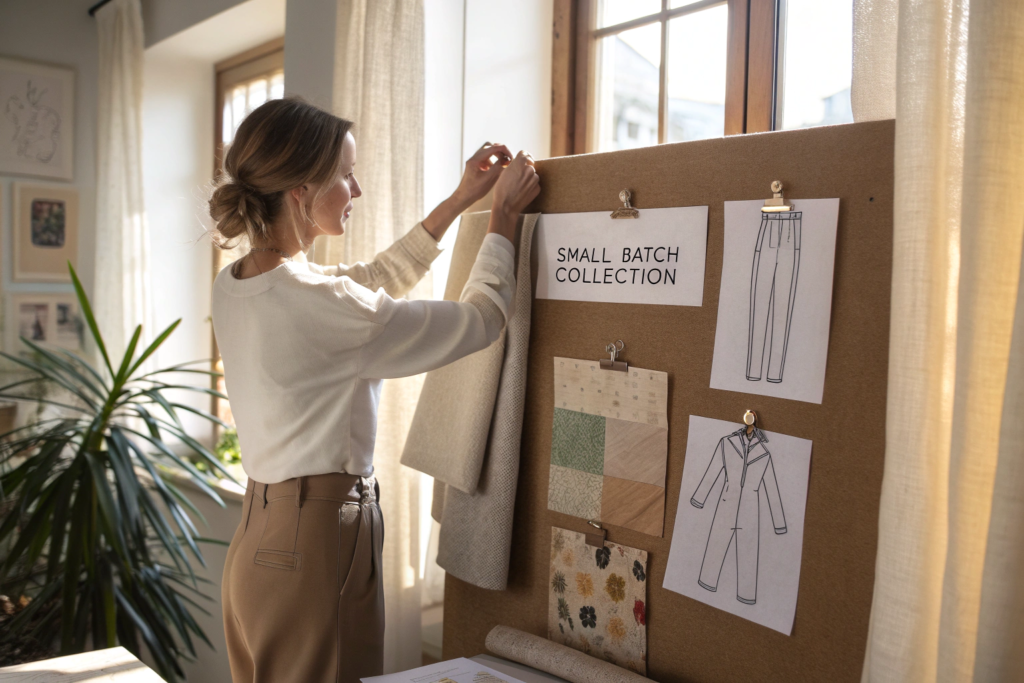
Sometimes you need even less. A capsule collection. An influencer collaboration. A limited drop of 50 pieces for a pop-up event. The standard MOQ still feels too high. I understand this. The modern fashion market moves in drops and exclusivity. Not every brand needs 300 units of one color. Some brands are built on scarcity.
We can go as low as 50 units per style by using our "In-Stock Linen" program. This program uses only the linen fabrics we keep in our warehouse—natural, white, black, and navy. You choose from these four colors. You cannot change the fabric weight. You can customize the silhouette, the waistband, the pocket details, and the labels. The MOQ is 50 units. The FOB cost is approximately 35% to 40% higher than the 300-unit bulk price.
This is a niche program. It is not for every brand. But for the right brand, it is a launchpad.
What Customizations Are Available on a 50-Unit Stock-Fabric Order?
You are limited in fabric, not in design. You can still design the entire pant silhouette. You can choose a wide-leg with a paper-bag waist. You can add side seam ties. You can spec a cropped length or a full length. You can design a custom woven label with your brand name. You can choose shell buttons or corozo buttons. You can add custom-printed hangtags.
What you cannot do is change the base fabric. The fabric is pre-shrunk, enzyme-washed, 190gsm linen in natural, white, black, or navy. This limitation is what makes the low MOQ possible. The fabric is already in our warehouse. The stock program is popular with small sustainable brands and influencer-led labels. They launch a "50-piece exclusive drop." They sell out in a weekend. They build a waitlist. They use the waitlist to fund a larger order. A brand in London did this last spring. She ordered 50 pairs of our stock natural linen with her custom high-waist design. She sold them in 48 hours to her Instagram followers. She collected emails from 200 people who missed out. She used those emails to pre-sell a 400-unit reorder. The 50-unit program was her proof of concept.
What Is the Trade-Off with a 50-Unit Order?
The trade-off is cost and exclusivity. The FOB cost is higher. The shipping cost per unit is higher because you are likely shipping by air courier, not sea freight. A 50-unit order by air to the US might add $4 per unit in freight. The total landed cost per pant might be $18 to $20. But if your brand sells exclusivity at an $80 to $100 retail price, the margin still works.
The other trade-off is the inability to restock the exact same product if it sells out, because the MOQ for a custom dye lot is still 300 units. If you sell out of your 50 natural linen pants, you can quickly reorder because the natural fabric is always in stock. But if you wanted a specific custom green for your next drop, you are back to the 300-unit MOQ. The stock program is best for a permanent core color or a one-time exclusive event. I advise my clients to use it strategically. Launch with a core color to build the brand. Then reinvest the profits into a custom-color bulk order. This is the stepping-stone path to a full collection. Shanghai Fumao can guide you through this journey because we have the flexibility to support both small and large orders.
How Do Fabric Choice and Design Complexity Affect MOQ?
The MOQ is not just about the number of pants. It is about the work inside each pant. A basic pull-on pant with an elastic waist and no pockets is a fast sew. A complex pant with a zipper fly, belt loops, double-welt back pockets, and a lined waistband is a slow sew. The slower the sew, the more the factory needs to justify the line setup. The style complexity directly influences the minimum quantity I can accept.
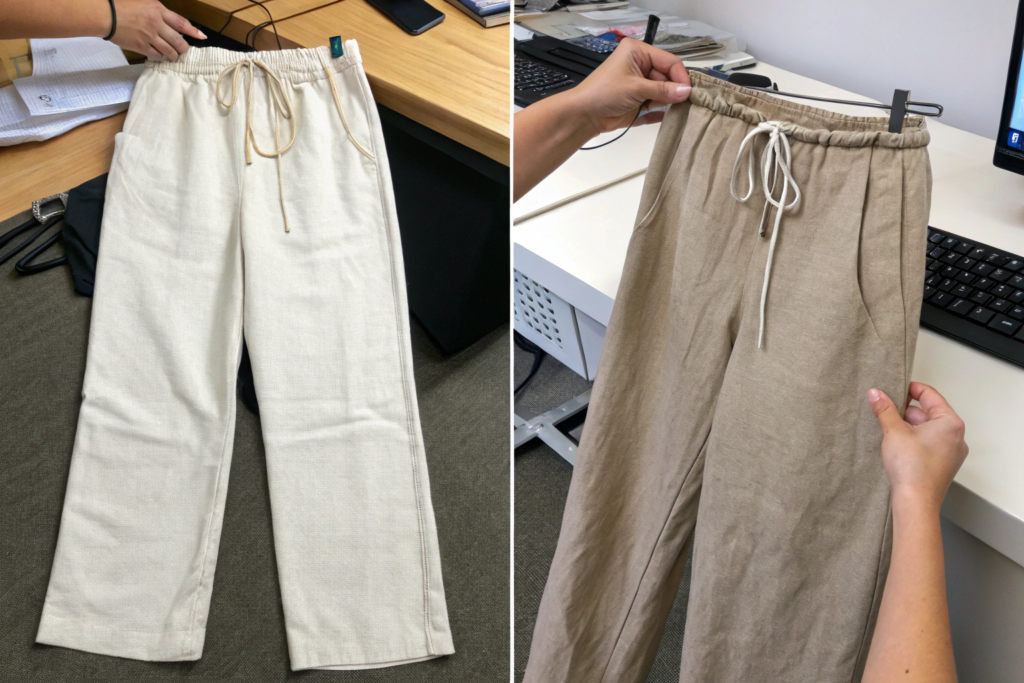
A simple linen wide-leg pant design with an elastic or drawstring waist can be produced at a lower MOQ, down to 100 units in a stock color. A complex design with a fly front, multiple pockets, and lining details requires our standard MOQ of 300 units or more. Every additional operation adds labor cost and setup time, which must be spread across a larger batch to be economically viable.
You can influence the MOQ with your design choices. Let me show you how.
Which Design Features Increase the MOQ?
Think of a pant as a series of operations. An elastic waistband is one operation: fold, stitch, insert elastic. A zipper fly is five operations: attach zipper to left fly, attach zipper to right fly, attach fly shield, topstitch fly, attach waistband facing. Each operation requires a different machine setting and a different skilled operator. The setup time multiplies.
| Design Feature | Complexity Level | MOQ Impact |
|---|---|---|
| Elastic waist, pull-on | Low | 100 units possible (stock fabric) |
| Drawstring waist | Low-Medium | 150 units possible |
| Basic slash pockets | Low | No MOQ increase |
| Zipper fly with button closure | High | 300 units minimum |
| Double-welt back pockets | High | 300 units minimum |
| Full lining | Medium | 250 units minimum |
| Multiple fabric panels or color-blocking | High | 400 units minimum |
A brand owner I work with in Chicago wanted a very complex design for her first order: zipper fly, belt loops, French-seam pockets, and a fully lined pant. Her order was 150 units. I told her the MOQ for that design was 300 units. Instead of walking away, we simplified. We swapped the zipper fly for a flat-front elastic waist with a faux fly stitch. We kept the French seams. We dropped the lining and upgraded the fabric to a heavier 210gsm linen that didn’t need lining. The pant still looked premium. The MOQ dropped to 150 units. She launched. The pants sold. The next season, with sales data, she ordered 500 units of her original complex design. The MOQ conversation is a design conversation. It is about what is essential to the brand identity and what can be adapted for the first run.
Can You Mix Colors to Meet the MOQ?
Yes, within limits. Our standard MOQ is 300 units per style per color. But we can sometimes mix two colors within the same style to reach the 300-unit total, especially if both colors use the same base fabric. For example, you can order 150 natural flax and 150 optic white. The total is 300 units. Both colors are our stock fabric. The MOQ is met.
You cannot easily mix a stock color and a custom dye color. The custom dye still requires its own 300-meter dye lot. The mixing flexibility works best within our in-stock color palette. A client in Austin mixed three colors on her first order: 100 natural, 100 white, and 100 navy. Total 300 units. We ran them on the same production line. The setup cost was shared. The per-unit price was the standard bulk rate. This is the smart way to meet the MOQ and still offer variety to your customers. I always recommend new brands launch with three core neutrals. It makes the MOQ math easy and gives the collection a cohesive look. You can add the fashion colors later when the volume justifies a dedicated dye lot.
Conclusion
The MOQ for high-quality linen wide-leg pants at Shanghai Fumao is not a brick wall. It is a set of options. The standard is 300 units per color for a custom-dyed linen pant at the best bulk price. The market test program lets you start at 100 to 200 units with a small surcharge. The stock-fabric program goes down to 50 units for a limited drop. And your design choices—simplicity versus complexity—directly influence the minimum quantity and the per-unit cost.
I built this flexible MOQ structure because I work with brands at every stage. I work with the Brooklyn startup testing her first design. I work with the established label ordering 5,000 units for a national retail rollout. Both deserve quality. Both deserve a fair price. The MOQ is just the number that makes the math work for that specific order.
If you have a design in mind and you are unsure where you fit in our MOQ structure, let’s talk. Contact our Business Director, Elaine, at elaine@fumaoclothing.com. Send her your design sketch or reference photo, your target quantity, and your preferred color. She will send you a personalized MOQ option and a transparent price breakdown within one business day. There is an MOQ that works for your brand. We will find it together.