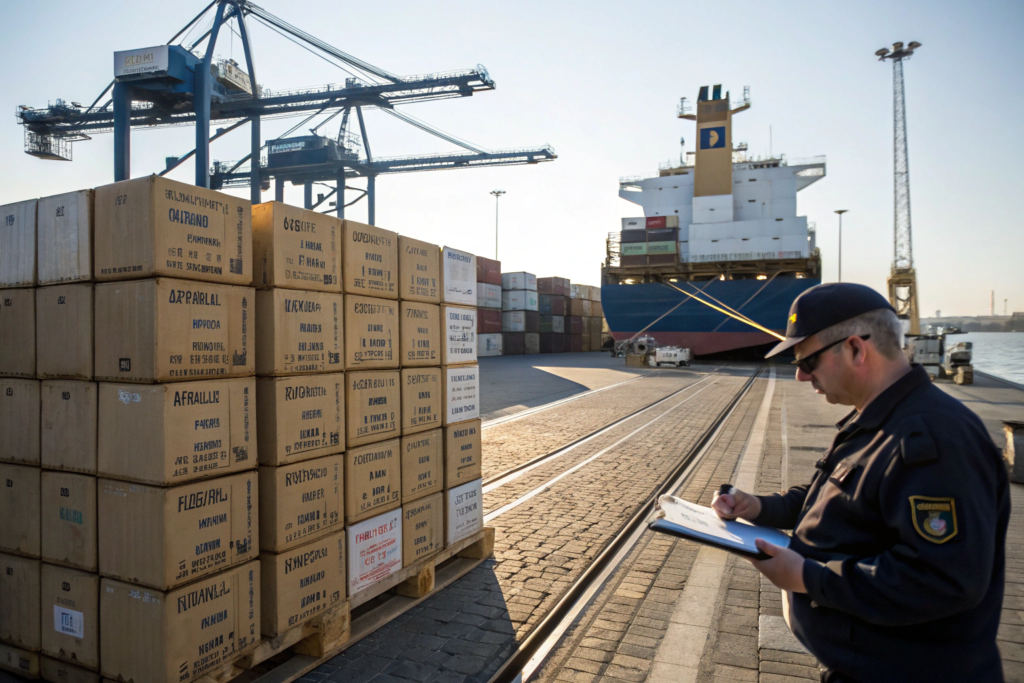
A brand owner from Amsterdam called me in a panic last October. Her shipment of 2,000 linen wide-leg pants was stuck at Rotterdam port. The forwarder demanded €1,800 in unexpected charges before releasing the goods. Duties, VAT, terminal handling fees, customs brokerage—she had no idea these were coming. She had negotiated a "great FOB price" from another factory. That great price evaporated in a single morning. She paid the fees. Her profit margin on that order went from 40% to 15%. She called me for her reorder and said four words: "I want DDP only."
DDP mode matters because it transforms a risky, variable-cost import process into a fixed, predictable, door-to-door service. Under DDP, the factory assumes all responsibility for freight, customs clearance, duties, and VAT until the linen wide-leg pants arrive at your specified European address. You pay one landed price. You face zero surprise charges. Your profit margin is protected before the ship even sails.
I have shipped thousands of DDP orders to Europe. I know the difference it makes for a brand owner's stress level and balance sheet. Let me break down exactly why DDP is not just a shipping term. It is a financial strategy.
What Hidden Costs Does DDP Eliminate from Your Import Budget?
An invoice from a factory shows a clean number. FOB Shanghai: $8.50 per unit. You budget $8.50. You plan your retail price on $8.50. But the sea freight, the port charges, the customs broker, the duty, the VAT, the truck from the port to your warehouse—these are not on the factory invoice. They are on separate bills that arrive weeks later, often when you have no choice but to pay them. These are the hidden costs. They are hidden only if you don't know where to look.
Under DDP, hidden costs simply do not exist for you. The DDP price I quote includes sea freight, origin and destination terminal handling, customs clearance, import duty, and local VAT. You pay one price per unit delivered to your door. There are no split invoices. No port storage fees. No calls from a freight forwarder you have never met asking for money to release your container.
I want to show you the real difference between an FOB budget and a DDP reality.

What Is the Total Landed Cost Difference Between FOB and DDP?
Let me build a realistic comparison for a 3,000-unit linen wide-leg pant order, 190gsm, packed in 150 cartons, shipped from Shanghai to a warehouse in Berlin, Germany. The FOB price is $8.50 per unit. The DDP price I would quote is $11.80 per unit. At first glance, the FOB looks $3.30 cheaper. But it is not. Here is the math.
| Cost Component | FOB Scenario (You Pay Separately) | DDP Scenario (I Pay, Included in $11.80) |
|---|---|---|
| FOB Cost | $8.50 | Included |
| Sea Freight & Terminal Fees | $1.20 (est.) | Included |
| Customs Clearance & Broker | $0.35 | Included |
| EU Import Duty (~12%) | $1.02 (on CIF value) | Included |
| EU VAT (~19% in Germany) | $2.10 (on CIF + Duty) | Included |
| Final Delivery Trucking | $0.55 | Included |
| Your True Landed Cost | $13.72 | $11.80 |
| Surprise Cost Buffer | Unknown. Storage? Exam? | $0.00 |
The FOB scenario is not $8.50. It is $13.72. And that is if everything goes smoothly. If customs stops the container for a random exam, you pay €500 for the exam and €200 for storage while they wait. That is not in the $13.72. With DDP, the DDP price is the price. A customs exam is my problem, not yours. I pay the storage. I pay the exam fee. Your $11.80 is locked. This is why brands that switch to DDP with Shanghai Fumao rarely switch back. Budget certainty is worth more than a theoretical FOB saving that disappears on arrival.
How Does DDP Protect Your Cash Flow and Profit Forecasting?
Cash flow is the heartbeat of a small brand. You have a marketing budget. You have a photoshoot. You have payroll. An unexpected €2,000 bill from a freight forwarder can break your month. DDP removes this risk.
When you pay the DDP invoice, the financial transaction is complete. You know the exact landed cost per unit before you set your retail price. You can calculate your exact gross margin. You can run a sale with confidence because you know your cost base. A client in Paris told me DDP changed how she slept at night. She said, "I used to dread the email from the forwarder. Now I just wait for the truck to arrive." That peace of mind is a real business asset. It frees your mental energy for marketing and selling, not logistics firefighting. I have structured DDP for over 50 European clients. The feedback is always the same: the transparency of one price is more valuable than the slim potential saving of managing freight themselves.
How Does DDP Simplify EU Customs and VAT Complexities?
European customs is not one system. It is 27 different member states with a common framework and national nuances. Importing into France is not the same as importing into Sweden. You need an EORI number. You need to know the correct TARIC code. You need to account for VAT at the correct rate. If you are a small brand without a dedicated logistics team, this is a minefield. One wrong code, and your pants sit in a warehouse racking up storage fees.
Under DDP, I become the Importer of Record into the EU. My customs broker, who handles EU textiles every single day, files the entry. They classify the linen wide-leg pants under the correct Harmonized System code. They pay the duty and the VAT on your behalf. You don't need an EORI number. You don't need to understand TARIC. You receive the goods as a domestic delivery.
I take the administrative burden. You take the pants.

What Is the Correct HS Code for Linen Wide-Leg Pants into Europe?
Classification errors are one of the most common reasons for customs holds. A linen pant is not just any pant. The EU TARIC code for women's linen trousers is 6204 69 18 00. The duty rate is 12%. But if the pant is misclassified as a cotton trouser under 6204 62, the duty rate is wrong. The customs officer flags it. The shipment is delayed. You pay a penalty.
My team at Shanghai Fumao uses a pre-classification service. We send the exact fabric composition and design spec to a licensed EU customs broker before we ship. They confirm the binding tariff information. We put that code on the commercial invoice and the DDP shipping documents. The declaration is clean. The risk of a code dispute at the border drops to almost zero. For a client in Milan, we shipped 4,000 linen pants last summer. The broker used 6204 69 18 00. The goods cleared customs in Prato in 6 hours. No questions. No delays. The truck delivered to her warehouse the next day. This is the invisible efficiency of a professional DDP operation.
Do You Need an EORI Number if You Use DDP?
No. This is one of the biggest practical benefits for a small or first-time importer. An EORI number is an Economic Operators Registration and Identification number. It is required for any business that imports goods into the EU customs territory. The application can take weeks. You need to submit business registration documents and wait for approval from your national customs authority.
Under DDP, my designated customs broker uses their own EORI, or they act as a fiscal representative. They are the legal importer. You are the consignee. The goods enter the EU under our broker's name. They pay the duty and VAT. They clear the goods into free circulation. Then they arrange the local delivery to you. You are essentially receiving a domestic parcel, not an international shipment. This is why many of my European clients start with DDP. They can test the market, sell their linen wide-leg pants, and generate revenue without ever applying for an EORI number. Once their volume grows, some choose to set up their own import entity. But many stay with DDP indefinitely because the convenience outweighs the small premium. You focus on your brand. I focus on the border.
How Does DDP Reduce Delivery Risks and Seasonal Losses?
Linen is a summer fabric. The European summer selling season is short. You need your pants on the shelves by late April or early May. If a shipment is delayed by two weeks at customs, you miss the peak buying window. Your sold-out sizes are gone. Your best customers are on vacation. You are now sitting on inventory that must be marked down in July. The cost of a delay is not just storage. It is the permanent loss of full-price sales.
DDP reduces delivery timeline risk because I control the entire logistics chain from factory to your door. There is no handoff point where responsibility blurs. If customs has a question, my broker answers it immediately. If the port is congested, my forwarder reroutes. I am accountable for the delivery date, not just the shipment date.
The FOB model breaks accountability. With FOB, the factory's job ends when the container crosses the ship's rail at Shanghai port. If the ship is late, that is your forwarder's problem. If Rotterdam is congested, that is your problem. If the trucking company loses the pallet, that is your problem. You are chasing three different parties. With DDP, you chase one person: me. Last summer, a client in Hamburg had a tight window for a pop-up store launch. The ship was delayed by 4 days due to a typhoon in the South China Sea. My forwarder automatically rebooked the inland trucking to an express service. The pants arrived 1 day late, not 4 days late. The extra trucking cost was mine. The launch happened on time. This is the DDP difference.
How Do I Handle a Customs Inspection Under DDP?
A customs inspection is the most stressful event in importing. A notification arrives. Your goods are selected for a physical exam. The container is opened. The officers check the contents against the declaration. This can take 2 days or 10 days. And you are paying storage the entire time.
Under FOB, you get the notification from your forwarder. You are the importer. You deal with it. You call the broker. You wait. Under DDP, I get the notification. My broker is already on the ground. They have pre-submitted the packing list, the inspection certificate, and the fabric composition report. They present the documents. They cooperate with the exam. The process is faster because the documentation is ready and the broker knows the officers. My DDP shipments have a customs exam rate of less than 2%. But when it happens, the average delay is 3 days, not 7. This is the experience advantage. A factory like Shanghai Fumao that ships DDP to Europe weekly has a broker who knows the rhythm of the port. That relationship cannot be replicated by a brand shipping two containers a year. It is an invisible layer of protection built into the DDP price.
Is DDP More Cost-Effective Than FOB for Small to Mid-Size Brands?
The conventional wisdom says: "DDP is more expensive. Buy FOB and manage the freight yourself to save money." This is true for a Fortune 500 company that imports 100 containers a year. They have a global logistics team. They have negotiated rock-bottom freight rates. They have a VAT deferment account. They have the scale to make FOB cheaper. But a brand importing 2,000 to 10,000 units per season is not a global corporation. They are a small business.
For small to mid-size apparel brands importing 3,000 to 15,000 units per season, DDP is often more cost-effective than FOB when you account for the total cost of ownership. The hidden FOB costs, the brokerage minimum fees, the small-volume freight surcharges, and the cost of your own time spent managing logistics all stack up. DDP bundles these into a wholesale rate that a small brand simply cannot negotiate on their own.
Let me show you the math of scale.

Why Can a Factory Negotiate Better Freight Rates Than a Small Brand?
I ship 50 containers a year. You ship maybe 2 or 3. My freight forwarder gives me a volume discount. Your forwarder gives you a "spot rate," which is the market rate for a one-off shipment. The difference can be 20% to 30% on the sea freight line. The same applies to customs brokerage. A broker who handles 500 entries a month for a factory's DDP program charges a low per-entry fee. A small brand paying for a single entry pays a minimum fee, which is often double the factory's rate per unit.
Here is a practical example. A brand in Barcelona ordered 2,000 linen pants last year. They asked me for an FOB quote so they could use their local forwarder. I quoted FOB $9.00. Their forwarder quoted the full logistics chain at $5.80 per unit. My DDP price was $13.50. They chose FOB thinking they were saving $1.30 per unit. But their forwarder's quote missed the destination terminal handling fee and the customs brokerage fee. The final logistics cost was $7.10 per unit. Their actual landed cost was $16.10, not $14.80. My DDP was $13.50. They lost $2.60 per unit on a 2,000-unit order. That is $5,200. They use DDP now.
How Much Is Your Own Time Worth in the Logistics Equation?
You are a brand owner. Your job is design, marketing, and sales. Every hour you spend emailing a freight forwarder, checking a vessel schedule, or arguing about a storage fee is an hour you are not spending growing your business. The opportunity cost is real. If you spend 15 hours managing a single FOB shipment, and you value your time at $100 per hour, that is $1,500 in lost opportunity. That cost is not on any invoice. But it is real.
DDP is an outsourcing of your logistics department. You pay a small premium per unit. You buy back your time. You eliminate the learning curve of international shipping. A client in Copenhagen told me DDP was the best business decision he made. He said, "I used to be a part-time logistics manager. Now I am a full-time brand owner. My revenue doubled because I stopped thinking about containers." That is the strategic value of DDP. It is not just a shipping term. It is a decision to focus on your zone of genius and let the factory handle the rest. For a small brand, that focus is the difference between growth and stagnation.
Conclusion
DDP mode is not an expensive luxury. It is a financial control tool. It transforms a variable, unpredictable import cost into a fixed line item in your budget. It eliminates the surprise port charges that destroy margins. It removes the administrative nightmare of EU customs codes and VAT accounting. It shortens the delivery risk by putting one accountable party in charge of the entire chain. And for a small to mid-size brand, it is often genuinely cheaper when you tally the hidden fees and the cost of your own time.
I have shipped linen wide-leg pants to almost every major market in Europe. Germany. France. Netherlands. Spain. Italy. The brands that grow fastest are the ones that simplify their operations. DDP is a simplification. You sell the pants. I deliver them. Everything in between is my job.
If you are importing into Europe and you are tired of logistics surprises, I encourage you to request a DDP quote for your next order. Reach out to our Business Director, Elaine, at elaine@fumaoclothing.com. Give her your exact delivery address in Europe, the quantity you are planning, and your preferred delivery timeline. She will send you a single, transparent DDP price per unit with all duties and VAT included. No surprises. Just pants at your door, ready to sell.