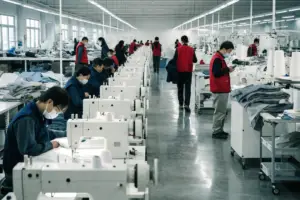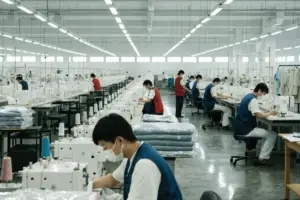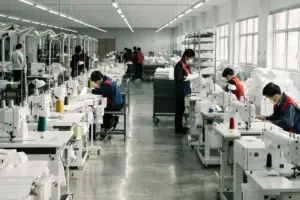
Two years ago, a brand owner in Chicago emailed me: "I want linen pants. Can you send a price?" That was his entire message. No style reference. No quantity. No fabric weight. I had to send him five follow-up questions. He got frustrated. I got frustrated. The quote took two weeks. We both lost time. The problem was not the factory. It was the communication. He didn’t know what I needed to give him a fast, accurate answer. And I didn’t guide him well enough at the start.
The most efficient way to communicate a custom linen pants order is to send a structured inquiry that includes a photo reference, your target quantity, your target FOB cost, and your deadline. From that first email, we move to a tech pack, a physical sample, and a dedicated project tracker. Clear inputs produce fast outputs. Vague inputs produce delays.
I have spent years refining how I talk to brand owners. I want to give you the exact communication roadmap that turns a "quote request" into a shipped order in the shortest possible time, with the fewest errors. This is about saving your season and my production line.
What Information Should Your First Inquiry Email Include?
The first email sets the speed for the entire project. I can spot a professional inquiry in five seconds. A professional inquiry gets a detailed reply in 24 hours. A vague inquiry goes into a slower queue because it requires a long back-and-forth to decode. This is not me being difficult. This is how manufacturing works. I cannot quote a price until I know what I am building, how many, and when.
A fast-track inquiry email needs five specific pieces of information: a reference image of the pant style, the target fabric weight or feel, the order quantity, the target FOB price or budget range, and the desired in-hands date. Sending these five things in your first message cuts the quotation time from two weeks to two days.
Let me break down each piece. This is the difference between "Can you make this?" and "I am ready to order."

Why Does a Reference Image Speed Up the Quote?
Words fail in fashion. You say "wide-leg." I imagine a 26-inch leg opening. You imagined a 22-inch leg opening. We are already misaligned. A photo fixes this instantly. Send a picture of a pant you like. It can be from a competitor’s website, a Pinterest board, or a sketch you drew on a napkin. I don’t care about the source. I care about the silhouette.
With a photo, I can estimate the construction. I see the waistband type. I see the pocket style. I see the hem finish. I can give you a ballpark FOB cost within an hour. A client from New York sent me three photos last month: one of the front, one of the back, one of a detail on the pocket. She wrote, "I want this exact silhouette but in a softer linen, no belt loops." I had a quote back to her in 6 hours. She placed the order two days later. That is the speed of visual communication. Text is slow. Images are fast.
What Is the "FOB Target" and Why Do You Need One?
FOB means Free On Board. It is the cost of the pants, packed and ready at the port in Shanghai. You should have a target cost in mind. Tell me. If you say, "I need this pant at a $9.00 FOB," I can tell you immediately if that is realistic for 100% linen with those trims. If it’s not, I can suggest a material substitution. Maybe a linen-cotton blend works. Maybe we simplify the pocket.
Without a target, I am throwing darts in the dark. I might quote a premium pant when you need a budget pant. Or I might quote a budget pant when you want luxury. This wastes time. A budget range is even better. "We are looking for something between $8.50 and $10.00 FOB." This tells me where to focus my sourcing energy. At Shanghai Fumao, I appreciate when a client is upfront about their margin needs. It lets me be a partner, not just a seller. I can engineer the pant to hit your number without sacrificing the look. That is what a good manufacturer does.
How Does the Tech Pack and Sample Process Work Efficiently?
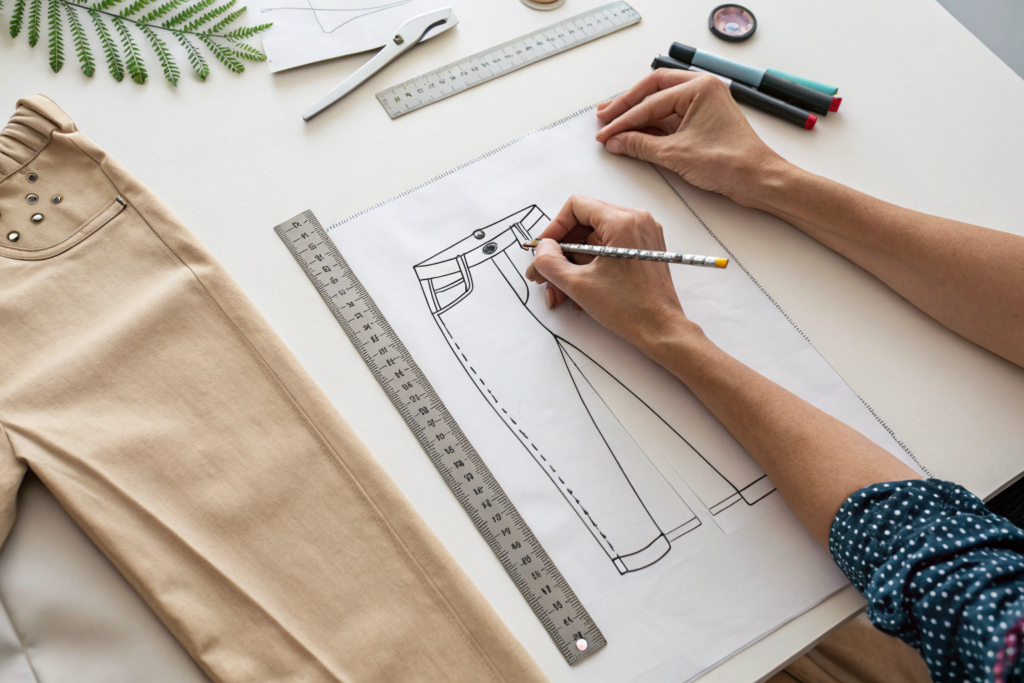
The initial quote was approved. Now we build the blueprint. This is the tech pack stage. A tech pack is a contract between your vision and my sewing line. A bad tech pack is a guess. A good tech pack is a guarantee. The sample we make from it is the physical proof. This stage is where communication either shines or breaks down. It is where emails get lost and assumptions get made.
We move from quote to sample with a hybrid process. You send us your initial design specs. We create a digital tech pack with all measurements, stitch details, and trim codes. You approve it. We make a pre-production sample. We ship it to you. You fit it on a live model. You send us one consolidated list of revisions with photos. We don’t play "email ping-pong" with ten small changes over two weeks.
Consolidation is the secret. Let me explain the system.
How Do You Give Effective Fit Feedback on a Sample?
You receive the sample. You put it on a fit model. You take photos: front, side, back. You look at the drape. You check the pocket placement. You sit down in the pant. Does the waistband gap? Does the seat pull? Now, instead of writing a long paragraph, you annotate the photos.
Draw an arrow. Write "Increase hip width by 1 inch." Take a close-up photo of the waistband with a ruler. Write "Waistband is 1.5 inches. Spec was 2 inches. Fix." This is visual, precise, and impossible to misinterpret. I had a client who sent a video of herself walking in the sample. She said, "See this pulling here? I want it to fall straight." I could see exactly what she meant. I showed the video to the pattern maker. We fixed it in one revision. Contrast this with an email that says, "The fit is weird around the top." I don’t know what "weird" means. I have to guess. We lose a week. Fit feedback must be visual and specific. A photo with a mark is worth a thousand words.
What Is a "Pre-Production Sample" and Why Is It the Final Check?
After we fix the fit issues, we make a new sample. This is the Pre-Production Sample, the PPS. This is the absolute final garment. It uses the exact bulk fabric, the exact bulk trims, the exact bulk thread color. It is the pant you will receive 3,000 times.
You must inspect this sample ruthlessly. This is the last chance to change anything without a cost penalty. Once you approve the PPS in writing, it becomes the "Golden Sample." It is sealed. It sits in my QC office. Every production unit is measured against this physical pant. Your approval email should be short and absolute. "I approve the PPS for Style LW-2026. Proceed with bulk production." No extra notes. No "just one more thing." If you have a change after this, it costs time and money. The Golden Sample is a communication lock. It says, "This is perfect. Repeat this." At Shanghai Fumao, I do not cut the bulk fabric until the PPS approval is in my inbox. This protects you and protects me from a miscommunication that could ruin 3,000 units.
How Do You Stay Updated During Mass Production?
The sample is approved. The fabric is cut. The sewing begins. Now you wait. And waiting in the dark is the worst part of overseas manufacturing. You don’t know if the pants are on track. You don’t know if there is a problem. Your launch date is approaching. The silence makes you nervous. That nervousness leads to anxious emails. Those emails interrupt the production manager’s focus. It is a bad cycle.
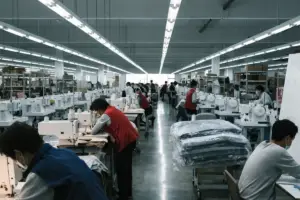
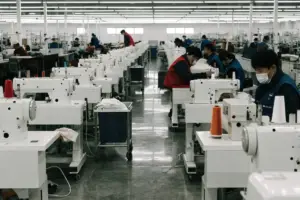
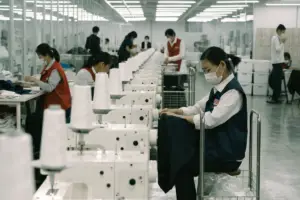
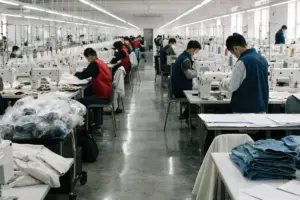
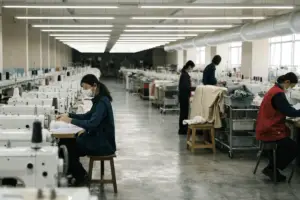
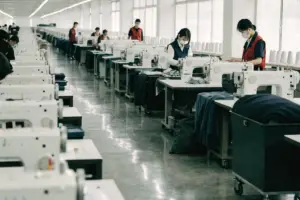
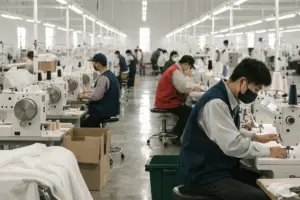
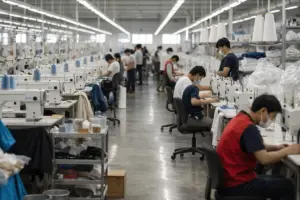
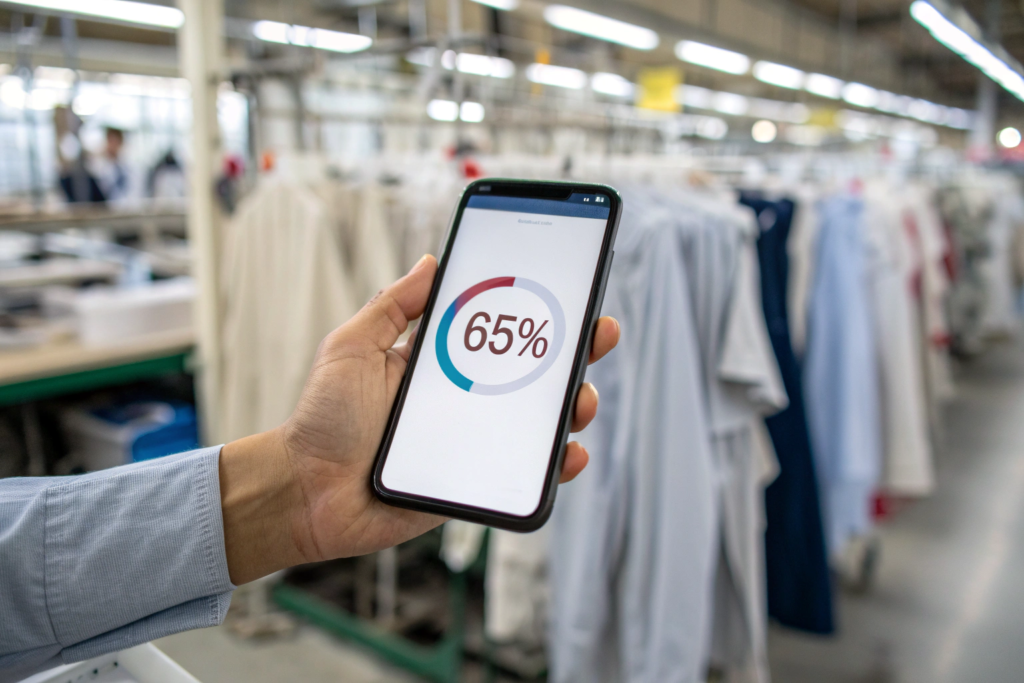
I break the silence with a weekly production tracker. Every Monday, you receive a simple PDF or a shared online sheet that shows the current status: cutting percentage complete, sewing percentage complete, finishing percentage complete, and the estimated ship date. I also send two to three unedited photos from the factory floor showing your pants in progress.
This takes me 10 minutes. It saves you hours of worry.
What Does the Weekly Production Photo Show You?
I ask my QC team to take specific photos. Not a staged, pretty marketing shot. A real, raw photo of your order on the line. It could be a stack of cut panels with your fabric clearly visible. It could be a row of half-finished pants on the sewing machines. It could be the finished pants on the pressing table.
A client in Florida told me these photos are the best part of her week. She said, "I can see the pocket. I can see the thread color is right. I can see the workers actually working on my order." This is psychological safety. It proves the order is real and moving. It also catches errors. In one photo, a client noticed the care label was the wrong color. She caught it in the photo. We fixed it the same day. The bulk was only 10% sewn. Without that photo, the entire order would have had the wrong label. The weekly photo is a free audit. It is a tool for you as much as it is a comfort for you.
How Do You Handle a Delay Communication Without Panic?
Delays happen. A fabric dye lot fails a shrinkage test. A key zipper trim is stuck in customs. I don’t hide this. I communicate it immediately. But I don’t just say, "We have a delay." I say, "The zipper trim is delayed by 3 days. Our ship date is now June 10 instead of June 7. We have shifted the pressing team to work overtime on June 9 to recover one day. I will update you on Tuesday."
This is a complete crisis communication. It states the problem. It states the new date. It states the recovery action. You don’t need to ask three follow-up questions. You have the information. A client from Los Angeles once thanked me for a delay email. He said every other factory just went silent when there was a problem. He had to chase them. He never chases me. This is my job. The production tracker is a tool for proactive honesty. It keeps your blood pressure low and your trust high.
How to Communicate Order Changes Before and During Production?
You had a brilliant idea in the shower. You want to add a side seam tie to the pant. Or you want to change the color of the buttons from tortoise to natural shell. The idea is great. But the timing is everything. A change before cutting is free. A change after cutting is expensive. A change after sewing is a disaster. The communication rule is simple: the earlier, the better.
All order changes must be communicated in writing via email, even if we discussed them on a call. A "Change Order" email with a clear subject line and a single, specific request prevents confusion. I confirm the cost and timeline impact in writing before the change is executed. Verbal changes are not changes until they are written down.
I run a factory, not a memory contest. Let me explain the timeline and the cost clock.

When Is a Change Free, and When Does It Cost Money?
Here is the cost of a change at each stage of a 3,000-unit linen wide-leg pant order.
| Production Stage | Example Change | Cost Impact |
|---|---|---|
| Pre-Cutting | Changing button color on the tech pack | Free. We buy different buttons. |
| Post-Cutting | Adding a side seam tie | Cost of tie fabric + labor for 3,000 units. Maybe $0.60/unit. |
| Post-Sewing | Shortening the hem by 1 inch | Unpicking and re-sewing. Labor cost doubles for that op. |
| Post-Packing | Changing the hangtag | Unpacking, retagging, repacking. Very expensive. Delay almost certain. |
I always tell my clients: "Live with the sample for 48 hours." Put it on a mannequin. Look at it in different lights. Sleep on it. Then send the single, final list of changes. A client in Nashville did exactly this. She sent one email with four changes. We priced them. She approved three and rejected one. It was clean, fast, and professional. The opposite is the "drip" client. One change Monday. Another Wednesday. Another Friday morning. Each change resets the tech pack. Each change risks a version control error. The "drip" is the enemy of efficiency. Consolidation is the cure.
How to Use a Video Call for a Mid-Production Decision?
Sometimes a photo is not enough. A color looks different on a phone screen. A fit adjustment is hard to describe in text. This is when you request a 5-minute video call. I am happy to do this. I take my phone to the production line. I show you the actual pants on an actual person. You say, "Yes, that drape is right," or "No, I need it softer." We decide in real-time.
The call is efficient because it replaces 15 emails. But the call must be followed by a written summary. After the call, send a brief email: "Per our call, confirmed we are changing the hem finish to a double-needle topstitch. No other changes. Please confirm receipt." I reply, "Confirmed." Now we have a record. The video call is the conversation. The email is the contract. This hybrid method is how we handle the gray areas of custom manufacturing. It is fast, human, and safe. At Shanghai Fumao, I encourage a video call at the PPS stage. It clarifies more in 10 minutes than a week of email threads. It is the most underused communication tool in sourcing.
Conclusion
Efficient communication is a system, not a personality trait. It starts with a structured first email that gives me the five things I need to quote. It continues with a tech pack process where you consolidate your fit feedback into one visual document. It is maintained during production with a weekly tracker that shows photos and percentages, not just empty words. It handles changes with a clear written process that respects the production clock. And it uses video calls for the complex moments that text cannot solve.
When you communicate this way, you are not a "client." You are a partner. You respect my production flow. I respect your brand deadline. The project moves fast. The pants arrive on time. The relationship lasts for years.
If you have a custom linen wide-leg pant in mind, I want to make it easy for you to start. Email our Business Director, Elaine, at elaine@fumaoclothing.com. In your email, just include the five things we talked about: a reference image, your target weight, your quantity, your FOB target, and your in-hands date. She will send you a structured quote template within one business day, and we can have a sample in your hands in under three weeks. Let’s communicate. Let’s build something that sells.