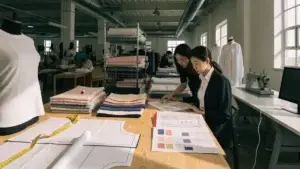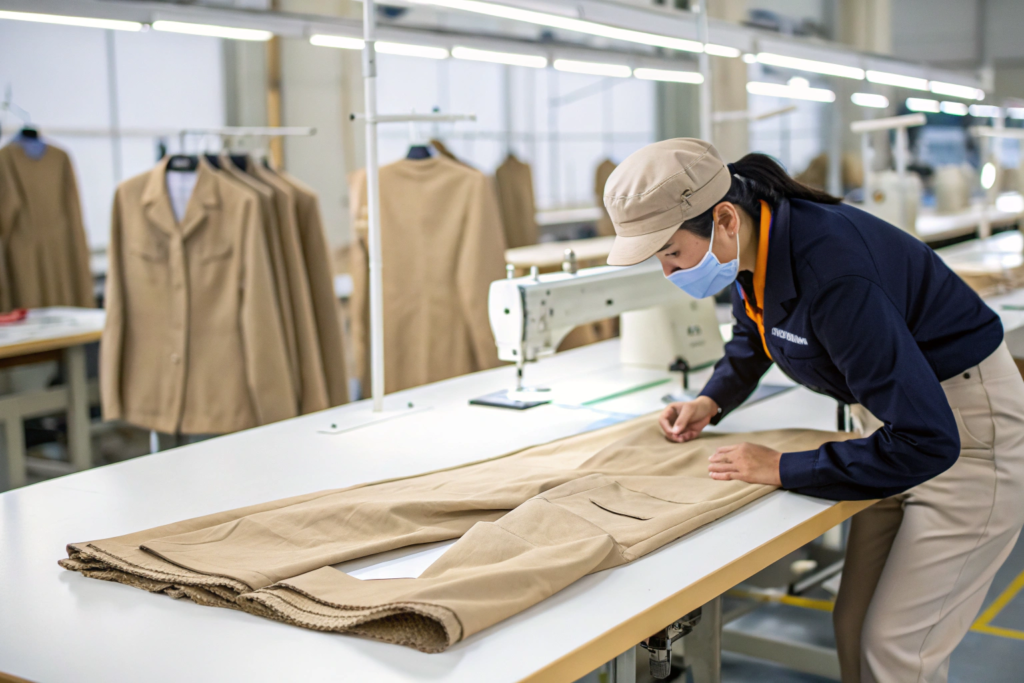
A client from San Francisco once told me he rejected an entire 3,000-unit linen pant shipment from a previous supplier. The first 100 pairs were flawless. The next 2,900 had inconsistent leg widths. Some were 23 inches wide at the hem. Some were 25 inches. The brand looked sloppy. He lost a department store account over half an inch of fabric. Quality control is not a checkpoint at the end of the line. It is a system that lives inside every step of production.
At Shanghai Fumao, we ensure quality on linen wide-leg pants through a four-gate inspection system that covers fabric testing before cutting, inline checks during sewing, a rigorous AQL 2.5 final audit, and a pre-shipment safety verification. Linen is a living fabric. It shifts. It slubs. It relaxes. Our QC system is built specifically to manage this natural movement so every pair that ships matches your approved sample.
I am not going to talk about "quality" in vague marketing terms. I am going to show you the exact moments where a bad pant gets caught and a good pant gets approved.
What Happens Before Cutting Begins for Your Linen Fabric?
Quality control starts before the fabric hits the cutting table. A sewing machine cannot fix bad fabric. A skilled tailor cannot sew a weak yarn into a strong pant. The decisions made in the fabric warehouse determine 60% of the final quality. If the fabric is wrong, the pants are wrong. No second chance.
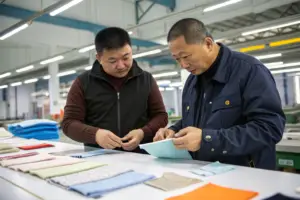
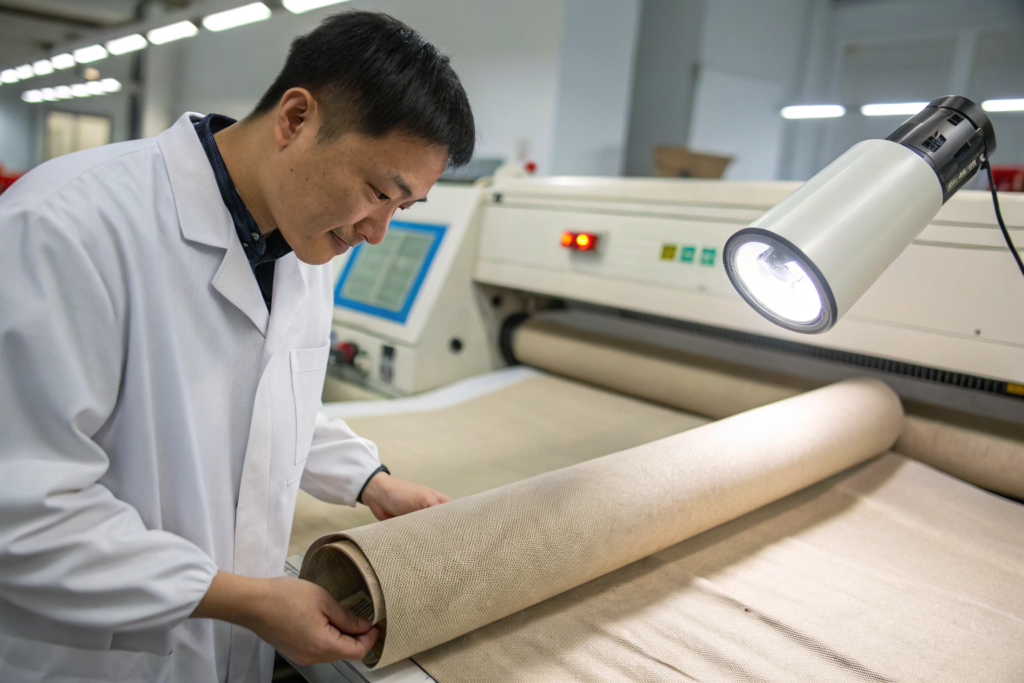
Our pre-production quality gate inspects 100% of the linen fabric rolls that arrive from the mill. We check the actual weight against the spec, shade continuity across the dye lot, and visual defects on a backlit inspection table. We also cut a header from each roll and send it for a shrinkage and colorfastness test before we cut a single pant panel.
This is slow work. It costs us about 2 hours per roll. But it saves weeks of rework later. Let me explain the two critical tests.
How Do We Catch Shrinkage Problems Before They Become Your Problem?
Linen shrinks naturally. A cotton blend shrinks predictably. The question is never if the fabric will shrink. The question is how much. Your size chart depends on this number. If the fabric shrinks 5% and we made the pants to the exact body measurement, the pants arrive 5% too small. They don't fit your customer. They get returned.
We cut a 50cm by 50cm square from the header of every fabric roll. We mark it. We put it through a standard industrial wash and dry cycle. We measure it again. If the shrinkage is 3% in the warp direction, our pattern maker adds 3% length to the pattern. The finished pant, after your customer washes it at home, will measure exactly what the size label says. This is called a "shrinkage allowance." We record this data per dye lot. A natural flax color from Batch A might shrink differently than an indigo-dyed Batch B. The dye process affects the fiber tension. We don't assume. We test. Last month, a new mill batch showed a 4.5% shrinkage instead of the usual 2.8%. We adjusted the pattern. The pants shipped perfect. The client never knew the fabric was different. This is what your factory should do in silence.
What Is a Shade Band Review and Why Does It Matter for Bulk?
Linen absorbs dye in a unique way. The slubs take color differently than the smooth yarns. This is beautiful. It gives linen its character. But you cannot have one pant leg that is noticeably darker than the other. Or one box of pants that looks like a different season from another box.
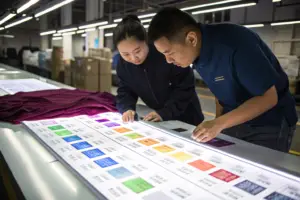
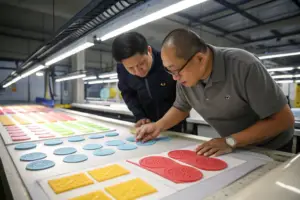
We create a shade band for your order. This is a strip of fabric with five accepted shades: the target color, two slightly lighter, and two slightly darker. The master cutter checks every roll against this band under a light box that simulates daylight, D65 lighting. If a roll falls outside the accepted range, we set it aside. We use it for cutting pocket bags or internal waistband linings, not main body panels. This keeps the visible pant parts consistent. I remember a brand from New York that ordered a deep terracotta color. The shade band saved 15% of the fabric from being used incorrectly. That fabric became the inner waistband. The client received 3,000 pants with perfectly matched legs. She said it was the most consistent color she had ever received from an overseas factory. That is the standard.
How Does Inline Inspection Catch Defects During Sewing?
The cutting room released good panels. The fabric is ready. Now the sewing begins. A pant has 40 separate operations from first seam to final press. An error at operation 7, like a misaligned pocket, will not be seen again until operation 38 when the pant is turned inside out. That is too late. You cannot fix a pocket buried inside a finished garment without ripping seams. Inline inspection catches the error at operation 8.
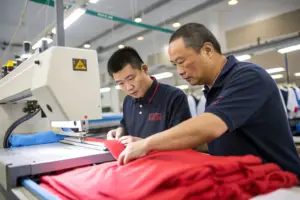
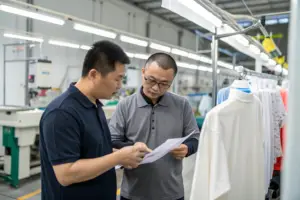
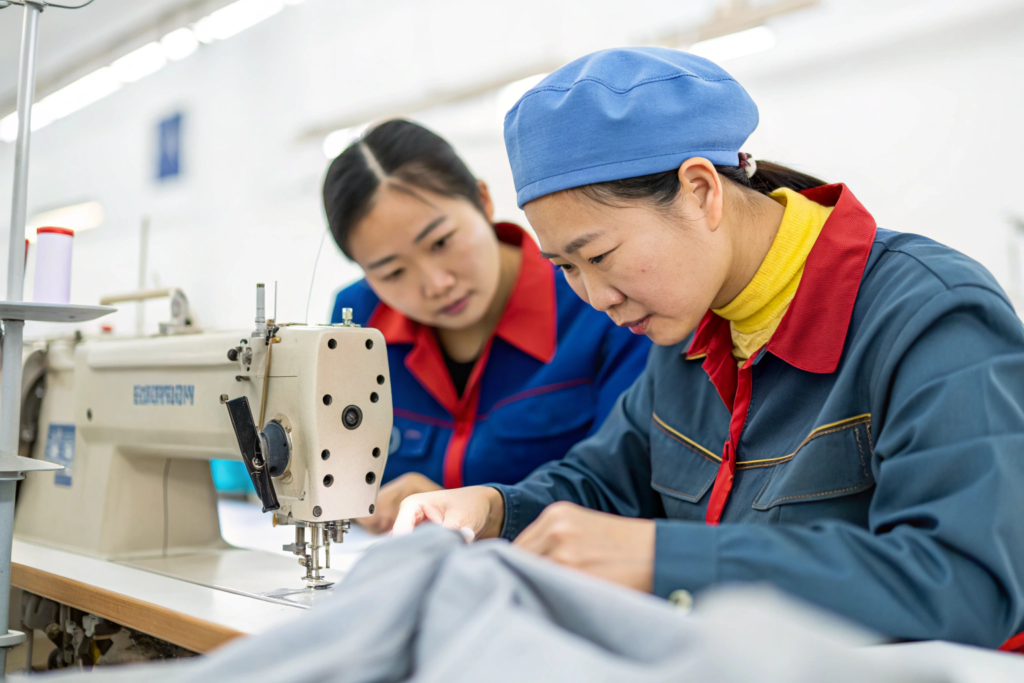
Our inline QC team works on the production floor, not in a separate room. They patrol the sewing lines and pull random units at three critical construction points: after pocket attachment, after the rise and crotch seam join, and after the waistband finish. They measure, compare to the sealed sample, and stop the line if a systemic error appears.
This is the heart of our quality system. It is proactive, not reactive. Here is how we break down the sewing line checkpoints.
What Does the First Inline Check After Pocket Attachment Verify?
The first inline check happens right after the side pockets and back pockets are attached. Pockets are a high-risk area on wide-leg pants. The loose fit of the pant means pocket bags can bunch or twist if they are sewn with too much tension or the wrong alignment.
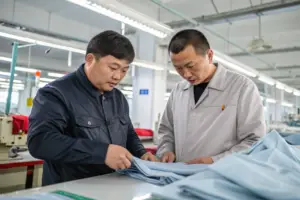
The inline inspector pulls 10 pants from the 50 just finished at this station. They turn the pants inside out. They measure the pocket bag depth on both sides. They check that the bartack reinforcement at the pocket opening corners is present and the correct length. A missing bartack will cause a pocket to rip open after two uses. They also feel the pocket fabric. We use a soft cotton voile for pocket bags. If the sewing machine tension is too high, the pocket bag becomes stiff and puckered. The inspector flags this. They call the mechanic. The mechanic adjusts the thread tension on the spot. The 10 pants with the tight pocket get reworked immediately. We don't wait for the final audit. I estimate this single inline check prevents 60% of pocket-related returns. A returned pant costs you a customer. A fixed pocket costs us 30 seconds.
How Do We Check the Rise Seam and Waistband Consistency?
The second inline gate is at the center of the pant construction. The rise seam, the crotch point, and the waistband attachment are all joined here. This is where the fit is built. If the crotch seam is sewn with even a 1mm variance from the spec, the pant will pull or twist when worn.
The inspector uses a jig. We have a clear plastic template cut to the exact curve of your approved rise seam. The inspector places the template on the half-finished pant. If the seam matches the curve, it passes. If it doesn't, the operator is immediately retrained. This is not a subjective judgment. It is a pass/fail against a physical standard. For the waistband, we check the stretch. A linen waistband must be interfaced with a soft, flexible fusing that does not bubble. The inspector folds the waistband. It must recover its shape instantly. If the interfacing is delaminating, we reject the whole batch of interfacing and quarantine the affected units. A brand owner from Chicago told me this specific waistband check is why his linen pants don't wrinkle at the waist after a day of sitting. The fusing quality matters. The inline check guarantees it.
How Does the Final AQL 2.5 Audit Work Before Packing?
The pants are sewn. They are pressed. They look like your product. This is the moment of truth before the polybag. The final inspection is a formal, statistical audit. It is not a casual glance. It follows an internationally recognized standard. The goal is not to find every single defect. The goal is to decide if the entire batch is acceptable to ship.
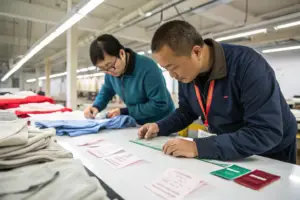
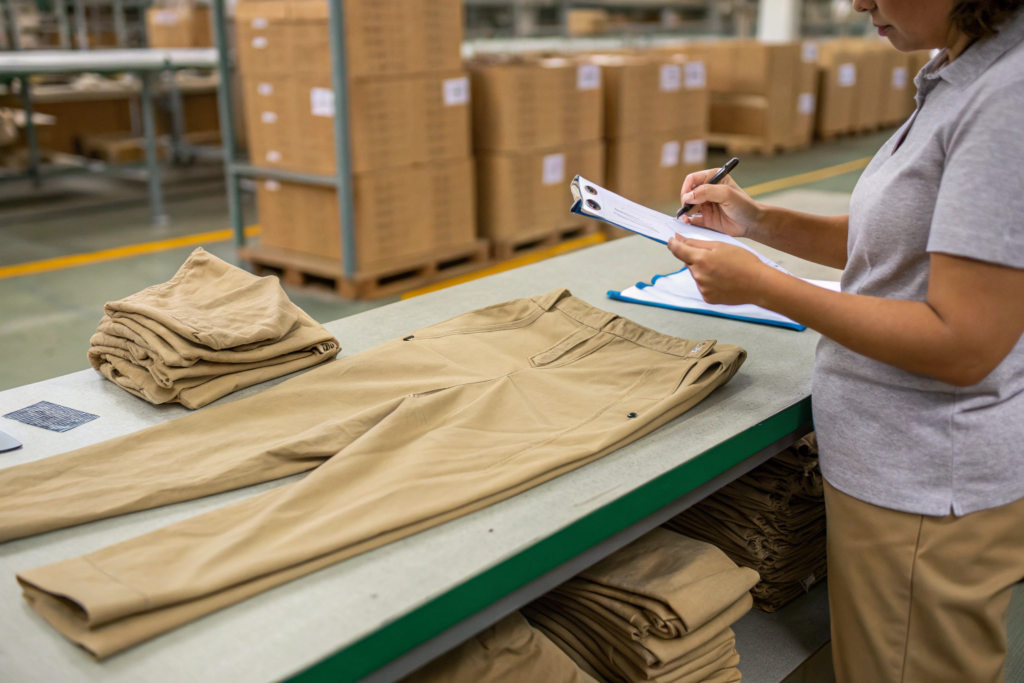
We conduct a final AQL 2.5 Level II random inspection on every production lot. This means if you order 3,200 pairs of linen wide-leg pants, we pull 200 random pairs from the packed cartons. We inspect each one for visual defects, measurement tolerance, and functional issues like zipper operation. The batch passes only if the number of major defects found is at or below the acceptable limit.
The math is strict. AQL 2.5 means we accept a maximum of 10 major defects in a sample of 200 units. A "major" defect is one that makes the pant unsellable or likely to be returned. A broken seam is a major defect. A missing size label is a major defect. A color shade that falls outside the approved shade band is a major defect. If we find 11, the entire batch fails. It does not ship. We re-inspect 100% of the batch. This is painful for us. It delays the shipment. It costs labor. But it is non-negotiable.
What Defects Are Classified as Critical vs. Major in This Audit?
This is a table we train every inspector on. It separates emotion from fact.
| Defect Type | Classification | Example on Linen Wide-Leg Pants | Action |
|---|---|---|---|
| Critical | Zero tolerance | Exposed sharp pin inside seam, mold on fabric, wrong care label content | Immediate line stop, 100% inspection |
| Major | AQL 2.5 limit applies | Seam opening over 1 inch, color shade outside band, zipper failure, stain over 5mm | Batch passes/fails based on AQL count |
| Minor | AQL 4.0 limit applies | Loose thread not cut, slight puckering, slub thicker than surrounding area | Passes with note, continuous improvement |
A critical defect is a safety hazard or a legal liability. I have found a broken needle tip inside a pant once in my career. That was 15 years ago. It shut down the line for a full day. We metal-detected every single pant in the shipment. Now, we use metal detectors at the end of every sewing machine as a standard practice. The needle detection protocol is mandatory. Critical defects cannot happen. The system is built to make them impossible.
How Do We Verify Measurements Against Your Spec Sheet?
The inspector takes the approved spec sheet—the one you signed—and measures the 200 sample pants. We check the waist circumference, the hip width, the front rise, the inseam, and the leg opening. The tolerance is +/- 1cm for the waist and +/- 1.5cm for the leg opening.
Linen has a relaxed nature. It can stretch slightly on the table. Our inspectors are trained to lay the pant flat without pulling the fabric taut. The measurement must be a "relaxed lay" measurement. This matches how a customer would measure the pant at home. If a batch consistently measures at the low end or the high end of the tolerance, we don't just ship it. We investigate. Maybe the cutting knife was angled. Maybe the fusing shrank during pressing. We find the cause. We fix it. A measurement audit is a health check on the entire production line. For a client in Miami, we caught a 1.5cm discrepancy in the inseam of 800 pants before packing. The pressing station was pulling the legs too aggressively. We re-pressed the batch. The inseam returned to spec. The client received a perfect shipment. He never saw the error because the system caught it.
What Additional Safety and Compliance Checks Protect Your Shipment?
Your pants can be beautiful. They can measure perfectly. But if a metal fragment from a broken needle is inside the waistband, you have a product recall on your hands. A safety recall will bankrupt a small brand. The final gate before packing is not about aesthetics. It is about liability. It is about your customer's physical safety and your legal protection.
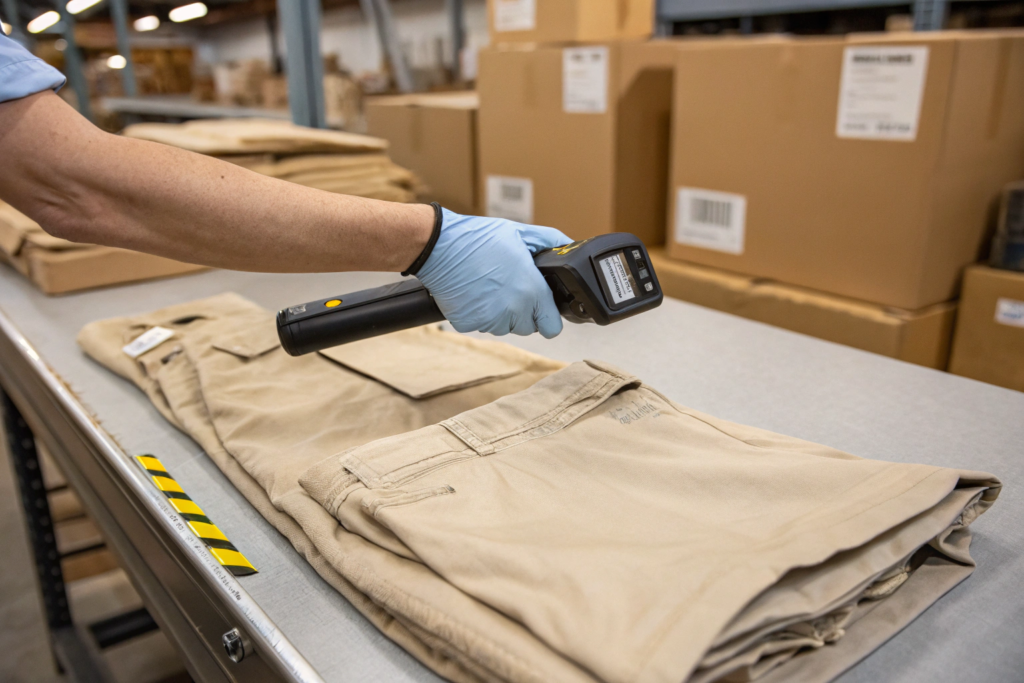
Every single linen wide-leg pant from Shanghai Fumao passes through a conveyorized metal detector after final pressing. This machine finds any broken needle tips, pins, or metal shavings. We then check random cartons for the correct labeling, the right polybag suffocation warning, and the exact product mix that matches your packing list. Safety compliance is the last word before the box is sealed.
This is the quiet, unglamorous work. It matters more than any fashion detail.
Why Is a Metal Detector a Mandatory Final Step?
Garment factories use industrial sewing machines that run at 5,000 stitches per minute. Needles break. It is a normal part of production. When a needle breaks, the operator must stop, find all the pieces, and log the incident. But a fragment can hide. It can sit inside a thick seam or a folded hem.
Our metal detector re-scans the pant as a whole. If the machine beeps, the pant is quarantined. A trained worker locates the metal fragment with a handheld wand. They extract it. They record the event. The pant is re-scanned. We don't guess. We verify. For children's wear, the safety standard is even stricter. For adult linen wide-leg pants, we apply the same discipline. A sharp metal fragment in an adult pant will cause injury. It will cause a lawsuit. I remember a recall notice from a major global brand a few years ago. A needle tip was found in a pair of trousers. The recall cost them millions. Our detectors cost a few thousand dollars. The operational cost is a few seconds per pant. The risk reduction is absolute. This is how we ensure you sleep well at night.
How Do We Verify Carton Accuracy Before Sealing?
The packing list says Carton #12 has Size Medium in Natural color. If the warehouse puts Size Large in Indigo instead, you have a fulfillment mess. Your 3PL charges you a mis-sorting fee. Your direct-to-consumer order ships the wrong item. You get a chargeback.
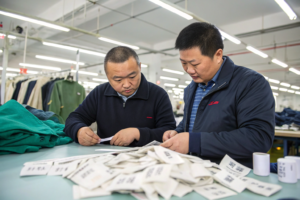
Our packing QC team pulls random cartons after the container load is built. They open the carton. They scan the barcode. They open the polybag inside and physically check the size label and the color. This is a triple check: carton mark, polybag sticker, garment care label. All three must match the packing list exactly. For a recent order of 8,000 pants to a brand in Toronto, the packing audit caught a mislabel issue. The factory label said "Natural" but the pant was "Cream." The colors were very close. The warehouse picker had confused the two shade labels. We re-checked the entire pallet. We found 4 mis-sorted cartons out of 160. We fixed it. The client's fulfillment center received a 100% accurate shipment. This final check is a 1-hour process. It prevents a week-long headache for you. It is an essential part of our QC definition. Quality is not just the pant. It is the entire transaction, ending at your warehouse door.
Conclusion
Quality control for linen wide-leg pants is a chain of small, deliberate acts. It starts with a fabric header cut and a washing machine in a lab. It continues with an inspector on the sewing floor who checks a pocket bag at the moment it is sewn. It formalizes in a final audit where 200 pants are measured against your signed spec. And it ends with a metal detector beeping silent and a carton check that confirms the size and color inside.
None of these steps are magic. They are discipline. They are the result of knowing that linen moves, shrinks, and slubs. You can't control the fiber, but you can control the process. A factory that does this work consistently is not a supplier. It is a partner in your brand's reputation.
This is the system I have built at Shanghai Fumao. It is the reason our clients reorder season after season. They know the pants will fit. They know the shipment will be clean and safe. They know there will be no surprises.
If you want a factory that treats your linen wide-leg pants with this level of care, let's start the conversation. Our Business Director, Elaine, can arrange a video walkthrough of our QC process live from the factory floor. Reach her at elaine@fumaoclothing.com. She can also send you a blank copy of our AQL inspection report and our fabric test sheet so you can see exactly what you will receive with your order. Quality is a promise. We put ours in writing.