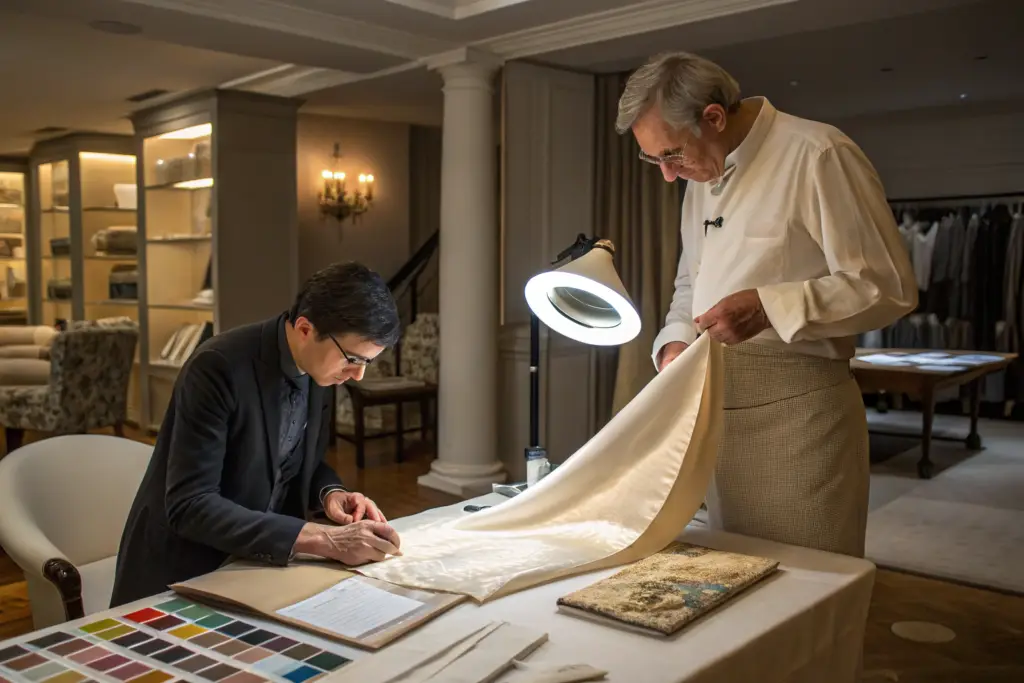
I once witnessed a luxury brand owner in a state of quiet devastation. She had sourced a breathtaking, hand-painted silk charmeuse from a small Italian mill. It cost $38 per meter. She entrusted it to a factory that primarily produced mid-market cotton basics. The factory’s cutting team laid the silk on a standard, high-speed spreading machine. The tension pulled the delicate, slippery warp threads. The laser guide heated the selvedge. The fabric puckered. The hand-painted panels distorted. By the time the cutting was finished, $12,000 worth of fabric was ruined. The factory was not malicious. They were simply ignorant. They did not know that silk charmeuse requires a relaxed, tension-free spreading table, a specific needle plate, and a cooled cutting blade. They had killed the fabric.
A factory with highly specialized fabric knowledge is crucial for luxury apparel brands because luxury fabric is not just expensive. It is alive, reactive, and unforgiving. A premium fabric like cashmere, silk organza, or embroidered tulle has a memory, a directional nap, a specific heat tolerance, and a shrink rate that cheap, industrial materials do not share. A specialist factory knows that you cannot cut a napped fabric without a one-way marker. They know that silk must rest in a humidity-controlled room for 24 hours before spreading. They know that cashmere requires a specific needle gauge to prevent "needle cutting" and visible seam holes. This knowledge is not written in any tech pack. It is stored in the hands and minds of experienced craftspeople. Without it, the factory will unknowingly destroy the very qualities that make the fabric luxurious. The luxury is in the fabric. The factory’s job is to protect it.
A luxury brand’s reputation is built on the sensorial experience of the final garment. The way a cashmere coat feels against the skin. The way a silk dress moves with the body. That experience is created by the fabric. If the factory’s ignorance damages the fabric, the luxury is lost. I want to share exactly what specialized fabric knowledge looks like in practice, and how Shanghai Fumao’s team protects the precious materials our luxury brand partners entrust to us.
How Does an Expert Factory’s “Fabric Memory” Prevent Irreversible Damage During the Cutting and Spreading Stage?
I have seen a factory cut a delicate wool-cashmere coating using the same high-speed straight knife they used for denim. The friction of the blade generated heat. The heat melted the fine cashmere fibers, sealing the cut edge into a hard, plastic-like crust. The fabric’s natural drape was destroyed at the seam. The brand had to scrap the cut panels. The factory owner told me he had "cut fabric for 20 years" and had never seen that happen. He had cut denim and cotton twill for 20 years. He had never cut fine cashmere. His 20 years of experience were in a different material universe.
Specialized fabric knowledge prevents cutting-stage damage by matching the cutting method, the blade type, and the spreading tension to the specific properties of the luxury fabric. Delicate, open-weave fabrics like bouclé or loose-gauge cashmere cannot be cut with a high-speed reciprocating blade. The vibration alone will fray the cut edge. They require a precise, slow-speed band knife or a hand-shearing technique. Napped fabrics like velvet or fine wool coating require a one-way cutting layout, where every pattern piece is oriented in the same direction relative to the nap. If a piece is cut upside down, the light catches the fibers differently, and the finished garment will appear to have mismatched color panels. Stretchy, unstable fabrics like silk charmeuse or viscose crepe require a relaxed spreading process, often with a pin-table, where the fabric is not pulled under tension but is allowed to rest in its natural, relaxed state. The specialist factory knows which fabrics demand which process. The generic factory applies the same process to everything.
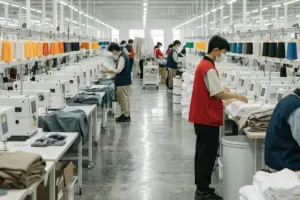
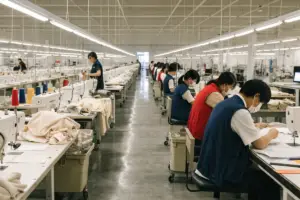
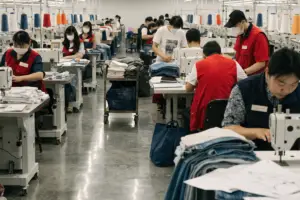
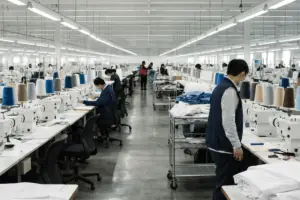
The cutting room is where a luxury fabric is most vulnerable. It has traveled from the mill, often across the world, and is about to be disassembled into pieces. The specialist factory’s cutting room is not a production line. It is a surgery. The fabric is the patient.
Why Does a One-Way Marker Layout for Napped Fabrics Prevent a Shimmering, Two-Tone Garment?
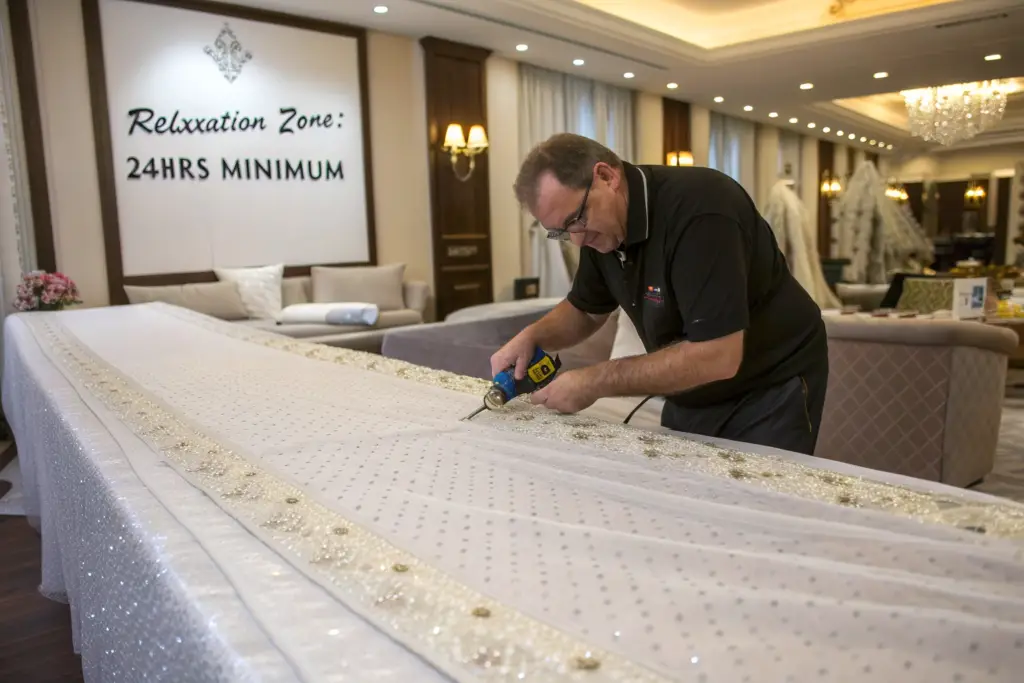
Napped fabrics like velvet, corduroy, and brushed wool have fibers that lie in a specific direction. When you brush your hand one way, the fabric feels smooth. When you brush the other way, it feels rough and looks darker. If a pattern piece is cut with the nap running up, and the adjacent piece is cut with the nap running down, the two pieces will reflect light differently. The finished garment will look like it was made from two different fabrics. A one-way marker layout ensures all pattern pieces are cut with the nap running in the same direction, typically down the body.
How Do You Test a Fabric’s “Relaxation Rate” Before Cutting to Avoid Panel Distortion on Silks?
Cut a one-meter square of the fabric, mark its dimensions, and let it rest freely on a flat table for 24 hours in the cutting room’s humidity. Re-measure. If the square has shrunk or distorted, the fabric has a high relaxation rate. The bulk fabric must be unrolled and allowed to relax for at least 24 hours, often longer, before spreading and cutting.
Why Is the Exact Needle Selection and Stitch Density Critical for Premium Wools and Delicate Silks?
A brand partner once complained that her $400 cashmere sweaters were developing small, visible holes along the shoulder seams after just a few wears. The factory was not cutting corners. They were using the same needle size they used for all knitwear. The needle was too thick for the fine cashmere yarn. It was cutting the fibers instead of parting them. The seam was essentially perforated. Under the stress of wear, the perforations became tears. The problem was solved by switching to a specific, ultra-fine ballpoint needle designed for delicate animal fibers.
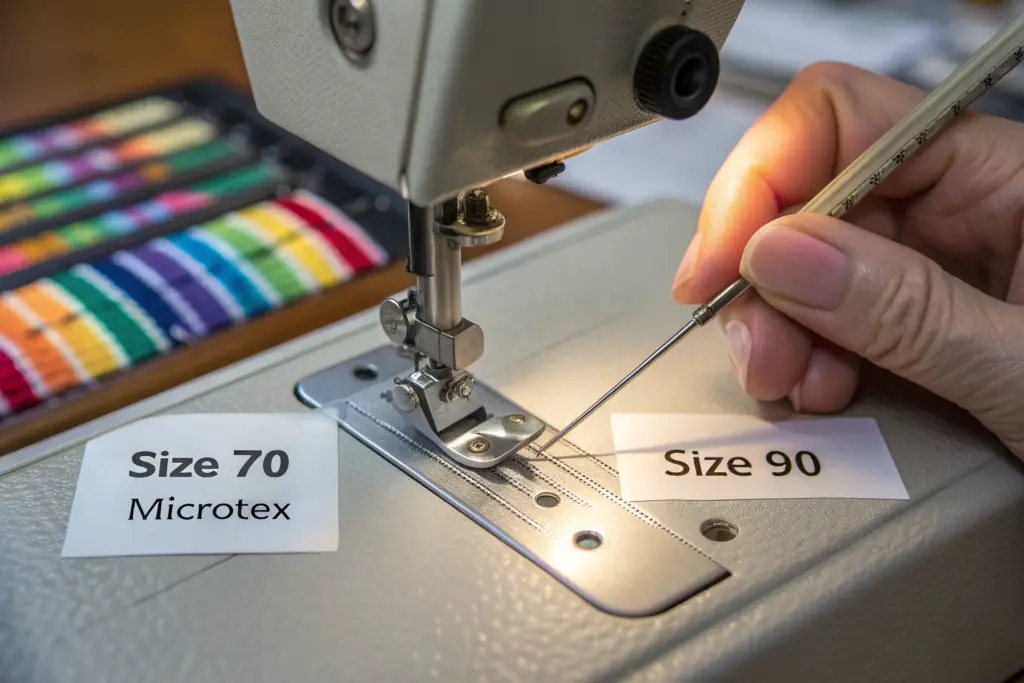
Specialized needle selection and stitch density are critical because the needle is the primary point of contact between the machine and the luxury fabric. A needle that is too thick will punch visible holes in a tightly woven silk taffeta or a fine merino wool jersey. A needle that is too thin will deflect and skip stitches on a dense, heavy wool coating. A specialist factory maintains a library of needle types, ballpoint for knits, sharp point for wovens, and specific sizes for specific fabric weights. They also adjust the stitch density. A luxury silk blouse requires a higher stitch density (12 to 14 stitches per inch) for a fine, almost invisible seam. A heavy wool coat may require a lower density (8 to 10 stitches per inch) to avoid perforating the fabric. The correct needle and the correct density are chosen for each specific fabric, not set to a factory-wide standard.
The needle is a small, cheap component. The damage it can cause to a $50-per-meter fabric is enormous. The specialist factory’s needle library is a small investment that protects massive material value.
What Is “Needle Cutting” and How Does a Ballpoint Needle Prevent It on Fine Wool Jersey?
Needle cutting happens when a sharp-point needle pierces the yarns of a knit fabric, severing them. The result is a run or a hole that grows over time. A ballpoint needle has a rounded tip that slides between the yarns, pushing them aside rather than cutting through them. This is essential for all knit fabrics, but especially critical for fine, delicate wool and cashmere jerseys.
How Do You Determine the Correct Stitch Density (SPI) for a Lightweight Silk Crepe de Chine?
Sew a test seam on the actual fabric, starting at 12 stitches per inch. Inspect the seam under a magnifying glass. If the stitches are causing the fabric to pucker, the density is too high for the fabric’s weight. Reduce to 10 SPI and test again. The correct density is the highest SPI that does not cause puckering. The specialist factory runs this test on every new fabric.
What Chemical Finishing and Pressing Knowledge Prevents a Luxury Garment from Being Ruined at the Final Stage?
A brand delivered a beautiful, perfectly sewn black wool suit to a client. The client wore it on a humid day. A strange, fishy odor emanated from the fabric. The brand was mortified. The investigation traced the smell to the finishing spray the factory had used during pressing. The spray was a cheap, generic sizing agent designed for cotton. On the high-quality wool, it had reacted with the natural lanolin and the humidity, producing the odor. The suit was returned. The factory’s ignorance of wool chemistry had destroyed a $2,000 garment at the very last step of production.
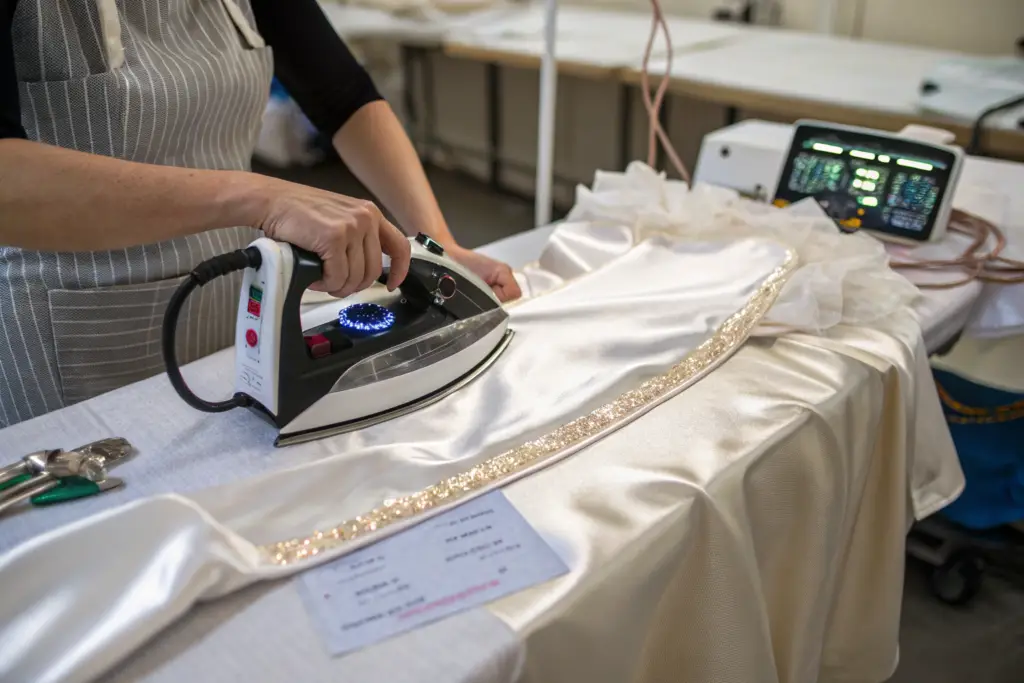
Specialized finishing and pressing knowledge prevents final-stage disasters by matching the temperature, pressure, steam level, and finishing chemistry to the specific fiber content of the luxury fabric. Wool can be permanently felted and shrunk if pressed with too much heat and steam. Silk can develop permanent water spots if the steam is too wet. Synthetic luxury blends can melt or become shiny if the iron temperature exceeds their heat tolerance. A specialist factory trains its pressers on the specific temperature settings for each fabric type. They use protective press cloths. They avoid harsh chemical sprays that can react with natural fibers. The pressing station is not a generic final step. It is a highly skilled craft that restores the fabric’s natural luster and drape after the stresses of sewing.
The press is the last hands that touch the garment before it reaches the customer. Those hands must know what they are doing. A garment that has survived cutting and sewing can be destroyed in seconds by a too-hot iron.
What Is the Correct Iron Temperature and Steam Level for a 100% Silk Chiffon Versus a Heavy Wool Coating?
Silk chiffon is pressed at a low temperature, approximately 110°C, with dry steam or no steam at all, and always with a protective press cloth. Heavy wool coating is pressed at a higher temperature, approximately 150°C, with generous steam and a vacuum cycle to set the shape and remove the moisture. The two fabrics require completely different pressing protocols.
How Do You Test a Pressing Technique on a “Sacrificial Sample” to Prevent Shine on Delicate Fabrics?
Always test the pressing technique on a scrap piece of the actual bulk fabric, a "sacrificial sample." Try the intended temperature and steam level. Check the surface for shine, water spots, or texture change. Do not touch the production garment with an iron until the sacrificial sample proves the technique is safe.
Conclusion
A factory with highly specialized fabric knowledge is not a nice-to-have for a luxury apparel brand. It is a financial necessity. The luxury is in the material. The silk that cost $38 per meter, the cashmere that cost $50 per meter, the embroidered tulle that took weeks to produce. That material is vulnerable at every stage of manufacturing. The cutting room, the sewing machine, and the pressing station are all potential destruction points. The specialist factory knows how to navigate each one safely. The generic factory does not.
The $12,000 loss on the silk cutting table was not an accident. It was an inevitable outcome of entrusting a specialist material to a non-specialist factory. The brand that chooses a factory for its material knowledge is paying for insurance. The brand that chooses a factory for its low price is gambling with its fabric investment.
At Shanghai Fumao, we have dedicated teams for specific luxury fabric categories. Our silk specialists understand the relaxation rates and needle requirements of silk charmeuse, silk chiffon, and silk organza. Our wool specialists know the pressing temperatures and shrinkage tolerances of cashmere, merino, and alpaca blends. We invest in the training and the equipment to handle precious materials with the care they deserve.
If your brand works with luxury fabrics and you want a manufacturing partner who understands how to protect them, we can help. At Shanghai Fumao, we will discuss your specific fabric requirements, share our material-specific handling protocols, and arrange for sample production using your precious materials. Contact our Business Director, Elaine, at elaine@fumaoclothing.com. She can provide a sample of our fabric handling guide and schedule a call with our head of technical development. Protect your fabric investment. Choose a factory that knows what it is holding.