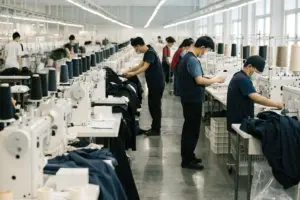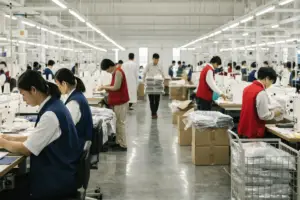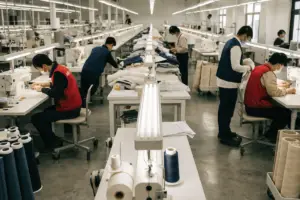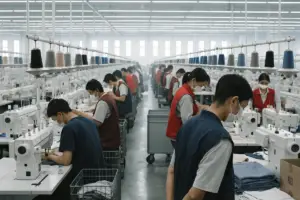
I once watched a factory manager weep in his office. Not from anger, but from the weight of a $40,000 mistake. His factory had produced 2,000 units of a women’s woven blouse. The shipment was packed and ready to go. The brand owner flew in for a final inspection. She pulled out the approved pre-production sample, the garment that both parties had signed off on before bulk cutting began. She held it against a bulk production piece. The collar point length was off by half an inch. The buttons were a different shade. The hem finish was a single needle instead of the specified double needle. The factory had rushed the bulk production without strictly adhering to the approved sample. The entire 2,000-unit order was rejected. The factory had to eat the cost of the fabric, the labor, and the lost trust. The pre-production sample had been approved, but the factory had not treated that approval as a binding contract. That was their fatal error.
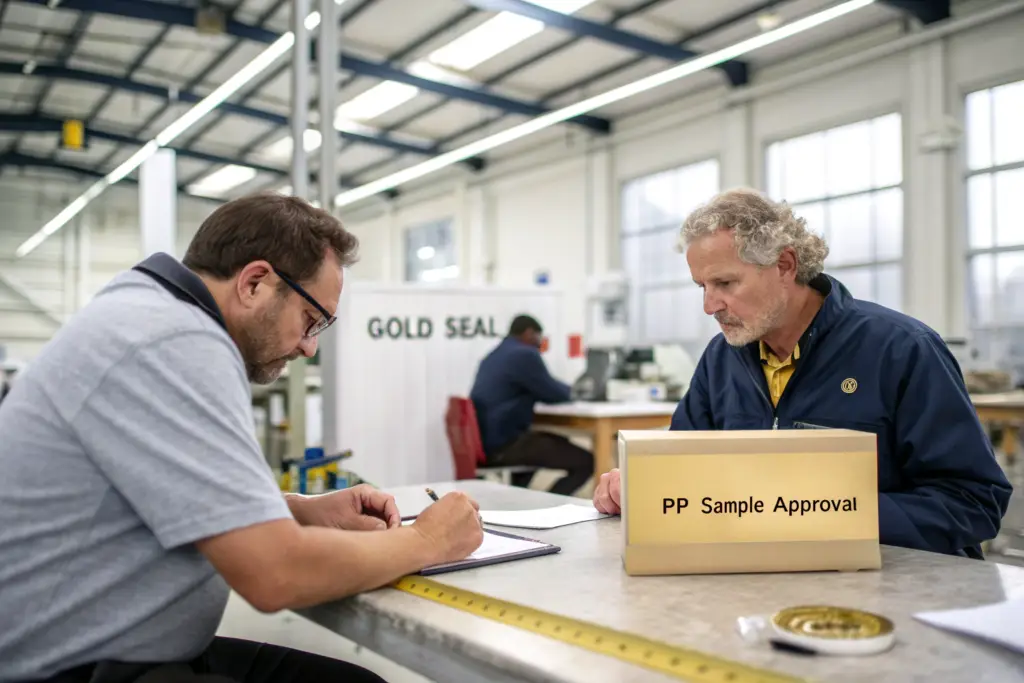
Strict pre-production sampling approval is the absolute most critical step in all garment manufacturing because it serves as the legally binding, physical contract between the brand’s design intent and the factory’s production execution. The approved PP sample is not a reference. It is the standard. Every measurement, every stitch type, every trim placement, every label position is locked in the moment both parties sign off on that sample. Without a strictly approved PP sample, the factory is guessing what the brand wants. The brand is hoping the factory understood the tech pack. The bulk production becomes a game of telephone, with the design on one end and the sewing machine on the other. The PP sample is the translator that converts a 2D sketch into a 3D garment. If that translation is not verified and locked, every subsequent step, fabric cutting, sewing, finishing, is built on an unverified foundation. The PP sample is the moment when mistakes are still cheap. A pattern change costs $50. A bulk production rework costs $50,000.
Most production disasters are not caused by bad sewing. They are caused by an approved sample that was not truly approved, an approval that was rushed, incomplete, or based on a sample that did not reflect the actual bulk materials. I want to share exactly what a rigorous PP sample approval process looks like, and how Shanghai Fumao uses it to eliminate ambiguity before a single meter of fabric is cut.
What Specific Details Must Be Physically Verified on a PP Sample That a Tech Pack Cannot Communicate?
A brand owner once sent me a tech pack that was 30 pages long. It had every measurement, every construction detail, every material specification. It was a masterpiece of documentation. The PP sample arrived, and it matched the tech pack perfectly. The brand owner approved it. The bulk production arrived, and the sleeves twisted because the fabric, a silk crepe, had a different drape than the cotton voile used for the development sample. The tech pack had specified the measurements. The PP sample had matched those measurements. But no one had checked how the actual bulk fabric would behave in that silhouette. The PP sample was a dimensional replica, not a material replica. That distinction cost the brand a 15% return rate.
A tech pack communicates dimensions. A PP sample communicates the physical reality of the garment. You must physically verify on the PP sample the exact hand feel and drape of the bulk fabric, the color of the thread against the actual fabric under multiple light sources, the sound and feel of the zipper, the stiffness of the interlining, the opacity of the fabric when stretched, and the way the garment hangs on a moving body. None of these qualities can be captured in a spec sheet. A measurement can be correct, and the garment can still be wrong because the fabric behaves differently than the designer imagined. The PP sample is the moment when the designer touches the physical garment made from the actual bulk materials and says, "Yes, this is exactly what I want to sell." If the PP sample is made from substitute materials, the approval is meaningless. The bulk materials must be used for the PP sample, or the approval is a fantasy.
The PP sample is not just a measurement check. It is a sensory evaluation. The hand, the eye, and the body must all approve the sample. A tech pack can tell you the sleeve length is 24 inches. It cannot tell you that the sleeve feels restrictive when you reach forward. Only a physical sample on a real body can communicate that.
Why Must the PP Sample Be Cut and Sewn from the Actual Bulk Fabric, Not a Similar Substitute?
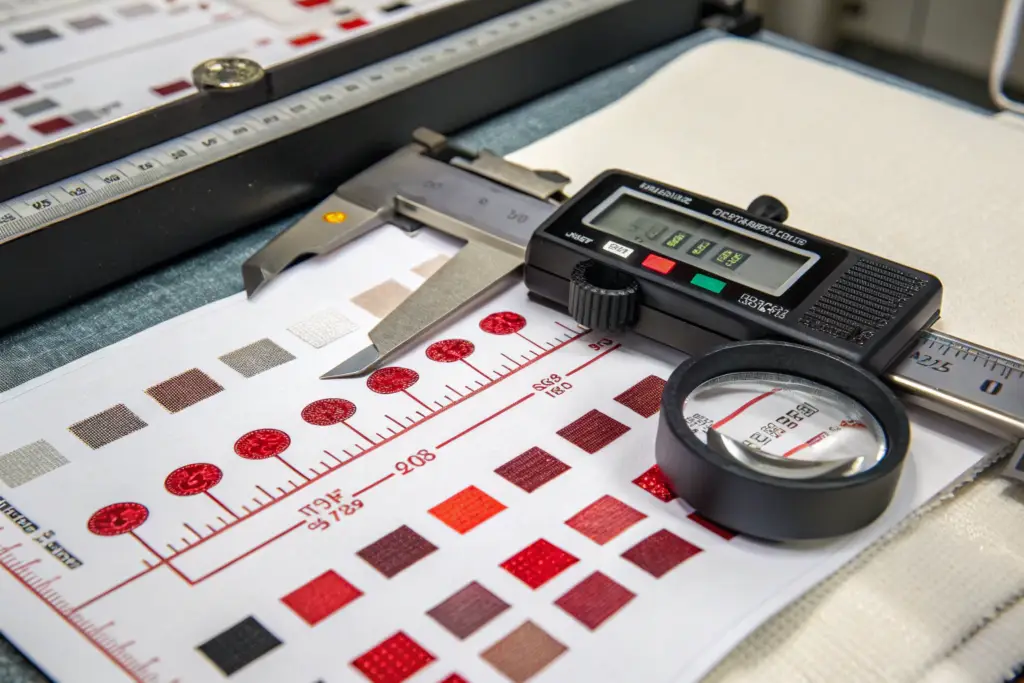
Fabric substitutions change everything. Drape, shrinkage, seam puckering, and opacity all vary between different fabric lots, even if the fiber content is identical. A PP sample made from a stock fabric tells you nothing about how the bulk fabric will behave. You must demand that the PP sample is cut from the actual bulk fabric lot that will be used for production. If the bulk fabric is not yet available, the sample approval is provisional and must be reconfirmed once the bulk fabric arrives.
How Do You Test “Drape Compatibility” on a PP Sample to Prevent the “Tent Effect” in Bulk Production?
The "tent effect" happens when a garment is designed for a fluid fabric but produced in a stiffer one. The garment hangs away from the body like a tent. You test drape compatibility by holding the PP sample at the shoulder seams and letting it hang freely. Observe how the fabric falls. Compare this to the designer’s intention. If the designer wanted a fluid, body-skimming silhouette and the fabric holds its shape, the drape is incompatible. The fabric must be changed, or the pattern must be adjusted to add shaping seams.
How Does a “Gold Seal” Sample Serve as the Irrefutable Legal and Quality Benchmark?
I was involved in a dispute where a brand owner claimed the factory had shortened the hem of a dress by 1.5 inches. The factory claimed they had followed the approved sample. The brand owner produced her sample. The factory produced theirs. The measurements were different. Who was right? Neither party could prove their case because there was no single, agreed-upon reference sample. The dispute ended in a compromise that satisfied no one. The relationship soured. The next season, we implemented the Gold Seal system. The dispute never happened again.
A Gold Seal sample is a single, physical garment, approved by both the brand owner and the factory manager, that is sealed in a tamper-proof bag and signed across the seal. It is the legally binding quality standard for the entire production run. When the bulk production is inspected, it is compared against the Gold Seal sample, not against the tech pack, not against the brand owner’s memory, and not against a different sample. If the bulk production matches the Gold Seal sample, the factory has fulfilled its contractual obligation. If there is a deviation, the factory is responsible. The Gold Seal sample eliminates the "I thought it was supposed to be different" argument. It replaces subjective memory with objective, sealed evidence. It is the single most effective tool for preventing and resolving quality disputes.
The Gold Seal sample is not an extra, optional step. It is the foundation of a professional quality assurance system. Every production order, regardless of size, should have a Gold Seal sample. The cost of creating and sealing the sample is negligible. The cost of a dispute that it prevents can be enormous.
What Is the Exact Protocol for Sealing, Storing, and Retrieving a Gold Seal Sample?
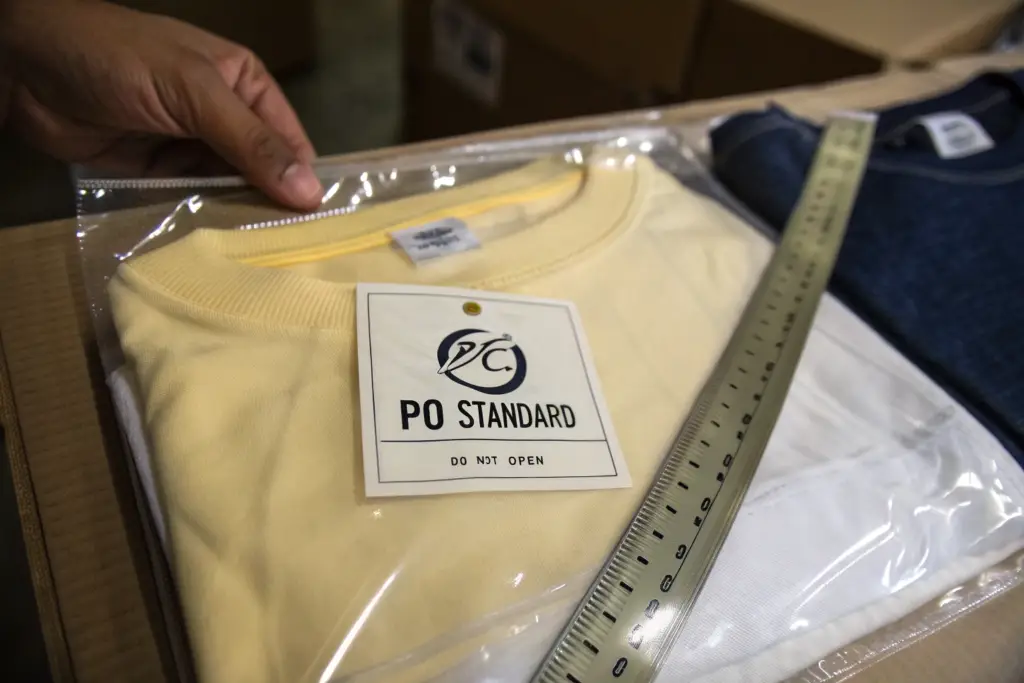
The protocol is simple and rigorous. The approved PP sample is placed in a transparent, tamper-evident bag. A security seal is applied across the opening. Both the brand representative and the factory representative sign their names across the seal. The PO number, style number, and date are written on a card inside the bag. The sealed bag is photographed and stored in a locked, climate-controlled cabinet. It is only opened in the presence of both parties if a quality dispute arises. The sample sealing protocol ensures the integrity of the reference standard.
How Does a Gold Seal Sample Hold Up in an International Arbitration Dispute?
In international trade disputes, physical evidence is powerful. A Gold Seal sample, sealed and signed by both parties, is a physical contract. It demonstrates mutual agreement on the quality standard. Arbitration panels view this type of physical evidence favorably because it is objective and cannot be easily falsified after the fact. The Gold Seal sample is the brand’s best defense against a factory that ships substandard goods, and the factory’s best defense against a brand that changes its mind after production.
What Is a “Production Standard Sample” and Why Must It Differ from a “Designer’s Showpiece”?
A brand owner once fell in love with a sample made by the factory’s most skilled seamstress. It was flawless. Every stitch was perfect. The pattern matched at every seam. She approved it and expected 2,000 units exactly like it. What she received was a production run made by the regular line workers, operating at standard speed, with standard factory tolerances. The pattern matching was slightly off on some units. The stitching was not quite as pristine. The garments were commercially acceptable, but they did not match the "showpiece" she had approved. She felt betrayed. The factory felt she was being unreasonable. The problem was that the approved sample was a one-off work of art, not a production standard.
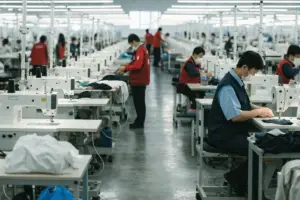
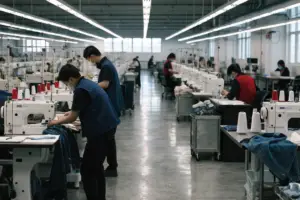
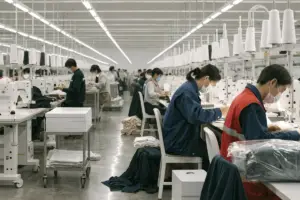
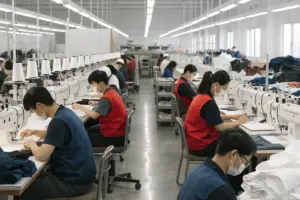
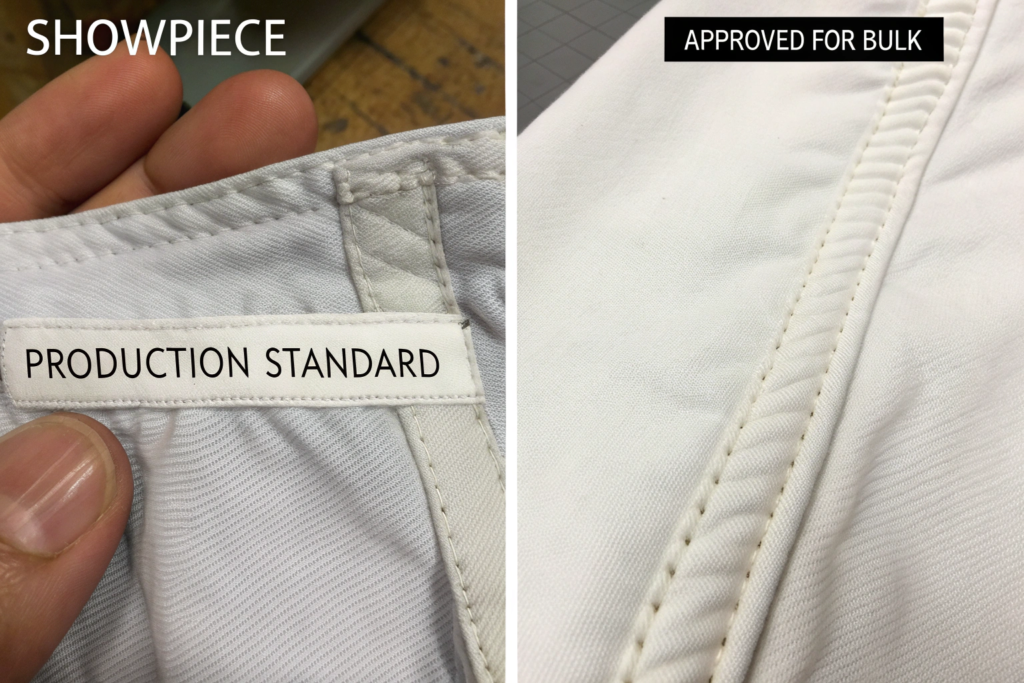
A Production Standard sample is a PP sample that is sewn on the actual production line, by the actual operators who will sew the bulk order, at the standard production speed. It represents the quality level that can be realistically achieved across thousands of units. A Designer’s Showpiece is sewn by the best seamstress, with unlimited time, using special handling. The showpiece is a marketing asset. The production standard sample is the quality benchmark. The brand must approve the production standard sample, not the showpiece. If the brand approves a showpiece, they are approving a quality level that the factory cannot replicate at scale. The inevitable gap between the showpiece and the bulk production will cause disappointment, disputes, and returns.
The production standard sample is the honest representation of what the factory can deliver. It sets realistic expectations for both parties. A factory that is proud of its production quality will be happy to provide a production standard sample. A factory that resists is likely hiding the gap between its showpieces and its bulk production.
How Can You Tell If a PP Sample Is a “Showpiece” Sewn by a Single Master Tailor?
Look for details that are impractical at scale. Hand-basted zippers, perfectly matched patterns at every seam including under the arm, and extremely dense, slow stitching are all signs of a showpiece. Ask the factory: "Was this sample sewn on the production line at standard speed?" If the answer is no, or if the factory hesitates, you are holding a showpiece. Demand a production standard sample before giving final approval.
What Are the “Acceptable Tolerance” Guidelines for Bulk Production That Must Be Agreed on at the PP Stage?
The PP approval is the moment to agree on acceptable tolerances. A collar point might be specified at 3.5 inches, but what is the acceptable range? 3.45 to 3.55 inches? 3.4 to 3.6 inches? These tolerances must be documented, signed, and attached to the Gold Seal sample. Without agreed tolerances, the factory will apply their own, which may be looser than the brand expects. The apparel tolerance guidelines provide industry standards, but the specific agreement is what matters.
Conclusion
Strict pre-production sampling approval is not a bureaucratic hurdle. It is the bridge between the designer’s imagination and the factory’s reality. The PP sample is the physical contract. The Gold Seal is the legal protection. The production standard sample is the honest benchmark. Together, they form a system that eliminates the ambiguity that causes $40,000 mistakes.
The factory manager who wept in his office was not a bad person. He was a victim of a process failure. He had not insisted on a Gold Seal sample. He had not provided a production standard sample. He had assumed the tech pack was enough. It was not. The PP sample, properly executed, would have caught the collar point error, the button shade issue, and the hem finish deviation before a single bulk unit was cut.
At Shanghai Fumao, we treat the PP sample as the most important step in our production process. We provide production standard samples sewn on the actual line. We use the Gold Seal system for every production order. We require signed approval of the PP sample, including agreed tolerances, before bulk fabric is cut. We do this not because we do not trust our sewing operators, but because we know that clear, documented, physical standards are the foundation of a stress-free manufacturing partnership.
If you want to implement a rigorous PP sample approval process for your next production run, we can help. At Shanghai Fumao, we will provide a production standard sample, a Gold Seal sealing protocol, and an agreed tolerance document. Contact our Business Director, Elaine, at elaine@fumaoclothing.com. She can send you a sample PP approval checklist and a Gold Seal procedure guide. Do not let an unverified sample be the reason your bulk production fails. Lock in the standard. Protect your brand. Approve with confidence.