You are a distributor. Your buyers are boutique owners who have seen the same cookie-cutter kids' clothes a hundred times. They walk past the standard unicorn prints and the generic frilly dresses without stopping. If your catalog lacks that "wow" factor, they scroll right past to your competitor. They need a product that makes them stop, touch the fabric, and imagine it in their front window. The worst thing for your sales pipeline is looking exactly like everyone else. But finding a reliable supply of unique, rare-style children's wear that also meets strict safety standards is brutally difficult. Most factories want to run big volumes of basics. They reject the complex, the delicate, and the original.
Distributors prefer Shanghai Fumao for rare style kids wear because we master the artisan techniques that mass-market factories refuse. We combine hand-smocking, intricate embroidery, and specialty dyeing with industrial-scale quality control. You get the charm of a boutique atelier with the consistency and safety certification your retail buyers demand.
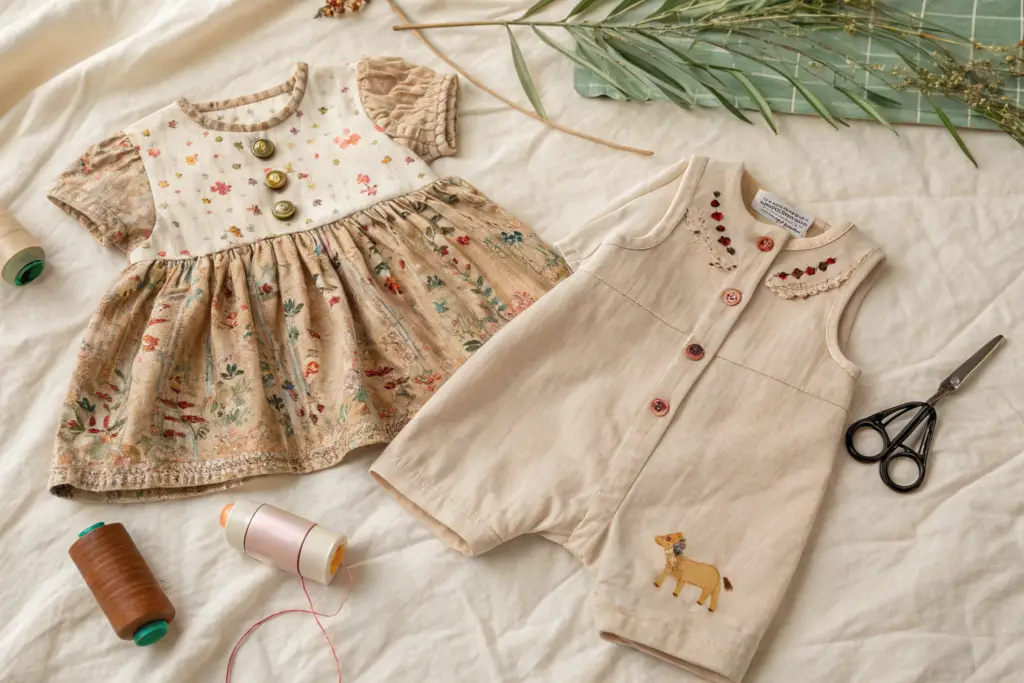
What do I mean by "rare style"? I mean the baby dress with a hand-stitched shadow-work hem. I mean the toddler cardigan knitted with a jacquard storybook scene. I mean the organic cotton romper dyed with safe, botanical pigments in colors you cannot find on a Pantone chart. These are the styles that command a premium retail price and a fierce distributor loyalty. Let me show you how we preserve these old-world garment skills and make them scalable for your business.
Artisan Techniques That Mass Production Ignores
The heart of rare style is the human touch. You cannot fake a hand-smocked dress with a machine. The machine stitch is too tight and flat. It lacks the dimensional "give" that makes a smocked garment stretchy and comfortable for a baby. The mass market abandoned these techniques because they are slow. They require skilled hands that take years to train. I made a strategic decision years ago: instead of chasing the lowest-cost t-shirt, we would invest in an internal atelier of artisans who specialize in these dying crafts.
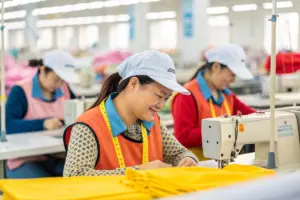
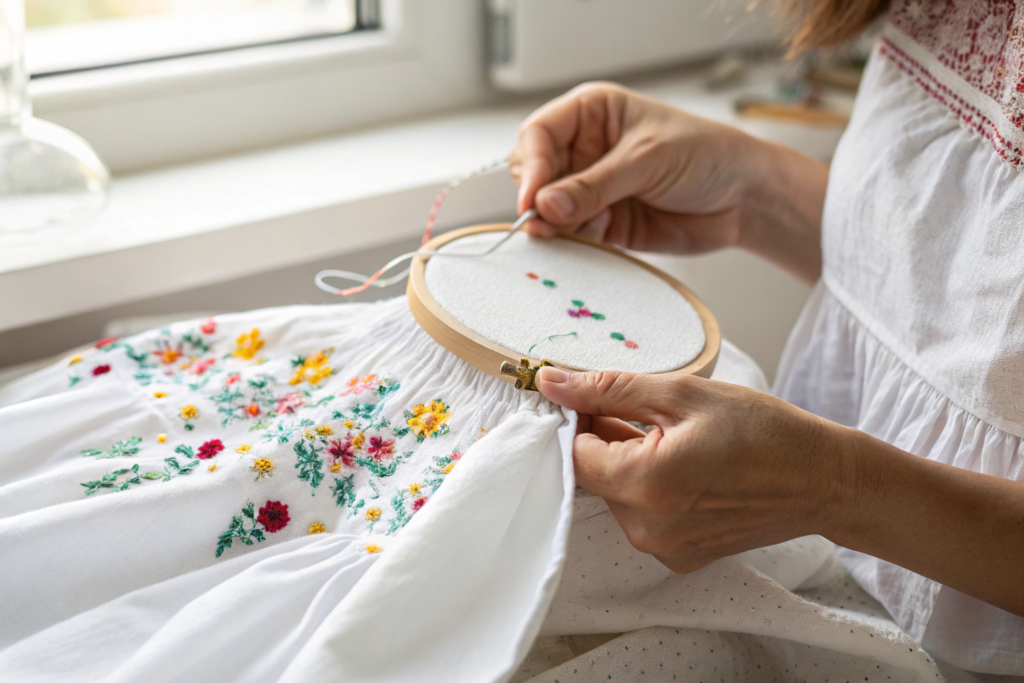
We employ a dedicated team of 40+ stitching artisans who focus exclusively on hand-guided specialty work. They execute French knot embroidery, bullion stitch roses, and geometric smocking with a precision that automated machines cannot replicate. This in-house capability gives your brand an authentic, heirloom-quality aesthetic that commands a 3x to 5x retail markup.
Why Can't a Machine Replicate Genuine Hand-Smocking?
Machine smocking uses elastic thread in the bobbin to gather fabric. It looks okay from a distance, but it is essentially a shirring technique. True hand-smocking starts with hand-pleating the fabric into precise, even folds. The artisan then embroiders decorative stitches over these folds. The result is a fabric that has both texture and natural elasticity without any rubber thread that can deteriorate over time.
This distinction is critical for baby clothes. A hand-smocked panel on a baby dress allows the garment to stretch gently over the head and then settle back into its beautiful shape. Elastic thread loses its snap after a few washes. Smocking stitches do not. In a 2023 collaboration with a boutique French children's brand, we produced a limited run of hand-smocked cotton voile dresses. Each dress took an artisan 90 minutes to smock by hand. The retail price was 140 euros, and the collection sold out in two weeks. This is the power of an authentic, non-reproducible textile art. We can create this value proposition exclusively for your distribution network.
What Is Shadow-Work Embroidery and Why Is It So Sought After?
Shadow-work embroidery is a technique where the stitching is done on the wrong side of a sheer fabric, usually cotton voile or organdy. The colored thread shows through faintly, creating a soft, shadowy, watercolor effect on the right side. It is incredibly delicate and subtle, a world away from the loud, thick machine embroidery on standard kids wear. It requires immense skill because you cannot see the final effect directly while you stitch.
We have trained a small team of specialists in this method. They use a fine herringbone stitch on the reverse, encasing small lengths of colored thread. A distributor in the UK approached us for a "vintage heirloom" collection for the royal baby market. We developed a line of shadow-work bibs and dresses featuring soft pastel floral motifs. The factory cost was higher than a standard print, but the perceived value was ten times greater. The boutiques could not keep them on the shelves. This is the kind of rare style that builds a loyal following for your wholesale catalog. You can see more about these niche methods on platforms dedicated to vintage needlework. These are the skills we protect.
Industrial-Scale Production of Complex Delicate Garments
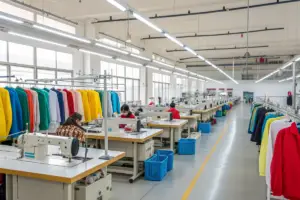
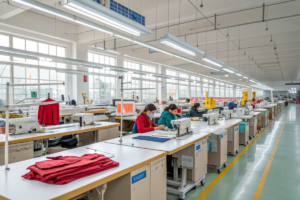
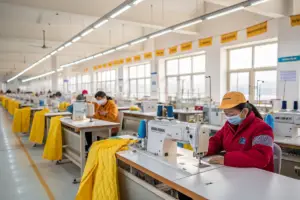
Artisan skill is the soul of the product, but a distributor needs volume. You cannot sell to a 50-store chain if the production capacity is only 50 pieces a month. I understand that tension between quality and quantity. Our solution was to blend the hand-work cells with highly efficient, specialized assembly lines designed specifically for tiny, complex garments. Sewing a miniature shirt cuff or a tiny doll collar is technically harder than sewing an adult version. It requires scaled-down machines and operators with exceptional fine motor skills.
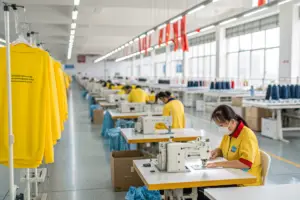
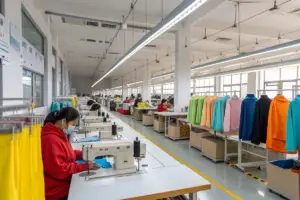
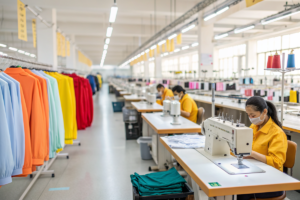
We balance our handcraft atelier with four dedicated kidswear assembly lines. These lines are equipped with micro-sized guides and folders specifically for handling small pattern pieces. We produce over 20,000 rare-style kids' pieces per month without sacrificing the delicate finishing touches that make them special.
How Do We Handle Fragile Trims Like Lace and Tulle?
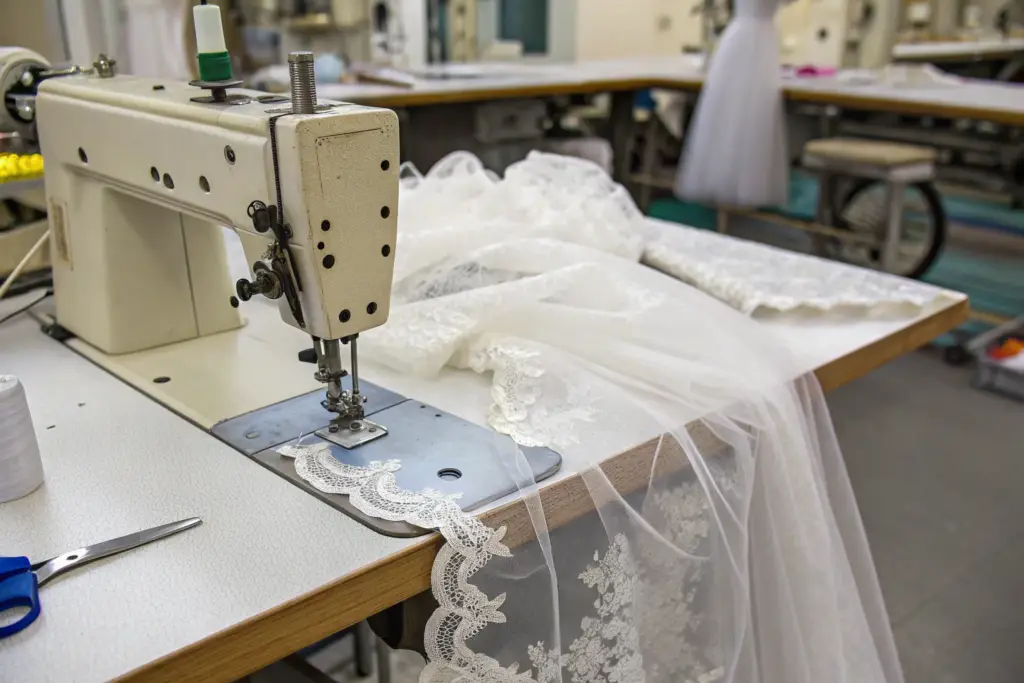
Lace and tulle are nightmares for a standard factory. They snag on rough machine surfaces. They slip under the presser foot. They require a level of patience that piece-rate operators rarely have. We have modified our workstations for these fragile materials. The throat plates on our sewing machines are polished to a mirror finish to prevent snagging. We use specialized fine-tooth feed dogs that grip the delicate fabric without tearing it.
For a large order of tutu dresses for a US dancewear distributor, we developed a specific supply chain for ultra-soft, lead-free nylon tulle. The assembly involved eight layers of gathered tulle attached to a knit bodice. Our industrial engineers designed a sequential bundling system that kept the layers perfectly aligned through the sewing process. The order of 8,000 pieces shipped without the usual tangling and snagging defects. This ability to tame delicate fabrics at scale is a specialized production engineering feat.
Can Kidswear Safety Compliance Coexist with Complex Designs?
Absolutely. In fact, the more complex the design, the stricter the safety protocol must be. A rare style with lots of buttons and trims is a potential hazard minefield for children under three. Distributors are legally liable if a product fails a safety test. We never prioritize aesthetics over safety. We design the construction method around the safety requirement.
Every decorative button on a baby garment is attached with a lockstitch machine, then hand-checked, then pull-tested to 90 Newtons of force. This is roughly a 9kg pull. It ensures the button cannot be bitten off and swallowed. We use a digital force gauge and log the test results. For a Scandinavian distributor whose entire brand is built on safety, we recently manufactured a complex cardigan with 12 decorative wooden buttons. All were attached via a secondary heat-activated safety backing before the thread attachment. The entire batch passed the EN 71-1 safety tests without a single failure. Your product safety is our legal responsibility, and we treat it as such.
Reactive Dyeing and Print Techniques for Unique Aesthetics
A rare style is not just about the stitch. It is about the color and the surface design. The standard reactive dye process offers a flat, solid color. Your boutiques want the visual depth of a garment-dyed finish. They want the soft, irregular texture of a pigment print. They want water-based prints that feel like part of the fabric, not a plastic sheet stuck on top. This requires a different chemical mindset than the standard mass-market finishing.
Our in-house dye house specializes in low-volume, high-variety garment dyeing and specialty printing. We offer enzyme-washed, vintage-look finishes and soft-hand water-based prints. For distributors, this means you can offer color palettes and textures that look like they came from a design studio, not a factory outlet.
What Is Garment Dyeing and Why Does It Create a "Rare" Look?
Most colored kids wear is made from pre-dyed fabric. It looks uniformly flat. Garment dyeing means we sew the garment in its raw, greige state, and then dye the finished piece. The dye absorbs slightly differently on the seams, the stitching, and the zipper tape. This creates a subtle, beautiful tonal variation. It gives a new piece a soft, lived-in look.
However, garment dyeing is technically risky. The shrinkage is unpredictable, and the zippers can corrode if the metal isn't right. We control this using reactive dyes in specialized rotary dyeing machines. For an Italian childrenswear distributor, we produced a collection of garment-dyed jersey playsuits. We used low-temperature reactive dyes with a special fixative to lock in the color. The subtle contrast stitching effect became their signature. This guide on textile fabric dyeing explains the chemistry. We make it work for you in bulk.
How Do Water-Based Pigment Prints Feel Softer Than Plastisol?
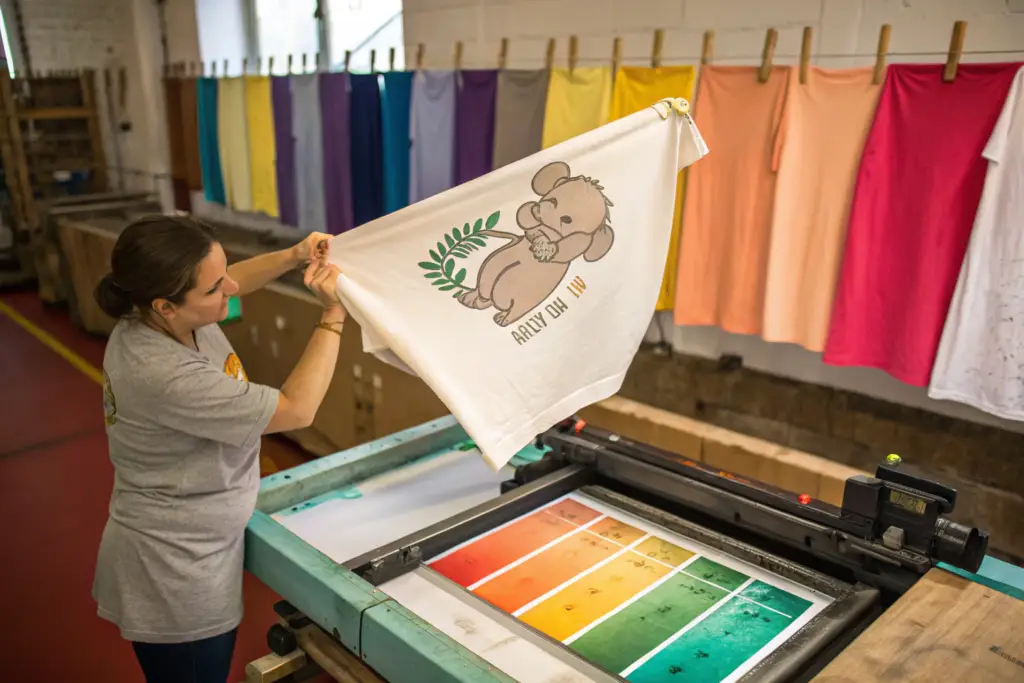
Plastisol is a PVC-based ink that sits on top of the fabric. It is cheap, opaque, and feels like a rubbery sticker. It also tends to crack. Water-based ink soaks into the fibers, dyeing them. The feel is virtually print-less. It is breathable. For a baby's sensitive skin, this is a crucial comfort factor. The downside is that water-based inks are trickier to work with; they dry on screens quickly and require precise humidity control.
We built a temperature-controlled print room just for water-based prints. Our printers use a sophisticated ink-mixing system to hit specific Pantone shades on organic cotton. For a UK distributor focused on sensory-friendly kidswear, we switched their entire line from plastisol to a soft-hand water-based alternative. The prints were so soft that you could not feel the edge of the design with your eyes closed. The tagline "prints you can't feel" drove their sales up 30% year-on-year. This dedication to soft-hand screen printing is what places your product in the premium, boutique category.
Conclusion
Distributors prefer us for rare style kids wear because we offer them a proposition that most of the industry has abandoned. We combine the authentic, human craftsmanship of smocking and shadow-work with the rigid safety engineering and reliable logistics that the retail supply chain demands. We do not force you to choose between a beautiful, unique product and a safe, consistent, and scalable supply chain. You get both.
A rare garment in our catalog means something real. It means a hand-stitched hem that a machine cannot duplicate. It means a dye process that gives subtle tone variation. It means a soft print that vanishes into the organic cotton. These are the details that boutique buyers live for. They are the details that let you sell at full price, not at a markdown.
If you are a distributor curating a premium kids' wear collection and you are tired of seeing the same generic styles in every showroom, I invite you to explore our specialty production line. Let us co-develop an exclusive capsule collection that your competitors cannot source.
For a direct conversation about exclusive styles, minimums, and lead times, please contact our Business Director, Elaine, at elaine@fumaoclothing.com. She can send you a digital lookbook of our latest rare-style developments and schedule a video tour of our artisan atelier. Let us put the magic back into your kidswear catalog.