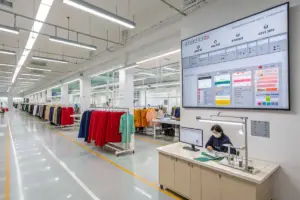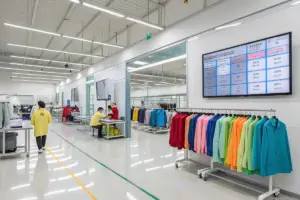
You are a busy brand owner. You have seen too many sample swatches that look perfect but fail in bulk. You have felt the frustration of a missed season because a shipment arrived with inconsistent sizing or weak seams. That sinking feeling in your gut is not just a delay. It is lost revenue and a damaged reputation. You need more than a supplier. You need a manufacturer whose technical skill is so consistent that quality is a guarantee, not a gamble.
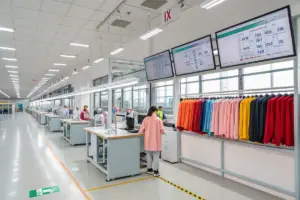
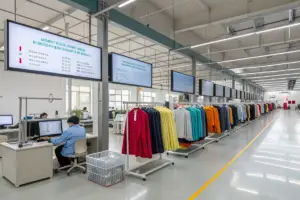
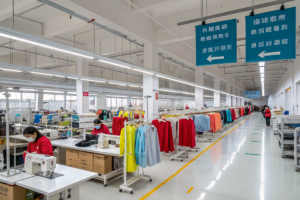
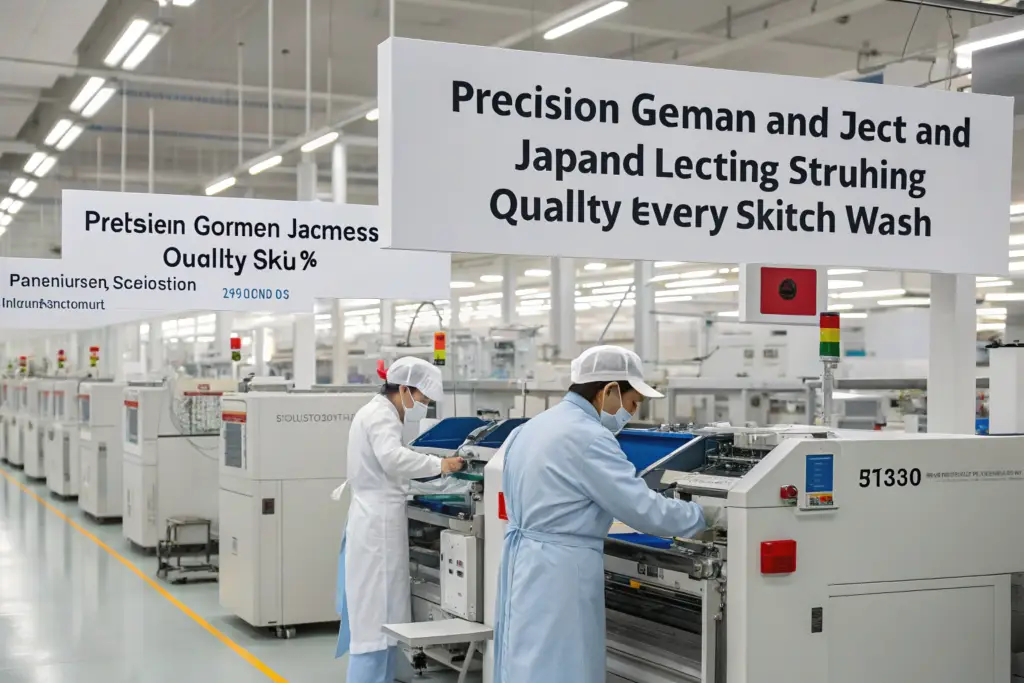
Our reputation rests on a simple but demanding formula. We combine precision German and Japanese machinery with a zero-tolerance quality control system. This marriage of equipment and rigorous process means we do not just hope for first-class results. We engineer them. Every stitch, every seam, and every wash is a controlled and repeatable scientific process.
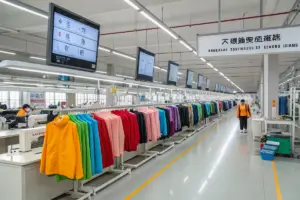
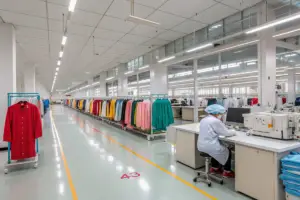
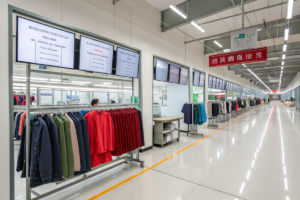
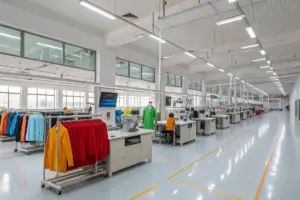
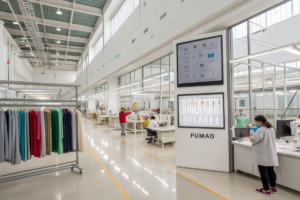
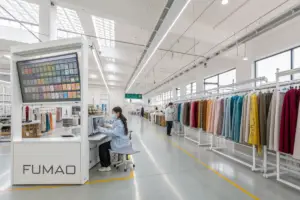
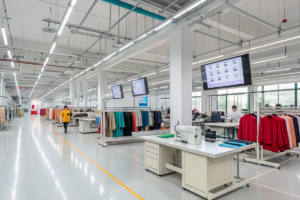
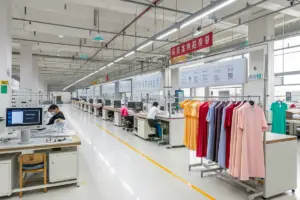
What does that technical depth look like in practice? It is not just a slogan on our website. I want to show you the specific machinery, the step-by-step protocols, and the material science that solves problems before they reach your customers. I will walk you through our factory floor, our testing lab, and our material archives to explain why a garment from Shanghai Fumao simply performs better. This is the story of how we turn fiber and thread into a competitive advantage for your brand.
How Do Advanced Machines Improve Garment Quality?
A beautiful design is just an idea on paper. Without the right equipment, that idea can become a warped, poorly stitched disappointment. You know the difference between a luxury feel and a cheap one often comes down to the machinery that made it. Our investment in technology is not about looking modern. It is about controlling physical forces—tension, speed, and pressure—to treat every fiber perfectly.
Our factory is a purpose-built environment where temperature and humidity are controlled to keep fabrics stable. This prevents shrinkage or stretching before a single cut is made. But the real heroes are the machines themselves. We use specialized equipment for distinct tasks, ensuring we never compromise on a garment’s unique requirements. For instance, our automatic spreading machines from Gerber Technology create perfectly tension-free layers of fabric. This is a critical first step. If the fabric is stretched during spreading, the cut pieces will shrink back, and a size medium will suddenly fit like a small.
What Cutting-Edge Technology Ensures Precision in Every Stitch?
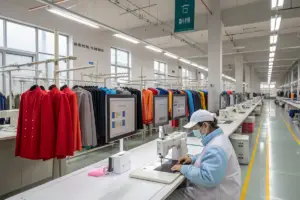
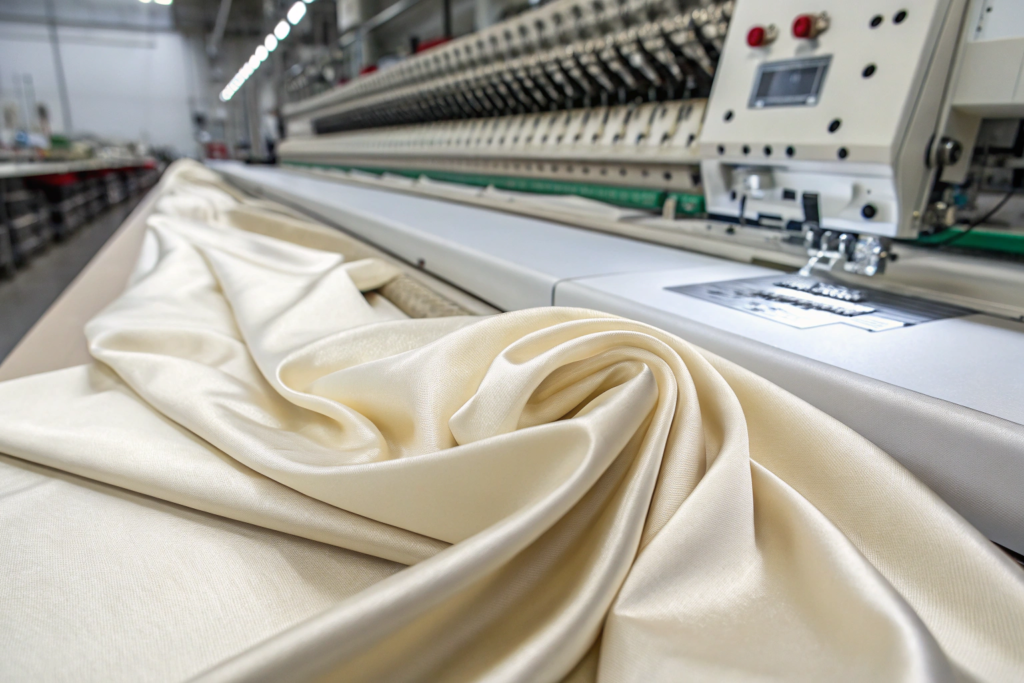
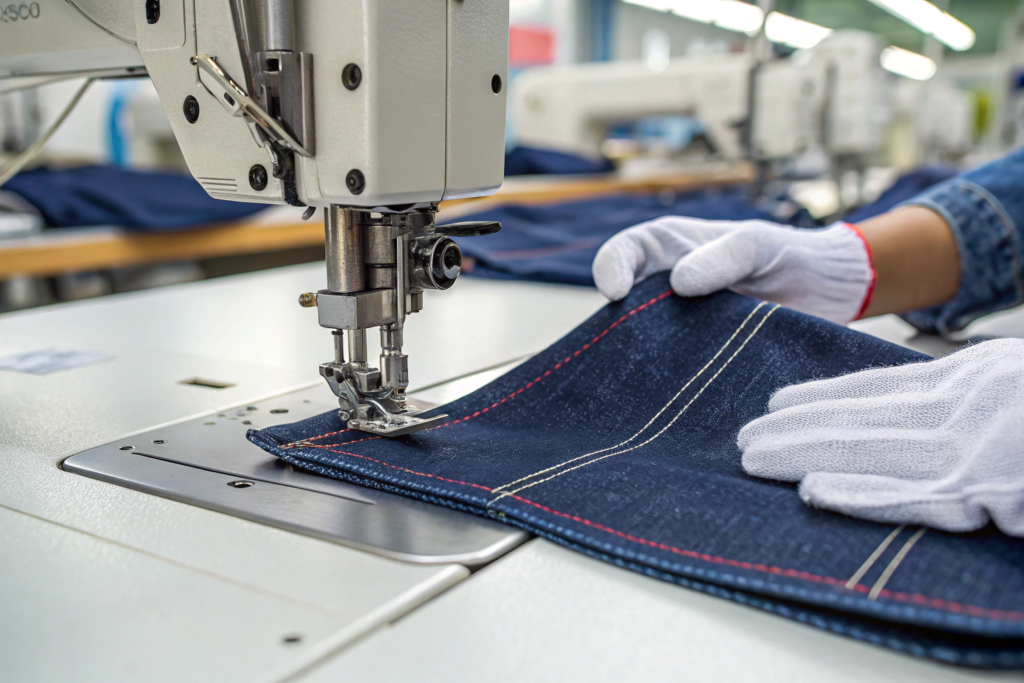
The path from fabric roll to finished garment is a sequence of precise operations. Our strategy is to use the best machine for each specific step. This specialization is what creates that first-class finish you can feel. A general-purpose machine cannot replicate what a dedicated, finely tuned one can do. We trace our commitment to this specific technology back to a pivotal project in 2019. An activewear brand from New York came to us with a crisis. Their previous supplier’s seams were cracking during high-intensity workouts. They needed a flatlock seam that was both indestructible and completely flat against the skin to prevent chafing.
We took on the challenge. Standard overlock machines create a bulky seam. We invested in a new line of high-speed, 4-needle 6-thread flat seaming machines from Pegasus. Our technicians spent two weeks working with the brand’s technical designer, fine-tuning the thread tension and differential feed. The result was a seam that stretched 200% without breaking and lay perfectly smooth. That client’s return rate on their premium leggings dropped by 70% in the next six months. This is what I mean by engineering a solution, not just sewing a garment.
The following are key machine types that set our quality apart:
| Machine Category | Key Function | Quality Impact |
|---|---|---|
| Gerber Auto-Spreader | Tension-free fabric spreading | Prevents size distortion; ensures all pieces match the CAD pattern. |
| Juki Digital Lockstitch | High-speed main seam construction | Delivers 5,000+ consistent stitches per minute with automatic thread trimming. |
| Pegasus Flat Seamer | Flat seams for activewear | Creates durable, chafe-free seams with superior stretch and recovery. |
| Veit Fusing Press | Interlining attachment on collars/cuffs | Ensures perfect bond without bubbling or strike-back, even after washing. |
How Does Automation Eliminate Human Error in Production?
Many people think garment making is an art that relies solely on human hands. In reality, top-tier quality relies on removing the subtle, inevitable variations that come with manual labor. Our approach is to automate the repetitive, precision-dependent tasks. This frees our skilled workers to focus on areas requiring true craftsmanship, like handling delicate fabrics or complex construction.
Consider button attachment. A manual process can lead to inconsistent thread tension, causing buttons to fall off or be too tight to use. We use automated button sewing and wrapping machines. An operator places the garment, and the machine executes the exact number of stitches, locks the thread, and trims it flawlessly every time. It is identical from the first button to the ten-thousandth. Similarly, our pocket creasing machines use a pre-programmed die and precise heat control. This replaces the inconsistency of a hand iron with a perfectly folded and fused pocket, every single time. This consistency builds trust with your customer, who receives the product they expect. For proven techniques in minimizing defects, you can review resources from AAFA, which provides insights on industry standards.
Why Is Quality Control So Much More Than a Final Check?
You have probably received a shipment where the final inspection report was perfect, but the actual garments were not. The reason is simple. Most factories treat quality control as a final checkpoint at the end of the line. By then, the defects are already sewn in. It is too late to fix them. Our philosophy turns that model on its head. We treat quality control not as an inspection, but as a continuous, integrated process from raw material to loaded carton.
This is what I call a proactive quality ecosystem. It begins in our in-house testing lab, which I consider the true start of our production line, not the end. We test everything before it enters the factory. This prevents problems instead of just finding them. A real-world example taught me this lesson permanently. A few years ago, a high-end childrenswear client from California was preparing a large order of cotton twill pants. Our pre-production fabric audit detected trace levels of formaldehyde that, while legally compliant, failed the stricter brand-specific RSL for kids’ wear. We caught it before a single meter was cut, rejected the batch, and sourced a certified safe alternative. It delayed us by a week, but it saved a brand disaster.
Can a 4-Point Inspection System Really Guarantee Flawless Products?
A system is only as good as its execution. We follow the well-known 4-Point Fabric Inspection System, but we push it to a higher standard. The system assigns penalty points for defects based on their size. The common industry acceptance threshold is 40 points per 100 square meters. We do not accept that. Our internal standard for top-tier clients is a maximum of 20 points. This tighter tolerance forces our fabric sourcing team to only buy from mills with the highest quality output.
Our inspection process uses an automated fabric inspection machine with a programmable light table. As the fabric unrolls over the illuminated panel, high-definition cameras scan for weaving flaws, stains, and color differences. An inspector can stop the machine to mark any suspect area. This data is logged against the roll number, creating a full digital passport for the fabric. Any roll exceeding our point threshold is immediately quarantined and returned. This rigorous front-end check ensures only pristine fabric enters the cutting room. To understand the basis of this system, you can find detailed explanations in resources on the 4-point system.
| Inspection Stage | Method | Rejection Standard |
|---|---|---|
| Raw Material Audit | Chemical testing, weight/density check, color spectrometer analysis. | Fails if outside 5% of spec for weight or color delta > 1.0. |
| Inline Production | Random checks at every 20% of the line, focusing on specific operations. | Any one operation with >3% defect rate triggers an immediate line stop. |
| Final Random Audit | AQL 2.5 standard sampling, with a shift to AQL 1.5 for critical/safety items. | Shipment held if major defects exceed AQL allowance; 100% re-inspection. |
Is Your Supplier’s Lab a Real Lab or Just a Light Box?
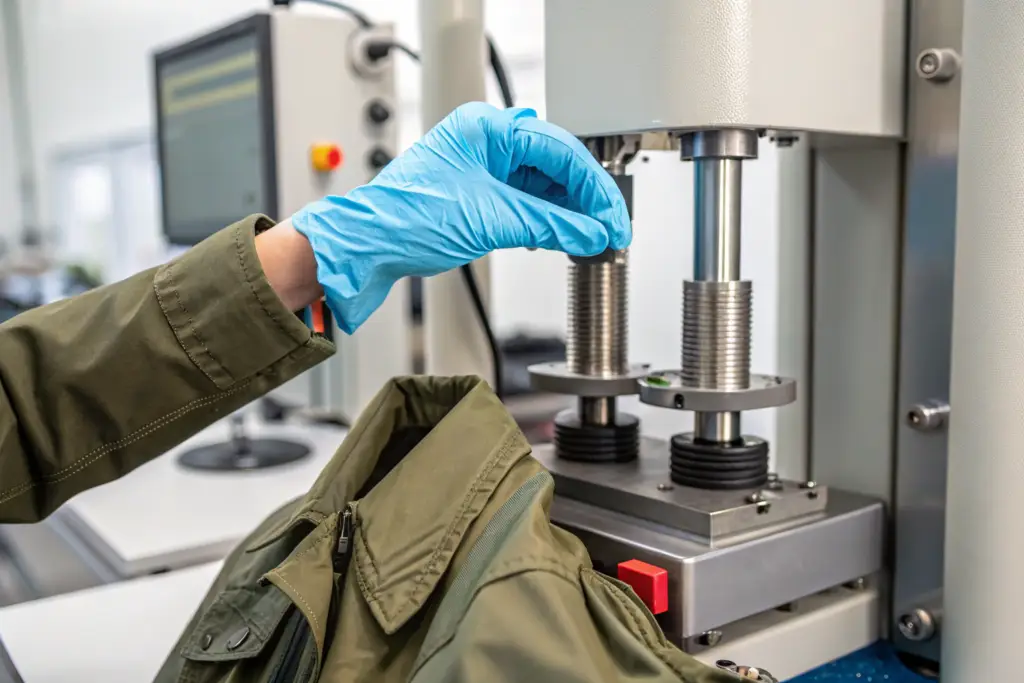
This is a tough question you must ask any potential partner. A “lab” that only contains a washing machine, a ruler, and a light box is not a lab. It is a showroom. Our in-house testing facility is equipped to simulate the life of a garment and verify its physical limits. This capability is our competitive advantage. We do not outsource tests and wait days for a certificate; we get instant data and react in real-time.
Our lab equipment allows us to perform a full spectrum of physical tests. A universal testing machine, which you might call a stretch-and-pull tester, measures the bursting strength of knits and the tensile strength of woven seams. We recently used this for a men’s outerwear brand from Chicago. They needed a waterproof jacket with taped seams that could withstand a specific water pressure. We created twenty different seam-sealing tapes and fabric combinations, testing each on our hydrostatic head tester until we found the one that exceeded their requirement by 25% without making the fabric too stiff. This is not guesswork. It is material science. For a comprehensive guide to these standards, you can refer to the internationally recognized ASTM test methods.
Why Are Fabric Partnerships the Foundation of Lasting Quality?
You cannot build a masterpiece on a weak foundation. The greatest tailor in the world cannot turn a low-grade, unstable fabric into an heirloom-quality garment. It will still fade, pill, or lose its shape. This is why our first-class technology is meaningless without an equal obsession with raw materials. Our technical capability begins months before production, deep within our carefully curated network of fabric mills.
Our business model is built on deep, exclusive partnerships with mills, primarily in Jiangsu and Zhejiang provinces. These are not transactional relationships. We co-invest in yarn development and finishing techniques. This gives our brand partners a significant advantage. You get access to proprietary fabric qualities and a level of supply chain transparency that is impossible for a transactional buyer to replicate. I remember a project for a premium menswear brand from Seattle in the spring of 2021. They wanted a supima cotton t-shirt with an unheard-of softness but a structured, crisp drape. It seemed like a contradiction. Our partner mill’s head chemist worked with our product development team for over a month. The solution was a dual-bio-polishing enzyme wash, followed by a special liquid ammonia treatment. It removed all surface fuzz without weakening the fiber. The result was a fabric that felt like a vintage wash but looked razor-sharp.
How Do Strategic Mill Relationships Guarantee Fabric Consistency?
Fabric consistency is the hidden giant killer of the apparel industry. Your customer falls in love with the perfect drape of a sample. They order in bulk, and the production shipment feels completely different. The color is a shade off. The hand feel is stiffer. This happens because the factory bought “equivalent” fabric from a different mill to save a few cents. We never do this. Our partnerships are built on exclusive, locked-in production lines.
For our core programs, we will literally reserve a specific knitting machine or dyeing vessel at a partner mill for the duration of a season. We can do this because of our volume commitments and long history with these partners. This guarantees that the yarn blend, the knit gauge, and the dye formula are absolutely identical from sample yardage to bulk shipment. The technical specification sheet becomes a legally binding performance contract with the mill. We then verify this on arrival using our spectrophotometer to ensure the delta color difference is under 1.0. This machine-science approach eliminates the “it feels different” argument before it can ever happen. You can learn more about ensuring the integrity of your supply chain from US Customs and Border Protection on combating counterfeit and substandard goods.
What Is the Real Value of Rare and Sustainable Fabric Sourcing?
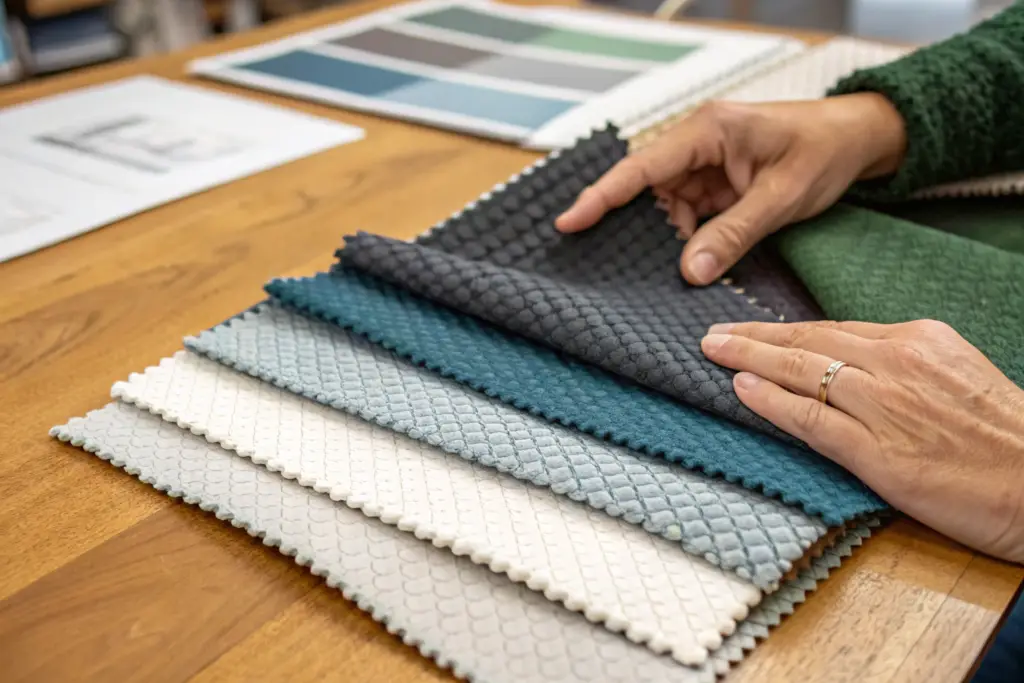
Finding a “rare style” is not just about aesthetics. It is about giving your brand a tangible competitive edge that cannot be easily copied. Our deep mill network is your gateway to this. We are not just flipping through standard swatch books. We are actively co-developing unique blends, like Cupro-linen hybrids that breathe like linen but drape like silk, or carbon-brushed fleece that offers extreme warmth without weight, utilizing hollow-core polyester yarns.
This sourcing power directly connects to the demand for sustainability, which we know is a make-or-break factor for US consumers. We understand that “eco-friendly” can sound like a marketing buzzword. We make it a technical, verifiable reality. We can source and verify a full range of responsible materials, from GOTS-certified organic cotton and TENCEL™ Lyocell to recycled polyester certified by the Global Recycled Standard (GRS). Our 2022 collaboration with a West Coast eco-brand involved developing a 100% compostable t-shirt, right down to the sewing thread and packaging. The technical challenge was finding a heat-resistant elastomer for the neck tape that would also biodegrade. It took four months of trial and error with a chemical company in Taiwan to get it right. That brand launched a genuinely zero-waste product at a competitive price because we managed the entire R&D process. Resources for responsible sourcing, such as certifications from Textile Exchange, are central to our material strategy.
How Do We Solve Your Worst Delayed Shipment Nightmares?
Technology and quality mean nothing if your product arrives late. A missed two-week window for a back-to-school launch can wipe out a season’s profit. You have my word that our entire technical system is designed with one ultimate goal: on-time, accurate delivery. But I know a promise is cheap. That is why I want to show you the specific logistical technology and planning protocols we use to turn an uncertain timeline into a guaranteed one.
The root cause of late shipments is rarely a single big failure. It is almost always a cascade of tiny, unmonitored delays in the supply chain. Our solution is aggressive pre-production planning, live digital tracking, and a direct integration with your distribution network. We use a Time and Action calendar that is not a static PDF, but a live project management document. Every single task, from lab dip approval to sewing thread procurement, has an assigned owner, a start date, and a hard deadline. The system automatically alerts management if a task is 24 hours overdue. This aggressive micro-management of the pre-production phase is not fun, but it is the only way to collapse development lead times and protect the final ship date.
What Makes DDP Shipping a Game-Changer for US Brand Owners?
The most stressful part of international sourcing is the unknown cost and complexity of logistics. You find a great FOB price, but then a shipment gets stuck in customs. You get a surprise bill for demurrage, port fees, and a customs bond. Suddenly, your margin is gone. This is why we champion Delivered Duty Paid (DDP) shipping. It is not just a shipping term; it is a total philosophy of partnership and financial transparency.
When we ship DDP, we are the Importer of Record. This means Shanghai Fumao handles everything from our factory floor to your specified warehouse door. We manage the ocean or air freight, the insurance, and, most importantly, the complex US customs clearance. We calculate and pay all duties and taxes under our own bond. You receive a single, all-inclusive price. There are no hidden fees, no frantic calls to a customs broker, and no risk of a shipment sitting on the dock while you sort out paperwork. For a brand owner, this converts a high-risk, variable-cost part of the business into a simple, fixed-cost line item. You can find excellent guidance on these terms from the International Trade Administration.
How Does Supply Chain Visibility Prevent Losing a Whole Season?
A delayed shipment that causes you to miss your sales window is a catastrophe. We prevent this with radical supply chain visibility. You should never have to email us to ask, “Where is my order?” The answer should already be on your screen. We provide a live, read-only link to your production order’s critical path. You can see the real-time status: “Cutting: 100% Complete,” “Sewing: 65% Complete,” “Packing: Not Started.”
This transparency is powered by barcode scanning at every major production milestone. A bundle of cut pieces is scanned as it enters the sewing line and scanned out as a finished garment. This data feeds directly into our cloud-based portal. If a line’s output drops below its planned target, our production manager sees it immediately and can add capacity or troubleshoot a machine issue within hours, not days. For a large distributor client in Florida last autumn, this system was the difference between a profitable season and a total loss. A late-stage fabric shortage threatened a 50,000-unit activewear order. The live tracking data alerted both our team and the client in real-time. We instantly air-freighted a top-up of greige fabric, prioritized it in the dye house, and delivered the entire order just three days before their distribution center’s cut-off date. This is how Shanghai Fumao technology protects your calendar, and your revenue.
Conclusion
First-class garment technology is not a single machine or a final inspection sticker. It is an ecosystem. It starts with a precise, automated cutting room that guarantees every piece of fabric matches the original design. It continues through a zero-tolerance quality control system that catches a flawed fiber before it can become a defective shirt. It depends on deep, strategic fabric partnerships that turn a sketch into a unique, high-performance textile you cannot find anywhere else.
This entire technical framework serves one purpose: to give your brand certainty. Certainty that a size medium fits like a medium, every time. Certainty that the color of the hoodie in your ad campaign matches the one that arrives at the customer’s doorstep. And, above all, certainty that your merchandise will be on the shelf and ready to sell on the exact date we promised. By combining German and Japanese machinery with a data-driven production culture, we have transformed garment manufacturing from a craft of hope into a science of results. We don’t just make clothes. We engineer confidence for our partners.
I hope this detailed look behind our factory doors has shown you how seriously we take our craft. If you are ready to experience a truly technical and reliable manufacturing partnership, I want to make it simple. We can audit your current best-seller for free, break down its construction, and show you how we would improve quality and margin using our system. Reach out to our Business Director Elaine directly. You can connect with her at elaine@fumaoclothing.com. Let’s stop troubleshooting and start engineering your next collection.