About five years ago, I was sitting in a meeting with a difficult, brilliant buyer from a major German luxury brand. He had audited dozens of factories across Asia. He was skeptical, precise, and unimpressed by standard factory claims of "quality" and "efficiency." He walked our main production floor in silence, observing. At the end of the tour, he turned to me and said, "Herr Zhao, your factory is good. It is a Mercedes. It is solid, reliable, well-engineered. But for our brand’s most complex, delicate, small-run pieces, I need a Porsche. I need something faster, more agile, more precisely tuned. I need a line that can change from a silk blouse to a tailored wool jacket in under an hour, and sew both to a standard that my atelier in Milan would accept. Do you have a Porsche line?" I didn’t. But his question planted a seed. A year later, the Porsche Line was born.
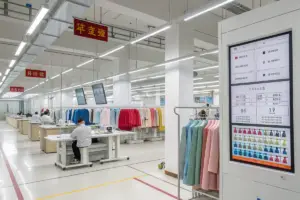
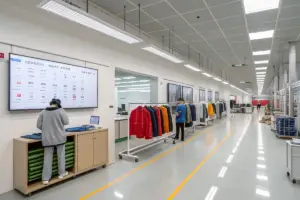
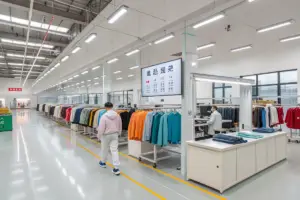
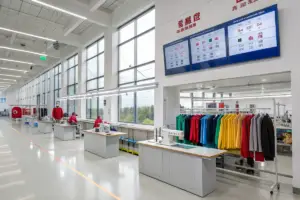
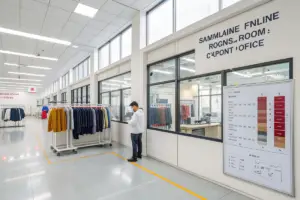
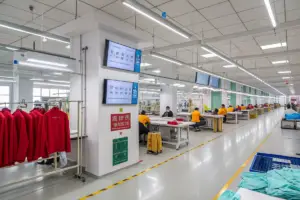
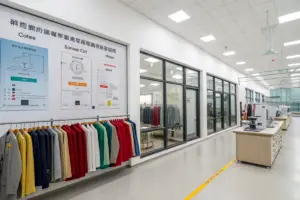
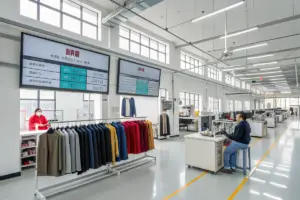
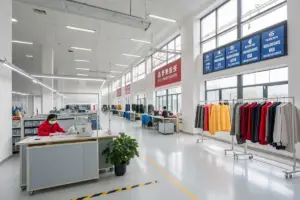
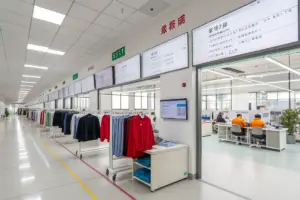
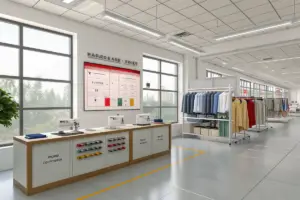
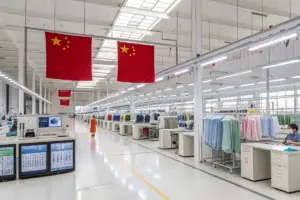
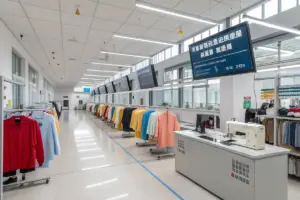
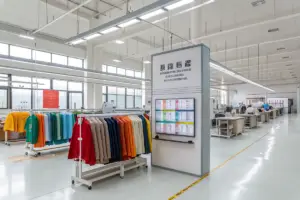
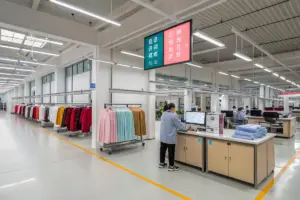
We call our premium, small-batch sewing floor "The Porsche Line" because it is engineered like a sports car, not a truck: it is designed for extreme agility, sub-30-minute style changeovers, single-piece flow production, and the highest stitch-per-inch precision, built specifically to manufacture complex, high-detail garments in quantities as low as 50 units per style for luxury and boutique brands that demand atelier-quality finishing at factory speed. A standard mass-production sewing line is a long, straight highway cruiser, optimized for one thing: producing thousands of identical units with maximum efficiency. The Porsche Line is a precision instrument for the opposite: producing small, exclusive runs of complicated, beautiful garments, with frequent, rapid changes between styles, without sacrificing a single stitch of quality. This is not a marketing nickname. It is a completely different production system, and it was built to answer a specific, unmet need in the luxury and boutique apparel market. Let me walk you inside this line, show you the engineering that makes it fast and flexible, and explain what kind of brand it is designed to serve.
What Is a "Single-Piece Flow" System in a Garment Factory?
A traditional, mass-production sewing line operates on a "bundle system." A large stack of cut fabric pieces for a single operation—say, 50 left sleeves—is bundled together. Operator A sews all 50 left sleeves. The bundle of 50 partially sewn garments then sits in a queue, waiting for Operator B to attach the cuff. The bundle moves from station to station in large batches. This system is efficient for large, stable volumes. It maximizes each operator’s speed on a repetitive single task. But it is slow to start, slow to change, and slow to finish. A single garment can take days to travel through a bundle system. A quality defect discovered at the end of the line means 50 defective units have already been produced.
The Porsche Line operates on a fundamentally different principle: single-piece flow. An individual garment, one single unit, travels continuously through a small, U-shaped cluster of multi-skilled operators. Operator A sews the left sleeve and immediately hands the garment to Operator B, who attaches the cuff. Operator B hands it to Operator C, who sews the side seam. The garment is never waiting in a queue. It is always in a pair of skilled hands. The first finished garment comes off the line minutes after the line starts, not days later. A quality defect is detected on the very first unit, and it is corrected before the second unit is cut. This system is inspired by the Toyota Production System and lean manufacturing principles, but adapted for the extreme variability and precision demands of high-end garment construction. It is the production philosophy of a Formula 1 pit crew, not an assembly line.

How Does a U-Shaped Workstation Cluster Enable a 20-Minute Style Changeover?
A traditional straight-line layout is a fixed sequence of specialized machines. To change from sewing a silk blouse to sewing a wool jacket, the machines must be physically reconfigured, the specialized guides and folders must be changed, and the operators must be re-trained on the new sequence. This can take hours, or even a full shift. For a factory running 5,000 identical blouses, this downtime is acceptable. For a brand ordering 50 blouses and 50 jackets, it is fatal.
The Porsche Line’s workstations are arranged in a tight U-shaped cluster. The machines are mounted on wheeled, modular platforms. Each machine is a quick-change, multi-functional unit. The sewing machine guides, folders, and presser feet are standardized on a magnetic, tool-free quick-release system. A style changeover is a precisely choreographed, 20-minute procedure. The previous style’s fabric, trims, and machine settings are cleared. The new style’s pre-loaded, calibrated machine modules are wheeled into position and locked. The digital tech pack for the new style, complete with 3D visual work instructions, is instantly pushed to the tablet screen at each workstation. The operators, who are cross-trained on multiple garment types, review the new sequence on their screens. Within 20 minutes of the last stitch on the old style, the first stitch on the new style is being sewn. This agility is the Porsche Line’s defining capability. It is what allows us to profitably and precisely manufacture small, diverse, complex orders that a traditional line cannot touch.
Why Does a "Multi-Skilled" Operator Matter for Luxury Finishing?
In a traditional bundle line, an operator performs a single, repetitive task: set a sleeve, sew a collar, hem a bottom. They become incredibly fast at that one operation. But they do not understand the whole garment. They cannot see how their single seam interacts with the overall fit and drape. A luxury garment, particularly a complex one with delicate fabric and precise hand-finishing, requires a different kind of operator. It requires an operator who understands the entire garment architecture and can make a judgment call at their station to adjust the handling of a specific piece of fabric to achieve a perfect result.
Every operator on the Porsche Line is a senior, multi-skilled technician with a minimum of 12 years of experience and specific training in luxury garment construction. They are proficient in multiple machine types and multiple operations. Operator A can sew a sleeve, a collar, and a buttonhole. Operator B can assemble a lining, attach a zipper, and execute a hand-felled hem. This multi-skilled capability means the garment is handled by fewer people, each of whom sees the whole garment, understands its quality standard, and takes personal ownership of the final result. A delicate silk charmeuse panel is not passed through ten different hands, each applying a slightly different tension. It is guided through the line by a small team of artisans who understand how the fabric behaves, how to adjust their handling to avoid pulling or puckering, and how to inspect their own work and the work of the previous operator in the sequence. This multi-skilled, whole-garment ownership is the human element that elevates Porsche Line production from "factory sewing" to "atelier-level finishing."
What Garment Details Require a Porsche Line Instead of a Mass Line?
Mass production is a triumph of standardization. It is perfect for a basic t-shirt, a simple pair of chinos, or a standard dress shirt. These garments are constructed with a relatively small number of straightforward operations, and their quality is defined by consistency. The Porsche Line is not for these garments. The Porsche Line is for garments that mass production cannot touch. It is for garments with a high degree of construction complexity, delicate and difficult-to-handle fabrics, and a requirement for visible, hand-finishing details that define the luxury aesthetic.
There is a specific, definable class of garment details that simply cannot be produced to a luxury standard on a high-speed, specialized, mass-production sewing line. These details require a slower machine speed, a different needle and thread, a specialized presser foot, and, most critically, a human operator who can make micro-adjustments to the fabric handling in real-time based on the specific characteristics of the individual piece they are sewing. These are the details that signal "couture" to a discerning customer, and they are the details that the Porsche Line was specifically built to execute at a commercially viable speed.

Why Does a French Seam Finish Require a Slower, More Precise Machine?
A French seam is a self-enclosed seam that encases the raw fabric edge within a second, folded seam. It is the hallmark of a high-quality, unlined garment, particularly in delicate, sheer, or easily frayed fabrics like silk chiffon, organza, or lightweight linen. A French seam is not stronger than an overlocked seam; it is more beautiful. It presents a clean, narrow, perfectly straight line on the inside of the garment. But it is unforgiving. Any wavering in the stitch line, any uneven trimming of the seam allowance, any slight puckering from incorrect thread tension, is immediately and permanently visible.
A mass-production line, optimized for speed, uses a high-speed overlock machine to finish a seam in a single, fast pass. This is efficient, but it leaves a visible row of thread on the inside. A French seam, in contrast, requires two separate sewing operations on a single-needle lockstitch machine, with a precise trimming operation in between. The machine speed must be reduced by 40% compared to standard seaming. The operator must guide the fabric with absolute precision, maintaining a perfectly consistent seam allowance width of 4 millimeters for the first pass and 6 millimeters for the second. There is no room for error. A single millimeter of deviation creates a visible wobble. The Porsche Line’s machines are calibrated for this slower, higher-precision work. The operators are specifically trained in the French seam technique. They understand the exact tension settings for different silk weights, and they know how to handle the delicate fabric without marking or stretching it. The result is a flawless, hairline French seam that is worthy of a $500 blouse.
How Do We Handle Delicate Silk Georgette Without Ply Shifting?
Silk georgette is a lightweight, sheer, crinkled fabric with a beautiful, fluid drape. It is also notoriously difficult to sew on an industrial machine. The individual plies of the fabric are loosely woven and highly mobile. Under the pressure of a standard presser foot and the pull of a standard feed dog, the top ply of the fabric shifts against the bottom ply. The seam, when finished, is puckered, twisted, and uneven. The garment is ruined.
The Porsche Line is equipped with a specific set of machine modifications to handle delicate, shifting fabrics. The feed dogs on our lockstitch machines are fine-toothed, smooth, and set to a minimal height. The presser foot pressure is pneumatically controlled and can be dialed down to a feather-light touch, just enough to hold the fabric without compressing it. We use a straight-stitch needle plate with a very small needle hole to prevent the fine fabric from being pushed down into the machine. The needle is a fine, sharp size 9, replaced every four hours to ensure a perfectly sharp point that separates the yarns without cutting them. The operator is trained in a specific fabric-handling technique: the two plies are gently aligned and held with a light, even tension from both hands, feeding the fabric smoothly without pulling or pushing. The seam is sewn slowly, at 2,500 stitches per minute instead of the standard 5,000. This combination of specialized machine setup, precision tooling, and highly skilled human handling is what allows us to sew a flawless seam in a silk georgette that will drape perfectly and never pucker. This capability is not available on a standard, high-speed line.
What Kind of Brand Benefits Most from the Porsche Line?
The Porsche Line is not for every brand. It is a specialized, high-cost, high-precision production asset, and it is a poor fit for a brand whose primary need is the lowest possible unit cost for a basic garment in high volume. The Porsche Line is specifically designed to be the perfect manufacturing partner for a specific type of brand: the luxury, contemporary, or high-design boutique brand that competes on exclusivity, quality of construction, and design complexity, not on price.
This brand typically produces smaller collections, with more styles and fewer units per style. They use premium, often difficult-to-handle fabrics. Their customer is discerning, knowledgeable, and unforgiving of poor finishing. The brand’s reputation rests on the visible and tactile quality of their garment’s construction. A poorly sewn French seam, a puckered silk panel, or a buttonhole with a loose thread is not a minor defect; it is a brand crisis. For this brand, the Porsche Line is not a factory; it is an extension of their own design atelier, providing the precision, flexibility, and human craftsmanship of a small workshop, but with the professional sourcing, testing, and logistics infrastructure of a world-class factory behind it.

Can a Brand Order Just 50 Units Per Style Without a Cost Penalty?
Yes. The Porsche Line is specifically designed for minimum order quantities as low as 50 units per style. This is not a concession; it is the line’s core operating model. A traditional mass-production line has a high minimum order quantity because the fixed setup cost—the time to reconfigure the line, train the operators, and start the first bundle—must be amortized across a large number of units. If that setup cost is $500, and you order 5,000 units, the setup cost is $0.10 per unit. If you order 50 units, the setup cost is $10 per unit. The unit price skyrockets, or the factory simply refuses the order.
The Porsche Line’s 20-minute style changeover fundamentally changes this economics. The setup cost is measured in minutes, not hours. The cost of switching from one style to another is minimal. A 50-unit order can be set up, sewn, finished, and packed with the same efficiency as a 500-unit order. There is no penalty for small quantities because the production system is designed for small quantities. This is the freedom we offer to a luxury brand. They can design a collection with ten styles, produce a small, exclusive run of 50 units each, test the market, sell through at full price, and then reorder the winning styles in a second, equally small batch. They are not forced to overproduce, not forced to hold inventory, and not forced to discount unsold stock. The Porsche Line enables a just-in-time, low-inventory, high-exclusivity business model that is the holy grail of luxury fashion.
Why Does a Couture Brand Need an "Atelier-Level" Production Partner?
A couture or high-design brand’s reputation is built on the perfection of its finishing. The customer who pays $800 for a blouse is not just buying fabric and design; they are buying the promise that every internal seam, every buttonhole, every hidden stitch is as beautiful and perfectly executed as the outside of the garment. This promise cannot be fulfilled by a factory that has never seen a hand-rolled hem or a pick-stitch.
The Porsche Line is, in essence, a factory-based atelier. It combines the handcraft skills and the quality obsession of a traditional tailoring workshop with the modern efficiency and professional management of a factory. Our operators are artisans. They can execute a hand-rolled hem, a pick-stitch lapel, a hand-sewn buttonhole, and a hand-felled lining. These are the skills that are typically found only in a small, independent atelier in Paris or Milan. But a small atelier cannot scale. It cannot produce 200 units for a trunk show delivery. It cannot provide independent lab test reports and a full compliance dossier. The Porsche Line can. It is the atelier that scales. It provides the couture-level hand-finishing that defines a luxury brand, delivered with the consistency, documentation, and reliability of a professional manufacturing partner. For a couture brand looking to move from a single atelier to a scalable, commercial production model without sacrificing a single stitch of quality, the Porsche Line is the answer.
Conclusion
The Porsche Line is not a marketing slogan. It is a fundamentally different sewing floor, engineered for a fundamentally different type of brand. It is a single-piece flow, U-shaped cluster system designed for 20-minute style changeovers, sub-50-unit minimums, and multi-skilled artisan operators who can execute atelier-level hand-finishing on the most delicate and complex fabrics. A French seam on a silk georgette blouse, a pick-stitch on a tailored wool jacket, a hand-rolled hem on a silk scarf—these are the details that the Porsche Line was built to produce, at a speed and a consistency that a traditional atelier cannot match, and with a flexibility and precision that a mass-production line cannot touch.
This line is for the luxury boutique brand, the high-design contemporary label, and the couture house that needs a manufacturing partner who speaks the language of hand-finishing, understands the economics of small-run exclusivity, and can deliver an $800 blouse that is as beautiful on the inside as it is on the outside.
If you are a U.S. luxury or boutique brand owner who has struggled to find a factory that can handle your complex designs, your delicate fabrics, and your small minimums without compromise, I invite you to see the Porsche Line in operation. We can arrange a live video tour of the line, showing you the changeover process and the hand-finishing stations. Contact our Business Director, Elaine, at elaine@fumaoclothing.com. Tell her you want to tour the Porsche Line. Let us show you the production system that was built for the most demanding, most detail-obsessed brands in the world.