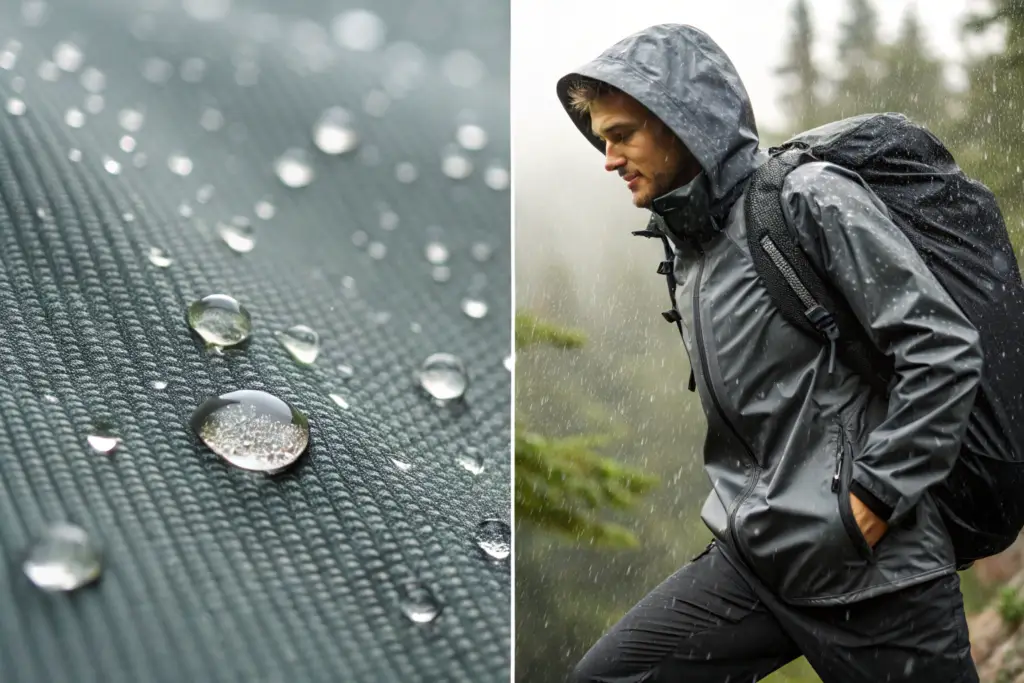
You are designing the ultimate outdoor jacket. You know it must protect the wearer from a torrential downpour, an absolute, non-negotiable shield against the elements. But you also know the special misery of a "waterproof" jacket that traps your own sweat, leaving you as wet on the inside from condensation as you would be from the rain. For decades, this was the impossible trade-off between staying dry and staying comfortable. You wonder if fabric technology has finally solved this ancient contradiction. A veteran mountaineer and gear designer once told me, "A trash bag is 100% waterproof. But you'll drown in your own sweat in ten minutes. A truly great outdoor fabric doesn't just keep the rain out; it lets your body breathe. It's a dynamic, intelligent barrier, not a static, suffocating shell."
Yes, waterproof breathable fabric is not only usable for outdoor apparel; it is the absolute, non-negotiable foundation of all modern high-performance outdoor gear. The technology works by creating a physical barrier with pores that are 20,000 times smaller than a water droplet, yet 700 times larger than a water vapor molecule. This allows sweat vapor to escape from the inside while completely preventing liquid rain, snow, and wind from penetrating from the outside. This is achieved through two primary technologies: 1) Laminated Membranes (like Gore-Tex, which bond an ultra-thin, microporous PTFE film to a face fabric), and 2) Coated Fabrics (which apply a microporous or hydrophilic PU layer directly to the fabric). The technology turns a static shell into a dynamic, intelligent climate-control system for the body.
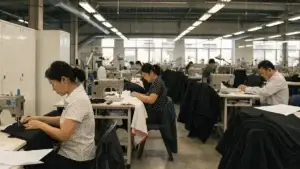
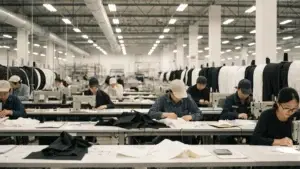
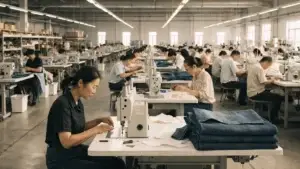
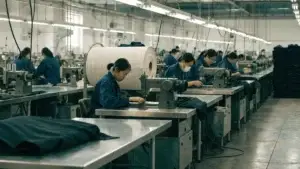
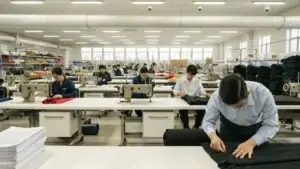
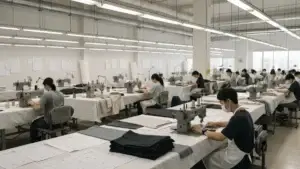
At Shanghai Fumao, our dedicated Outerwear Line is equipped with the specialized machinery—including advanced seam-sealing (taping) equipment—and the expert workforce to construct high-performance waterproof breathable garments. Let me explain the science behind this essential outdoor technology and how we help our B2B partners build gear that performs flawlessly in the harshest conditions.
How Does a Waterproof Breathable Membrane Actually Work at the Microscopic Level?
The concept of a fabric that is both waterproof and breathable sounds like a physical impossibility. How can a material be a complete barrier to liquid water while simultaneously allowing water vapor to pass through? The answer lies in a feat of microscopic engineering. A waterproof breathable membrane is not a solid sheet of plastic; it is a thin, highly structured film riddled with billions of incredibly tiny pores, creating a selectively permeable barrier that can distinguish between a liquid and a gas.
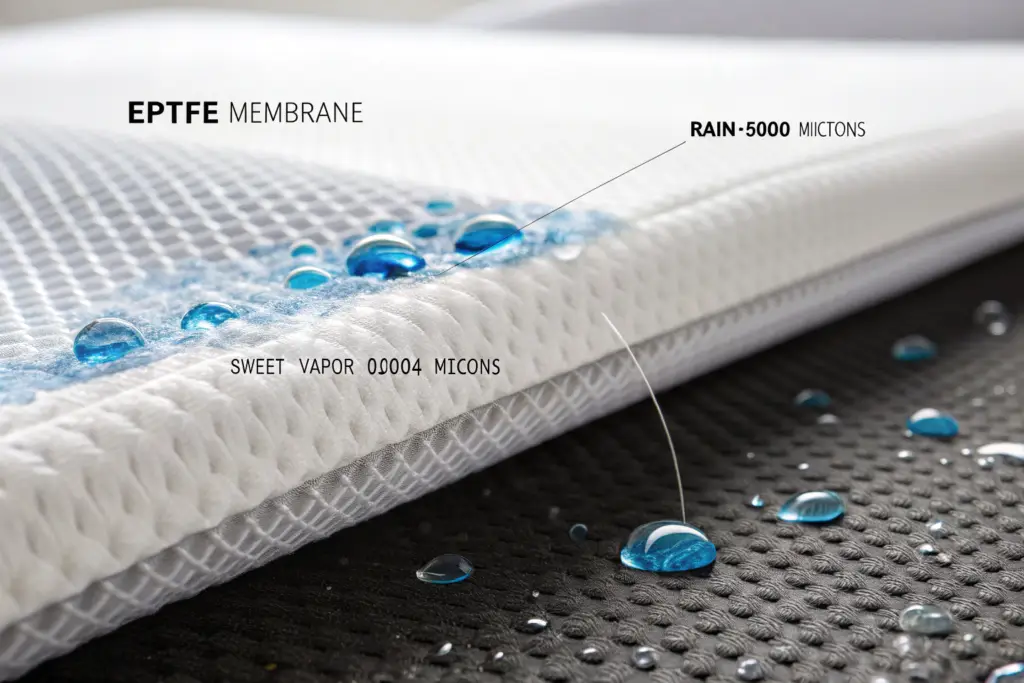
A waterproof breathable membrane works through a simple, brilliant principle of size exclusion. Its pores are engineered to a precise size, typically between 0.2 and 10 microns. A single liquid water droplet is massive by comparison, around 5,000 microns, far too large to pass through. However, a single molecule of water vapor (sweat in its gaseous form) is infinitesimally small, around 0.0004 microns, and can pass through the pore unimpeded. The membrane acts as a microscopic sieve, blocking the large liquid droplets while allowing the tiny vapor molecules to escape.
The original and most famous branded technology is Gore-Tex, which uses an expanded Polytetrafluoroethylene (ePTFE) membrane. The key innovation is that the ePTFE is incredibly hydrophobic (water-hating), which adds the surface tension effect to the size-exclusion mechanism. This dual-action barrier is what creates the legendary, high-performance protection of a modern, premium outdoor shell. This is the science behind the fabrics we use in our technical outerwear production .
What Is the Difference Between a "Microporous" and a "Hydrophilic" Waterproof Breathable Technology?
- Microporous (e.g., Gore-Tex, eVent): Uses physical holes (pores) that are smaller than water droplets but larger than vapor molecules. This is the most breathable technology, especially those like eVent that are "air-permeable," allowing a direct convective airflow.
- Hydrophilic (e.g., Sympatex, PU Coatings): Uses a solid, non-porous film that has a chemical affinity for water. It works by absorbing moisture vapor on the warm, humid inside, diffusing it through the solid film via a chemical chain reaction, and then releasing it on the cooler, drier outside. It is very effective, but the "breathability" is dependent on a temperature and humidity gradient.
How Is the Overall Breathability of a Fabric Measured and Rated?
There are two key metrics. Waterproofness is measured by a Hydrostatic Head Test, expressed in millimeters (mm). A rating of 5,000mm is rain-resistant, 10,000mm is waterproof, and 20,000mm+ is professional-grade for extreme conditions. Breathability is measured by its Moisture Vapor Transmission Rate (MVTR), expressed in g/m²/24hrs. A rating of 5,000g is suitable for light activity, 10,000g for moderate hiking, and 20,000g+ for high-intensity aerobic activity. A professional outdoor partner should provide these objective data points. This is our standard for performance fabric qualification .
Why Is Seam Sealing (Taping) the Absolute Non-Negotiable Second Step for a Waterproof Garment?
You can buy the most expensive, highest-rated waterproof breathable fabric in the world, but if you sew it into a jacket with a standard needle and thread, the finished garment will leak like a sieve. The act of sewing creates thousands of tiny needle holes along every seam, which are direct, open channels for water to pour through. The critical, non-negotiable second step in constructing a truly waterproof garment is a process called seam sealing, or seam taping.
Seam taping is the non-negotiable, critical second step in manufacturing a waterproof garment. A special, waterproof tape is applied over every single stitch line on the inside of the garment using a specialized hot-air taping machine. The heat melts an adhesive on the back of the tape, bonding it permanently and seamlessly to the fabric, creating a flexible, impermeable barrier over every needle hole. Without this process, a garment made from the best waterproof fabric in the world will still leak. The presence of a seam-taping machine on a factory floor is the definitive sign of a true outerwear manufacturer.
A brand we work with almost launched a "waterproof" ski jacket before we physically showed them the difference. We had sewn two samples from their chosen shell fabric. One was untaped; the other had its seams professionally sealed on our specialized taping machines. We placed a cup of water into the inside of each seam. The untaped sample dripped water through the needle holes instantly. The taped sample was bone dry. They immediately understood that seam taping was not an optional extra; it was the core waterproofing technology. This is the standard of our technical outerwear construction .
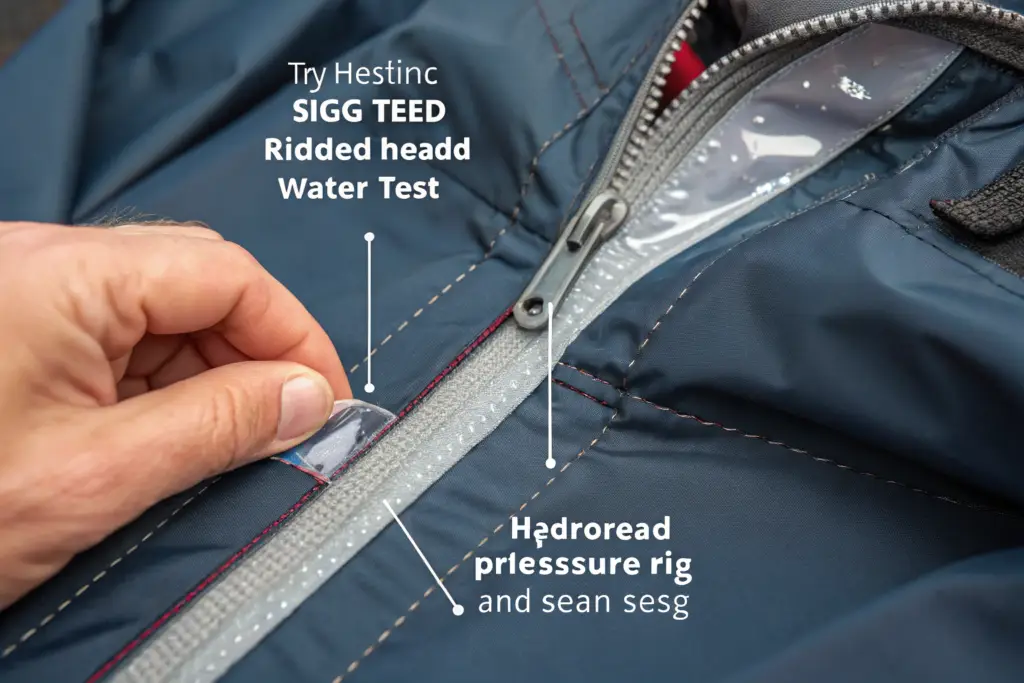
Why Is a Specialized "Hot-Air Taping Machine" a Non-Negotiable Sign of a Capable Outerwear Factory?
A standard sewing factory does not have this equipment. A seam-taping machine precisely applies heat, pressure, and a cooling cycle to bond the waterproof tape to the fabric. It is a significant capital investment that demonstrates a factory's serious, long-term commitment to producing true technical outerwear. Seeing these machines on a video tour is a definitive sign you are talking to the right partner. This is a core part of our specialist manufacturing capability .
How Do You Test a Finished Taped Seam to Ensure a Lifetime of Waterproof Integrity?
A professional factory will perform a seam-strength test and a hydrostatic pressure test on a sample of the taped seam. We also conduct a practical, physical test on a random sample of finished garments, using a "Rain Room" or a localized water-pressure test to verify that every taped seam is a perfect, impermeable barrier before the garment is packed. This is our commitment to performance quality control .
How to Choose the Right Waterproof Breathable System for Different Outdoor Activities?
Not all waterproof breathable systems are the same. The specific construction—how the membrane is bonded to the face fabric and protected on the inside—creates garments with vastly different performance characteristics, suited for different types of activities. A professional outdoor brand understands these construction types and strategically chooses the right system for the end-user's needs.
The three primary constructions are: 1) 2-Layer, which has the membrane bonded to the face fabric with a separate, loose hanging mesh liner. It is the most comfortable and affordable, ideal for general hiking and everyday wear. 2) 2.5-Layer, which replaces the liner with a printed, textured "half-layer" on the inside. It is the lightest and most packable, perfect for trail running and emergency shells. 3) 3-Layer, which sandwiches the membrane between a durable face fabric and a tough, integrated inner scrim. It is the most rugged, durable, and high-performance system, built for mountaineering, backcountry skiing, and the harshest conditions.
A brand we work with designs a specific jacket for each category. Their ultralight running shell uses a 2.5-layer system for maximum packability. Their flagship alpine jacket uses a burly 3-layer Pro Shell for uncompromising durability. Their everyday rain jacket uses a comfortable 2-layer system. They do not use a single fabric for everything; they engineer the right system for the specific activity and consumer. This is the strategic thinking we support in our product development partnership .
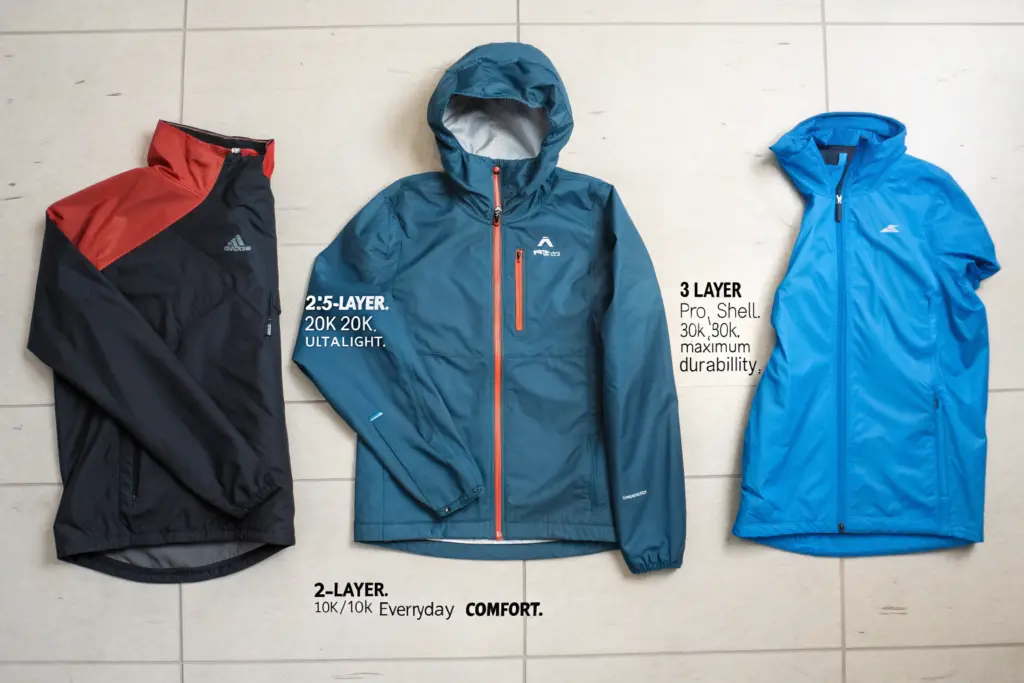
What Is a "3-Layer Pro Shell" and Why Is It Overkill for an Everyday Commuter Jacket?
A 3-Layer Pro Shell is a tank. It sandwiches the waterproof membrane between a heavy-duty face fabric and a tough, integrated inner scrim. It is incredibly durable and designed for the abrasion of rock climbing and the weight of a heavy backpack. It is also heavier, stiffer, less breathable, and far more expensive than a 2-Layer system. For a commuter walking from the train to the office, the 3-Layer's extreme durability is an unnecessary and uncomfortable trade-off. The right tool must be matched to the right job.
What Does a "20k/20k" Rating Mean on a High-End Mountaineering Jacket?
This is the performance language of the prosumer. The first number refers to the Waterproof Rating (Hydrostatic Head) : 20,000mm means the fabric can withstand the pressure of a 20-meter column of water before leaking, suitable for extreme, driven rain. The second number refers to the Breathability Rating (MVTR) : 20,000g/m²/24hr means it can move 20,000 grams of water vapor through a square meter in 24 hours, suitable for high-exertion activities. A 20k/20k rating is a clear signal of a professional-grade, high-performance garment.
How Does Fumao's Specialized Outerwear Line Turn a High-Tech Fabric into a World-Class Performing Jacket?
A high-tech fabric is just a very expensive roll of material until it is in the hands of a factory with the specialized machinery, the trained workforce, and the obsessive quality control processes to transform it into a flawless, life-protecting garment. Our dedicated outerwear line is your brand's bridge from a mill's innovation to a customer's summit.
Fumao's specialized outerwear line is the critical link between high-tech fabric and high-performance garment. We have the heavy-duty, walking-foot machines to precisely construct multi-layer fabrics. We have the specialized hot-air seam-taping equipment to create a truly waterproof seal on every seam. And we have the rigorous, in-house quality control process, including seam-strength and water-pressure testing, to verify that every single jacket that leaves our factory will perform to its specification. We are the expert partner that turns your performance vision into a flawless, field-ready reality.
A brand that had struggled for years with inconsistent waterproofing from other suppliers switched their entire technical shell production to us. They told me, "Your outerwear line is a different universe from a normal sewing floor. Seeing the walking-foot machines and the taping equipment was one thing, but seeing your QC team pressure-test the seams on our production run gave us a level of confidence we'd never had before. Our return rate for "leaking" has dropped to zero." That is the peace of mind we provide. This is the value of a specialist, performance-focused manufacturing partner .
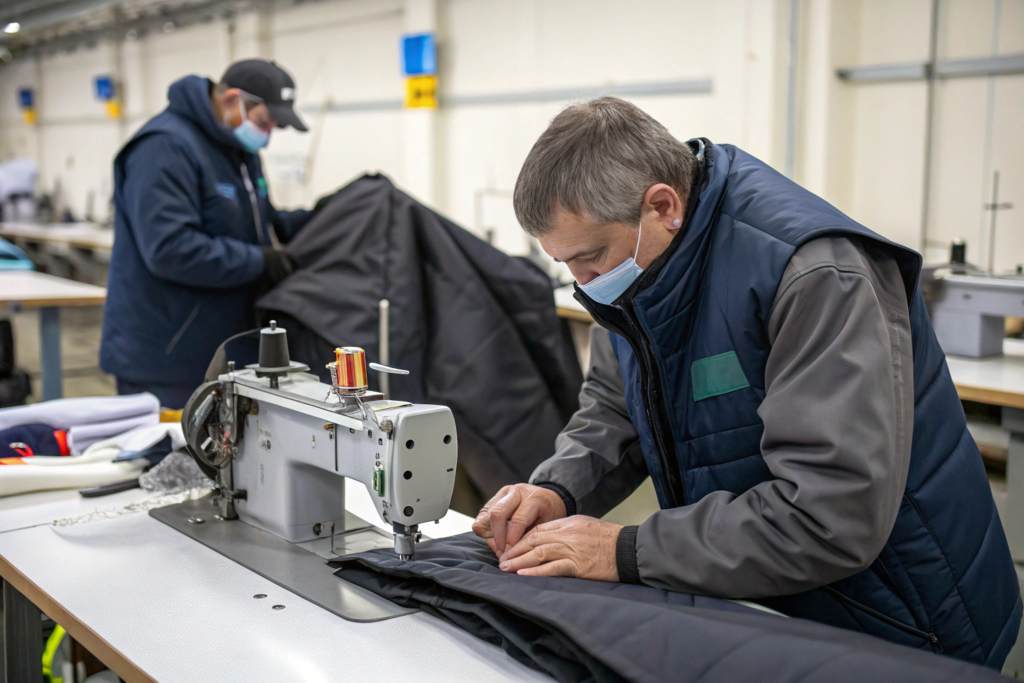
How Do Your Specialized Walking-Foot Machines Ensure a Perfect Construction on a Slippery 3-Layer Fabric?
A 3-layer fabric is dense, stiff, and extremely slippery. A standard sewing machine's presser foot will grip only the top layer, causing the layers to shift, creating puckered, misaligned, and unprofessional seams. Our walking-foot (compound feed) machines have a second set of feed dogs built into the presser foot, which move the top layer of fabric in perfect synchronization with the bottom layer. This is the only tool that can sew a complex, multi-layer waterproof textile with precision.
How Do You Test the Finished Waterproofing of a Jacket Before It Ships?
Our final QC for technical outerwear goes beyond a visual check. We perform a localized water-pressure test on a random sample of critical seam junctions—like the hood, shoulders, and zippers—using a hydrostatic head tester. This physical test verifies the waterproof integrity of the constructed garment, not just the fabric on the roll. This is the standard of our performance quality assurance .
Conclusion
Waterproof breathable fabric is not a contradiction; it is the foundational, life-protecting technology of all modern outdoor apparel. By marrying an intelligent, microporous membrane with the non-negotiable, expert process of seam taping, a garment becomes a dynamic, intelligent barrier that keeps the elements out while allowing the athlete's body to perform at its peak.
At Shanghai Fumao, our dedicated outerwear line, our specialized machinery, and our obsessive, performance-focused quality control are the tools that transform these high-tech materials into world-class, field-tested garments. We are the partner that ensures your product's technical promise is kept, even in the most unforgiving conditions.
If you are ready to build a line of true, high-performance outerwear with a specialized manufacturing partner, let's talk. Our Business Director, Elaine, can walk you through our technical outerwear capabilities. Please email Elaine at: elaine@fumaoclothing.com.