You have just received the fit sample for your new collection. The design is beautiful. The fabric is perfect. But as you put it on your fit model, your heart sinks. The sleeves are too long. The chest is too tight. The proportions are just... off. You feel a familiar knot of frustration. You know that a sizing issue now can cascade into a disastrous bulk production run. A brand owner told me, "I used to think sizing issues meant endless, confusing email chains. Now I know there's a fast, precise, almost surgical way to fix them. It's all about visual data and a direct line to the pattern maker."
The key to quickly resolving sizing discrepancies with an international supplier is to replace subjective, written descriptions with objective, visual, and measurable data. The fastest process involves three steps: 1) Immediately staging a live, annotated fit session (on a video call if possible), 2) Communicating the exact, measurable discrepancy for each affected Point of Measure (POM), and 3) Receiving a clear, written confirmation from the factory's pattern maker of the exact changes to be made. This visual, data-driven approach can resolve issues in days, not weeks.
At Shanghai Fumao, our entire product development and CMT communication model is built to solve these kinds of problems with speed and precision. Let me show you the exact process we use with our B2B partners to turn a sizing crisis into a simple, technical correction, ensuring your next sample is perfect and your production stays on schedule.
How to Stage a "Live Fit Session" That Replaces Weeks of Emails?
The single biggest time-waster in resolving fit issues is the asynchronous, text-heavy email chain. You send a written description. The factory tries to interpret it. They ask a question. You reply two days later. This slow dance can take weeks. The alternative is to compress this entire diagnostic phase into a single, focused, real-time video call. This is the most powerful tool you have for speed.
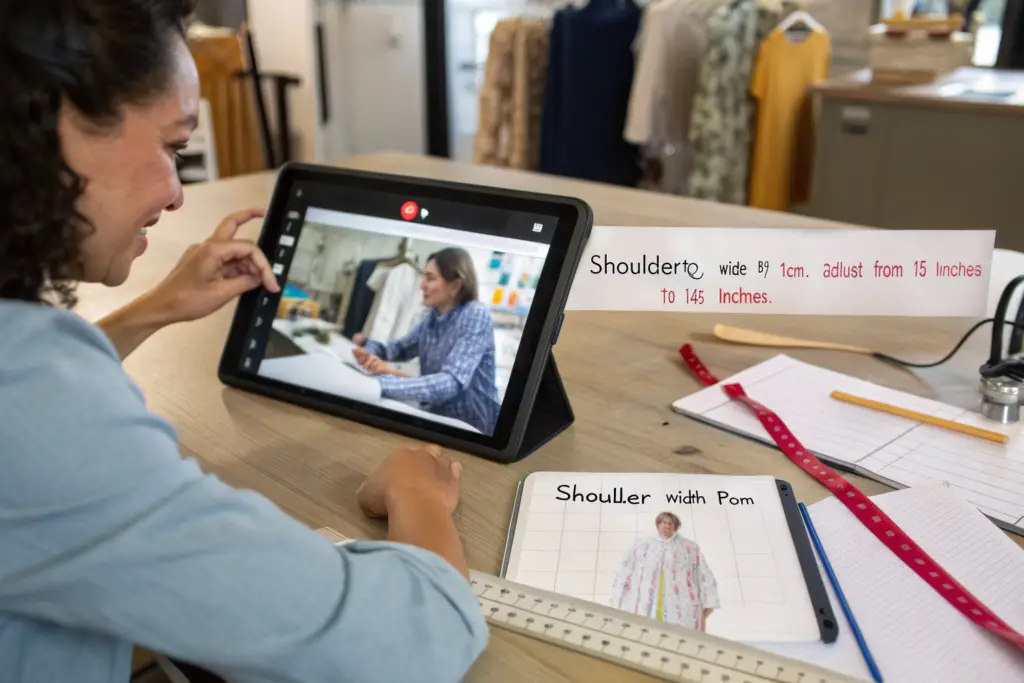
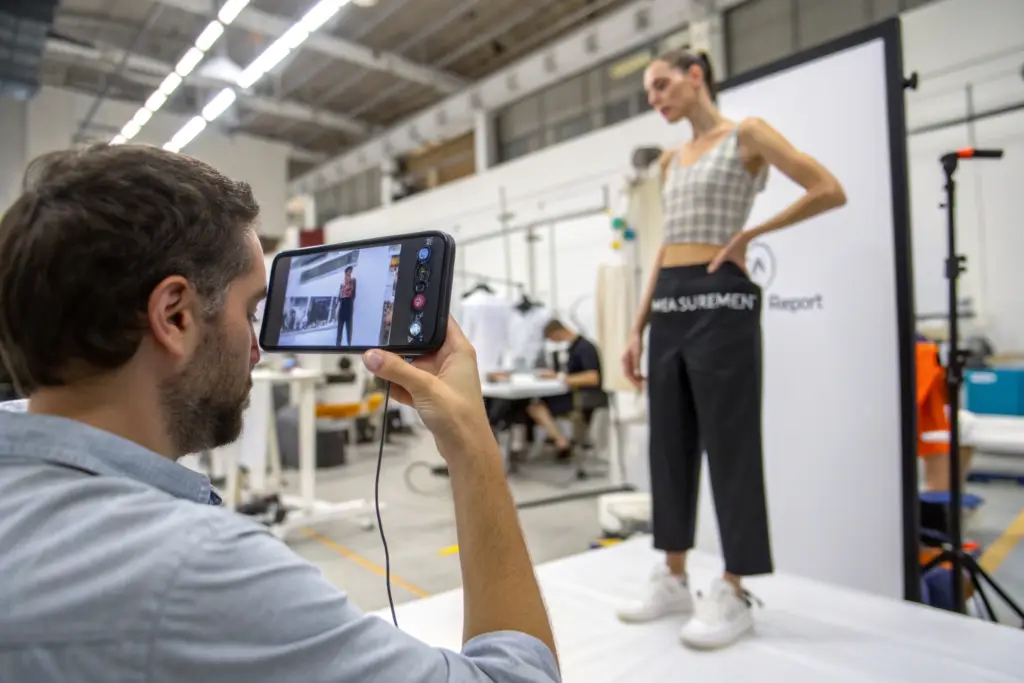
A live fit session is the fastest way to diagnose and communicate sizing issues. Schedule a 15-minute video call with your factory's pattern maker or Project Manager. Put the sample on your fit model. Use your camera to walk them through every issue, in real-time, from every angle. Point to the specific area of concern. Describe the problem while showing it visually. This eliminates the ambiguity of written language and allows the pattern maker to ask clarifying questions on the spot, achieving a shared understanding in minutes rather than weeks.
A brand we work with had a very specific issue with the pitch of the shoulder on a new blazer. Instead of sending a long email, they scheduled a quick video call with our head pattern maker. They put the blazer on their fit model, pointed their laptop camera at the back, and said, "See this pulling across the back? The shoulder seam needs to move forward by about half an inch." Our pattern maker saw the issue live, asked a few clarifying questions about the fit model's posture, and immediately understood the correction. The revised pattern was ready the next day. This is the speed of a live, visual diagnostic. This is our standard practice for collaborative fit resolution .
Why Is a Video Call with the Pattern Maker More Effective Than an Email to a Sales Rep?
A Sales Rep is a middleman. They must interpret your email and then explain it to the pattern maker. Information gets lost. A direct video call with the Pattern Maker, facilitated by your Project Manager, eliminates this game of "telephone." You are speaking directly to the person who will make the change. This is the most direct and efficient communication path. This is why we connect our partners directly with our technical team when needed. This is the value of our direct communication model .
What Tools Do You Need for an Effective Live Fit Call?
Keep it simple. All you need is:
- A good internet connection.
- Your fit model.
- The problematic sample.
- A measuring tape.
- Your printed spec sheet.
The spec sheet is your shared reference point during the call. This is the most effective approach for remote fit assessment .
How to Communicate the Fix with Surgical, Measurable Precision?
The live call creates a shared understanding of the problem. The next critical step is to communicate the solution with absolute, unambiguous precision. Vague language like "make it a bit looser" is the enemy of speed and accuracy. You must translate your subjective feeling into an objective, measurable instruction that is directly linked to your approved spec sheet. This is the language a Pattern Maker understands.
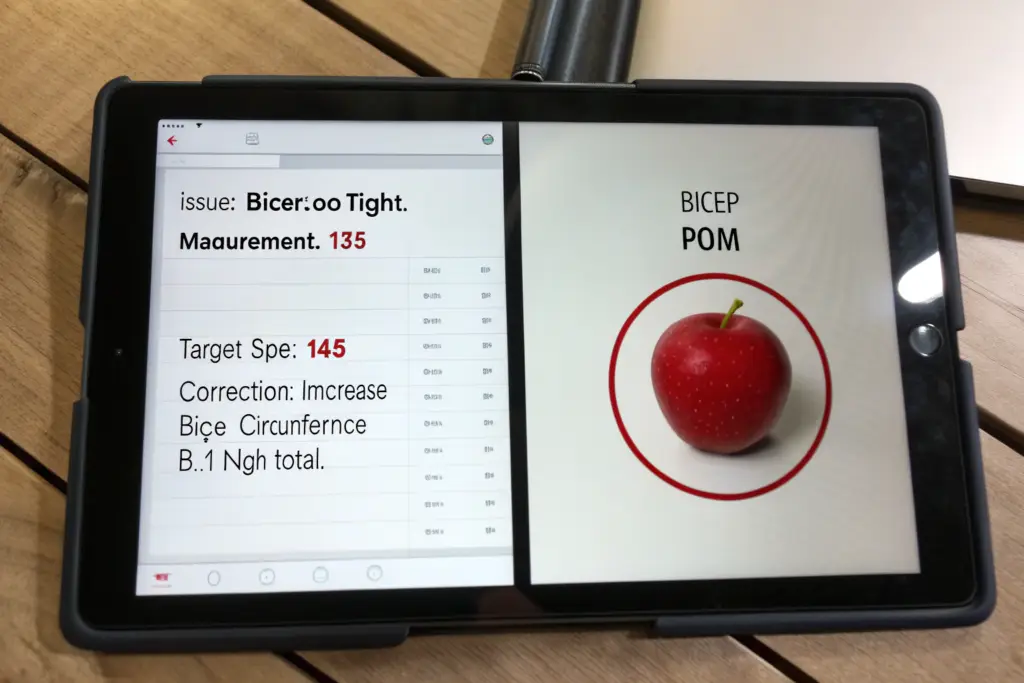
To communicate the fix with surgical precision, you must use the "Visual + Data" method for every single issue. Take a photo of the problem area on the fit model. Annotate the photo with a circle and an arrow. Then, state the correction using the specific Point of Measure (POM) code and measurements: "Refer to POM 'D' (Bicep). Current sample measures 13.5 inches. Target spec is 14.5 inches. Please increase bicep circumference by 1 inch." This leaves zero room for interpretation.
The most efficient brands we work with have mastered this. After a fit session, they send us a single, organized email. It contains a bulleted list of changes, each one referencing a specific POM on the spec sheet, providing the "current vs. target" measurement, and including an annotated photo. Our pattern maker can work through this list immediately, without any back-and-forth clarification. This single, disciplined communication practice can save days of delay. This is the precise feedback protocol we train our partners to use.
What Is the "Comment/Photo/Measurement" Formula for a Perfect Correction Note?
Master this simple formula for every single change:
- Photo: Clear, annotated photo of the issue on the fit model.
- POM Reference: "Refer to Spec Sheet POM 'X' (e.g., Sleeve Length)."
- Data: "Current sample measures [X]. Target spec is [Y]. Please adjust by [Z]."
This is the universal language of precise pattern correction. This is a key part of our product development efficiency .
Every sample we ship includes a detailed Measurement Report showing the target spec, the tolerance, and the factory's actual measurement. Use this report as the foundation for your feedback. It shifts the conversation from subjective opinion ("I feel like it's tight") to objective data ("Your report shows it measures 18.5 inches, but the target is 19 inches"). This depersonalizes the issue and makes it a simple, technical correction. This is the value of our transparent measurement process .
How to Verify the Fix and Prevent the Issue from Recurring in Bulk?
You have communicated the fix perfectly. The factory has adjusted the pattern. Now, the revised sample arrives. This is the moment of truth. You must verify that the correction was implemented exactly as specified, and you must do it before bulk production begins. This final audit is what prevents a sizing issue from becoming a costly, large-scale disaster. It is the essential, non-negotiable final step.
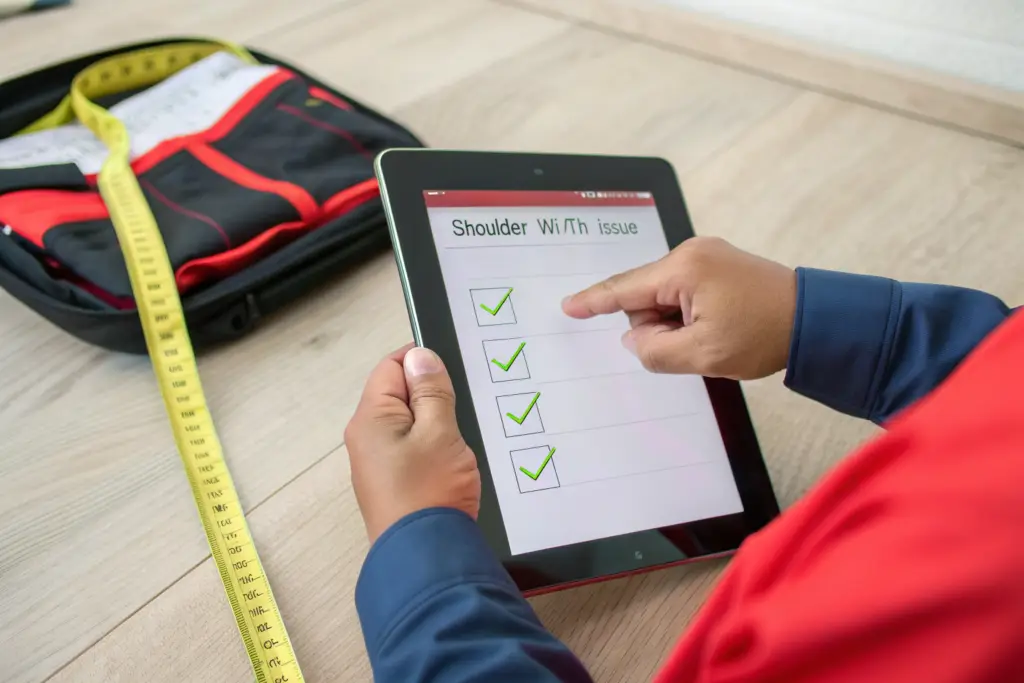
The final, non-negotiable step is to physically verify the revision. When the next sample arrives, the first thing you must do is measure the previously problematic POMs against the corrected spec sheet. Do not just look at it; measure it. Put it back on the fit model and re-assess the fit. Only when the measurements and the visual fit are confirmed as correct should you approve the sample and authorize bulk production. This confirms the fix is real and prevents the error from being replicated across thousands of units.
A men's wear client had a persistent issue with the collar band on their shirts being too tight. We corrected the pattern based on their specific feedback. When the revised PP Sample arrived, the first thing they did was measure the collar circumference. It was spot on. They then put it on their fit model and confirmed the comfort and roll. They approved the bulk with confidence. They later told us, "That simple act of measuring the fix before approving bulk saved us from a disastrous run. It's a non-negotiable step in our process now." This discipline is what separates professional brands from amateurs. This is the core of our pre-production quality assurance .
What Should You Do If the Revised Sample Is Still Not Right?
Do not approve it. It can be frustrating, but it is much better to have a third sample than 2,000 units of a poorly fitting garment. Go back to the "Visual + Data" process. Re-stage a live fit call. Re-measure and re-annotate. A good factory partner will not be defensive; they will be committed to getting it right. This is the standard of our commitment to perfect fit .
How to Document the Final, Approved Spec to Prevent Future Season Drift?
Once the fit is perfect and the PP Sample is approved, this sample becomes the new Sealed Sample, and its measurements become the new "Golden Spec" for all future reorders of that style. Ensure this revised spec sheet is formally updated and kept on file. This prevents the same sizing issue from creeping back in next season. This is the foundation of consistent, long-term quality management .
Conclusion
Resolving sizing discrepancies with an international supplier quickly is not about luck; it is about a disciplined, visual, and data-driven process. It is about replacing vague emails with live, collaborative fit sessions, and subjective feelings with precise, measurable feedback. It is about treating the pattern maker as a creative partner and communicating in their language of POMs and specifications.
At Shanghai Fumao, we champion this precise, efficient approach to product development. Our transparent communication, detailed Measurement Reports, and direct access to our technical team are all designed to make resolving fit issues a fast, stress-free, and accurate process. We turn a potential crisis into a simple, technical adjustment.
If you are tired of lengthy, confusing sizing battles and want a partner who speaks the language of precision, let's talk. Our Business Director, Elaine, can walk you through our fit resolution process. Please email Elaine at: elaine@fumaoclothing.com.