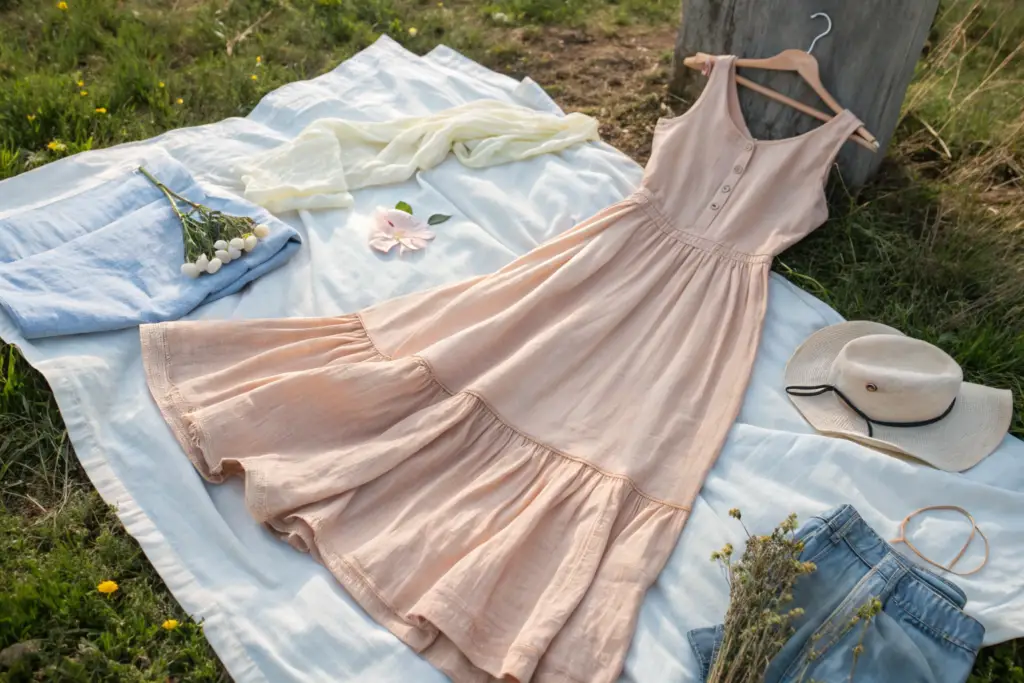
You have designed a stunning women's summer dress. The silhouette is perfect. The print is gorgeous. But when the sample arrives, it feels heavy. It hangs stiffly. It is hot to the touch. You realize that the beautiful design is completely wrong for the season. A brand owner told me, "I used to think any cotton was fine for summer. Then I launched a dress in a heavy poplin, and the reviews said it felt like wearing a tent. I learned that for summer, weight is everything."
Yes, lightweight fabric is absolutely essential for successful women's summer dresses. It is not just a preference; it is a functional requirement driven by the need for breathability, drape, and comfort in warm weather. A lightweight fabric (typically in the 100-180 GSM range) allows air to circulate, prevents the garment from feeling heavy and oppressive on the body, and creates the fluid, effortless drape that defines a beautiful summer silhouette. Using a heavy fabric for a summer dress is a fundamental design error.
At Shanghai Fumao, we guide our B2B partners through the critical process of seasonal fabric selection. We know that getting the weight right is what separates a summer best-seller from a dress that languishes on the rack. Let me explain the science and the art of choosing the perfect lightweight fabrics for your summer collections.
What Exactly Defines a "Lightweight" Fabric for Summer Dr
"Lightweight" is not just a subjective feeling; it is a measurable property. Understanding this measurement—GSM (Grams per Square Meter) —is the key to making objective, smart sourcing decisions. It removes the guesswork and allows you to communicate precisely with your mill and your CMT factory. For summer dresses, the target range is specific and crucial.
A lightweight fabric for summer dresses is objectively defined as one that falls within the 100-180 GSM (Grams per Square Meter) range. This weight provides the necessary properties for warm-weather comfort: it allows for airflow, it is not heavy or oppressive on the skin, and it is light enough to create the beautiful, fluid drape that is essential for summer silhouettes. Fabrics above 200 GSM generally become too heavy and structured for most summer dress styles.
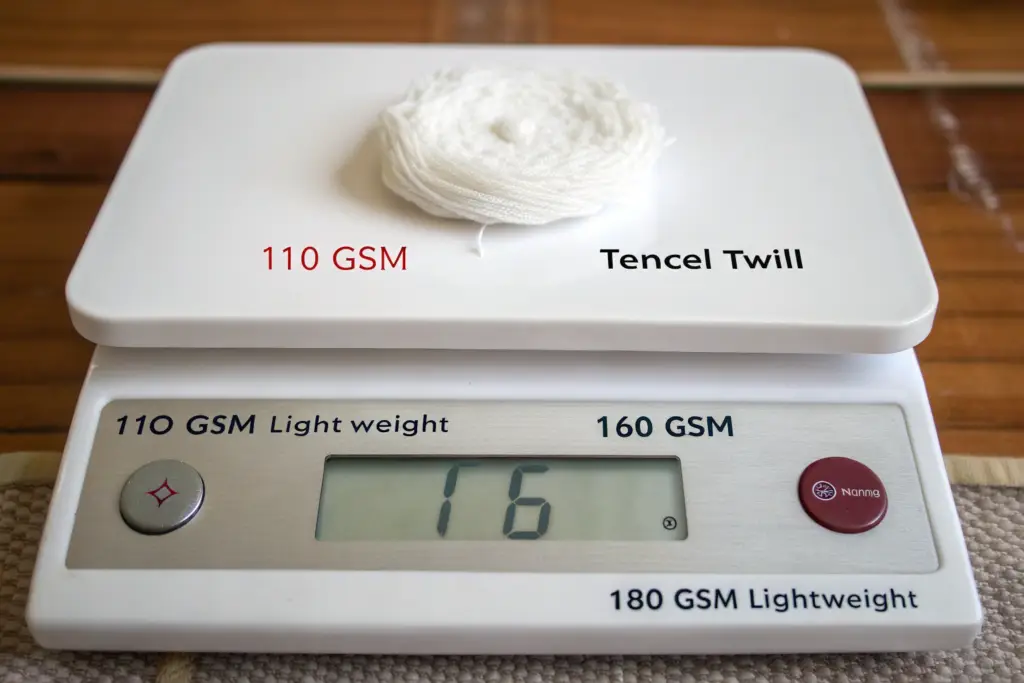
I recall a brand founder who was designing a flowy, tiered maxi dress. She chose a beautiful cotton poplin based on its color. The sample, however, was a disaster. The fabric was a 220 GSM poplin. It was stiff, heavy, and the tiers stood out from the body like a lampshade instead of draping gracefully. She was devastated. We helped her switch to a 140 GSM Tencel Twill. The transformation was magical. The dress was light, breathable, and moved with a liquid, effortless drape. It became her best-selling summer style. The lesson was clear: the weight made the dress. This is the power of understanding fabric weight for seasonal design .
What Is GSM and Why Is It the Universal Language of Fabric Weight?
GSM stands for Grams per Square Meter. It is a simple, objective measurement of a fabric's weight and, indirectly, its density and substance. A higher GSM means a heavier, thicker fabric. A lower GSM means a lighter, thinner one. Using GSM allows you to have a precise conversation with mills and factories, removing subjective terms like "light" or "heavy." For summer dresses, always think in terms of your target GSM range. This is a key part of our fabric sourcing education .
What Is the "Feel" Difference Between a 120 GSM and a 200 GSM Fabric?
The difference is dramatic and immediate:
- 120 GSM (e.g., cotton voile): Feels airy, semi-sheer, incredibly soft, and weightless. It has a beautiful, fluid drape.
- 200 GSM (e.g., standard cotton poplin): Feels substantial, crisp, and structured. It holds its shape and has less drape. It will feel noticeably warmer and heavier on the body.
For a dress that is meant to float and breathe, the 120 GSM fabric is the clear winner. The 200 GSM fabric is better suited for a structured shirt or a heavier skirt. This is a key distinction we help our private label partners make.
Which Specific Fibers Deliver the Best Lightweight Performance for Summer?
The weight of the fabric is critical, but the fiber itself is what delivers the specific type of comfort. Different fibers have different natural properties that make them ideal for hot weather. Some breathe exceptionally well, others feel cool and silky against the skin. The best summer dresses often leverage the unique strengths of these natural and cellulosic fibers to create an exceptional wearing experience.
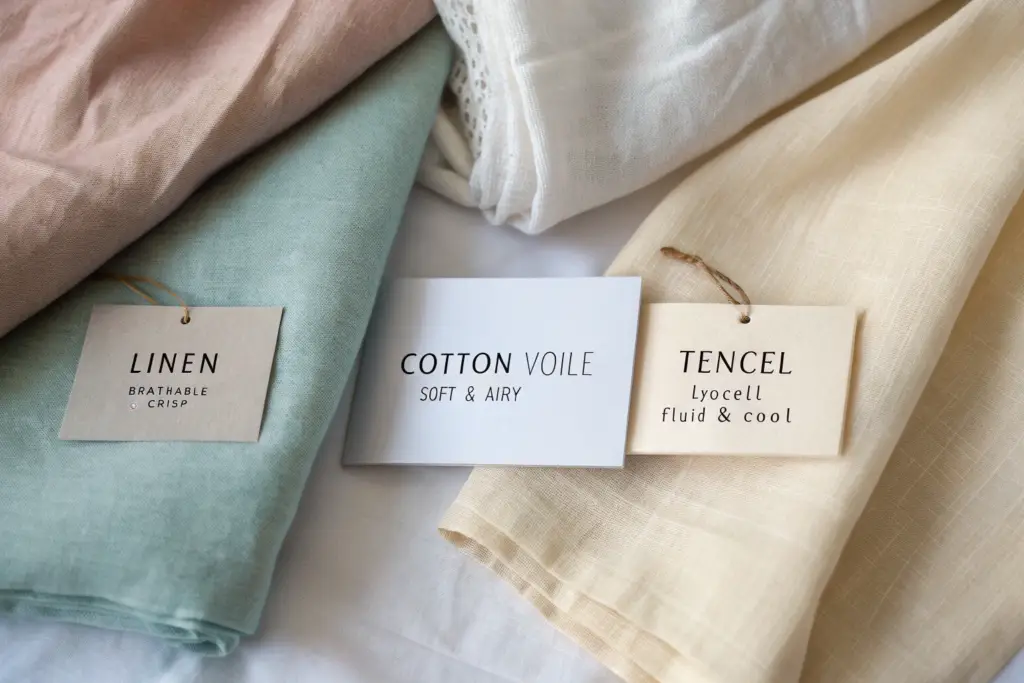
The best lightweight summer fibers are Linen, Cotton Voile, and Tencel Lyocell. Linen's hollow fibers allow for unmatched breathability and a crisp, textured feel. Cotton Voile is incredibly soft, airy, and has a beautiful semi-sheer drape. Tencel is exceptionally smooth, feels cool to the touch, and has a fluid, liquid-like drape. Each offers a distinct aesthetic and comfort profile for different summer dress styles.
A women's wear brand we work with has three distinct summer dress personalities, each anchored by a different fiber. Their effortless "throw-on" vacation dress is made from a breezy linen. Their romantic, feminine tiered dress is made from a delicate cotton voile. Their modern, minimalist slip dress is made from a fluid Tencel twill. By understanding the unique properties of each fiber, they have created a cohesive but varied summer collection that appeals to different customers. This is the power of intelligent fiber selection. This is the kind of guidance we provide as part of our fabric sourcing expertise .
Why Is Linen the Undisputed King of Hot-Weather Fabrics?
Linen's breathability is unmatched. The flax fibers are long, hollow tubes, allowing air to circulate freely and wicking moisture away from the body. It has a naturally crisp, textured feel that gets softer with every wash. Its tendency to wrinkle is part of its relaxed, "lived-in" charm. For a casual, effortless summer dress, a lightweight linen (120-180 GSM) is an exceptional choice.
When Is Tencel a Better Choice Than Cotton Voile for a Summer Dress?
While cotton voile is incredibly soft and airy, Tencel offers a different kind of luxury. Its surface is perfectly smooth, which gives it a subtle sheen and an incredibly fluid, liquid-like drape. It also feels naturally cool to the touch. For a slip dress, a bias-cut gown, or any style where a sensual, fluid drape is paramount, Tencel is often the superior choice. It offers the breathability of a natural fiber with the drape of a luxury synthetic. This is why it is a favorite for our premium dress clients .
How Does Fabric Construction Impact Breathability Beyond Just Weight?
Even within the lightweight 100-180 GSM range, two fabrics can feel completely different in the heat. A tightly woven 150 GSM poplin will feel much warmer and less breathable than an open-weave 150 GSM linen or a knitted 150 GSM jersey. Breathability is a function of both weight and construction. The tighter the weave, the more it traps air and moisture, regardless of its GSM.
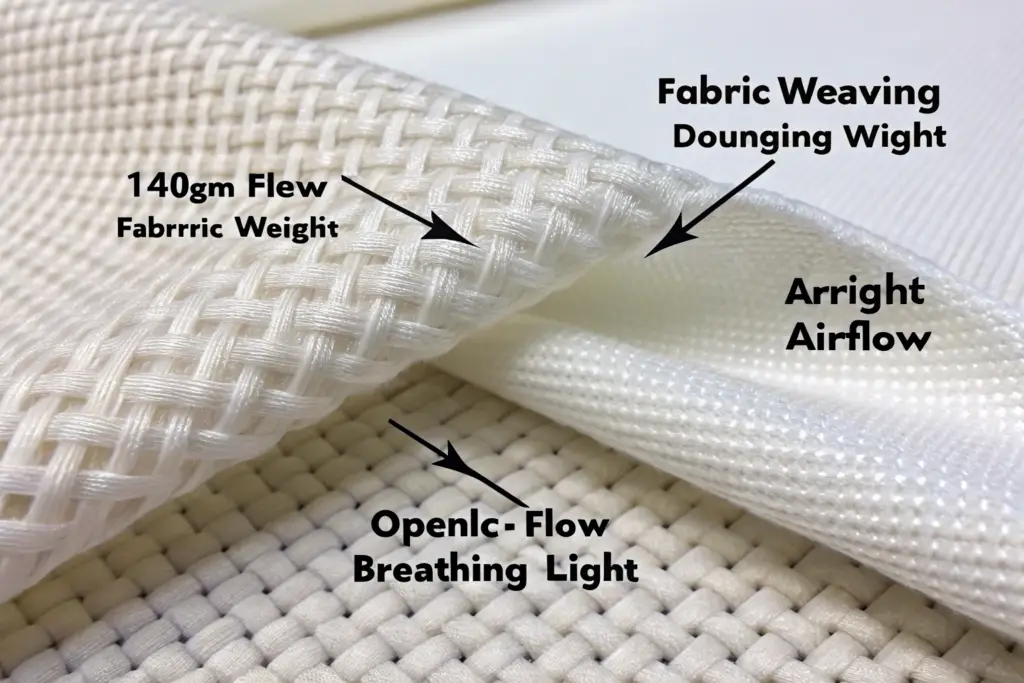
Construction is just as important as weight for summer breathability. Open, loose weaves (like voile and linen) and knit structures (like jersey) allow for significantly more airflow than a tightly woven plain weave (like a dense poplin). A 150 GSM linen will feel dramatically cooler than a 150 GSM poplin because of the larger gaps between the yarns. Both weight and weave must be considered together when selecting a true summer fabric.
A brand once designed a summer shirt dress in a 150 GSM cotton poplin, thinking the weight was light enough. The customer feedback was that it felt "stuffy." The problem was not the weight; it was the tight weave. The next season, they switched to a 150 GSM cotton voile , which has a much more open weave, for the same dress style. The reviews immediately improved, praising the dress's "breezy" feel. The weight was the same, but the construction made all the difference. This is a nuanced but critical part of intelligent fabric selection for summer .
What Is the Difference in Breathability Between a Plain Weave and an Open Weave?
- Plain Weave (e.g., poplin, broadcloth): Yarns are tightly interlaced in a simple over-under pattern. This creates a dense, smooth surface with very small pores. It is inherently less breathable.
- Open Weave (e.g., voile, linen): Yarns are spaced further apart, creating visible gaps in the weave. This allows for free air circulation and superior breathability.
For a true summer dress, an open weave is almost always the more comfortable choice. This is a key factor we consider in our seasonal fabric development .
Why Are Knits Like Jersey Often More Breathable Than Wovens of the Same Weight?
A knit fabric, like a jersey, is constructed from interlocking loops. This looped structure naturally creates more space within the fabric than a tightly interlaced woven structure. This makes knits inherently more breathable and stretchy. A 150 GSM cotton jersey will always feel airier and more relaxed than a 150 GSM woven poplin. This is why jersey is such a popular choice for casual summer tees and dresses.
How Does Fumao's Expertise Guide You to the Perfect Summer Dress Fabric?
The world of lightweight fabrics is vast. You should not have to become a textile scientist to make the right choice for your collection. Our role is to curate the best options, translate the technical specs into a sensory experience, and guide you to the perfect material that will make your summer dresses an effortless success.
Fumao guides you to the perfect summer dress fabric by combining technical knowledge with a curated, tactile approach. We listen to your design vision and your customer's lifestyle. We then present you with a curated selection of appropriate lightweight swatches, allowing you to feel the difference between a crisp linen, a soft voile, and a fluid Tencel. We provide the data (GSM, weave, drape) and the expert guidance to make a confident, informed decision.
A new brand founder came to us wanting to make "a floaty summer dress." She was overwhelmed by the options. We sent her a "Summer Dress Swatch Kit" containing a breezy linen, a soft cotton voile, and a fluid Tencel twill . She could touch them, drape them, and feel how they moved. She chose the Tencel for its incredible drape and cool handfeel. That dress became the hero piece of her debut collection. She told us, "I didn't need to know the technical terms. I just needed to feel the difference." That is our goal. To make the complex world of fabric selection simple and sensorial. This is the value of our curated fabric experience .
What Is a "Fabric Story" Board and How Does It Help?
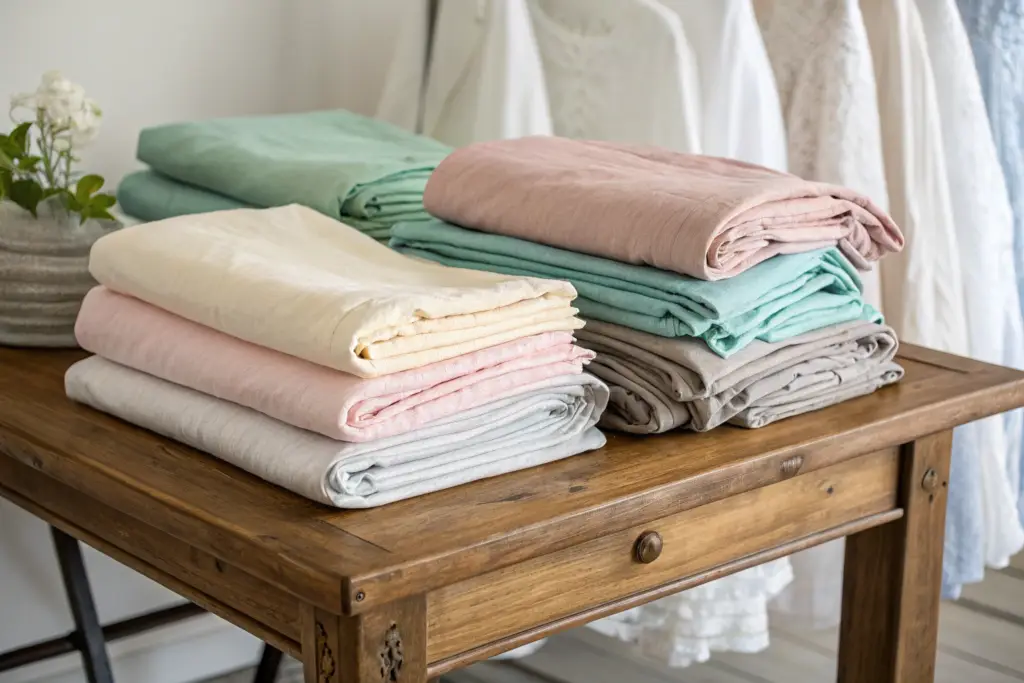
A Fabric Story Board is a physical or digital board we create for clients. For a specific design, like a summer wrap dress, it might show 3-4 perfectly suited fabric options from our library, paired with a suggested color palette. It is a curated, tactile, and visual tool that helps the designer see how all the elements will come together. It moves the conversation from abstract specs to a concrete, sensory experience.
How Do We Help You Avoid the Mistake of Choosing the Wrong Weight?
We act as your safeguard. If a client wants to use a beautiful 220 GSM fabric for a summer style, we will gently guide them. We will explain that the weight will not drape correctly for the silhouette and will feel too warm. We always present alternative, lighter options that achieve a similar aesthetic. Our experience is your safety net, preventing costly design mistakes. This is our commitment to being a true strategic partner .
Conclusion
For a women's summer dress, lightweight fabric is not a luxury—it is the defining functional and aesthetic requirement. It is the difference between a dress that feels like a cool, effortless breeze and one that feels like a heavy, stifling burden. The art is in understanding the interplay of weight, fiber, and construction.
At Shanghai Fumao, we are passionate about the art and science of seasonal fabric selection. We guide our B2B partners to the perfect lightweight materials, providing the tactile samples, the technical data, and the expert advice needed to create summer dresses that are as comfortable as they are beautiful. We help you make dresses that women will reach for all summer long.
If you are planning your next summer collection and want expert guidance on lightweight fabrics, let's talk. Our Business Director, Elaine, can share our seasonal fabric library and help you select the perfect materials. Please email Elaine at: elaine@fumaoclothing.com.