I visit dozens of clothing brand websites every week. It is part of my job as a factory owner in China. When a potential client reaches out to Shanghai Fumao I always look at their digital presence first. And I have to be honest with you. Most of the sites I see are beautiful. They have stunning lifestyle photography. The fonts are clean. But they are built for retail customers browsing on their phones not for wholesale buyers who are trying to place a $50,000 purchase order. The site looks pretty but it fails at its most important job. It does not give me the information I need to trust that brand with my production capacity. If I feel that friction imagine how a busy retail buyer at a major department store feels.
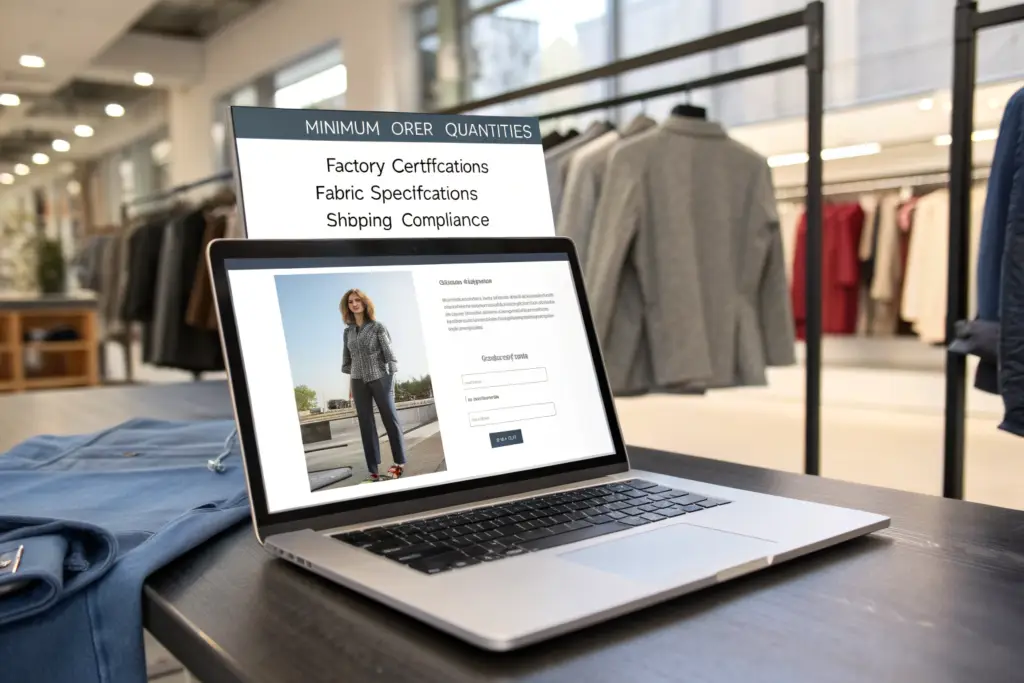
Optimizing your clothing brand website for B2B buyer conversions requires a fundamental shift from aesthetic storytelling to technical transparency and logistical clarity. You must structure your site to answer the specific questions a professional buyer has about minimum order quantities factory certifications fabric specifications and shipping compliance before they even need to pick up the phone.
I want to share what I see from the other side of the supply chain. In this article I will show you how to structure your product pages to close wholesale deals faster how to use visual content to reduce sample request costs and what specific elements make a B2B buyer feel confident enough to wire a deposit to a brand they have never met in person. These are the details that separate a website that just looks good from a website that actually converts serious wholesale accounts.
What Website Features Do Wholesale Buyers Look for First?
A wholesale buyer does not browse your site the same way a retail customer does. A retail customer lands on your homepage and wants to be inspired. They want to see a model walking on a beach. A wholesale buyer lands on your site and wants to be efficient. They have 15 minutes before their next vendor meeting. They need to know if you are a legitimate business partner or just a dropshipper with a nice Instagram account. If they cannot find the information they need in under 30 seconds they click away and email one of your competitors.
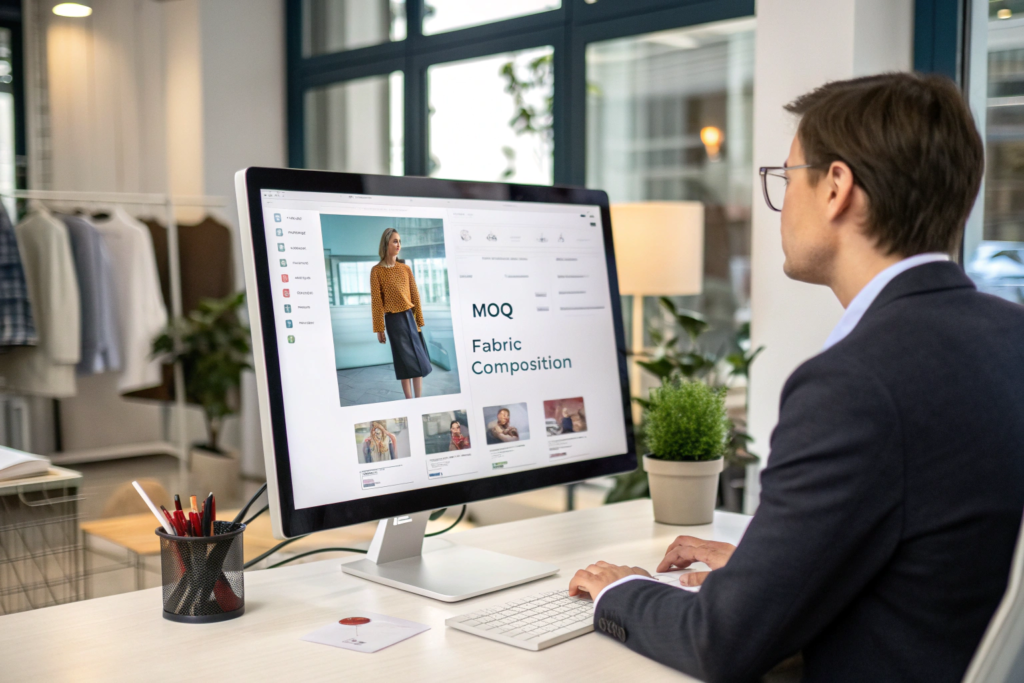
Wholesale buyers look first for clear navigation to a dedicated wholesale or B2B portal prominent display of minimum order quantities and easily accessible information about fabric composition and country of origin. These elements signal that your brand is operationally mature and ready to handle bulk commercial orders rather than just single-unit ecommerce sales.
Why Should MOQ Information Be Visible on the Homepage?
This is a point of contention I hear from brand owners all the time. They tell me "I do not want to scare off small boutiques by posting a high MOQ." I understand that fear. But hiding your minimums wastes everyone's time including yours. I have seen email chains go back and forth for three days only to end when the buyer learns the MOQ is 300 units per style and they only wanted 12. That is a loss of productivity for both sides.
The most professional B2B sites I see display MOQ information prominently in the footer or in a dedicated "Wholesale" section linked directly from the main navigation. Some brands even include a tiered table right on the homepage. Here is an example of what I consider best practice based on feedback from U.S. boutique owners I speak with:
| Order Tier | Units Per Style | Per Unit Price Adjustment | Typical Buyer Type |
|---|---|---|---|
| Starter Pack | 50-100 units | Base Wholesale Price | Small Boutique / Pop-up Shop |
| Standard Wholesale | 100-300 units | 5% Discount | Regional Chain Store |
| Volume Order | 300+ units | 10% Discount + Free DDP Shipping | National Distributor |
A men's grooming and apparel brand we manufacture for implemented a table exactly like this on their wholesale landing page in January 2026. They reported a 30% decrease in "What is your MOQ?" email inquiries. Their sales team spent less time on data entry and more time on actual relationship building. This transparency also builds trust because it shows you are not making up pricing on the fly. It aligns with the wholesale pricing best practices that professional buyers expect.
How Do SSL Certificates and Security Badges Affect Wholesale Trust?
This sounds technical but it is critical. A wholesale transaction often involves sharing sensitive business information. You might send a line sheet with your cost prices. You might receive a credit application with the buyer's tax ID and bank references. If your website does not have a valid SSL certificate showing the padlock icon in the browser bar a sophisticated buyer will hesitate.
I recall a situation in late 2025. A buyer from a large Midwest department store reached out to one of our clients. Before they would even discuss an order they requested a vendor setup packet. Part of that packet required screenshots of the brand's website security protocols and a valid SSL certificate. The buyer's procurement team explained that they had been targeted by phishing scams in the past pretending to be legitimate vendors. They would not upload any purchase order information to a non-secure portal. This is the new reality of B2B ecommerce. Security is not optional. It is a prerequisite for getting paid.
How to Use Product Pages to Close More Wholesale Accounts?
Most brand websites treat product pages as if they are writing for a consumer who already loves the brand. The copy is flowery. "This effortless piece transitions from day to night." That language is useless to a B2B buyer. A buyer wants to know if the fabric will pill after five washes. They want to know if the sizing is consistent with industry standards. They want to know if the garment is packed in a way that is compatible with their warehouse scanning system.
Your product pages need to serve a dual purpose. They must maintain the brand aesthetic for the end consumer but they must also contain a hidden layer of technical data that arms the wholesale buyer with the information they need to defend their purchasing decision to their own boss or buying committee.
What Technical Specifications Should Replace Vague Marketing Copy?
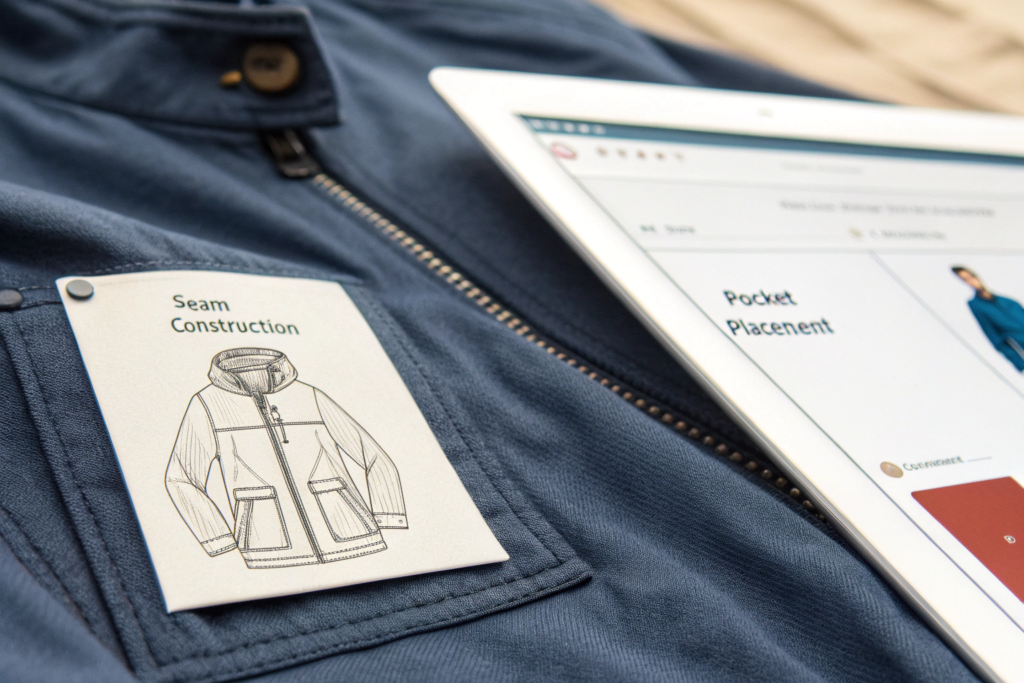
Replace phrases like "buttery soft" with "32 Singles Combed Ring-Spun Cotton 180gsm." Replace "flattering fit" with "Size Medium Spec: Chest 40in Length 28in Sleeve 34.5in." This is the language of the professional buyer. This is the data that allows them to compare your product against their open-to-buy plan.
At Shanghai Fumao we advise all our private label partners to include a "Tech Specs" tab on every product page within their wholesale portal. Here is a comparison of two descriptions for the same hoodie:
| Feature | Consumer-Facing Copy (Ineffective for B2B) | B2B-Facing Spec (High Conversion) |
|---|---|---|
| Fabric | Premium heavyweight fleece. | 440gsm 100% Cotton Face 80/20 Poly-Cotton Back Loopback Terry. |
| Fit | Relaxed modern cut. | Dropped shoulder seam 2in extended from natural shoulder line. |
| Durability | Built to last. | Cross-stitched shoulder seams with ISO 4915 Stitch Type 515. |
| Sourcing | Made with care. | Yarn sourced from Xinjiang inspected to BCI standards. |
We had a client in the outdoor apparel space who added this technical layer to their website in Q4 of 2025. Within two months they received a purchase order from a regional outdoor retailer with 14 locations. The buyer specifically mentioned in the kickoff call "I appreciated not having to email you for the fabric weight. I could see it right there on the line sheet. It saved me a day of back and forth."
How Can High-Quality Flat Lay Photography Reduce Sample Requests?
This is a direct cost-saving measure. Every time a buyer requests a physical sample it costs you money. You pay for the garment the shipping and the administrative time. While samples are necessary for large orders you can reduce the number of "curiosity sample" requests by providing professional flat lay photography that shows the garment from a top-down technical perspective.
Include a front and back view of the garment laid completely flat on a white surface with a measuring tape visible in the shot. Show the inside of the garment turned inside out so the buyer can inspect the seam finishing and the neck tape. A buyer from a boutique in Texas told one of our brand partners "I could see the bar-tack reinforcement on the pocket stress points in your flat lay image. I did not need to order a sample to confirm construction quality. I just placed the order." That one image saved the brand $45 in sample shipping costs and closed a $4,200 wholesale order.
What Should a B2B Clothing Brand Lookbook Actually Contain?
I have seen brands spend $15,000 on a fashion editorial photoshoot in Joshua Tree. The photos are stunning. The light is golden. But the lookbook has no SKU numbers no color codes and no delivery dates. That lookbook is a piece of art. It is not a sales tool. A B2B buyer needs to flip through a document and place an order. If they have to call you to figure out what color "Sand Dune" actually is you have failed at your job.
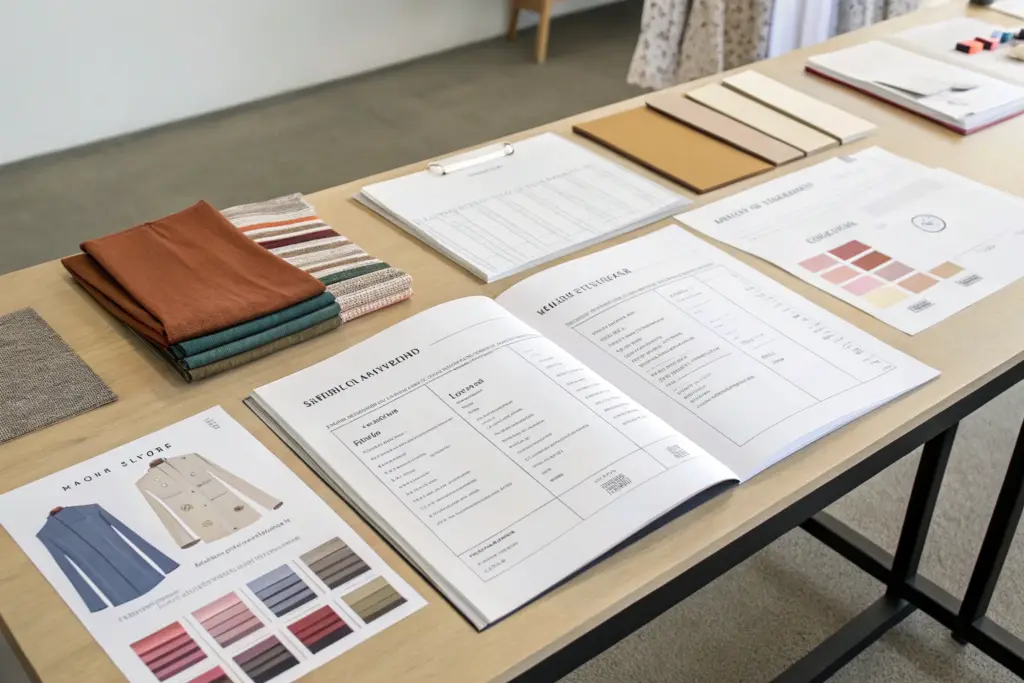
A B2B clothing brand lookbook should function as a digital line sheet first and a creative showcase second. It must include clear style numbers wholesale cost pricing per tier fabric content percentages and precise color swatch references using industry-standard Pantone or color codes.
Why Should You Include Fabric Swatch Cards in Digital Line Sheets?
Color accuracy on a computer screen is a myth. Every monitor is calibrated differently. A beautiful sage green on your MacBook Pro looks like a dull hospital scrub green on the buyer's Dell laptop. This discrepancy leads to returns and chargebacks. "This is not the color I ordered."
The solution is to direct the buyer to a physical standard. In our factory we use Pantone TPX codes for textiles. Your digital lookbook should list the exact Pantone code next to the color name. For example: "Sage Green (Pantone 16-0213 TPX)." This gives the buyer a reference they can check against a physical Pantone swatch book in their office. It removes subjectivity from the conversation.
Additionally a best practice I have seen work well is including a short video clip in the digital line sheet. A simple 5-second loop showing the fabric being crumpled in a hand demonstrates fabric hand feel better than any written description. One of our clients who produces premium knitwear added these micro-videos to their wholesale portal. They saw a 22% increase in order value from new accounts in the first season because buyers felt more confident committing to bulk fabric without touching it first.
How Do Lead Times and Shipping Info Influence the Buying Decision?
In the apparel business timing is everything. A buyer for a Fall/Winter collection is placing orders in February. If your lookbook does not clearly state "Orders placed by Feb 28th ship by Aug 1st" they will skip you for a vendor who provides that clarity. They cannot risk having empty shelves in October because a shipment is late.
Your B2B materials must include a Delivery Window Calendar. At Shanghai Fumao we help our clients build this out by providing a reverse production calendar. We tell them exactly how many days it takes from fabric procurement to final DDP delivery. Here is the type of simple timeline that converts a hesitant buyer:
| Milestone | Timeframe from Order Confirmation |
|---|---|
| Fabric Sourcing & Lab Dip Approval | 14 Days |
| Bulk Cutting & Sewing (Standard Order) | 30-45 Days |
| Quality Control & Finishing | 7 Days |
| Ocean Freight to US West Coast (DDP) | 18-22 Days |
| Total Lead Time | 69-86 Days |
By publishing this timeline you filter out the buyers who need goods in 3 weeks and you attract the planners who value reliability. You also protect yourself from the logistics disputes that happen when expectations about delivery dates are vague.
How to Use Social Proof to Build B2B Credibility Online?
In the B2B world social proof looks different than it does in B2C. You do not need a thousand five-star reviews from consumers. You need one or two logos from recognized retail partners. You need a photo of your product hanging on a rack at a trade show. You need evidence that other businesses have trusted you with their money and received a professional outcome.
Social proof for B2B clothing brands is built through the display of retail partner logos images of trade show booths and testimonials from boutique owners that speak specifically about shipping reliability and quality consistency. This type of proof reassures a buyer that you understand the operational demands of wholesale fulfillment not just direct-to-consumer marketing.
Why Are Trade Show Photos More Valuable Than Instagram Likes?
An Instagram post with 3,000 likes might be all from teenagers who will never buy wholesale. A photo of your booth at Magic Las Vegas or Coterie New York shows that you are a serious industry player. It shows that you have invested in a physical presence and that you have survived the scrutiny of other buyers and competitors walking the aisles.
I tell all my clients to document their trade show setup professionally. Hire a photographer for an hour at the show. Capture images of buyers writing orders at your table. Capture images of the rack fully merchandised with your line. Post these images on a dedicated "Press & Shows" page on your website. When a new buyer from a different region visits your site they see that their peers in the industry have already validated you. This is the principle of social proof applied to wholesale. We had a brand partner in 2025 who was struggling to get traction with East Coast boutiques. After we encouraged them to add a gallery of their successful West Coast pop-up events to their website the East Coast inquiries increased by 40% in the following quarter.
How Can Case Studies with Anonymized Data Drive Wholesale Signups?
You can be more specific than just a logo. You can write a short case study. But you must respect the confidentiality of your B2B relationships. Do not name the boutique without permission. Instead use descriptive categories.
For example a client of ours who produces children's wear added this block of text to their wholesale page:
"Case Study: Regional Boutique Chain (Midwest USA). The buyer needed a reliable source for organic cotton toddler tees after their previous supplier consistently shipped 3 weeks late. By switching to our manufacturing partner Shanghai Fumao they achieved a 99.2% on-time delivery rate over three seasons. Their reorder rate increased by 18% due to consistent stock levels. Read the full case study."
This is powerful because it addresses the exact pain points of a wholesale buyer. It mentions a specific metric (99.2% on-time delivery) and it shows an understanding of the buyer's business model. It also highlights the supply chain reliability that B2B partners crave. This type of content does not need to be long. It needs to be specific and verifiable.
Conclusion
Optimizing your clothing brand website for B2B conversions is not about making it look more expensive. It is about making it more useful to a professional buyer. You need to strip away the vague marketing language and replace it with technical specifications. You need to make your minimum order quantities visible and your shipping lead times predictable. You need to use photography that answers construction questions rather than just lifestyle aspirations.
The buyers who are in a position to write large purchase orders do not have time for mystery. They need data. They need to know that if they commit to 500 units of your new jacket those units will arrive in their distribution center on time and looking exactly like the sample they approved. Every piece of information you hide on your website creates an extra email they have to send. And every extra email is an opportunity for them to click over to a competitor who has already provided that answer.
The brands that win in the wholesale channel are the ones who treat their website as a self-service resource for busy retail buyers. They make it easy to trust them. They make it easy to place an order. They make it easy to reorder.
If you are working on building or rebuilding your B2B website and you need a manufacturing partner who can help you deliver on the promises you make on those product pages we are here to support you. Our team understands the requirements of U.S. wholesale buyers and we ensure that the production matches the specification every time. For more information on how we can help you scale your brand with reliable DDP manufacturing please contact our Business Director Elaine. You can reach her at elaine@fumaoclothing.com.