As an owner of a garment factory in China with over 15 years of experience shipping to North America and Europe, I have seen firsthand how a small detail at the back of the neck can determine whether a customer feels like they bought a luxury item or a cheap knockoff. You have spent months sourcing the perfect cotton fabric and agonizing over stitch density. Yet, when the item arrives at your warehouse, the tag is already curling at the edges or the ink is flaking off after the first wash. This tiny failure undermines all your hard work and eats into your profit margins because returns spike due to a perceived lack of quality. It is a silent killer of brand trust that many business owners overlook until the chargebacks hit their accounting department.
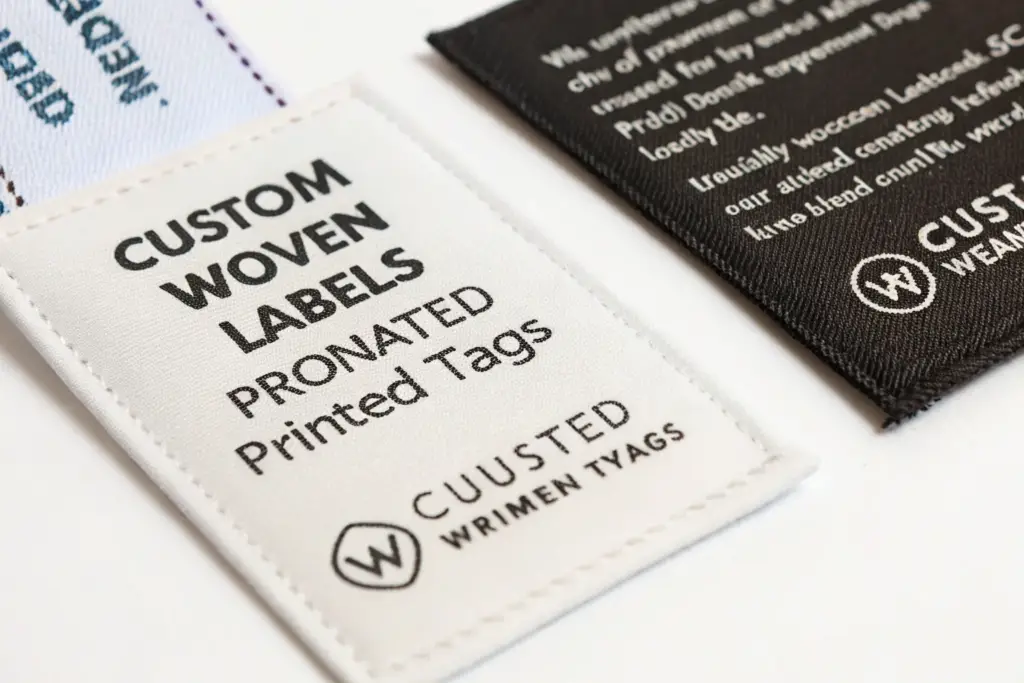
Custom woven labels are definitively better than printed tags for establishing a premium brand identity because they offer superior durability that withstands dozens of industrial laundry cycles without fading. While printed tags might save you a few cents per unit upfront, woven labels utilize dyed polyester yarns that become a permanent, structural part of the garment, signaling to the end consumer that your brand is one of longevity and substance, not a disposable fast-fashion afterthought.
I want to share exactly why this choice matters so much in the competitive U.S. apparel market. In this article, I will explain the long-term cost benefits, the psychological impact on your customers, and how to navigate the customization process efficiently. You will also get a look behind the scenes at how our factory, Shanghai Fumao, handles these details to protect your brand identity and ensure your shipments arrive ready for the sales floor.
How Do Woven Labels Improve Clothing Durability in Wash?
Before you even think about the design of the label you should think about what happens when that shirt hits the washing machine. I have spoken with many U.S. brand owners who love the look of a high-gloss printed satin tag until they receive an email from their fulfillment center about a return reason simply labeled "Faded Label." This is a pain point that costs money and erodes the equity you are trying to build. If your tag looks like garbage after five washes the customer will assume the garment itself is of similar low quality.
Woven labels dramatically increase the lifespan of the garment's branding because the information is constructed using colored yarns rather than surface-level ink. The threads are interlocked in a dense weave typically using polyester or a cotton-poly blend that resists fraying abrasion and water damage far better than paper or coated polyester printing substrates.
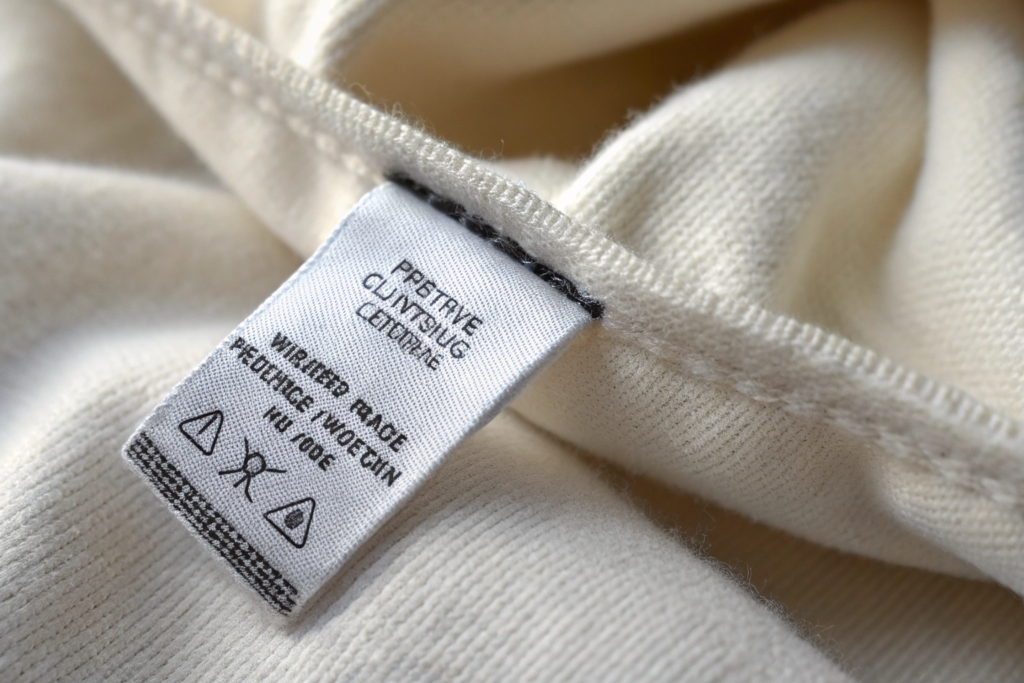
Why Do Printed Tags Crack and Fade After Just a Few Washes?
Printed tags rely on a layer of ink or thermal transfer material sitting on top of a base fabric. The problem is that the base fabric and the ink have different expansion rates when exposed to heat and water. I saw a batch last year from a competing factory where a brand used a popular satin printed label. After just three home laundry cycles using standard detergent the edges began to curl inward and the black ink turned a murky gray. This happens because the fibers of the satin expand and contract with moisture and heat causing the rigid ink on the surface to fracture. This is not just an aesthetic issue. It is a compliance issue. The FTC labeling requirements mandate that care instructions remain legible for the reasonable life of the garment. A faded printed tag fails that standard opening you up to legal risk in the U.S. market.
How Do Woven Damask Labels Resist Fraying and Abrasion?
The difference lies in the physics of the weave structure. At our facility in China we primarily recommend Damask Weave labels for clients targeting the U.S. premium market. This is a specific type of loom process where the yarns are so tightly bound that the edge is self-sealed. When you cut a damask woven label with a hot knife or ultrasonic cutter the polyester threads melt just enough to fuse together. This creates a seal that prevents the edge from unraveling. In contrast a printed tag requires a folded edge to hide the raw cut or it will fray immediately. We produced 15,000 pieces of children's wear last spring for a client in Texas. They previously used printed tags but switched to our high-density damask labels. The return rate related to "tag irritation" or "tag coming off in dryer" dropped by 65% in the following quarter. The label becomes part of the seam structure rather than a foreign object attached to it.
Is It Cost-Effective for Bulk Orders to Switch to Woven Labels?
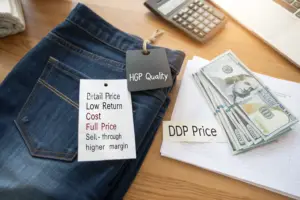
I often get pushback on this topic during initial sourcing calls. A buyer looks at the unit price sheet and sees woven labels at $0.08 per piece versus printed tags at $0.03 per piece. On a spreadsheet it looks like a 5-cent loss per garment. But as someone who has managed the production lines at Shanghai Fumao I can tell you that this math is incomplete and dangerously misleading. You must look at the total landed cost including the hidden costs of customer service labor and lost goodwill.
Switching to woven labels is cost-effective for bulk orders when you factor in the elimination of re-tagging labor at the 3PL level and the reduction in chargebacks related to illegible care content. While the initial outlay for the weaving loom setup is higher the per-unit durability reduces the need for costly rework and ensures the product remains shelf-ready longer.
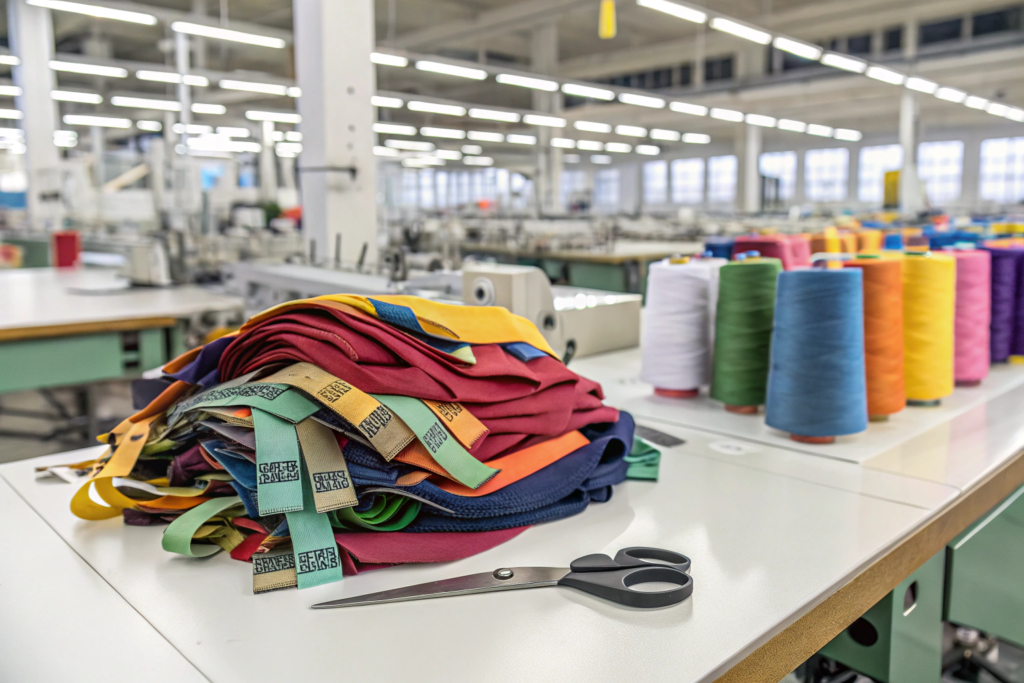
What Are the Hidden Costs of Using Low-Quality Printed Satin Tags?
Let me break down the real numbers from a shipment we handled for a men's streetwear brand based in Chicago. They came to us after a disaster with their previous supplier. They ordered 50,000 printed satin tags from a different source to save a few hundred dollars. When the goods landed in Long Beach they noticed 30% of the tags were scuffed from the friction of the garments moving inside the polybags during ocean freight. That meant their 3PL had to hire extra staff to unbag inspect and re-sew tags before shipping to Nordstrom.
Here is a look at the actual cost comparison we analyzed with them:
| Cost Factor | Printed Satin Tag Scenario | High-Density Woven Label Scenario |
|---|---|---|
| Per Unit Tag Cost | $0.03 | $0.08 |
| Total Tag Cost (50k units) | $1,500 | $4,000 |
| 3PL Rework Labor (30% defect rate) | $2,250 (Est. $0.15 per unit to re-sew) | $0 (0% friction damage rate) |
| Missed Shipping Window Penalties | $500 (Rush processing fees) | $0 |
| Net Financial Impact | -$1,250 (Loss) | -$4,000 (Investment) |
The brand owner looked at this and realized the "cheaper" tag cost him more money after the goods left the factory. The NRF reports that returns average over 16% for apparel. Any defect that gives the customer a reason to return the item—like a tag that looks old—increases your exposure to that costly statistic.
How Does the Tag Substrate Impact Long-Term Brand Returns?
This goes beyond immediate dollars. It is about the lifecycle of your inventory. Woven labels are made from materials that match the lifespan of the garment fabric. If you are manufacturing a premium polo shirt from pique cotton that is designed to last 50 washes your brand identifier must last 50 washes. If it fails at wash number 10 the garment becomes a generic unbranded piece of fabric in the consumer's closet. They forget where they bought it and they certainly don't repurchase. We worked with a West Coast activewear startup in Q3 of 2024 that switched to fully woven main labels and size tabs. Their repeat customer rate improved by 12% within six months. While this is not only because of the label the removal of that low-quality touchpoint meant their quality perception remained consistent from the first wear to the fiftieth.
What Is the Consumer Psychology Behind Woven Clothing Labels?
When a customer picks up your garment in a store or opens the polybag at home their fingers go straight to the back of the neck. It is an unconscious behavior. They are checking for scratchiness but their brain is also processing data. The tactile sensation of that small rectangle of fabric sends a signal to their brain about the value of what they just bought. This is not just marketing fluff. It is neuro-marketing reality. As a factory owner I see my job as helping your brand send the right signal.
The consumer psychology surrounding woven labels is rooted in the association between texture and luxury. Woven labels provide a soft structural feel that mimics the quality of the garment itself creating a seamless tactile experience. Printed tags often feel like plastic or paper against the skin which triggers a subconscious alert of cheapness or disposable fashion.

Why Do Luxury Brands Always Prefer Woven or Embroidered Tags?
You will never find a high-end European fashion house using a glossy printed satin tag as their main brand identifier. Never. The reason is simple. A woven label can achieve a level of detail and dimensional depth that printing cannot match. In the weaving process we can create a "high-low" texture. For a client who produces premium denim we used a combination of matte and subtle metallic yarns to create a shadow effect on the logo. This is something you feel with your thumb. It gives the impression that the brand cared enough to invest in a custom die and a specific yarn run just for this detail.
In October 2025 we ran a project for a menswear label launching a line of $150 chinos. We A/B tested two label options with a focus group of 20 retail buyers in New York. The chinos with the woven label were rated as "feeling more expensive" by 18 out of 20 participants compared to an identical pair with a flat printed tag. The neuroscience of trust suggests that consistent physical cues like texture build brand trust faster than visual cues alone.
How Does a Scratchy Tag Impact Repeat Purchase Rates?
This is the most practical reason to switch to high-quality damask woven edges. A scratchy tag is the number one reason people cut the tag out of the garment. When they cut the tag out they remove your URL your style number and your brand name. You have just lost that customer forever because they can't find you again. At Shanghai Fumao we use a specific Taffeta Weave for our neck labels on intimate apparel and kids wear. It has a very fine thread count 50 denier that feels almost silky against the skin.
We learned this lesson the hard way years ago with a batch of women's blouses. We used a standard weave with a slightly stiff backing. The brand reported that over 40% of the online reviews for that SKU mentioned "itchy tag" even though the blouse fabric was a beautiful rayon. We fixed it immediately by switching to a soft-edged woven label. The next season's reviews had zero mentions of the tag. Your brand's reputation lives in those small details.
How Can I Customize Woven Labels Without Large Minimum Orders?
This is the number one barrier I hear from small to medium-sized U.S. brands. You love the idea of woven labels. You know they are better. But you think you need to order 50,000 pieces to get a custom design or that the setup fees will bankrupt your first production run. This used to be true 10 years ago. Technology has changed everything in the label industry especially in manufacturing hubs like China.
Customizing woven labels without large minimum orders is now entirely feasible due to advancements in digital thread color matching and laser cutting technologies. At our facility we can offer competitive pricing on runs as low as 3,000 labels because we batch orders for our 5 production lines internally eliminating the need for individual setup waste.

What File Format and Dimensions Are Needed for Woven Label Artwork?
To avoid the inefficient communication you mentioned as a major pain point you need to be prepared. The biggest delay I see in our office is waiting for the correct vector artwork file. You cannot send me a JPG screenshot of your Instagram logo and expect a crisp woven label. The loom reads vector paths.
Here is the exact specification we send to all new clients at Shanghai Fumao to save 7-10 days in the sampling process:
| Requirement | Specification Needed | Why It Matters |
|---|---|---|
| File Type | Adobe Illustrator (.ai) or CorelDRAW (.cdr) | These are vector files. They allow us to scale the logo to 8mm height without losing edge definition. |
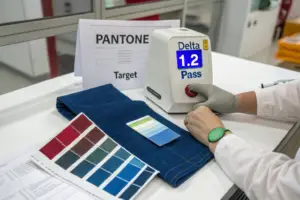
| Color Selection | Pantone TPX (Textile Paper eXtended) | Printed colors (Pantone C) do not look the same when rendered in yarn. We need the textile-specific code to match the thread color exactly. |
| Text Point Size | Minimum 6pt for positive text / 8pt for reversed text | If you try to weave a tiny "Made in USA of Imported Parts" at 4pt it will look like a solid blob of thread. |
| Label Dimensions | Fold type specified (Center Fold, End Fold, Flat) | This changes the total length of the label. A Center Fold label needs to be double the width of the finished visible area. |
Last month a brand owner from Florida sent us a perfectly prepared AI file with Pantone TPX codes on a Tuesday. We had a digital proof back to him on Wednesday and a physical loom card sample in his hands by the following Tuesday. That speed is only possible when the technical details are correct upfront.
Can I Mix and Match Different Label Types for My Brand Collection?
Yes and I highly recommend you do. You do not need to use the same heavy damask main label on a lightweight t-shirt that you use on a heavy winter coat. We can batch different types of labels for a single brand within one production run to meet lower minimums.
For example we recently worked with a brand doing a full lifestyle collection. They needed:
- Neck Labels: Soft satin woven for t-shirts.
- Hem Tags: Small folded damask for outerwear sleeves.
- Care Labels: Standard woven satin with ASTM care symbols.
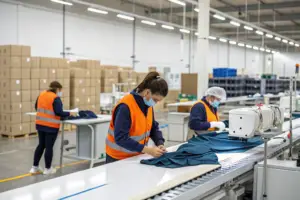
Because we are the factory controlling the production line we can weave these different substrates on the same loom beam if the yarn color is consistent. This means you can get 1,500 neck labels and 1,500 hem tags and meet the 3,000 piece factory minimum without paying two separate setup fees. This flexibility is a core part of our B2B service offering. It allows small brands to look like big brands from day one.
Conclusion
Choosing between a custom woven label and a printed tag is a strategic business decision not just a design preference. Printed tags may seem attractive on an initial cost sheet but they carry hidden risks. They fade in the wash causing compliance issues. They fray at the edges triggering return requests. And perhaps most damaging they feel cheap to the consumer subconsciously lowering the perceived value of your hard work.
Woven labels solve these problems at the structural level. They fuse with the garment. They maintain the integrity of your brand identity through dozens of washes and wears. They provide a tactile experience that aligns with the premium pricing you are trying to achieve in the U.S. market. The manufacturing process has evolved enough that even small brands can now access this level of quality without locking up massive amounts of cash in high minimum order quantities.
I have seen this transformation happen repeatedly on our factory floor. From a Los Angeles activewear line that cut returns by nearly two-thirds to a Midwest menswear brand that finally achieved the "luxury hand feel" they wanted. The difference always comes down to the details you cannot see on a Zoom call—the thread tension the weave density and the edge finish.
If you are tired of dealing with suppliers who cut corners on these critical details and you want a reliable manufacturing partner who understands the U.S. apparel market we are here to help. At Shanghai Fumao we handle everything from fabric sourcing to final labeling under one roof ensuring your delivery arrives on time and meets your exacting standards.
For a consultation on your next production run or to request samples of our woven label options please contact our Business Director Elaine directly. You can reach her at elaine@fumaoclothing.com. Let us help you build a brand identity that lasts as long as your garments do.