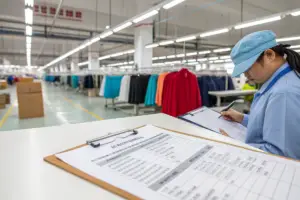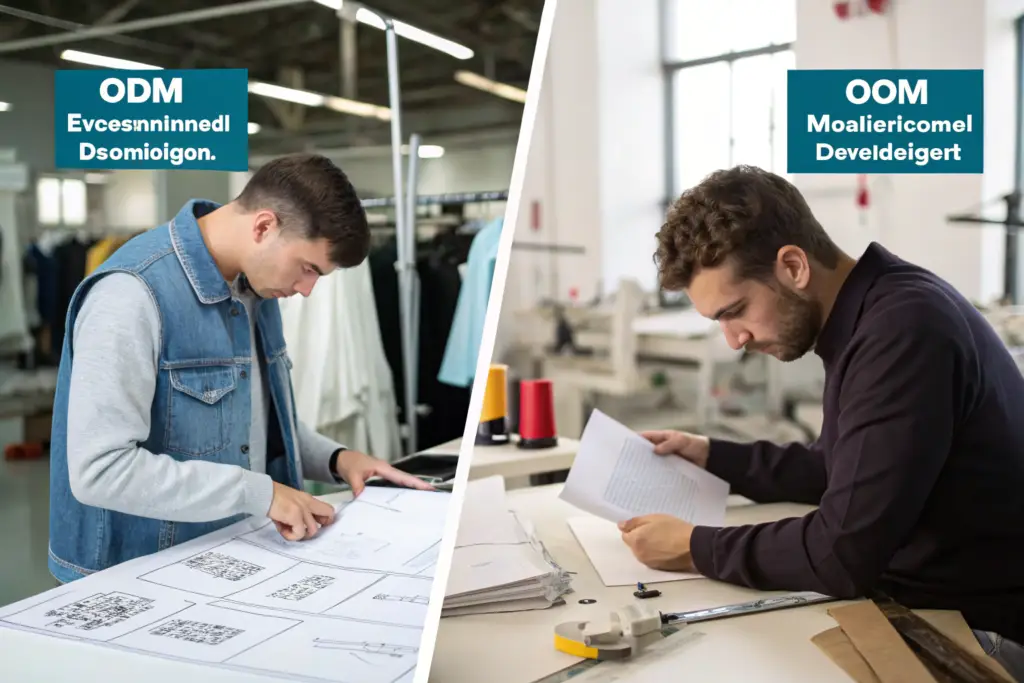
Two months ago, a new client from Miami called me. He was excited. He had found a "manufacturer" online who promised to make his custom jogger design for $8.50 FOB. He sent his tech pack with unique pocket angles and a specific waistband construction. The factory replied, "Yes, we can make. But we recommend our standard pocket. It is cheaper and faster." He was confused. He thought he was talking to an OEM. He was actually talking to an ODM. The difference between those three letters determines who owns the design, who controls the fit, and who sets the minimum order quantity. Confusing them can cost you your brand identity or thousands in unnecessary tooling fees.
The difference between OEM and ODM in international clothing manufacturing lies in the origin and ownership of the product design and specifications. OEM (Original Equipment Manufacturing) means the buyer provides the complete design, tech pack, patterns, and specifications. The factory simply executes production. ODM (Original Design Manufacturing) means the factory provides a pre-existing design or product catalog, and the buyer selects from those options, often customizing only fabric, color, or logo placement. OEM gives you a unique product with higher development costs. ODM gives you a faster, cheaper route to market with less exclusivity.
You are a business owner. You source from China. You rebrand and distribute in the USA. You need to know which model fits your business stage and your brand promise. At Shanghai Fumao, we operate both models on our five production lines. I have seen brands succeed brilliantly with ODM and fail miserably with OEM because they were not ready for the complexity. I want to give you the clear, no-nonsense framework to decide which path is right for you.
What Exactly Does OEM Mean for a Clothing Brand Owner?
OEM is the model most new brand owners think they want. They have a vision in their head. A specific sleeve shape. A particular way the collar rolls. They do not want a stock item. They want their item.
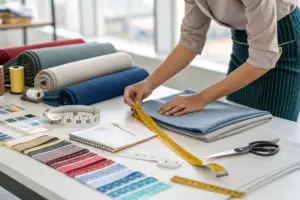
OEM, in the context of clothing manufacturing, means you, the brand owner, are responsible for the entire product development lifecycle. You provide the factory with a complete "Recipe for Production." This recipe includes the pattern, the graded size specifications, the approved fabric, the exact trim sourcing, and the sewing construction methods. The factory's role is strictly to follow the recipe. The intellectual property of the design belongs to you.
This is the path to a truly unique brand. It is also the path with the most potholes. Let me walk you through exactly what you are signing up for.
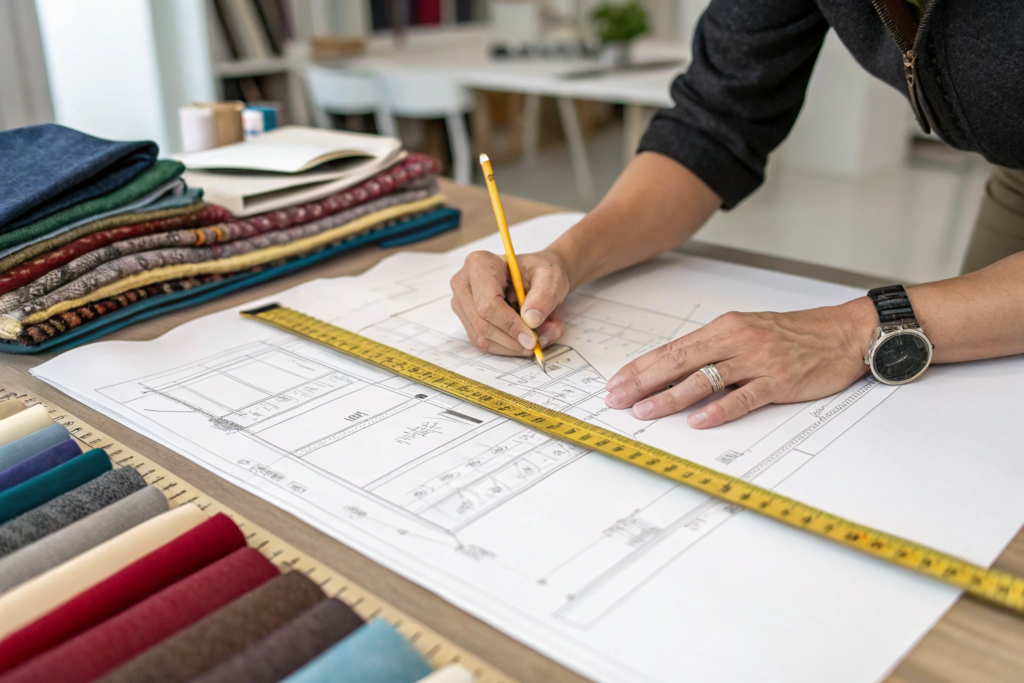
What Specific Documents Does an OEM Factory Require from Me?
This is where the "inefficient communication" pain point you mentioned often begins. A buyer says, "I have a design." The factory says, "Send the tech pack." The buyer sends a photo from Pinterest and a rough sketch on a napkin. The factory sighs. The relationship starts with friction.
To succeed with an OEM model at a factory like Shanghai Fumao, you need a complete Technical Package (Tech Pack) . Here is the minimum viable checklist.
The OEM Document Checklist:
| Document/Item | What It Is | Why the Factory Needs It |
|---|---|---|
| 1. Technical Flat Sketch | Black and white line drawing of front and back. | Shows seam lines, pocket placement, and design proportions. |
| 2. Spec Sheet (POM) | List of Points of Measure. E.g., "Chest width 1" below armhole: 20 inches." | This is the legal contract for fit. Without this, the factory guesses. |
| 3. Pattern or Base Size Sample | A physical garment or a digital pattern file (DXF/AAMA). | The blueprint for cutting the fabric. This is the most critical piece. |
| 4. Grade Rules | How much each measurement increases per size (e.g., +2" chest per size). | If you don't provide this, the factory uses their own standard grade. Your Size 10 might fit like a Size 6. |
| 5. Bill of Materials (BOM) | Exact list of every component. Fabric (Mill + Article #), Thread (Color #), Buttons (Supplier + SKU), Labels. | Prevents the factory from substituting a cheap button that cracks. |
| 6. Sewing Construction Details | Stitch type (e.g., 301 Lockstitch, 504 Overlock). Seam allowance (e.g., 1/2 inch). | Ensures the garment is durable and looks professional inside. |
The Reality Check:
I have seen buyers spend $5,000 on pattern making and sample development in the US, then send a perfect tech pack to us. The production runs smoothly. They get exactly what they designed.
I have also seen buyers send a photo and say, "Just make it like this." The factory makes a sample based on their internal block. The buyer hates it. We go through five rounds of sampling. The cost is $800 and 8 weeks of delay.
OEM is not cheaper development. It is just different development. You pay for the pattern and sample in the USA (or with a specialized pattern service) instead of paying the factory to guess.
Who Owns the Pattern and Design in an OEM Agreement?
This is a question that haunts many founders. They worry the factory will steal their brilliant jogger design and sell it to another brand.
The Legal Answer:
In a strict OEM contract, you own the design and the pattern. The factory is a "Contract Manufacturer." They are a pair of hands. The intellectual property is yours.
The Practical Reality in China:
Most factories are not interested in "stealing" your design. They are interested in efficiency. Your custom pattern requires them to stop their line, change thread colors, adjust machine settings, and re-train workers for your specific pocket angle. This is expensive for them. They would much rather run their standard ODM style that 10 other brands are buying.
What to Include in Your OEM Agreement:
- Confidentiality Clause: Factory agrees not to use your patterns or tech packs for any other client.
- Pattern Ownership Clause: Factory acknowledges the pattern file (digital or physical) is your property and must be returned or destroyed upon request.
- Exclusivity Clause: Factory agrees not to produce an identical garment for any other entity for a period of [X] years.
The Real Risk:
The bigger risk is not the factory stealing your design. It is the factory's Trim Supplier running out of your specific custom zipper pull and the factory substituting a similar one without telling you. That is an OEM failure. That is why the BOM (Bill of Materials) is sacred.
At Shanghai Fumao, we sign NDAs as standard practice for OEM clients. We have a secure server for client patterns. We treat your intellectual property as if it were our own because if your design fails, our relationship fails.
How Does ODM Manufacturing Work for Apparel Sourcing?
Now let's talk about the model that actually launches most successful apparel brands. ODM is not a dirty word. It is a smart business strategy.
ODM manufacturing means the factory has already invested in the design, pattern making, fit approval, and fabric sourcing for a collection of garments. You, the buyer, walk into their showroom (physically or virtually), look at the samples, and say, "I'll take this jacket in Navy and Olive, with my logo embroidered on the chest." The factory owns the pattern. You own the branding on the finished good.
This is how most boutique owners and Amazon sellers get started. It is faster. It is cheaper to sample. The fit is already proven.
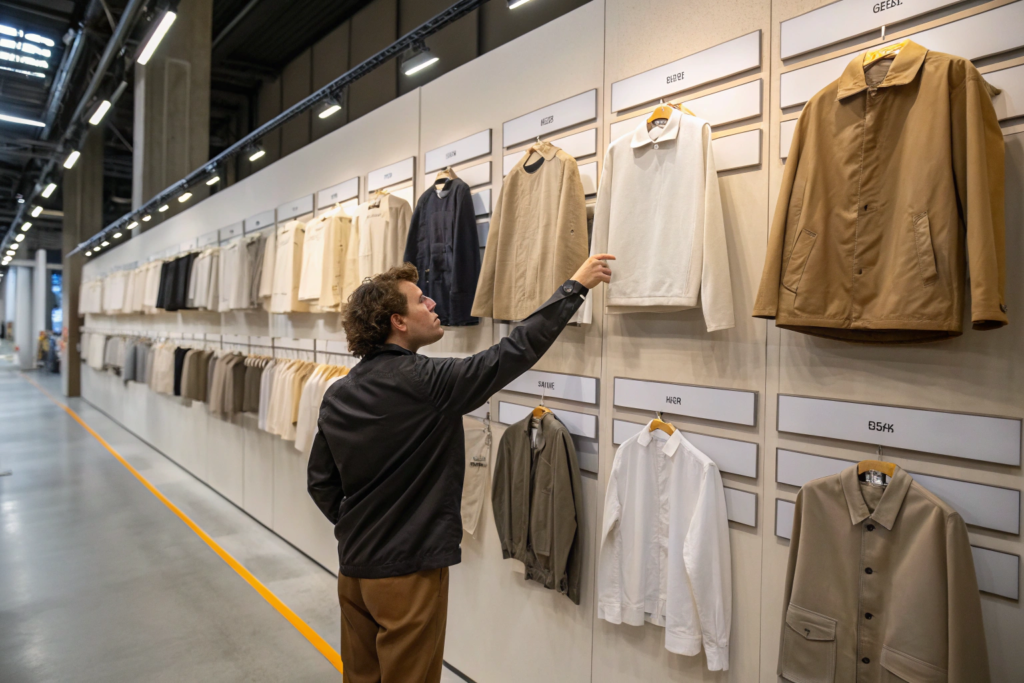
What Customizations Are Possible with an ODM Product?
This is the biggest misconception. Buyers think ODM means "off the shelf, no changes." That is not true. ODM exists on a spectrum of customization.
Here is the ODM Customization Ladder that I use to explain options to clients at Shanghai Fumao:
| Level | Customization Type | What You Can Change | Typical MOQ Impact |
|---|---|---|---|
| Level 1: Branding Only | Logo Application | Add your woven label. Add your logo embroidery or screen print. | No MOQ increase. (You just pay for the label/sewing). |
| Level 2: Color & Fabric | Material Substitution | Choose a different color from the factory's existing dye lot. Or choose a different fabric from the factory's stock library. | Small MOQ increase. (Dye lot minimums apply, e.g., 300 yards per color). |
| Level 3: Trim & Detail | Component Swap | Change the standard plastic buttons to your custom logo metal buttons. Add a contrast drawstring. | Moderate MOQ. (You must meet the trim supplier's minimum order). |
| Level 4: Fit Modification | Pattern Adjustment | "I like this jacket, but can we make the body 2 inches longer?" | Significant Cost. This crosses into OEM territory. The pattern must be altered and re-graded. |
A Real Example:
A client of ours found a ODM Linen Blazer in our showroom. The fit was great. The price was right. She did a Level 2 Customization. She ordered it in three of our stock colors: Natural Flax, Navy, and Black. She added her Level 1 Customization (woven label). Total development time: 2 weeks. She had a beautiful, branded blazer line ready for wholesale in under a month.
If she had gone OEM for a new blazer pattern, the development time would have been 12-16 weeks and cost her an extra $2,500 in pattern and sample fees.
How Does ODM Reduce Lead Times and Minimum Order Quantities?
This is the massive advantage of ODM. It solves two of the biggest pain points for growing brands: Time and Cash.
Why Lead Times Are Shorter:
- Patterns Exist: The factory has already perfected the fit over dozens of previous production runs. No sampling back-and-forth.
- Fabric Is Stocked (or Pre-Booked): ODM factories often buy greige fabric in bulk for their best-selling styles. They hold inventory. You are not waiting 25 days for the mill to weave your custom fabric.
- Trims Are Standardized: The buttons, zippers, and interlining are already in the factory's inventory. No waiting for a custom zipper to be manufactured.
Why MOQs Are Lower:
- Fabric Aggregation: This is the secret sauce of ODM. The factory can cut Brand A's order (50 units of Navy) , Brand B's order (100 units of Navy) , and Brand C's order (50 units of Navy) from the same roll of fabric. The mill's MOQ was 1,000 yards. The factory absorbs that risk. You only need to meet the factory's Cutting MOQ, which is often as low as 50-100 units per style.
The ODM vs. OEM Timeline Comparison:
| Task | ODM (Stock Design) | OEM (Custom Design) |
|---|---|---|
| Design & Pattern | 0 Days (Exists) | 14-21 Days |
| Sampling | 0-7 Days (Review existing sample) | 21-42 Days (Multiple fit rounds) |
| Fabric Sourcing | 0-7 Days (From stock) | 20-30 Days (Custom dye lot) |
| Production | 30 Days | 30 Days |
| Total Lead Time | 5-6 Weeks | 12-16 Weeks |
For a new brand testing the market, the ODM model allows you to fail fast and cheap. You can test 5 styles with a $5,000 budget instead of betting $15,000 on one custom OEM style that might not resonate with your audience.
When Should a Brand Choose OEM Over ODM?
This is the strategic fork in the road. You have limited time and limited cash. Should you invest in a custom OEM product or leverage the speed of ODM?
A brand should choose OEM over ODM when the core value proposition of the brand is tied to a proprietary fit, a unique silhouette, or a signature functional detail that cannot be achieved through ODM customization. If your brand story is "The Perfect Fitting T-Shirt," you cannot use a generic ODM t-shirt block. You must go OEM. If your brand story is "Curated Coastal Style," you can absolutely build a beautiful collection using ODM bases with elevated fabric choices and branding.
The decision is not about ego. It is about Brand Equity. Will your customer pay a premium for this specific feature? If yes, go OEM. If no, go ODM and invest the savings in marketing.
Is OEM Only for Large Established Companies?
No. This is a harmful myth. I have worked with small brands that went OEM on their very first production run. They succeeded because they were maniacally focused.
The Profile of a Successful Small OEM Brand:
- Founder has a technical background. They know how to sew or how to spec a garment. They are not guessing.
- The product solves a specific fit problem. (e.g., "Jeans for women with athletic thighs"). You cannot find an ODM fit block for this niche.
- They have pre-sold the concept. They used Kickstarter or a waitlist to validate demand before spending $8,000 on pattern development.
- They are patient. They understand that a perfect fit takes 3-4 rounds of samples.
The Warning:
I have seen more brands fail because they unnecessarily chose OEM than because they chose ODM. They spent $10,000 developing a "custom" hoodie that looked and fit exactly like 50 other hoodies on the market. They could have bought that same hoodie ODM for $12 and spent the $10,000 on Facebook ads to actually sell it.
My Advice:
If you are under $500,000 in annual revenue, you should be 90% ODM and 10% OEM. Use ODM for your cash flow drivers. Use OEM for your one Hero Product that defines your brand. Once that Hero Product is profitable, use the cash to develop your next OEM product.
At Shanghai Fumao, we help clients make this decision honestly. If a client comes to us with a sketch that looks exactly like our ODM stock item #4021, I tell them, "We have this already. It's $12.50. Your custom version will cost you $16.00 and take 8 weeks longer. Is the extra $3.50 worth the 8 weeks?" Sometimes the answer is yes because of a specific fabric story. Usually, the answer is no, and the client is grateful for the transparency.
How Do I Transition My Brand from ODM to OEM Smoothly?
This is the natural evolution of a healthy brand. You start with ODM to get to market. You build a customer base. You learn what they actually want. Then you invest in OEM to protect your margins and your uniqueness.
The Transition Roadmap:
Phase 1: The ODM Foundation (Year 1-2)
- Action: Sell ODM styles. Collect data.
- Data to Track: What is your #1 selling silhouette? What is the #1 requested fit change in customer reviews? ("I love this dress but wish it had pockets.")
- Factory Relationship: Prove you are a reliable, paying partner. Build trust with the factory manager.
Phase 2: The "ODM Plus" Upgrade (Year 2-3)
- Action: Take your #1 selling ODM style and do a Level 4 Modification.
- Example: The ODM dress sells 1,000 units. Customers say, "Wish it was 3 inches longer."
- Step: Pay the factory to alter the pattern. Add 3 inches to the length. This is a small OEM project nested within an ODM relationship.
- Benefit: You now have an "Exclusive" style that fits your specific customer better, but you did not start from scratch.
Phase 3: Full OEM Development (Year 3+)
- Action: Develop a completely new category or silhouette that does not exist in the factory's ODM library.
- Example: You want to launch a line of Boiler Suits. The factory has never made one. This is full OEM.
- Requirement: You have the cash reserves to fund a 16-week development cycle and the 1,000-unit MOQ for custom fabric.
The Smooth Transition Secret:
Use the same factory for the transition. If you go ODM with Shanghai Fumao for two years, we know your quality standards. We know your communication style. When you are ready for OEM, we already speak the same language. There is zero onboarding friction.
If you jump to a new "OEM Specialist" factory for your custom project, you are starting from zero on the relationship. That is a recipe for stress.
How to Identify Whether a Factory Is True OEM or Just ODM?
This is where many buyers get tricked. A factory's website says "OEM Service." Their Alibaba page says "Custom Manufacturing." But when you send a tech pack, they push you toward their standard styles.
Identifying a true OEM factory requires verifying the existence and activity level of three specific departments: the Pattern Room, the Sample Room, and the Fabric Sourcing Team. A true OEM factory has skilled pattern makers on payroll who can create a pattern from a sketch. An ODM factory has sewing operators who can copy a sample garment but cannot engineer a new fit from scratch.
You can test this from 7,000 miles away.
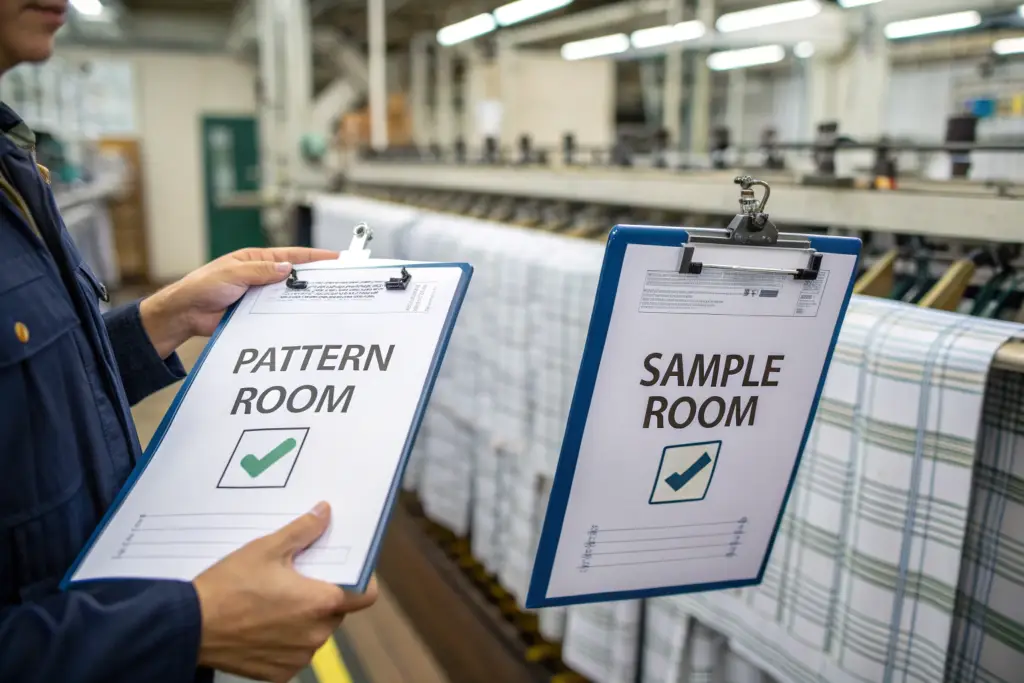
What Questions Should I Ask to Reveal Their True Capabilities?
You cannot just ask, "Are you OEM?" The answer is always "Yes." You must ask process questions that reveal the truth.
The Five Revealing Questions:
-
"Can I speak to your pattern maker directly?"
- True OEM Response: "Yes, we can schedule a Zoom call with our senior pattern maker. Please have your spec sheet ready."
- ODM Pretending Response: "Our sales rep handles all technical questions." (Translation: There is no pattern maker. The sales rep is just guessing).
-
"What file format do you accept for digital patterns?"
- True OEM Response: "We accept DXF, AAMA, and Gerber .zip files."
- ODM Pretending Response: "Please just send a sample garment." (Translation: We will copy the sample, not engineer a pattern).
-
"What is your process for creating a new size grade?"
- True OEM Response: "We can follow your provided grade rules, or we can apply our standard ASTM D6860 grade rules for your target demographic."
- ODM Pretending Response: "We just make S, M, L." (Translation: We use a simple linear percentage grade that works for knits but destroys woven fit).
-
"Can you source a specific mill's fabric that is not in your current library?"
- True OEM Response: "Yes, we can contact the mill for a sample yardage. Please provide the article number. Lead time is approximately 20 days."
- ODM Pretending Response: "We recommend using our in-house fabric. It is very similar." (Translation: We only buy from our two regular suppliers).
-
"What is your sampling fee policy for a completely new pattern?"
- True OEM Response: "We charge a development fee of approximately $150-$300 for the pattern and first sample. This is credited back to your bulk order if the order exceeds 1,000 units."
- ODM Pretending Response: "Sampling is free!" (Translation: We are only showing you existing ODM samples. There is no new pattern work).
At Shanghai Fumao, we have a dedicated Pattern Room with three full-time pattern makers using Gerber CAD systems. When an OEM client asks for a Zoom call, we put the pattern maker on the screen with the fabric and the sketch. That transparency is the proof.
Why Is the Factory's "Sample Room" the Key Indicator?
The Sample Room is the heartbeat of an OEM factory. It is separate from the production line. It has specialized machines and senior sewers who can make one garment perfectly, not one thousand garments quickly.
How to Assess the Sample Room Remotely:
Ask for a Video Tour. Do not accept a glossy marketing video. Ask for a live WeChat video call where they walk you through the room.
Look for These Visual Cues:
| What You See | What It Means |
|---|---|
| Paper Patterns Hanging on Racks | Green Flag. They are actively making new patterns. True OEM. |
| Large Format Printer/Plotter | Green Flag. They print digital patterns in-house. |
| Dress Forms in Various Sizes | Green Flag. They care about fit on different bodies. |
| Only Finished Garments on Hangers | Red Flag. This is a showroom, not a sample room. ODM. |
| Only Industrial Sewing Machines in Long Rows | Red Flag. This is the production floor. They are showing you the wrong room. |
I once had a client who was about to send a $20,000 deposit to a factory she found online. She asked for a video call of the sample room. The factory showed her the production floor. She asked again. They made excuses. She walked away. She later found out from another buyer that the factory was strictly ODM and had outsourced her "OEM" sample to a third-party sample shop. The fit was a disaster.
Conclusion
The difference between OEM and ODM is not just a technical definition. It is a strategic business decision that impacts your cash flow, your brand identity, and your stress levels. OEM means you own the blueprint. ODM means you lease the blueprint. Both are valid paths. Confusing them is what causes pain.
We walked through the demanding document checklist of OEM—the tech packs, the grade rules, the BOMs—and the reality that this path requires either deep technical knowledge on your part or a budget to hire someone who has it. We explored the speed and agility of ODM, understanding that the "Customization Ladder" allows you to add your logo, swap a fabric, or even tweak a fit without reinventing the wheel. We examined the strategic moment to transition from one model to the other, and the revealing questions you must ask to know if a factory is truly capable of delivering on their OEM promises.
For most brands starting out, ODM is not a compromise. It is the smart, capital-efficient way to test the market and build a relationship with a factory. For brands with a unique fit proposition or a signature design, OEM is the only way to protect that intellectual property and command a premium price.
At Shanghai Fumao, we are equipped to support you on either path. We have a library of hundreds of proven ODM styles in knits, wovens, and outerwear that you can brand and customize with low minimums. And for those ready to take the leap into OEM, we have the pattern room, the sample room, and the experienced team to bring your unique vision to life with precision and care.
Understanding which model fits your current business stage is the first step toward a profitable, stress free supply chain. If you want to discuss your product ideas and figure out whether ODM or OEM is the right starting point for you, our Business Director, Elaine, is ready to help you map out the smartest path forward.
Email: elaine@fumaoclothing.com