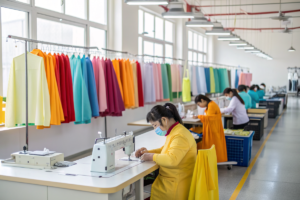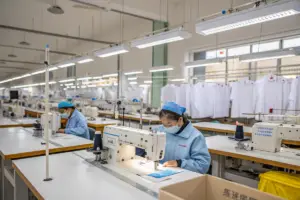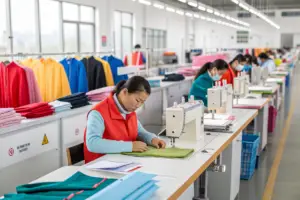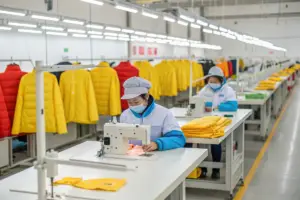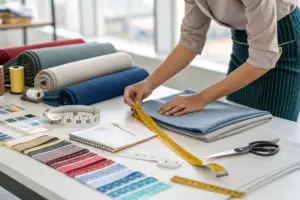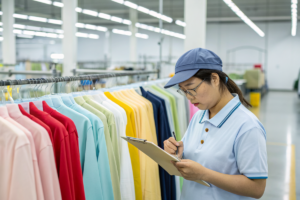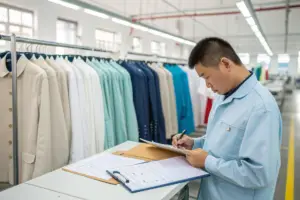
Four years ago, I received an email from a client that I will never forget. The subject line was: "I HATE THIS INDUSTRY." She was a talented designer from Austin, Texas. She had just received her third shipment from a factory in another province. The buttons were wrong. The sizing was off. The delivery was six weeks late. She had spent $12,000 and gained nothing but anxiety and a garage full of unsellable inventory. She was ready to quit. Today, she runs a seven-figure brand and we speak on the phone maybe twice a month. The difference was not finding a magic factory that never makes mistakes. The difference was learning how to build a relationship that survives mistakes.
Building a stress free relationship with your overseas clothing factory requires a fundamental shift from a transactional "buyer-vendor" mindset to a collaborative "partnership" mindset. This shift involves three core pillars. First, establishing radical clarity on expectations through detailed tech packs and approved reference samples. Second, creating a communication rhythm that balances oversight with autonomy. Third, implementing a problem-solving framework that treats errors as system failures to be fixed, not personal betrayals to be punished.
You are a business owner. You understand sales. You know that stress is not just an emotion. It is a cost. It clouds your judgment. It makes you snap at your team. It makes you lose sleep before a big launch. At Shanghai Fumao, I have been on the factory side of this equation for over 15 years. I have seen what makes relationships thrive and what makes them combust. This article is about building a supply chain partnership that gives you peace of mind, not panic attacks.
What Does a "Partnership" with a Factory Actually Look Like?
Most buyers think a good factory is one that replies "Yes, sir" to every request and delivers perfect goods magically. That is not a partnership. That is a fantasy. A real partnership looks different. It looks like two businesses working on the same problem.
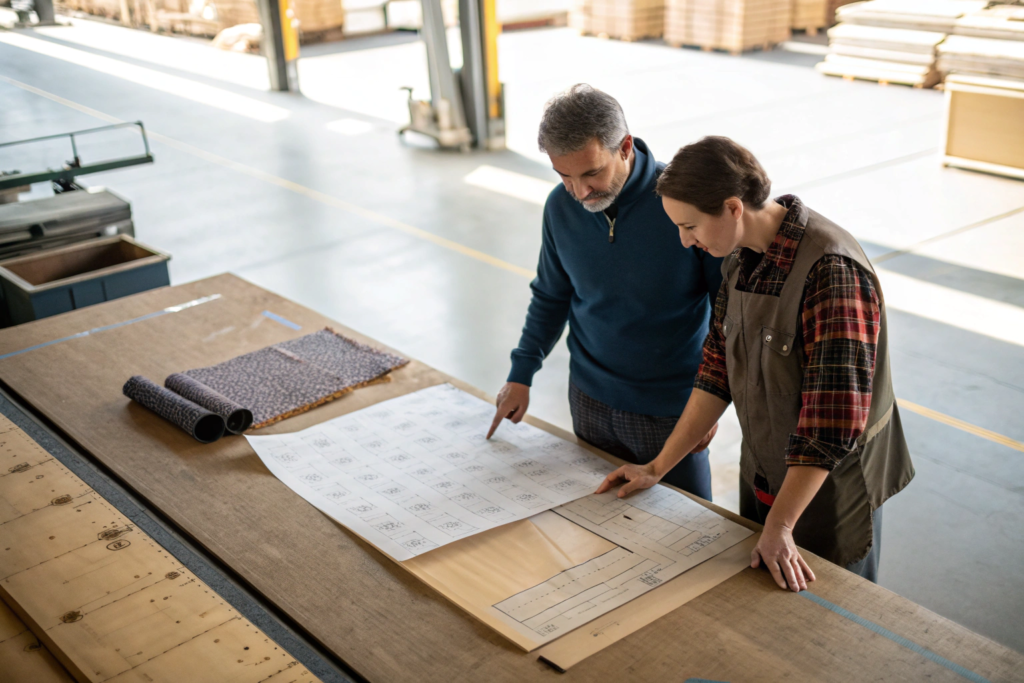
A true partnership with an overseas factory means the factory acts as an extension of your brand's operations team. It means they proactively flag a potential fit issue before cutting the fabric. It means they suggest a more cost-effective trim option that does not compromise quality. It means they tell you the honest lead time, even when it is longer than you want to hear. In a partnership, the factory's goal shifts from "shipping the order" to "making your brand successful."
This is not just about warm feelings. It is about economics. A transactional factory makes money on this order. A partner factory makes money on your next ten orders. That long-term incentive changes every single decision they make.
How Is a Partner Different from a Vendor?
I see this confusion constantly. A buyer will call a factory a "partner" but treat them like a vendor. The language we use shapes the outcome we get.
Here is a table I use to explain the difference to my team at Shanghai Fumao:
| Trait | Vendor (Transactional) | Partner (Relational) |
|---|---|---|
| Information Flow | One-way. Buyer sends PO. Factory ships. | Two-way. Factory shares mill delays. Buyer shares sell-through data. |
| Problem Ownership | "That's your fabric issue." | "How do we fix this fabric issue?" |
| Cost Discussion | Zero-sum. Lower price means factory loses. | Value-based. "Can we save $0.20 here to invest $0.30 there?" |
| Conflict Resolution | Blame assignment. | Root cause analysis. |
| Future Planning | Next PO only. | Capacity planning for next season. |
I recall a specific incident with a client who was transitioning from a vendor to a partner mindset. She sent an angry email about a slight shade variation on a reorder of a navy blazer. She was ready to demand a discount.
Before she hit send, she called me. She said, "I'm frustrated. Why is the navy different?" I pulled the original dye lot card and the new one. I explained that the mill had changed their dye supplier, and while the color was within commercial tolerance (Delta E 1.8), it was visibly different side-by-side.
Vendor Response: "It's within tolerance. Pay the invoice."
Partner Response: "You're right. It's different. We can't ship this as a reorder because your retail accounts expect an exact match to last season. Let's sell this batch to a different channel as a 'New Navy' capsule, and I'll work with the mill to match the original lot for your next core order. I'll absorb the cost of the new lab dips."
She agreed. We found a home for the goods. She placed the next order. The partnership survived because we focused on solving the business problem (mismatched retail expectations), not just the technical problem (colorimeter reading).
Why Does "Losing Money on One Order" Sometimes Build a Stronger Bond?
This sounds counter-intuitive. You want the factory to make a profit so they stay in business. But sometimes, the factory eating a small loss is the best investment they can make in the relationship.
Scenario: The factory made a mistake. They sewed the wrong size label into 200 units. The goods are otherwise perfect. The factory has two choices:
- Choice A (Vendor): Ship the goods. Hope the buyer doesn't notice. (Buyer notices. Files chargeback. Relationship ends).
- Choice B (Partner): Call the buyer. "We made a labeling error. We can either rework the 200 units here (Delay: 5 days, Cost to factory: $400 labor) or ship them as-is with a 5% discount on those units."
The Buyer's Reaction:
If the factory owns the mistake and offers a solution before the buyer finds it, the buyer's trust increases. They think, "Wow, this factory caught their own error and told me about it. They have integrity."
That $400 labor cost to re-label is not a loss. It is a marketing expense for trust. It buys the factory the next $100,000 order.
At Shanghai Fumao, we have a "No Surprises" policy. If we find an internal error during QC, we do not hide it. We present it with a fix. This has never lost us a client. It has only deepened our relationships. Buyers are so used to being lied to that radical honesty is a competitive advantage.
How to Communicate with Your Factory Without the Daily Headache?
The pain point you mentioned: "inefficient communication with suppliers' sales reps." This is the number one source of stress. The endless email chains. The "Reply All" with 12 people. The vague WeChat voice messages at 2 AM.
Stress free communication with a factory requires a structured, documented, and predictable rhythm. You must separate "Urgent Operational Chatter" (WeChat) from "Permanent Record Decisions" (Email). You must move from open-ended questions like "How is it going?" to specific, binary questions like "Is the cutting finished? Yes or No?" This reduces cognitive load on both sides.
You do not need to talk every day. You need to talk with purpose.
What Is the "One Email Rule" for Weekly Updates?
I implemented this rule for my account managers three years ago, and it has transformed our client relationships. It is based on a simple principle: Consolidate, then Communicate.
The Problem:
A buyer has three styles in production.
- Style A is in cutting.
- Style B is in sewing.
- Style C is waiting for buttons.
The factory sends three separate emails from three different departments over three days. The buyer's inbox is a mess. They cannot see the forest for the trees.
The "One Email Rule" at Shanghai Fumao:
Every Friday at 4:00 PM Shanghai time, the account manager sends ONE email per client. The subject line is always the same: "[Client Name] Weekly Production Status - [Date]"
The Body of the Email (Template):
Overall Status: On Track / At Risk (with color coding: 🟢🟡🔴)
Style #1001 (Linen Dress):
- Phase: Sewing
- Progress: 45% Complete (900 of 2,000 units sewn)
- This Week's Win: Collar attachment issue resolved.
- Next Week Focus: Finishing sleeves.
- Risk: None.
Style #1002 (Cotton Poplin Shirt):
- Phase: Waiting for Buttons
- Progress: Fabric cut. Ready for sewing.
- This Week's Win: N/A
- Next Week Focus: Buttons arriving Monday. Sewing starts Tuesday.
- Risk: 🟡 Buttons delayed 2 days. No impact on final ship date. We will add one weekend shift to catch up.
Action Items for Client:
- Please approve the attached Fall 2025 Trim Sheet by EOD Monday.
Photos Attached:
- IMG_001: Bundles of Style 1001 on sewing line.
- IMG_002: Cut panels for Style 1002.
Why This Works:
- Predictability: The buyer knows when the email is coming. They do not need to refresh their inbox all week.
- Context: All information is in one place.
- Accountability: The status from last week can be compared to this week.
This one email, which takes 20 minutes to compile, saves the buyer hours of mental energy. It replaces the vague "How's it going?" email with concrete data.
How to Give Feedback That Gets Results Instead of Defensiveness?
You will need to give critical feedback. A button is crooked. A hem is uneven. A fabric feels off. How you deliver this feedback determines whether the problem gets fixed or the relationship gets damaged.
The Wrong Way (Triggering Defensiveness):
"These buttons are terrible. They look cheap. What did you do? Fix this immediately."
This is an attack. The factory manager's brain shuts down or goes into fight mode.
The Right Way (The "Fix This, Please" Framework):
- Reference the Standard: "Comparing the bulk production to the Approved TOP Sample we signed off on March 15th..."
- State the Objective Observation: "...I notice the button attachment appears looser. There is less thread shank visible."
- Show Visual Proof: "See attached photo. Bulk on the left. Approved sample on the right."
- State the Business Impact: "If these loosen in the wash, we will see a high return rate from customers."
- Ask for the Solution: "Can you please review the button machine tension and confirm how we can match the approved sample standard on the remaining 80% of the order?"
The Outcome:
The factory manager looks at the photo. He sees the objective difference. He does not feel attacked. He feels like a problem-solver. He checks the machine. He finds the tension was off. He fixes it. He emails you: "Fixed. Tension adjusted. Thank you for catching this."
I had a client who mastered this technique. She used to send all-caps emails that made my team dread opening her messages. I coached her on this framework. The next issue that came up, she sent a calm, photo-documented note. My production manager said, "She's so professional now. I want to help her more." The speed of resolution doubled.
How to Handle Quality Issues Without Destroying the Relationship?
This is the crucible of the relationship. Quality issues will happen. Fabric is organic. Sewing is human. The stress does not come from the defect itself. The stress comes from how the defect is handled.
Handling quality issues without destroying the relationship requires a shared commitment to an objective standard (like AQL) and a pre-agreed process for remediation. The goal is not to prove who is at fault. The goal is to get the goods to a sellable condition at the lowest total cost to the partnership. This often means the factory pays for the labor rework, and the buyer absorbs a minor time delay.
If every defect becomes a courtroom drama over who pays $500, the relationship will die of exhaustion. You need a framework.
What Is a "Fair Fault" Process for Defective Goods?
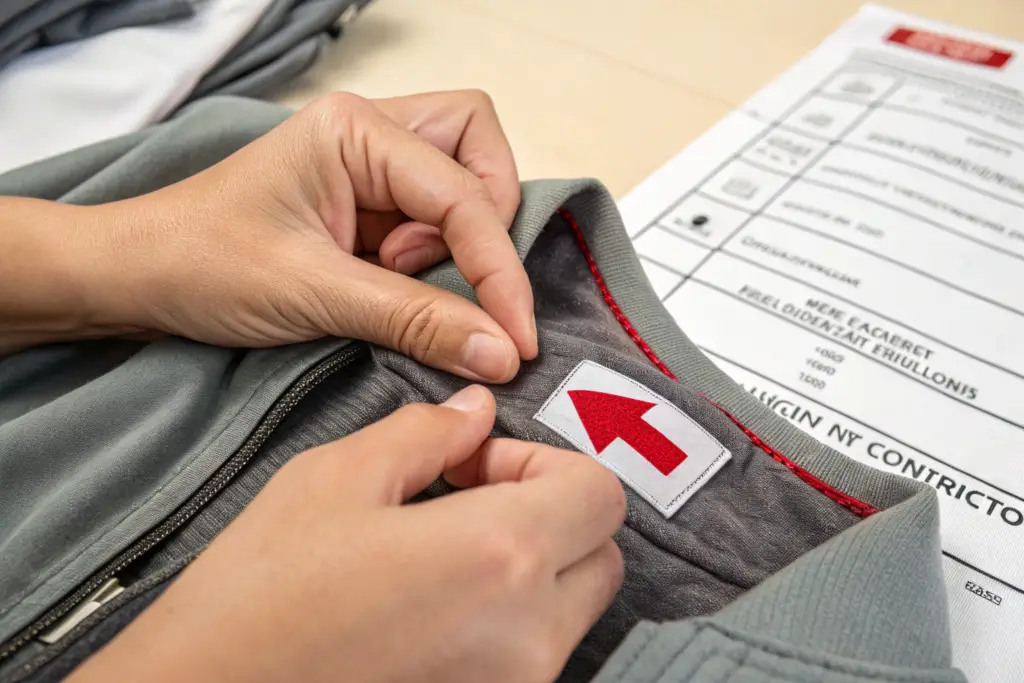
I have developed a simple three-category system for assigning responsibility when something goes wrong. This removes the emotion and focuses on the solution.
Category 1: Factory Fault (Factory Pays 100% of Rework)
- Definition: Error is in the factory's direct control and contradicts the approved tech pack or sample.
- Examples:
- Wrong thread color used.
- Measurement out of tolerance by more than 0.5 inches.
- Skipped stitches or broken seams.
- Packing wrong size ratio in carton.
- Resolution: Factory pays for local rework labor. If rework is impossible, factory issues a Credit Memo for the value of the defective units.