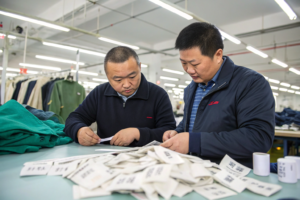
Eighteen months ago, I watched a brand owner from Denver walk away from a $75,000 order. Not because the quality was bad. Not because the price was high. He walked away because the factory demanded 100% payment before shipment. His cash was tied up in a warehouse lease and a trade show deposit. He simply could not write a check for $75,000 and wait 35 days for the goods to arrive and sell. He needed 30 days of float. The factory refused. That factory lost a client who has since placed over $400,000 in orders with Shanghai Fumao. Why? Because we understood that in the apparel business, cash flow timing is more important than unit price.
Flexible payment terms are a massive advantage for apparel buyers because they align the cash outflow of inventory procurement with the cash inflow of wholesale receivables or direct-to-consumer sales. When a factory offers terms like 30% deposit and 70% against bill of lading, or net 30 after shipment, they are effectively providing interest-free working capital financing. This allows buyers to scale their order volume, test new categories, and survive the seasonal cash flow crunches that kill undercapitalized brands.
You are a business owner. You source from developing countries. You rebrand and distribute in the USA. You understand that profit is not just revenue minus cost of goods sold. It is Revenue minus Cost of Goods Sold minus the Cost of Capital. Flexible terms reduce that third variable to nearly zero. Let me explain exactly how this works and why it should be at the top of your vendor negotiation checklist.
What Exactly Are "Flexible Payment Terms" in Apparel Manufacturing?
When you hear "payment terms," you might think of a simple invoice. But in the world of cross-border apparel sourcing, this is a complex financial instrument that can make or break your year.
Flexible payment terms in apparel manufacturing refer to any deviation from the strict "100% upfront before production" model. The most common structures include a deposit-before-production and balance-before-shipment split, a letter of credit at sight, or open account terms with deferred payment. These terms determine how long your cash sits in the factory's bank account versus how long it sits in yours.
The traditional model is brutal for buyers. You pay for fabric. You pay for labor. You pay for shipping. Then you wait. By the time the goods arrive at your warehouse, you have been out of pocket for 60 to 90 days. If you are a growing brand, that is an eternity.

How Does a Standard 30/70 Payment Structure Actually Work?
This is the industry standard for established relationships. It is a significant upgrade from 100% upfront. Let me walk you through the timeline with a concrete example from Shanghai Fumao.
Order: 3,000 units of women's woven blouses.
Total Invoice: $36,000 ($12.00 per unit landed cost).
Phase 1: Order Confirmation (Day 1)
- Payment: 30% Deposit = $10,800.
- What Happens: We use this money to book the greige fabric and reserve dyeing capacity. This covers our raw material risk. If you cancel the order, we are not stuck with 3,000 yards of custom-dyed fabric that we cannot sell.
Phase 2: Production Period (Day 10 to Day 45)
- Payment: $0.
- What Happens: The fabric is dyed, cut, and sewn. During this 35-day window, your cash is still in your bank account. You can use it for marketing, paying your staff, or placing a smaller reorder on a fast-selling item.
Phase 3: Shipment Ready (Day 50)
- Payment: 70% Balance = $25,200.
- What Happens: We send you photos of the finished goods, the packing list, and the third-party inspection report. You wire the balance. We release the cargo to the freight forwarder.
The Financial Math of the Float:
With 100% upfront, you lose access to $36,000 for 50 days.
With 30/70, your average cash outlay over that 50-day period is roughly $15,000.
That is $21,000 of extra liquidity that stays in your operating account.
For a small brand, that $21,000 is the difference between running a Facebook ad campaign to pre-sell the blouses or waiting silently for the container to arrive.
What Is the Difference Between "Against Bill of Lading" and "Net 30"?
This is where terms get nuanced and where the real advantage kicks in.
Terms: "70% Against Copy of Bill of Lading (B/L)"
- Timing: You pay the 70% balance when the container is on the ship. The factory sends you a scanned copy of the Bill of Lading (proof the goods are on board).
- Cash Float: 14 to 21 days. (Transit time from Shanghai to Los Angeles).
- Advantage: You have two to three weeks to collect receivables from your own customers before you have to pay the factory.
Terms: "Net 30 Days from Bill of Lading Date"
- Timing: You pay the 70% balance 30 days after the ship sails.
- Cash Float: 30 to 45 days.
- Advantage: This is the holy grail of apparel terms. The goods might arrive at your warehouse before you have paid for them. You can ship to your retail accounts, send them an invoice with Net 30 terms, and use their payment to pay the factory. This is called Vendor Financing. You are building a business on Other People's Money (OPM) .
The Risk for the Factory:
Offering Net 30 requires immense trust. The factory is essentially lending you an unsecured loan for 30 days. At Shanghai Fumao, we only extend Net 30 to clients who have successfully completed 3-4 orders with perfect payment history on a 30/70 basis. It is a loyalty reward.
I recall a client who was struggling to keep up with demand. He had orders from 12 new boutiques but no cash to produce the goods. We moved him to Net 30 terms for one season. He used the 30-day float to fulfill the orders, collect the cash, and pay us. That single adjustment in terms helped him 3x his revenue that year without taking on a high-interest merchant cash advance.
How Do Flexible Terms Reduce the Cost of Capital for a Brand?
You might think the price per unit is the only cost that matters. It is not. The Cost of Capital is the hidden tax on inventory.
Flexible payment terms reduce the cost of capital by eliminating or minimizing the need for external financing. When a buyer uses a factory's Net 30 terms, they are borrowing at 0% interest. If that same buyer had to use a business credit card (18-24% APR) or a factor (3-5% per month) to cover the 70% balance payment, the effective cost of goods sold increases significantly, eroding the margin they thought they had locked in.
Let me show you the math. It is brutal and eye-opening.

What Is the True Cost of Using a Credit Card vs. Factory Terms?
Scenario: You have a $50,000 bulk order. You need to pay the $35,000 balance before shipment. The transit time is 4 weeks. Your retail partners pay you 30 days after they receive the goods. Total cash gap: 60 days (2 months) .
Option A: Pay Factory with Credit Card (or Cash Advance)
- Source of Funds: Business Credit Card at 22% APR.
- Loan Amount: $35,000.
- Time: 60 days.
- Interest Cost: ($35,000 0.22) / 365 60 = $1,265.
- Impact on Margin: Your landed cost was $15.00 per unit. With interest, it is effectively $15.54. You just gave away 3.6% of your margin to a bank.
Option B: Factory Offers Net 30 from Bill of Lading
- Source of Funds: Factory Float.
- Loan Amount: $35,000.
- Time: 60 days (30 days transit + 30 days terms).
- Interest Cost: $0.
- Impact on Margin: Zero.
The Competitive Advantage:
That $1,265 saved on interest can be reinvested. You can use it to pay for free shipping for your wholesale accounts. You can use it to hire a better photographer. You can simply take it as profit.
This is why large retailers like Macy's and Nordstrom push for 90-day terms. They understand the time value of money. Small brands often forget this lesson until they are drowning in credit card debt. At Shanghai Fumao, we want our clients to be profitable so they can place larger reorders. We structure terms to help them avoid the credit card trap.
How Does Payment Flexibility Help with Pre-Selling Inventory?
This is a specific, powerful tactic used by smart DTC and wholesale brands. It only works if you have flexible payment terms with your factory.
The Pre-Sell Model:
- You have a 30/70 agreement with the factory. Deposit is $5,000.
- You launch a Pre-Sale on your website for a new style. Delivery promised in 6 weeks.
- Customers pay now. You collect $20,000 in revenue over a 10-day launch window.
- You use that $20,000 in customer cash to pay the 70% balance to the factory.
Without Flexible Terms:
If the factory demanded 100% upfront, you would need $25,000 of your own cash to place the order before you even knew if the style would sell. That is a huge barrier.
With Flexible Terms:
The deposit is low. The balance is due just as the pre-sale cash settles in your account. You are Cash Flow Positive on the order before it even ships.
I have a client who does this masterfully with a line of linen dresses. She launches a pre-sale in March for May delivery. She collects the cash. She pays our balance invoice in late April. She uses the leftover cash to fund the next pre-sale. She has not used a bank loan in three years. She calls it her "Customer-Funded Inventory Model."
This model requires a factory that is willing to wait for the balance payment. It requires trust. But when it works, it is a beautiful, self-funding growth engine.
Why Do Flexible Terms Protect Against Quality and Shipping Disputes?
You mentioned your pain point: "delayed shipments leading to missed seasons" and "suppliers occasionally falsify certificates." Flexible payment terms are your leverage against these exact scenarios.
Flexible payment terms protect buyers in quality and shipping disputes because they retain a significant financial holdback until the goods are verified. When a buyer has already paid 100% of the invoice before shipment, they have zero leverage. The factory has no financial incentive to fix a broken zipper or expedite a delayed container. When 70% of the payment is contingent on a clean bill of lading or a passed inspection, the factory's interests are aligned with the buyer's.
Money talks. Specifically, money that is still in your bank account talks.
What Happens If the Goods Fail a Third-Party Inspection?
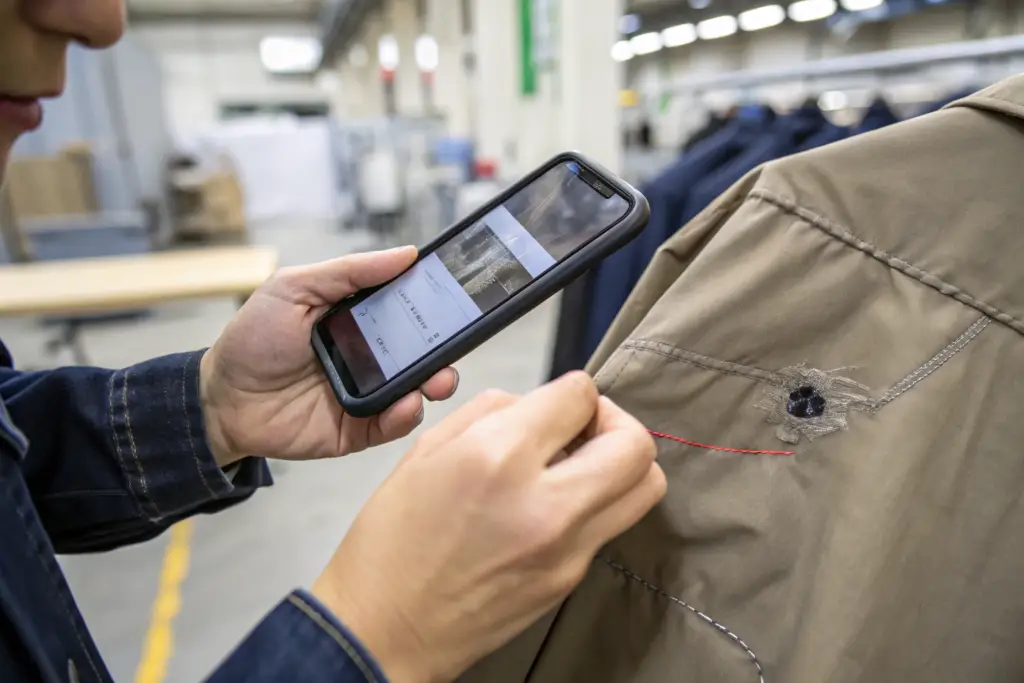
This is a scenario I have navigated dozens of times. You hired SGS or Bureau Veritas to inspect the 3,000 units before shipment. The report comes back with Major Defects: Broken Stitches on 8% of units.
Scenario A: You Paid 100% Upfront (Or 30/70 with Balance Already Paid)
- Your Position: You beg the factory to fix the issue.
- Factory's Position: They have your money. They will "fix it next order." They ship the defective goods anyway because the vessel cut-off is tomorrow. You receive 240 defective units. You eat the loss.
Scenario B: You Have a 30/70 Structure and Have NOT Paid the Balance
- Your Position: You email the factory: "Inspection failed. Balance payment is on hold until 100% of units are re-inspected and passed."
- Factory's Position: They need that $25,200 balance to pay their workers and the freight forwarder. They are highly motivated to fix the issue immediately. They pull the shipment from the dock, open the cartons, and repair the stitches over the weekend.
The Outcome:
You receive a clean shipment. The factory gets paid. The only reason the factory fixed it was because the money was still in your pocket.
At Shanghai Fumao, we do not wait for the client to withhold payment. If an inspection fails, we automatically stop the shipping process. We rework the goods. We re-inspect. Only then do we send the final invoice. This is proactive quality management, but the underlying structure of "payment upon satisfactory inspection" is what makes it economically necessary for any factory to behave this way.
How Can I Use Payment Terms to Mitigate Port Strike or Delay Risks?
You cannot control a longshoreman strike in Long Beach. You cannot control a typhoon in the South China Sea. But you can control who holds the cash while the container sits idle.
The Clause You Need:
In your Purchase Order or Manufacturing Agreement, include this language regarding the balance payment:
"70% Balance due 7 days after Vessel Departure Confirmation (Clean On-Board Bill of Lading). In the event of force majeure port closure or shipping line delay prior to vessel departure, the balance payment date shall be extended accordingly."
Why This Matters:
If the factory has a delay in getting the truck to the port, they cannot bill you the 70% until the ship sails. This puts the cost of delay on the factory. They will pay for the expedited trucking to make the vessel cut-off because they want to trigger your payment.
The Alternative (Bad Terms):
If your terms say "70% due upon Ex-Factory Date" (when goods leave the factory gate), you pay even if the goods sit in a Chinese warehouse for two weeks due to a paperwork error. You are financing the factory's logistics incompetence.
I had a client whose container was rolled twice due to a blank sailing. Because we had a "Vessel Departure" clause, the client did not pay the $40,000 balance for an additional 21 days. That cash stayed in his account earning interest (or avoiding interest charges) while the shipping line sorted out the mess. If he had paid earlier, he would have been stressed about the delay and stressed about the cash.
How to Negotiate Better Payment Terms with an Overseas Factory?
You might think the terms are set in stone. They are not. Everything is negotiable, but you must approach the negotiation from a position of Mutual Benefit, not just demand.
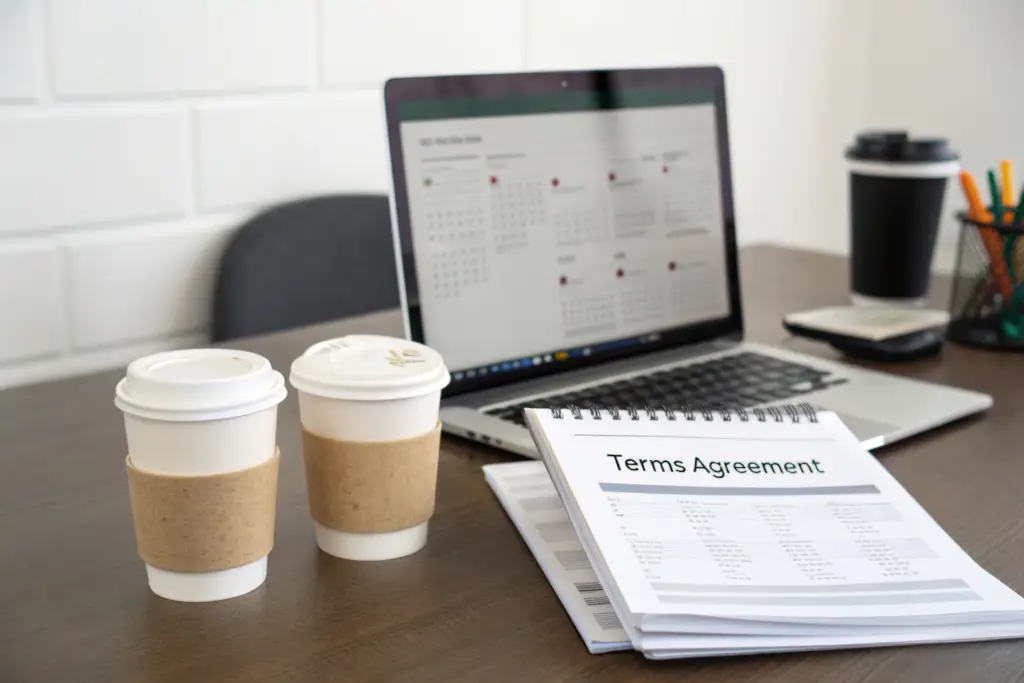
Negotiating better payment terms with an overseas factory requires building a track record of reliability, offering transparency into your business model, and sometimes agreeing to a slightly higher unit price in exchange for extended dating. You must frame the request as a long-term partnership play, not a short-term cash grab.
Factory owners are business people, just like you. They understand cash flow. They also understand risk. Your job is to lower the perceived risk of extending you credit.
Should I Offer to Pay a Slightly Higher Price for Net 30 Terms?
Yes. And this is a very sophisticated move that most buyers miss.
The Trade-Off Calculation:
Let's say the factory quotes you $10.00 FOB with 30/70 Against B/L.
You want Net 30 from B/L.
Your Offer:
"I understand that offering Net 30 increases your working capital burden. I am willing to accept $10.15 FOB in exchange for Net 30 terms."
The Factory's Math:
The factory owner thinks: "An extra $0.15 per unit on 5,000 units is $750. That covers my interest cost and a little extra for the hassle. Deal."
Your Math:
You just paid $750 for a $35,000 interest-free loan for 30 days. If you had to borrow $35,000 from a factor at 3% per month, it would cost you $1,050. You saved $300 and you built trust with the factory by acknowledging their cost.
This is how you use terms as a strategic tool. You are not just begging for a favor. You are structuring a win-win financial transaction.
At Shanghai Fumao, we have clients who value terms more than price. We have clients who value price more than terms. We tailor the offer to their specific business model. This is only possible if you have an open conversation about it.
How Does Transparency About My US Business Help My Case?
Factory owners in China and Vietnam are constantly burned by buyers who disappear after receiving goods without paying the balance. This is why they guard their cash so fiercely.
The Information Asymmetry Problem:
You know your business is solid. They see you as just another email address from a foreign country.
The Solution: Share Your "Business Vitals" Document.
When I am assessing whether to extend terms to a new client, I look for specific signals. If a buyer proactively provides these, my confidence skyrockets.
What to Share:
- Website and Social Media: A professional, active brand presence shows you are real.
- Trade Show Schedule: "We will be exhibiting at Dallas Apparel Mart in March." This shows you are invested in wholesale and will be publicly visible (so you cannot easily hide).
- Basic Financial Narrative: You do not need to share bank statements. But a sentence like, "We did $850k in revenue last year and are projecting $1.2M this year. We need terms to manage the growth." This gives context.
- References: Offer to connect them with another vendor you work with (a trim supplier or a 3PL) who can vouch for your payment history.
The Impact:
I had a client send me a one-page PDF titled "Our Brand Story and Growth Plan." It included photos of their pop-up shop, their team, and a simple revenue chart. That document did more to secure them Net 30 terms than any bank letter of credit ever could. It made them human. It made them a partner.
Conclusion
Flexible payment terms are not just a convenience. They are a strategic weapon in the brutal war of apparel cash flow. They transform the way you buy inventory, the way you manage risk, and the way you finance your growth.
We have broken down the mechanics of the 30/70 split and why keeping that 70% balance in your account for an extra 30 to 45 days is equivalent to securing a zero-interest line of credit. We looked at the math of avoiding 22% credit card interest and how that savings drops straight to your bottom line. We examined how holding back payment protects you when a third-party inspection fails or when a port strike leaves your container sitting on the dock. And we discussed the art of the negotiation, showing how a small price increase or a transparent business plan can unlock the best terms in the industry.
The relationship between a brand and a factory should be a partnership, not a transaction. And the cornerstone of that partnership is a fair and flexible financial agreement. If your factory demands 100% upfront and offers no flexibility, they are treating you like a one-time buyer, not a long-term partner. You deserve better.
At Shanghai Fumao, we have structured our business to support the financial health of the brands we work with. We understand that your success is our success. If you are constrained by cash flow, we cannot grow with you. That is why we offer tailored payment solutions based on the length and depth of our relationship. Whether it is a standard 30/70 split or more advanced terms for established partners, we are here to help you scale your apparel vision from our five production lines in China to the US market.
If you are ready to work with a factory that understands the financial realities of running an apparel brand, reach out to our Business Director, Elaine. Let's discuss how we can build a payment structure that works for your cash flow, not against it.
Email: elaine@fumaoclothing.com