Eight months ago, I received a text message at 11:30 PM Shanghai time. It was from a client in New York. He wrote: "Container delayed again. No update from factory. Retailer canceling PO if not here Friday. Help." I called the logistics manager at our warehouse immediately. The container had been rolled to the next vessel due to a port congestion issue in Ningbo. The factory knew this three days ago. They did not tell the client. They were afraid of the reaction. That silence cost the client a $45,000 wholesale order. That silence cost the factory a long-term partnership. In apparel, the bad news does not get better with age. It rots.
Proactive communication is the only way to survive the apparel industry because the supply chain is inherently fragile and geographically fragmented. Fabric mill delays in China, port strikes in California, or a snap button shortage in Vietnam are not "exceptions." They are weekly occurrences. If you wait for the buyer to ask for an update, you have already failed. If you push the update to the buyer before they feel the pain, you are not a vendor. You are a partner.
You mentioned your pain point: "inefficient communication with suppliers' sales reps." This is the disease that kills more apparel businesses than bad fit or high prices ever will. At Shanghai Fumao, I have built my factory's reputation on one simple rule. Over-communicate the ugly stuff early. I want to explain why this approach is not just polite. It is the only viable business strategy for surviving lead times, quality crises, and the brutal calendar of fashion seasons.
What Does Proactive Communication Look Like in Garment Manufacturing?
You might think you have good communication with your factory. You send an email. They reply within 24 hours. That is reactive communication. That is the bare minimum. It is table stakes. It will not save you when the dye lot is off-shade and the cutting ticket is scheduled for Tuesday.
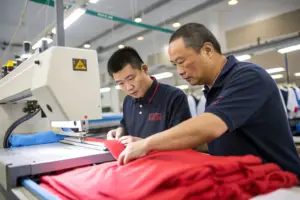
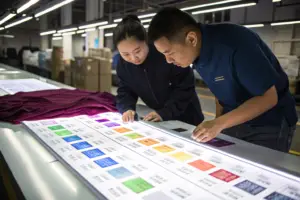
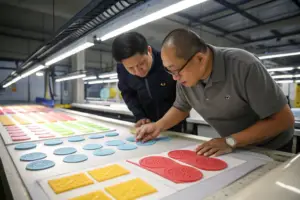
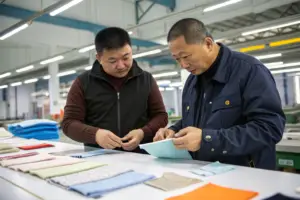
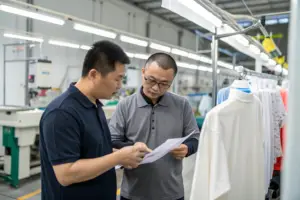
Proactive communication in garment manufacturing means the factory anticipates the information you need to manage your business and delivers it before you realize you need it. It is a weekly status report that includes a "Risk Register." It is a photo of the bulk fabric roll with a color reading from a spectrophotometer. It is a calendar invite for a 15-minute "Pre-Production Alignment Call" six weeks before the ship date.
Let me show you the difference with a real scenario from my production floor.
Scenario: Fabric Arrival
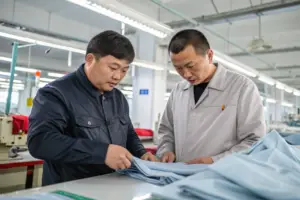
- Reactive Factory: Fabric arrives. QC finds 8% shade variation between rolls. Factory decides to "manage it internally." They cut the fabric. They sew the garments. They hope you don't notice the slight shade difference between the sleeve and the body. You notice. You file a chargeback. Relationship over.
- Proactive Factory (Shanghai Fumao): Fabric arrives. QC finds 8% shade variation. Within 4 hours, you receive an email with:
- A photo of the shade variation under D65 lighting.
- The Delta E reading from the spectrophotometer (e.g., Delta E 2.5).
- Three options for you to choose from: (A) Proceed with cutting but sort panels by shade roll. (B) Return fabric to mill for re-dye (Delay: 12 days). (C) Accept 5% discount on fabric cost.
You choose Option A. You tell your retail buyer, "We noticed slight shade variation. We sorted it. The front panels will be consistent. The back panels may have a slight variance but it is within commercial tolerance." The retailer appreciates the heads-up. The order ships on time. Trust increases.

How Often Should a Factory Update a Brand Owner During Production?
This is the number one question I get from new brand owners. They do not want to micromanage. But they are terrified of radio silence.
The frequency of communication should be tied to the Critical Path Timeline (CPT) . Here is the communication cadence I mandate for all our account managers at Shanghai Fumao:
| Production Phase | Communication Frequency | Content of Update |
|---|---|---|
| Pre-Production (Sampling) | Daily or Every 2 Days | Pattern corrections, trim approvals, lab dip tracking. |
| Fabric Greige Sourcing | Weekly | Mill delivery date confirmation. |
| Dyeing & Finishing | Every 3 Days | Lab dip approval status. This is where delays hide. |
| Cutting & Sewing | Weekly (Every Friday) | Standard Progress Report: "Week 1 of 4: 25% complete. On track." |
| Quality Inspection | Within 24 Hours of Audit | Full AQL report with photos of any defects found. |
| Packing & Shipping | Daily during packing week | Carton count, booking confirmation, vessel name. |
The Friday Report Rule:
I train my sales reps to send a Friday Update even if nothing has changed. An email that says: "Weekly Update: Production on Line 3 is at 45%. Fabric quality looks good. No issues to report. Have a good weekend."
Why is this email worth the 60 seconds it takes to write? Because it prevents the client from sending an email on Sunday night asking, "Hey, just checking in. How is production?" That client is lying awake thinking about their inventory. Your proactive email turns off that anxiety.
What Is the Difference Between a Sales Rep and a Production Partner?
You mentioned "inefficient communication with suppliers' sales reps." This inefficiency stems from a structural problem. Many factories hire Sales Reps who are evaluated on booking orders. Once the order is booked, they move on to the next lead. They are not evaluated on delivery performance.
A Production Partner is a different breed. They are evaluated on On-Time, In-Full (OTIF) delivery.
Here is a side-by-side comparison based on my experience managing both types of people:
| Trait | Sales Rep (Transactional) | Production Partner (Relational) |
|---|---|---|
| First Question | "How many units?" | "What is your in-store date?" |
| Response to Bad News | Hides it. Hopes it resolves. | Immediately escalates with a solution proposal. |
| Knowledge Depth | Knows price per unit. | Knows fabric lead time, mill schedule, and vessel cut-off. |
| Language | "Don't worry." | "Here is the risk. Here is the mitigation plan." |
| Goal | Close the deal. | Ship the goods. |
I remember a client who was burned by a factory in Vietnam. The sales rep told her, "Yes, we can do 30-day delivery." The sales rep did not check the fabric stock. The fabric was out of stock. The order was delayed by 60 days. The sales rep avoided her calls for two weeks. When she finally reached him, he said, "Oh, the mill had a problem."
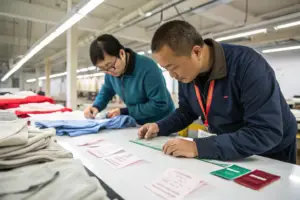
At Shanghai Fumao, our account managers sit on the production floor, not in a separate office building. They can see the cutting table. They can hear the sewing machines. When a client asks for an update, they do not send an email to the "production department." They walk 20 feet and look at the bundles.
How Does Proactive Communication Prevent the "Missed Season" Nightmare?
You mentioned the pain point: "delayed shipments leading to missed selling seasons." This is the existential threat of the apparel business. You can have the best design, the perfect fit, and the most competitive price. If the goods arrive December 1st for a Holiday collection, you are selling at a 50% loss. You missed the window.
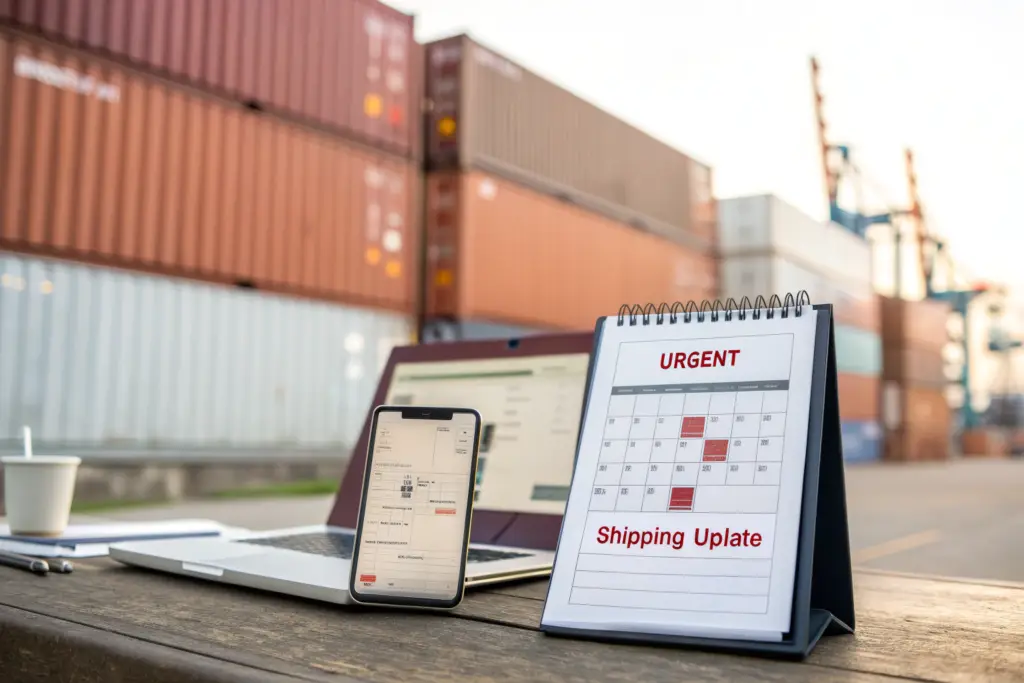
Proactive communication prevents missed seasons by triggering contingency plans early in the timeline. A 5-day delay caught on Day 10 of a 60-day lead time can be absorbed with expedited freight. That same 5-day delay hidden until Day 55 results in a missed vessel and a 14-day port delay. The time value of information is exponential. Early information is cheap. Late information is bankruptcy.
Let me walk you through a real timeline where proactive communication saved a season.
Client: Women's wear brand in Chicago.
Product: 5,000 units of a rayon crepe dress for Spring Break delivery (Must arrive in US by February 15).
Factory: Shanghai Fumao.
The Event: On November 10, the fabric mill reported that the rotary printing machine had broken down. The print strike-off was delayed by 7 days.
Reactive Scenario (What most factories do):
- Factory hopes the mill catches up. Says nothing to client.
- December 1: Factory realizes they cannot make the Jan 5 vessel cut-off.
- Factory tells client on December 2: "Delay. Sorry. Next vessel is Jan 19."
- Client receives goods March 1. Spring Break is over. Retailers cancel. Client is stuck with 5,000 units.
Proactive Scenario (What we did):
- November 10 (Day of Delay): We informed the client of the 7-day print delay.
- November 11 (Plan B): We proposed switching from Sea Freight (28 days) to Sea-Air Combo (Ship to Long Beach, fly to Chicago). Cost increase: $0.45 per unit.
- Client Decision: Approved $0.45 upcharge ($2,250 total) to save the season.
- Outcome: Goods arrived February 12. In stores for Spring Break. The $2,250 spent on freight saved $65,000 in potential markdowns and lost sales.
The key was telling the client on November 10. That gave us 55 days to solve the problem. If we had waited until December 20, the air freight option would have cost $4.50 per unit and the window would have been closed.
What Specific Information Should Be in a Weekly Production Update?
A vague update is useless. "Everything is fine" is not data. It is a feeling. You need hard numbers and visual evidence.
A Gold Standard Weekly Production Update from a factory should contain these five elements:
- Percentage Complete (Visual): A simple progress bar or a photo of the Cut Bundles. If you see 1,000 cut bundles on Monday and 1,000 cut bundles on Friday, you know they did not cut this week. That is a red flag.
- Inline QC Findings: A photo of the Defect Board on the sewing line. "This week: Found 3 instances of skipped stitches on collar. Retrained operator #14. Issue resolved." This shows the factory is actively managing quality, not just packing defects.
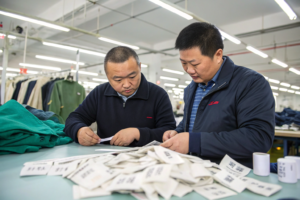
- WIP (Work in Progress) Photo: One photo of the actual sewing line making your specific garment. I cannot stress this enough. A generic photo of a factory floor is useless. I send my clients a photo of the bundle with their Hangtag visible.
- Next Week's Focus: "Next week: Finishing sleeves. Expect to complete 40% of sewing." This sets expectations.
- Risk Register: One bullet point. "Risk: Button shipment from Hong Kong is 2 days late. Contingency: We have 2,000 buttons in safety stock. Will use those to start sewing. No impact to timeline."
This report takes a production manager 15 minutes to compile. It saves the brand owner 15 hours of anxiety.
How to Handle a Major Delay Without Losing the Client?
Delays happen. Machines break. Ships sink. Workers get sick. The client will be angry. That is allowed. The question is whether the anger turns into a terminated relationship.
The Proactive Apology Formula I teach my team:
Step 1: Own It Immediately (Within 24 Hours of Knowing)
Do not use passive voice. Do not say, "A delay has occurred." Say, "I have bad news. We will miss the original ship date by 5 days. This is our fault. I take full responsibility."
Step 2: Explain the Root Cause (Briefly)
"The specific cause was a quality hold on the zipper plating. We rejected the batch for cosmetic reasons."
This shows you have standards. You did not just let bad zippers go out to meet a date.
Step 3: Present the New Timeline and the Recovery Plan
"Original Ship Date: May 1. New Confirmed Ship Date: May 6. Recovery Plan: We have authorized overtime for the sewing line this Saturday at our expense. We will also upgrade your freight to 'Priority Discharge' at the port at our cost."
Step 4: Offer Compensation (If Significant)
If the delay is more than 7 days, a 10% discount on the sewing labor cost is a standard industry gesture. It shows you value the partnership more than the margin on this one order.
I had to do this exact call with a client last fall. A typhoon hit the coast of China. The port was closed for 4 days. It was an Act of God. It was not our fault. But I still called the client within an hour of the port closure notice. I said, "Typhoon. Port closed. We are monitoring. We have a backup trucking plan for when it reopens. I will update you in 12 hours." The client was stressed, but she did not yell. She knew I was in the trenches with her.
Why Do US Retailers Demand Transparency More Than Ever Before?
You are not just selling to a customer. You are selling to a US Retailer (if you are wholesale) or a US Consumer (if you are DTC). Both of these audiences have changed. They have been trained by Amazon to expect real-time tracking. They have been trained by Patagonia to expect ethical transparency.
US retailers demand transparency because their own inventory systems and marketing calendars are automated and inflexible. A surprise delay in your production creates a "hole on the shelf" that triggers algorithmic markdowns and lost advertising spend. Furthermore, retailers are under increasing legal pressure (e.g., Uyghur Forced Labor Prevention Act) to prove the origin of their goods. Proactive communication is no longer a courtesy. It is a compliance requirement.
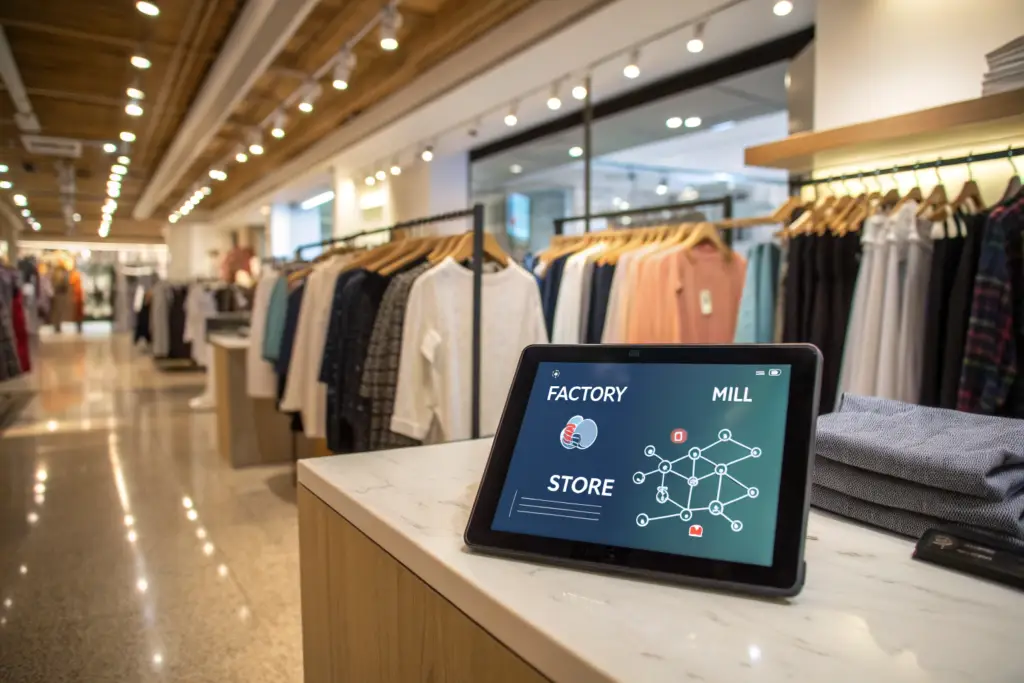
If you cannot provide a Supply Chain Map showing Tier 1 (Sewing) and Tier 2 (Fabric Mill) locations, many large retailers will not even onboard you as a vendor.
How Does Proactive Data Sharing Build Retailer Trust for Reorders?
Reorders are the lifeblood of a profitable apparel brand. The first order pays for development. The Reorders pay for your mortgage.
Retailers place reorders based on Sell-Through Rate. If your dress is selling at 15% per week, the buyer will reorder. But she will only reorder if she trusts the delivery date.
The Trust Loop:
- You ship Order #1 On Time.
- You provide Proactive Tracking Updates.
- Goods arrive exactly when expected.
- Retailer reorders.
- You provide Realistic Lead Time for Order #2 (e.g., "We have greige fabric stock. 30 days.").
- You ship Order #2 On Time.
This loop is unbreakable if you communicate. It shatters instantly if you promise 30 days and deliver in 45.
I have a client who sells to a major department store chain. The store uses a Vendor Scorecard. We are rated on:
- On-Time Delivery (40% of score)
- Quality (30% of score)
- Cost (20% of score)
- Data Accuracy (10% of score) (e.g., ASN, packing list accuracy).
Because Shanghai Fumao provides Proactive ASN (Advanced Shipping Notice) data 72 hours before the truck leaves, we help this client maintain a 98% On-Time Scorecard. This score gives them preferred vendor status. They get first look at the buyer's open-to-buy budget for next season.
What Is the "UFLPA" and How Does Communication Relate to Compliance?
The Uyghur Forced Labor Prevention Act (UFLPA) , enforced by U.S. Customs and Border Protection, is the single biggest regulatory shift in apparel importing in a decade.
What it means for you:
If your cotton or polyester supply chain touches the Xinjiang region in China, your goods can be Detained, Excluded, or Seized at the port. The burden of proof is on YOU, the Importer.
How Proactive Communication Solves This:
You cannot just ask your factory, "Do you use Xinjiang cotton?" They will say "No." You need Documentation.
A proactive factory will provide a Cotton Traceability Document without being asked. This document traces the cotton from the Gin to the Spinner to the Knitter to the Garment Factory.
At Shanghai Fumao, we have built a UFLPA Compliance Packet for our US clients. It includes:
- Mill affidavits.
- Invoices showing cotton origin (e.g., Brazilian Cotton, US Cotton).
- GPS coordinates of the cutting and sewing facility.
This is Proactive Communication at the compliance level. It prevents a $50,000 shipment from sitting in a Customs warehouse in Long Beach for 6 months accruing storage fees. If your factory cannot provide this documentation clearly and quickly, you are taking a massive financial risk.
How to Build a Culture of Proactive Communication with an Overseas Factory?
This is the final piece of the puzzle. You can want proactive communication. You can demand it. But if the factory does not have the Culture to support it, you will get a flurry of updates for the first two weeks and then radio silence.
Building a culture of proactive communication with an overseas factory requires you, the buyer, to model the behavior you want to see. You must respond quickly to their questions. You must thank them for bad news. And you must use collaborative language ("How do we solve this?") rather than punitive language ("This is your fault"). You set the tone. The factory will mirror it.
I have worked with hundreds of US buyers over 15 years. The ones who get the best service are not the ones with the biggest orders. They are the ones who reply to emails within 12 hours.

Should I Use WeChat for Faster Factory Communication?
Yes. But with strict boundaries.
Email is for Legal Documentation. WeChat is for Urgent Operations.
Why WeChat Works for Proactive Updates:
- It is instant. A production manager can snap a photo of a cutting ticket and send it in 3 seconds.
- It is informal. It allows for quick voice messages: "Hey, quick question about the pocket placement."
- It overcomes the time zone barrier. A voice message sent at 9 PM Shanghai time is waiting for you when you wake up in New York.
The Boundary You Must Set:
WeChat is a firehose. If you are not careful, you will be managing 15 different chats and lose track of decisions.
My Recommended Protocol:
- WeChat: For photos, voice memos, and "Did you see my email?" notifications. Decision made on WeChat must be summarized in an Email. "Per our WeChat, we agree to move the pocket 1cm down. I will update the tech pack."
- Email: For PO changes, spec sheet approvals, lab dip sign-offs. This is the Record of Truth.
I use WeChat daily with my clients. Last week, a client sent me a photo of a competitor's stitching detail she liked. I took the phone to the sewing line, showed the supervisor, and sent back a photo of our sample with the improved stitch within 45 minutes. That speed is impossible over email.
How to Reward a Factory for Telling You Bad News Early?
This is counter-intuitive but critical. If you scream at the factory every time they tell you there is a problem, you are training them to hide problems.
Instead, use Differential Reinforcement.
- Scenario A: Factory hides problem until it is a disaster. Consequence: Chargeback, angry call, termination of relationship.
- Scenario B: Factory tells you about a small problem early. Consequence: Calm discussion, collaborative solution, Verbal Praise.
I explicitly tell my new clients: "If we find a problem and tell you on Day 1, please do not yell at us. We are on the same team. We are fighting the problem together. If we hide it until Day 30, then you can yell at us."
The "Thank You" Email:
When a supplier gives me bad news early, I reply with: "Thank you for flagging this so quickly. I appreciate the transparency. Let's figure out Plan B."
That simple sentence reinforces the behavior I want. The factory learns: Telling the truth is safe. Hiding the truth is dangerous.
At Shanghai Fumao, we have a "No Blame" policy on the production floor. If a sewer makes a mistake and reports it immediately, we thank her and fix it. If she tries to hide it in the bundle and it gets packed, there is a penalty. This internal culture of transparency flows outward to our client relationships.
Conclusion
Proactive communication is not a soft skill. It is a hard operational requirement in an industry defined by distance, time, and friction. The factory that hides a 5-day dye delay from you is stealing your ability to make a $2,000 decision that saves your season. The factory that sends you a photo of the cut bundles on Friday afternoon is giving you back your weekend.
We have dissected what this looks like in practice. It is the Friday Report that says "On Track." It is the WeChat photo of the lab dip under D65 light. It is the difficult call on November 10th that allows you to switch to air freight and hit your February 15th floor date. We looked at how US retailers are using vendor scorecards to mathematically eliminate suppliers who cannot provide accurate ASN data. And we examined how the new legal landscape of UFLPA makes supply chain transparency a matter of Customs clearance, not just marketing.
The apparel supply chain will always have problems. Fabric will arrive late. Buttons will crack. Typhoons will close ports. Your survival does not depend on preventing every problem. It depends on when you find out about the problem.
The brands that thrive are the ones who partner with factories that understand this. They choose partners who see communication not as a chore to be avoided, but as the very product they sell alongside the garments.
At Shanghai Fumao, we have structured our entire operation around this principle. From our account managers on the factory floor to our weekly progress photo system, we are built to keep you informed before you have to ask. We believe that a well-informed client is a calm client. And a calm client places reorders.
If you are tired of chasing updates and want to experience what a truly transparent production partnership feels like, we are here. Let's discuss your next collection and how we can manage the process with clear, consistent, and proactive communication.
Contact our Business Director, Elaine, to start a different kind of factory relationship.
Email: elaine@fumaoclothing.com