You are sitting in your office. You have a new design idea. Instead of waiting weeks for a sample, you generate a photorealistic 3D model and a cost estimate in minutes. Instead of emailing five mills for fabric availability, an AI assistant scans global inventories and finds the perfect match instantly. Instead of wondering if your shipment will be late, a predictive algorithm warns you of a potential port delay three weeks in advance. This is not science fiction. A CEO of a tech-forward brand told me, "AI isn’t going to design a beautiful dress. But it is going to make the entire process of making that dress faster, smarter, and less wasteful."
The future of AI in garment manufacturing and sourcing is not about replacing human creativity or craftsmanship. It is about augmenting them. AI will revolutionize the industry in three key areas: 1) Hyper-Efficient Sourcing & Costing (predictive analytics for materials and instant, accurate pricing), 2) Digital Sampling & Fit Prediction (reducing physical waste and accelerating development), and 3) Intelligent Supply Chain & Quality Control (predictive logistics and automated defect detection).
At Shanghai Fumao, we are not waiting for the future. We are actively integrating AI-powered tools into our B2B workflow to provide our private label partners with a faster, more transparent, and more efficient path from concept to consumer. Let me show you where the technology is making a real, tangible difference today and where it is headed in the next few years.
How Will AI Transform Fabric Sourcing and Cost Estimation?
The traditional sourcing process is slow and analog. It involves emails, spreadsheets, and waiting days for quotes that are often just rough estimates. This is a massive drag on the product development cycle. AI is poised to compress this timeline from weeks to minutes. It turns the chaotic, opaque world of textile sourcing into a transparent, data-driven marketplace.
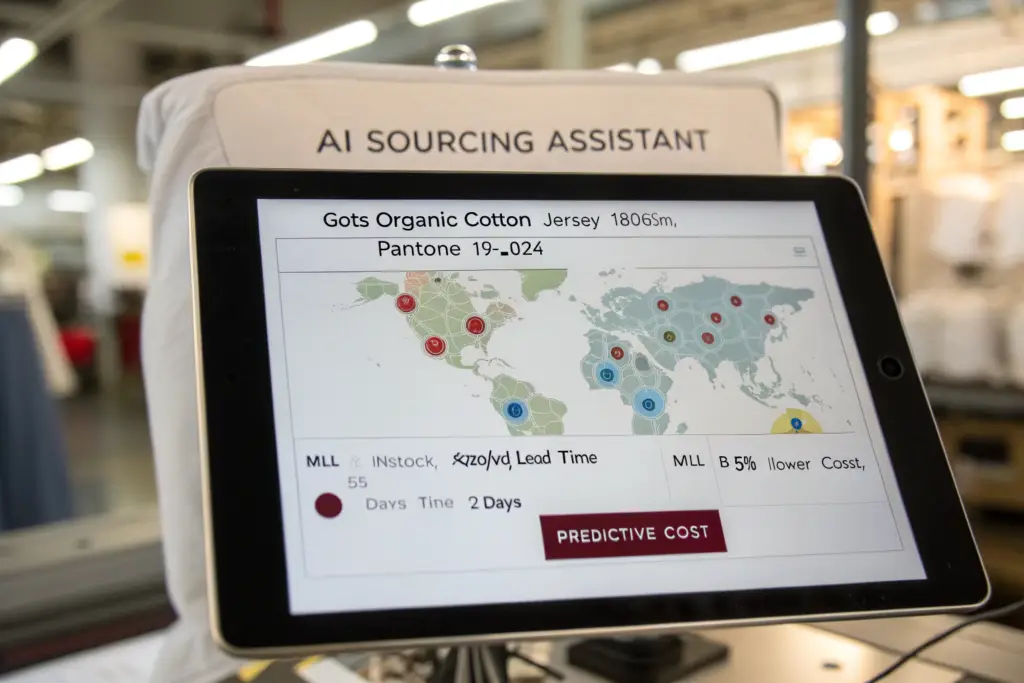
AI will transform sourcing by creating a "Smart Match" system between brand requirements and global mill inventories. An AI assistant, trained on a vast database of fabric specs, certifications, and real-time availability, can instantly identify the optimal source for a specific material, balancing cost, lead time, and sustainability credentials. Furthermore, AI-powered costing engines will provide instant, 95%+ accurate BOM estimates from a simple sketch or Tech Pack.**
We are already using elements of this technology. When a client asks for a specific recycled nylon, our internal system can query our network of vetted mills and provide a comparative analysis of cost and availability within hours, not days. Looking ahead, we envision a future where a brand can upload their Tech Pack to a secure portal and receive a complete, line-item cost breakdown and a list of compliant fabric options within 60 seconds. This will radically democratize access to professional sourcing and allow brands to make faster, smarter decisions. This is the next frontier of efficient sourcing .
Can AI Accurately Predict Fabric Consumption and Yield?
Absolutely. This is one of the most immediate and impactful applications of AI. Traditional marker making (nesting pattern pieces on fabric) relies on the experience of a human technician. AI-powered nesting software can try millions of different arrangements in seconds, finding the absolute tightest fit and achieving marker efficiencies of 90%+ . This directly translates to less fabric waste and a lower cost per garment. It is a win for both profit and sustainability.
How Will AI Help Verify Sustainable and Ethical Sourcing Claims?
AI will be a powerful tool in the fight against greenwashing. AI systems can be trained to continuously scan and verify supplier certifications against official databases. They can cross-reference supplier information with news reports and NGO watchlists to flag potential compliance risks. This will provide brands with a real-time "trust score" for their supply chain partners, adding a crucial layer of due diligence and brand protection .
What Role Will Digital Sampling and 3D Prototyping Play?
The physical sampling process is one of the most wasteful and time-consuming phases of apparel manufacturing. A single style can go through 3-4 rounds of samples, generating piles of discarded fabric and incurring hundreds of dollars in express shipping fees. Digital sampling is the solution. It moves the iteration process from the physical world to the digital one.
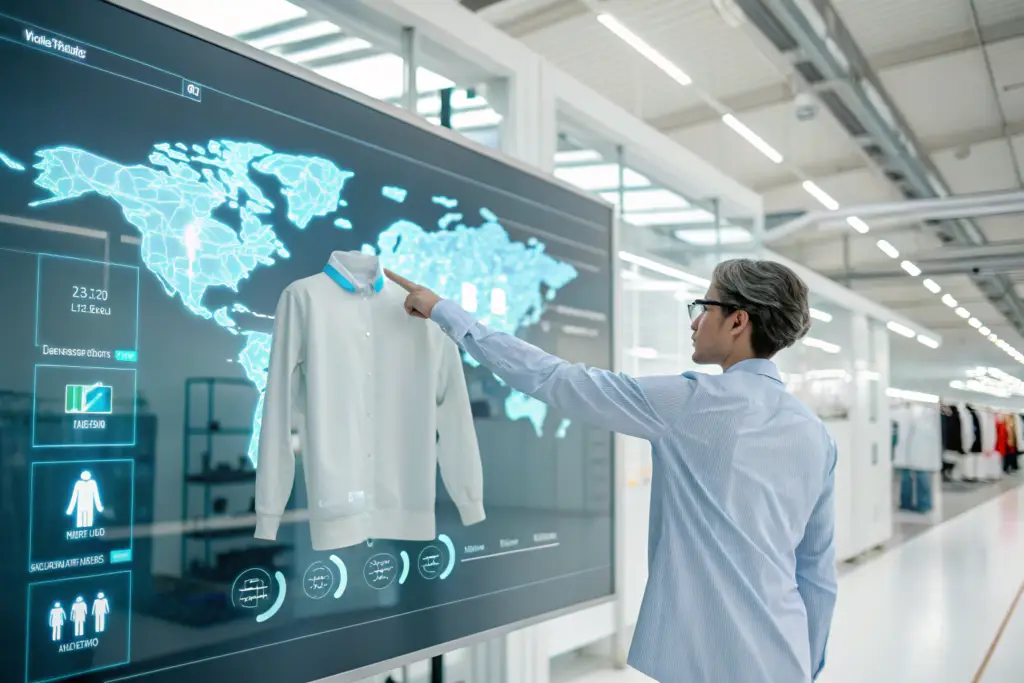
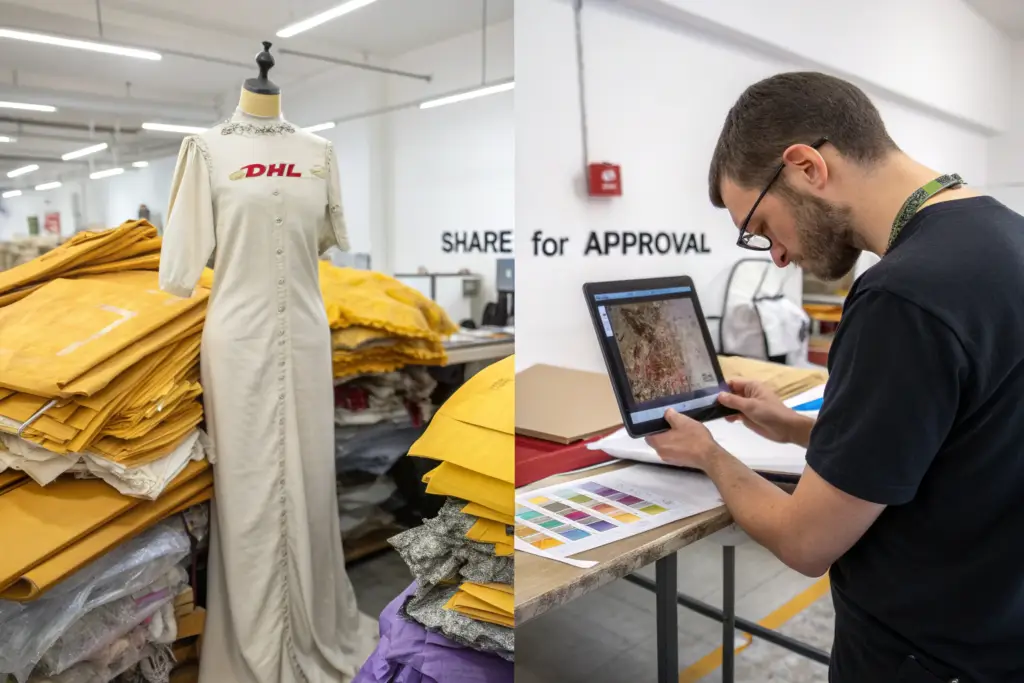
Digital sampling and 3D prototyping will become the industry standard, drastically reducing the number of physical samples needed. Designers will create and share photorealistic 3D models of garments, which can be reviewed for fit, drape, and color on customizable avatars. This allows for rapid iteration and approval of the design before a single yard of physical fabric is cut. This slashes development time by weeks and significantly reduces material waste.
A women’s wear client recently approved the entire color palette for a new blouse collection using 3D renders we provided. She could see exactly how the Tencel fabric draped and how the different colors looked on a virtual fit model. She made all her design comments on the digital model. When we cut the first physical sample, it was 95% correct. This process saved three weeks and over $1,000 in development costs. This is not a futuristic fantasy; it is how we are working with our forward-thinking private label partners today.
Can AI Predict the Fit and Drape of a Fabric Accurately?
This is the holy grail of digital sampling, and the technology is advancing rapidly. By creating "Digital Twins" of physical fabrics—data files that capture not just the look, but the precise physical properties of weight, stretch, and drape—AI can simulate how a garment will behave on a body with remarkable accuracy. While a physical fit sample on a real human is still the final gold standard, AI will soon be able to predict 90% of fit issues digitally, reducing the number of physical fit samples needed to just one or two.
How Does This Technology Democratize Access for Smaller Brands?
This is a crucial point. A small brand that cannot afford multiple rounds of expensive physical samples can use 3D technology to perfect their design digitally. They can arrive at the factory with a fully resolved, manufacturable design, ready for a single, final physical Proto Sample. This lowers the financial barrier to entry and allows creative entrepreneurs to compete with larger, better-funded brands. It is a great equalizer.
How Will AI Enhance Quality Control and Supply Chain Visibility?
Human eyes get tired. After inspecting hundreds of identical garments, an inspector can easily miss a subtle defect. AI-powered computer vision never blinks. It never gets bored. It can inspect every single square inch of fabric and every single seam with unwavering, superhuman consistency. This is not about replacing human QC staff; it is about giving them a powerful new tool.
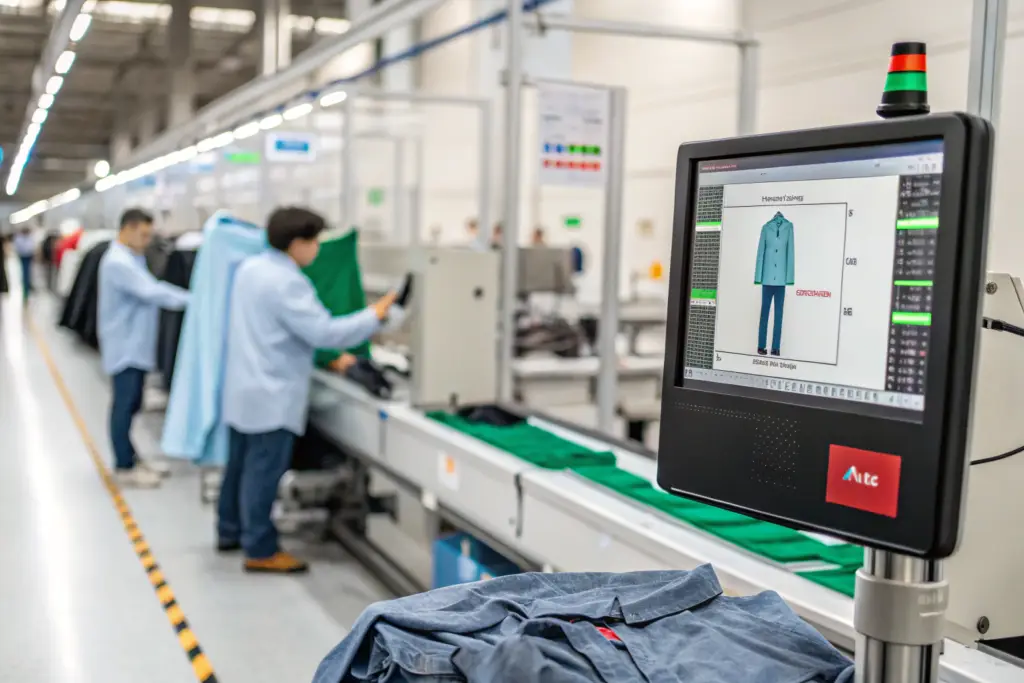
AI will revolutionize quality control through automated computer vision systems. High-speed cameras paired with deep learning algorithms, trained on millions of images of "good" and "bad" garments, will instantly detect defects—missing stitches, stains, shade variations—that a human might miss. This allows for real-time correction on the line and ensures a higher, more consistent level of quality. In the supply chain, AI will provide predictive logistics, forecasting delays before they happen.
We are piloting computer vision technology on our finishing tables. The AI flags a specific area on a garment for the human inspector to review. This makes our QC team faster and more accurate. It is a force multiplier for their expertise. Looking forward, AI will provide our clients with a real-time "Quality Score" for their production run, accessible via their production dashboard . This is the future of transparent, data-driven quality assurance.
What Is Predictive Logistics and How Will It Prevent Delays?
Imagine a system that analyzes millions of data points—ship positions, weather patterns, port congestion reports, news headlines about labor strikes—and alerts you three weeks in advance that your specific container has a 70% probability of being delayed. This is predictive logistics. It allows the manufacturer to proactively re-route the shipment or adjust the delivery schedule, rather than simply reacting to a delay after it has already happened. This is the next evolution of reliable delivery.
How Will AI Empower the Human Workforce in the Factory?
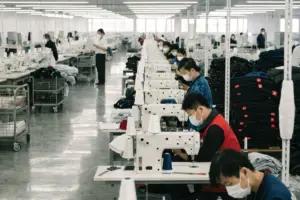
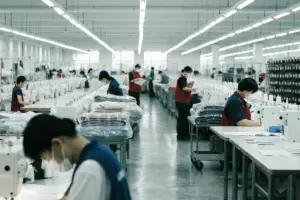
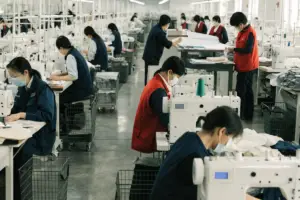
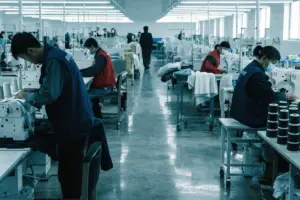
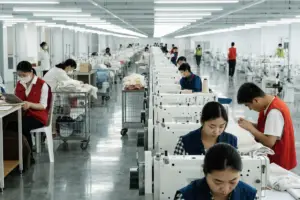
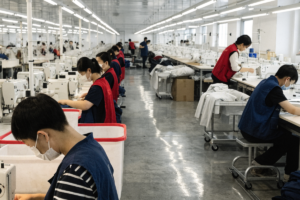
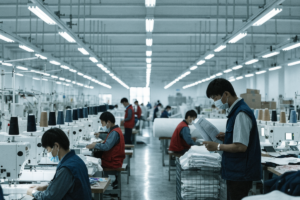
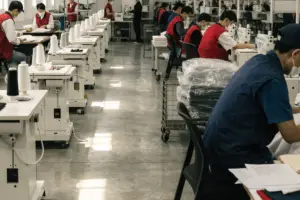
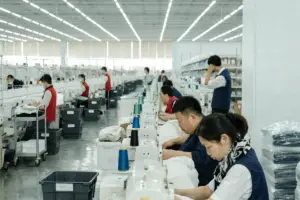
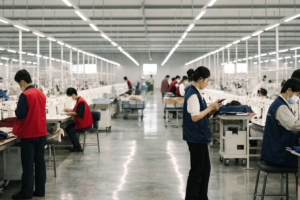
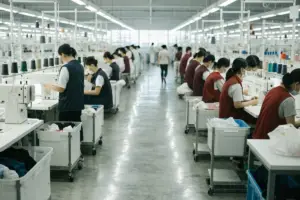
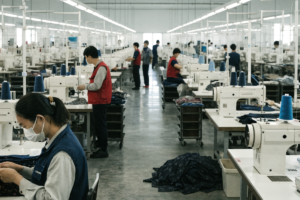
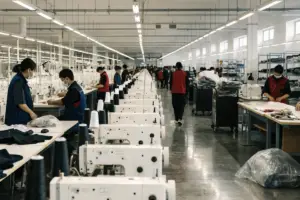
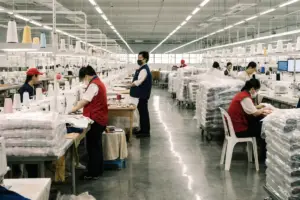
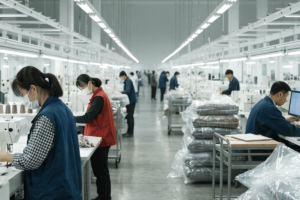
The narrative of "robots taking jobs" is simplistic. In a top-tier factory like ours, AI will augment human workers, not replace them. It will handle the repetitive, physically demanding, or data-heavy tasks (like scanning for defects or optimizing a marker), freeing up our skilled sewers, pattern makers, and QC specialists to focus on what they do best: problem-solving, creative craftsmanship, and managing complex, rare style constructions. The future factory is a collaborative space where human skill is amplified by machine intelligence. This is the vision of the smart factory .
How Is Fumao Preparing for and Investing in This AI-Driven Future?
We are not waiting for the future to arrive. We are actively building the bridge to it. We believe that the role of a modern B2B clothing manufacturer is not just to execute production, but to provide our partners with a technological advantage. We are investing in the tools, training, and partnerships that will define the next decade of apparel manufacturing.
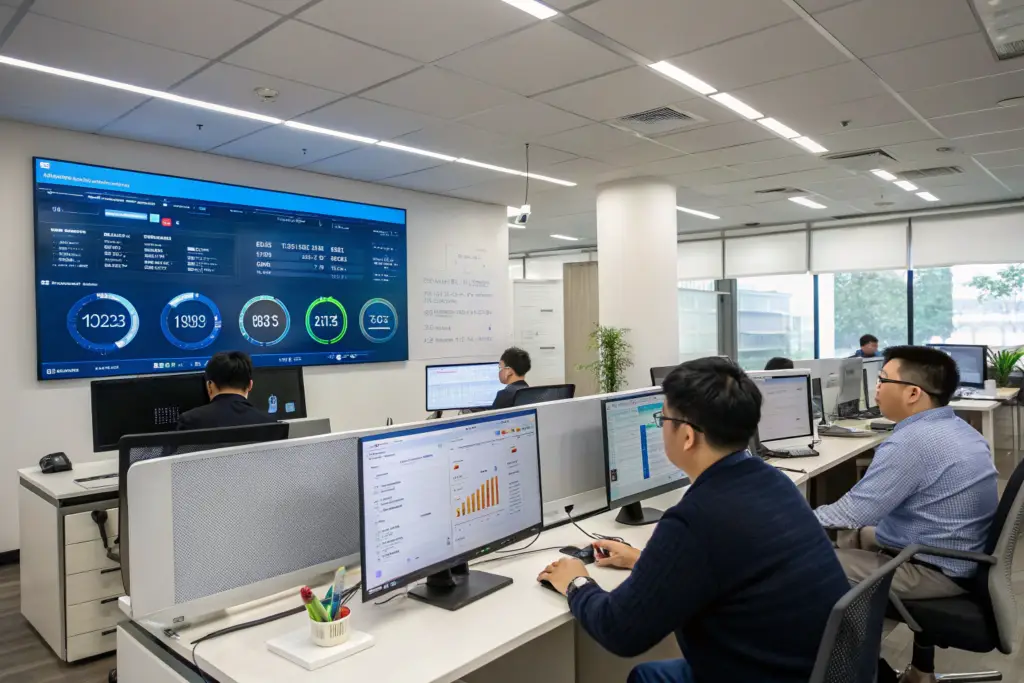
Fumao is preparing for the AI-driven future through strategic investments in three key areas: 1) Digital Integration (implementing 3D design software and AI-powered nesting tools into our workflow), 2) Data and Visibility (building a more robust production dashboard to provide clients with real-time, data-rich insights), and 3) People and Training (educating our team on how to leverage these new tools to enhance their expertise, not replace it).
We are currently in the beta phase of integrating a new 3D design platform that will allow our clients to collaborate with us on digital prototypes. We are also upgrading our internal data systems to lay the foundation for more advanced predictive analytics. Our goal is simple: to harness the power of AI to make the process of creating a private label collection faster, more transparent, more sustainable, and ultimately, more successful for our B2B partners. We are building the future of manufacturing , today.
What Does This Mean for a Brand Partnering with Fumao Today?
Partnering with us today means you are partnering with a factory that is not stuck in the past. It means:
- Faster, more accurate quotes for your designs.
- Reduced sampling time and cost through digital prototyping.
- Access to a vetted, transparent, and increasingly intelligent supply chain.
- A partner who is constantly looking for ways to innovate and improve.
You get the benefit of our deep traditional expertise, combined with the forward-looking advantages of a tech-enabled factory.
Will the Human Element Remain Important?
More important than ever. AI can process data. It cannot understand the subtle emotion of a beautiful drape, the intangible feel of a premium fabric, or the creative vision behind a brand. That is the irreplaceable domain of human expertise. Our Project Managers, pattern makers, and QC specialists are the heart of our operation. We are giving them better tools so they can do their best work. The future is a powerful partnership between human creativity and artificial intelligence.
Conclusion
The future of AI in garment manufacturing and sourcing is not a distant, abstract concept. It is a wave of innovation that is already beginning to reshape our industry. It promises a future where sourcing is instantaneous, sampling is digital and waste-free, and supply chains are transparent and predictive. It is a future where the process of making clothes is as intelligent and refined as the clothes themselves.
At Shanghai Fumao, we are not just watching this future unfold. We are actively participating in its creation. We are investing in the technology and, more importantly, in our people, to ensure that our B2B partners are equipped to thrive in this new era. We believe that AI will make us better partners—faster, smarter, and more transparent.
If you want to build your fashion brand with a manufacturing partner who is embracing the future, let’s talk. Our Business Director, Elaine, can share more about our digital initiatives and how they can benefit your next collection. Please email Elaine at: elaine@fumaoclothing.com.