You get a price from your supplier. It seems reasonable. You place the order. Later, you wonder. Could you have gotten a better price? Why is this style more expensive than that style? You do not know. The supplier just gives you a total. You have no visibility. This is a problem. Without a breakdown, you cannot negotiate effectively. You cannot compare suppliers accurately. You cannot identify where costs are high. You are flying blind.
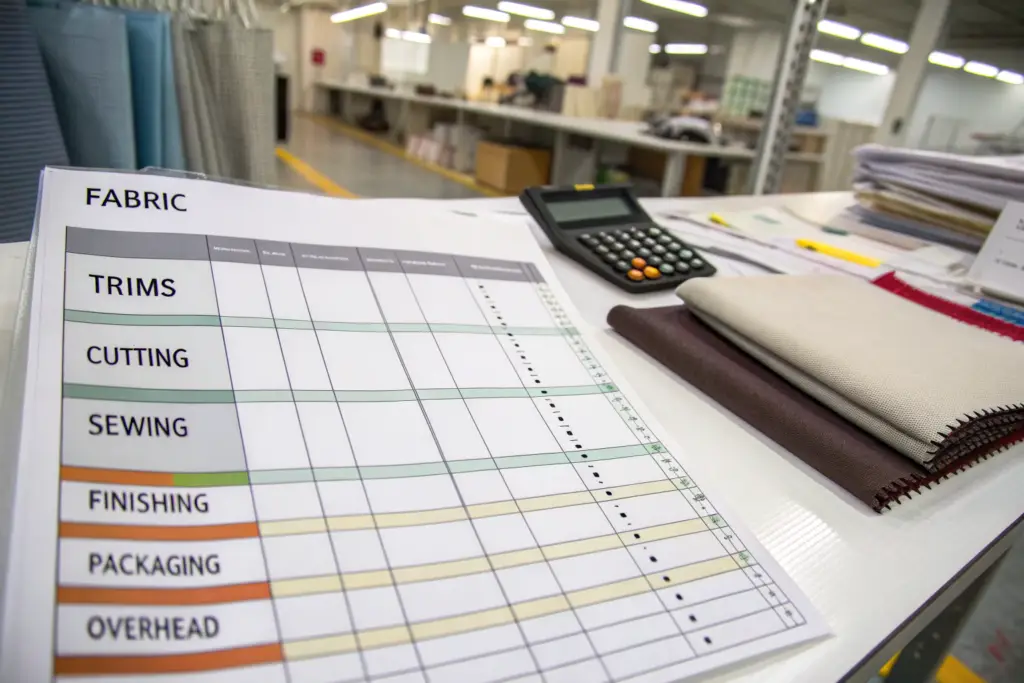
To request a detailed cost breakdown from your garment supplier, you need to ask for specific line items: fabric cost per unit, trim cost, cutting labor, sewing labor, finishing labor, packaging, overhead, and profit margin. You need to ask for quantities. A breakdown without quantities is not useful. You need to ask for the basis of the quote. Is it FOB or EXW? You need to be professional. A good supplier will provide a breakdown. A supplier who refuses may be hiding something or may not have good cost control.
I have run a clothing factory for over a decade. I have provided thousands of cost breakdowns to clients. I know what a good breakdown looks like. I also know why some factories are reluctant to share. The factories that are confident in their efficiency will share. The factories that are not will hide. A detailed cost breakdown is a sign of a professional supplier. It is also a tool for partnership. When you understand the costs, you can work together to reduce them.
What Should a Detailed Cost Breakdown Include?
A detailed cost breakdown is not a single number. It is a list of components. Each component contributes to the total. Understanding each component helps you see where money goes.
What are the standard line items in a garment cost breakdown?
A professional cost breakdown includes these line items. Each line should have a cost per unit and a brief explanation.
Standard line items:
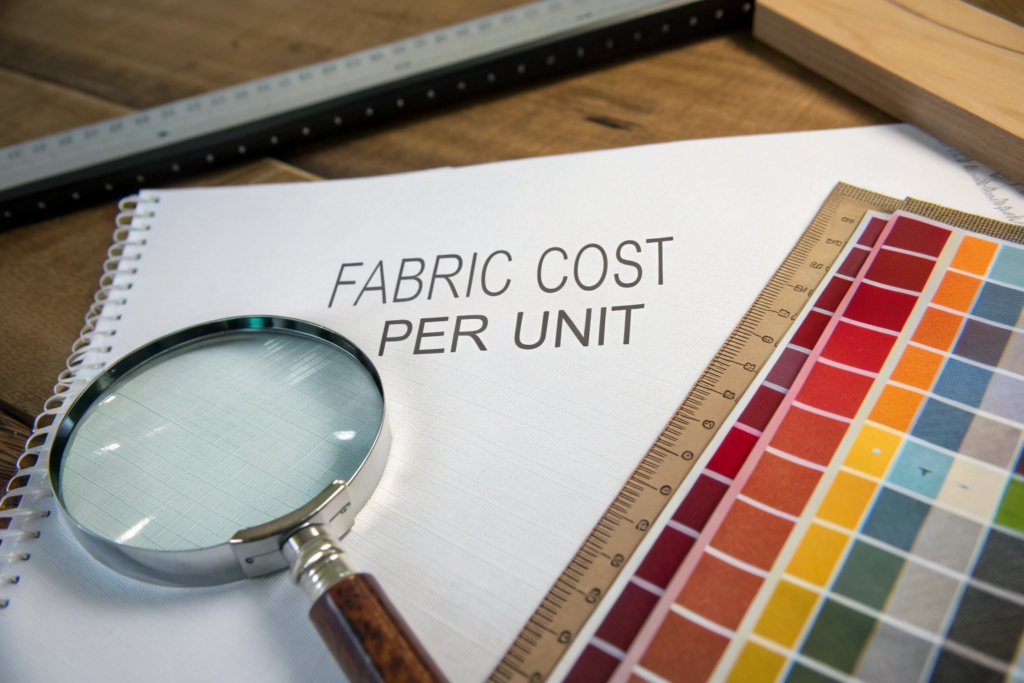
- Fabric cost: The cost of the fabric per garment. This includes fabric consumption (yards per garment) multiplied by the fabric price per yard.
- Trim cost: The cost of all trims per garment. Zippers, buttons, labels, elastic, thread, hang tags, and packaging.
- Cutting labor: The cost to cut the fabric. This includes spreading the fabric, cutting, and bundling.
- Sewing labor: The cost to sew the garment. This is usually the largest labor cost. It is calculated based on the sewing operations and the time per operation.
- Finishing labor: The cost for pressing, trimming threads, folding, and packing.
- Overhead: Factory overhead including rent, utilities, equipment depreciation, management salaries, and quality control.
- Profit margin: The factory’s profit on the order. This is typically 5% to 15% for apparel manufacturing.
- Total FOB price: The sum of all the above, plus any other fees.
A client in Los Angeles received a breakdown from us. The breakdown showed that fabric was 40% of the cost. Trims were 15%. Sewing labor was 25%. Overhead was 12%. Profit was 8%. The client understood exactly where the money went. They asked if we could use a lower-cost fabric. We found an alternative. The cost dropped by 10%.
You should ask for this level of detail. A supplier who cannot provide it may not have good cost control.
How should quantities be presented in the breakdown?
A cost breakdown without quantities is not useful. The cost per unit depends on the order quantity. Higher quantities spread fixed costs over more units. You need to know the quantity assumptions.
The breakdown should state:
- Order quantity: The number of units the quote is based on. 500 pieces, 1,000 pieces, 5,000 pieces.
- Minimum order quantity (MOQ): The smallest quantity the factory will produce. This affects the per-unit cost.
- Tiered pricing: Some factories offer different prices for different quantities. 500 pieces at $15.00. 1,000 pieces at $14.00. 2,000 pieces at $13.00.
A client in New York asked for a breakdown for 1,000 pieces. We provided it. They then asked for the same breakdown for 2,000 pieces and 5,000 pieces. The per-unit cost dropped significantly for the higher quantities. The client used this information to decide on their order size. They ordered 3,000 pieces to balance cost and risk.
You should always ask for quotes at different quantities. The cost per unit often decreases as quantity increases. But the decrease may be small after a certain point. You need to find the optimal quantity for your business.
What does FOB versus EXW mean in a cost breakdown?
The shipping terms affect what is included in the price. You need to understand the difference.
- EXW (Ex Works): The price includes only the cost of the goods at the factory. You are responsible for all transportation, export documentation, insurance, and loading.
- FOB (Free on Board): The price includes the cost of the goods plus transportation to the port, export documentation, and loading onto the vessel. You pay for ocean freight, insurance, and import duties.
- FCA (Free Carrier): Similar to FOB but for air freight or other carriers.
Most garment suppliers quote FOB to the nearest port. For example, FOB Shanghai means the price includes delivery to the Shanghai port and loading. You pay for shipping from Shanghai to your country.
A client in Chicago received a quote that said FOB Ningbo. They assumed the price included ocean freight. It did not. They had to pay an additional $2,000 for shipping. They learned to check the shipping terms.
You should always confirm the shipping terms. Ask: Is this price EXW, FOB, or delivered? Get it in writing.
How to Ask for a Cost Breakdown Professionally?
How you ask matters. A professional request gets a professional response. A rude or vague request gets a poor response. You need to build a relationship. Your supplier should see you as a partner, not an adversary.

What is the best way to request a breakdown without damaging the relationship?
Be respectful. Acknowledge that you understand the factory needs to make a profit. Explain why you need the breakdown. Position it as a tool for collaboration, not suspicion.
A good request sounds like this:
"We are excited to work with you. To help us plan our pricing and potentially increase our order quantities, could you please provide a detailed cost breakdown for style #123? We are looking for fabric cost, trim cost, cutting, sewing, finishing, overhead, and profit per unit. This will help us understand where we might be able to increase volumes or adjust designs to reduce costs together."
This approach is collaborative. It invites the factory to help you. It is not adversarial.
A client in Seattle sent a request like this. The factory responded positively. They provided a detailed breakdown. They also suggested cost-saving ideas. The client and factory worked together to reduce the cost by 8%. The relationship strengthened.
You should avoid accusatory language. Do not say "Your price seems too high. Break it down." Do not say "I need to see if you are cheating me." This will damage the relationship.
What specific questions should you ask to get the most useful breakdown?
Ask specific questions. Vague questions get vague answers. Be clear about what you need.
Ask these questions:
- Fabric: What is the fabric consumption per garment? What is the fabric price per yard? What is the fabric cost per garment?
- Trims: Can you list each trim and its cost per unit? Zipper, buttons, labels, thread, packaging?
- Labor: Can you separate cutting labor, sewing labor, and finishing labor? What is the labor cost per minute or per hour?
- Overhead: What is the overhead percentage or per-unit cost?
- Profit: What is the profit margin included in the price?
- Quantity: Is this breakdown based on a specific quantity? Can you provide tiered pricing?
A client in Denver asked these questions. The factory provided a detailed response. The client saw that the labor cost was high for a particular style. They asked if a simpler construction could reduce labor. The factory suggested a different seam type. The labor cost dropped by 15%.
You should also ask about sample costs. Some factories charge for samples. Others include sample costs in the production price. Ask for sample cost breakdown separately.
How do you handle a supplier who refuses to provide a breakdown?
Some suppliers refuse to provide breakdowns. They say it is their policy. They say the breakdown is confidential. This is a red flag. A professional factory should be able to provide a breakdown.
If a supplier refuses, you have options:
- Ask again politely: Explain why you need it. "We need to understand the cost structure to plan our retail pricing. Can you provide at least a high-level breakdown?"
- Ask for a partial breakdown: If they refuse full detail, ask for fabric cost and labor cost only. That is often enough.
- Compare with other suppliers: If one supplier refuses and another provides a breakdown, the transparent supplier may be a better partner.
- Consider walking away: If a supplier is not transparent about costs, they may not be transparent about other issues. This is a warning sign.
A client in Boston asked three suppliers for breakdowns. Two provided them. One refused. The client chose one of the transparent suppliers. The relationship was good. The client never regretted walking away from the non-transparent supplier.
You should be willing to walk away. There are many factories. You can find one that is transparent.
How to Analyze and Use a Cost Breakdown?
A cost breakdown is useless if you do not analyze it. You need to compare. You need to identify opportunities. You need to make decisions.

What are the key benchmarks for comparing breakdowns?
You need benchmarks to know if a cost is reasonable. Benchmarks vary by product type and region. But general ranges exist.
General benchmarks for a basic woven garment (FOB China):
- Fabric: 40% to 50% of total FOB price
- Trims: 10% to 15%
- Cutting labor: 3% to 5%
- Sewing labor: 15% to 25%
- Finishing labor: 3% to 5%
- Overhead: 8% to 12%
- Profit: 5% to 10%
A client in Austin received a breakdown where fabric was 60% of the total. That was high. They asked the factory why. The factory was using a premium fabric. The client decided to keep the premium fabric for their premium line. For their basic line, they found a lower-cost fabric. The breakdown helped them make the decision.
If a breakdown shows profit at 20%, that is high. You can negotiate. If profit is 5%, that is reasonable. If overhead is 20%, the factory may be inefficient. You may want to look elsewhere.
You should get breakdowns from multiple suppliers. Compare them. You will see patterns. A supplier with lower fabric cost may have a better fabric mill relationship. A supplier with lower labor cost may be in a lower-cost region.
How can you use the breakdown to negotiate better pricing?
A breakdown gives you leverage. You can see where the costs are. You can ask questions. You can suggest alternatives.
Negotiation strategies using the breakdown:
- High fabric cost: Ask if there is a similar but lower-cost fabric. Ask if you can increase quantity to get better fabric pricing.
- High trim cost: Ask if standard trims are available. Custom trims are expensive. Standard trims are cheaper.
- High labor cost: Ask if there is a simpler construction. Ask if you can consolidate operations. Ask if the factory can provide a learning curve discount for repeat orders.
- High overhead: Ask what is included. Some factories include shipping to port in overhead. Others charge separately.
- High profit: Ask if the profit can be reduced for larger quantities or longer-term commitment.
A client in San Francisco used the breakdown to negotiate. The breakdown showed a high trim cost. The client asked if they could supply their own trims. The factory agreed. The client sourced trims directly and saved 20% on trim cost. The factory was happy because they did not have to manage trim sourcing.
You should approach negotiation as a collaboration. "I see the fabric cost is high. Can we work together to find a better fabric?" This is better than "Your fabric cost is too high, reduce it."
What are the warning signs in a cost breakdown?
A breakdown can reveal problems. You need to know what to look for.
Warning signs include:
- Missing line items: If cutting labor is missing, maybe the factory does not cut in-house. They outsource. This can cause quality issues.
- Very low labor cost: Extremely low labor cost may indicate underpaid workers or poor working conditions. This is a social compliance risk.
- Very high profit: Profit over 15% for a simple garment is high. You may be overpaying.
- Inconsistent quantities: If the breakdown says 1,000 pieces but the fabric cost seems based on 5,000 pieces, the factory is not being transparent.
- Vague descriptions: "Miscellaneous" or "Other costs" with no explanation is a red flag.
A client in New York received a breakdown with a line item called "Other" for 8% of the total. The client asked what "Other" included. The factory could not explain. The client did not place the order. The lack of transparency was a deal-breaker.
You should ask for clarification on any line item you do not understand. A transparent factory will explain. A factory that hides will evade.
How to Build a Long-Term Cost Transparency Partnership?
The goal is not just to get a breakdown for one order. The goal is to build a partnership of cost transparency. Over time, this partnership will lead to better pricing, better quality, and better communication.

How does regular cost review improve your partnership?
Costs change. Fabric prices fluctuate. Labor costs increase. Exchange rates move. You should review costs regularly, not just at the beginning.
A quarterly or bi-annual cost review is good practice. Review the breakdown together. Discuss changes. If fabric prices have dropped, ask for a reduction. If labor costs have increased, understand why. This regular review keeps the relationship honest and collaborative.
A client in Seattle had a quarterly cost review with us. We reviewed each active style. We discussed fabric market trends. We discussed labor cost changes. Sometimes costs went down. We passed the savings to the client. Sometimes costs went up. The client understood why. The relationship was based on trust.
You should schedule regular cost reviews. Make them part of your partnership rhythm.
How can you use breakdowns to identify cost-saving opportunities together?
The breakdown is a tool for joint problem-solving. You and your factory can look at it together. You can ask "How can we reduce this cost together?"
Joint cost-saving ideas:
- Increase quantity: You order more. The factory gets economies of scale. You share the savings.
- Simplify design: You remove a complicated detail. The factory saves labor. You share the savings.
- Change material: You approve a different fabric or trim. The factory sources more efficiently. You share the savings.
- Consolidate orders: You combine multiple styles into one production run. The factory saves setup time. You share the savings.
- Long-term commitment: You commit to a year of orders. The factory can plan better. You share the savings.
A client in Denver and their factory looked at the breakdown together. They saw that sewing labor was high because of a complicated pocket. The client agreed to simplify the pocket. The factory reduced the labor cost. The client and factory split the savings 50/50. Both won.
You should approach cost reduction as a partnership. You are not trying to squeeze the factory. You are trying to remove waste and inefficiency. A healthy factory makes good products.
Conclusion
A detailed cost breakdown is essential for any professional apparel brand. It gives you visibility. It allows you to negotiate. It helps you identify cost-saving opportunities. It builds trust with your supplier.
The breakdown should include fabric, trims, cutting labor, sewing labor, finishing labor, overhead, and profit. It should state the quantity the quote is based on. It should clarify the shipping terms.
Ask for the breakdown professionally. Be respectful. Explain why you need it. Position it as a tool for collaboration. If a supplier refuses, consider it a warning sign.
Use the breakdown to compare suppliers. Use it to negotiate. Use it to find cost savings together with your factory. Review costs regularly. Build a partnership of transparency.
At Shanghai Fumao, we provide detailed cost breakdowns to all our clients. We believe transparency is the foundation of a good partnership. We want our clients to understand our costs. We want to work together to reduce costs and improve value. Our breakdowns are clear, detailed, and honest.
If you are looking for a factory partner who will be transparent about costs, we would like to work with you. Our Business Director, Elaine, can provide you with a detailed breakdown for your styles. She can walk you through each line item. You can reach her at elaine@fumaoclothing.com. Let us build a transparent, profitable partnership together.