You placed your order. You waited. You assumed everything was fine. Then you got the news. Your shipment is delayed. The factory says there was a fabric issue. Or a machine broke. Or they are waiting for trims. You wonder why they did not tell you earlier. You could have adjusted your plans. You could have expedited the fabric. You could have split the shipment. But they did not tell you. And now it is too late. Your launch is delayed. Your customers are waiting. This is the cost of silence.
Regular factory communication is the key to avoiding shipment delays because delays are rarely sudden. They are cumulative. A fabric delay is not a surprise if you knew when the fabric was supposed to arrive. A production bottleneck is not a surprise if you knew when cutting was supposed to start. Regular communication creates visibility. It allows you to see problems when they are small. You can intervene before they become big. The factory that communicates regularly is not hiding anything. They are inviting you to partner with them to solve problems together.
I have run a clothing factory for over a decade. I have seen delays happen. I have also seen delays avoided. The difference is almost always communication. The orders that ship on time are the ones where the brand and the factory talk regularly. They share information. They flag risks early. They make decisions together. The orders that are delayed are the ones where the brand assumes everything is fine and the factory assumes the brand does not want to hear about problems. Silence is dangerous. Communication is safety.
What Information Should You Expect from Your Factory Regularly?
Regular communication is not random. It is structured. You should expect specific information at specific intervals. A good factory will provide this without being asked. A great factory will provide it before you ask.
What should a weekly production update include?
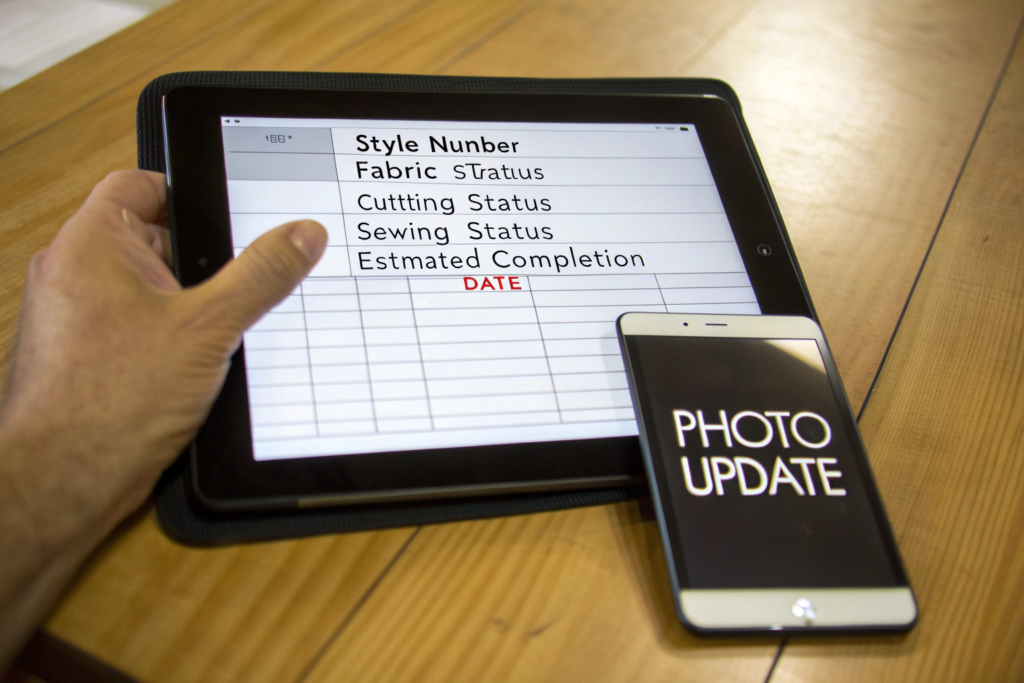
A weekly production update is the minimum. It should give you a snapshot of where each style stands. It should be clear and actionable. You should not have to guess what the status means.
Your weekly update should include:
- Style identification: Style number, name, and description
- Status by stage: Fabric (ordered, arrived, inspected), Cutting (not started, in progress, completed), Sewing (not started, in progress, percentage complete), Finishing (not started, in progress), Packing (not started, in progress)
- Estimated dates: Estimated completion date for each stage, estimated ship date
- Issues or risks: Any problems encountered, any risks to the timeline
- Photos: Photos of production at each stage
A client in Chicago received a weekly update every Friday. The update was a simple table. It took the factory 30 minutes to prepare. It saved the client hours of follow-up emails. The client knew where every order stood. They could plan their marketing and logistics with confidence.
You should ask your factory for this update. If they do not provide it, ask why. A factory that cannot or will not provide regular updates is a factory that may be hiding problems.
How do photo and video updates build trust?
Photos and videos are powerful. They show you what is happening. They are harder to fake than written reports. A photo of fabric rolls in the warehouse is proof that fabric has arrived. A photo of cut pieces stacked on a table is proof that cutting is done.
A good factory sends photos at key milestones:
- Fabric arrival: Photos of fabric rolls with labels visible
- Cutting: Photos of cut pieces stacked and labeled
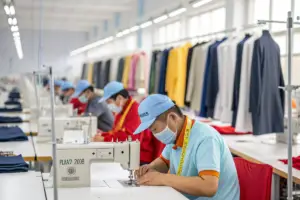
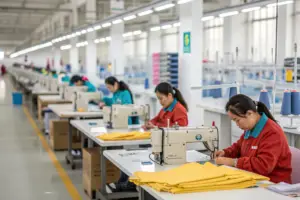
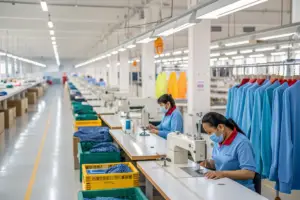
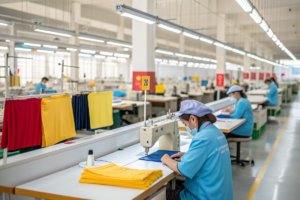
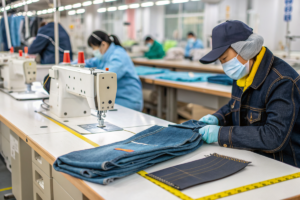
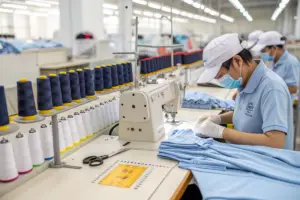
- Sewing in progress: Photos of workers sewing your garments
- First piece off the line: Photo of the first completed garment
- Finishing: Photos of garments being pressed and packed
- Packed cartons: Photos of sealed cartons with labels
A client in Denver was skeptical of a new factory. The factory sent photos every three days. The client saw the fabric arrive. They saw the cutting. They saw the sewing. They saw the finished goods. By the time the goods shipped, the client had no anxiety. The photos built trust.
You should ask for photos at each milestone. Save them. They are also useful for your marketing. Customers love to see behind-the-scenes content.
Communication is two-way. You cannot expect the factory to share everything if you do not share your information. Your factory needs to know your plans to plan their capacity.
Share with your factory:
- Your sales forecasts: How many units do you expect to sell? This helps them reserve materials and capacity.
- Your launch dates: When do you need the goods? This helps them prioritize.
- Your marketing plans: If you have a major campaign, tell them. They will understand why the date is critical.
- Your inventory levels: If you are running low on a style, tell them. They can expedite.
- Any changes to your business: If you are growing, tell them. They can invest in capacity.
A client in Seattle shared their entire annual forecast with us. They told us which styles they expected to grow. They told us which styles they expected to phase out. We used this information to plan our fabric purchases and production lines. We were able to meet their demand without delays. The forecast made us partners.
You should treat your factory as a partner, not a vendor. Partners share information. Vendors only take orders.
How to Establish a Communication Rhythm That Prevents Delays?
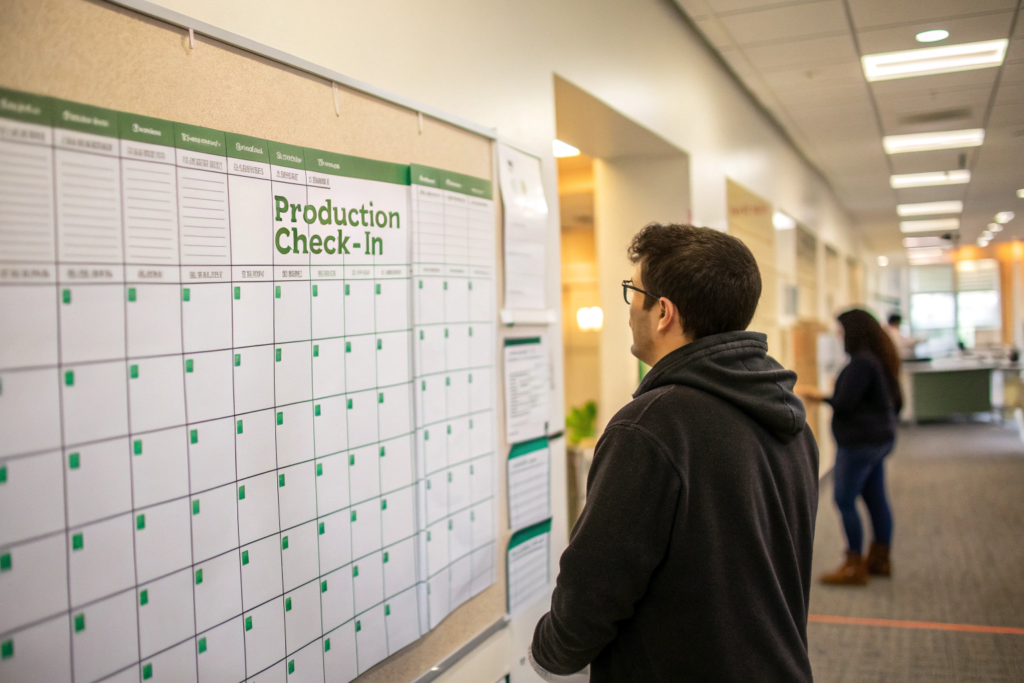
A communication rhythm is a schedule. It is predictable. Both sides know when to expect information. This predictability reduces anxiety. It also creates accountability. When a meeting is scheduled, it happens.
What is the ideal communication schedule for production?
The ideal schedule depends on the stage of production. Different stages require different frequencies. A good rhythm adapts to the process.
Suggested schedule:
- Pre-production (sampling, fabric booking): Weekly check-in. This stage has many decisions. Weekly calls keep things moving.
- Active production (cutting, sewing, finishing): Weekly status update plus ad hoc communication for issues. A weekly call or email is enough. But if there is a problem, communicate immediately.
- Final stage (packing, inspection, shipping): Daily or every other day. The end of production is critical. Small issues can delay shipment. Frequent communication ensures nothing is missed.
- Post-shipment: One final update with tracking information and photos of packed cartons.
A client in Boston used this schedule. They had a weekly call during sampling. They had a weekly email during production. They had daily updates in the final week. Their orders were never late. The rhythm kept everyone aligned.
You should set the schedule with your factory at the start of the relationship. Agree on when you will communicate. Agree on what information will be shared. Put it in writing.
How do weekly calls differ from email updates?
Email updates are good for status. Calls are good for problems. Email is passive. You receive information. Calls are active. You can ask questions. You can discuss solutions.
A weekly call should cover:
- Review of status: Go through each style. Confirm status against the update.
- Issues: Discuss any issues that have arisen. Understand the root cause.
- Solutions: Decide how to address issues. Make decisions together.
- Next steps: Confirm what will happen in the coming week.
- Risks: Identify any potential future risks. Discuss how to mitigate them.
A client in Austin had a weekly call with us every Tuesday. The call lasted 15 to 20 minutes. We reviewed the status of all active orders. We discussed any issues. We made decisions. The call prevented dozens of small problems from becoming big ones.
You should keep calls short. A long call is inefficient. A short, focused call is effective. Prepare an agenda. Stick to it.
How do you handle urgent communication when problems arise?
Problems will arise. The key is to communicate them immediately. Do not wait for the weekly call. Do not hope the problem will resolve itself. Tell the factory as soon as you know. Expect the same from them.
For urgent issues:
- Use phone or messaging: Email is too slow. Call or use WhatsApp or WeChat. Get a real-time conversation.
- Be clear about the impact: Do not just report the problem. Explain how it affects the timeline. "This fabric delay of 5 days will push our ship date by 5 days unless we expedite."
- Propose solutions: Do not just complain. Suggest options. "Can we air freight the fabric? Can we move to another production line?"
- Document the decision: After the call, send a summary email. Confirm what was decided. This creates a record.
I remember a client in New York who called me immediately when they saw a quality issue in photos. We discussed it. We agreed to stop production and correct the issue. The delay was 3 days. If they had waited for the weekly call, the issue would have affected 500 more garments. The delay would have been 2 weeks. The quick call saved time.
You should set expectations with your factory. Tell them you want to know about problems immediately. Tell them you will not punish them for early communication. You will work with them to solve problems. This encourages honesty.
What Are the Warning Signs of Poor Factory Communication?
Poor communication is a warning sign. It often precedes delays. If a factory stops communicating, something is wrong. You need to recognize the signs. You need to act before it is too late.

What behaviors indicate a factory is hiding problems?
Some factories hide problems. They hope to fix them before you find out. This is dangerous. A problem that is hidden becomes bigger. A problem that is shared can be solved.
Warning signs include:
- Slow responses: Emails that used to be answered in hours now take days.
- Vague answers: "Everything is fine" without details. "We are working on it" without specifics.
- No photos: They used to send photos. Now they do not. Or the photos are old.
- Excuses: They blame others. The fabric mill is late. The shipping company is slow. They never take responsibility.
- Missed promised updates: They said they would send an update. They did not.
A client in San Francisco noticed that their factory stopped sending photos. Emails went unanswered for days. When they finally got a response, it was vague. The client flew to the factory. They found that the factory had not started production. The fabric was not even ordered. The factory had been hiding the problem for weeks. The client canceled the order. They learned to trust the warning signs.
If you see these signs, escalate. Call. Demand a video call. Ask for specific evidence. If the factory cannot provide it, consider visiting or hiring a local agent to check.
How do you address communication breakdowns?
When communication breaks down, you need to fix it. Do not ignore it. Do not hope it will get better. Address it directly.
Steps to address communication breakdowns:
- Raise the issue: Tell the factory you are concerned about communication. Be specific. "I have not received an update in 5 days. I am concerned about the timeline."
- Ask for a plan: Ask how they will improve communication. "What is your plan to ensure I receive weekly updates?"
- Escalate within the factory: If your contact is not responsive, ask to speak to their manager. A higher-level person may take the issue more seriously.
- Set consequences: If communication does not improve, set consequences. "If I do not receive a weekly update, I will consider this a breach of our agreement."
- Consider alternatives: If communication does not improve, consider finding a new factory. Poor communication is a sign of poor management. It will eventually affect quality and delivery.
A client in Los Angeles had a factory that stopped responding. They escalated to the factory owner. The owner was embarrassed. He assigned a new project manager. Communication improved. The order shipped on time. The client stayed with the factory but monitored communication closely.
You should not accept poor communication. It is not acceptable. Your business depends on information. If you do not have information, you cannot plan. You cannot manage your risk.
How Does Regular Communication Build a Partnership That Prevents Delays?
Regular communication does more than prevent delays. It builds a partnership. A partnership is stronger than a transaction. A partner will prioritize your orders. A partner will tell you about problems early. A partner will work with you to find solutions.

How does communication create mutual accountability?
When you communicate regularly, both sides are accountable. You know what the factory promised. The factory knows what you need. There is no hiding.
Mutual accountability works like this:
- The factory commits to a ship date. You mark it on your calendar.
- You check in weekly. The factory updates you on progress.
- If there is a risk, it is flagged early. Both sides work to address it.
- The ship date is met, or there is a clear reason why it is not.
A client in Portland had this relationship with us. We had a ship date. They checked in weekly. We updated them. One time, we had a fabric delay. We told them immediately. They asked if we could expedite. We said yes, but it would cost extra. They agreed. The order shipped on time. The extra cost was worth it to them. The communication made the solution possible.
You should treat your factory as a partner. Partners hold each other accountable. They do not blame. They solve.
What is the role of transparency in preventing delays?
Transparency means sharing information even when it is bad. It means admitting mistakes. It means being honest about capabilities.
A transparent factory will tell you:
- "We are running behind on cutting. We will be 3 days late unless we add overtime."
- "The fabric color is slightly different from the sample. Do you want to proceed or wait for a new batch?"
- "We made a mistake on the labels. We are redoing them. This will delay shipment by 2 days."
This transparency allows you to make informed decisions. You can accept the delay. You can pay to expedite. You can split the shipment. You have options because you have information.
A client in Atlanta valued transparency above all. They told us: "Tell me the truth, even if it is bad. I will work with you. But do not hide problems." We were transparent. We had problems. We told them. They worked with us. The relationship lasted for years. The delays were minimal because problems were caught early.
You should create a culture of transparency. Reward honesty. Do not punish factories for telling you about problems early. If you react angrily, they will hide the next problem. If you react calmly and work to solve, they will be honest next time.
Conclusion
Regular factory communication is not a nice-to-have. It is essential. It is the difference between orders that ship on time and orders that are delayed. It is the difference between a stressful partnership and a trusted partnership.
Delays rarely come out of nowhere. They build slowly. A fabric order placed a week late. A cutting line that is backed up. A quality issue that requires rework. Each of these can be caught early if you are communicating. Each can be addressed before it causes a delay.
Communication gives you visibility. Visibility gives you control. Control allows you to intervene. Intervention prevents delays. This chain is simple. But it requires discipline. You need to set a rhythm. You need to expect information. You need to share your information. You need to address problems immediately.
The factories that communicate well are the ones that deliver. They are proud of their work. They have nothing to hide. They want you to see their progress. They want you to be confident. These are the factories you want to work with.
At Shanghai Fumao, we communicate regularly with our clients. We send weekly updates. We share photos. We flag risks early. We answer questions quickly. We believe that communication is the foundation of a successful partnership. Our clients trust us because they know what is happening with their orders at all times.
If you are looking for a factory partner who will communicate with you regularly and honestly, we would like to work with you. Our Business Director, Elaine, can show you our communication process. She can explain how we keep our clients informed. You can reach her at elaine@fumaoclothing.com. Let us build a partnership where you never have to wonder about your order status.