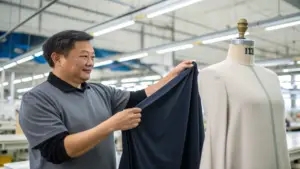
You are at a trade show. You see two dresses. They look similar. The fabric feels similar. The price is very different. You wonder why. You pick up the cheaper dress. You look at the seams. They are uneven. The stitching is loose in some places. You look at the expensive dress. The seams are straight. The stitching is consistent. This is the difference. It is not fabric. It is not design. It is construction. It is the stitching. Good stitching separates premium garments from cheap ones. It is the difference between a dress that lasts for years and a dress that falls apart after three washes.
To identify premium quality stitching on wholesale women's wear, you need to examine five critical elements: stitch density, seam straightness, thread tension, seam type appropriateness, and finishing details. Premium garments use a higher stitch count per inch, perfectly straight seams, balanced thread tension that does not pucker or loosen, the correct seam type for the garment construction, and clean finishing details like backstitching and thread trimming. These details are not visible from a distance. But they determine how the garment performs over time. They separate a premium product from a commodity.
I have run a clothing factory for over a decade. I have trained hundreds of sewers. I have inspected thousands of garments. I know what good stitching looks like. I also know what cheap stitching looks like. The difference is in the details. A trained eye can spot premium quality in seconds. You can train your eye too. You just need to know what to look for.
What Are the Visual Signs of Premium Stitching?
Visual inspection is the first step. You can see quality without touching the garment. The stitching should look clean, straight, and consistent. Any variation is a sign of lower quality or rushed production.
How do I check stitch density?
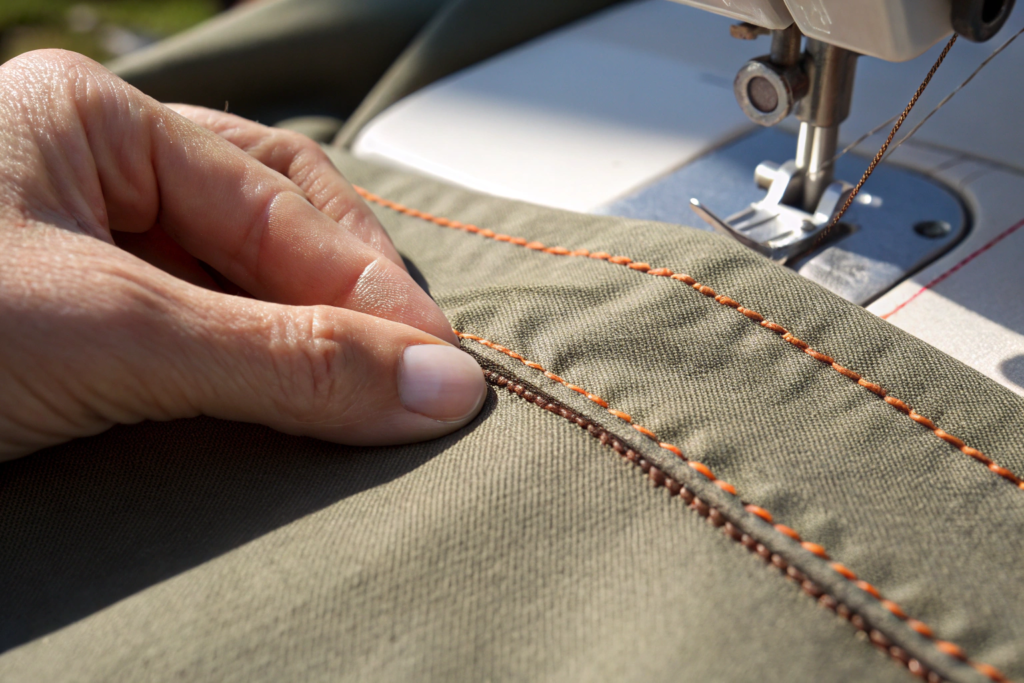
Stitch density refers to the number of stitches per inch. Higher stitch density generally means stronger seams. Premium garments typically use 10 to 12 stitches per inch for wovens and 8 to 10 stitches per inch for knits. Cheap garments may use only 6 to 8 stitches per inch.
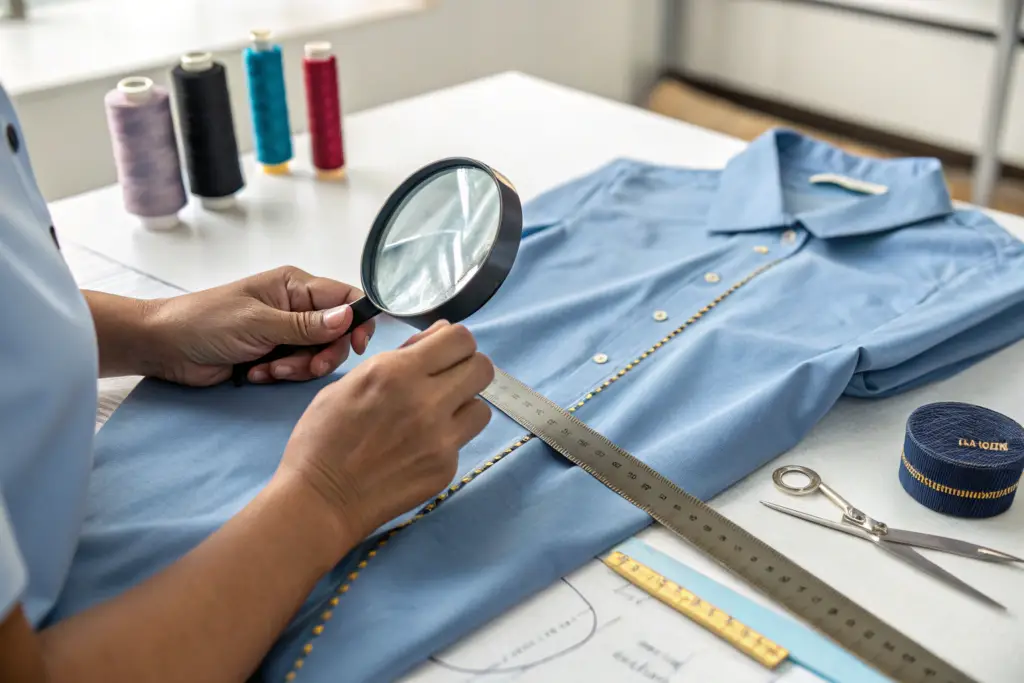
To check stitch density, you need a ruler. Count the stitches in one inch. Do this on a straight seam. Count in multiple places. Consistency matters as much as density. If the stitch count varies along the seam, the sewer was inconsistent.
A client in Los Angeles was comparing two blouse suppliers. One had 10 stitches per inch consistently. The other had 8 stitches per inch with variations. The client chose the first supplier. The blouses held up better. The returns were lower. The higher stitch density was worth the slightly higher cost.
You should also look at the stitch type. Lockstitch is the most common. It is strong and secure. Chainstitch is faster but can unravel if the thread breaks. Premium garments use lockstitch for critical seams. Ask the factory what stitch type they use. A good factory will tell you.
What does straightness tell me about quality?
Straight seams are a sign of skilled workers and well-maintained machines. A sewer who is rushing or untrained will produce wavy seams. A machine that is not properly calibrated will produce uneven seams.
Look at the seam from a distance. Follow it from top to bottom. Is it perfectly straight? Does it follow the pattern line exactly? On a curved seam, like an armhole, does the stitching follow the curve smoothly? Any wavering indicates lower quality.
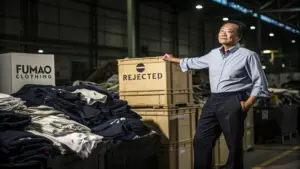
I remember a client from San Francisco who rejected an entire shipment because the seams were wavy. The factory had used inexperienced sewers. The client had specified straight seams in their tech pack. The factory had to redo the entire order. The client was right to reject. Wavy seams look cheap. They also create fit issues.
On garments with topstitching, the distance from the edge should be consistent. Premium garments maintain the same distance along the entire seam. Cheap garments vary. This is a quick way to assess quality. Look at the topstitching on a pair of trousers. Is it a consistent 1/4 inch from the edge? If it varies, the quality is not premium.
How does thread tension affect appearance?
Thread tension determines how the stitches sit on the fabric. Balanced tension produces stitches that lie flat. The thread does not pull the fabric. There is no puckering. Unbalanced tension creates problems.
Tension that is too tight pulls the fabric together. The seam puckers. This is common on cheap garments. The factory did not adjust the machine for the fabric. Tension that is too loose leaves loops on the underside. The stitches are not secure.
Run your finger along the seam. Does it feel flat? Or does it have ridges? Look at the underside. Are the stitches even? Premium garments have flat seams with even stitches on both sides.
A client in New York showed me two jackets. One had puckered seams at the shoulder. The other was smooth. The puckered jacket was $20 cheaper. The client bought the smooth one. They knew the puckered seams would look bad after washing. The garment would not lay flat. Customers would notice.
You should also check for skipped stitches. A skipped stitch is a missing stitch in the seam. It is a weak point. The seam can fail there. Premium garments have no skipped stitches. Cheap garments often have them, especially on curved seams.
How to Evaluate Stitching Construction and Finishing?
The outside of a garment tells part of the story. The inside tells the rest. Premium garments have clean insides. The seams are finished. The threads are trimmed. The construction is thoughtful. Cheap garments have messy insides. The seams are raw. The threads are long. The construction is minimal.
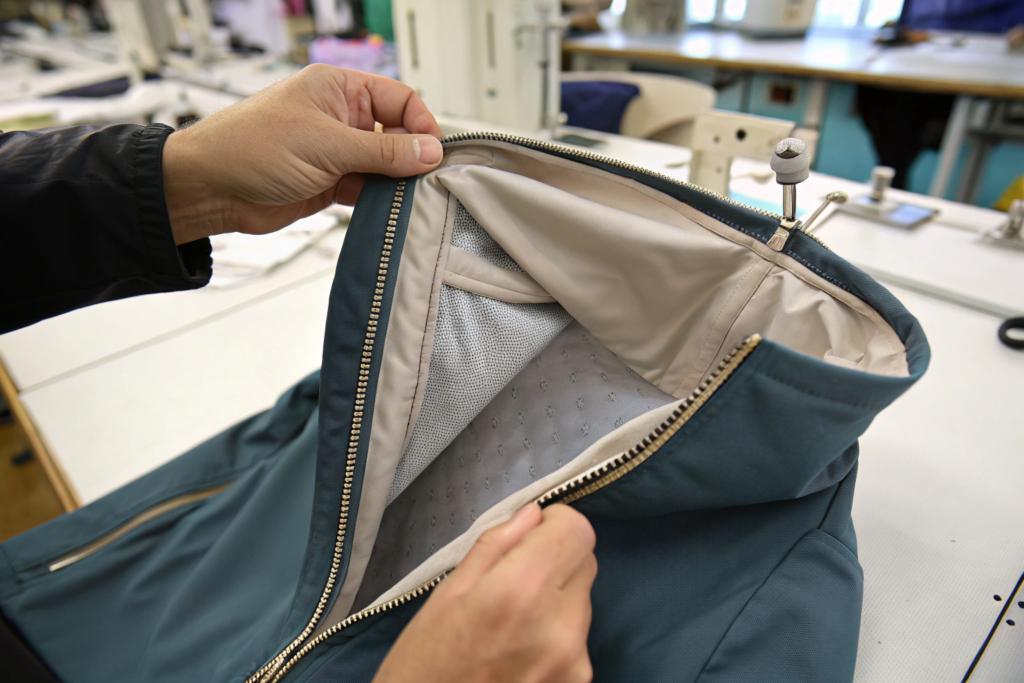
Different garments require different seam types. The right seam type for the fabric and construction indicates a knowledgeable manufacturer.
For woven fabrics, premium seams include:
- Flat-felled seam: Two rows of stitching. The raw edge is enclosed. Common on denim and workwear. Very strong.
- French seam: The raw edge is enclosed inside the seam. Common on sheer fabrics. Clean and professional.
- Overlocked seam with topstitching: The raw edge is overlocked. Then a second row of topstitching reinforces it. Common on shirts and blouses.
For knit fabrics, premium seams include:
- Coverstitch: Two or three needles create parallel rows of stitching on the outside. The inside is a chainstitch. Common on t-shirts and activewear. Allows stretch.
- Overlock with safety stitch: The seam is overlocked and reinforced with a second row of stitching. Strong and secure.
A client in Austin was sourcing activewear. She asked each factory what seam types they used. One factory used a simple overlock with no reinforcement. Another used a coverstitch on the outside and a safety stitch on the inside. She chose the second. The seams lasted longer. The garments held their shape.
You should specify the seam type in your tech pack. A good factory will follow your specification. A cheap factory will use whatever is fastest.
How do I check seam finishing?
Seam finishing protects the raw edges from fraying. It also makes the inside of the garment look professional. Premium garments have finished seams. Cheap garments often leave edges raw.
Look inside the garment. Check the seam allowances. Are they finished? Common finishing methods include:
- Overlock: The edge is wrapped with thread. This is the most common.
- Bias binding: A strip of fabric covers the raw edge. This is more expensive but very clean.
- Hong Kong finish: The raw edge is encased in a strip of fabric. Very high-end.
Check that the seam allowance is even. Premium garments have consistent seam allowances. Cheap garments vary. A 1/2 inch seam allowance should be 1/2 inch along the entire seam.
A client in Boston opened a garment. The inside was a mess. The seam allowances varied from 1/4 inch to 3/4 inch. The edges were raw. Loose threads were everywhere. She rejected the order. She told the factory this was not acceptable. The next order was clean. She learned to check the inside before approving production.
You should also check for backstitching. Backstitching is when the sewer reverses direction at the beginning and end of a seam. It locks the thread. It prevents the seam from unraveling. Premium garments have backstitching at every seam start and end. Cheap garments often skip it.
What does thread trimming tell me?
Thread trimming is the final step. All loose threads are cut. Premium garments have no loose threads. The inside is clean. The outside is clean.
A garment with loose threads looks unfinished. It signals that the factory rushed the final step. It also creates a problem for the customer. They have to trim the threads themselves. It is a small detail. But it affects the perception of quality.
I have seen clients reject shipments because of loose threads. It seems strict. But loose threads are easy to fix. If the factory does not care about loose threads, what else do they not care about? Attention to detail matters.
Run your hand over the garment. Do you feel any loose threads? Look inside. Are there thread tails hanging? A premium garment should have no visible loose threads.
How to Test Stitching Durability and Strength?
Visual inspection is important. But you also need to test. The stitching needs to perform. It needs to hold up to wear. It needs to withstand washing. Testing gives you confidence.
How do I perform a simple pull test?
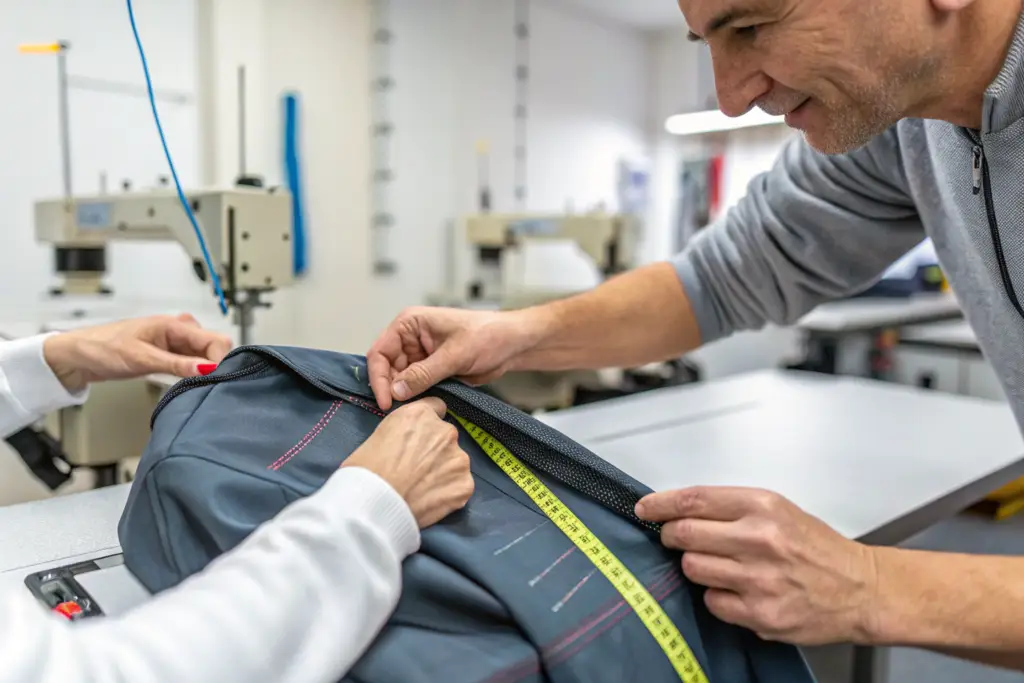
A pull test is simple. You pull on the seam. You see if it holds. This test reveals weak stitching.
Take the garment in both hands. Place your hands on either side of a seam. Pull gently. Does the seam gap? Does it stretch? Does it make noise? A strong seam holds. It does not gap. It does not pop.
On a knit garment, pull the seam across the stretch. The seam should stretch with the fabric. If the seam does not stretch, it will break when the customer moves. Premium knitwear uses seams that stretch.
A client in Seattle did a pull test on samples from three factories. Two factories' seams held. One factory's seam popped with light pressure. The client eliminated that factory. The pull test revealed what visual inspection did not.
You should also test the seam on a curved area. Curved seams, like armholes, are more vulnerable. Pull across the curve. A good seam holds. A weak seam may show stress.
What does a wash test reveal about stitching?
A wash test is the ultimate test. It simulates what the customer will do. Wash the garment. See how the stitching holds up.
Wash the garment according to the care label. Use the recommended temperature. After washing, inspect the seams. Look for:
- Puckering: Did the seam pucker? This indicates poor thread tension or shrinkage mismatch.
- Fraying: Did the seam edges fray? This indicates poor finishing.
- Thread breakage: Did any stitches break? This indicates weak thread or poor stitching.
- Color bleeding: Did the thread color bleed? This indicates poor dye quality.
A client in Miami washed samples from two factories. One came out perfect. The other had puckered seams and frayed edges. The client chose the first factory. The wash test saved them from a costly mistake.
You should test multiple garments. Wash them at different cycles. A gentle wash and a regular wash. The stitching should hold in both.
How do I evaluate thread quality?
The thread itself matters. Premium garments use high-quality thread. Cheap garments use low-quality thread. You can feel the difference.
Good thread is smooth. It does not fuzz. It does not break easily. You can test by pulling a thread from the seam. Good thread resists breaking. Cheap thread snaps easily.
Thread color should match the fabric. On premium garments, the thread is either perfectly matched or intentionally contrasting. If it is meant to match, it should match exactly. A mismatch looks cheap.
You should also check for thread that is too thick or too thin. The thread weight should match the fabric weight. Heavy fabric needs heavy thread. Light fabric needs light thread. A mismatch creates problems. Heavy thread on light fabric can pucker. Light thread on heavy fabric can break.
How to Work with Your Factory to Ensure Premium Stitching?
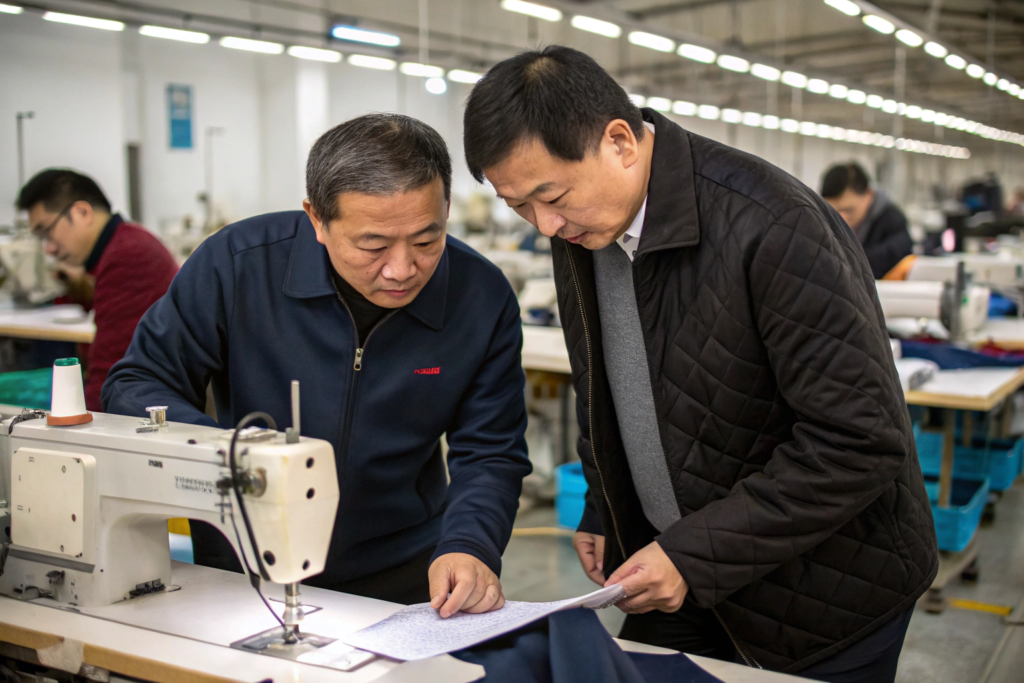
You cannot inspect quality into a garment. Quality must be built in. The best way to ensure premium stitching is to work with your factory. Set expectations. Provide clear specifications. Build a partnership focused on quality.
What specifications should I include in my tech pack?
Your tech pack is your instruction manual. It should include detailed stitching specifications. Do not assume the factory knows what you want. Tell them.
Your tech pack should specify:
- Stitch type: Lockstitch, chainstitch, coverstitch, etc.
- Stitches per inch: 10 SPI for wovens, 8 SPI for knits, etc.
- Seam type: Flat-felled, French, overlock, etc.
- Seam allowance: 1/2 inch, 3/8 inch, etc.
- Topstitching distance: 1/4 inch from edge, etc.
- Thread type: Cotton, polyester, bonded nylon, etc.
- Thread color: Match to fabric or specific Pantone
- Backstitching requirements: At start and end of each seam
- Thread trimming: All threads trimmed to 1/8 inch
A client in Denver created a detailed stitching specification page in their tech pack. They included diagrams. They included photos of good and bad examples. The factory knew exactly what was expected. The first sample was nearly perfect. The spec sheet saved time and prevented miscommunication.
You should also provide a sample of acceptable stitching. A physical sample is worth a thousand words. Send a garment that represents the quality you want. The factory can use it as a reference.
How do I conduct a factory stitching audit?
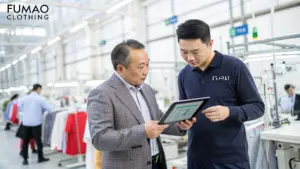
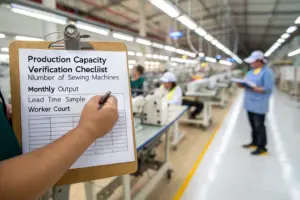
A stitching audit is a visit to the factory to assess their sewing capabilities. You can do this yourself or hire a third party. The audit should focus on the factors that affect stitching quality.
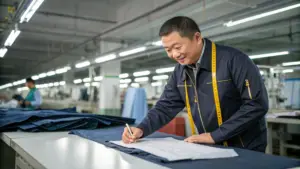
During the audit, check:
- Machine condition: Are machines well-maintained? Are they clean? Do they have the correct attachments?
- Worker skill: Do workers have experience? Do they receive training? Are they working at a reasonable pace?
- Quality control: Is there in-line inspection? Do QC checkers have magnifying glasses? Do they check stitch density?
- Thread management: Is thread stored properly? Is the correct thread used for each operation?
- Lighting: Is the sewing area well-lit? Poor lighting leads to mistakes.
I have hosted many factory audits. The best audits are collaborative. The client points out areas for improvement. We discuss how to address them. The result is better quality for future orders.
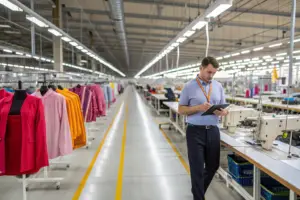
If you cannot visit, ask for video. Ask to see the sewing floor. Ask to see the QC station. A factory that is proud of their quality will show you.
How do I build a quality partnership with my factory?
Quality is a shared responsibility. You cannot just demand it. You must work with the factory to achieve it. A partnership approach is more effective than a transactional approach.
Share your quality standards. Explain why they matter. Show the factory your market. Help them understand your customer. When the factory understands your brand, they take pride in the product.
Pay fairly. Factories that are squeezed on price will cut corners. Stitching is often where corners are cut. It is labor-intensive. It is easy to speed up at the expense of quality. Paying a fair price allows the factory to invest in skilled workers and proper quality control.
Provide feedback. When quality is good, say so. When quality is not good, explain why. Be specific. "The topstitching on the collar is uneven" is better than "the quality is poor." Work together to solve problems.
A client in Portland had a strong partnership with us. They visited twice a year. They brought samples. They explained their customer. They gave us feedback on every order. We learned their standards. We took pride in their products. Their quality was consistently high because we worked together.
Conclusion
Premium stitching is the foundation of premium garments. It is what separates clothes that last from clothes that fall apart. It is what customers notice, even if they do not know it. A garment with perfect stitching feels better. It looks better. It holds up better.
To identify premium stitching, you need to look at the details. Check the stitch density. Look for straight seams. Feel for balanced tension. Inspect the seam types and finishing. Test the durability with pull tests and wash tests. Work with your factory to build quality into every garment.
The investment in premium stitching pays off. Your customers will notice. They will buy again. They will recommend your brand. They will trust your quality. That trust is the foundation of a successful apparel business.
At Shanghai Fumao, we take stitching seriously. We train our workers. We maintain our machines. We inspect every seam. We know that our clients' success depends on our quality. We are proud of the garments we produce.
If you are sourcing women's wear and want to ensure premium stitching, we would like to work with you. Our Business Director, Elaine, can walk you through our quality processes. She can show you examples of our work. You can reach her at elaine@fumaoclothing.com. Let us build quality into your collection together.