You have a large order. The factory asks for a 50% deposit. You hesitate. What if they do not deliver? What if the quality is poor? You want to protect yourself. The factory also wants protection. They need to buy materials. They need to pay workers. They do not want to be left with your fabric if you cancel. This is the tension in every apparel transaction. Both sides need security. The solution is not a single payment. It is a series of payments. Each payment is tied to a milestone. This creates alignment. Both sides have something to lose if the project fails.
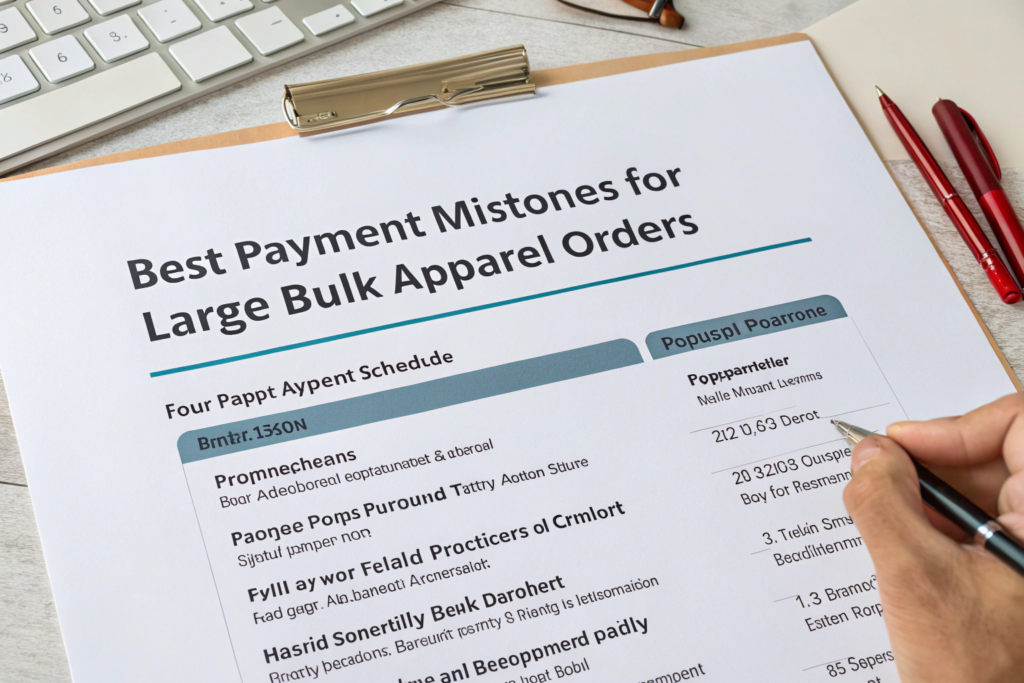
The best payment milestones for large bulk apparel orders are a structured four-part payment schedule: a 30% deposit to initiate production, a 30% payment upon fabric and trim arrival, a 30% payment upon shipment, and a 10% final payment after quality inspection or delivery. This structure balances risk between the brand and the factory. It gives the factory enough cash flow to start production without overexposing the brand. It creates natural checkpoints where quality and progress can be verified before more money changes hands.
I have run a clothing factory for over a decade. I have negotiated payment terms with hundreds of brands. The ones that work best are the ones that are fair to both sides. A payment schedule that is too demanding on the factory creates friction. The factory may cut corners to preserve cash flow. A payment schedule that is too generous to the factory creates risk for the brand. The brand has no leverage if something goes wrong. The best schedules are balanced. They give the factory confidence to invest in your order. They give you confidence to invest in your factory.
What Is the Standard Payment Structure for Large Apparel Orders?
The standard payment structure has evolved over decades. It reflects the realities of apparel production. Each payment serves a purpose. Each payment aligns with a stage of production. Understanding this structure helps you negotiate effectively.

Why is a deposit necessary to start production?
The deposit is the first payment. It is typically 30% to 50% of the total order value. The deposit serves several purposes. It shows the factory that you are serious. It gives the factory cash to buy materials. It covers the factory's initial costs. Without a deposit, the factory would have to finance your order. Most factories cannot do that. They operate on thin margins.
The deposit amount should be enough to cover the cost of raw materials. For most apparel orders, fabric and trims account for 30% to 50% of the total cost. A 30% deposit covers materials. A 50% deposit covers materials plus some labor. The right amount depends on your relationship with the factory. New relationships may require higher deposits. Established relationships may require lower deposits.
A client in New York started with a 50% deposit on their first order. This gave us confidence. We bought the fabric. We booked the production line. After three successful orders, we reduced the deposit to 30%. The client had proven they were reliable. We had proven we were reliable. The trust allowed for better terms.
You should negotiate the deposit amount based on the materials. If the fabric is expensive and custom, the factory needs more deposit. If the fabric is standard and readily available, the deposit can be lower. Ask the factory to explain their costs. A transparent factory will show you how much they need for materials.
How does progress payments create accountability?
Progress payments are payments made during production. They are tied to specific milestones. Common milestones include fabric arrival, cutting completion, sewing completion, and packing. Each payment gives the factory cash flow to continue production. It also gives you a checkpoint to verify progress.
The most common progress payment is upon fabric and trim arrival. This is a natural checkpoint. You can verify that the materials have arrived. You can inspect them if you wish. You can confirm that the factory has invested in your order. Then you release the payment. The factory uses that payment to fund labor and overhead.
A client in Los Angeles used a three-part progress payment structure. They paid 30% deposit. They paid 30% upon fabric arrival. They paid 30% upon shipment. They held 10% until final inspection. This structure worked well. They had a checkpoint at each critical stage. They never had a large amount at risk at any time.
You should tie progress payments to verifiable milestones. Do not pay based on time. Pay based on completion. Ask for evidence. Ask for photos. Ask for inspection reports. The factory should be able to show you that the milestone has been achieved.
What is the role of the final payment?
The final payment is typically 10% to 20% of the total. It is paid after the goods are shipped or after they arrive. This payment gives you leverage. If there is a quality issue, you can withhold the final payment until it is resolved. The factory wants that final payment. They will work to resolve any issues.
The final payment also covers the factory's profit. The deposit and progress payments cover their costs. The final payment is where they make their margin. This creates alignment. The factory will not get their profit until you are satisfied.
A client in Chicago held 10% until after the goods arrived. They inspected the goods. Everything was good. They released the payment. One time, there was a quality issue. They held the final payment. The factory corrected the issue. Then they released the payment. The final payment gave them leverage to get the issue resolved.
You should be reasonable with final payments. Do not hold a large percentage. 10% is standard. Holding 20% or more can create tension. The factory may feel you are not trusting them. They may deprioritize your order. Find the balance that works for both sides.
How to Structure Payment Milestones for Different Types of Orders?
Not all orders are the same. A reorder of a standard style is different from a new style with custom fabric. Your payment structure should reflect the risk. Higher risk requires more protection. Lower risk allows for simpler terms.
How do custom materials affect payment milestones?
Custom materials are a risk for the factory. They order fabric specifically for you. If you cancel, they cannot use that fabric for another client. They need more protection. You should expect to pay a higher deposit when custom materials are involved.
For orders with custom materials:
- Deposit: 40% to 50% to cover the custom fabric cost
- Fabric arrival payment: 20% to 30% upon verification of fabric
- Shipment payment: 20% to 30% upon shipment
- Final payment: 10% upon arrival or inspection
A client in Denver ordered custom-knit fabric with their own color. The fabric had a long lead time and a high minimum. The factory asked for a 50% deposit. The client paid it. The fabric was produced. The order was completed. The client understood that the custom fabric increased the factory's risk. The higher deposit was fair.
You should ask the factory to show you the fabric invoice. This gives you confidence that the deposit is being used for materials. A transparent factory will share this information.
How do reorders and repeat styles simplify payments?
Reorders are lower risk. The factory already has the patterns. The materials are standard. They know your quality standards. You know their capabilities. The payment structure can be simplified.
For reorders of established styles:
- Deposit: 20% to 30%
- Shipment payment: 60% to 70% upon shipment
- Final payment: 10% upon arrival or inspection
You may even skip the progress payment. The factory trusts you. You trust the factory. A simpler structure saves administrative time.
A client in Seattle placed reorders every month. After two years, we moved to a 30% deposit and 70% upon shipment. No progress payment. No final hold. The trust was established. The simpler terms made both our lives easier.
You should still maintain quality control. Even for reorders, you should inspect. Trust is good. Verification is better.
How does order size influence payment structure?
Larger orders create more risk for both sides. The factory has more money tied up in materials. You have more money at risk. Larger orders often have more complex payment structures.
For very large orders (over $100,000):
- Deposit: 30%
- Fabric arrival: 20%
- Cutting completion: 10%
- Sewing completion: 20%
- Shipment: 10%
- Final: 10%
More milestones create more checkpoints. They spread the risk. They give both sides confidence.
A client in Boston placed a $250,000 order. We used five milestones. The client paid 30% deposit. They paid 20% when fabric arrived. They paid 10% when cutting was done. They paid 20% when sewing was 50% complete. They paid 10% at shipment. They held 10% until arrival. The client felt secure. We had cash flow to manage the large production. The structure worked.
You should discuss milestone timing with your factory. Find a structure that gives you confidence without creating administrative burden for the factory.
How to Use Letters of Credit for Large International Orders?
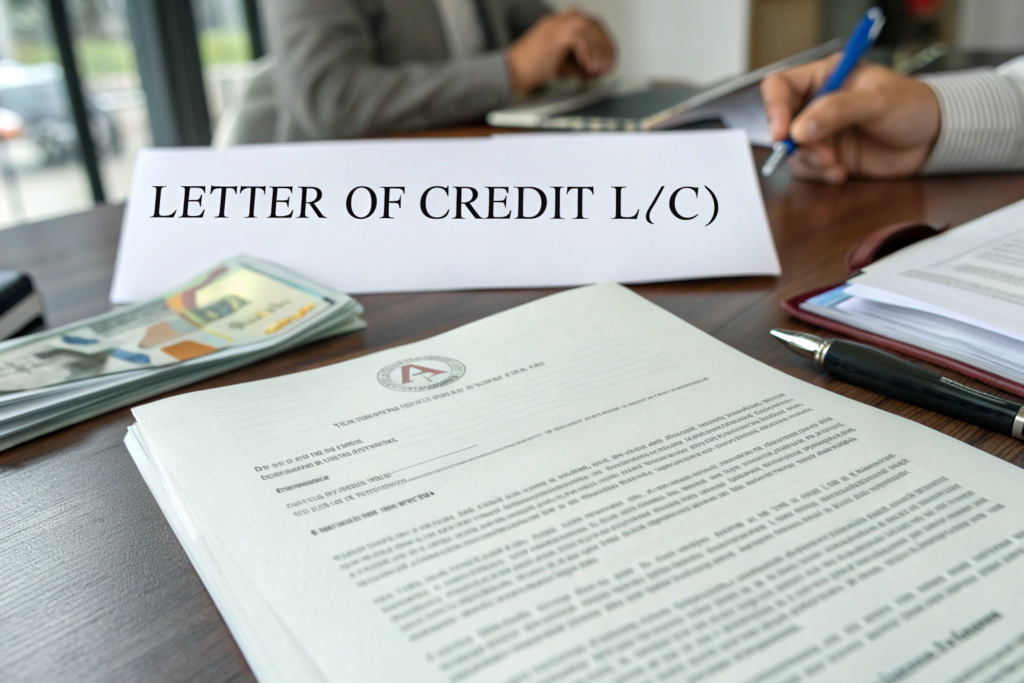
For very large orders or new factory relationships, a Letter of Credit (L/C) is common. An L/C is a bank instrument. It guarantees payment if the factory meets the terms. It protects both sides. The factory knows they will be paid if they deliver. You know you will not pay unless they deliver.
What are the advantages of using a Letter of Credit?
A Letter of Credit shifts risk from the buyer and seller to the banks. The bank verifies that the factory has shipped the goods. The bank verifies that the documents are correct. Then the bank releases payment. This gives you security. You do not pay until the goods are shipped and documented.
For the factory, an L/C provides certainty. They know the bank will pay if they meet the terms. They do not have to worry about your financial stability. They can confidently invest in your order.
A client in New York used an L/C for their first order with a new factory. The order was $80,000. The client did not want to send a large deposit. The factory did not want to produce without a deposit. The L/C solved the problem. The factory produced the order. They presented shipping documents to the bank. The bank paid them. The client received the goods. Both sides were protected.
The costs of an L/C are shared. The buyer pays for the L/C issuance. The seller pays for presentation fees. The total cost is typically 1% to 2% of the order value. For large orders, this is a reasonable cost for security.
What are the disadvantages of Letters of Credit?
Letters of Credit are complex. They require precise documentation. A small error in a document can delay payment. The factory must present exactly what the L/C requires. Any discrepancy is a problem.
L/Cs also require bank involvement. This takes time. The process adds 5 to 10 days to the payment cycle. For repeat orders with established relationships, L/Cs are often overkill.
A client in Austin used an L/C for every order. They had a good relationship with their factory. But the L/C paperwork was a burden. Every shipment required document preparation. Every discrepancy caused delays. They switched to a deposit plus balance structure. It was simpler. The factory was happy to have faster access to funds.
You should use L/Cs for new relationships or very large orders. For established relationships, simpler payment structures are usually better.
How to Negotiate Payment Terms That Work for Both Sides?
Payment terms are negotiated. They are not fixed. You can ask for terms that work for your business. The factory can ask for terms that work for theirs. The goal is to find a structure that balances risk and cash flow for both sides.

What factors should you consider when negotiating?
Several factors affect what payment terms are reasonable. Consider these factors before you negotiate:
- Your relationship history: New relationships require more security. Established relationships allow more flexibility.
- Order size: Larger orders may justify more complex structures. Smaller orders may justify simpler structures.
- Material type: Custom materials require higher deposits. Standard materials allow lower deposits.
- Factory's financial health: A factory with strong finances may accept lower deposits. A factory that is struggling may need more upfront.
- Your financial position: If you have strong cash flow, you can offer better terms. If you are tight on cash, you may need to negotiate.
A client in San Francisco had strong cash flow. They offered to pay 50% deposit on the first order. This was attractive to the factory. In exchange, they asked for better pricing. The factory agreed. The client got a better price. The factory got cash flow security. Both won.
You should be transparent about your needs. Tell the factory why you want certain terms. If you need to conserve cash, explain. A good factory will work with you. If they cannot, they will explain their constraints. Open communication leads to better outcomes.
What are common payment terms for different relationship stages?
Your payment terms should evolve as your relationship grows. Here is a typical progression:
First Order (New Factory):
- 50% deposit
- 50% balance upon shipment
- OR Letter of Credit
First Year (3-5 Orders):
- 30% deposit
- 30% upon fabric arrival
- 30% upon shipment
- 10% after arrival/inspection
Established Relationship (1+ Years):
- 30% deposit
- 70% upon shipment
- OR 20% deposit, 80% upon shipment
Strategic Partnership (3+ Years):
- 20% deposit
- 80% upon shipment
- OR Net 30 terms after delivery
A client in Chicago has worked with us for five years. Their payment terms are 20% deposit and 80% upon shipment. They pay reliably. We trust them. The simple terms work for both of us.
You should review your payment terms annually. As your relationship grows, ask for better terms. The factory may offer them without asking. But it is good to have the conversation.
Conclusion
Payment milestones are more than just a way to transfer money. They are a tool for managing risk and building trust. A well-structured payment schedule aligns the interests of the brand and the factory. It gives the factory the cash flow they need to produce your order. It gives you the checkpoints you need to verify quality and progress.
The standard structure of deposit, progress payment, shipment payment, and final payment has stood the test of time. It balances the needs of both sides. It creates natural points for communication and verification. It protects both parties from the risks inherent in international production.
As your relationship grows, your payment terms can evolve. New relationships require more protection. Established relationships allow more flexibility. The best terms are the ones that work for both sides. They are negotiated openly. They are based on trust earned through successful orders.
At Shanghai Fumao, we work with our clients to find payment terms that work for their business. We understand that every brand has different cash flow needs. We are flexible. We are transparent. We believe that fair payment terms are the foundation of a strong partnership.
If you are planning a large apparel order and want to discuss payment structures that protect both sides, we would like to talk. Our Business Director, Elaine, can walk you through our standard terms and discuss what might work for your situation. You can reach her at elaine@fumaoclothing.com. Let us build a payment plan that gives you confidence and gets your order produced.