You have a unique design. You spent months developing it. You found a factory that can make it perfectly. You place your order. Six months later, you see your design on a competitor's website. The fabric is the same. The cut is the same. The details are the same. Your unique style is no longer unique. Your advantage is gone. You feel betrayed. The factory sold your design to someone else. This happens more often than you think. It is a risk of working with overseas manufacturers. But it is a risk you can manage.
To secure exclusive manufacturing rights for your rare clothing styles, you need to combine legal protection, strategic factory selection, and relationship management. You must have a clear written agreement that defines exclusivity, you must choose a factory that values long-term partnerships over short-term gains, and you must make yourself a client worth keeping exclusive. Exclusivity is not automatic. It is earned and protected through contracts, trust, and mutual benefit.
I have run a clothing factory for over a decade. I have seen brands lose their unique designs to copycats. I have also seen brands protect their intellectual property effectively. The difference is not luck. It is preparation. The brands that secure exclusivity are the ones who think about it before they place their first order. They build protection into their relationship from day one.
What Legal Tools Protect Your Exclusive Manufacturing Rights?
Legal protection is the foundation of exclusivity. You cannot rely on trust alone. You need documents that create obligations. You need documents that give you recourse if those obligations are violated. The legal tools are available. You just need to use them.

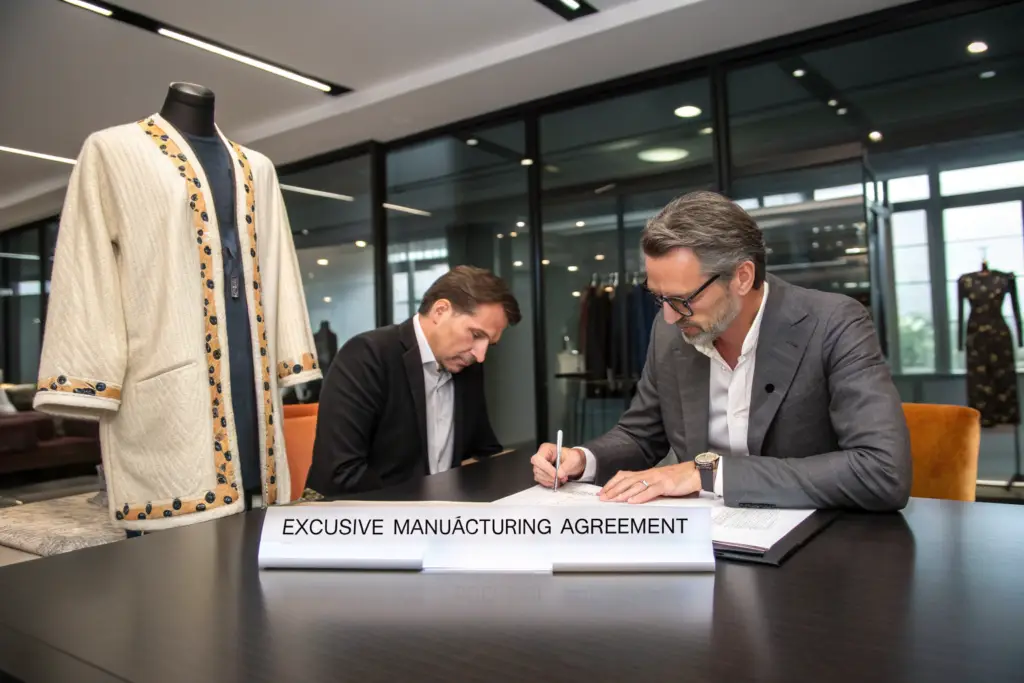
What should be included in a manufacturing exclusivity agreement?
An exclusivity agreement is a contract between you and the factory. It defines what is exclusive and what is not. It should be clear, specific, and enforceable. Vague agreements create confusion. Specific agreements create protection.
Your exclusivity agreement should include:
- Definition of exclusive styles: List the specific styles covered. Include style numbers, names, and descriptions. Do not leave it open-ended.
- Territory: Define where the exclusivity applies. Is it worldwide? Is it only the US? Is it only certain channels?
- Duration: Define how long the exclusivity lasts. One year? Two years? Indefinite? Renewal terms?
- Scope of exclusivity: Define what the factory cannot do. They cannot produce your styles for other brands. They cannot sell your styles to other buyers. They cannot use your patterns for other products.
- Consequences of breach: Define what happens if the factory violates the agreement. Monetary damages? Termination of relationship? Return of molds and patterns?
A client in Seattle had a strong exclusivity agreement. They defined 15 specific styles. They specified that the factory could not produce those styles for any other brand worldwide for two years. The factory signed. When another brand approached the factory asking for similar styles, the factory declined. They showed the other brand the agreement. The exclusivity was respected.
You should have the agreement reviewed by a lawyer who specializes in international trade and intellectual property. The laws in the factory's country may be different from your country. A local lawyer can advise on enforceability. The agreement should be in both English and the local language.
How do NDAs and IP protection documents work?
A Non-Disclosure Agreement (NDA) is a simpler document. It protects your confidential information. It does not create exclusivity. But it prevents the factory from sharing your designs with others. It is a foundational document.
Your NDA should cover:
- Definition of confidential information: Design sketches, tech packs, fabric specifications, trim details, pricing, and customer information.
- Obligations of the factory: They cannot share confidential information with anyone. They cannot use it for any purpose other than your production.
- Duration: How long does the confidentiality last? Typically 3 to 5 years after the relationship ends.
- Return of materials: The factory must return all confidential materials when the agreement ends.
In many countries, you can also register your designs. Design patents protect the ornamental appearance of a garment. In the US, a design patent lasts 15 years. In China, a design patent lasts 15 years. Registration creates a public record of your ownership. It makes enforcement easier.
A client in Los Angeles registered their signature jacket design with the US Patent and Trademark Office. They also registered in China. When a copycat appeared, they had legal standing to stop them. The design patent was expensive to obtain. But it protected their unique style for 15 years. The investment was worth it.
You should also use copyright protection. In the US, original designs are protected by copyright automatically. But registration strengthens your rights. It allows you to sue for statutory damages. For fashion designs, copyright protection is more limited than patents. But it still provides a layer of protection.
How to Select a Factory That Respects Exclusivity?
Not all factories are equal. Some factories routinely copy their clients' designs. They see it as a normal part of business. Other factories protect their clients' designs. They see it as a competitive advantage. You need to select the second type. The factory's culture and business model matter.

What questions should I ask a factory about protecting designs?
Before you work with a factory, ask questions about how they handle intellectual property. Their answers will tell you a lot. A factory that respects exclusivity will have clear answers. A factory that does not will be vague or defensive.
Ask these questions:
- Do you have a policy on protecting client designs? A good factory will say yes and explain their policy.
- Have you ever been involved in a dispute over design copying? Ask how it was resolved. A factory that handled it professionally is a good sign. A factory that blames the client is a warning.
- Do you work with other brands in my category? If they work with multiple brands in the same category, there is a higher risk of conflict. Ask how they manage that.
- Are you willing to sign an exclusivity agreement? A factory that is hesitant may be planning to work with your competitors.
A client in New York asked these questions of several factories. One factory said they worked with 20 other streetwear brands. They said they could not offer exclusivity. Another factory said they worked with only 2 brands in that category. They were willing to sign an exclusivity agreement. The client chose the second factory. The exclusivity was respected.
You should also ask about their other clients. A factory that works with established, reputable brands is more likely to respect exclusivity. They have a reputation to protect. They cannot afford to be known as a copycat. A factory that works with unknown brands may be less concerned about reputation.
How do I verify a factory's reputation for protecting client designs?
Reputation is built over time. You can verify it. Talk to other brands. Ask about their experience. Use industry networks. Check online forums. A factory that copies designs will have a reputation. You just need to find it.
Ask the factory for references. Contact their other clients. Ask specific questions:
- Has the factory ever shared your designs with anyone else?
- Have you ever seen your designs appear with another brand?
- How does the factory handle confidentiality?
A client in Austin asked for references from a factory they were considering. They called three brands. Two had positive experiences. The third said they stopped working with the factory because their designs appeared with another brand. The client chose a different factory. The reference call saved them from a costly mistake.
You can also use third-party audits. Some audit firms specialize in intellectual property protection. They can assess a factory's systems for protecting client designs. This is more common for large brands. But smaller brands can also request it.
Another approach is to visit the factory. A physical visit gives you insight. You can see if they have secure areas for sample development. You can see if they restrict access to design materials. You can meet the management and assess their attitude. A factory that takes IP seriously will have physical and procedural controls.
How to Structure Your Partnership to Encourage Exclusivity?
Exclusivity is a two-way street. You want the factory to be exclusive to you for your styles. The factory wants a client who is loyal, consistent, and easy to work with. If you provide that, they will want to keep you. Exclusivity becomes mutually beneficial.
How does consistent volume encourage factory loyalty?
Factories are businesses. They need consistent work. A client who places small, irregular orders is not valuable. A factory will not hesitate to take another client with the same designs. A client who places consistent, growing orders is valuable. The factory will want to protect that relationship.
If you want exclusivity, you need to be a client worth keeping. Place regular orders. Plan your production in advance. Communicate clearly. Pay on time. Be professional. When a factory has a choice between a consistent client and a one-time buyer, they will choose the consistent client.
A client in Chicago placed small test orders with us for two seasons. They were professional. They paid on time. They communicated clearly. After two seasons, they asked for exclusivity on their designs. We agreed. They were a good client. We wanted to keep them. We had no incentive to share their designs with anyone else.
You should also consider long-term commitments. A one-year exclusivity agreement is common. A multi-year agreement is stronger. If you commit to a factory for multiple seasons, they have more incentive to protect your designs. They know you are not going to leave.
What role does fair pricing and transparency play in exclusivity?
Fair pricing builds trust. If you constantly push for the lowest price, the factory will look for other ways to make money. They may sell your designs to other buyers. If you pay a fair price, the factory is satisfied. They do not need to seek extra income from copying your designs.
Transparency also matters. Share your plans with the factory. Tell them about your growth. Tell them about your challenges. When they understand your business, they become invested in your success. Your success becomes their success.
A client in Denver was always pushing for lower prices. They changed factories frequently to save a few cents. They had no loyalty. Factories had no loyalty to them. Their designs were copied multiple times. When they started paying a fair price and building relationships, the copying stopped. The factory valued the relationship. They did not want to lose a good client.
You should also share credit for successes. When a style sells out, tell the factory. Thank them for their work. Share the positive feedback. This positive reinforcement builds loyalty. The factory feels proud of their work. They want to continue that success with you.
How to Monitor and Enforce Your Exclusive Rights?
Exclusivity agreements are only valuable if they are enforced. You need to monitor the market. You need to act quickly if you see a violation. Enforcement sends a message. It shows the factory that you take your rights seriously.
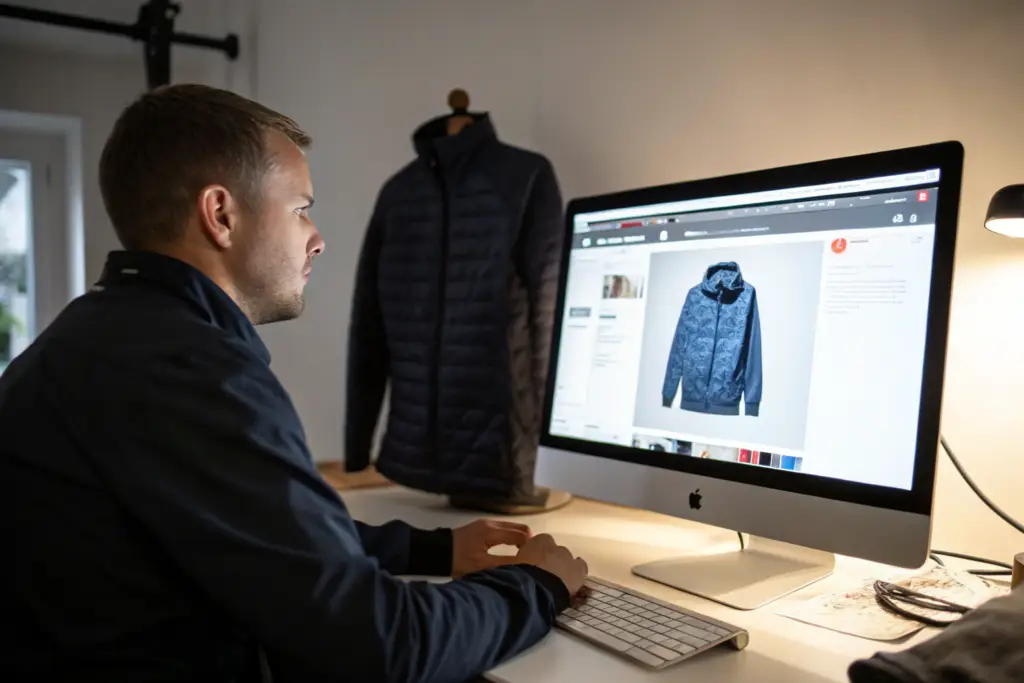
You need to watch the market. Set up alerts. Search regularly. Use technology. The faster you find a violation, the faster you can act.
Monitor:
- Competitor websites: Check regularly. Use reverse image search tools. Upload photos of your designs. See if similar images appear elsewhere.
- Alibaba and other B2B platforms: Search for your styles. Use keywords from your tech pack. See if any suppliers are offering your designs.
- Social media: Follow hashtags in your category. See what other brands are launching.
- Trade shows: If possible, attend trade shows. Walk the floor. Look for your designs.
A client in San Francisco used a reverse image search tool every month. They uploaded photos of their best-selling styles. One month, they found a competitor using their design. The competitor was sourcing from the same factory. The client confronted the factory with the evidence. The factory stopped working with the competitor. The enforcement was effective.
You can also hire a monitoring service. Some companies specialize in tracking counterfeit and copied products. They use technology and investigators. For a brand with a large catalog, this can be cost-effective.
What steps should I take if I discover a violation?
If you find a violation, act quickly. Do not ignore it. Do not wait. The longer you wait, the harder it is to stop.
Your steps should be:
- Document the violation: Take screenshots. Save the URLs. Note the date. Capture the evidence.
- Contact the factory: Share the evidence. Ask for an explanation. Remind them of the exclusivity agreement. Demand they stop.
- Send a formal cease and desist: If the factory does not stop, send a formal letter. Use a lawyer if necessary. Make it official.
- Consider legal action: If the violation continues, consider legal action. This is expensive. But it may be necessary to protect your rights.
- Terminate the relationship: If the factory will not respect exclusivity, end the relationship. Do not continue working with a partner who violates your rights.
A client in Boston discovered their design on a competitor's website. They contacted the factory. The factory admitted they had produced the design for another buyer. The client invoked the exclusivity agreement. The factory stopped. They also compensated the client for the lost sales. The relationship survived because the factory took responsibility.
Sometimes, the violation is not the factory. It may be another factory copying the design independently. In that case, you need to enforce against the copycat, not your factory. Your factory may even help you identify who is copying.
Conclusion
Securing exclusive manufacturing rights for your rare clothing styles is essential. Your unique designs are your competitive advantage. If you lose that advantage, you lose what makes your brand special. Protecting your designs requires a multi-layered approach.
You need legal tools. A strong exclusivity agreement defines your rights. NDAs and design patents create enforceable protections. You need to select the right factory. Choose a partner that values long-term relationships and has a reputation for protecting client designs. You need to structure your partnership to encourage loyalty. Be a client worth keeping. Pay fair prices. Communicate clearly. Share your success. You need to monitor and enforce your rights. Watch the market. Act quickly when you see violations.
The brands that succeed in protecting their designs are the ones who think about exclusivity before they start production. They build protection into their relationship from the beginning. They do not wait until a problem arises. They are proactive.
At Shanghai Fumao, we respect our clients' intellectual property. We sign exclusivity agreements. We protect client designs. We do not share designs with other buyers. Our reputation is built on trust. Our clients stay with us because they know their unique styles are safe with us.
If you are developing rare clothing styles and want a manufacturing partner who will protect your designs, we would like to work with you. Our Business Director, Elaine, can discuss our approach to exclusivity and intellectual property protection. She can walk you through our standard agreements. You can reach her at elaine@fumaoclothing.com. Let us protect your designs together.