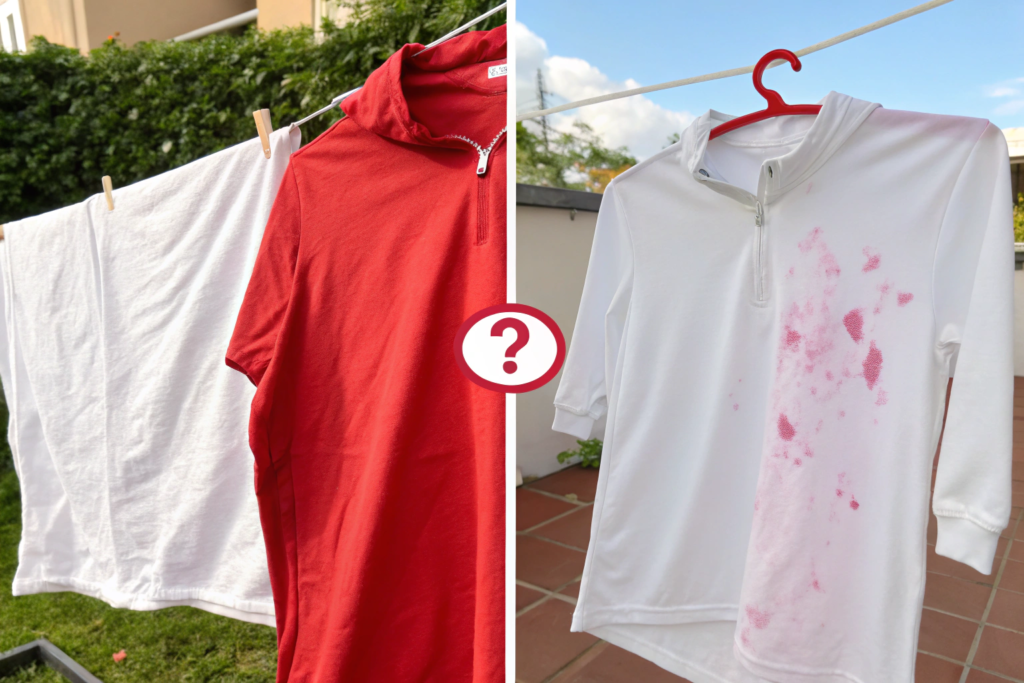
I have seen it happen too many times. A brand owner approves a sample. The color looks perfect. They place a large bulk order. The goods arrive. Everything looks fine. Then the customer washes the garment at home. The color bleeds. A white shirt is now stained pink. A pair of jeans leaves blue marks on a beige sofa. The returns start coming in. The brand's reputation suffers.
I remember one client from Texas. He ordered a large run of red cotton t-shirts. The color was vibrant. He was excited. Then his customers started washing them. The red dye bled onto other clothes. The complaints were overwhelming. He had to refund dozens of orders. He lost over $15,000. The factory he used had not tested for colorfastness. They assumed it would be fine. It was not.
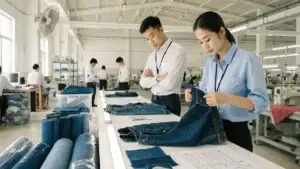
As the owner of Shanghai Fumao, a Chinese apparel manufacturer with five production lines, I have made colorfastness testing a standard part of our quality control process. We do not assume. We test. We test before bulk production. We test during production. We test again on finished goods.
Testing the colorfastness of sample garments before bulk ordering is essential. It protects your brand. It prevents costly returns. It ensures your customers receive products that maintain their appearance after washing and wearing. In this article, I will show you exactly how to test colorfastness. I will explain the different tests. I will tell you what results to look for. I will share real examples from my experience.
What is colorfastness and why does it matter for your brand?
Colorfastness is the resistance of a fabric to color change or color transfer. When a garment has good colorfastness, the color stays where it belongs. It does not fade in the sun. It does not bleed in the wash. It does not rub off onto other surfaces.
For a clothing brand, colorfastness is not a technical detail. It is a customer experience issue.
What happens when colorfastness fails?
When a garment fails colorfastness tests, the consequences can be severe:
| Failure Type | What Happens | Impact on Brand |
|---|---|---|
| Color bleeding | Dye transfers to other garments during washing. | Customers ruin other clothes. High returns. Negative reviews. |
| Color fading | Garment loses color after a few washes. | Customers feel product is poor quality. Low repeat purchase rate. |
| Crocking (rubbing) | Dye rubs off onto skin, furniture, or other surfaces. | Embarrassing for customer. Potential liability issues. |
| Light fading | Color fades after exposure to sunlight. | Product looks old quickly. Customer dissatisfaction. |
A client from Florida learned this lesson the hard way. She ordered a collection of dark denim jeans. The denim looked great. But she did not test for crocking. When her customers wore the jeans, the blue dye rubbed off onto their light-colored handbags and car seats. She received angry emails. She had to issue refunds. Her brand was tagged in social media posts about the issue. The damage to her reputation took months to repair.
Why do some factories skip colorfastness testing?
Some factories skip testing to save time and money. Testing takes a few days. It costs a small amount per sample. But to a factory that is focused only on price and speed, testing seems like an unnecessary expense.
These factories assume that if the fabric looks good, it will perform well. That assumption is dangerous. Different dyes, different fabrics, and different finishing processes all affect colorfastness. You cannot see colorfastness. You have to test it.
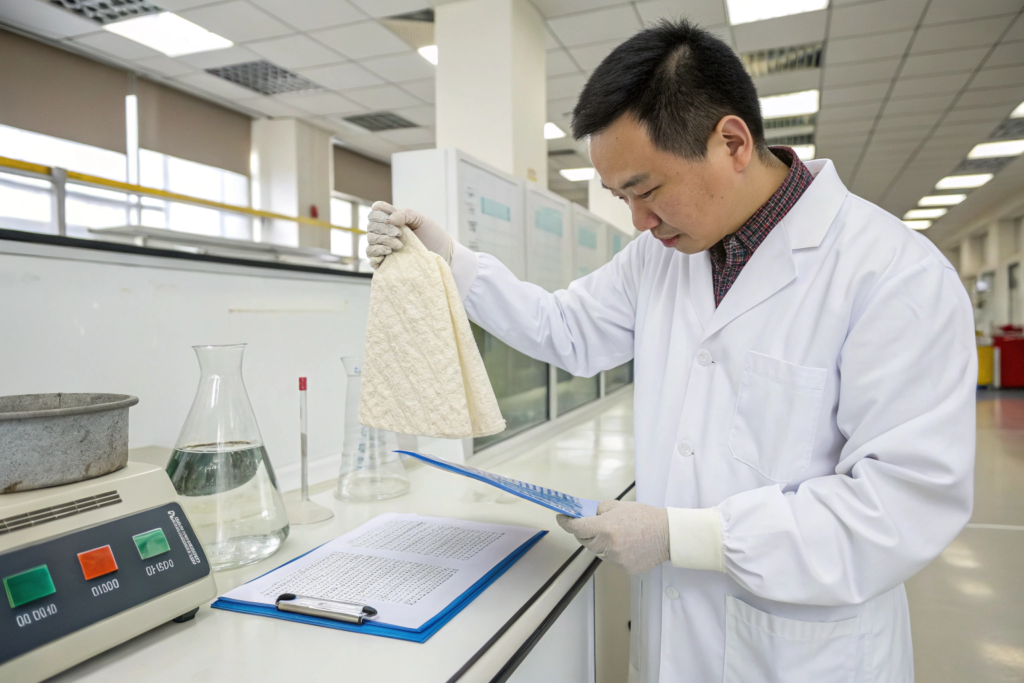
At Shanghai Fumao, we do not skip testing. We have an in-house testing capability for basic colorfastness tests. For more advanced tests, we work with third-party laboratories like SGS. We believe testing is an investment in our clients' success. A small investment in testing prevents a large loss from returns.
What are the essential colorfastness tests for apparel?
There are several types of colorfastness tests. Each tests a different condition. For apparel, you need to test for the conditions your customers will encounter. Washing, rubbing, light exposure, and perspiration are the most common.
How to test colorfastness to washing?
Washing is the most common cause of color problems. Customers wash their clothes. They expect the color to stay.
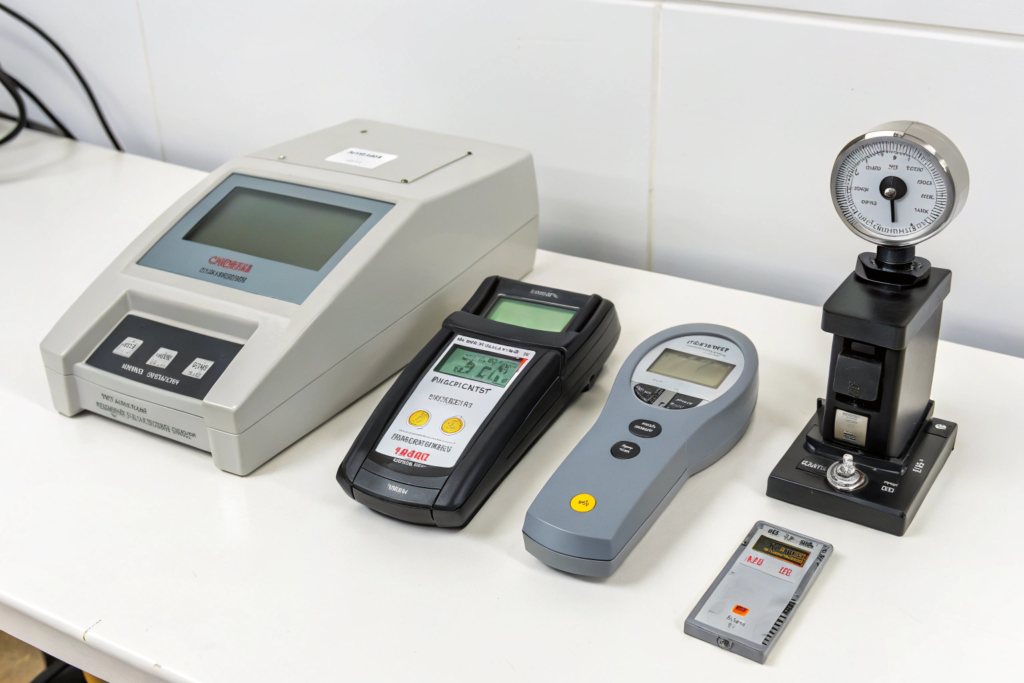
The test for colorfastness to washing is simple. You take a sample of the fabric. You attach a piece of multifiber fabric (which contains strips of different fiber types). You wash them together under controlled conditions. You then compare the color change of the original fabric and the color transfer onto the multifiber fabric.
Here is the process we follow:
| Step | What We Do | What We Look For |
|---|---|---|
| 1. Prepare sample | Cut a fabric sample of a standard size. Attach a multifiber fabric strip. | Ensures consistent test conditions. |
| 2. Select wash conditions | Choose temperature and cycle based on care label. (e.g., 40°C for cold wash, 60°C for warm wash). | Simulates actual customer use. |
| 3. Wash and dry | Place in a wash wheel or laboratory washing machine. Run the cycle. Dry according to care label. | Replicates home laundering. |
| 4. Evaluate results | Use gray scales to rate color change of original fabric and color staining on multifiber fabric. | Provides a numerical rating. |
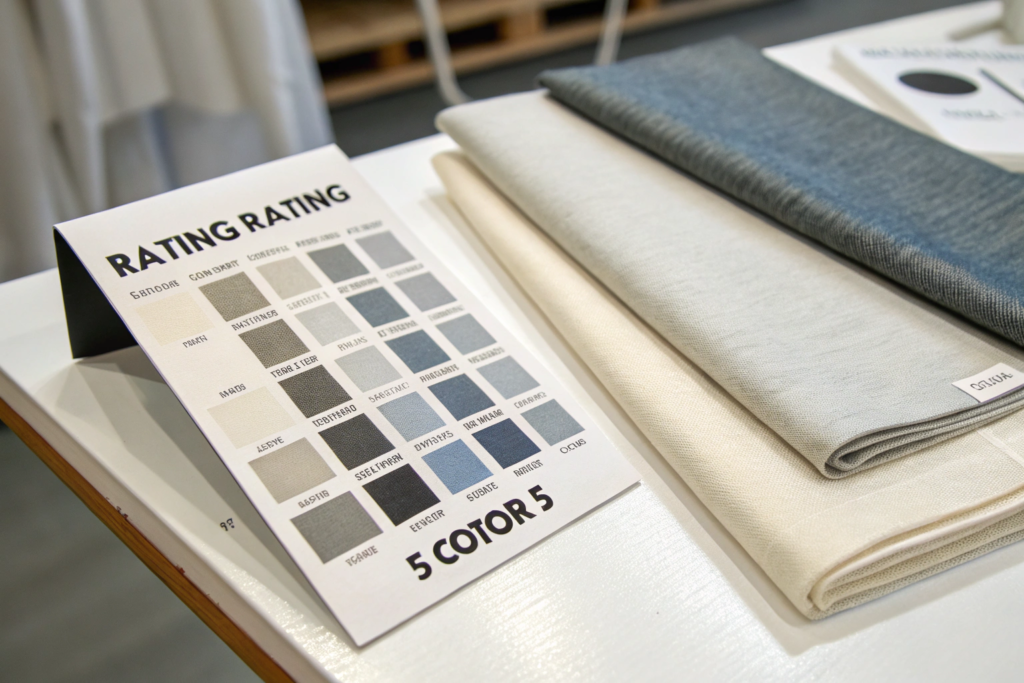
The results are rated on a scale of 1 to 5. Grade 5 means no color change or staining. Grade 1 means severe color change or staining. For apparel, we aim for Grade 4 or higher.
I had a client from Chicago who was sourcing navy blue cotton sweaters. We tested for colorfastness to washing at 40°C. The test showed color transfer onto the adjacent fabric. The rating was Grade 3. This was not acceptable. We went back to the dye house. They adjusted the dyeing process. We tested again. The second test showed Grade 4. We approved the fabric. The bulk order had no washing issues. The client's customers were happy.
How to test colorfastness to rubbing (crocking)?
Rubbing, or crocking, is when dye transfers from the fabric to another surface through friction. This is especially important for dark colors, denim, and fabrics that will be worn against light-colored items or furniture.
The test uses a device called a crockmeter. It rubs a piece of white cloth against the fabric under controlled pressure. There are two tests: dry crocking and wet crocking.
| Test Type | What It Simulates | Common Failure Issues |
|---|---|---|
| Dry crocking | Dye transferring to skin, car seats, or furniture during normal wear. | Loose surface dye on dark fabrics. |
| Wet crocking | Dye transferring when fabric is wet. For example, after sweating or during washing. | Dye that is not properly fixed to the fiber. |
The results are also rated on a 1 to 5 scale. For dark colors, Grade 4 is acceptable. Grade 4.5 or 5 is excellent.
A client from New York was launching a line of black leggings. We tested for crocking. The dry crocking test was fine. But the wet crocking test showed significant transfer. The rating was Grade 3. We knew this would be a problem. Sweaty workouts would cause the black dye to transfer onto the wearer's skin or onto other gym equipment.
We worked with the fabric supplier. They changed the dye recipe and added a wash step to remove unfixed dye. We retested. The wet crocking improved to Grade 4.5. The client proceeded with bulk production. She received no complaints about color transfer. Her leggings became one of her best-selling products.
What about colorfastness to light and perspiration?
Two other tests are important for certain garment types.
Colorfastness to light: This tests how the fabric reacts to sunlight exposure. It is important for swimwear, activewear, and any garment that will be worn outdoors. The test exposes the fabric to a xenon arc lamp that simulates sunlight. The rating is on a 1 to 5 scale. For swimwear, we aim for Grade 4 or higher.
Colorfastness to perspiration: This tests how the fabric reacts to sweat. It is important for activewear, underwear, and summer clothing. The test soaks the fabric in an acid solution (simulating sweat) and applies pressure. The rating is on a 1 to 5 scale.
I had a client from California who made yoga wear. We tested her fabric for both light and perspiration fastness. The perspiration test showed color transfer onto the adjacent fabric. The rating was Grade 3. We recommended a different fabric with better dye fixation. The client switched. Her yoga pants did not stain her customers' skin or mats. Her brand grew through word-of-mouth referrals.
How to perform colorfastness tests on sample garments?
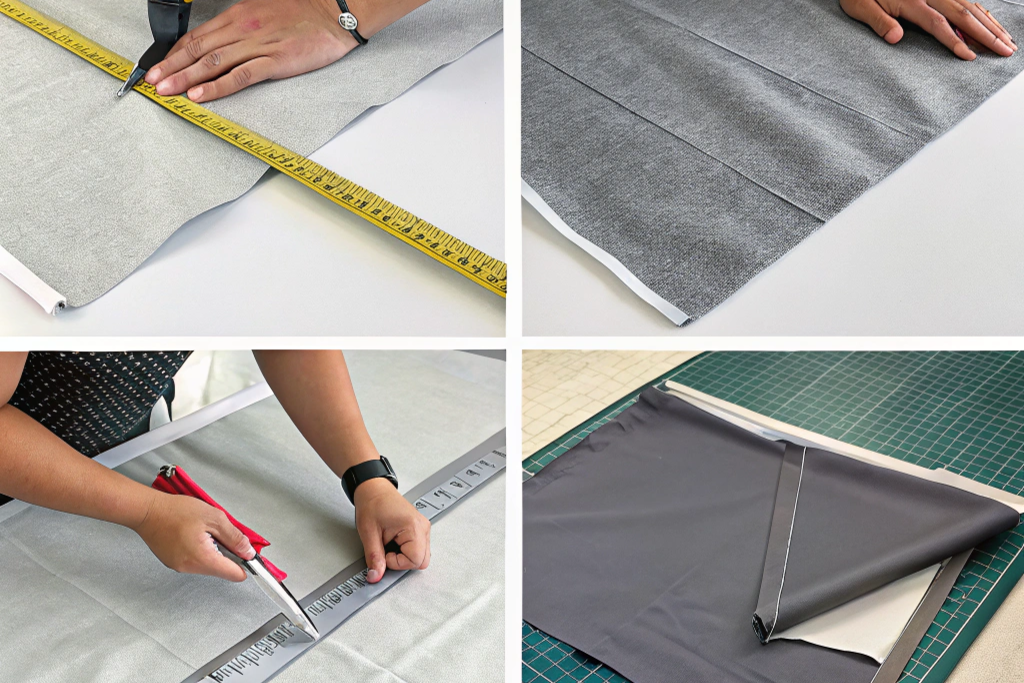
Testing on sample garments is the best approach. You have the actual fabric, with the actual dye, processed through the actual production method. Testing on a sample garment gives you confidence before you commit to bulk production.
What samples should you test?
When you request a sample from a factory, ask for a sample that represents the bulk production. This means:
- The same fabric
- The same dye batch or a representative dye lot
- The same finishing processes
If the factory sends you a sample that is made from a different fabric roll, the test results may not reflect the bulk order.
At Shanghai Fumao, we always make sample garments using fabric from the same source that will be used for bulk production. When we send a client a sample, we can also send a separate fabric swatch for testing. This allows the client to test the colorfastness while they are evaluating the fit and construction.
What equipment do you need for basic testing?
You do not need a full laboratory to do basic colorfastness testing. For initial screening, you can perform simple tests yourself.
Simple washing test:
- Take a fabric swatch from your sample garment.
- Place it in a small container with warm water and a small amount of mild detergent.
- Add a piece of white cotton fabric (or use a white cotton sock).
- Agitate for 10-15 minutes.
- Rinse and dry.
- Check the white fabric for color transfer. Check the original fabric for color change.
Simple rubbing test:
- Take a fabric swatch.
- Rub a piece of white cotton fabric firmly across the surface 10 times.
- Check the white fabric for color transfer.
- Repeat with a damp white fabric for wet rubbing.
These simple tests are not as precise as laboratory tests. But they can catch major issues. If a fabric fails these simple tests, it will definitely fail professional testing.
A client from Seattle used this simple approach. She received a sample dress in a deep purple color. She did a quick wash test with a white sock. The white sock turned purple. She knew there was a problem. She asked us to investigate. We found that the dye had not been properly fixed. We corrected the issue before bulk production. She avoided a disaster.
When should you use a third-party laboratory?
For serious production, I recommend using a third-party laboratory. Third-party labs provide certified test reports. These reports are evidence that your products meet quality standards. They also protect you if there is ever a dispute with the factory.
Third-party labs like SGS, Intertek, and Bureau Veritas offer comprehensive colorfastness testing. They follow international standards like AATCC (American Association of Textile Chemists and Colorists) or ISO.
The cost is modest. A full set of colorfastness tests (wash, crock, light, perspiration) typically costs $100-$300 per sample. This is a small price to pay for confidence in your bulk order.
One of our clients from Boston requires a third-party test report for every new fabric. She sends the sample to SGS. She receives the report within one week. She then approves the fabric for production. She has never had a colorfastness issue with her orders. She considers the testing cost a necessary part of her quality assurance budget.
How to interpret test results and make decisions?
Test results are only useful if you know how to read them. Understanding the ratings and what they mean for your product is essential.
What do the numbers mean?
Colorfastness tests use a gray scale for evaluation. There are two scales. One scale rates color change. The other rates color staining.
| Rating | Color Change | Color Staining | Action |
|---|---|---|---|
| 5 | No change | No staining | Excellent. Proceed with confidence. |
| 4 | Slight change | Slight staining | Good. Acceptable for most apparel. |
| 3 | Moderate change | Moderate staining | Borderline. Consider for low-risk applications only. |
| 2 | Significant change | Significant staining | Poor. Not acceptable for apparel. |
| 1 | Severe change | Severe staining | Unacceptable. Do not use. |
For most women's apparel, a Grade 4 is the minimum acceptable. For dark colors, Grade 4 on crocking is acceptable. For light colors or white fabrics, staining is less of a concern.
For high-risk products like swimwear, activewear, or children's clothing, I recommend aiming for Grade 4.5 or higher. These products face more challenging conditions. Swimwear has chlorine and sunlight. Activewear has sweat and repeated washing. Children's clothing has everything.
What do you do when test results are borderline?
If your test results come back at Grade 3 or 3.5, you have a decision to make. You can proceed with caution. You can ask the factory to improve the fabric. Or you can change the fabric.
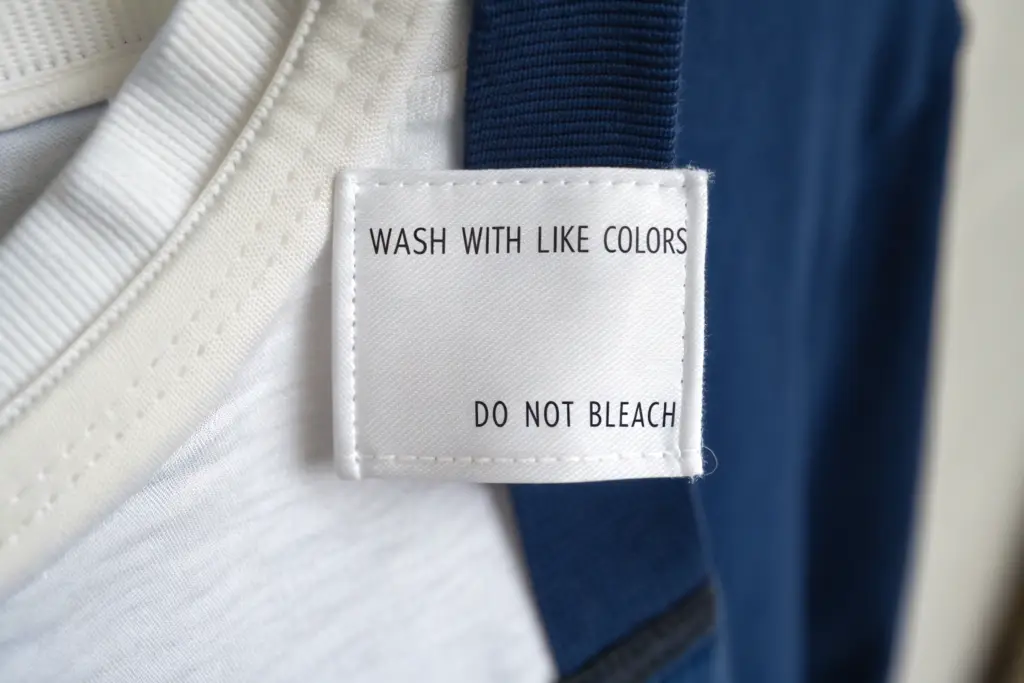
Proceed with caution: If the garment is a light color and the staining is minimal, Grade 3 might be acceptable for some applications. But you should warn your customers. Include care instructions that say "wash separately" or "wash with like colors."
Ask for improvement: Often, the factory can improve colorfastness by adjusting the dyeing process. They can use more dye fixative. They can add a wash step to remove unfixed dye. They can change the dye recipe. This may add a small cost. It may add a few days to the timeline. But it is worth it.
Change the fabric: If the fabric consistently fails testing, it may be the wrong fabric for the application. Some fibers are harder to dye than others. Some colors are harder to fix than others. A dark red on cotton can be challenging. A dark blue on polyester is easier.
A client from Denver had a fabric that tested at Grade 3 for wet crocking. The color was a deep burgundy. We worked with the dye house to improve it. They added a fixative and ran an extra rinse cycle. The retest came back at Grade 4. The client accepted the fabric. She added a care label that said "wash separately." She had no complaints.
What care instructions should you include based on test results?
Your test results should inform your care instructions. If your fabric has borderline colorfastness, the care label becomes your protection. Clear instructions help your customers avoid problems.
How to write care instructions for color-sensitive garments?
Based on colorfastness test results, you can add specific instructions to protect the garment.
| Test Result | Recommended Care Instruction |
|---|---|
| Color transfer during washing (Grade 3-4) | "Wash separately" or "Wash with like colors" |
| Crocking on dark colors (Grade 4) | "Avoid contact with light-colored fabrics and furniture when damp" |
| Fading from light (Grade 3-4) | "Do not dry in direct sunlight" |
| Sensitive to high temperatures | "Machine wash cold" |
| Any borderline result | "Turn garment inside out before washing" |
At Shanghai Fumao, we help our clients develop care instructions based on actual test results. We do not just copy generic instructions. We ensure the care label matches the fabric's performance characteristics.
A client from Texas had a line of dark wash denim. The wet crocking test was Grade 4. This was acceptable but not perfect. We added a care label that said "Wash separately before wearing. Avoid contact with light-colored upholstery when damp." The client distributed these instructions. Her customers followed them. She received very few complaints about color transfer.
Why is it important to include testing in your quality agreement?
Testing should be part of your agreement with the factory. Do not assume the factory will test. Specify what tests you require. Specify what standards you require.
In your quality agreement, include:
- List of required colorfastness tests (wash, crock, light, perspiration)
- Acceptable rating (e.g., Grade 4 minimum)
- Whether testing will be done in-house or by a third-party laboratory
- Who pays for testing (usually the buyer for initial development, the factory for production verification)
- What happens if tests fail (rework, replacement, or cancellation)
At Shanghai Fumao, we include testing in our quality control plan for every order. We share the test results with our clients. We welcome third-party testing. We believe that clear agreements prevent disputes.
Conclusion
Colorfastness testing is not optional. It is essential. A garment that looks perfect in the sample can fail in the customer's home. Color bleeding, fading, and rubbing damage your brand's reputation. They cause returns. They create negative reviews.
Testing before bulk ordering protects you. It gives you confidence. It ensures your customers receive products that perform as expected.
The essential tests are colorfastness to washing, rubbing (crocking), light, and perspiration. You can do simple tests yourself for screening. For serious production, use a third-party laboratory like SGS or Intertek. Interpret results using the gray scale. Accept Grade 4 or higher for most apparel. Use test results to write accurate care instructions.
At Shanghai Fumao, we make colorfastness testing a standard part of our process. We have in-house testing capability. We work with third-party laboratories when clients require certified reports. We help our clients understand test results and make informed decisions.
If you are planning a bulk order and want to ensure your colors stay true, I invite you to work with us. We will test your fabrics before production. We will share the results. We will only proceed when we are confident.
Please contact our Business Director, Elaine, to discuss your next collection. You can reach her at elaine@fumaoclothing.com. She can explain our testing process and help you build a quality assurance plan that protects your brand.