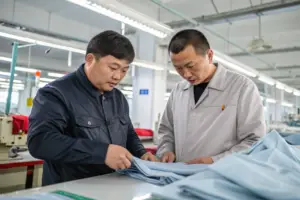
I speak with American brand owners every week. Many of them share the same story. They spend hours searching online for a custom apparel manufacturer. They find dozens of websites. They send inquiries. They receive quotes. But when they dig deeper, something feels wrong. The company that claimed to be a factory turns out to be a trading company. The prices that looked good start climbing with hidden fees. The samples they receive do not match the quality they were promised.
I have run Shanghai Fumao for over a decade. We are a real factory with five production lines in China. I have watched this problem grow. The online marketplace for apparel manufacturing has become crowded. It is hard for buyers to separate genuine manufacturers from middlemen. It is hard to know who actually controls production quality and who is just passing orders along.
The struggle to find genuine custom apparel manufacturers online exists because the digital landscape is full of intermediaries who look like factories. Many trading companies present themselves as manufacturers. They use professional websites and stock photos. They promise capabilities they do not have. For a buyer sitting in the United States, it is nearly impossible to verify who is real without knowing what to look for.
In this article, I will show you how to identify genuine manufacturers online. I will share the specific questions to ask. I will give you the red flags to watch for. And I will explain how we at Shanghai Fumao operate differently, so you know what a real factory partner looks like.
How can you tell a real factory from a trading company online?
The first challenge you face is identification. When you search for a garment factory on Google or Alibaba, you see hundreds of results. Most of these companies look professional. They have nice websites. They show photos of factories. They list impressive capabilities. But many of them are trading companies.
A trading company acts as a middleman. They take your order. Then they find a factory to produce it. They add their profit margin on top. This model is not inherently bad. Some trading companies provide valuable services. But the problem is when they pretend to be something they are not. When they claim to own factories they do not control, you lose visibility into your production.
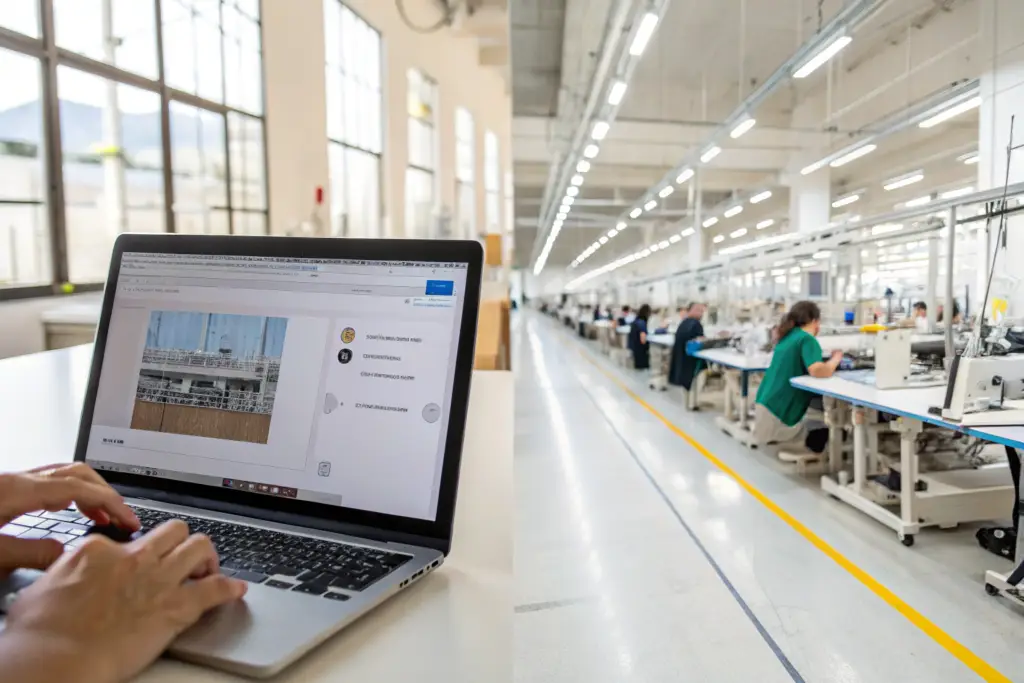
What specific questions expose a trading company?
I have learned that the right questions will quickly reveal who you are dealing with. A genuine factory answers these questions directly. A trading company will give vague answers or avoid the question.
Here is a list of questions I recommend you ask every potential supplier:
| Question | What a Real Factory Will Say | What a Trading Company Might Say |
|---|---|---|
| Do you own your own factory? | Yes, we own our factory. We have X production lines in X city. | We work with several partner factories. Or, we have our own production base (without specifics). |
| Can I see a live video of your production floor? | Yes, let us schedule a time. I can walk you through on a video call. | I will send you photos. Or, we need to ask the factory manager first. |
| How many sewing machines do you have? | We have X number of machines, including lockstitch, overlock, and flatlock machines. | We have enough capacity for your order. |
| Can I speak directly with your production manager? | Yes, let me connect you. Or, I can have them join our call. | I am the main contact. I will communicate with them for you. |
I remember a buyer from New York who contacted us last year. She told me she had already spoken to five other "factories." She asked me the questions on this list. I answered each one directly. I told her we have 85 sewing machines. I told her our factory is in Shanghai. I offered to do a live video tour right then. She later told me that I was the only one who gave her clear, specific answers without hesitation. That is how she knew we were real.
Why do factory photos and certificates not guarantee authenticity?
This is a painful truth. Photos and certificates can be faked. I have seen trading companies use stock photos of factories. I have seen them use photos taken from another company's website. I have even seen fake certificates that look convincing at first glance.
A few years ago, a client from Texas showed me a certificate another supplier had sent him. It was supposed to be a WRAP certification. The logo looked correct. The formatting looked professional. But when I looked closely, the certificate number did not follow the standard format. I suggested he verify it directly with WRAP. He did. WRAP confirmed the certificate was fake. The supplier was not certified at all.
This is why I tell clients that photos and documents are not enough. You need verification. A genuine factory will not just send you a certificate. They will give you the certificate number so you can verify it with the issuing body. They will offer to show you the physical certificate on a video call. They will understand why you want to verify.
At Shanghai Fumao, we display our certifications on our website. But we also encourage clients to verify them. We have had clients contact SGS to confirm our inspection reports. We welcome this. A real factory has nothing to hide. A fake one will make excuses when you ask for verification.
Why do online platforms make it hard to find reliable partners?
Online platforms like Alibaba and Global Sources have made it easier to find suppliers. But they have also created new problems. The platforms themselves do not verify who is a factory and who is a trader. They allow both to list as "manufacturers." This creates a crowded marketplace where it is hard to stand out, and even harder to trust.
I have seen this from both sides. As a factory owner, I compete with trading companies who use our photos and claim to have our capabilities. As a consultant to buyers, I see how overwhelmed they feel when they receive twenty similar quotes and cannot tell who is real.

How does platform verification actually work?
Many buyers assume that platform badges like "Gold Supplier" or "Verified Manufacturer" mean something. They do, but not what you might think. These badges usually mean the company paid a fee and submitted some basic documents. They do not mean the company owns a factory.
Alibaba's verification process typically checks business licenses. It does not verify production capacity. A trading company with a business license can get the same badge as a factory with fifty production lines.
I am not saying these platforms have no value. They are a useful starting point. But you must treat them as a directory, not a guarantee. You still need to do your own verification. You still need to ask the questions I shared above.
A client from Florida told me he used to trust the platform badges completely. He contacted a "Gold Supplier" with a high rating. The company sent him samples that looked good. He placed a large order. The production was delayed for months. The quality was poor. When he tried to complain, the supplier disappeared from the platform. He learned that the ratings and badges did not protect him. Now he verifies every supplier himself, regardless of their platform status.
What information is missing from typical online listings?
Online listings focus on what sells. They highlight low prices, fast turnaround, and broad capabilities. They rarely give you the information you actually need to evaluate a real manufacturing partner.
Here is what typical online listings do not tell you:
- Who owns the factory: Is it a family business with decades of experience? Or is it a trading company operating from an office?
- What are their specializations: A factory that makes t-shirts well may not be good at making tailored jackets. Most listings claim they can make everything.
- What is their quality control process: Do they have in-line inspections? Do they use AQL standards? Most listings do not mention this.
- Who are their current clients: A real factory with good capabilities usually works with established brands. They should be able to share their client profile (without revealing confidential information).
At Shanghai Fumao, we try to provide this missing information on our website. We explain our production lines. We describe our quality control stages. We share our experience with U.S. brands. We do this because we want serious buyers to find us and trust us. We know that a real factory does not need to hide behind vague claims.
I remember a buyer from California who found our website. She told me she appreciated the level of detail. She said most other suppliers just listed product categories and prices. Our website explained our process. It gave her confidence to reach out. That initial trust, built on transparency, led to a partnership that has now lasted three years.
The cost of working with a non-genuine supplier is not always obvious upfront. The initial quote might look attractive. But the real costs appear later. They appear as delays, poor quality, miscommunication, and unexpected fees. I have seen brand owners lose thousands of dollars, and sometimes their entire collection, because they chose the wrong partner.
When you work with a trading company that is not transparent, you lose control. You do not know which factory is making your goods. You do not know if they have the right equipment for your product. You do not know if they are managing quality. This lack of control leads to real financial losses.

How do delays and quality issues impact your business financially?
Let me give you a concrete example. A brand owner from Chicago came to us after a bad experience. He had placed an order with a supplier he found online. The supplier claimed to be a factory. The price was good. But the delivery was delayed by three months. By the time the goods arrived, the selling season was over. He had already spent money on marketing. He had committed to retailers. He ended up losing over $40,000 in missed sales and penalties.
The problem was that the supplier was a trading company. They had taken his order and then struggled to find a factory that could actually produce his complex jacket design. They kept promising delivery. They kept missing deadlines. They had no control over the real production.
When he came to us, we analyzed his tech pack. We told him honestly that his design required specialized equipment. We had that equipment. We gave him a realistic timeline. We delivered on time. His next collection sold out.
The hidden cost of working with the wrong supplier is not just the money you lose on the bad order. It is the opportunity cost. It is the sales you miss. It is the retailers who lose trust in you. It is the marketing budget you waste promoting products that are not available.
A genuine factory gives you a clear, complete price. We include everything in our DDP quotes. We tell you the cost of the product, the cost of shipping, the cost of duties. There are no surprises.
A non-genuine partner often gives you a low initial price. Then, as the process moves forward, new fees appear. They might charge extra for samples that they said were free. They might add fees for minor changes. They might surprise you with higher shipping costs at the last minute.
I had a conversation with a buyer from Seattle who was frustrated by this. He showed me a quote from another supplier. The base price was low. But then there was a "sample fee," a "pattern fee," a "lab dip fee," and a "quality inspection fee." When he added it all up, the total was higher than our all-inclusive quote.
At Shanghai Fumao, we are transparent about our pricing from the start. We include development costs in our initial quote. We do not add surprise fees. We believe that a clear, honest price is the foundation of a good partnership. A partner who hides costs is a partner who cannot be trusted.
How to verify a manufacturer's capabilities before placing an order?
Verification is the solution to the online struggle. You do not have to guess if a manufacturer is genuine. You can verify. The verification process takes effort, but it saves you from much larger losses. I encourage every brand owner to do this verification before placing their first order.
At Shanghai Fumao, we welcome verification. We know that a serious buyer wants to be sure. We are happy to provide the evidence that we are what we say we are. A genuine factory will never be offended by verification requests. A fake one will make excuses.
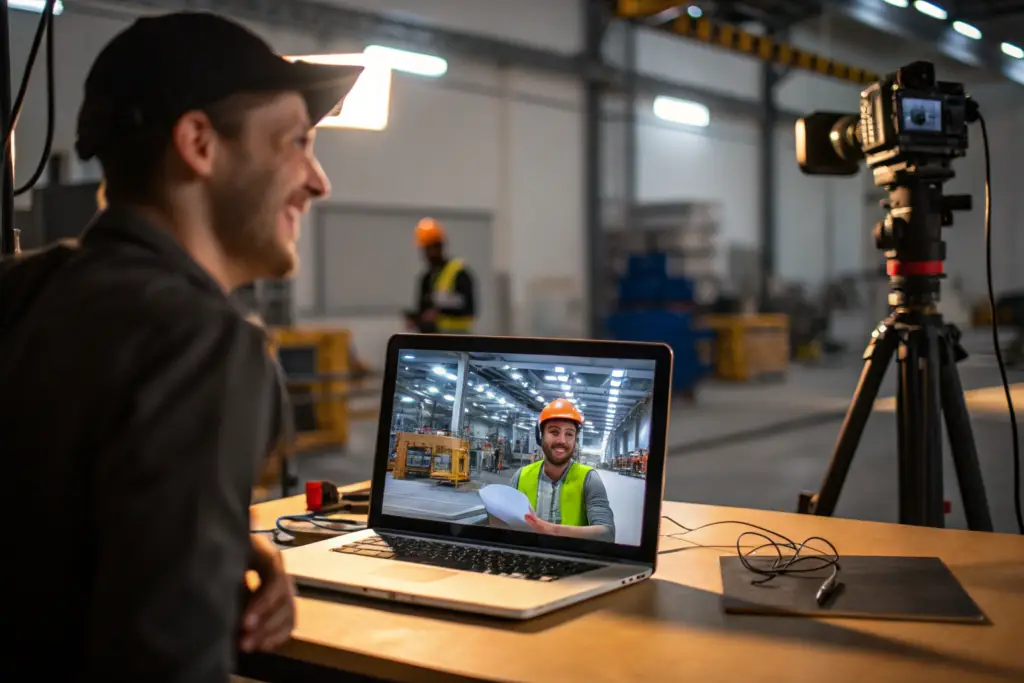
What does a thorough factory verification process look like?
I recommend a three-step verification process. You can do this with any potential supplier, whether you find them online or through other channels.
Step One: Document Verification
Ask for their business license, factory registration, and certifications. Then verify these documents directly with the issuing authorities. For example, if they claim a WRAP certification, contact WRAP to confirm. If they claim a SGS inspection, ask for the report number and verify it.
Step Two: Live Visual Verification
Schedule a live video tour of their facility. Do not accept pre-recorded videos or photos. A live tour allows you to see the actual conditions. Ask to see the cutting room, the sewing floor, the quality control area, and the finished goods warehouse. Ask to see your specific order if it is in production.
Step Three: Trial Order Verification
Before placing a large production order, do a small trial order. This could be 50 to 100 pieces. Use this trial to evaluate their quality, communication, and delivery. A genuine factory will treat a trial order with the same seriousness as a large order. A fake one may deliver poor quality or miss deadlines.
I remember a client from Boston who did this verification process perfectly. She found us online. She asked for our business license and WRAP certificate. She verified both. She scheduled a video tour. I walked her through our entire facility. She saw our five production lines. She saw our quality control station. She saw our sample room. Then she placed a trial order of 80 shirts. We delivered on time with perfect quality. That trial order led to a full production schedule that is still ongoing. The verification process gave her the confidence to trust us with her brand.
Why should you ask for client references?
A genuine manufacturer with experience will have clients. They will be able to provide references. These references are one of the most powerful verification tools you have.
When you ask for references, ask for clients in your market. For example, if you are a U.S. brand, ask for other U.S. brands they have worked with. Contact those clients. Ask about their experience. Ask about quality, communication, delivery, and problem-solving.
At Shanghai Fumao, we have many U.S. brand clients. We are happy to provide references. We understand that hearing from another brand owner who has gone through the process is more powerful than anything we can say.
A client from Denver told me he called three of our references before placing his first order. He spoke with a brand in California, one in Texas, and one in New York. All three gave positive feedback about our quality and reliability. That gave him the confidence to move forward. He later told me that those reference calls were the deciding factor in choosing us over other suppliers.
Conclusion
The struggle to find genuine custom apparel manufacturers online is real. The internet is full of trading companies that look like factories. The platforms do not always help you tell the difference. Hidden costs and quality issues can appear after you commit. But this struggle is not hopeless. With the right approach, you can find a real partner.
At Shanghai Fumao, we are committed to being that real partner. We are a genuine factory with five production lines. We own our production. We control our quality. We are transparent about our capabilities, our pricing, and our process. We welcome verification. We provide references. We treat every client with the seriousness they deserve.
I invite you to test us. Ask us the questions from this article. Ask for our certificates and verify them. Schedule a live video tour of our factory. Speak with our current clients. Place a trial order. We are confident that once you go through this process with us, you will see the difference between a genuine manufacturer and a middleman.
If you are ready to find a true manufacturing partner, please contact our Business Director, Elaine. You can reach her at elaine@fumaoclothing.com. She will answer your questions honestly. She will help you verify our capabilities. And she will show you how a real factory partnership can help your brand grow.