A womenswear brand owner from Chicago called me last year frustrated with her fit issues. Her customers with broad shoulders kept returning tops that made them look wider than they wanted. The designs were beautiful on the hanger, but on real bodies, they emphasized the wrong features. She asked me to help her understand what necklines actually work for broader shoulders.
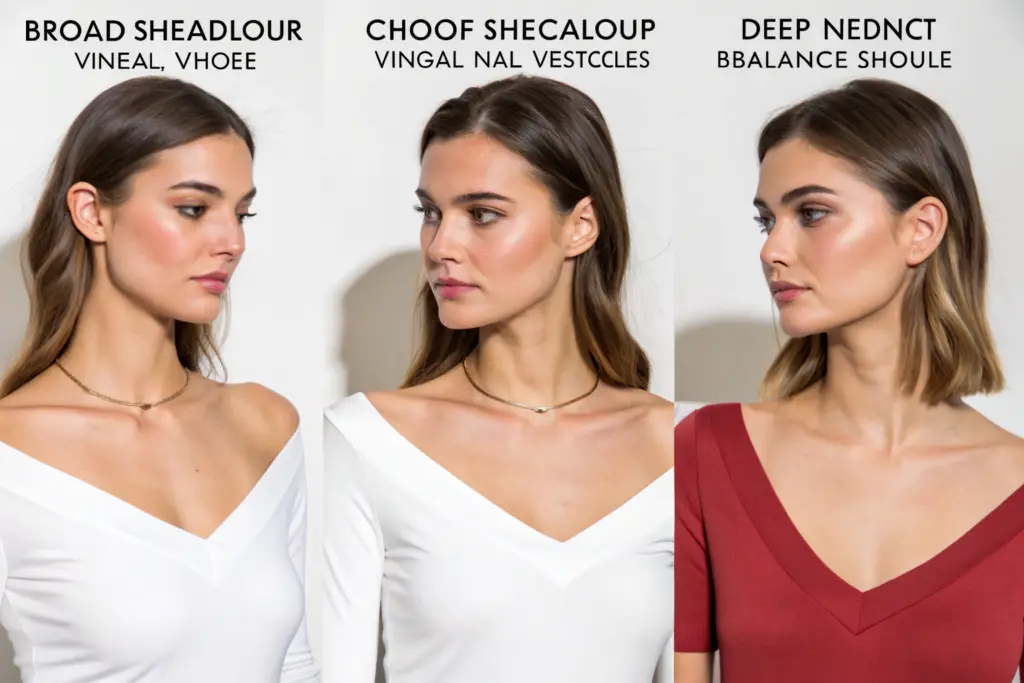
Necklines that balance broad shoulders work by creating vertical lines that draw the eye inward and downward, rather than across the shoulder line. V-necks, scoop necks, and deep U-necks are most effective because they break up the horizontal expanse of the shoulders. Off-shoulder and wide boat necks, while popular, actually emphasize width and should be avoided. The right neckline creates visual balance, making shoulders appear proportional to the rest of the body.
Running a manufacturing facility in Shanghai means I work with fit across every body type. At Shanghai Fumao, we produce tops for American brands serving diverse customer bases. I have seen which necklines actually work on broad shoulders and which create fit challenges. Let me share what the data shows and what real customers report.
What Necklines Actually Work for Broad Shoulders?
A Dallas-based stylist shared her before-and-after photos with me. The same client in a crew neck sweater looked boxy and wide. In a V-neck version of the same sweater, she looked proportional and balanced. The difference was dramatic and immediate.
V-necks consistently rank as the most effective neckline for balancing broad shoulders. The downward angle of the V creates vertical lines that draw the eye toward the center of the body rather than across the shoulders. The depth matters, too shallow loses the effect, too deep may not suit the occasion. Scoop necks and deep U-necks work similarly by creating a vertical opening that breaks the shoulder line.
Why Are V-Necks So Effective for Broad Shoulders?
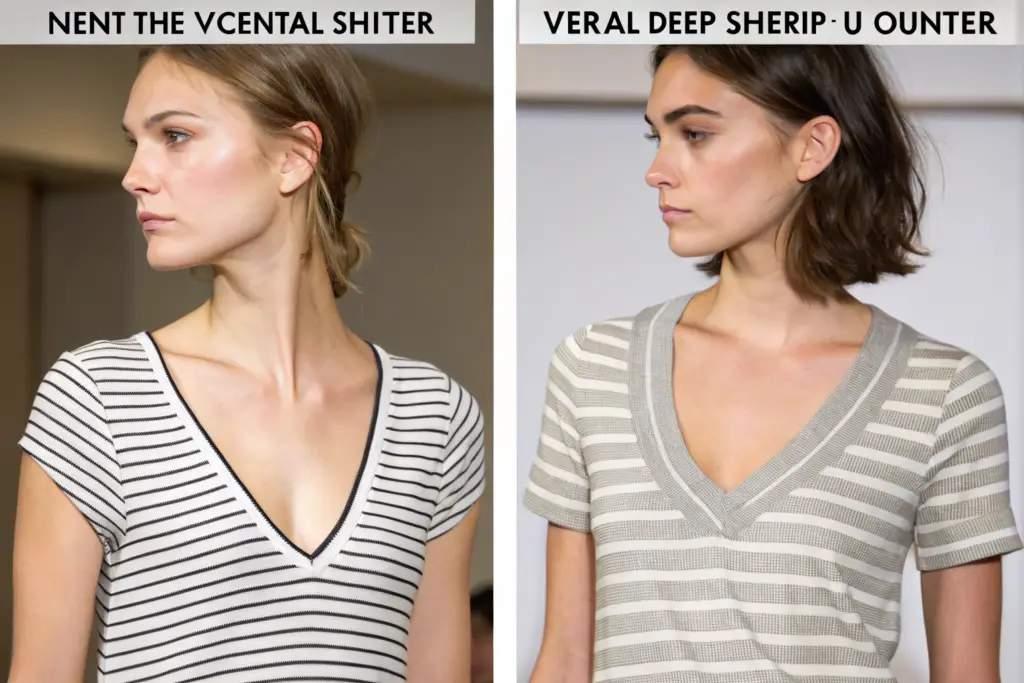
The V-neck creates a vertical line that extends downward from the shoulder area. This vertical line draws the eye toward the center of the chest and down, effectively breaking the horizontal line created by broad shoulders. A New York-based customer described switching to V-neck tops as "the easiest style change I ever made. Suddenly I looked like myself instead of a linebacker." V-neck depth matters significantly. A shallow V, just an inch or two below the collarbone, may not provide enough vertical line to balance width. A deeper V, extending four to six inches, creates more dramatic balance. However, depth should suit the occasion and personal comfort level. We recommend clients offer V-neck options in multiple depths so customers can choose what works for them. The V-neck styling guide provides visual references for how different depths affect proportions.
How Do Scoop Necks Compare to V-Necks?
Scoop necks offer a similar balancing effect through a different mechanism. The curved opening creates a downward-facing shape that draws the eye toward the center. The effect is slightly softer than a V-neck, which some customers prefer. A Seattle-based customer described scoop necks as "the more feminine version of what V-necks do." Scoop neck depth should be sufficient to create the balancing effect. A shallow scoop, sitting high on the chest, does little for shoulder balance. A deeper scoop that reveals the collarbone area creates the necessary vertical line. We help clients develop scoop neck patterns that balance coverage and effect for their target customers. At Shanghai Fumao, we maintain a library of neckline patterns with different depths so brands can sample multiple options.
Which Necklines Should Broad Shoulders Avoid?
A Philadelphia-based brand learned this lesson through customer feedback. Their best-selling boat neck top generated disproportionate returns from customers with broad shoulders. The same customers loved their V-neck version but consistently returned the boat neck.
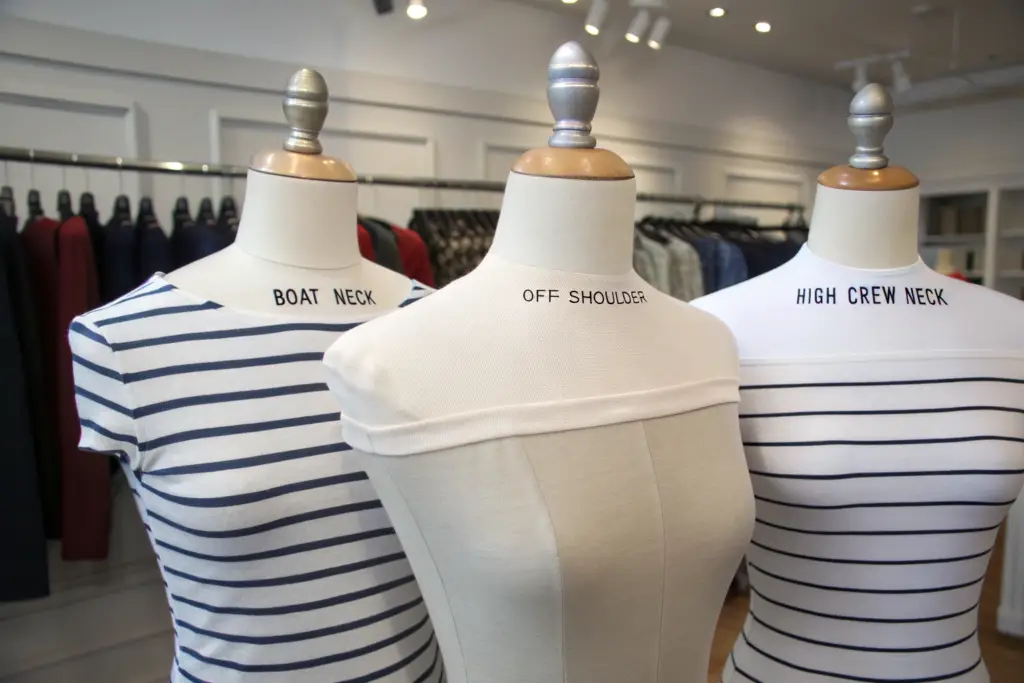
Necklines that emphasize width across the shoulders should be approached with caution. Boat necks, off-shoulder styles, and high crew necks all create horizontal lines that mirror and emphasize shoulder width. These styles can make broad shoulders appear even wider. While some customers love these styles regardless, they consistently create fit dissatisfaction for customers seeking balance.
Why Do Boat Necks Emphasize Shoulder Width?
Boat necks create a horizontal line that runs directly across the shoulders, visually reinforcing and emphasizing the shoulder line. The wide, horizontal opening draws the eye across the shoulder width rather than breaking it. A Boston-based customer who loves boat neck tops acknowledged this effect, saying, "I know they make me look wider, but I’ve decided I don’t care. I like the style." Boat neck effect is not universally negative. Some customers embrace the look, especially those who want to emphasize athletic builds. But for customers seeking balance, boat necks work against their goals. We recommend brands offer boat neck options for customers who want that aesthetic while providing balanced alternatives for those who do not. The boat neck fit guide explains which body types boat necks flatter and which they challenge.
Are Off-Shoulder Styles Always a Mistake?
Off-shoulder styles present a complicated case. They remove fabric from the shoulder area entirely, which can have a balancing effect in some contexts. However, the horizontal line created by the garment’s top edge still emphasizes width. A Denver-based customer described off-shoulder tops as "a gamble. Sometimes they look amazing. Sometimes I look like a football player in a dress." Off-shoulder considerations include the specific design and personal preference. Soft, draped off-shoulder styles with gathered fabric can soften the effect. Structured off-shoulder styles with clean lines emphasize width more clearly. At Shanghai Fumao, we help clients develop off-shoulder patterns that work for broader shoulder customers when appropriate. You can explore off-shoulder design variations to understand how different construction techniques affect shoulder appearance.
How Do Strap Width and Placement Affect Shoulder Perception?
A Nashville-based brand discovered that strap placement mattered as much as neckline shape. Two tops with the same neckline shape but different strap widths looked completely different on broad shoulders. Customers noticed the difference even when they could not explain why.
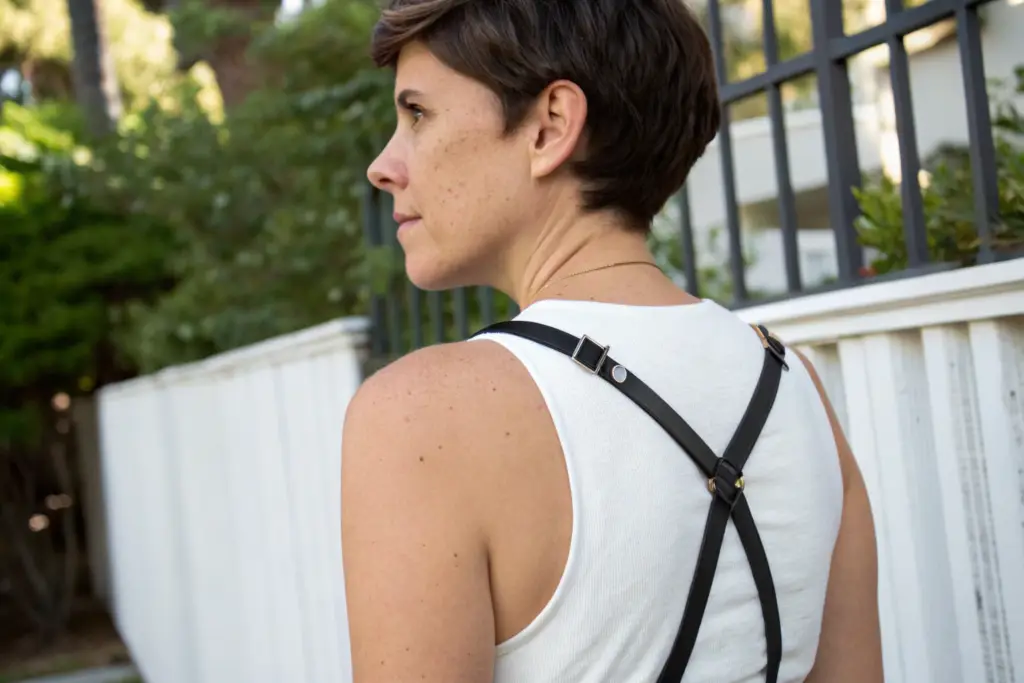
Strap width and placement significantly affect how shoulders appear. Wider straps and straps placed closer to the neck create a narrowing effect. Narrow straps placed at the edge of the shoulders emphasize width. The visual line created by straps interacts with the neckline to either balance or emphasize shoulder width.
What Strap Width Creates the Most Balance?
Wider straps generally create more balanced proportions on broad shoulders. The visual weight of a wider strap holds its own against the shoulder width, creating a more proportional appearance. A Portland-based customer found that switching from spaghetti straps to one-inch straps on tank tops "made my shoulders look like they belonged to the rest of me." Strap width considerations include the overall design aesthetic. Very wide straps can read as sporty or casual, which may or may not suit the intended look. We recommend clients test multiple strap widths during sampling to find the balance between aesthetic goals and proportion optimization. The strap design guide provides technical information on how strap width affects visual proportions.
Where Should Straps Be Placed for Best Effect?
Strap placement determines the visual line from shoulder to neck. Straps placed closer to the neck create a narrower visual frame, drawing the eye inward. Straps placed at the edge of the shoulders extend the visual line outward. A Chicago-based designer learned this when comparing two tank patterns. Moving straps inward by an inch dramatically changed how the garment read on broad shoulders. Strap placement should be considered early in pattern development. The placement interacts with neckline shape, so both decisions should be made together. At Shanghai Fumao, we help clients adjust strap placement during sampling to achieve the desired effect. The pattern making resource explains how strap placement interacts with shoulder proportions in garment construction.
What Role Do Fabric and Construction Play?
A Los Angeles-based brand discovered that the same neckline pattern performed differently across fabrics. A V-neck in drapey jersey balanced shoulders beautifully. The same V-neck in stiff cotton poplin created a different effect. The fabric’s behavior mattered as much as the pattern.
Fabric and construction choices either enhance or undermine neckline effects. Drapey fabrics that follow the body’s curves tend to support balancing necklines by creating soft lines that draw the eye downward. Stiff fabrics that hold their shape can create hard lines that emphasize width. Construction techniques like seam placement and facing affect how the neckline sits on the body.
How Does Fabric Drape Affect Shoulder Balance?
Drapey fabrics that move with the body create soft lines that support the balancing effect of V-necks and scoop necks. The fabric follows the contours of the body, creating curves that draw the eye downward. Stiff fabrics that hold their shape create hard lines that can fight the neckline’s balancing effect. A Seattle-based customer described this as "a soft V-neck looks elegant. A stiff V-neck looks like a uniform." Fabric selection should consider how the material behaves around the neckline. Lightweight knits, fluid viscose, and soft silks support balancing necklines. Structured cotton, stiff linen, and heavy wools may require different neckline approaches. We help clients select fabrics that work with their chosen necklines rather than against them. The fabric drape guide provides information on how different fabric types behave around the neckline area.
What Construction Details Support Balancing Necklines?
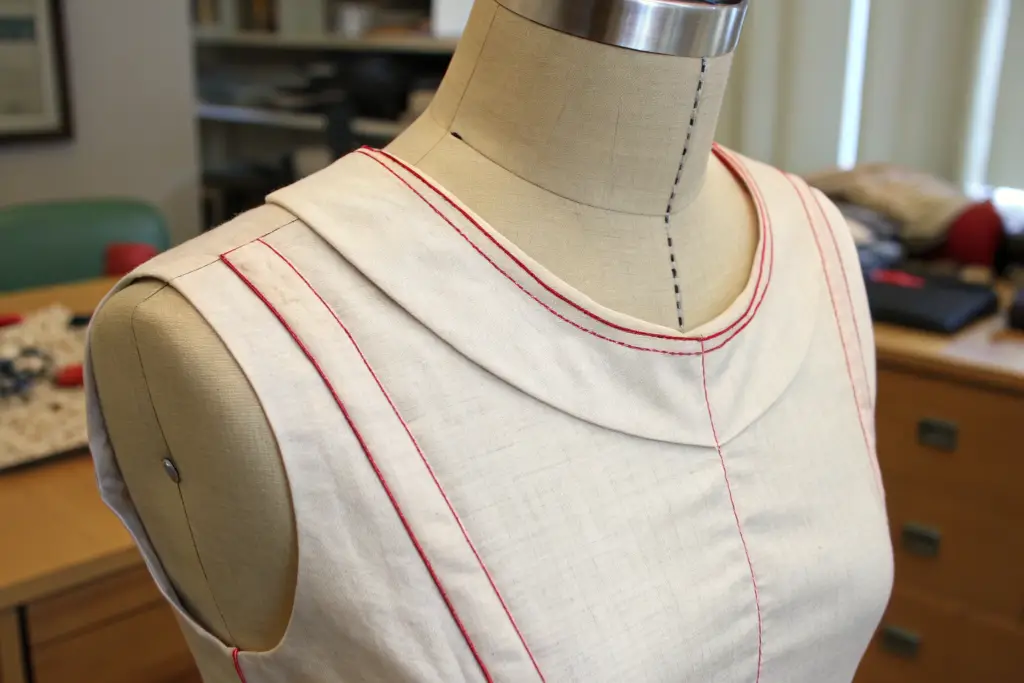
Construction details affect how the neckline sits and performs. Proper facing or binding keeps the neckline shape consistent. Strategic seam placement can create additional vertical lines that support balance. A Boston-based designer found that adding vertical seams from shoulder to hem in V-neck tops enhanced the balancing effect. Construction considerations include interfacing choices, seam finishes, and garment structure. Too much structure can fight the intended effect. Too little can cause neckline sagging that ruins the shape. At Shanghai Fumao, we help clients develop construction specifications that support their neckline choices. You can explore neckline construction techniques to understand how facing, binding, and finishing affect neckline appearance and performance.
How Can Customers Test Necklines Before Buying?
A Denver-based brand implemented fitting guides for their customers. They saw return rates drop significantly when customers could make informed choices about necklines that worked for their body types. Education reduced frustration on both sides.
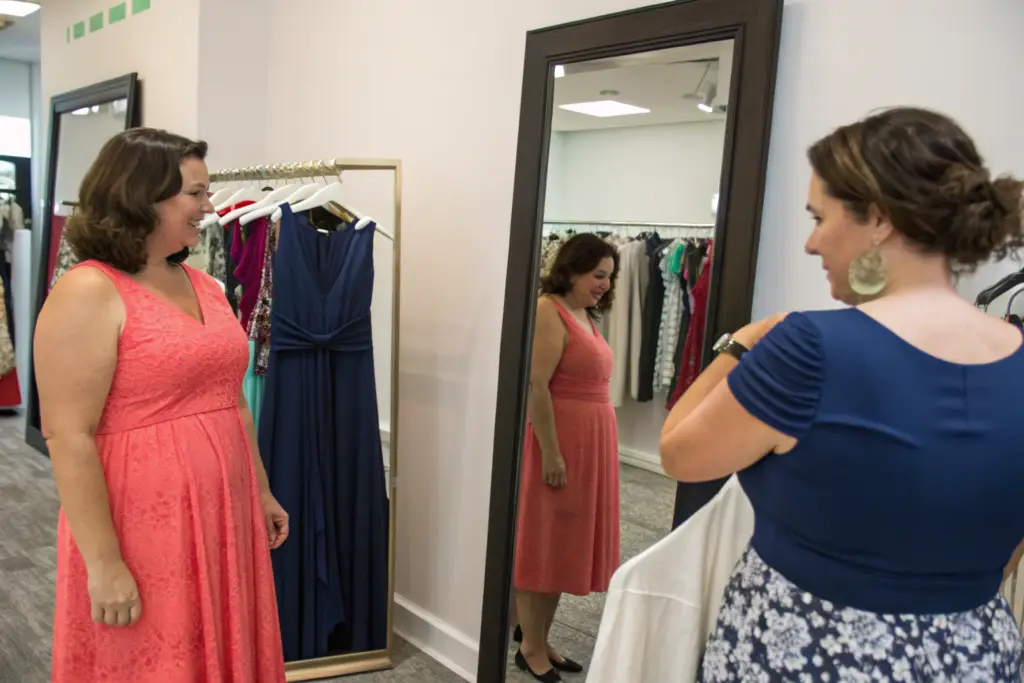
Customers can test neckline effects with simple techniques before purchasing. Using a mirror, they can observe how different necklines change their silhouette. Paying attention to where the eye is drawn, across the shoulders or down the body, reveals the neckline’s effect. Trusting the difference between what looks good on the hanger versus what looks good on the body is essential.
What Simple Test Reveals Neckline Effects?
The mirror test reveals neckline effects clearly. Stand in front of a mirror wearing different necklines and observe where your eye goes first. If your eye travels across your shoulders, the neckline is emphasizing width. If your eye travels down your body, the neckline is creating balance. A Portland-based stylist teaches clients this technique, noting that "once you see it, you can’t unsee it." Mirror testing works for all necklines and helps customers develop their own preferences. We encourage brands to include neckline guidance in their fit guides and product descriptions. The fit guide resource provides examples of how brands can help customers understand neckline effects.
How Should Customers Shop for Their Body Type?
Shopping for body type means prioritizing fit over trend. A customer with broad shoulders might love the look of boat neck tops but find that V-necks consistently make her happier with her appearance. A Nashville-based customer described her shopping shift: "I used to buy what I thought was pretty. Now I buy what I know works. I return almost nothing now." Shopping guidance should be practical and empowering, not restrictive. The goal is helping customers find styles they love and feel confident wearing. At Shanghai Fumao, we help brands develop product descriptions and fit guides that educate customers without limiting their choices. You can explore body type shopping guides for examples of how to present fit information helpfully.
Conclusion
Necklines that balance broad shoulders work by creating vertical lines that draw the eye inward and downward. V-necks lead the category, with their downward angle effectively breaking the horizontal shoulder line. Scoop necks and deep U-necks offer similar balancing effects with softer aesthetics. Necklines to avoid include boat necks, off-shoulder styles, and high crew necks that emphasize rather than balance shoulder width. Strap width and placement, fabric drape, and construction details all affect how a neckline performs.
At Shanghai Fumao, we help brands develop tops that flatter diverse body types. Our pattern development considers shoulder proportions, and our sampling process allows testing across real bodies. If you are developing a top collection and want to ensure your necklines work for broad-shouldered customers, contact our Business Director Elaine at elaine@fumaoclothing.com. She can discuss pattern development, fit testing, and how we help brands create garments that customers love to wear. You can also explore our fit development guide to understand how we approach pattern making for diverse body types and request a consultation on your neckline designs.