A brand owner from Boston called me four years ago, excited about her first collection. She had spent months perfecting the designs, choosing fabrics, and overseeing production. But when the garments arrived, she realized she had forgotten something critical: packaging. She threw them in plain poly bags and shipped them. Her customers received beautiful clothes in ugly, generic packaging. The unboxing experience was a disappointment.
Packaging is not an afterthought. It is the first physical interaction your customer has with your brand. It sets expectations, communicates quality, and creates an experience. Good packaging can turn a simple purchase into a memorable moment. Bad packaging can make even a great product feel cheap. Understanding your packaging options is essential for any private label brand.
My name is David, and I run Shanghai Fumao, a garment factory that has helped hundreds of American brands with their packaging needs. I have seen the difference that thoughtful packaging makes in customer perception and brand loyalty. Based on what I have learned from our most successful partners, I want to share everything you need to know about common private label packaging options.
Why Does Packaging Matter for Your Brand?
A client from Miami once told me, "I sell clothes, not boxes. Why should I care about packaging?" I asked him to think about the last time he received a package that felt special—beautiful tissue paper, a handwritten note, a nice box. He remembered it. He felt valued. That is why packaging matters.
Packaging serves multiple purposes for your brand. It protects the product during shipping. It communicates your brand identity. It creates an unboxing experience that customers remember and share. And it can include information that customers need, like care instructions or return policies.
How does packaging affect first impressions?
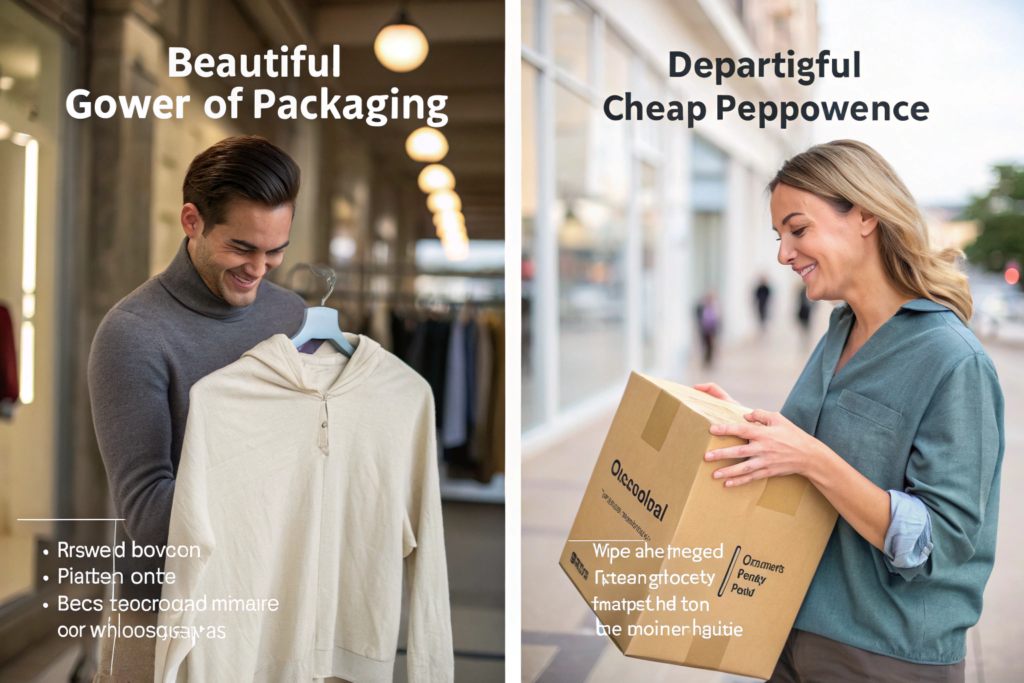
The moment a customer receives your package, they form an impression. If the package is damaged, dirty, or generic, that impression is negative. If the package is beautiful, thoughtful, and clearly branded, that impression is positive. This first impression colors everything that follows. A customer who receives a beautiful package is more likely to be excited about the product inside. One client who produces women’s wear invests in custom tissue paper and a branded box. She says the unboxing experience is part of her product. Her customers post videos of opening her packages on social media, giving her free marketing. For research on first impressions in e-commerce, the Journal of Retailing has published studies on packaging and consumer perception.
What role does packaging play in brand recognition?
Consistent packaging builds brand recognition. When customers see your distinctive box, your custom tissue paper, your signature sticker, they know it is from you before they even open it. This recognition builds familiarity and trust. It also makes your brand more memorable. One client’s activewear line uses a distinctive neon pink poly bag with a black logo. It stands out immediately. Her customers recognize it instantly. For branding strategies, the American Marketing Association offers resources on building brand recognition through packaging.
What Are the Primary Packaging Options for Garments?
A client from Denver asked me, "Do I need boxes, or are bags enough?" The answer depends on your product, your price point, and your brand positioning. There is no single right answer—only the right answer for your brand.
Primary packaging is what the customer receives. It is the outer layer that protects the garment during shipping and presents it upon arrival. There are several common options.
When should you use poly bags?
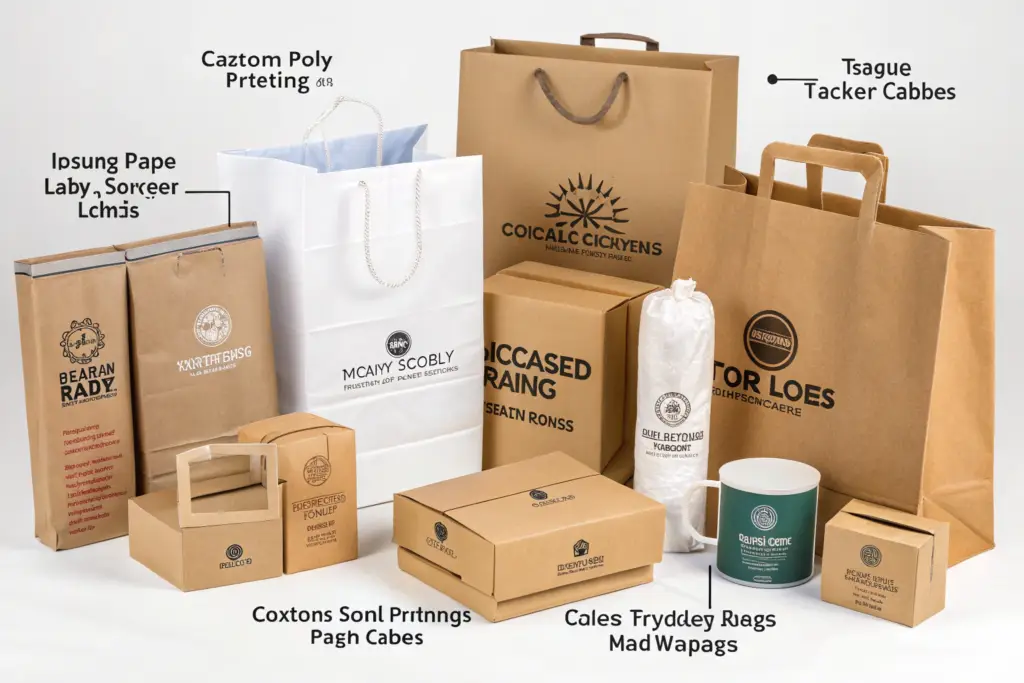
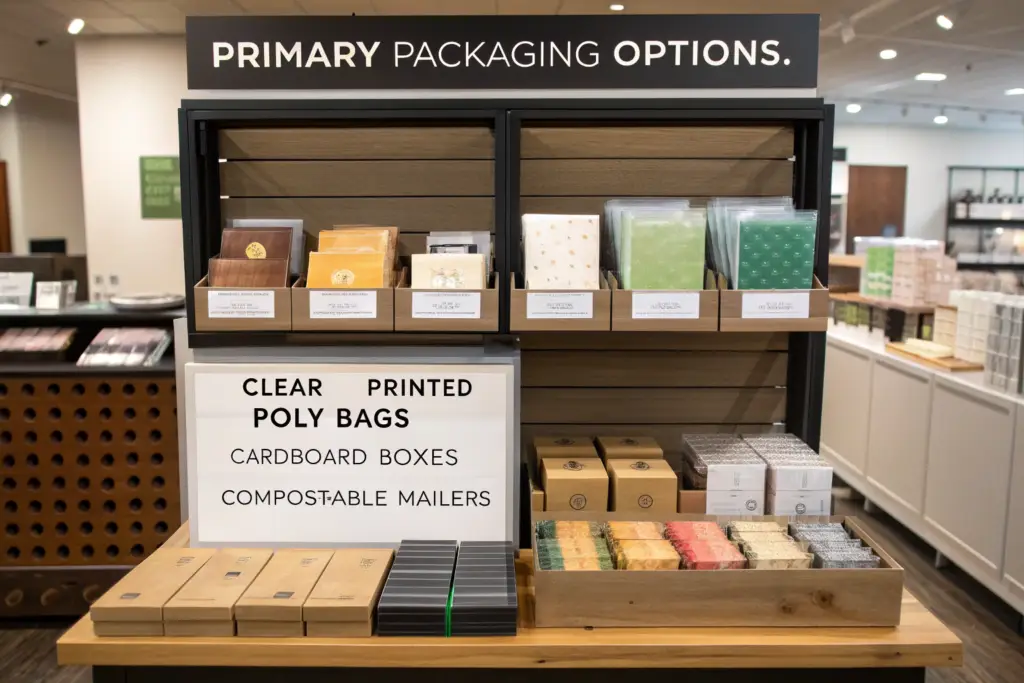
Poly bags are the most common and cost-effective packaging for garments. They are lightweight, waterproof, and take up minimal space. Clear poly bags allow customers to see the garment without opening the package. Printed poly bags can feature your logo, brand colors, and messaging. Poly bags are ideal for items that do not need rigid protection—t-shirts, sweaters, casual wear. They are also the best choice for high-volume shipping where minimizing weight and size matters. One client who produces men’s wear uses custom-printed poly bags with a "thank you" message and care instructions printed on them. It adds minimal cost but creates a branded experience. For poly bag specifications, ASTM International provides standards for plastic packaging materials.
What are the benefits of cardboard boxes?
Cardboard boxes offer the most protection. They prevent crushing, keep garments flat, and create a more substantial unboxing experience. Boxes are ideal for items that need to maintain their shape—structured jackets, formal wear, items with delicate embellishments. They also allow for more elaborate interior presentation—tissue paper, inserts, and multiple layers. The downside is cost and weight. Boxes are more expensive than bags and add to shipping costs. One client’s outerwear line ships in custom boxes sized perfectly for each jacket. The boxes are beautiful and protect the investment pieces inside. Her customers often reuse the boxes for storage. For box strength standards, the ASTM provides test methods for corrugated box performance.
What Interior Packaging Elements Enhance Presentation?
A client from Seattle once received a package from a luxury brand. Inside the box was beautiful tissue paper, a handwritten note, and a small fabric swatch. She remembered that experience years later. She realized that interior details create emotional connections.
Interior packaging is what the customer sees when they open the outer package. It is where you can add personality and create delight.
What role does tissue paper play?
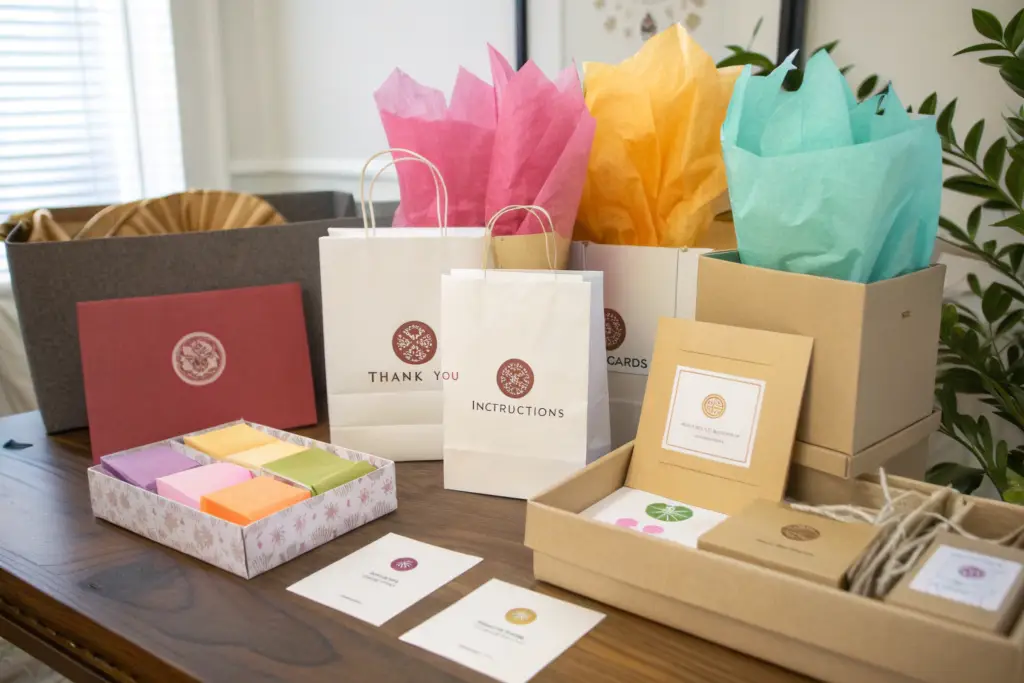
Tissue paper wraps the garment, adds a layer of protection, and creates a sense of ceremony. Unfolding tissue paper to reveal the garment feels special. Custom-printed tissue paper with your logo or pattern reinforces your brand. Choose colors that complement your brand identity. One client who produces activewear uses bright, energetic tissue paper colors that match her brand’s vibe. Her customers comment on how fun the packaging is. For tissue paper quality, consider weight (thicker tissue feels more luxurious) and acid-free options for long-term storage.
Why include thank you cards and inserts?
A thank you card is a simple way to show appreciation. It can be a small card with a personal message from the founder. Inserts can include care instructions, lookbooks, discount codes for future purchases, or information about your brand’s story and values. These elements extend the customer experience beyond the product itself. One client’s women’s wear line includes a small card with styling suggestions—how to wear the piece three different ways. Customers appreciate the added value and often share the ideas on social media. For inspiration, study how brands like Everlane use inserts to communicate their brand story.
What Labeling Options Are Essential for Private Label?
A client from Chicago once received a shipment of beautiful shirts. They were perfect except for one thing: the care labels said "made in Vietnam" instead of "made in China." He had not specified the label content, and the factory used their standard labels. He had to replace every label at his own expense.
Labels are a critical part of your packaging. They communicate essential information, comply with legal requirements, and reinforce your brand. Getting them right is non-negotiable.
What types of fabric labels should you use?
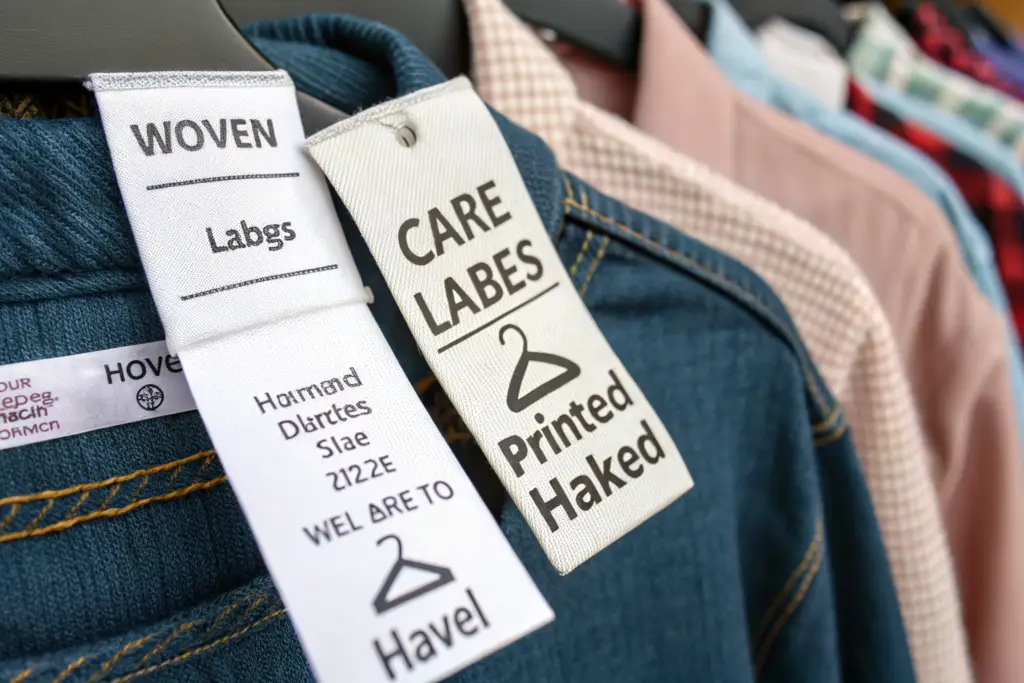
Woven labels are sewn into the garment and typically display your brand name and logo. They are durable and look professional. Choose the material (satin for a soft feel, taffeta for durability), size, and color. Printed labels are less expensive but may fade over time. Care labels are required by law in most countries and must include fiber content and care instructions. They are usually printed on satin or non-woven material and sewn into a seam. Size labels indicate the garment size and can be part of the brand label or separate. One client’s men’s wear line uses high-quality woven satin labels that feel luxurious against the neck. His customers notice the quality. For labeling regulations, the Federal Trade Commission (FTC) provides detailed requirements for care labeling in the US.
What information must legally be on labels?
In the US, the FTC requires that most textile garments have a label stating the fiber content (e.g., "100% cotton") and the country of origin (e.g., "Made in China"). Care instructions (e.g., "Machine wash cold, tumble dry low") are also required. The label must be attached securely and remain legible throughout the life of the garment. Some states have additional requirements. If you sell in other countries, research their regulations. One client learned the hard way that her activewear labels did not meet Canadian requirements. She had to relabel every garment before shipping to Canadian customers. For a comprehensive guide, the Federal Trade Commission website has detailed information on textile labeling rules.
How Do You Choose Packaging for Different Products?
A client from Dallas once used the same box for every product—t-shirts, dresses, coats. The boxes were too big for the t-shirts, which slid around and arrived wrinkled. They were too small for the coats, which were crammed in and misshapen. She had not matched the packaging to the product.
Different products have different packaging needs. Choosing the right packaging for each product protects the garment and creates the right presentation.
What packaging works best for delicate items?
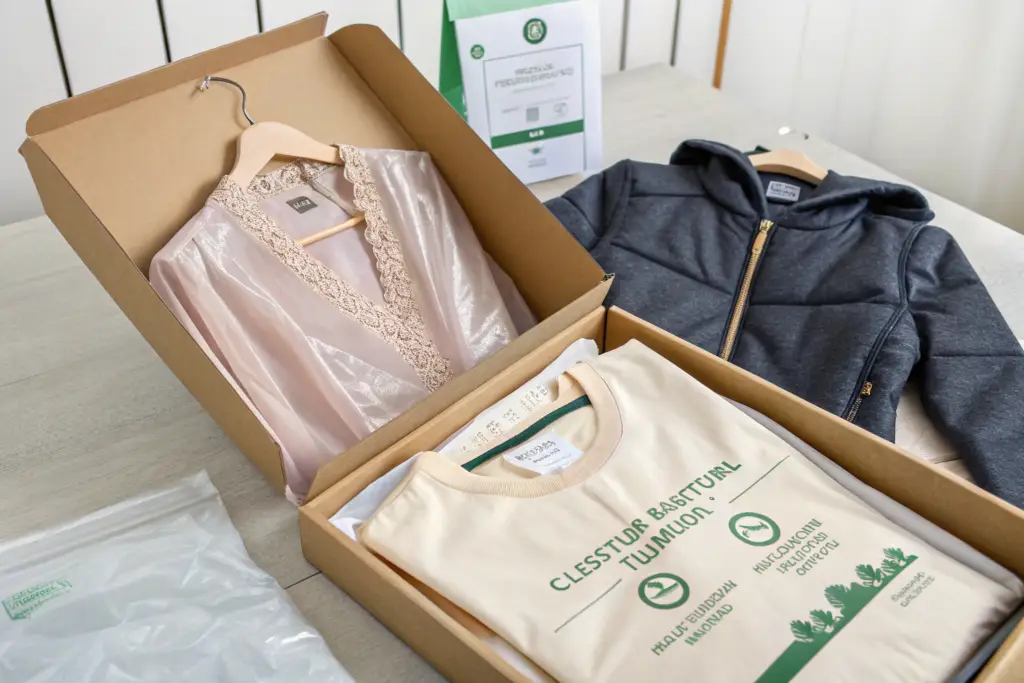
Delicate items—silk blouses, lace dresses, items with embellishments—need more protection. A rigid box prevents crushing. Tissue paper prevents friction that could snag delicate fibers. The garment should be folded carefully, with acid-free tissue between folds if needed. Consider whether the item needs to stay flat or can be folded. One client’s women’s wear line includes silk blouses that require careful packaging. She uses a box with a custom insert that holds the blouse in place, preventing shifting during shipping. Her customers receive perfect, unwrinkled garments.
How should you package items that need to stay flat?
Structured items—jackets, blazers, tailored shirts—need to maintain their shape. They should be shipped flat in a box, not folded into a small poly bag. Consider using tissue paper or cardboard inserts to maintain the garment’s structure. For very structured items, a garment bag on a hanger may be appropriate, though this requires larger shipping boxes. One client’s outerwear line ships each jacket in a box sized to keep the jacket flat, with a sheet of acid-free tissue between the folds. The jackets arrive ready to wear.
Conclusion
Private label packaging options range from simple poly bags to elaborate custom boxes. Your choice should be guided by your product type, your brand positioning, and your budget. Primary packaging protects the garment and makes the first impression. Interior elements like tissue paper, thank you cards, and stickers create delight and emotional connection. Labels convey essential information and reinforce your brand legally and aesthetically. Different products require different packaging—delicate items need more protection, structured items need to stay flat. And balancing cost with quality requires strategic thinking about where to invest and where to save.
At Shanghai Fumao, we help our clients navigate packaging decisions every day. We can source custom poly bags, arrange for hang tag production, ensure labels meet legal requirements, and coordinate all your packaging needs. Our quality control extends to packaging—we check that labels are correct, packaging is undamaged, and everything is ready for your customers.
If you are ready to create a complete packaging experience for your private label line, I invite you to reach out. Please contact our Business Director, Elaine, directly at elaine@fumaoclothing.com. Let us discuss how we can help you package your products in a way that delights your customers and builds your brand.