Sourcing custom kids' wear is a unique challenge. The margins can be tight because parents are price-conscious, but the safety and quality standards are incredibly high. A buyer from Denver called me last year, frustrated. She had found a factory with low prices, but their samples arrived with sharp metal snaps that could easily detach. She knew she could never sell that to mothers in the U.S. She was stuck between cost and safety.
The most cost-effective way to source custom kids' wear is to partner with a manufacturer who specializes in balancing stringent safety regulations with efficient, flexible production. You need a partner who understands U.S. safety standards for children's clothing, can source certified safe materials at scale, and offers low minimum order quantities to test new designs. The goal is to minimize your financial risk while ensuring every garment is completely safe for its end user.
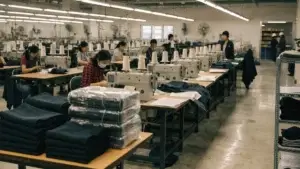
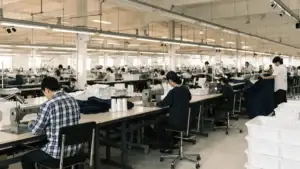
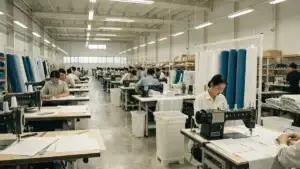
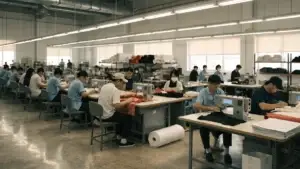
I have run Shanghai Fumao for over a decade, and we have produced thousands of kids' wear orders for American brands. The key is not finding the absolute cheapest price. It is finding the best value, which comes from a factory that prevents costly safety recalls and quality failures. Let me walk you through the practical steps to achieve this.
What safety standards must U.S. kids' wear meet in 2026?
If you get the safety standards wrong, the cost is catastrophic. It is not just about a bad review. It is about a federal recall, legal liability, and the complete destruction of your brand's reputation. I have seen small brands go out of business because they unknowingly imported jackets with drawstrings that posed a strangulation hazard. This is not an area where you can cut corners.
For the U.S. market in 2026, children's sleepwear and playwear must meet strict flammability standards. All clothing for sizes 0-16 must comply with the Consumer Product Safety Improvement Act (CPSIA), which includes lead and phthalate limits for any component, including zippers, snaps, and prints. The most cost-effective way to handle this is to work with a supplier who already sources certified components and understands these rules, so you do not have to learn them through a costly mistake.
Let me give you a specific example. A few years ago, a new client came to us wanting to produce a line of toddler hoodies. Her design included a drawstring in the hood. We had to stop her. We explained that drawstrings in the hoods and necks of children's upper outerwear are considered a substantial risk and are effectively banned by U.S. guidelines. We showed her the alternative: using snaps or elastic. She was shocked. She had no idea. If she had gone to an inexperienced factory, they might have just made the hoodie as designed, and she would have faced a major recall later. Because we knew the rules, we saved her from that disaster. This is the value of experience. When you source kids' wear, you are not just buying sewing. You are buying compliance knowledge. At Shanghai Fumao, we stay updated on CPSC regulations so our clients do not have to become safety experts overnight.
What is CPSIA and why does it matter for your imports?
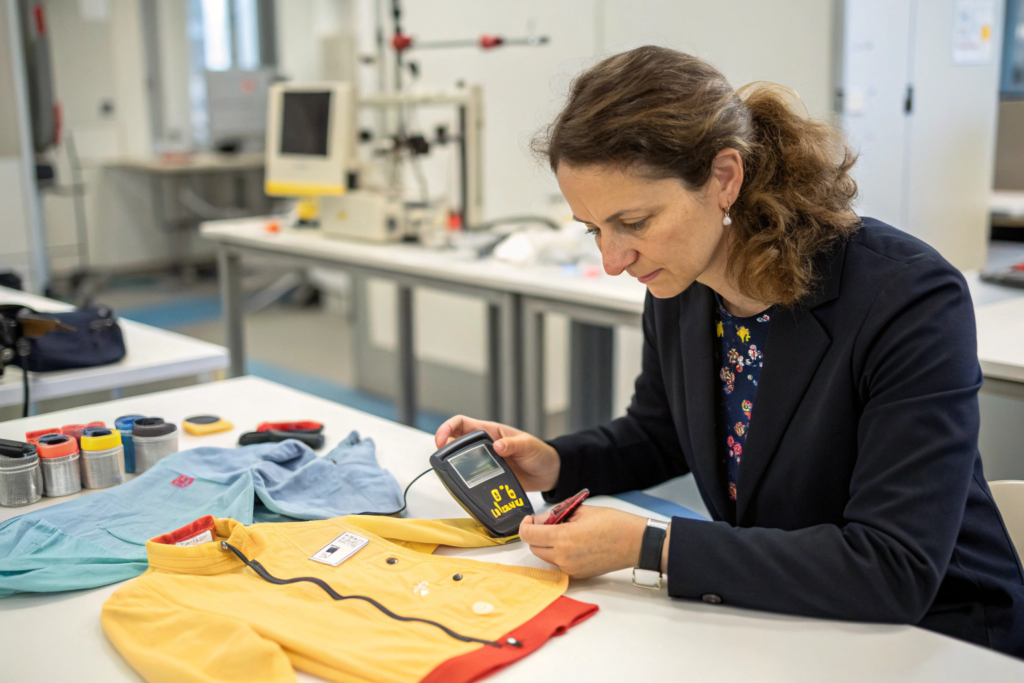
CPSIA stands for the Consumer Product Safety Improvement Act. It is a U.S. law that sets strict limits on lead and phthalates in children's products. For clothing, this means every component—the fabric, the thread, the zipper, the snap, and even the screen print ink—must be tested and certified to contain less than the allowable amount of these harmful chemicals. You cannot guess. You need a supplier who can provide documentation from their material suppliers proving compliance. If your goods are stopped at customs for a CPSIA violation, they will be destroyed. You lose the product and the money.
How do you verify that trims like zippers are safe for children?
You ask for a "Children's Product Certificate" (CPC) or a lab test report for the specific trim. A reputable zipper factory will test their products for lead and phthalates. Your garment factory should request these reports from their trim suppliers and share them with you. For example, when we order zippers for a kids' wear order, we ask our zipper supplier for their latest test reports. We then keep these on file. When the client asks for proof, we send them the reports. You can also specify that the trims must come from a certified supplier and require that random trims from the shipment be tested by a third-party lab like SGS or Bureau Veritas.
How can low minimums help you test the kids' wear market?
Kids' fashion is trend-driven, but children outgrow clothes fast. Parents are often looking for the next cute thing. This makes inventory management tricky. If you order too many of one style and the trend passes, you are left with boxes of clothes that no one wants. Your cash is tied up in dead stock.
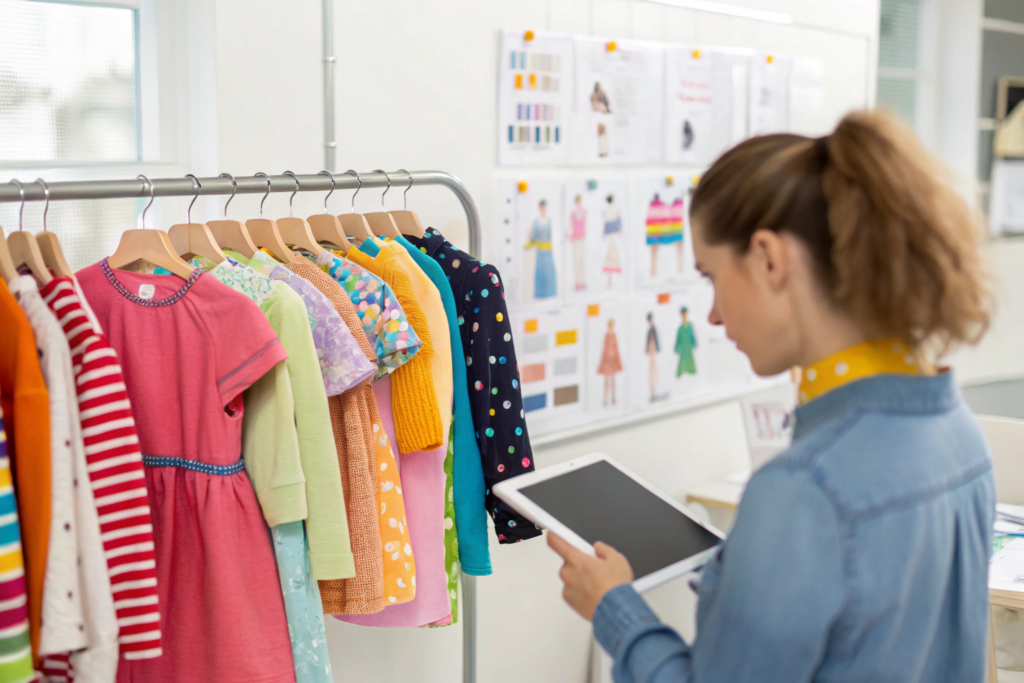
The most cost-effective strategy for kids' wear is to start with low minimum order quantities (MOQs). This allows you to test multiple designs, colors, and sizes with your actual customers before committing to a massive bulk order. A flexible factory that can run small batches of, say, 300 pieces per style, allows you to gather real sales data. Then, you invest more money in the styles that are proven winners. This minimizes waste and maximizes your return on investment.
I have seen this strategy work beautifully. A brand in Austin, Texas, came to us two years ago with a line of organic cotton kids' graphic tees. They had five different designs. They were unsure which ones would sell. We worked with them to produce just 200 pieces of each design, in a range of sizes. This was a small total order. They launched them on their website and at a few local boutiques. Within a month, two designs had sold out, and three had barely moved. Based on that data, they came back to us and placed a large re-order for the two winning designs. They did not waste money on the designs that failed. They also used the initial small batch to get beautiful photos and customer reviews, which helped them market the re-order. This "test and scale" method is the smartest way to grow a kids' brand without risking your entire budget. At Shanghai Fumao, we are set up to handle both these small test runs and the large-scale production that follows.
What is a reasonable MOQ for custom kids' clothing?
A reasonable MOQ for a simple custom kids' t-shirt or dress using stock fabrics can be as low as 200 to 300 pieces per style, spread across sizes and colors. For more complex items like outerwear or pieces with custom prints, the MOQ might be higher, around 500 to 800 pieces, because of the setup costs for the fabric and trims. Always ask the factory what their ideal MOQ is and if they have any stock fabric programs that could lower it.
Why does testing with small batches save you money in the long run?
Small batches prevent overproduction. When you order 3,000 pieces of a new style and it does not sell, you lose the cost of those 3,000 pieces, plus storage, plus you might have to discount them heavily to clear them out. When you order 300 pieces and it sells out, you have made a profit. You also have proven demand, which reduces the risk of your next, larger order. It is a leaner, more capital-efficient way to run a fashion business. You learn what your customer wants without betting the farm on it.
How do you balance soft fabrics with durability for kids?
Parents want clothes that feel soft and comfortable against their child's sensitive skin. But they also need clothes that can survive the playground, multiple washes, and the general chaos of childhood. These two needs—softness and durability—can sometimes conflict. A fabric that is incredibly soft might be delicate and prone to tearing or pilling. A fabric that is super durable might be rough and uncomfortable.
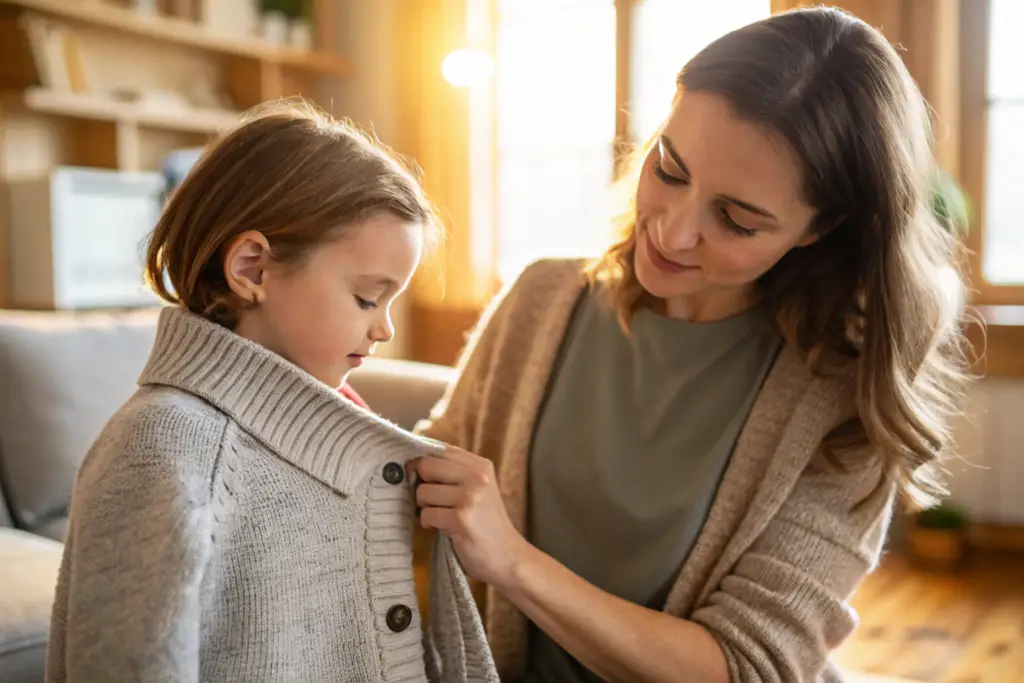
The solution lies in choosing the right fabric construction and fiber blend. For cost-effective kids' wear that feels good and lasts, look for high-quality cotton blends. For example, a cotton-polyester blend can offer the softness of cotton with the strength and wrinkle resistance of polyester. For active kids' wear, fabrics with a bit of spandex allow for movement and keep their shape. You need a partner who can guide you to fabrics that hit this sweet spot.
I remember a specific project with a client in Portland who was launching a line of premium kids' basics. She wanted everything to be 100% organic cotton, which is a great, soft choice. But for her line of leggings, the first samples we made using 100% organic cotton wore out at the knees very quickly after just a few washes in our in-house tests. We sat down with her and suggested a blend: 95% organic cotton and 5% spandex. This tiny amount of spandex made the leggings stretchy, so they fit better and moved with the child. It also added recovery, so the knees did not bag out. And most importantly, it significantly increased the durability. We tested the new blend, and it lasted three times longer. The client was able to market them as "soft, comfortable, and built to last." The slight increase in material cost was more than offset by the higher customer satisfaction and lower return rates. This is the kind of practical problem-solving you get from an experienced partner.
What are the best fabrics for active children's wear?
For active kids' wear, you want fabrics that offer stretch and recovery. Cotton-spandex jersey is a great choice for t-shirts and tops. For bottoms like leggings or shorts, polyester-spandex blends are excellent. They are durable, moisture-wicking, and hold their color well. For outerwear, a nylon ripstop fabric is lightweight, wind-resistant, and very hard to tear. These fabrics are cost-effective because they perform well and last a long time, reducing the likelihood of returns.
How can you test for pilling before bulk production?
Pilling is those little balls of fiber that form on fabric after washing. It makes clothes look old and worn out quickly. You can test for this before production using a "Martindale abrasion tester" or by doing a simple home-style wash test on a sample. A professional factory will have a "pill testing box" where they rub the fabric in a circular motion for a set number of cycles and then grade the result. You should ask for a "pilling resistance test report" for any fleece or knit fabric you plan to use for kids' wear.
What trims and details add value without breaking your budget?
Children's clothing sells on details. A cute embroidered patch, a unique button, a fun printed label—these are the things that catch a parent's eye and make them choose your brand over a competitor. But custom trims can be expensive. They often come with high MOQs and tooling costs that can kill a small brand's budget.
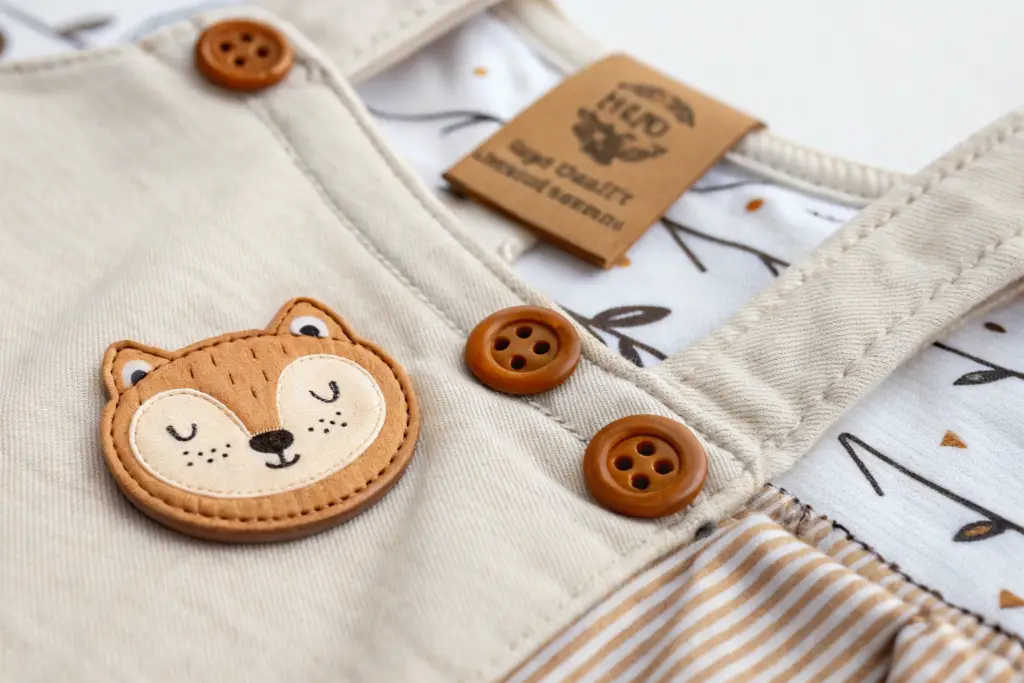
The most cost-effective way to add value through trims is to be strategic. Invest in one or two signature details that define your brand. It could be a custom woven label sewn onto every garment. It could be a unique, high-quality snap in your brand's color. For other trims, you can use high-quality stock options from your supplier. This approach gives your line a cohesive, premium feel without the cost of custom-making every single button and zipper pull.
I will give you an example of how we helped a client do this. A new brand from Miami wanted to launch a line of baby bodysuits. They had a vision for custom, star-shaped snaps. The cost to have a mold made for custom snaps was over $2,000, and the minimum order for the snaps themselves was huge. It was not feasible for their startup budget. We worked with them to find a beautiful, high-quality, nickel-free snap in a standard shape, but in a custom color that matched their brand. We also created a custom-woven label with their logo to sew onto the chest. The total cost for this was a fraction of the custom snap. The final product looked unique and premium because of the color and the woven label, and the client stayed within their budget. This is the kind of creative, cost-conscious thinking you need from a manufacturing partner. At Shanghai Fumao, we have a wide network of trim suppliers, and we can help you find the perfect balance between uniqueness and cost.
Which custom trims offer the best return on investment?
Custom woven labels and hang tags offer the best ROI. They are relatively inexpensive to produce, even in smaller quantities, and they are very visible to the customer. They immediately brand the garment. A custom-printed elastic or ribbon can also be a great investment for items like leggings or pajamas, as it adds a branded detail every time the cuff is seen.
How can you source unique trims without high MOQs?
Ask your factory if they have relationships with trim suppliers who offer "low MOQ" programs. Many suppliers in China are now catering to smaller brands and offer stock molds for things like buttons and snaps in popular shapes. You can choose from these stock molds and then just customize the color. This avoids the high cost of creating a new mold. Also, consider using stock trims in a unique way, like combining a standard button with a custom thread color for sewing it on.
Conclusion
Sourcing custom kids' wear cost-effectively is about smart risk management and smart design choices. It means partnering with a factory that understands U.S. safety laws so you do not face a costly recall. It means using low minimums to test the market before investing in large inventory. It means choosing fabrics that balance softness with the durability parents demand. And it means using custom trims strategically to build your brand identity without overspending on every single detail.
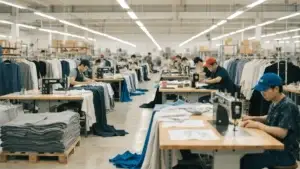
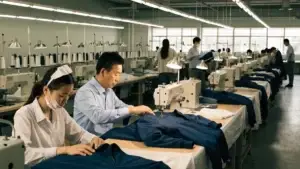
At Shanghai Fumao, we have extensive experience guiding brands through this process. Our five production lines are ready for both small test runs and large-scale production. We source certified safe materials. We help our clients choose the right fabrics and trims for their budget. We are committed to helping you build a successful, safe, and profitable kids' wear line.
If you are ready to bring your custom kids' wear ideas to life with a partner who understands the unique challenges of this market, let us talk. We would love to hear about your vision. Please contact our Business Director, Elaine, at elaine@fumaoclothing.com to start the conversation.