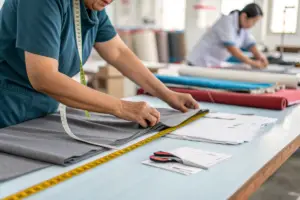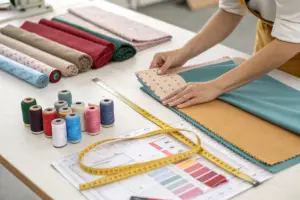
I learned the hard way that pricing is not just about covering costs. Early in my career, I had a client who designed beautiful women's blouses. She was so excited to get her first production quote from us. When we gave her the price, she panicked. She had no idea how to mark it up for wholesale, and she was sure she would lose money. We sat down together, and I walked her through the numbers. That conversation saved her business before it even started.
To price garments for wholesale, you start with the total landed cost. This is the factory price plus shipping, duties, and any agent fees. You then multiply that cost by your desired markup, typically 2.0 to 2.5 times for wholesale, to reach your wholesale price. To maximize profit margins, you must control every element of your cost, from fabric sourcing to production efficiency, before you ever set a price.
A few years ago, a sportswear brand from Denver came to us with a problem. Their profit margins were shrinking, even though sales were growing. We looked at their pricing together. They were using the same markup they used five years ago, but their shipping costs had doubled, and fabric prices had gone up. They were slowly losing money on every order. We helped them recalculate their true landed cost and adjust their wholesale pricing. The next year, their profitability came back. Pricing is a math problem, but you need the right numbers to solve it.
What Is The Correct Formula For Calculating Wholesale Price?
Many new brand owners think the wholesale price is just the factory price times two. This is dangerous. You will miss hidden costs and slowly lose money. I have seen brands fail because they did not account for the real cost of getting goods from our Shanghai warehouse to their customer in Chicago. The formula must include everything.
The correct formula is: Total Landed Cost = Factory Price + Ocean/Air Freight + Insurance + Customs Duties + Broker Fees + Inland Trucking. Then, Wholesale Price = Total Landed Cost x (1 + Desired Markup Percentage). A common wholesale markup is 100%, which is a keystone markup, meaning you multiply by 2. If your landed cost is $20, your wholesale price is $40.
Let's break down each part of this cost. If you miss one, you are giving away your profit. I want you to understand exactly what happens to your money from the moment it leaves your bank account to the moment the product arrives at your door.

What costs are often forgotten in the landed cost calculation?
The factory price is obvious. The freight cost is usually quoted. But the small costs add up. Customs brokerage fees are one. A broker handles your paperwork with US Customs. They charge a fee, often between $100 and $200 per shipment. If you only ship a few styles, this fee can add a surprising amount to each garment's cost.
Another forgotten cost is inland trucking from the port to your warehouse. The freight quote usually covers the ship to the port of Los Angeles or New York. But getting it from the port to your door costs more. Also, consider the cost of money. If you pay your factory deposit months before you sell the goods, that money is tied up. Some accountants call this the cost of capital. For a small brand, this can be significant. I always advise my clients to add a small contingency, maybe 3% to 5%, to their landed cost for unexpected fees. It is better to be safe than sorry.
How do you choose the right markup percentage for your brand?
The standard markup is 2.0 to 2.5 times your landed cost. But where you land in that range depends on your brand. If you are selling to high-end boutiques, you might use a 2.5 markup. These buyers expect exclusivity and are less price sensitive. If you are selling to large department stores or big online retailers, they will demand a lower wholesale price. You might be forced down to a 1.8 or 2.0 markup.
Your sales volume also matters. A lower markup with a huge order from a big retailer might be more profitable than a high markup with tiny boutique orders. I worked with a client who made premium kids' wear. She sold to small boutiques at a 2.5 markup. Then she got an offer from a large national catalog. They wanted a 1.7 markup. We calculated that even with the lower markup, the volume was so large that her total profit was higher. She took the deal and grew her brand significantly. You must look at the whole picture, not just the percentage.
How Can You Reduce Costs Before Setting Your Wholesale Price?
The best way to maximize your profit margin is to lower your costs before you ever calculate the price. Once your wholesale price is set with retailers, it is very hard to raise it later. But you can always work on making the product for less, as long as you do not sacrifice the quality your customers expect. This is where a good factory partner becomes invaluable.
You can reduce costs by optimizing your fabric sourcing, simplifying your design for production efficiency, ordering larger quantities to spread out fixed costs, and consolidating shipments to save on freight. Each of these strategies can shave dollars off your landed cost, which goes directly to your bottom line when you maintain your wholesale price.
At Shanghai Fumao, we see cost reduction as a team sport. We work with our clients to find savings without compromising their vision. Let's look at some specific ways you can lower your costs.
How does fabric choice impact your final garment cost?
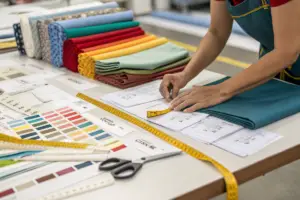
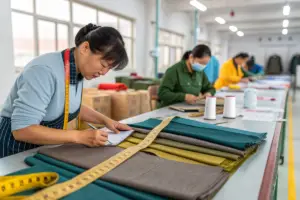
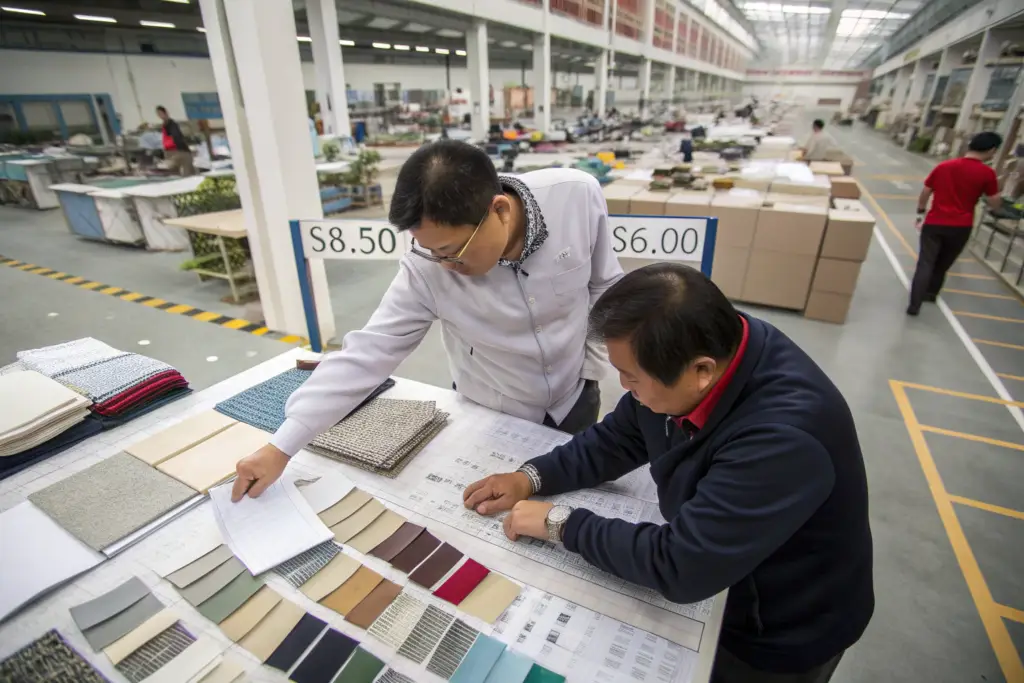
Fabric is usually 60% to 70% of your garment cost. This is where the biggest savings are found. If you choose a specialty fabric that must be custom woven or dyed in small quantities, your cost will be high. If you choose a stock fabric that our mill runs every month, your cost will be much lower.
I had a client from Miami who designed a beautiful men's shirt. He wanted a specific shade of blue that was not a standard color. The mill charged him a high fee for a custom dye lot of only 500 meters. The fabric cost doubled. For his next season, he chose colors from the mill's standard palette. His fabric cost dropped by 40%, and his shirts still looked fantastic. His customers never noticed the change, but his profit margin improved dramatically. Always ask your factory for options. We can often suggest a similar fabric that costs much less.
What design changes can make production more efficient?
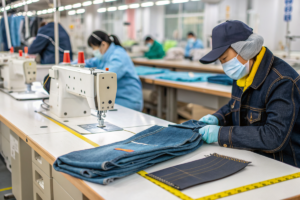
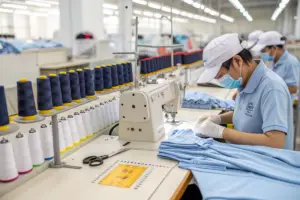
Some design details are expensive to produce. Multiple pockets, complex seam lines, and difficult-to-attach trims all add labor time. Labor is a direct cost. The longer a garment takes to sew, the more it costs. When you design, think about the sewing process. Can a pocket be simplified? Can a seam be eliminated?
A few years ago, a streetwear brand from Los Angeles showed us a jacket design with eight separate panels on the front alone. It looked great, but it took our sewers hours to piece together. We worked with their designer and suggested combining some panels into larger pieces. The final design was 95% the same, but the sewing time was cut by 30%. The wholesale price dropped, making them more competitive, and their profit margin actually increased because we saved so much labor. Small design changes can have a huge impact on cost.
What Pricing Strategies Help You Maximize Profits With Retailers?
Once you know your costs and set your wholesale price, you need a strategy for selling to retailers. Just giving everyone the same price is not always the best way to maximize your profits. Different customers have different values and different needs. You can use this to your advantage.
Smart pricing strategies include volume discounts for larger orders, early payment discounts to improve your cash flow, and tiered pricing for different types of retailers. You can also create exclusive styles for key accounts at premium prices. The goal is to capture more value from each customer while still moving your inventory efficiently.
Let's explore some of these strategies. I have seen them work for many of our clients over the years. The key is to be flexible but also know your bottom line.

Should you offer discounts for large wholesale orders?
Yes, but carefully. Large orders are great because they give you economies of scale. Your fixed costs, like shipping and customs clearance, are spread over more units. This means your landed cost per unit actually goes down on a large order. You can share some of this saving with the retailer to encourage them to order more.
For example, you might have a standard wholesale price of $40 for orders of 50 pieces per style. But if a retailer orders 200 pieces per style, you could offer them $38. You still make more money because your costs are lower, and they feel they are getting a good deal. It is a win-win. Just make sure you calculate the new landed cost for the larger volume so you know exactly how much room you have to discount. At Shanghai Fumao, we help our clients model these scenarios so they can negotiate with confidence.
How do you handle pricing for new vs. returning customers?
New customers are a risk. You do not know if they will pay on time or if they will reorder. Returning customers who pay reliably are gold. Your pricing should reflect this. For a first-time buyer, you might stick firmly to your standard pricing or even require a higher deposit. For a loyal customer who has bought from you for years, you can be more flexible.
I had a client in Oregon who had a fantastic relationship with one department store buyer. They ordered every season, and they always paid within terms. When the buyer asked for a small discount on a large order, my client was happy to give it. He knew the risk was low and the relationship was valuable. For a new, unknown boutique, he held the line. This is just good business. You reward the behavior you want to see. Your pricing strategy should help you build a base of reliable, long-term partners.
Conclusion
Pricing garments for wholesale is a balancing act. You must cover all your costs, build in a profit, and still offer a price that retailers find attractive. The key is to start with a crystal-clear understanding of your total landed cost. Then, you can apply a markup that fits your brand and your market. After that, work constantly to reduce your costs through smart sourcing and efficient design. Finally, use flexible pricing strategies to get the most value from each of your retail partners.
At Shanghai Fumao, we do more than just manufacture clothes. We help our partners build profitable businesses. We provide detailed cost breakdowns, suggest cost-saving alternatives, and share our decades of experience in the global market. We want you to succeed because your success is our success.
If you are ready to start a project and want a partner who cares about your bottom line, please reach out. Contact our Business Director, Elaine, at elaine@fumaoclothing.com. Let's work together to create beautiful, high-quality garments that are also priced for profit. Visit Shanghai Fumao to learn more about how we can help you grow.