You finally have your production ready. The garments are packed. You are excited. Then the logistics nightmare begins. The freight forwarder asks you for documents you have never heard of. Customs holds your shipment for inspection. You get a surprise bill for duties and taxes. Your goods are stuck at the port. Your selling season is slipping away. You wonder why importing has to be so complicated. You wonder if there is a better way.
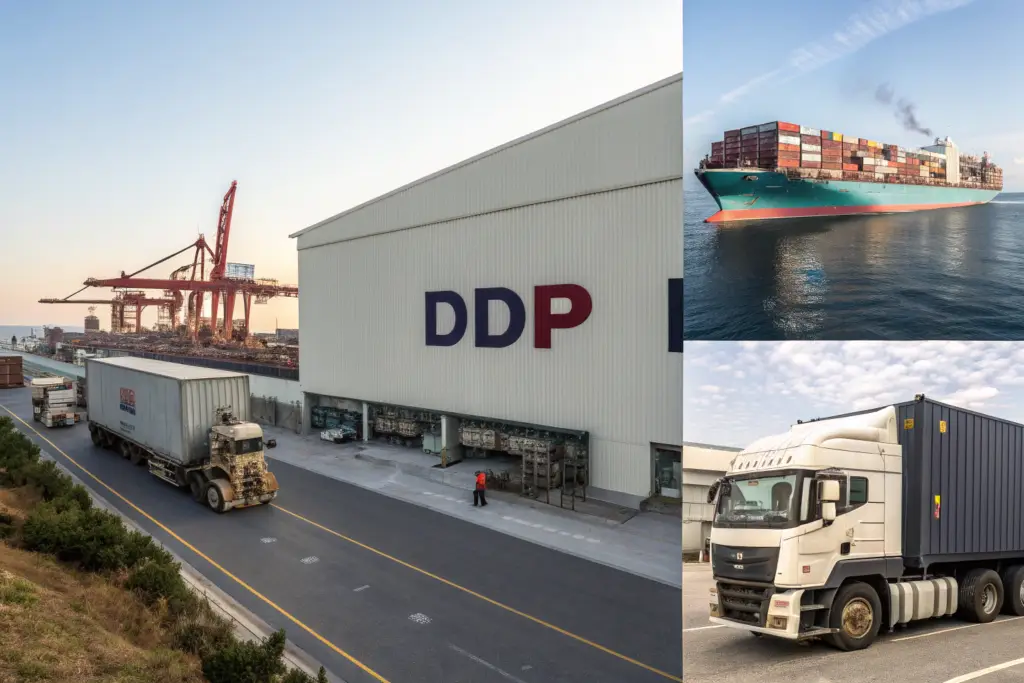
DDP stands for Delivered Duty Paid. It is a shipping agreement where the seller, the factory, takes full responsibility for delivering the goods to your door, including paying all shipping costs, export and import duties, taxes, and customs clearance. For US apparel importers, DDP is better because it simplifies the entire process, eliminates surprise fees, reduces your workload, and gets your goods to your warehouse with minimal stress and maximum predictability.
I have seen too many clients struggle with shipping. A few years ago, a client from Chicago had a nightmare experience with a DAP shipment. His goods arrived at the port, but his forwarder messed up the customs paperwork. The shipment sat for two weeks. He incurred storage fees. He missed his launch date. When he came to us, he asked if we could handle everything. We said yes. We have been shipping DDP for him ever since. His products arrive on time, every time. Let me explain exactly how DDP works and why it might be the best choice for your business.
What are the different Incoterms for apparel shipping?
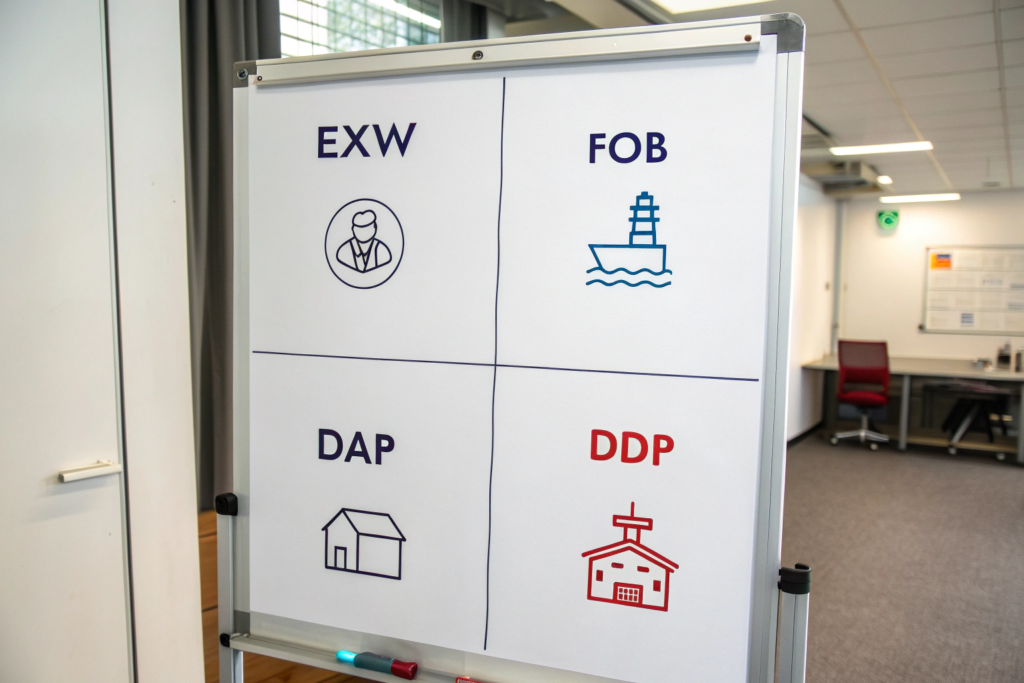
To understand DDP, you need to understand the alternatives. Shipping terms, officially called Incoterms or International Commercial Terms, define who is responsible for what during shipping. There are 11 terms, but for apparel imports from China to the USA, you will mostly encounter four.
What is EXW and why is it risky for new importers?
EXW stands for Ex Works. Under this term, the seller's responsibility ends when the goods are made available at their factory. You, the buyer, are responsible for everything from that point on. You must arrange pickup, trucking to the port, export clearance, ocean freight, import clearance, and final delivery.
For a very experienced importer with a dedicated logistics team, EXW can offer control. But for most brands, it is a nightmare. You have to coordinate multiple parties. If something goes wrong, it is your problem. A client from Seattle once tried EXW to save money. His trucker arrived at the factory a day late. The factory charged him storage. Then his forwarder mislabeled the documents. Customs held the shipment. He spent weeks on the phone fixing problems. He swore he would never do EXW again. EXW is cheap in theory, but expensive in stress and time.
What is FOB and why is it the industry standard?
FOB stands for Free on Board. Under FOB, the seller is responsible for delivering the goods to the port of departure and loading them onto the ship. Once the goods are on the ship, responsibility transfers to you. You are responsible for ocean freight, insurance, import clearance, and delivery from the port of arrival.
FOB is the most common Incoterm in apparel. It is a clean split. The factory handles the domestic side. You handle the international and import side. Many brands are comfortable with FOB because they can control the shipping and choose their own freight forwarder. However, it still requires you to manage the import process, pay duties and taxes separately, and coordinate with your forwarder. For a client from Los Angeles with a good forwarder, FOB works well. He gets competitive freight rates and knows his broker. But for many, the import side is still a burden.
What is DAP and how is it different from DDP?
DAP stands for Delivered at Place. Under DAP, the seller is responsible for delivering the goods to a named place, usually your warehouse or a terminal. The seller pays for transportation and bears the risk until the goods arrive. However, the buyer is responsible for import clearance and paying any duties and taxes.
DAP is like DDP but without the duties paid. The goods arrive, but you still have to handle customs and pay the import fees. This can be tricky because you need to have a broker or be ready to clear the goods yourself. If you are not prepared, the goods can get stuck. DAP is a good option if you have your own broker and want to control the customs process, but you do not want to handle the international shipping.
How does DDP shipping work step by step?
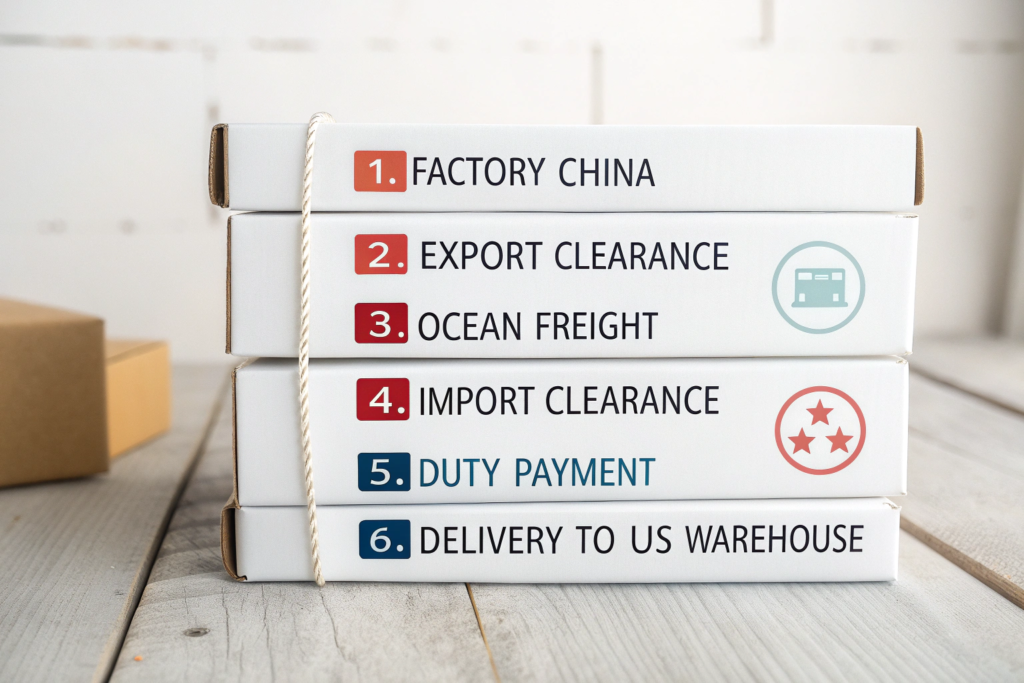
DDP puts all the responsibility on the seller, which is us. We handle every step from the factory floor to your warehouse door. You simply wait for the truck to arrive. Here is how it works.
Who handles export and import documentation under DDP?
Under DDP, we handle all documentation. This includes the commercial invoice, packing list, bill of lading, and any certificates of origin or compliance. We work with our freight forwarder to ensure all documents are correct and complete.
For the export side, we file the necessary paperwork with Chinese customs. This is straightforward for us. We do it every day. For the import side, we work with a customs broker in the USA. We provide them with all the information they need to clear your goods. We classify your products under the correct HTS codes, or Harmonized Tariff Schedule codes. This classification determines the duty rate. A client from Boston once had a shipment of wool coats that we classified correctly as wool apparel. The duty rate was higher than for cotton, but it was the correct classification. If we had tried to cheat and classify them as something else, we could have faced fines and delays. Honesty and accuracy are essential in DDP shipping. You can research HTS codes on the US International Trade Commission website.
Who pays the duties and taxes in a DDP shipment?
This is the key difference. In DDP, we pay the duties and taxes. We include them in the total price we quote you. When the goods arrive at the US port, our broker files the entry and pays the duties from our funds. You never see a bill from customs.
This is a huge relief for many buyers. Duties can be significant, often 10% to 30% of the garment value depending on the fiber and construction. With DDP, you know the total landed cost before the goods even ship. There are no surprises. A client from Miami once had a shipment under FOB where the duties were much higher than he expected because his forwarder misclassified the goods. He had to pay an extra $5,000 he had not budgeted for. With DDP, that risk is ours. We make sure the classification is correct because we are paying the bill. This predictability is one of the biggest advantages of DDP.
How is the final delivery arranged?
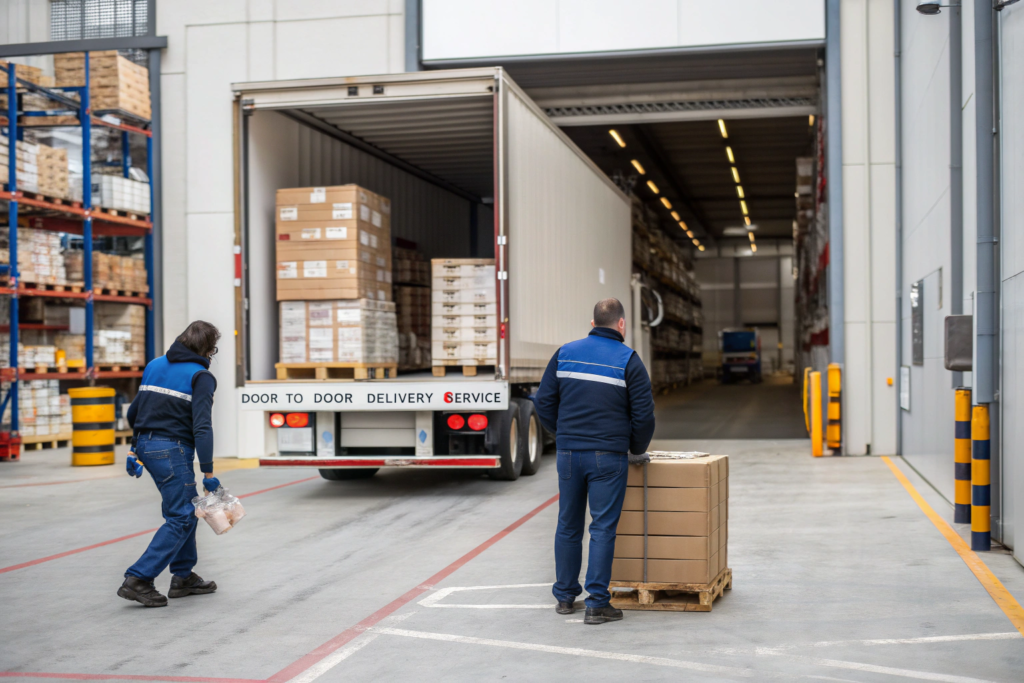
Once the goods are cleared by US customs, our forwarder arranges for final delivery. This is usually done by a trucking company. They pick up the container from the port and deliver it to your warehouse or a distribution center. You just need to be ready to receive it.
We provide you with a tracking number and an estimated delivery window. You can plan your receiving staff and your inventory system. For a client from Chicago, we schedule all his DDP deliveries for Tuesdays and Thursdays, which are his receiving days. The truck arrives, he unloads, and the goods are in his warehouse. It is simple and predictable. This final step is what makes DDP truly "door-to-door" service.
Why is DDP better for US apparel importers?
Now that you understand the mechanics, let me explain why so many of our clients prefer DDP. It is not just about saving money. It is about saving stress, time, and risk.
How does DDP simplify the import process for you?
The biggest benefit of DDP is simplicity. You deal with one party: us. You do not need to find a freight forwarder, a customs broker, or a trucking company. You do not need to learn about HTS codes or duty rates. You do not need to worry about whether your documents are correct.
You simply place your order, pay us, and wait for the truck to arrive. For a client from Seattle who runs a small but growing brand, this simplicity is invaluable. He does not have a logistics department. He is the logistics department. DDP frees him up to focus on design and sales, not on paperwork and phone calls with brokers. This peace of mind is worth a lot.
How does DDP eliminate surprise costs?
With FOB or EXW, you never know your total landed cost until after the shipment arrives. You have to estimate freight costs, which can fluctuate. You have to estimate duties, which can be complicated. If fuel prices spike or if customs reclassifies your goods, your costs can go up unexpectedly.
With DDP, we quote you a total landed cost upfront. This includes everything: production, shipping, insurance, duties, and taxes. You know exactly what you are paying. There are no surprise invoices later. A client from Boston once had a FOB shipment where the forwarder charged him a "peak season surcharge" of $2,000 that he had not budgeted for. With DDP, that risk is ours. We absorb the fluctuations. This predictability helps you price your products confidently and protect your margins. At Shanghai Fumao, we provide clear DDP quotes so you always know where you stand.
How does DDP protect you from customs delays?
Customs delays are a nightmare. They can hold your goods for days or weeks. They can charge storage fees. They can miss your selling season. With DDP, we are highly motivated to avoid these delays because they cost us money and damage our reputation.
We use experienced customs brokers who know how to clear apparel efficiently. We ensure all documents are accurate. We classify goods correctly. We pay duties promptly. This proactive approach minimizes the risk of holds and inspections. A client from Los Angeles once had a DDP shipment that was randomly selected for inspection by CBP, or US Customs and Border Protection. Because our broker had all the documents in order and the goods were properly labeled, the inspection took only two days. The goods cleared and were delivered on time. If the documents had been messy, it could have taken weeks. DDP puts the responsibility on us, and we take it seriously.
What are the considerations when choosing DDP?
DDP is not always the perfect choice for every situation. There are trade-offs. Understanding them helps you make the right decision for your business.

Is DDP more expensive than other shipping options?
Sometimes DDP can appear slightly more expensive than a DIY approach. This is because we are charging you for a service. We are taking on risk. We are managing the logistics. We are paying the duties upfront. All of this has a cost.
However, you have to compare apples to apples. When you add up the freight forwarder fees, the customs broker fees, the trucking fees, the duties, and the value of your time spent managing the process, DDP is often very competitive. A client from Chicago did a detailed comparison for a large order. His DIY FOB costs, including his own time valued at $100 per hour, were actually higher than our DDP quote. He chose DDP and never looked back. Get quotes for both and do the math. You might be surprised.
What information do you need to provide for a DDP quote?
To give you an accurate DDP quote, we need specific information. We need the total weight and volume of the shipment. We need the value of the goods for insurance and duty calculation. We need the fiber content and construction of each garment to determine the correct HTS code. We need your full delivery address in the USA.
The more accurate your information, the more accurate our quote. If you underestimate the value, we might underquote duties and have to come back for more money later. If you overestimate, you might pay too much. Be honest and precise. For a client from Denver, we walked through each style and calculated the duty rates together. He learned a lot about the process, and we got a quote he could trust. This collaboration makes DDP work smoothly.
Conclusion
DDP shipping is a powerful tool for US apparel importers. It simplifies a complex process. It eliminates surprise costs. It protects you from customs headaches. It lets you focus on what you do best: building your brand and selling your products. While it may not be right for every single shipment, for many brands, especially those without dedicated logistics teams, it is the best choice.
At Shanghai Fumao, we offer DDP shipping to all our US clients. We have the experience, the broker relationships, and the systems to make it work seamlessly. We have delivered thousands of DDP shipments to warehouses across America, from New York to Los Angeles, from Miami to Seattle.
If you are tired of shipping stress and want a simpler way, let us talk. Please contact our Business Director, Elaine, at elaine@fumaoclothing.com. She will explain our DDP service and provide a quote for your next order. Let us handle the logistics so you can handle your business.