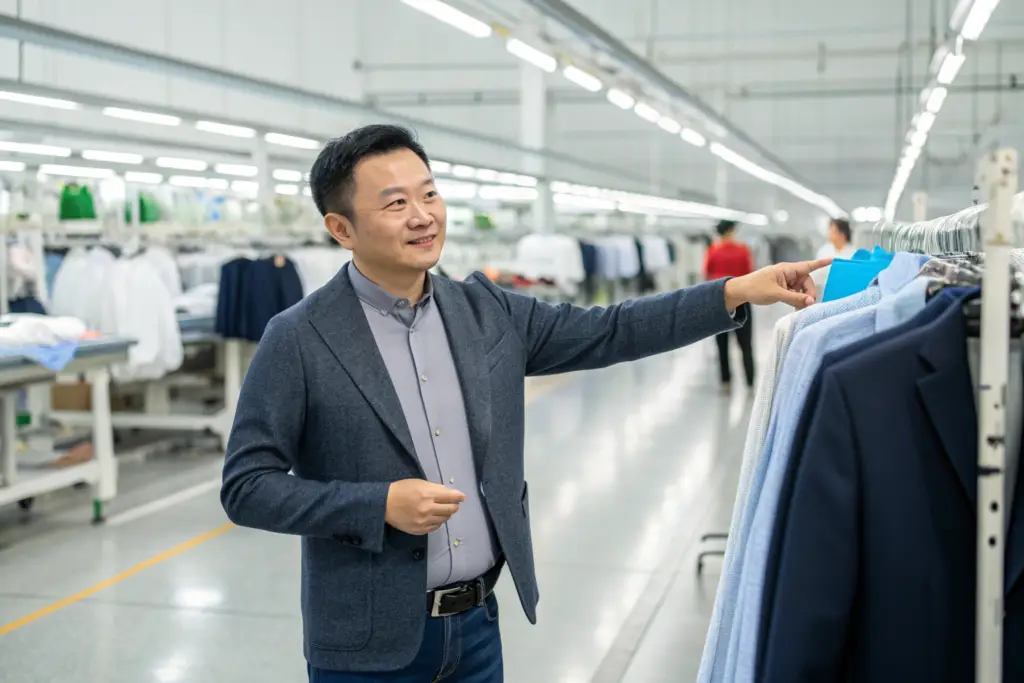
I remember meeting a brand owner from New York at a trade show in Las Vegas two years ago. He was frustrated. He had spent months working with a fabric supplier in one country, a trim supplier in another, and a sewing factory somewhere else. Nothing arrived on time. The colors didn’t match. He told me, “I just want one person to blame if something goes wrong.”
That is the problem full package manufacturing solves. You hand us your idea. We handle everything else. We source the fabric, develop the pattern, source the buttons and zippers, sew the sample, run the production, check the quality, pack the boxes, and ship the goods directly to your warehouse in the U.S. You deal with one point of contact. You get one invoice. You have one person to hold accountable.
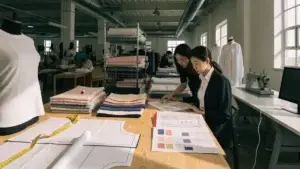
Full package manufacturing, often called FPP, is a service where a single factory manages the entire production process for a clothing brand. This starts with the initial concept or technical design and ends with the finished product delivered to the brand’s door. It includes fabric sourcing, trim procurement, sampling, pattern making, grading, cutting, sewing, finishing, quality control, and logistics.
For years, my clients in the U.S. thought the only way to save money was to source fabric themselves or find a cheaper factory for just the sewing. They acted as their own project managers. They quickly learned that this creates chaos. Communication breaks down between different suppliers in different time zones. One delay causes a chain reaction. You lose the season. I built Shanghai Fumao to be the opposite of that. We are the single source of truth for your project. We take full responsibility for the final product in your store.
How Does Full Package Manufacturing Reduce Your Sourcing Risks?
I have a client in Los Angeles who used to split his orders. He bought fabric in Korea, had it shipped to Vietnam for cutting, and then sent the pieces to China for sewing. The process was a nightmare. The fabric from Korea arrived late in Vietnam. The cutting factory blamed the shipper. The sewing factory in China blamed the cutting factory. By the time the product reached his warehouse in LA, summer was over. He lost $80,000 on that season alone.
When you choose full package manufacturing with us, that scenario disappears. You transfer the risk to us. We manage the timeline from start to finish. We have relationships with our fabric mills that go back fifteen years. We know exactly who delivers on time and who doesn’t. We know which trim supplier has the best quality zippers for a heavy jacket. We handle the logistics between our own suppliers so you don’t have to.
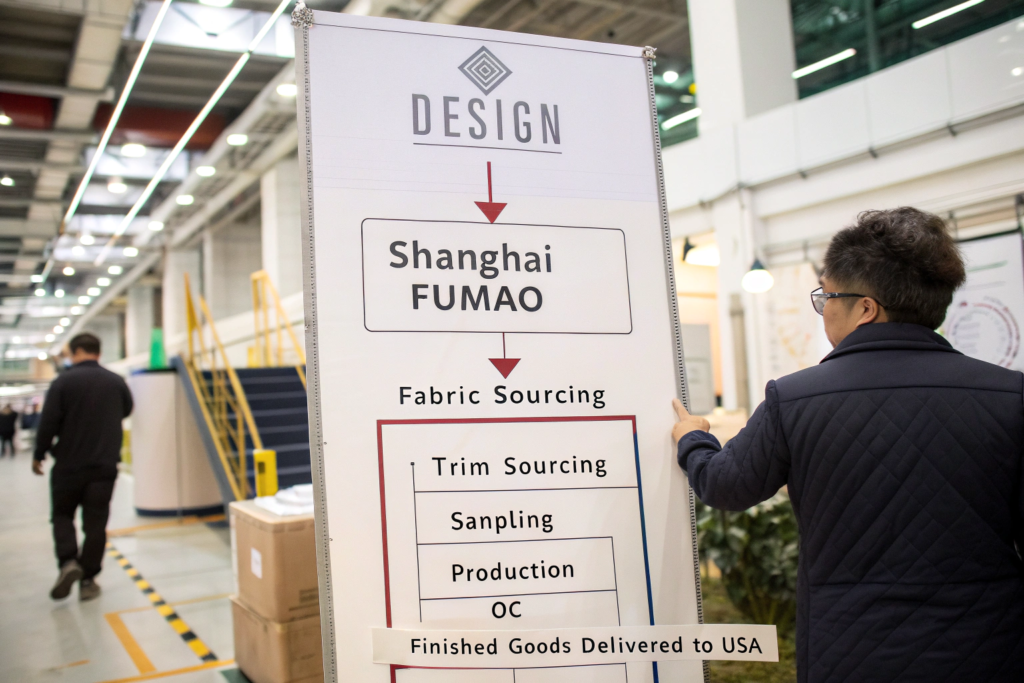
Why is dealing with one supplier safer than dealing with many?
When you work with multiple vendors, you become the project manager. You sit in America, trying to solve a dispute between a factory in Bangladesh and a dye house in India. It is almost impossible to get the full story. With Shanghai Fumao, you talk to Elaine. She talks to our production manager. We talk to the mill. We resolve the problem internally and give you one clear update. This saves you time and protects your sanity. It also protects your money because we control the quality at every stage, not just at the end.
How does a single point of contact fix communication problems?
The biggest complaint I hear from American buyers is that their suppliers’ sales reps don’t understand the product. The rep just passes messages. I train my team differently. Our sales team, led by Elaine, works on the factory floor. They know the machines. They know the limitations of the fabric. When you ask a technical question, they can get you an accurate answer within hours, not weeks. This direct line of communication stops small misunderstandings from becoming big production delays. We speak your language, both in English and in manufacturing terms.
What Specific Services Are Included in a Full Package Deal?
Full package manufacturing is not just about sewing a shirt you designed. It is a bundle of services. Some buyers think they can save money by doing some of these steps themselves. But I have seen the numbers. When a brand in Chicago tried to source their own fabric last year, they overestimated the quantity needed. They ended up with 2,000 yards of expensive dead stock they couldn’t use. They paid for the fabric, the storage, and eventually the disposal.
We prevent that waste. Our process integrates all these steps so you only pay for what you need for the final product. We use our experience to guide you on fabric yields and trim quantities, saving you money before a single piece of fabric is cut.
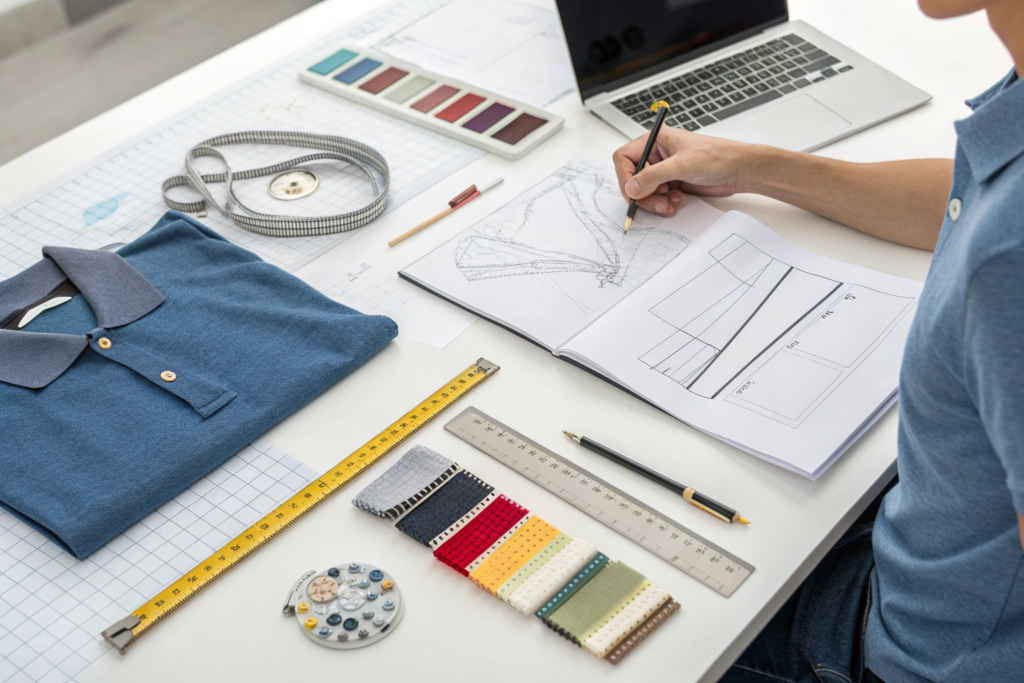
Fabric sourcing and trim procurement
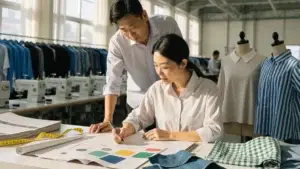
Fabric is the soul of the garment. I have spent twenty years building relationships with mills across China and Asia. These relationships mean I can get you better prices and priority access to high-demand materials. When a sportswear brand from Texas needed a specific moisture-wicking fabric for a summer line, we didn’t just buy off-the-shelf. We worked with our mill partner to develop a custom blend that was 15% cheaper than the name-brand equivalent but performed just as well. We also source every button, zipper, thread, and label. You approve it once, and we handle the purchase orders and delivery to our factory floor.
Pattern making, grading, and sample development
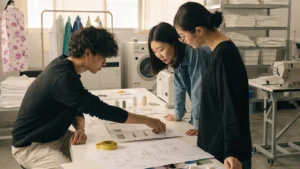
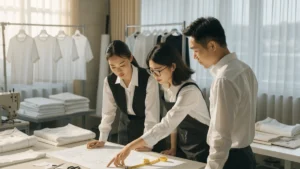
Your design might look perfect on paper, but it needs to work on a human body. Our pattern makers are artists with a technical mind. They create the first prototype. Then we grade it into all the sizes you need—Small to 3XL. Last spring, a client in New York sent us a sketch for a women’s blouse. The first sample revealed the armholes were too tight. We adjusted the pattern, sent a second sample in three days, and it fit perfectly. This speed is only possible because the pattern makers, cutters, and sewers are all in the same building, working as a team.
Production, quality control, and finishing
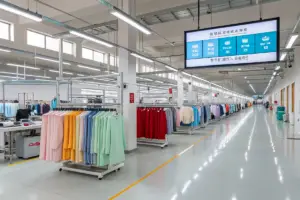
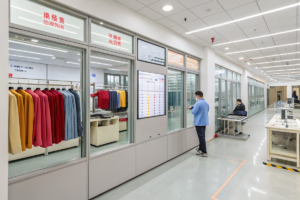
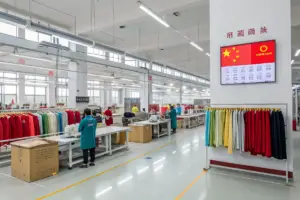
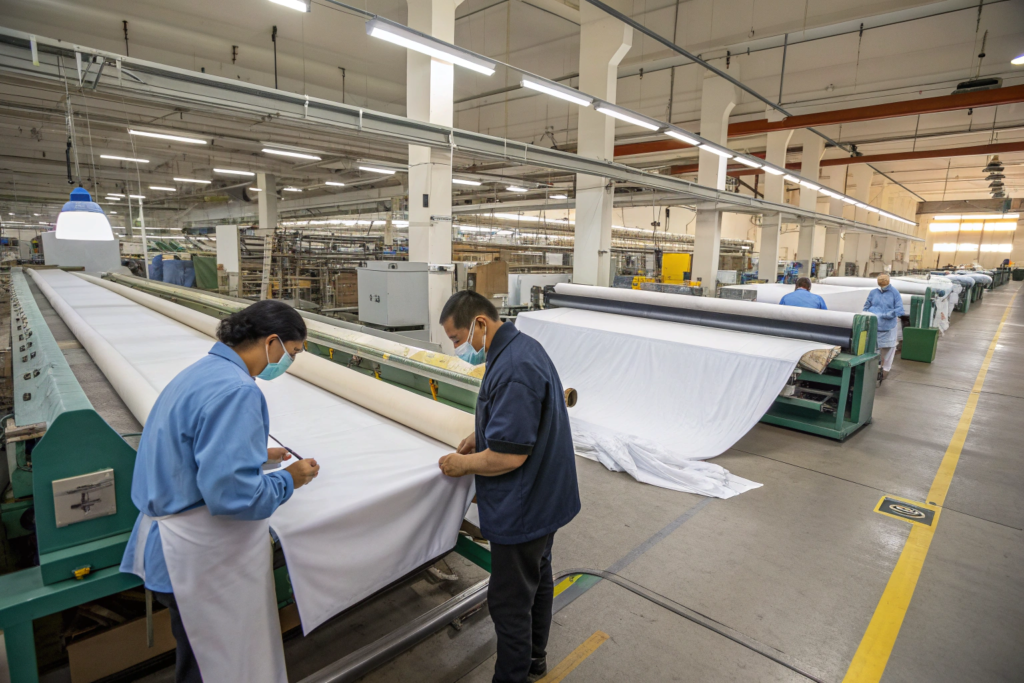
This is where the magic happens. The fabric is cut by automated machines for precision. Our skilled sewers, some of whom have worked with me for over a decade, assemble the pieces. But production is nothing without control. We have quality checkpoints after cutting, after sewing, and after finishing. We check for loose threads, incorrect stitching, and measurement accuracy. We don’t wait for a final inspection to find problems. We find them during production and fix them immediately. This is how we ensure that when the goods are packed, they are ready for your customers.
Logistics, shipping, and DDP delivery
Getting the product from our factory in China to your door in America is the final step. And it is a step many factories ignore. We don’t. We handle the booking, the documentation, and the customs clearance. Many of our clients prefer our DDP service. DDP means we handle everything, including paying the duties and taxes in the U.S. You receive the goods at your warehouse with no surprise bills. It is truly full package, from our loading dock to your customer’s closet.
How Do You Verify Quality and Certifications in a Foreign Factory?
Trust is good. Verification is better. I learned this lesson ten years ago when a buyer asked me for specific certifications. At that time, I didn’t have them all. I lost the order. It hurt. From that day, I made sure Shanghai Fumao became a factory that could open our books and our processes to any audit.
You, as a brand owner, have a reputation to protect. If a supplier sends you fabric that doesn’t meet U.S. flammability standards, you are liable. If the garments arrive with lead paint on the buttons, you could face serious legal issues. We take that responsibility seriously.
What certifications should you ask for?
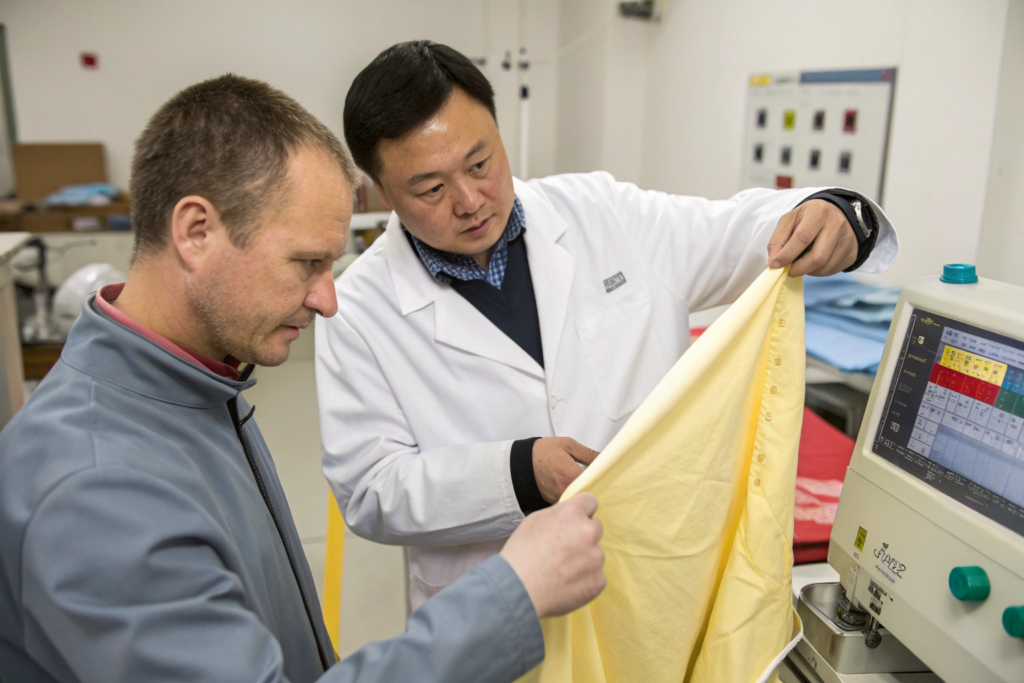
Certifications are not just pieces of paper. They are proof of a system. For our factory, we maintain certifications that matter to the U.S. market. These include ISO 9001 for quality management. For specific products, we can provide Oeko-Tex Standard 100 certificates, which prove every thread, button, and zipper is free from harmful substances. If you need organic cotton, we have GOTS certification. If you need social compliance, we can provide audits like BSCI or Sedex. I keep these documents updated and ready to share. If a rep tells you they have a certification but can’t show you the latest report, be careful. Ask for the certificate number and verify it.
How can you trust our quality without flying here every month?
You can’t fly here every month. It’s too expensive and time-consuming. So we bridge that gap with technology and transparency. First, we offer video calls during key production milestones. You can watch the first samples come off the line. Second, we send detailed photo reports. We show you the measurements we are taking. We show you the wash tests. Third, I encourage you to hire a third-party inspection company. I welcome them to our factory. I want them to find issues, because I want to fix them before the shipment leaves. Last year, for a client in Florida, the third-party inspector flagged a small stitching issue on 50 units. We fixed every single one before they were packed. The client never saw the problem, only the perfect final product.
Why Choose a Chinese Factory Over Vietnam or India for Full Package?
I am Chinese. I run a factory in China. So you expect me to say China is the best. But I don’t want you to take my word for it. I want you to look at the facts of what a mature supply chain means for your business. Vietnam and India are good countries. I have partners there. But for full package manufacturing, China still has an edge.
I spoke to a buyer from Oregon last month. He had been sourcing simple t-shirts in Vietnam. The price was good. But when he wanted to add a complex new dye technique for his next line, the Vietnamese factory couldn’t do it. They didn’t have the machinery or the trained workers. He came back to China because we have the depth to handle complex orders and simple ones.
What about price? Are Chinese factories still competitive?
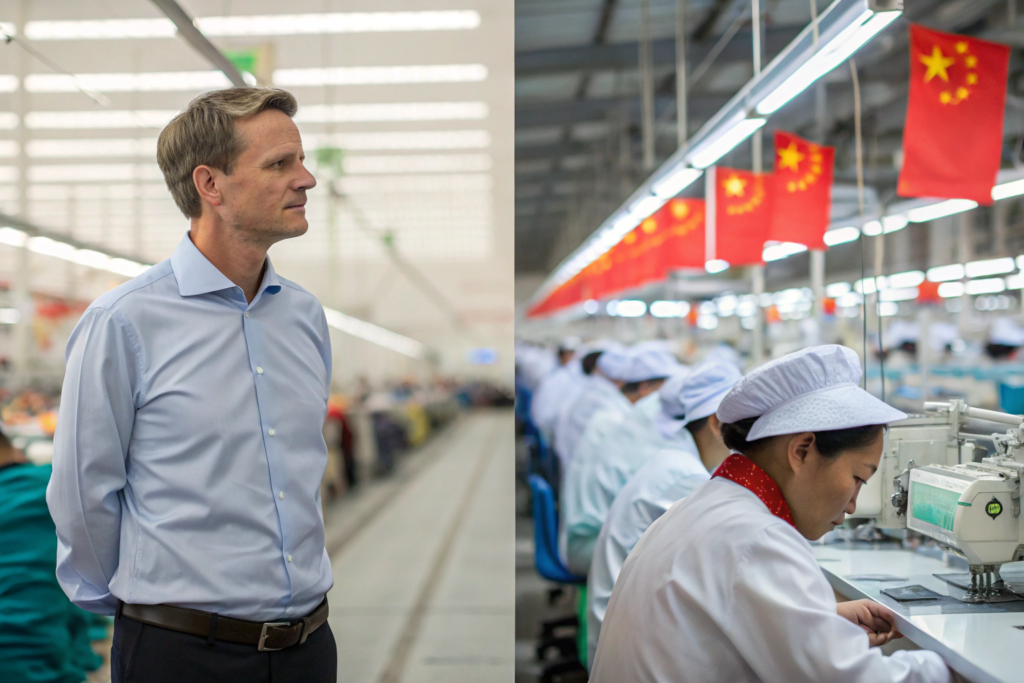
Price is always a concern. I get it. Your profit model depends on buying low and selling high. Ten years ago, China was the cheapest. Now, labor costs here have risen. So why do brands still come here? Because the total cost of the project is often lower. In other countries, you might save 10% on the base labor cost. But then you might lose 20% on fabric waste because their cutting is less precise. You might lose another 15% on shipping delays because the port infrastructure is less reliable. You might have to spend your own time fixing quality problems. In China, the ecosystem is mature. The fabric is next door. The trim supplier is down the street. The port is efficient. The speed and reliability save you money that the cheap labor rate elsewhere cannot match. At Shanghai Fumao, we optimize our production lines to keep our prices competitive while maintaining that speed and quality.
How does China’s infrastructure speed up production?
Imagine you are making a jacket. You need the main fabric, lining fabric, zippers, buttons, snaps, and labels. In China, I can source all of these components within a 50-mile radius of my factory. If we run out of a specific color thread, a courier delivers it in two hours. If we need to adjust a metal snap, the supplier’s technician visits our factory the same day. This ecosystem does not exist in many developing countries. This proximity is the secret to our fast delivery times. It allows us to solve problems in hours, not weeks. For you, this means your order is less likely to be delayed and miss your selling season. That reliability is worth a premium.
How Do You Start a Full Package Project with a Factory Like Ours?
Starting a new project with a new factory can feel like a big step. You might worry about getting stuck with a minimum order quantity that is too high. You might worry about protecting your designs. These are normal concerns. I have helped hundreds of brands take this first step. The process is simpler than you think.
I remember a smaller brand from Denver. They were nervous. They had only done small batches locally. They sent me a sketch and asked, "Can you even make five pieces for me to test?" We could. We made the samples, they loved them, and that small test grew into a regular production line that now runs thousands of units a year. The key is just to start the conversation.
What information should you prepare before contacting us?
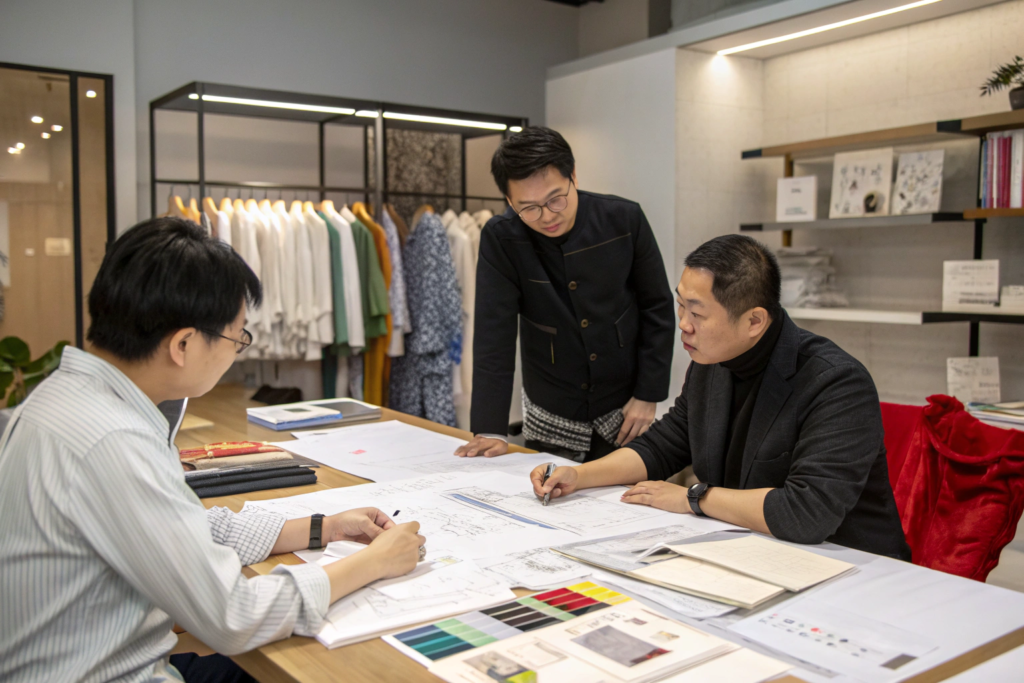
The best way to start is to be prepared, but you don’t need a perfect technical pack. You need a clear idea. Send us images, sketches, or even a link to a similar product. Tell us about the fabric you like. Tell us the quantity you are dreaming of, even if it’s just a guess. The more we know, the better we can guide you. When you email Elaine at elaine@fumaoclothing.com, include as much detail as you have. If you don’t know the fabric, tell us the price point you want to hit. We can suggest fabrics that fit your budget. If you don’t know the exact quantity, tell us if you are testing a market or launching a full line. We can recommend a minimum that makes sense for your stage.
What is the timeline from first contact to delivery?
Speed is everything in fashion. Here is a realistic timeline for a typical woven shirt or jacket project with Shanghai Fumao:
- Week 1-2: Initial contact. We discuss your idea. We provide a rough quote based on your specifications.
- Week 3-4: Sample development. We create the first sample. We might send photos or videos for initial feedback. We ship the physical sample to you.
- Week 5-6: Sample approval and adjustments. You review the fit. We make any changes. You approve the final sample and sign off on production.
- Week 7-12: Production. We order fabric, cut, sew, and conduct in-line quality checks.
- Week 13-14: Final QC and shipping. We do the final inspection, pack the goods, and ship them via air or sea. For sea freight to the U.S. West Coast, add about 15-20 days for transit.
This timeline is a guide. Simple t-shirts can move faster. Complex outerwear might take a little longer. But we will give you a clear schedule at the beginning and update you every step of the way. We do not let our clients wonder where their goods are.
Conclusion
Full package manufacturing is more than a service. It is a partnership designed to remove the stress and risk from sourcing apparel. You no longer need to juggle fabric mills in three countries and hope everything arrives on time. You focus on your brand, your marketing, and your customers. We focus on turning your designs into products that meet your quality standards and arrive in time for the season.
For over two decades, I have built Shanghai Fumao to be that trusted partner for American brands. We combine the deep supply chain advantages of China with transparent communication and rigorous quality control. Whether you need help developing a rare style, sourcing the perfect fabric, or managing a complex DDP shipment, we have the experience and the production lines to deliver.
If you are tired of inefficient communication with sales reps or worrying about delayed shipments, let’s talk. Bring us your sketches, your ideas, or just your questions. You can reach our Business Director, Elaine, directly. She will personally oversee your inquiry and connect you with the right team. Send her an email at elaine@fumaoclothing.com. Let’s build something great together.