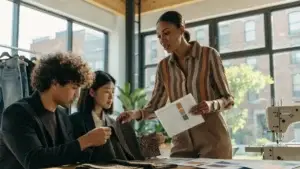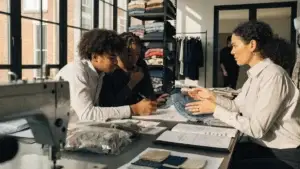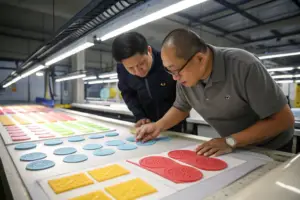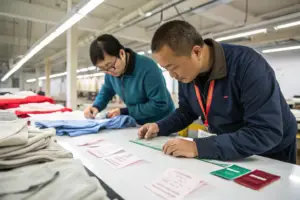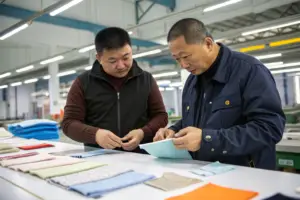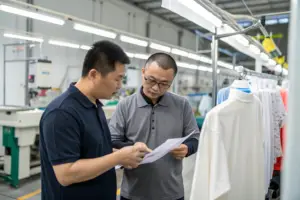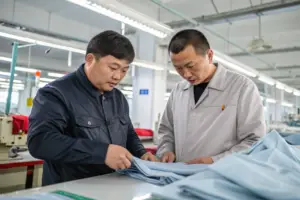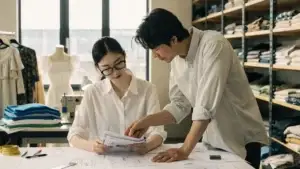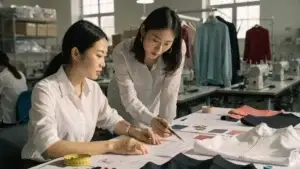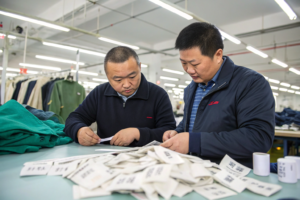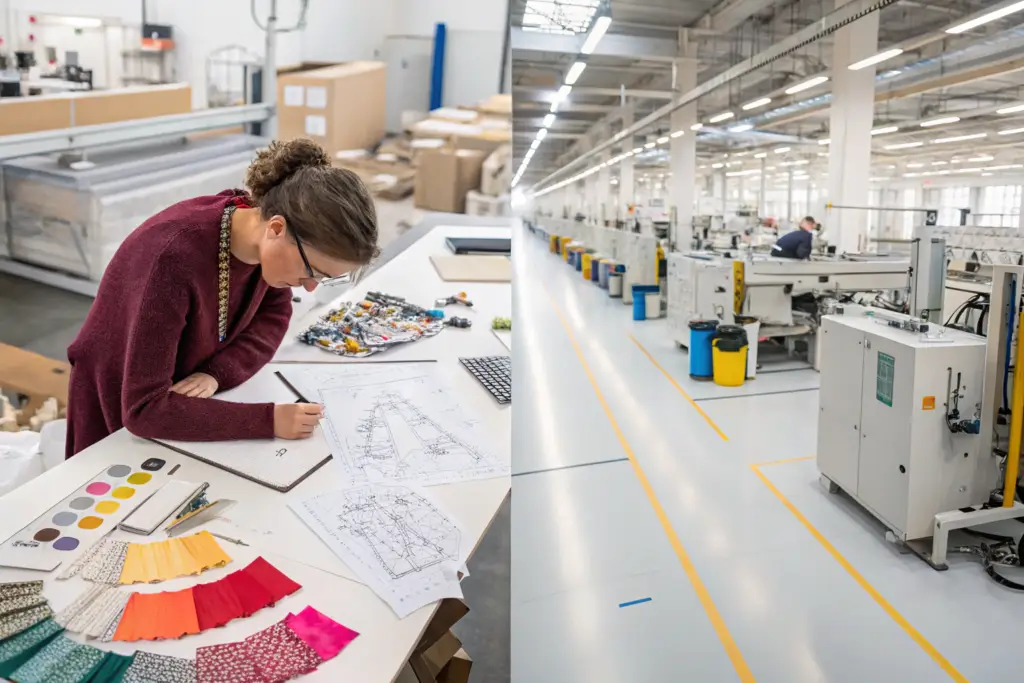
I've stood in our sample room countless times, holding a sketch from a client and wondering how we would bring it to life. The request is almost always the same: "Can you make this unique design, but I need it in 60 days, not 90." For years, the industry treated creativity and speed as opposites. You either got something special, or you got it fast. You couldn't have both. But a few years ago, a buyer from Seattle changed my perspective. She ran a contemporary womenswear brand. Her designs were unlike anything in the market, featuring complex draping and unusual seam lines. She needed small batch runs delivered quickly to test the market. The big factories turned her down. She came to us.
The secret to balancing rare styles with fast production lies in early collaboration and modular manufacturing. When a supplier is involved in the design phase, we can preempt production bottlenecks. We can suggest fabric alternatives that achieve the same look but are readily available. We can plan our cutting and sewing lines around the garment's complexity before the order is even placed. Speed isn't just about rushing at the end; it's about smart planning from the beginning.
My name is [Your Name], and I own Shanghai Fumao. We've spent the last decade perfecting this balance for American and European brands. We've learned that "rare" doesn't have to mean "slow." It just means we need to communicate differently. Let me show you exactly how we turn creative visions into reality without missing a single shipping deadline.
How Can We Collaborate During Design To Save Time Later?
The biggest time-waster in our industry is the back-and-forth after an order is placed. A designer sends a sketch. The factory says, "We can make that." Then, weeks later, the first sample arrives, and it's wrong. The silhouette is off. The fabric doesn't drape correctly. The pockets are too shallow. This cycle can kill a selling season. I learned this lesson with a brand from Boston that made sophisticated workwear. Their first sample from another supplier was a disaster. They came to us frustrated and behind schedule.
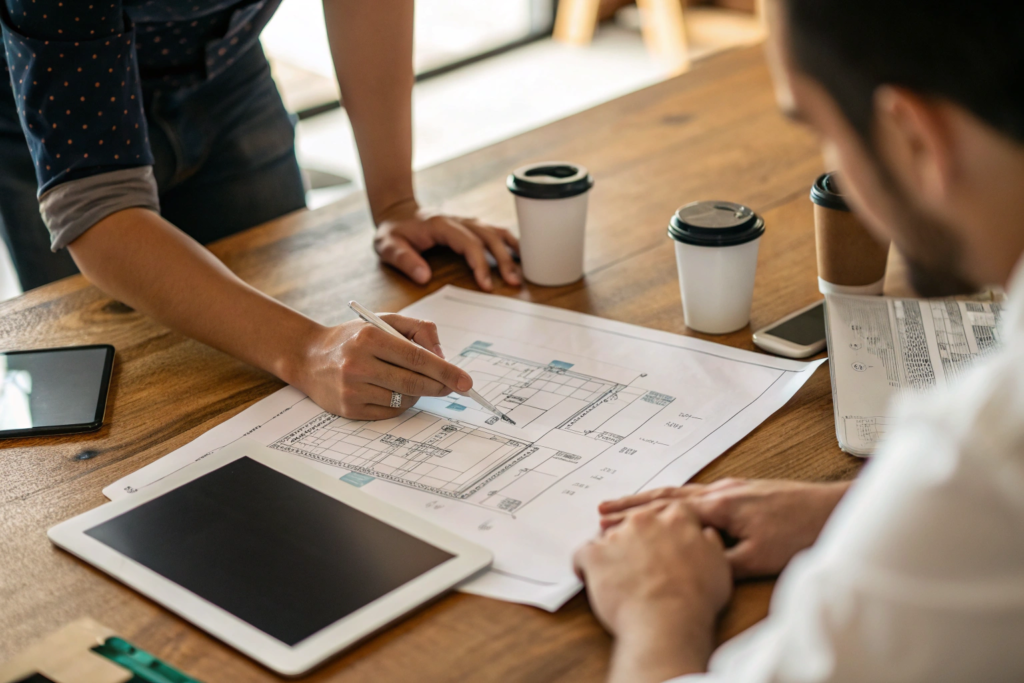
What is the difference between a sketch and a tech pack?
A beautiful sketch is an inspiration. A detailed tech pack is a blueprint for speed. The red flag for many brands is sending only images. A proper tech pack includes flat sketches with measurements, construction details, stitch types, and trim specifications. When a brand sends us a complete tech pack, we can start pattern making immediately. There is no guesswork. If you don't have experience creating tech packs, there are fantastic resources available. Websites like Techpacker offer software and templates to build professional specifications. Investing time here saves weeks of sampling errors. We also provide feedback on your tech pack for free at Shanghai Fumao because a clear start leads to a fast finish.
How does early fabric selection prevent delays?
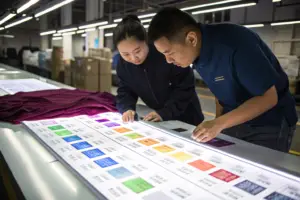
Imagine designing a coat with a rare, heavy bouclé fabric. It looks amazing in the sketch. But if that fabric is only made by one mill in Italy with a 12-week lead time, your production speed is dead on arrival. When we collaborate early, we can discuss "fabric mapping." We look at your desired aesthetic and match it with fabrics that are either in stock at our partner mills or have short production lead times. For a client in Chicago who needed a unique velvet for holiday, we sourced a deadstock luxury velvet that was sitting in a mill in Korea. It was rare, beautiful, and we got it in two weeks instead of waiting for a new production run. Understanding fabric sourcing timelines is crucial, and resources like Common Objective provide great insights into the global textile supply chain.
What Production Techniques Allow For Both Complexity And Speed?
For years, factories separated "quick response" lines from "complex style" lines. The quick lines did simple t-shirts. The complex lines did everything else, and they were always slow. We broke that model. We realized that with the right machine setup and operator training, a factory can be both flexible and fast. I saw this firsthand when a surf brand from California came to us with a jacket that required 12 separate construction steps, including a welded seam. Most factories quoted them 120 days. We did it in 75.
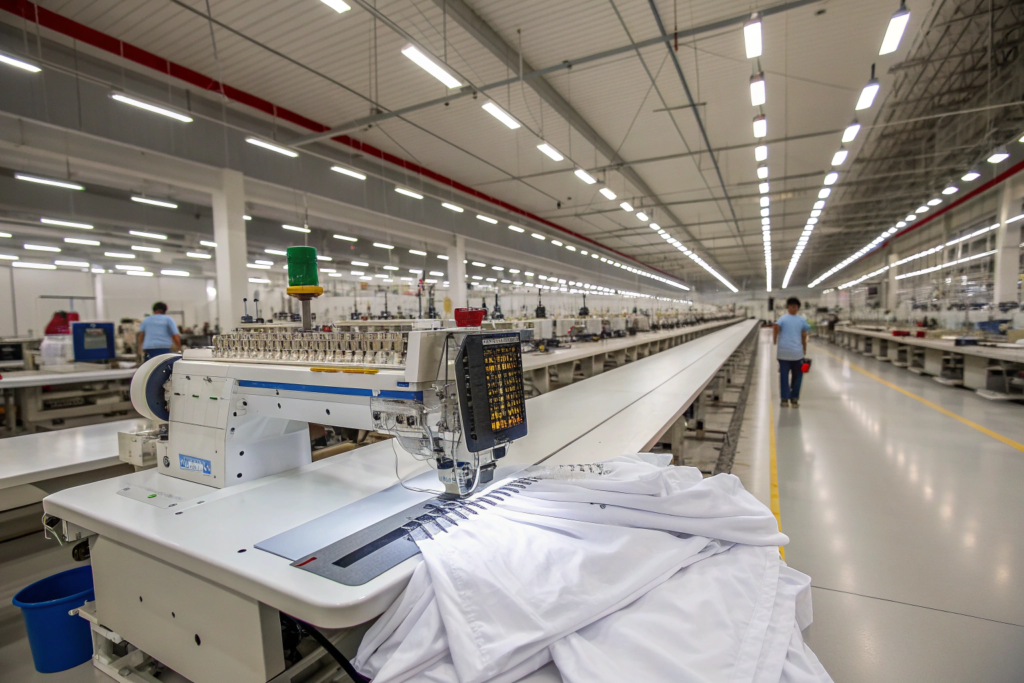
What is modular manufacturing and how does it help?
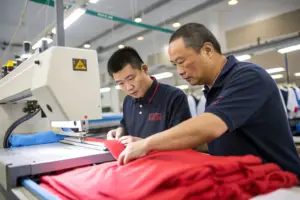
Traditional manufacturing is an assembly line. The garment moves from person to person. If one person is slow, the whole line stops. Modular manufacturing, or cell production, is different. A small team works on a garment from start to finish. They are cross-trained on multiple machines. This system is perfect for rare styles because it's flexible. If a design has a tricky detail, the team can figure it out together without holding up an entire factory. We switched to modular lines five years ago, and our lead times for complex styles dropped by 30%. You can read more about the efficiency of modern production systems from industry analysts at McKinsey's Apparel, Fashion & Luxury Group. This approach allows us to handle small batch runs of unique designs efficiently, a service we proudly offer to our clients at Shanghai Fumao.
Can digital sampling replace physical samples?
Partially, yes. And that "partially" saves a huge amount of time. We now use 3D sampling software like Browzwear or CLO 3D. Instead of sewing a first physical sample, which takes 2-3 weeks, we can create a photorealistic 3D model in days. The designer can see the drape, the fit, and the details on a computer. We make changes digitally. We only cut a physical sample when the digital version is approved. This process eliminates at least one round of physical sampling. For a recent project with a New York streetwear brand, we went from initial sketch to approved physical sample in 10 days because we did three rounds of digital fitting first. This is a game-changer for speed. To see the capabilities of this technology, explore the Browzwear or CLO 3D websites.
How Do We Manage Small Batch Production Of Unique Items?
The market has changed. Brands don't need to order 10,000 pieces of one style anymore. They want to test trends with 300 or 500 pieces. They want to offer variety. But many factories refuse small batches. They say it disrupts their mass production. They're not wrong. It does disrupt the old way of working. But we've built our model around this new reality. A few years ago, a boutique brand from Austin, Texas, needed 200 pieces of five different rare-style dresses. They were sure no factory would take them. We did, and we delivered in 45 days.
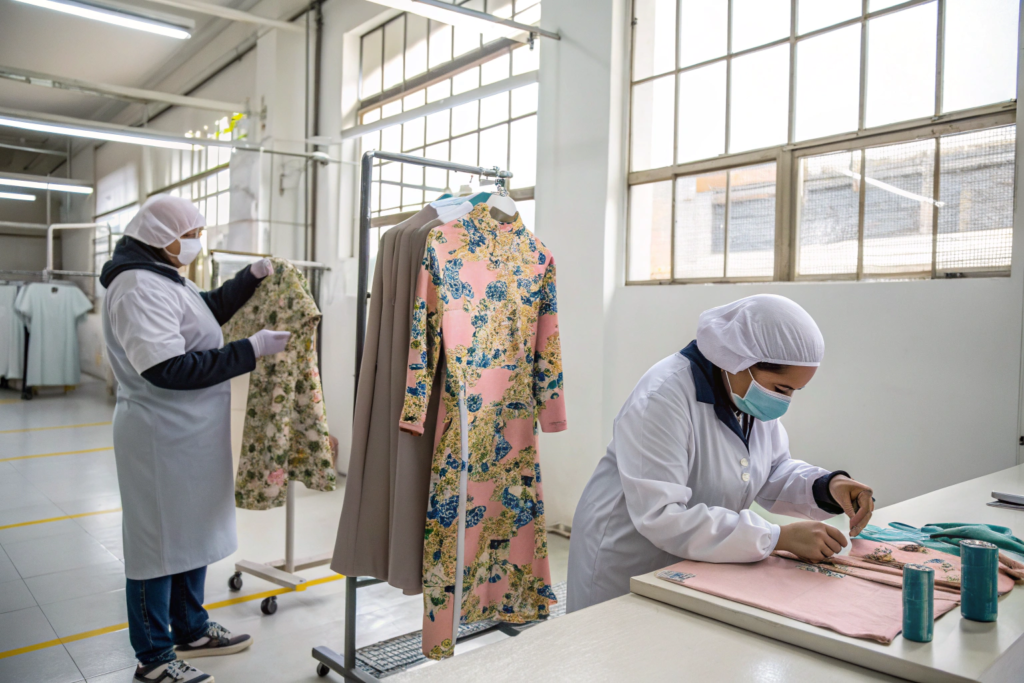
How do we handle fabric waste for small orders?
Fabric waste is a real cost issue for small batches. When a factory cuts only 200 yards of fabric, the waste percentage can be higher than a 2,000-yard cut. To solve this, we use automated nesting software. This software calculates the most efficient way to lay pattern pieces on the fabric, minimizing waste regardless of order size. We also maintain a "deadstock" library of high-quality leftover fabrics from previous orders. Sometimes, we can find a rare fabric that perfectly matches a new design, eliminating fabric lead time and cost entirely. For a recent project, a designer found a rare deadstock silk that was originally produced for a luxury brand that over-ordered. It was a perfect match for her unique top design. Learning about fabric waste reduction is important, and organizations like the Sustainable Apparel Coalition offer valuable resources on efficient material use.
What about trim and label customization for small runs?
Custom labels, hang tags, and buttons often have high minimum order quantities (MOQs). A factory might require you to order 5,000 pieces of a custom woven label. For a 300-piece order, that's impossible. We've built relationships with suppliers who specialize in low MOQ trims. They use different technology, like digital printing for labels, to make small batches economical. When we plan a small batch production, we immediately review the trim requirements. If the client's dream button has a 5,000-piece MOQ, we find a similar alternative with a 500-piece MOQ. This keeps the project moving fast and on budget. A great resource for finding low-MOQ trim suppliers is the Maker's Row platform, which connects brands with domestic and international production partners.
How Do We Ensure Quality Doesn't Drop When We Rush?
Speed is useless if the quality is terrible. A rushed, bad product will kill your brand faster than a late one. The key is building quality checks into the process, not adding them at the end as an afterthought. I remember a brand from Miami that needed a rush order for a music festival collection. They were terrified the quality would suffer. We sat down and mapped out every critical control point for their designs. We agreed to inspect each step: the fabric, the cutting, the sewing of each major component, and finally the finished garment. Because we planned the inspections, we found a tension issue on a specific seam after the first 20 pieces, not after 200.
What are in-line inspections versus final inspections?
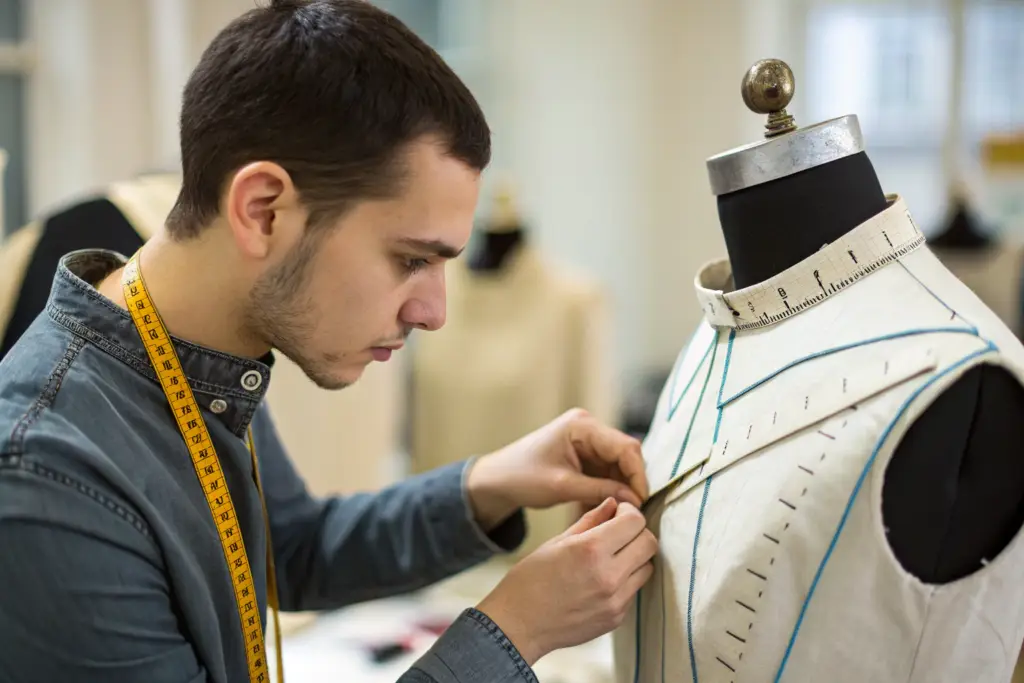
Many factories only do a final inspection. They finish all the garments, then check them. If there's a problem, everything is wrong. You have to redo everything. That's a disaster for speed. We use in-line inspections. This means after the fabric is cut, we check the cut pieces. After the first few garments are sewn, we check those first pieces (this is called a "seal" or "top-of-line" inspection). If something is wrong, we catch it immediately and fix the process. Only then does the whole line run. For a rush order of rare styles from a Canadian brand last year, our in-line inspection caught a misunderstanding on a pocket placement after the first five units. We fixed the pattern instantly, and the entire order of 800 pieces was perfect. This process is a core part of our quality management system, which aligns with the principles outlined by the American Society for Quality.
How do we train workers for unfamiliar designs?
A rare style is, by definition, unfamiliar. You can't just put it on a standard line and expect workers to know what to do. We address this with a "pre-production meeting" for every unique style. The pattern maker, the line supervisor, and the key operators sit down with the sample garment. We go through each step. We identify which steps are tricky. We even create "visual aids" or small video clips showing how to do the difficult parts. This 30-minute meeting before production starts prevents hours of mistakes and rework later. It's an investment in speed. For a deeper look into effective workforce management in manufacturing, the Society for Human Resource Management offers extensive resources on training and development.
Conclusion
Achieving rare styles without sacrificing speed is not magic. It's a deliberate process. It starts with clear communication before the order, using tools like tech packs and 3D sampling. It relies on flexible production systems like modular manufacturing and automated nesting. And it's protected by rigorous in-line quality control and focused worker training. The days of choosing between creativity and efficiency are over. You can have both, but you need a partner who understands how to build that bridge.
At Shanghai Fumao, we've made this our specialty. We love the challenge of a unique design. We get excited when a brand brings us something we've never seen before. But we also understand the pressure of the market, the deadlines, and the need to move fast. We've built our five production lines and our team to serve this exact need. We helped a streetwear brand from Los Angeles bring a complex, multi-panel technical pant to market in just 55 days, a style other factories said would take four months. We guided a sustainable brand from Oregon through a rare fabric selection that was both eco-friendly and available immediately, saving them eight weeks of lead time.
If you have a vision for something different, something rare, don't let slow production hold you back. Let's talk about how we can make it happen, on time and at the quality your brand deserves. Please contact our Business Director, Elaine, directly at elaine@fumaoclothing.com to start the conversation. We are ready to turn your unique ideas into your next best-selling collection.