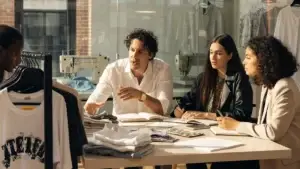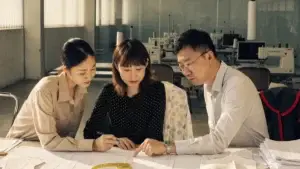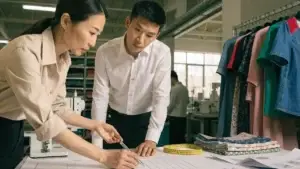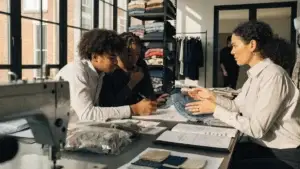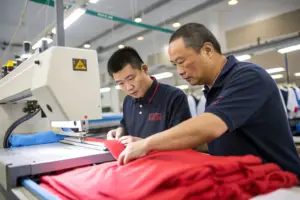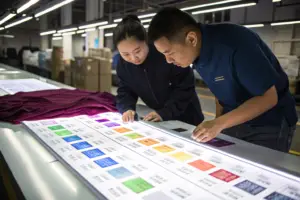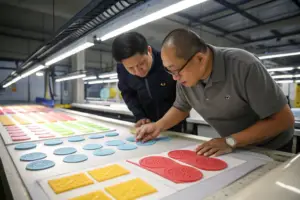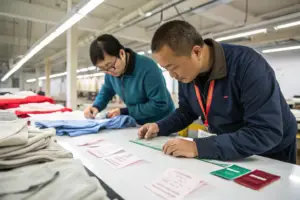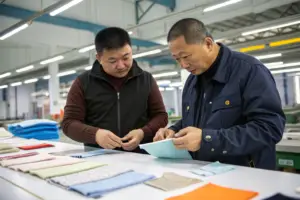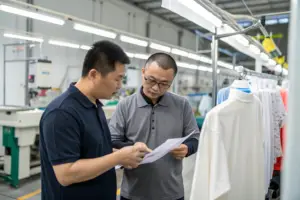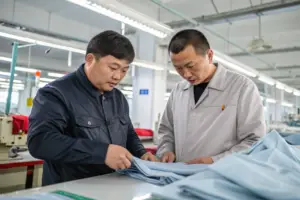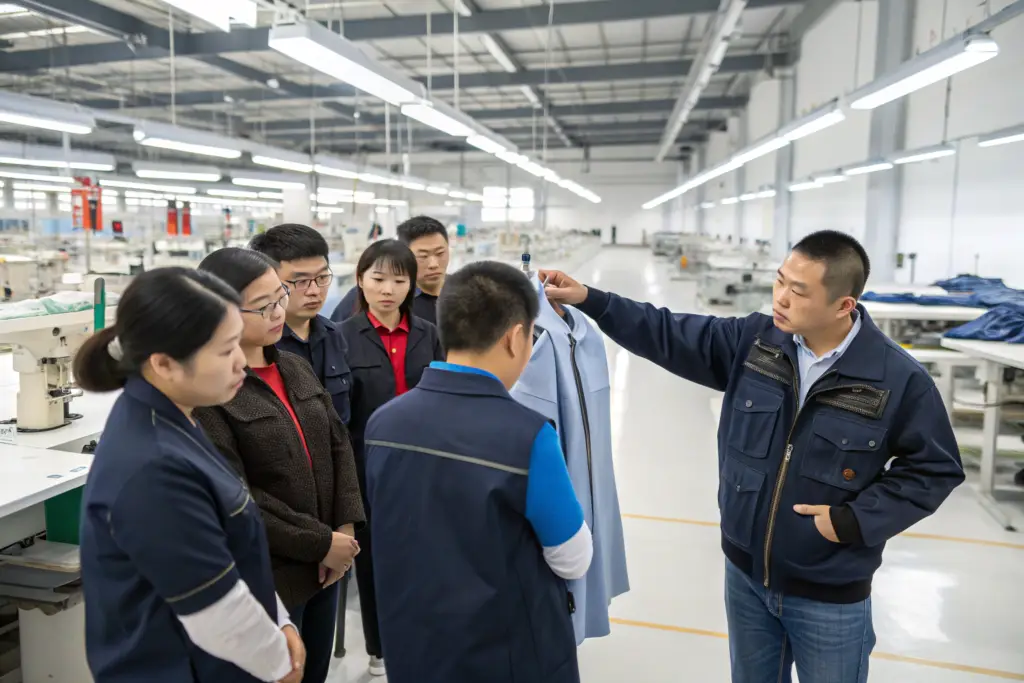
Last month, a buyer from New York asked me a blunt question during a factory tour. He had seen our equipment, which is modern but similar to many others in China and Vietnam. He wanted to know our real edge. I didn't talk about machines. I pointed to a group of our pattern makers who were huddled around a table, dissecting a sample he had just handed us. They were debating the best way to adjust the stitching for his specific fabric blend to prevent puckering. "That," I told him, "is our advantage."
We invest heavily in continuous training because machinery is just a tool. The skill, adaptability, and judgment of our people are what turn that tool into a perfect product for your brand. When you partner with Shanghai Fumao, you are not just hiring a factory; you are accessing a team that is constantly learning how to solve your specific problems and prevent costly mistakes before they happen.
I started this company because I saw a gap. Too many U.S. brands were getting stuck with suppliers who treated their orders like a commodity. They would send samples back and forth for weeks, dealing with sales reps who didn't understand the technical side. The real issue was always the same: a lack of deep, specialized knowledge on the production floor. A machine operator who doesn't understand why a seam is failing on a new type of stretch fabric will keep making the same error. A quality inspector who hasn't been trained on the latest U.S. sizing standards might let a shipment go out with inconsistencies. We decided early on that our only path to being a reliable partner was to make sure every single person in our process, from the designers to the logistics team, was an expert in their field. This commitment to knowledge is how we guarantee quality control, ensure on-time delivery, and build the trust that our buyers, like you, depend on.
How Does Staff Training Impact Garment Quality And Consistency?
Think about the last time you had a quality issue with a shipment. Maybe the color was slightly off. Maybe the stitching on a dozen units was loose. Chances are, it wasn't a machine problem. It was a human judgment problem. Someone didn't know the exact shade to look for under specific lighting. Someone wasn't sure how tight a "tight stitch" really needed to be for that fabric.
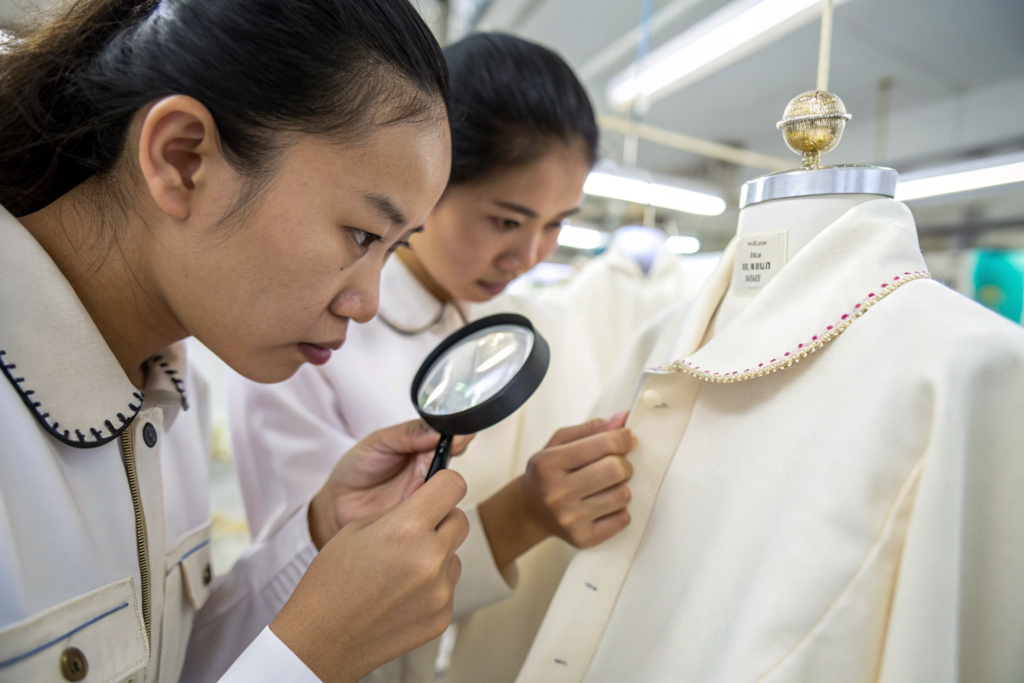
What Specific Skills Do We Update Through Training To Prevent Defects?
We don't just train people once and forget about it. Fashion changes. Fabrics change. Buyer expectations change. Our training programs are living systems. For example, last year, a new type of recycled polyester became popular among our European clients. It behaved differently than standard polyester; it was more prone to heat sensitivity during ironing. We immediately held workshops for our finishing department. We brought in the fabric supplier to explain its properties. We then ran tests and created a new standard operating procedure for ironing this specific material. This proactive training prevented what could have been hundreds of damaged garments for a brand we were working with. We also run monthly sessions on quality control standards and how to identify subtle defects like shading or needle damage that are easy to miss. We use real-world examples from our own production line, showing a "good" vs. "bad" unit and explaining the root cause. This constant reinforcement helps our team maintain a zero-defect mindset.
How Does Consistent Training Lead To Fewer Production Errors?
Consistency is the holy grail of manufacturing. A brand needs to know that the 1,000th piece from an order will be identical to the first. This is impossible without a skilled team. Our training directly targets this. We use a "train-the-trainer" model. Our most experienced production line leaders are constantly mentoring newer staff. They don't just say "do it this way." They explain why. Why this stitch length on a woven shirt and a different one on a knit t-shirt. When people understand the "why," they make better decisions.
A concrete example: A few months ago, an operator on our line noticed the fabric for a run of high-end men's trousers was feeding slightly unevenly. Because of our training sessions on fabric behavior, he recognized the early warning sign of a potential tension issue. He stopped the line and called over his supervisor. We adjusted the machine settings before a single defective pair was made. In a factory without that training, he might have just kept going, and we would have only discovered the problem at final inspection, resulting in wasted material and rework. That's the real value. Training turns every employee into a quality inspector.
What Are The Hidden Costs Of Not Training Your Supplier's Team?
When a buyer only focuses on the price per unit, they often miss the biggest costs. These costs don't show up on the invoice. They appear later, in the form of rushed shipping, missed sales, and damaged brand reputation. An untrained team at the supplier level is a direct risk to your bottom line.

How Does Poor Training Lead To Shipping Delays And Missed Seasons?
This is the pain point I hear most often from buyers like you. A shipment arrives late, and the entire selling season is lost. The root cause is often poor planning and problem-solving on the factory floor, which stems from a lack of training. An untrained cutting team might waste too much fabric, meaning we have to order more, causing a delay. An untrained sewing operator might work too slowly because they are unsure of the correct technique. An untrained production planner might not know how to re-organize the line when a machine breaks down.
I remember a case from two years ago. We were producing a complex, multi-paneled jacket for a client in Chicago. Our head of production realized that a particular step in the assembly was taking twice as long as estimated. Because our team is trained in lean manufacturing principles, they didn't just panic. They held a quick meeting, analyzed the process, and redesigned the workflow for that station. They retrained three operators on the new method over a single weekend. We absorbed the extra time and still shipped on time. If our team hadn't had that problem-solving training, that order would have been late. You would have been stuck with winter jackets arriving in spring.
What Is The Real Cost Of Certificate Fraud And Poor Compliance?
Your profile mentioned a critical pain point: suppliers occasionally falsify certificates. This is a terrifying reality in our industry, and it's almost always a sign of a poorly run, untrained operation. A reputable supplier doesn't need to fake a certificate. They train their staff to meet the standards required to earn that certificate legitimately.
When a buyer asks us for a specific certification, like OEKO-TEX Standard 100, we don't just buy a piece of paper. We train our entire sourcing and production team on what it means. They learn which dyes and chemicals are banned. They learn how to segregate certified materials from non-certified ones to avoid cross-contamination. Our internal audits are constant. This training is our insurance policy. It protects your brand from the massive reputational and financial damage that comes from a scandal involving unsafe materials. When you work with Shanghai Fumao, you are getting a partner who values the integrity of your brand as much as you do. We build compliance into our processes through knowledge, not just a stamp on a document.
How Can A Supplier's Training Improve Communication And Speed?
You mentioned inefficient communication with sales reps is a major frustration. I understand this completely. It happens when the person you are talking to doesn't really understand the product or the production process. They are just a messenger. They take your question, go ask someone in the factory, and come back with an answer a day later. This back-and-forth kills speed and creates errors.

How Do We Train Our Sales Team To Be Technical Experts?
At Shanghai Fumao, our sales team doesn't just sit in an office. They spend time on the production floor. They go through basic training on cutting, sewing, and finishing. They learn to read a tech pack accurately. They understand the difference between a single needle stitch and a double needle stitch. This technical knowledge changes everything.
When you talk to one of my colleagues, like our Business Director Elaine, you are talking to someone who can visualize your problem. If you send an email saying, "The collar on the sample doesn't sit flat," she doesn't just forward it. She can discuss potential reasons with you immediately. "Is it the interfacing? Is it the tension on the top stitch?" This saves days of email tennis. We train our team to understand your intent, not just your words. This shared language is the foundation of fast, efficient work.
What Is The Link Between Technical Training And Faster Sampling?
The sampling stage is where most projects get bogged down. An untrained sales rep or pattern maker might make a sample that is technically correct but misses the aesthetic point. You send it back. They try again. Weeks go by.
Our continuous training program includes regular sessions on design interpretation. We bring in mood boards from fashion forecasters. We study the details of high-end designer garments. We train our pattern makers to think like designers. Last year, a brand sent us a sketch for a dress with a very specific, soft drape. Our head pattern maker, through his ongoing education in fabric draping techniques, immediately suggested a slight adjustment to the pattern and a specific grainline that would achieve the desired look better than the original specs. The first sample was approved. That's speed. That's efficiency. That's what happens when you invest in people who understand both the art and the science of making clothes. This expertise is built into the service we offer at Shanghai Fumao.
How Does Training Help Us Adapt To Complex Manufacturing Like DDP?
DDP, or Delivered Duty Paid, is more than just a shipping term. It's a responsibility. It means we take full ownership of getting your goods from our factory floor to your warehouse door. This involves complex logistics, customs regulations, and precise timing. A single mistake in paperwork can hold up a shipment for weeks. This requires a highly trained team, not just on the production side, but on the logistics and compliance side as well.
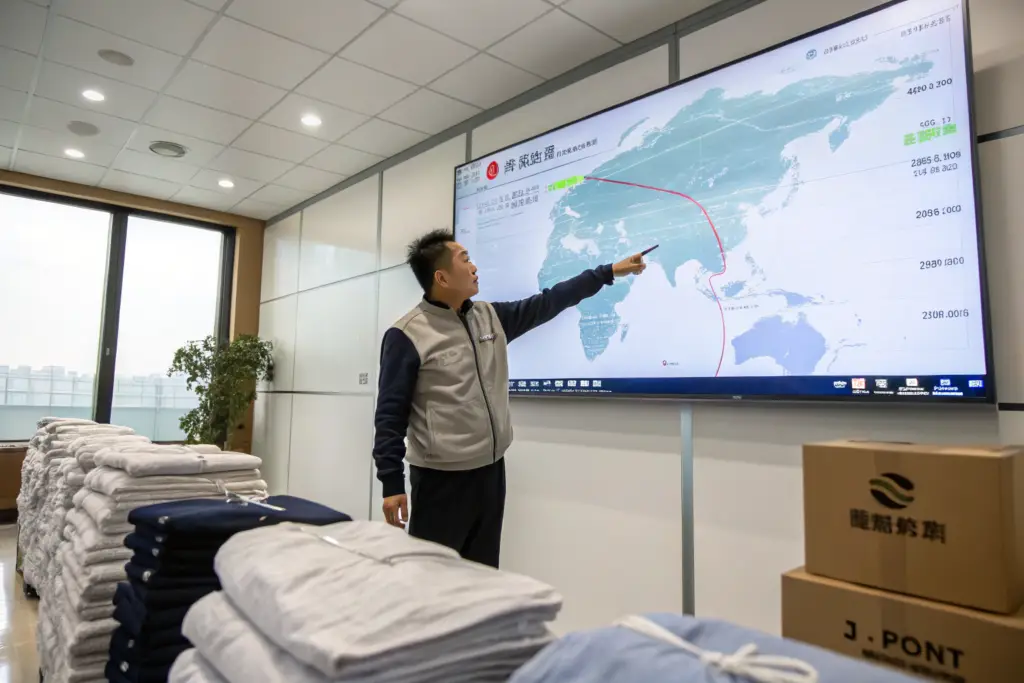
Who On Our Team Manages The Complexities Of DDP Shipping?
It's not just one person. It's a team. We have dedicated logistics specialists whose only job is to stay updated on U.S. import regulations, tariff codes, and documentation requirements. They attend webinars and seminars hosted by shipping lines and customs brokers. They are trained to spot potential red flags in paperwork before it becomes a problem.
I recall a situation where a new trade regulation was set to take effect right in the middle of a client's shipping window. Our logistics team had been tracking this change for months. They proactively reached out to the client, adjusted the shipping schedule, and prepared all the new required documentation in advance. The shipment cleared customs without a single delay. This is not luck. This is the result of continuous investment in specialized knowledge. Your supply chain is only as strong as the knowledge of the people managing it.
How Does A Trained Production Team Support DDP Efficiency?
DDP also puts a premium on production accuracy. If the final inspection at our factory fails, we can't just "fix it on the dock." We have to absorb the cost of delays and re-shipment. This is why our production training ties directly into our DDP service. Our quality control team is trained to inspect goods with the mindset of a U.S. customs officer and a U.S. consumer. They know that a small mistake in a country of origin label or a care instruction can stop an entire container.
We simulate these scenarios in our training. We show our inspectors examples of correctly and incorrectly labeled garments. We drill them on the specific placement and formatting required by U.S. law. This attention to detail, driven by continuous learning, ensures that when we commit to a DDP shipment for you, we have the internal expertise to deliver on that promise reliably. It transforms a complex logistical challenge into a seamless, worry-free experience for your brand.
Conclusion
The garment industry is constantly changing. New fabrics appear. New styles become popular. Trade regulations shift. Consumer expectations rise. A factory that rests on its past achievements will quickly become obsolete. For me, investing in the continuous training of our team at Shanghai Fumao is not an expense. It is the only way to guarantee that we can keep solving your problems, year after year. It is how we ensure that your shipments arrive on time, that the quality is consistent, and that communication is clear and efficient. It is the foundation of the trust we build with every brand we partner with.
If you are tired of the inefficiency, the miscommunication, and the risks that come with suppliers who don't invest in their people, I invite you to experience the difference a trained team can make. Let's discuss how we can put our expertise to work for your next collection. Please contact our Business Director, Elaine, at elaine@fumaoclothing.com to start the conversation.