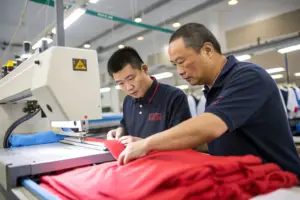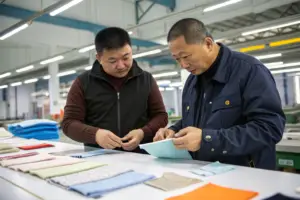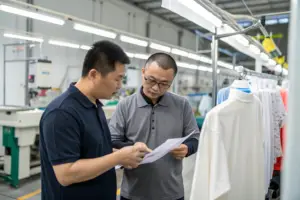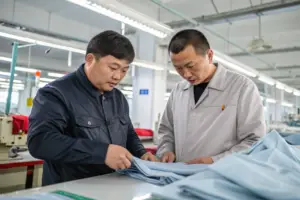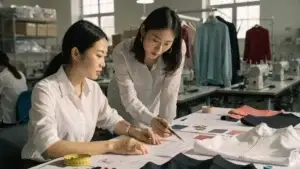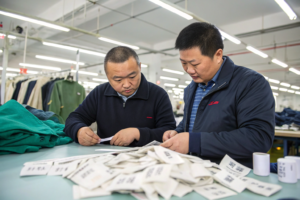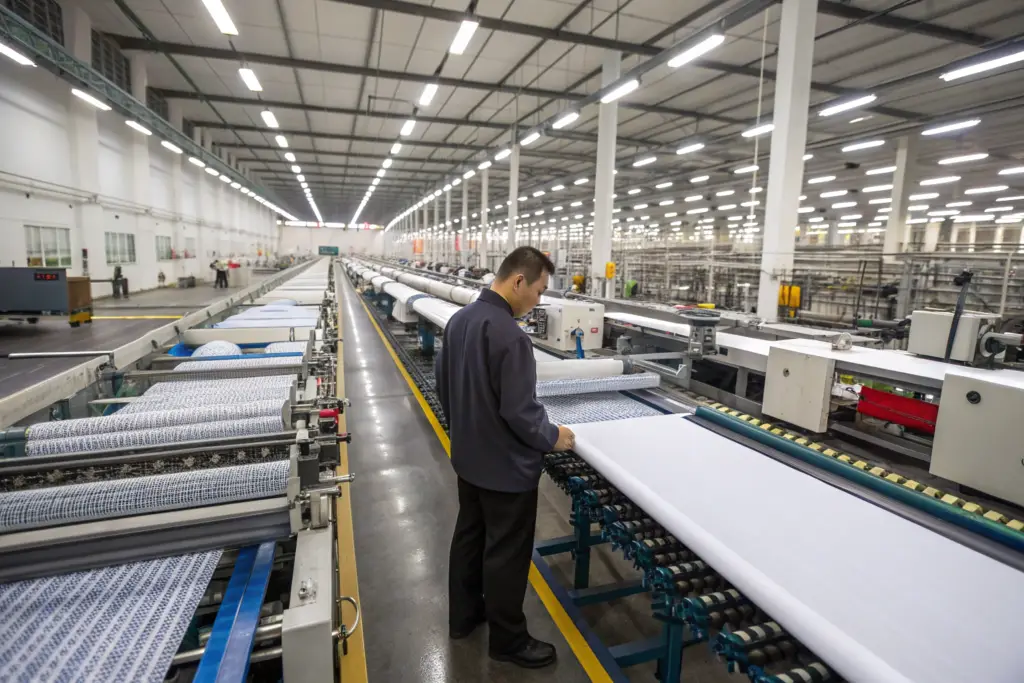
For years, one of my biggest frustrations in this industry was hearing buyers say, "The red on the sleeves doesn't match the red on the body." I knew that problem firsthand. In 2019, a major buyer from New York rejected an entire container of premium polo shirts because the color variation between two production batches was just slightly off under their showroom lighting. That rejection cost us time and money. It also taught me a permanent lesson. Color inconsistency is a silent killer for brands. It erodes trust and damages your reputation with end consumers. If you have spent decades sourcing garments from Vietnam or India like many of our clients, you know the pain of a shipment arriving only to find that the "Navy Blue" you approved looks like a completely different shade under natural sunlight.
Color consistency in apparel manufacturing is achieved through a combination of rigorous raw material control, standardized dyeing procedures, and advanced digital monitoring technology. It is not about luck; it is about engineering the process from fiber to finished fabric to ensure every piece meets the exact spectrophotometer readings, regardless of when or where it was produced.
The challenge becomes even more complex when you are dealing with multiple production lines running simultaneously. As a factory owner, I have seen how easy it is for a slight fluctuation in water temperature or a change in fabric tension to throw off an entire shade. For an American brand owner like Ron, who focuses on quality and competitive pricing, this is a non-negotiable aspect of supplier selection. You cannot afford to miss a selling season because your supplier's dye house had a bad week. That is why, at Shanghai Fumao, we have built our entire quality control philosophy around predictable and repeatable color. Let me walk you through exactly how we ensure that the black we produce in January looks identical to the black we produce in July.
What Raw Material Factors Cause Dye Lot Variations?
When buyers face shipment delays or quality claims, the finger is often pointed at the dye house. But in my experience, the root of the problem usually starts much earlier. It starts with the raw materials. You cannot dye a dirty or inconsistent fabric and expect a perfect result.
Why does the fabric's origin affect the final dye shade?
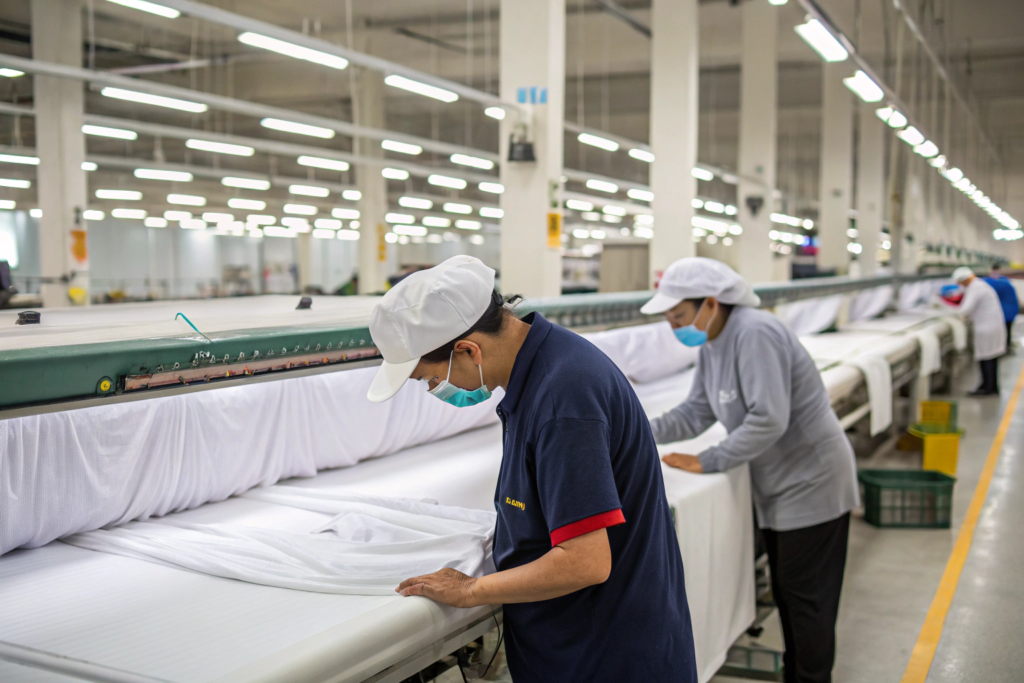
The journey to consistent color begins at the spinning mill. The origin of the cotton or the quality of the polyester filament directly impacts how it absorbs dye. For instance, cotton grown in different regions has different levels of maturity and fiber fineness. This affects the dye uptake. We had a case last year where we sourced Supima cotton from two different certified suppliers for a Los Angeles activewear client. The fabric felt identical to the touch. But when we ran our initial lab dips, the same dye formula produced two visibly different shades of heather gray. The client was surprised we caught it before production. We replaced one batch immediately to ensure the entire order ran on homogenous yarn. This is why we strictly audit our raw material sourcing protocols. We require certificates of origin from our mills and test every new batch of greige fabric before it enters the dye house. Using consistent, high-quality inputs is the only way to guarantee a predictable output. If the base material is off-spec, the dyeing will be off-color.
How do we pre-treat fabric to prepare it for dyeing?
Pre-treatment is arguably the most critical step, yet it is often overlooked by less experienced suppliers. Fabric straight from the loom or knitting machine contains impurities like natural waxes, oils, and dust. If these are not removed uniformly, the dye will not strike the fabric evenly. We operate a continuous pre-treatment line that ensures the fabric's absorbency is consistent across its entire width and length. We use a specific desizing process to remove the starch coating applied to warp yarns in weaving. For our knit fabrics, we use a precise scouring and bleaching method. This step is not just about cleaning; it is about activating the fiber. A properly pre-treated fabric will have a uniform surface tension, allowing the dye liquor to penetrate deeply and evenly. Skipping or rushing this step is a false economy that leads to patchy dyeing and off-shade rejects later on. We follow strict guidelines from the American Association of Textile Chemists and Colorists (AATCC) to benchmark our pre-treatment quality.
How Do We Control the Dyeing Process Technically?
Once the fabric is ready, the technical work begins. We cannot leave color to chance or the "eye" of a dyer, no matter how experienced. We rely on science and digital tools to lock in the shade.
What is the role of a spectrophotometer in quality control?
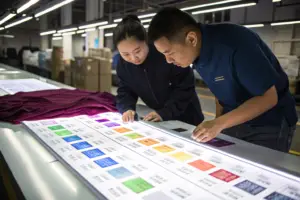
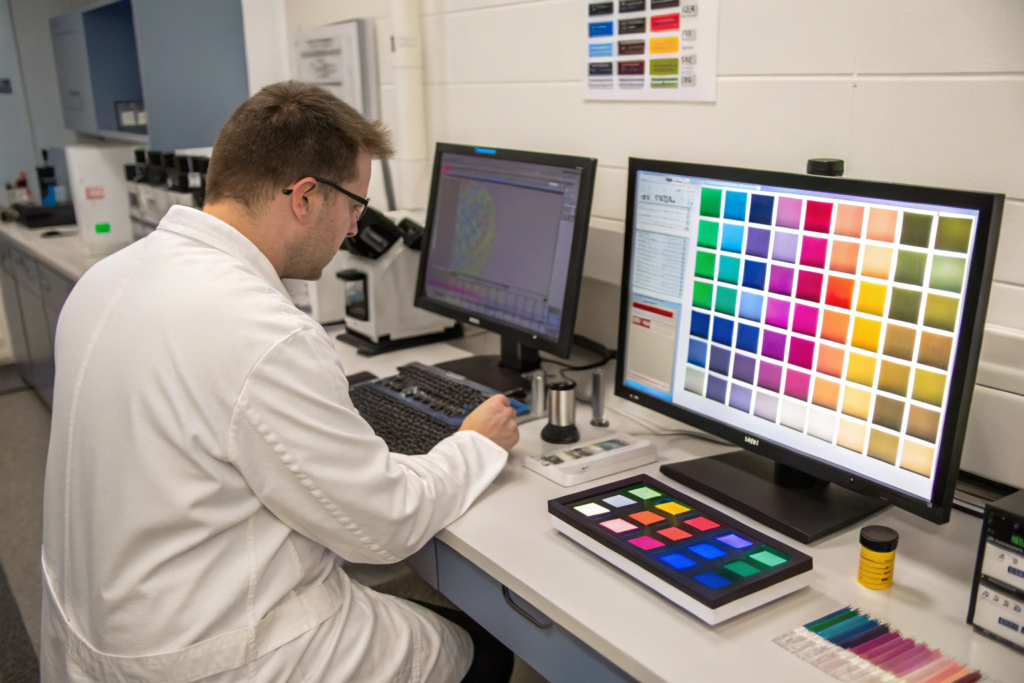
Gone are the days when we matched colors under a fluorescent light bulb. Today, our lab is equipped with advanced spectrophotometers. When a client sends us a physical sample or a Pantone number, we don't just look at it. We measure it. The spectrophotometer reads the color across the light spectrum and gives us a numeric reflectance value. We then input this data into our color matching software. This software calculates the precise recipe of dyes required to achieve that target shade. It accounts for the specific fabric substrate we are using. For a recent order of high-visibility safety vests for a workwear brand, the color tolerance was incredibly tight. We used the spectrophotometer to create a digital fingerprint of the approved standard. Then, every production batch was measured against that fingerprint. If the Delta E (the measurement of color difference) was outside the agreed tolerance, the batch was flagged automatically. This removes human error and ensures we are making decisions based on data, not just perception. We actually encourage our clients to keep a sealed sample of their approved lab dip. This allows for a final verification against the same digital standard before the goods are shipped. You can read more about digital color management standards used by top manufacturers worldwide.
Why is water quality a secret factor in consistent dyeing?
This is a secret I learned from a very old dyeing master in Jiangsu. Water is the carrier of the dye. If your water chemistry is inconsistent, your color will be inconsistent. Hard water, with varying mineral content, can interfere with the dye molecules and the chemical auxiliaries we use. In our facility, we have a dedicated water treatment plant. We use reverse osmosis to remove chlorine, calcium, and magnesium ions from the municipal water supply before it ever touches our dye jets. We test the pH and conductivity of the water multiple times a day. I recall a situation about three years ago when we had a slight color shift in a batch of royal blue dresses for a European client. After checking the dye recipe and the fabric, we traced it back to a fluctuation in the city water supply main. Because we had our own treatment system, we were able to correct the water chemistry immediately and stabilize the process. Without that system, the entire day's production would have been at risk. This level of manufacturing quality control is what separates a reliable partner from a commodity vendor. At Shanghai Fumao, we treat these hidden factors as seriously as the visible ones.
How Do We Manage Dyeing Across Multiple Production Lines?
Scaling up from a sample to a bulk order is the real test. It is easy to dye 50 meters perfectly. Dyeing 5,000 meters across different machines requires a system.
How do we standardize dyeing protocols across different machines?
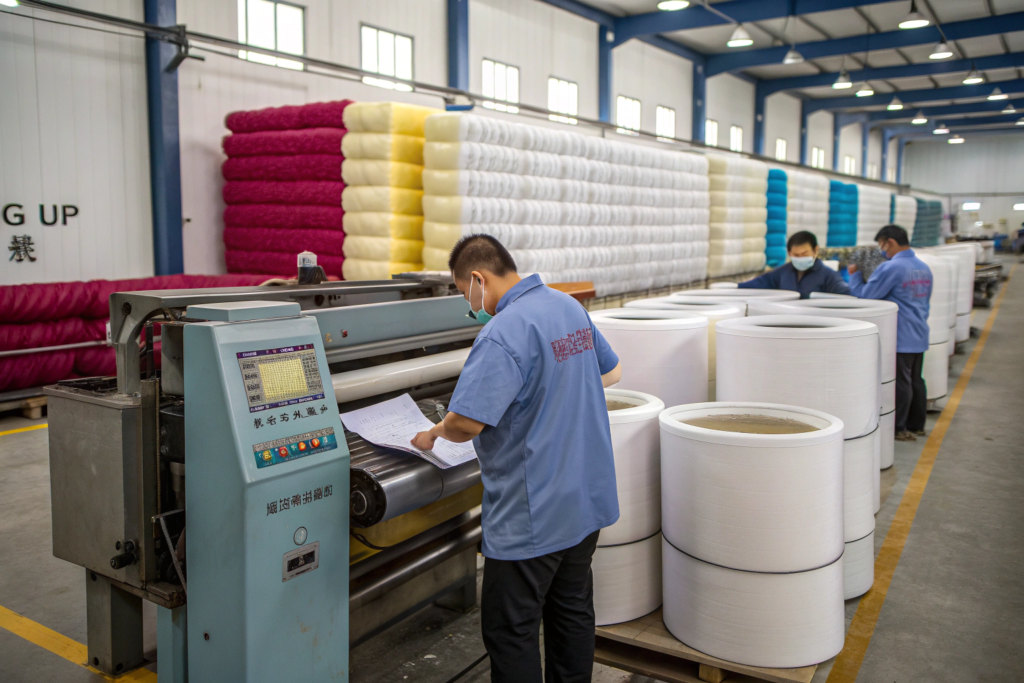
We have 5 production lines, each with multiple dyeing machines. These machines, even from the same manufacturer, can have slight personality differences. To counter this, we have implemented a strict "Right First Time" (RFT) manufacturing philosophy. Every dyeing machine operator follows the exact same electronic program for a given fabric and color. We don't allow manual adjustments during the run. The programs control the rate of temperature rise, the dwell time at peak temperature, and the cooling rate. We also maintain a detailed log of every single dye lot. This log ties the specific machine, the operator, the dye recipe batch number, and the fabric lot together. If a client ever has a question about a shipment delivered six months ago, we can pull up this digital record. This traceability is essential. It also allows us to run smaller batches efficiently without mixing up shades. We can schedule similar colors on the same machine to minimize clean-up time and reduce the risk of cross-contamination. This approach aligns with the principles of lean manufacturing in textiles.
What is the final inspection process for shade sorting?
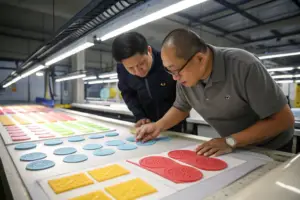
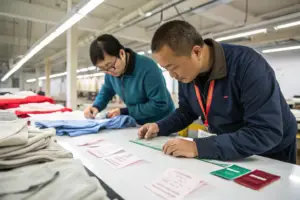
Even with all this precision, there can be microscopic differences between batches. This is where shade sorting becomes an art. When an order is finished, we lay the fabric out on a flat inspection table under standardized daylight lamps. We compare the bulk production to the original sample. But we also compare pieces within the same production run. We sort the finished garments or rolls by the actual measured shade. For a critical order, we might have A, B, and C shades, all of which are within the commercial tolerance but separated for the cutting room. This ensures that when a garment is cut and sewn, all its component parts—the front, back, and sleeves—come from the same shade lot. This prevents the "patchwork" look that ruins a premium garment. This meticulous inspection and quality assurance process is something we take immense pride in. It protects the brand's image and ensures that your customer receives a flawless product.
How Do We Handle Dyeing for Complex Orders Like DDP Shipments?
Selling on DDP (Delivered Duty Paid) terms adds another layer of complexity. You are not just managing color; you are managing the entire supply chain, and color issues at the end of the line are catastrophic.

How does DDP affect our approach to color management?
When we ship DDP to the US, we are responsible for everything until the goods arrive at our client's warehouse. If there is a color rejection, we don't just lose the cost of the goods. We lose the freight, the duty, and the client's trust. Therefore, our approach to color for DDP orders is even more conservative. We insist on a "pre-production" meeting specifically for color. We ask the client to approve multiple lab dips on the actual production fabric. We also run a "strike-off" on the production machine, not just in the lab. This ensures that the scaling-up process is perfect before we cut a single piece of expensive fabric. I remember a DDP order for a line of organic cotton baby wear destined for Texas. The margins were tight, and the timeline was tight. By locking in the color at the strike-off stage and monitoring it in real-time during production, we cleared US customs without a single quality hold related to dyeing. This reliability is why brands trust us with their complex logistics. Understanding DDP shipping terms and responsibilities is crucial for any importer.
How do we communicate color standards with US-based buyers?
Communication is the final piece of the puzzle. We have all experienced the pain of inefficient supplier communication. A buyer in New York sees a color on their calibrated monitor. Our team in Shanghai sees a color under different lighting. There is a disconnect. We solve this by using physical AATCC color standard chips. We mail a physical set of approved standards to the client before bulk production begins. We also use high-resolution photography with a color checker card in the frame. When we send progress photos, the client can see the true color relative to a known standard. This transparency builds confidence. Our sales and production teams are trained to ask the right questions early. Do you want the color to match under store lighting or sunlight? What is your acceptable Delta E tolerance? By asking these specific questions upfront, we eliminate the back-and-forth that delays shipments. We treat our clients as true partners in the process. This commitment to clear dialogue is part of the supplier communication best practices that help brands succeed.
Conclusion
Maintaining consistent dyeing across apparel production is a complex challenge. It touches every part of the supply chain, from the cotton fields to the final inspection table. It requires technical investment in water treatment and spectrophotometers. It demands rigorous process control across all production lines. And most importantly, it needs open and clear communication between the factory and the buyer. We have learned these lessons over many years and through real-world challenges. We know that for a brand owner, a perfect color match is not just a detail—it is the foundation of the product's value.
If you are tired of inconsistent quality and unreliable communication with your current suppliers, we are here to help. At Shanghai Fumao, we have built our reputation on solving these exact problems for demanding brands in North America and Europe. We invite you to experience a partnership where precision is the standard. Please contact our Business Director, Elaine, at elaine@fumaoclothing.com to discuss how we can bring your next collection to life with flawless color execution. Let's build something great together.