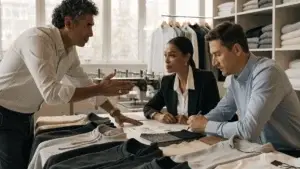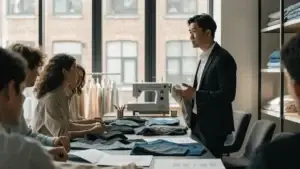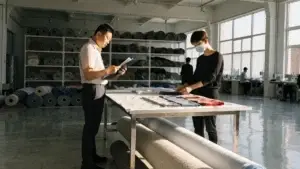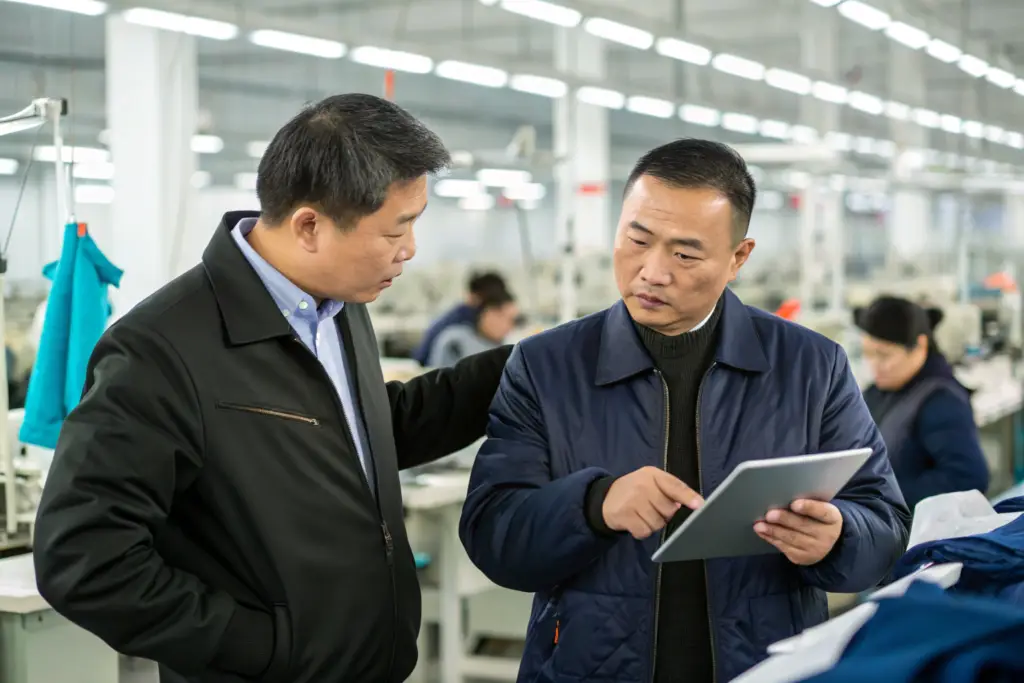
I lost a potential client three years ago because I told him the truth. He was a denim brand owner from New York. He loved our pricing on a complex woven jacket. But when I explained we would need to outsource the washing and distressing to a partner facility in a different province, he paused. He asked me, "Who watches your subcontractor at 2 AM?" I did not have a good answer. He signed with a competitor who owned their own laundry plant. That conversation changed how I operate.
A factory's ownership of its production lines is the difference between directing an orchestra and hoping the band shows up on time. When you own the cutting room, the sewing floor, the finishing department, and the inspection unit under one roof and one management system, you control the tolerance. You control the needle density. You control who touches the fabric and when. Subcontracting is not inherently evil, but it introduces variables that directly contradict the consistency required for premium brand licensing, complex prints like Realtree, and high-stakes DDP programs.
I am the founder of Shanghai Fumao. We operate five dedicated production lines, and I have personally rejected the temptation to overflow work to outside vendors during peak season. It costs me short-term revenue. It saves my clients' long-term reputation. In this article, I will explain exactly why line ownership is non-negotiable for serious buyers, how to audit a factory for true vertical control, and why the "virtual manufacturer" model usually fails when quality pressure hits its peak.
How does line ownership directly impact garment consistency and tolerance?
Consistency is the holy grail of apparel manufacturing. Your customer in Ohio does not care if the factory in Shanghai had a power outage. They care that the Large size they bought online fits exactly the same as the Large size they bought at the retail store last month. If you do not own the line, you cannot guarantee this.
When a factory subcontracts, the garment travels. The fabric is cut at Facility A. The sewing is done at Facility B, which is 40 kilometers away. The finishing is at Facility C. Each facility has different humidity levels. Different machine calibrations. Different thread tension preferences. Different definitions of "clean finish." By the time the garment arrives at your warehouse, it is a compromise, not a specification.
I visited a subcontractor in Jiangsu in 2022. One of my potential clients had been using them for basic woven shorts. The sewing operator was skilled, but she was using a needle gauge that was one size too heavy for the fabric. Why? Because her manager bought bulk needles in 2019 and still had inventory to use up. The shorts looked fine on day one. After three washes, the needle holes remained stretched and visible. The brand had a 15% return rate on that SKU. When you own your line, you control the supply of consumables. You enforce the needle policy on Monday morning, not after the claim comes in.
What specific sewing defects are caused by fragmented production?
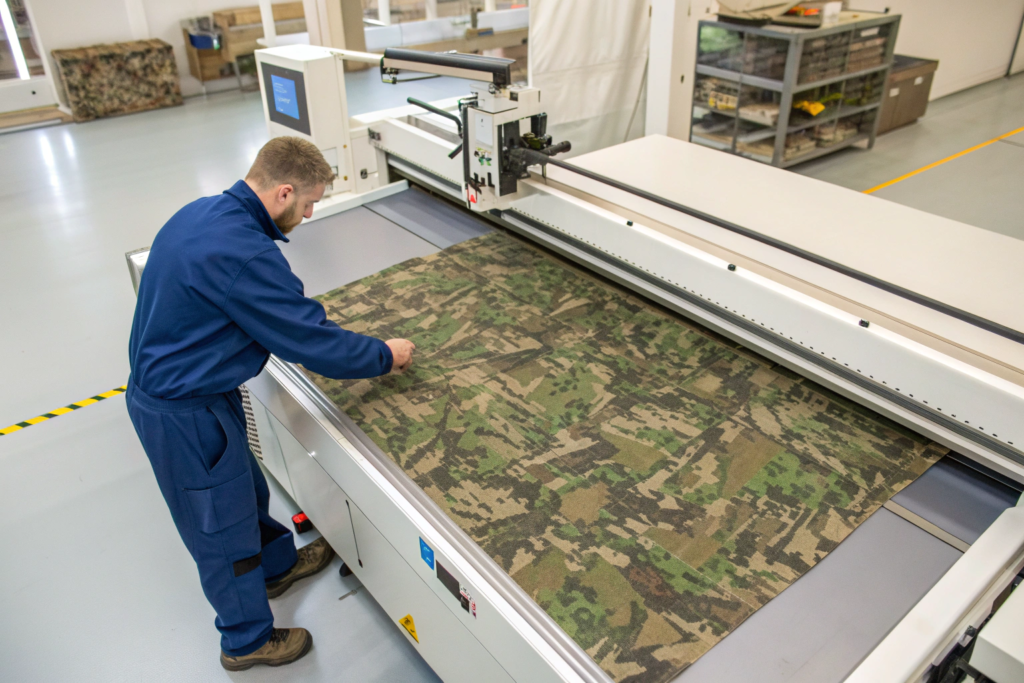
The most common defect I audit is "tension variance" between pieces of the same purchase order. If a factory cuts 1,000 bodies but sends 500 sleeves to a satellite sewing shop, that satellite shop's machines are calibrated differently. One shop runs at 4,500 RPM. The other runs at 4,000 RPM. The stitch length per inch changes. On solid fabric, the buyer may not notice. On striped fabric, plaid, or high-definition Realtree camo, the pattern distortion is visible from three feet away. Shanghai Fumao prohibits off-site sewing for any visible outer garment. We keep every stitch inside our four walls. We also enforce strict adherence to ASTM D6193-16, the standard practice for stitching strength and seam types. This is impossible to enforce when the sewing is happening in someone else's building.
How does ownership affect the speed of corrective action?
Time is the asset you cannot buy back. When a defect is spotted on our floor at 10 AM, I can stand at the machine at 10:05. I can talk to the operator. I can check the tension disc. I can review the bundle ticket. The problem is identified, solved, and the next 50 pieces are protected. If that sewing was happening at an external vendor, the communication loop takes 48 hours. First, the vendor denies the problem. Then, they blame the fabric. Then, they ask for more money. By the time they admit fault, 2,000 defective units are already in the carton. You either ship them and pray, or you liquidate them. Both options damage your brand equity with your retail partners.
Why do subcontracting risks increase exponentially with licensed patterns?
Licensed patterns are not commodities. They are intellectual property. When you sign a licensing agreement for Realtree, Mossy Oak, or a major sports league, you are legally promising to control the quality of the representation. If your subcontractor screws up the print registration and the product hits the shelf looking blurry, you are not just losing a sale. You are violating your licensing terms.
The licensing body does not audit your subcontractor. They audit you. They send inspectors to your nominated facility. If they discover that 40% of your production volume is happening in an unapproved, unregistered workshop, they can and will revoke your license. You do not own the pattern. You are renting it. Subcontracting without disclosure is a breach of that rental agreement.
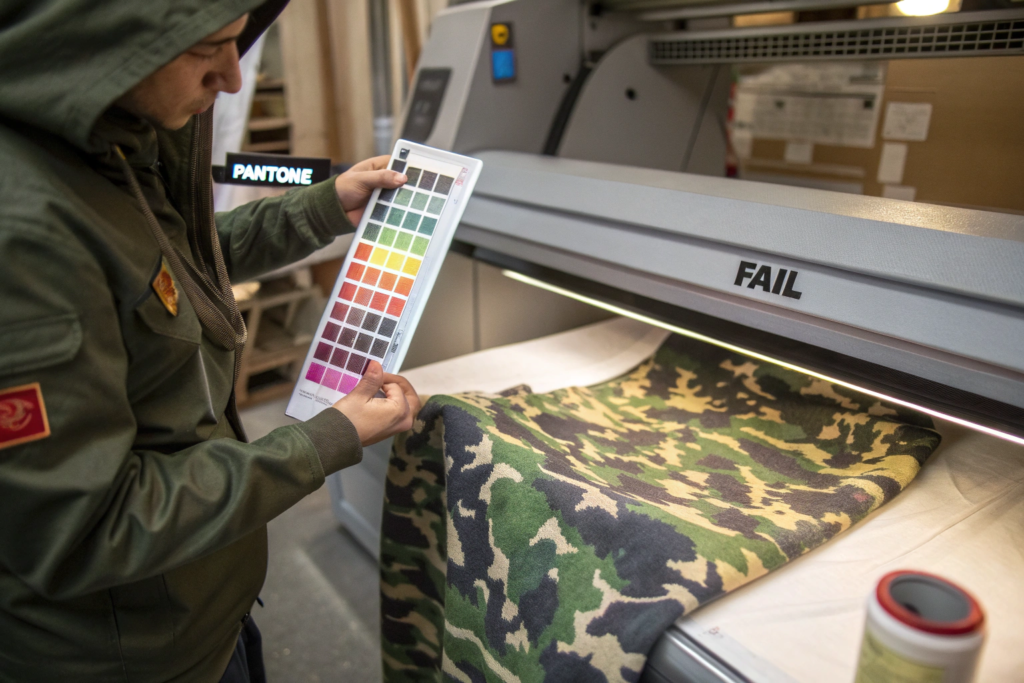
A client from Minnesota approached us in 2023. He had a license for a major waterfowl camouflage pattern. His previous agent in Vietnam had subcontracted the printing to a third-party mill without telling anyone. The mill used the wrong ink formulation. After 10 washes, the brown tones shifted to a muddy green. Ducks Unlimited members are detail-oriented. They complained loudly on social media. The licensor issued a warning. The brand almost lost the contract. We now run all of their certified printing on our monitored lines. We provide the licensor with direct access to our production records upon request.
What specific certifications vanish when you move lines?
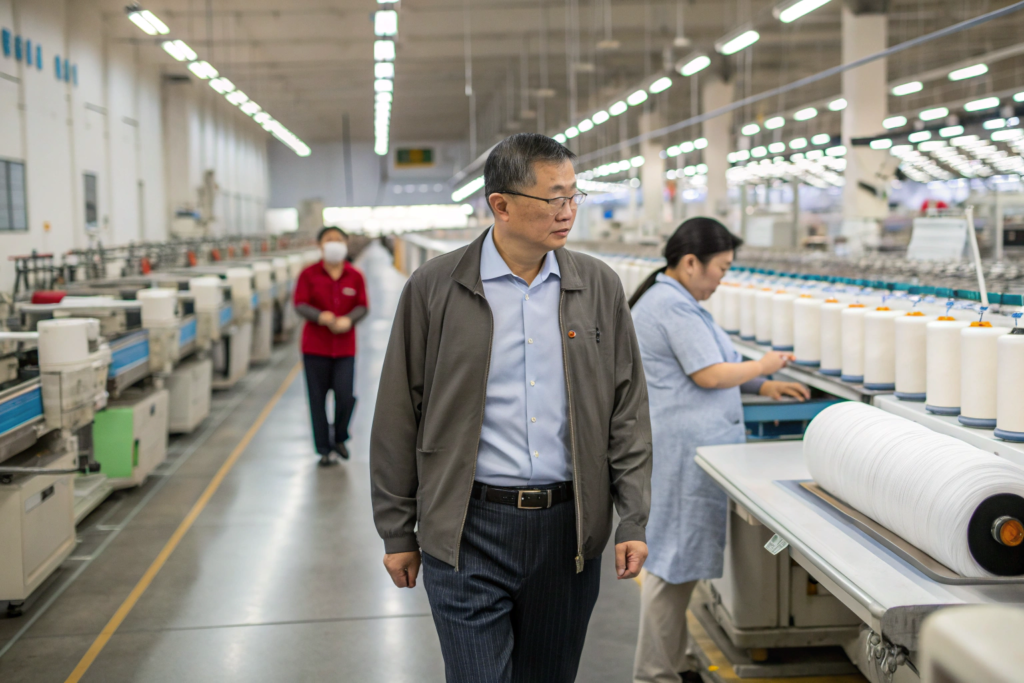
Most American buyers ask for WRAP certification or BSCI audits. These certifications are facility-specific. If your main factory is WRAP certified but your subcontractor is not, you are exporting your social compliance risk. You are also exposing yourself to the US Customs and Border Protection forced labor enforcement. If CBP determines your subcontractor uses unethical labor practices, your entire shipment is seized. You do not get a warning. You get a detention notice. You cannot claim ignorance. Ownership of the line means ownership of the compliance burden. You know exactly who is sewing the garment, their age, their working hours, and their wage statements. Subcontracting creates a fog. CBP does not accept fog as an excuse.
How does pattern matching fail across different factory floors?
I explained this to a buyer from Colorado last month. He wanted to split a large order of Realtree pants between our facility and another vendor to "spread risk." I advised against it. Here is why. Even if both factories use the exact same fabric roll, the "marker making" software differs. Our nesting algorithm might place the front piece at a 2-degree rotation to save fabric. The other factory's algorithm might place it at 0 degrees. The final pant looks different. The placement of the "leaf" pattern on the knee cap shifts. The consumer notices. They do not know why the pants look different. They just know the second pair looks "off." They return them. We refused the split order. We took the full volume. The pants shipped uniformly. The sell-through rate was 92%.
How can a buyer verify true vertical ownership versus agent claims?
I have visited factories in China, Vietnam, and Bangladesh that claimed to be "vertical." I walked in and saw a beautiful cutting room. I saw a nice sample room. Then I walked to the back and saw empty concrete floors where the sewing machines should be. The factory was actually a trading office. They cut the fabric, bundled it, and sent it by truck to 15 different. The owner called this "flexible capacity." I call it a loss of control.
You cannot verify ownership from a PDF brochure or a beautiful website. You must verify it through three specific documents: the business license, the machinery purchase invoices, and the payroll records. If a factory owns a machine, they have a depreciation schedule for it. If they rent the space to someone else who owns the machine, the quality assurance chain breaks. Ask to see the fixed asset register.
I always advise my clients to perform a "surprise FaceTime walk-through." I am not afraid of this. Last year, a client from Seattle called me on WeChat video at 9 PM Shanghai time. He asked me to walk to Line 3 and show him the specific operator sewing his pocket bags. I walked over. I showed him. He saw his fabric. He saw our employee. He saw the thread color. He placed a reorder the next week. If your supplier hesitates or says "that area is off-limits," you have your answer.
What specific clauses should be in your manufacturing contract?
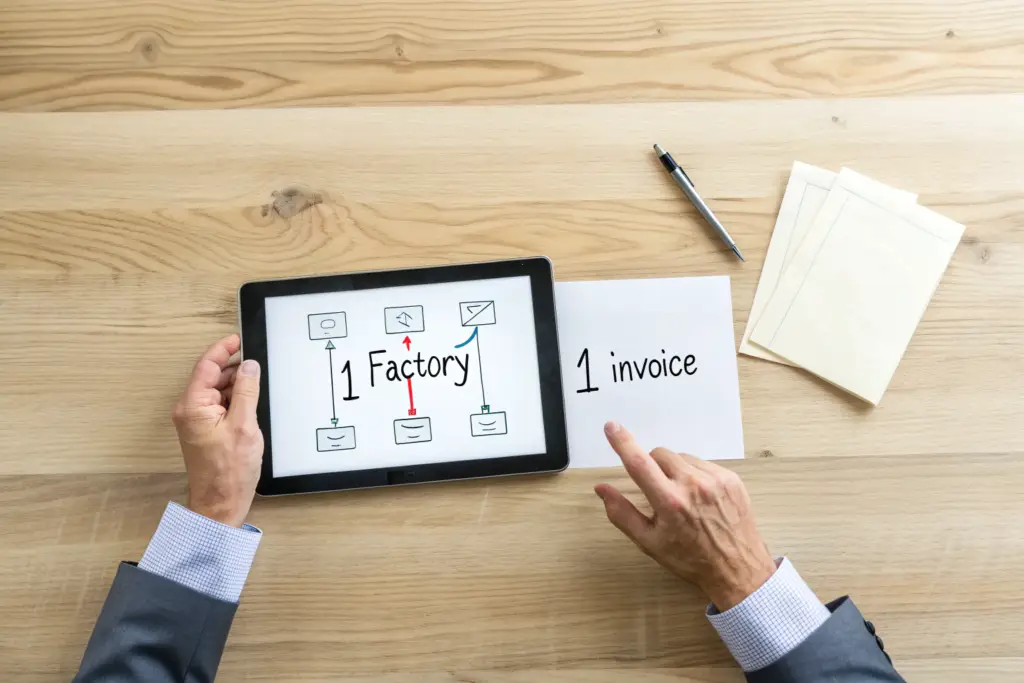
Do not accept vague language like "supplier shall use reasonable efforts to control quality." You need a Non-Subcontracting Clause. The clause should state: "Vendor warrants that 100% of the cutting, sewing, finishing, and packing for this Purchase Order shall be performed within Vendor's owned and operated facilities located at [address]. Any deviation requires prior written consent from Buyer." We sign this clause willingly. We have nothing to hide. We also agree to include a liquidated damages provision if unauthorized subcontracting is discovered. This protects your cost of replacement and your lost reputation.
How do we audit the "shadow factory" risk?
The most sophisticated buyers now request a Capacity Verification Report. They do not just ask, "Can you make 10,000 units?" They ask, "Show me the floor plan. Show me the machine count. Calculate your theoretical maximum capacity based on 22 working days and 85% efficiency." If our stated capacity is 15,000 units but we quote you 20,000, the math does not work unless we are subcontracting. We are transparent. We tell you our ceiling. If you need more, we schedule a longer lead time. We do not lie about the ceiling and secretly outsource. I encourage you to use tools like Sedex to cross-reference factory profiles and audit histories. If a factory appears under multiple ownership names, investigate.
I meet buyers who are afraid of factories. They think factories are rigid and hard to communicate with. They prefer trading companies because the trading company speaks better English and sends nicer gifts during Chinese New Year. I understand the comfort. But comfort is expensive.
A trading company adds a minimum of 15% to your FOB cost. They do not own the machines. They do not own the fabric. They are a middle layer. When there is a quality problem, the trading company becomes a referee, not a decision maker. You complain to the trader. The trader complains to the factory. The factory complains to their production manager. The production manager ignores it because he is paid by the piece, not by your satisfaction. You need a direct line to the decision maker.
We took over a program in 2021 from a large Hong Kong trading house. The buyer was a pet apparel brand in California. They were paying $12.50 per unit for a simple Realtree dog vest. The trading house was paying the actual factory $8.20. The brand thought they were getting "premium vendor management." They were actually paying a 52% markup for email forwarding. We came direct at $9.40 with better stitching density. The owner saved $3.10 per unit and gained direct access to our wash test lab. He now visits us twice a year.
What is the real cost of poor communication latency?
Time is the hidden line item on every P&L. When you communicate through an agent, every question takes 24 hours. "Can you match this thread color?" 24 hours. "The shipment is short 50 pieces, why?" 24 hours. Over the course of a 90-day production cycle, you lose 5-7 full days just waiting for information to travel through the middleman. When you work directly with Shanghai Fumao, I answer your message. If I am in a meeting, Elaine answers. You get the decision now, not tomorrow. This speed saves you from "panic air freight," which can cost $3.00 to $5.00 per unit. That is a hidden cost most buyers never calculate.
How does ownership protect your intellectual property?
I will be direct with you. Copycats exist. If you send a detailed tech pack with unique Realtree placement, custom trims, and special wash formulas to a trading company, that tech pack sits on a shared server. It is emailed to three different potential factories for quoting. It is printed out and left on desks. Your proprietary design becomes public knowledge in the supply chain. When you work with an owner-operated factory, we keep your files on our secured server. We do not shop your design around. It is your brand. We are your manufacturing department, not your competitor's R&D source. We sign strict NDA agreements with every client and we enforce them internally.
Conclusion
The apparel industry loves to talk about partnerships. But a partnership built on subcontracting is a partnership built on quicksand. When the market slows down and everyone is fighting for the same dollar, the factories that own their lines survive. The traders and the assemblers disappear. They leave you with chargebacks, angry retailers, and a warehouse full of inconsistent inventory.
I built Shanghai Fumao around the belief that a handshake between a brand owner and a factory owner should mean something. When I tell you your Realtree order will ship on October 1st with perfect pattern alignment, I am not guessing what my vendor in another province will do. I am telling you what my operator on Line 4 will do. I own that machine. I trained that operator. I bought that thread.
If you are currently sourcing through agents and you are tired of explaining the same quality standards every season, let us connect. If you are worried that your current supplier is not telling you where your goods are actually made, ask them the questions I outlined above. If the answers are vague, you know what to do.
Please contact our Business Director, Elaine, to schedule a virtual factory tour or to request a compliance package. She will show you our fixed asset register and our BSCI audit reports. You will see exactly where your garments will be cut and sewn. Her email is: elaine@fumaoclothing.com. You can also review our full manufacturing capabilities on our website: https://shanghaigarment.com/.