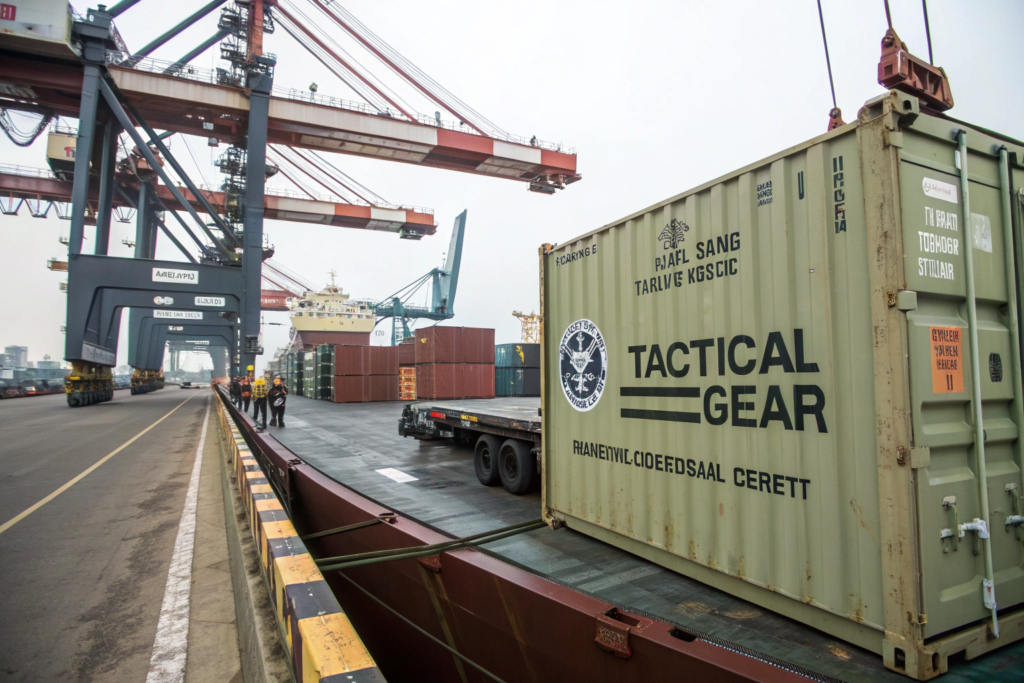
For apparel brands sourcing camouflage gear from Asia, logistics is where profits can be secured or lost. The journey from a factory in China or Vietnam to a distribution center in the USA is fraught with complexity—port congestion, tariff classifications, seasonal demand spikes, and strict documentation. Simply booking a container isn't enough. True optimization requires a strategic approach that balances cost, speed, and reliability at every touchpoint. So, what are the actionable steps to streamline this process and ensure your tactical cargo arrives on time and on budget? The answer lies in proactive planning, intelligent consolidation, precise documentation, and leveraging strategic trade agreements.
Optimizing logistics for camo apparel shipped from Asia to the USA requires a multi-pronged strategy: selecting the optimal Incoterms (preferably DDP), consolidating shipments smartly, ensuring flawless and detailed documentation, leveraging free trade agreements when possible, and building flexibility into routing to mitigate inevitable disruptions. The goal is to achieve a reliable, predictable, and cost-effective landed cost.
This isn't a one-size-fits-all process; it's a tailored system built on foresight and partnership. Let's break down the key operational levers you can pull to optimize your supply chain.
How does choosing the right Incoterms and partner define control?
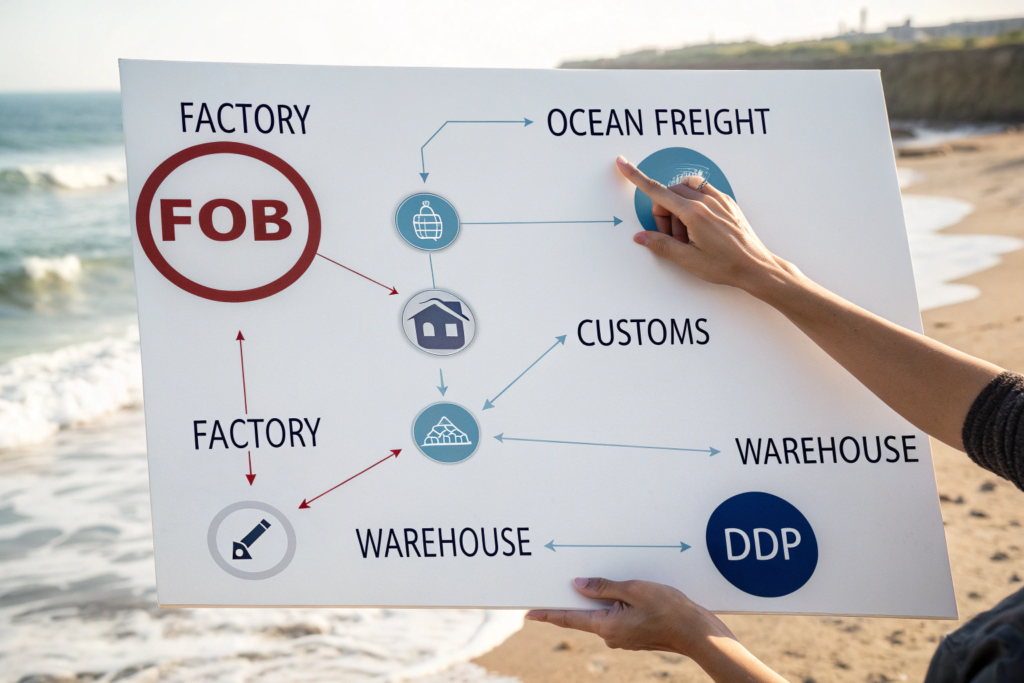
The foundation of logistical optimization is clarity of responsibility. The Incoterms® rules you choose with your supplier determine who controls the shipping process, bears the risk, and pays the costs at each stage. For most U.S. brands, especially those without in-house logistics teams, Delivered Duty Paid (DDP) is the gold standard for optimization. Under DDP, your Asian manufacturer (or their licensed freight partner) handles everything from the factory gate to delivery at your designated U.S. warehouse, including all export/import formalities, duties, and taxes.
Why is DDP optimal? It provides cost certainty. You receive one all-inclusive landed cost quote upfront, eliminating surprise fees from customs, demurrage, or last-mile delivery. It also places the burden of expertise and compliance on your supplier, who should be far more experienced in navigating Asian export and U.S. import regulations. For a client importing a mixed container of camo hunting pants and jackets, switching to our DDP service transformed their process. Previously, they spent over 40 staff hours per shipment coordinating between four different vendors. Now, they receive a single tracking number and a confirmed delivery date, freeing their team to focus on sales and marketing.
What is the role of the supplier's logistics license?
Partnering with a manufacturer like Shanghai Fumao that holds its own import/export licenses is critical. This means they have an in-house logistics department or a deeply integrated partner, not just a random freight forwarder. They have established relationships with shipping lines, priority access to space during peak seasons, and the expertise to correctly classify your camouflage apparel under the correct HTS codes, which is vital for avoiding customs delays and duty overcharges.
Why is FOB often a false economy?
While Free On Board (FOB) might show a lower initial unit cost, it transfers control and risk to you the moment goods are loaded onto the vessel. You are responsible for the often-complex and costly journey from the foreign port onward. For brands without significant logistical scale, hidden costs and delays almost always erode the initial savings, making the apparent lower price a risky illusion.
How can consolidation and planning slash costs and complexity?
Logistics optimization is fundamentally about maximizing container utilization and minimizing handling. Shipment consolidation is the most powerful tool here. This doesn't just mean filling a 40-foot container with one SKU. Smart consolidation involves:
- Combining Orders: Work with your supplier to bundle multiple production runs or even different product categories (e.g., camo jackets, t-shirts, and caps) into a single shipment.
- Less-than-Container Load (LCL) to Full-Container Load (FCL) Transition: For smaller brands, start with cost-effective LCL. As your volume grows, plan production to hit FCL thresholds. The cost per unit in an FCL shipment is significantly lower.
- Pre-Booking Space: Based on your production calendar, your supplier should book vessel space 4-6 weeks in advance, especially before peak seasons like Chinese New Year or the August-October shipping rush for holiday goods.
A practical example: We helped a growing outdoor brand analyze their shipment history. By slightly adjusting their production schedule to align two smaller batches of camo fleece and lightweight shells, we consolidated them from two LCL shipments into one FCL container. This single move reduced their total shipping cost by 35% and cut transit time variability by 50%.
How does packaging design affect logistics cost?
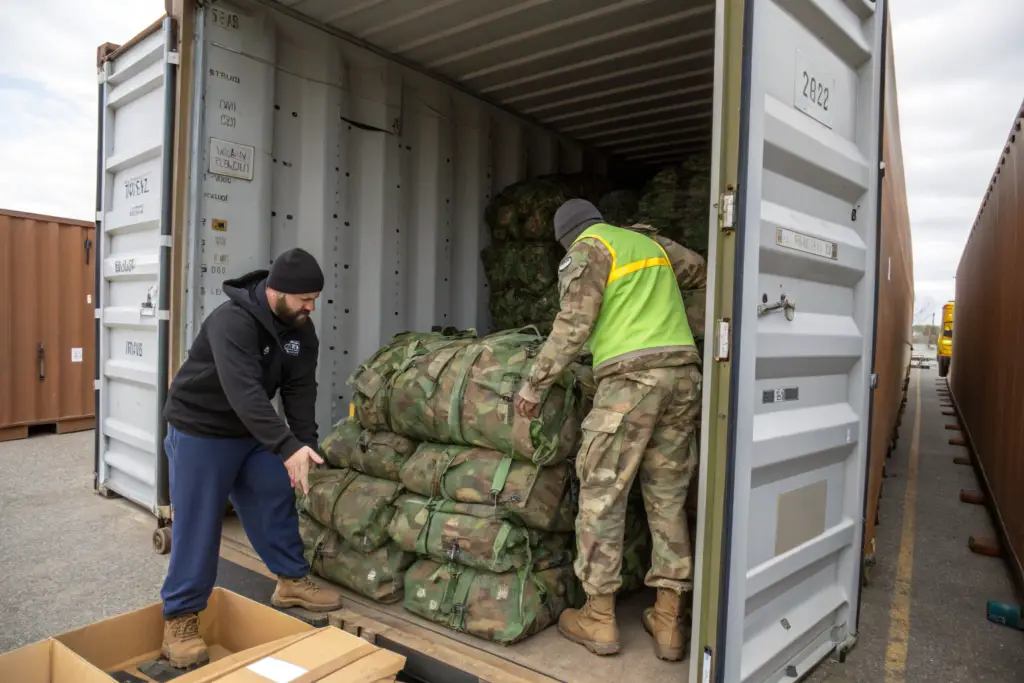
Optimization starts with the box. Dimensional weight (DIM weight) is a key charging factor for air freight and domestic trucking. Work with your factory to design packaging that is protective but space-efficient. Using right-sized cartons and optimizing pallet layouts can increase the number of units per container by 10-15%, directly lowering your per-unit freight cost.
What is the importance of a buffer and seasonality planning?
Always build a logistical buffer of 10-15 days into your timeline. Assume there will be port delays, especially on the U.S. West Coast. Plan production completion dates well in advance of your absolute latest needed delivery date. Furthermore, understand seasonal bottlenecks: avoid shipping during the pre-holiday global rush if possible, and plan production around factory closures during Chinese New Year.
Why is documentation accuracy the key to preventing delays?
A container can be physically fast but administratively stalled. Perfect documentation is non-negotiable. A single error on a commercial invoice, packing list, or certificate of origin can lead to U.S. Customs and Border Protection (CBP) holds, inspections, and weeks of delay. For camo apparel, documentation must be exceptionally precise.
Key details include:
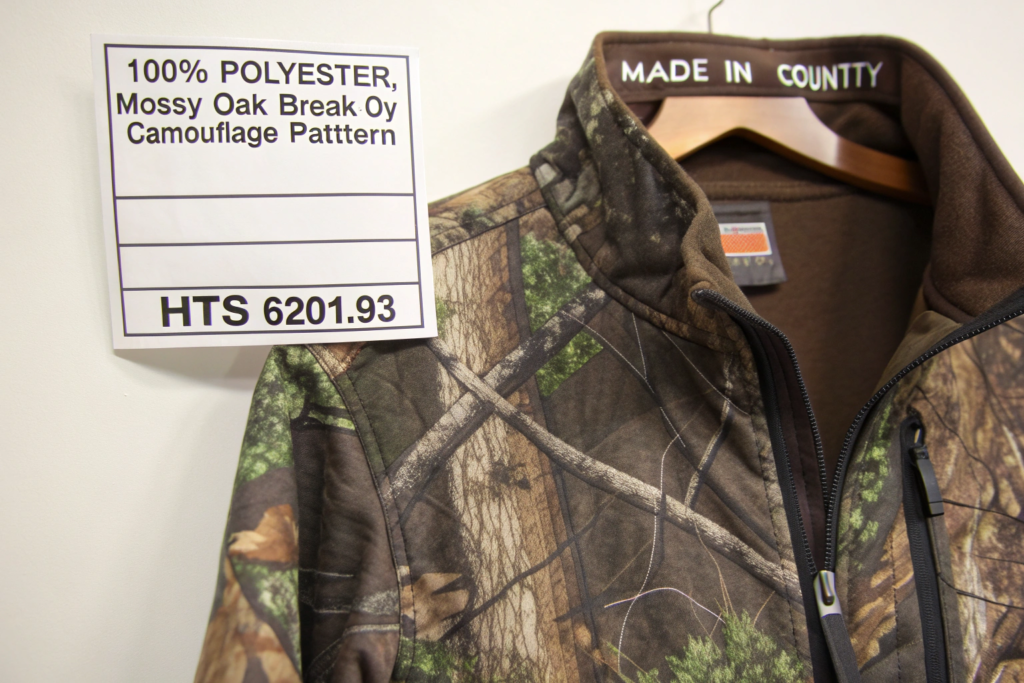
- Detailed Product Descriptions: Avoid generic "men's jackets." Use specifics like "Men's Hunting Jacket, 100% Polyester, Mossy Oak Break-Up Camouflage Pattern."
- Accurate HTS Codes: The Harmonized Tariff Schedule (HTS) code determines duty rates. Camo sportswear jackets (e.g., HTS 6201.93) have a different duty than non-camo jackets. Misclassification risks penalties.
- Value Declaration: The invoiced value must be accurate for customs valuation.
- Origin Marking: Each garment must have a permanent "Made in [Country]" label, and this must match the documented country of origin.
We implement a three-eye check system for all client documentation. Last year, this process caught an error where a junior staff member listed the wrong camouflage pattern name on the invoice, which could have triggered a CBP query for possible trademark or pattern restriction issues. Catching it pre-shipment saved the client a potential 2-3 week delay.
What special documents are needed for camouflage apparel?
Beyond standard docs, be prepared with:
- Test Reports: Proof of compliance with safety standards (e.g., flammability, chemical).
- Materials Breakdown: Detailed fiber content percentages.
- Potential Duty Exemption Docs: If claiming an exemption under a Free Trade Agreement (e.g., for apparel assembled in Vietnam from certain regional fabrics), the proper declaration must be filed.
How does technology enable documentation accuracy?
Use suppliers that offer digital documentation portals. These systems auto-populate fields from your tech pack and order details, minimizing manual entry errors. They also allow for pre-submission reviews and electronic filing, speeding up the entire process.
How can routing and agreement leverage minimize duties and transit time?
The final layer of optimization involves strategic routing and leveraging all available trade tools. Don't default to the nearest port.
- Port Diversification: While LA/Long Beach is common, consider routing through less congested ports like Tacoma, Houston, or Savannah if your warehouse location allows. The longer ocean leg might be offset by faster offloading and cheaper inland trucking.
- Transit Time vs. Cost Analysis: Compare premium services (e.g., expedited ocean freight) versus standard shipping. Sometimes paying a 15% premium for a guaranteed 7-day-faster service can protect a crucial selling season, saving far more than the cost.
- Leverage Trade Agreements: While direct imports from China face Section 301 tariffs, understand the rules of origin. If your product is substantially transformed in a country like Vietnam, it may qualify for different, potentially lower duty rates under normal Most Favored Nation (MFN) status. A knowledgeable supplier will help you explore these options during the sourcing stage.
What is the role of a customs bond and broker?
If you are not using DDP, you must have a U.S. Customs bond and a licensed customs broker. Your broker is your advocate with CBP. Choose one with specific experience in textile and apparel imports. They can help you apply for duty refunds (drawbacks) if you re-export materials and can provide binding ruling requests to clarify the HTS classification of your unique camo products.
How do you build resilience into your routing?
Have a pre-approved alternate routing plan with your supplier. If your primary port declares a force majeure, you should already know which alternate port and carrier will be used, and what the cost and timeline impact will be. This preparedness turns a crisis into a manageable deviation.
Conclusion
Optimizing logistics for camo apparel from Asia to the USA is a continuous, detail-oriented process. It requires moving beyond basic freight booking to a holistic strategy encompassing commercial terms, shipment consolidation, impeccable documentation, and intelligent routing. The most successful brands treat their logistics partner—ideally their integrated manufacturer—as a strategic ally in this effort.
The outcome is a supply chain that is not just a cost center, but a reliable, predictable, and competitive asset that ensures your products are where they need to be, when they need to be there.
Mastering this complex flow is what we do every day at Shanghai Fumao. Our integrated manufacturing and logistics model is designed to provide this optimization as a standard service, giving our clients peace of mind and a tangible market advantage. To streamline your camouflage apparel supply chain from start to finish, contact our Business Director, Elaine, at elaine@fumaoclothing.com.