As a brand or buyer sourcing hunting apparel, you know the market is unforgiving. Your customers don’t just wear your garments; they rely on them in demanding conditions. Quality failures don’t just mean returns—they can break trust and damage a brand permanently. So, what are the non-negotiable benchmarks that separate reputable hunting gear from the rest? The answer lies in a multi-layered framework that goes far beyond basic durability, encompassing material performance, construction integrity, functional design, and rigorous third-party validation.
The quality benchmarks for hunting apparel in the US market are defined by performance against extreme elements (water, wind, scent), durability under physical stress, functional and silent design features, and adherence to strict chemical and safety compliance standards. These are validated through both standardized laboratory tests and real-world, application-specific field testing.
Meeting these benchmarks is not optional; it's the price of entry. For manufacturers and brands, understanding and implementing these standards is critical to building products that perform, protect, and endure. Let's dissect these benchmarks layer by layer.
How is material performance and fabric technology tested?
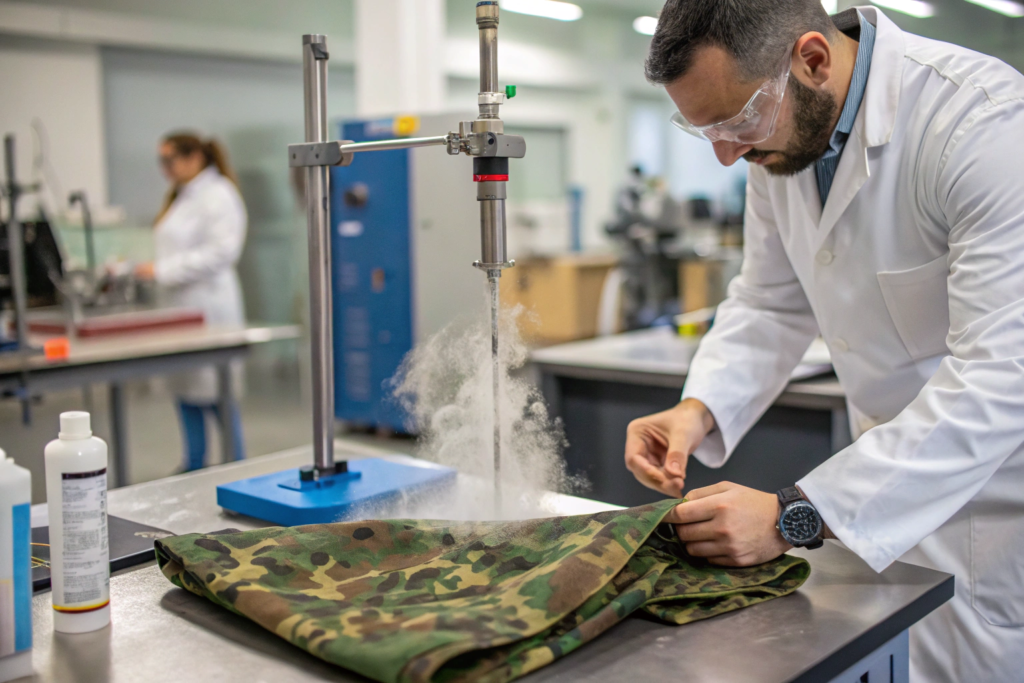
The foundation of any hunting garment is its fabric. Benchmarks here are scientific and measurable. The core triumvirate is Water Resistance, Breathability, and Windproofness. These are not marketing claims but results from standardized tests conducted in certified labs.
Water Resistance is measured in millimetres (mm) via the Hydrostatic Head Test (e.g., AATCC 127). For heavy-duty rain gear, 10,000mm is a common benchmark, while softshells may rate at 5,000mm. Breathability is measured in grams per square meter over 24 hours (g/m²/24hrs) via tests like the Upright Cup Method (ASTM E96). High-performance membranes like GORE-TEX can exceed 25,000 g/m²/24hrs. Windproofness is tested for air permeability (CFM - cubic feet per minute). A true windproof fabric will have a CFM below 1.
Last season, we developed a whitetail hunting jacket for a client targeting the Midwest. They insisted on a fabric rated for at least 8,000mm water resistance and 15,000 g/m²/24hrs breathability. Using our sourcing network, we selected and tested three fabric options in an independent lab. The chosen fabric not only met but exceeded these benchmarks. This data-driven approach allowed the brand to confidently market the jacket’s performance, which became a key selling point for their wholesale buyers.
What are the key tests for durability and wear?
Durability is quantified. Key tests include:
- Abrasion Resistance: Measured with a Martindale or Wyzenbeek test (e.g., ASTM D4966). A benchmark for heavy-duty hunting pants might be 40,000+ Martindale cycles before fabric rupture.
- Tear Strength: Measured with an Elmendorf Tear Tester (ASTM D1424). This indicates how well a fabric resists propagating a rip.
- Seam Strength: Critical for waterproof integrity. This is tested by applying force to stitched seams to ensure they don’t pull apart under stress, often following ASTM International standards.
Why is fabric certification from mills important?
Reputable mills provide detailed Technical Data Sheets (TDS) with test results. Sourcing from certified mills (e.g., those with BLUESIGN® certification) ensures the raw materials meet high environmental and safety standards from the start. This is a foundational benchmark for brands that market sustainability. It provides a verifiable chain of custody and pre-validates many chemical compliance aspects.
What defines construction and craftsmanship quality?
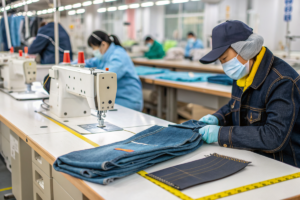
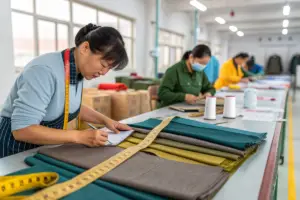
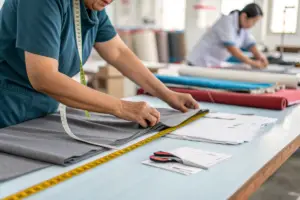
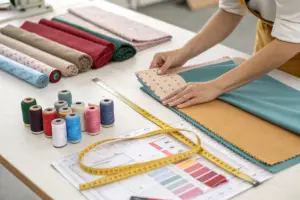
Superior materials can be undone by poor construction. The benchmarks here are visual, tactile, and again, testable. It starts with pattern engineering. Garments must be designed for a full range of motion—articulated knees, gusseted crotches, and strategic stretch panels are not luxuries but necessities. Seams in high-stress areas (armpits, shoulders) should be flat-locked or taped to prevent chafing and ensure waterproofness.
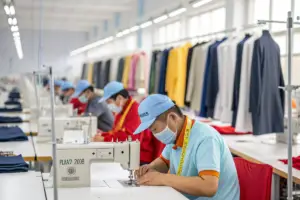
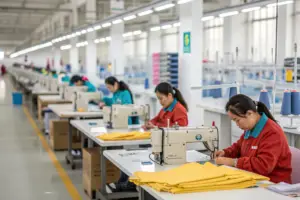
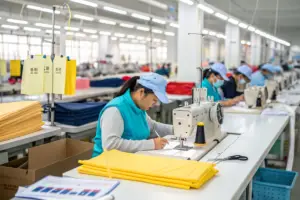
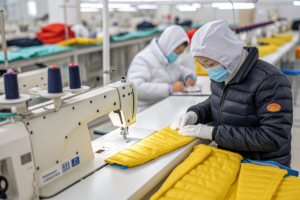
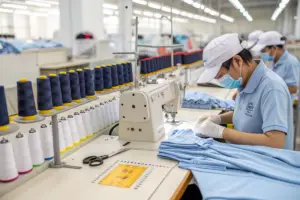
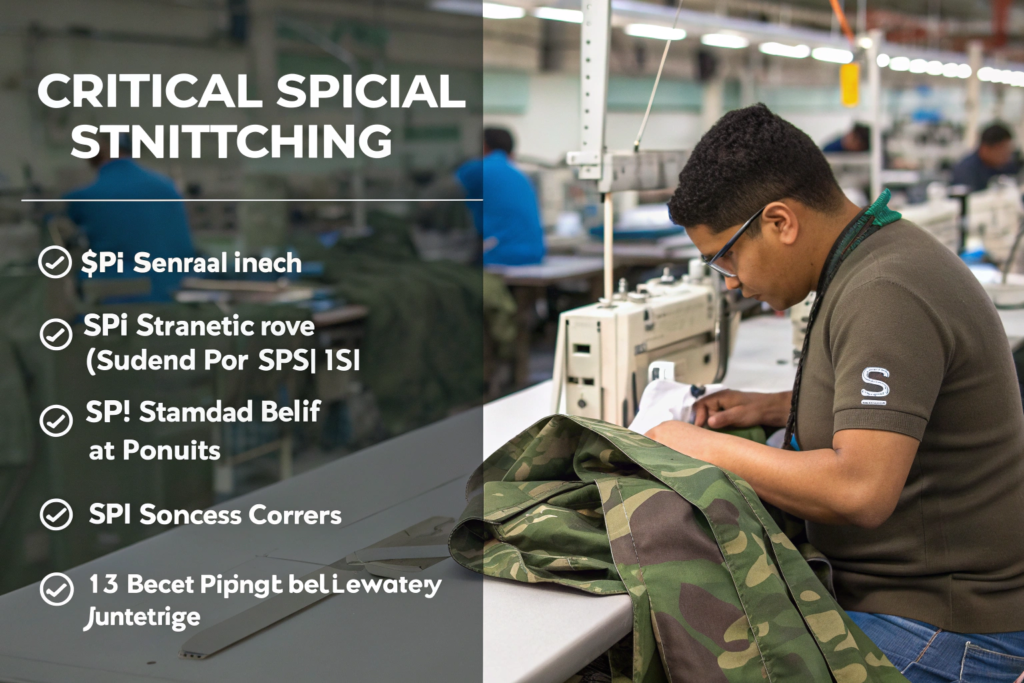
Stitching is critical. Benchmarks include stitches per inch (SPI). For example, 8-12 SPI is standard for general sewing, but bar-tacking at stress points (pocket corners, belt loops) must be dense and robust. We implement a strict inline inspection protocol where every seam is checked for consistency, and every zipper is tested 50 times on a rig before a garment is approved. A common failure point is the attachment of camouflage leaves or 3D elements; they must be securely stitched or bonded to withstand snagging on brush.
What are the benchmarks for silent performance?
For hunting apparel, silence is a functional benchmark. Fabrics must be tested for noise generation when rubbed. This is often a subjective but crucial panel test. We work with clients to perform "sound checks" on prototypes in quiet rooms. Furthermore, hardware like zippers must be of the highest quality. Brands should specify silent zippers, like those from YKK, with rubberized pulls that don’t clink. A noisy garment fails its core purpose, regardless of other qualities.
How is waterproof construction validated?
For waterproof garments, construction is everything. The benchmark is fully taped seams. This means every needle hole in the waterproof membrane is sealed with a waterproof tape. This is validated through a Rain Test (like AATCC 35) on the finished garment, not just the fabric. At Shanghai Fumao, we have a dedicated seam-taping station and conduct spot-check rain tests on 100% of waterproof garment runs. This process once caught a calibration error in a tape machine, preventing an entire batch of jackets from having a potential leak—a costly error avoided.
What functional design and compliance standards are mandatory?
Quality in hunting apparel is deeply tied to functionality and safety. Benchmarks here are both user-centric and regulatory.
Functional Design benchmarks include:
- Ergonomic Storage: Pocket placement must be accessible while wearing a harness or backpack. Our designers use 3D body scans to map pocket placement.
- Ventilation: Strategic pit-zips or two-way front zippers for heat management are expected in mid-to-high-tier gear.
- Scent Control: For many hunters, this is paramount. Fabrics with permanent odor-neutralizing technology (e.g., via silver ion treatment) must prove efficacy through tests like ISO 20743 for antimicrobial activity.
Compliance Standards are non-negotiable legal and safety benchmarks:
- Chemical Compliance: Adherence to the brand’s or retailer’s Restricted Substances List (RSL) is mandatory. This often aligns with standards like OEKO-TEX® Standard 100, which tests for harmful substances.
- Flammability: While not as strict as children’s sleepwear, certain materials must meet U.S. CPSC guidelines for general wearing apparel.
- Labeling Compliance: Permanent care labels and fiber content tags must comply with the Textile and Wool Acts enforced by the FTC. False or missing labels can lead to shipments being refused at port.
How are fit and mobility standardized?
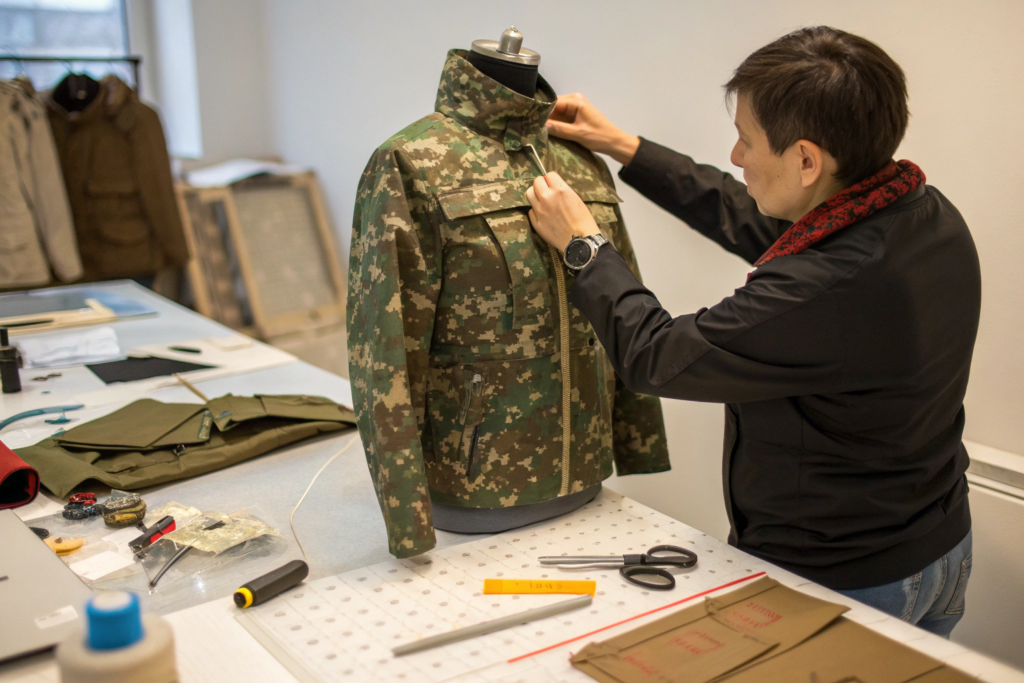
Fit is benchmarked against established size charts (like ASTM D5585 for body measurements). However, hunting gear requires “allowances” for layering. A quality manufacturer will develop a “Layered Fit” pattern, which is one size larger in key areas than a standard streetwear pattern of the same labeled size. This ensures mobility when wearing base layers and insulation underneath.
Why is third-party certification a key trust signal?
Beyond in-house quality control, final validation often comes from independent, third-party testing labs like Intertek or SGS. Having a garment tested and certified by these bodies provides an unbiased quality benchmark that is respected by large retailers and informed consumers alike. It turns subjective claims into objective facts, which is a powerful tool for sales and marketing.
How is quality control implemented from factory to delivery?
The final benchmark is the systematic process that guarantees consistency across thousands of units. This is where a manufacturer’s quality assurance system proves its worth. It’s a multi-stage process:
- Incoming Material Inspection: Testing fabric rolls and trim against approved standards before cutting.
- During Production (DUPRO): Line supervisors conduct checks at every major assembly point.
- Final Random Inspection (FRI): This is the critical benchmark. It follows the AQL (Acceptable Quality Level) sampling system, typically at Level II. For hunting apparel:
- Critical Defects: 0% tolerance (e.g., broken needle fragment, major safety issue).
- Major Defects: AQL 1.0-2.5 (e.g., open seam, misprint, functional failure).
- Minor Defects: AQL 4.0 (e.g., minor stitching unevenness, loose thread).
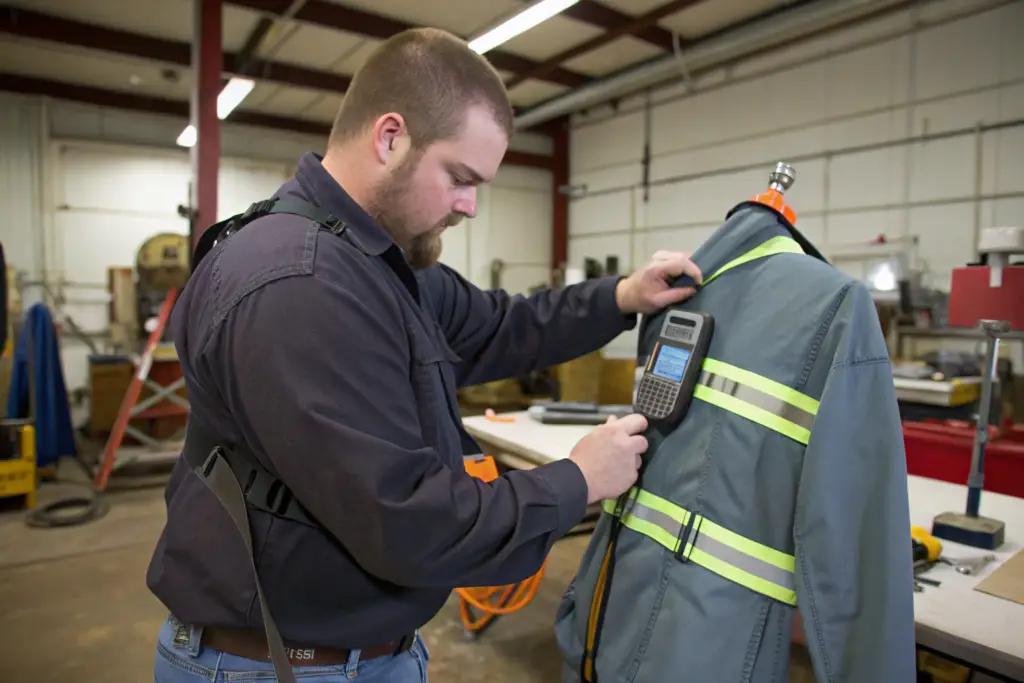
A few years ago, a client discovered a competitor’s jacket had a critical flaw: the bartack securing the chest strap could fail under load. When they came to us, we implemented a 100% pull-test on that specific bartack for their entire order, using a calibrated digital force gauge. This extra step, part of our full-package manufacturing commitment, ensured every single jacket met the structural integrity benchmark.
What documentation proves quality compliance?
The quality benchmark is only as good as its documentation. Reputable suppliers provide:
- Mill Test Reports for fabrics.
- Lab Test Reports for finished garments (water, breathability, etc.).
- AQL Inspection Reports for each production lot.
- Certificates of Compliance (for RSL, etc.).
The absence of this paperwork is a major red flag. At Shanghai Fumao, we compile this into a Quality Dossier for our clients, providing full transparency and a defensible record of quality.
Conclusion
The quality benchmarks for US hunting apparel are a comprehensive ecosystem of performance data, construction precision, functional design, and verifiable compliance. They are not a single checkpoint but a continuous process from material selection to final inspection. For brands, understanding these benchmarks is essential for product development. For buyers, they are a checklist for vetting suppliers.
Ultimately, meeting these benchmarks builds the trust that the hunting community demands. It transforms a garment from mere clothing into reliable equipment.
Partnering with a manufacturer that not only understands but is institutionally built around these benchmarks is the most strategic decision a brand can make. Shanghai Fumao integrates these standards into every stage of production, from sourcing certified materials to executing rigorous final inspections. We ensure your products are built to perform, season after season. To develop hunting apparel that truly meets the market’s high standards, contact our Business Director, Elaine, at elaine@fumaoclothing.com for a detailed consultation.