You've successfully imported a container of Realtree camo hunting jackets or pants. The season starts, and then the emails begin: customers are returning items for broken zippers, fading fabric, or mismatched patterns. Each return is a direct hit to your profit and reputation. Handling defects and returns from overseas-manufactured goods feels especially daunting—the factory is thousands of miles away, communication is slow, and the fear of being left holding the bag is real. A reactive, poorly planned approach can turn a manageable 3% defect rate into a business crisis.
To effectively handle returns and defects for imported Realtree clothing, you must implement a proactive, three-part strategy: 1) Establish Clear Defect Classification and Responsibility Terms Before Production, 2) Create a Streamlined Process for Verification and Communication with Your Factory, and 3) Develop a Local Remediation Plan to Protect Your Customers and Cash Flow. The goal is not to eliminate defects (an impossibility) but to manage their cost and impact efficiently.
For brand owners and distributors, a robust returns and defect protocol is not a post-sale afterthought; it's a critical component of your supplier agreement and operational plan. At Shanghai Fumao, we build these protocols with our clients from the outset, turning a potential point of conflict into a structured partnership. Here’s how to set up a system that works.
What Should Be Defined as a "Defect" Before Production Starts?
The single biggest source of conflict is disagreement over what constitutes a defect. One side's "minor flaw" is the other's "unsellable product." For technical, patterned apparel like Realtree, these definitions must be hyper-specific.
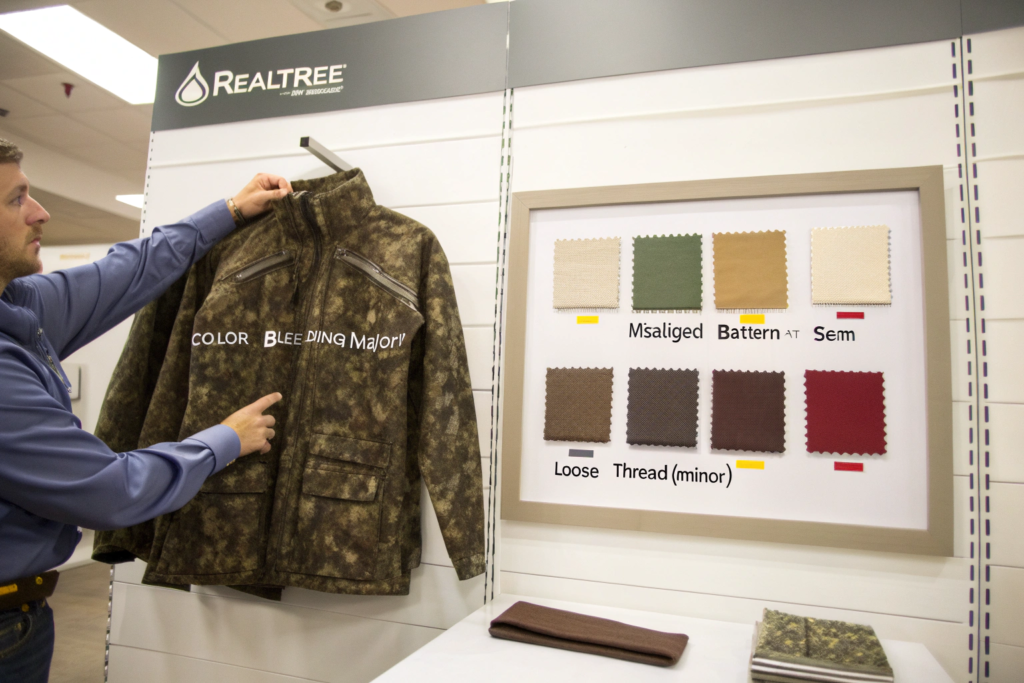
You must define defects using a pre-agreed AQL (Acceptable Quality Level) standard for inspections, create a physical "defect catalog" with approved samples, and explicitly categorize issues into "Critical," "Major," and "Minor" with associated financial responsibilities for each.
How Do You Use AQL Standards for Realtree Apparel?
The AQL (Acceptance Quality Limit) is an international sampling standard (like ANSI/ASQ Z1.4) that defines how many pieces to inspect and how many defects are acceptable. For Realtree clothing, we recommend:
- General Inspection Level II: The standard for most apparel.
- Critical Defects AQL 0: Zero tolerance for safety issues (e.g., sharp objects, harmful chemicals) or functional failures (e.g., waterproof seam tape completely detached).
- Major Defects AQL 2.5: Strict tolerance for issues affecting salability or use, such as prominent pattern mismatch, broken zipper, large stain, or significant color fading.
- Minor Defects AQL 4.0: Looser tolerance for issues with little impact on function, like a small, non-contrasting thread pull or minor uneven stitching inside the garment.
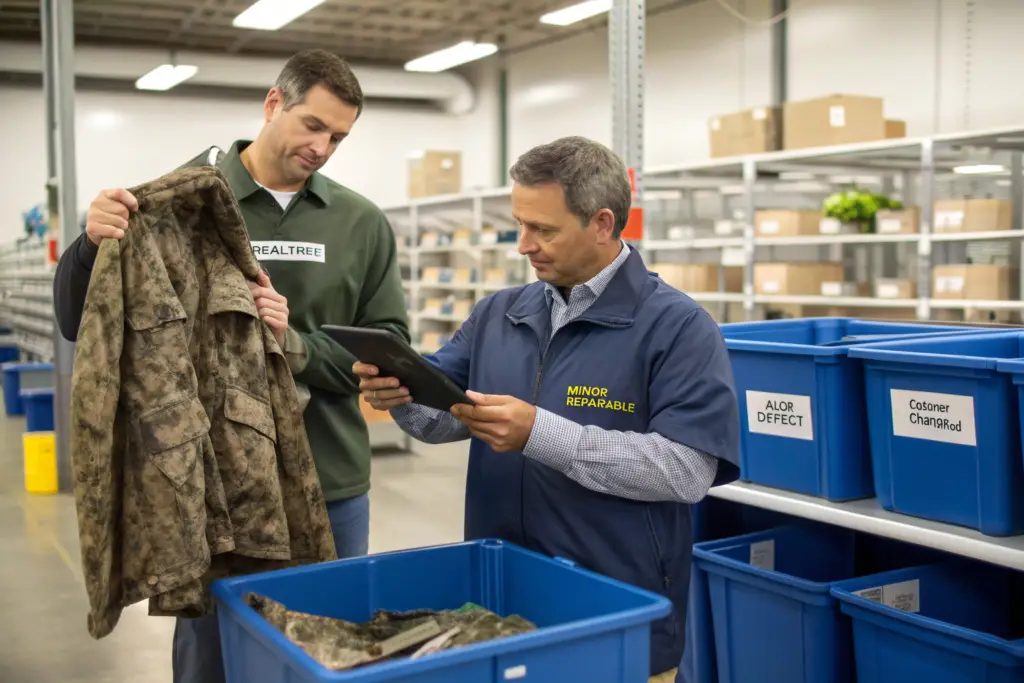
Your pre-shipment inspection report should be based on this. If the inspection fails (defects exceed AQL), the factory is contractually obligated to 100% re-inspect and repair or replace before shipping. This is your first line of defense. We provide these inspection reports as part of our quality assurance commitment.
Why is a Physical "Defect Catalog" Crucial?
An email description is not enough. Before bulk production, work with your factory to create a physical catalog.
- Gather Samples: During sample development, intentionally create or identify potential defect examples.
- Label and Agree: Label each: "Defect: Seam Puckering - Reject" vs. "Acceptable: Slight Fabric Gather - OK."
- Sign and Keep: Both you and the factory sign a copy. This becomes the objective referee for any disputes.
For Realtree, specific defects like "pattern misalignment greater than 1/4 inch at center front" or "color crocking (rubbing off) on printed logo" should be in the catalog. This eliminates subjective arguments over aesthetics.
What is the Step-by-Step Process When Defects Are Found Post-Delivery?
Despite best efforts, some defective units will reach your customers. Having a clear, calm process prevents panic and ensures you gather the evidence needed for a constructive resolution with your factory.
The process is: 1) Quarantine and Document, 2) Categorize and Quantify, 3) Initiate Formal Communication with Evidence. Never send angry emails first; send organized data.
How Should You Document Defects for the Factory?
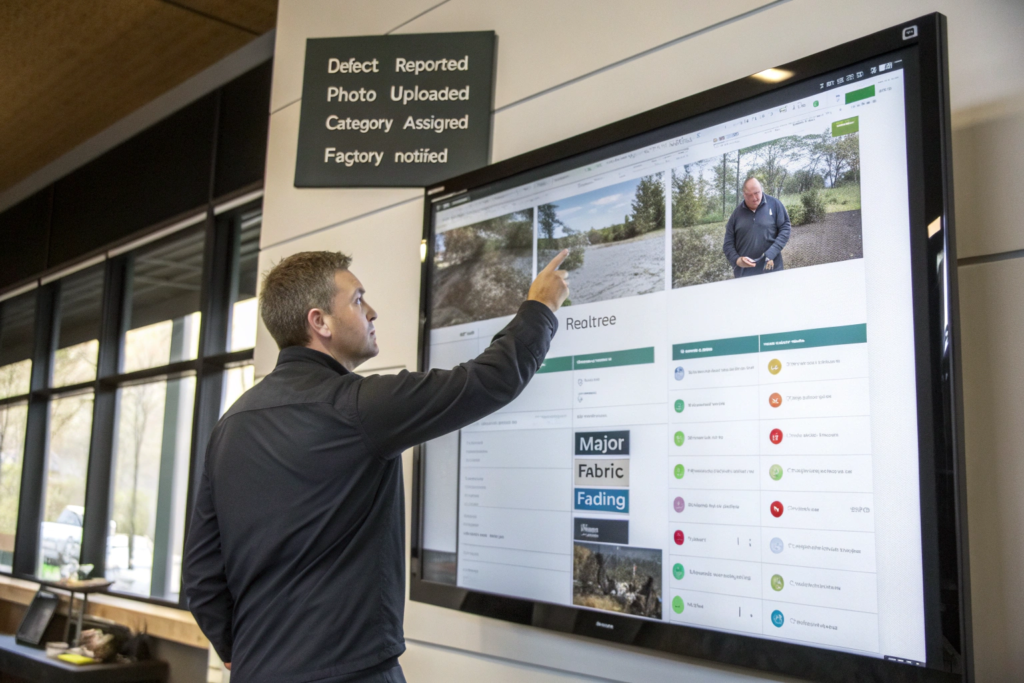
Your factory needs forensic-level evidence, not a complaint. For each defective unit, create a digital case file containing:
- High-Resolution Photos: Overall garment, close-up of the defect, and a photo of the care label/washing instructions (to rule out user error).
- Videos for Functional Issues: A 10-second video showing a zipper failing to close or fabric tearing under gentle stress.
- Data Log: SKU, PO number, factory production batch/lot number (if available), and the date you received the container.
Crucially, trace the defect back to its root cause. Is it a manufacturing flaw (sewing, cutting) or a material flaw (fabric, zipper)? In one case for a client, post-wash fading was traced to a substandard dye lot from the fabric mill, not our sewing process. This changed the liability and resolution. This systematic approach solves the pain point of inefficient, emotional communication.
What is a Fair and Effective Resolution Protocol?
| Once evidence is compiled, propose a solution based on the defect category and volume. A standard escalation protocol is: | Defect Scope | Proposed Resolution | Goal |
|---|---|---|---|
| Isolated ( 5% of order) | Return for full repair/replacement at factory cost, or a significant financial settlement. | Major remedy for a major failure. |
Always link the request to your mutually agreed terms and the evidence. A professional factory like Shanghai Fumao will respond in good faith to such a structured claim. We once replaced an entire batch of 200 jackets for a client after verifying a sewing machine tension issue caused seam failures, covering all logistics costs both ways.
How Can You Mitigate Impact and Protect Customers Locally?
While you work with the factory on a backend resolution, your customer-facing actions cannot wait. Your brand's reputation depends on a seamless customer experience, even when the product fails.
Mitigate impact by establishing a local repair network for minor issues, implementing a generous but clear returns policy that separates manufacturer defects from customer remorse, and considering strategic inventory buffers to allow for immediate replacement.
Should You Repair or Replace Locally?
For minor, repairable defects (loose button, small open seam), local repair is faster and cheaper than international return shipping. Build a relationship with a reliable local tailor or sewing service. The cost is a business expense you can factor into your cost of goods or seek reimbursement for from the factory.
- Benefit: Customer gets a fixed garment back in days, not months.
- Example: We had a client with a 0.5% rate of loose belt loops. Instead of a slow international claim, we pre-agreed on a per-unit repair credit. They fixed them locally, customers were happy, and we settled the credit immediately.
How Does Your Returns Policy Need to Adapt?
Your policy must distinguish between:
- Manufacturer Defects: Full refund or replacement, with you covering return shipping. This protects the customer.
- Customer Remorse (Size, Style): Standard return, possibly with a restocking fee. This protects you.
For defects, make the return process easy. Provide a prepaid label and a simple online form to upload photos. This swift action turns a negative experience into a positive demonstration of your brand's reliability, even when the factory is at fault.
Conclusion
Handling returns and defects for imported Realtree clothing is a test of your operational planning and partnership with your factory. The key is to move from a reactive, emotional stance to a proactive, process-driven one. By setting crystal-clear standards upfront, executing a disciplined evidence-gathering process when issues arise, and having local solutions to protect your customers, you transform defects from a profit-draining disaster into a manageable cost of doing business.
Ultimately, your factory's willingness to engage fairly in this process is the true test of their reliability. A partner who stands behind their product will collaborate on solutions, not disappear.
At Shanghai Fumao, we view our responsibility as extending far beyond the factory gate. We work with clients to establish these robust protocols because we know our success is tied to yours. If you seek a manufacturing partner that provides not just quality products but also a clear, fair framework for managing the rare occasion when things go wrong, let's talk. To build a more resilient supply chain for your Realtree apparel, please contact our Business Director Elaine at: elaine@fumaoclothing.com.