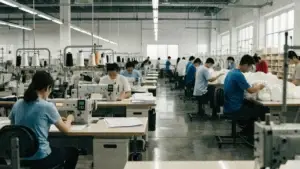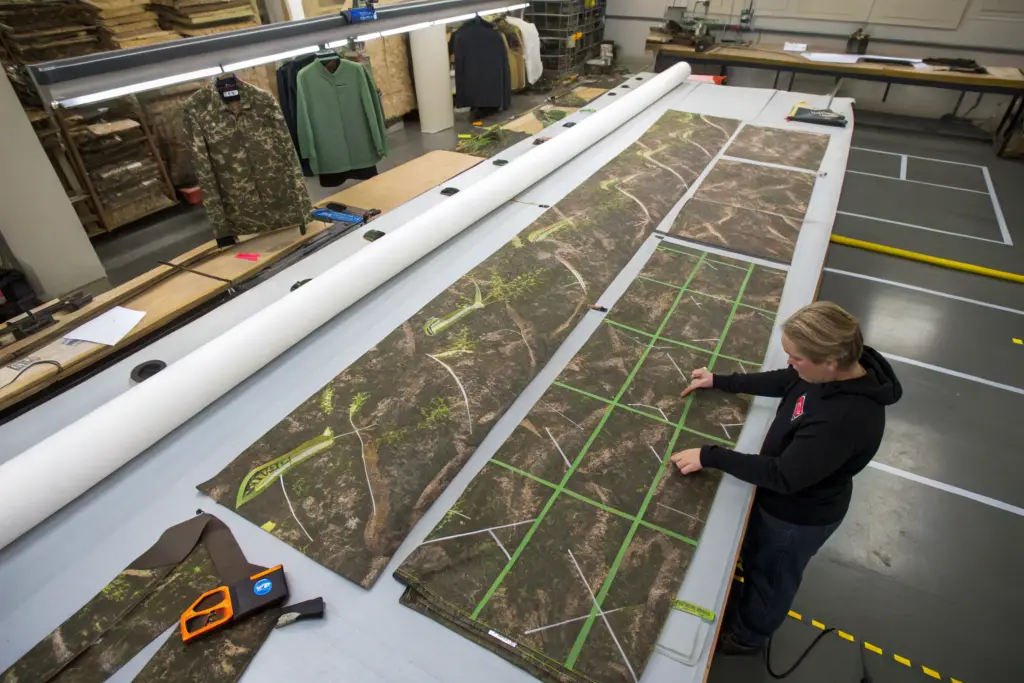
You've invested in premium licensed camo fabric like Realtree or Mossy Oak for your new hunting line. The samples looked perfect. But when the bulk order arrives, you see it: jackets where the tree branches don't line up at the seams, pants with a harsh visual break at the crotch, or vests where the pocket flaps look "cut out" from a random spot. This inconsistency makes products look cheap, angers discerning hunters, and leads to returns. It’s a clear sign the factory lacks the technical control needed for pattern-matching.
A factory ensures consistent camo pattern matching across garments by implementing a disciplined, multi-stage process that combines strategic fabric spreading with calibrated cutting, skilled pattern engineering, and rigorous in-line quality checks, all governed by strict Standard Operating Procedures (SOPs) for licensed and technical apparel.
For brands that stake their reputation on authenticity and quality, consistent pattern matching isn't just an aesthetic detail—it's a fundamental performance feature. It signals craftsmanship and respect for the end-user. At Shanghai Fumao, we treat pattern alignment with the same importance as waterproof seams or insulation ratings. Here’s how we systematically achieve this consistency.
What is the Role of Fabric Spreading in Pattern Matching?
The foundation of perfect matching is laid not on the sewing line, but on the cutting table. How the fabric is laid out determines all future possibilities. Haphazard spreading guarantees mismatched garments.
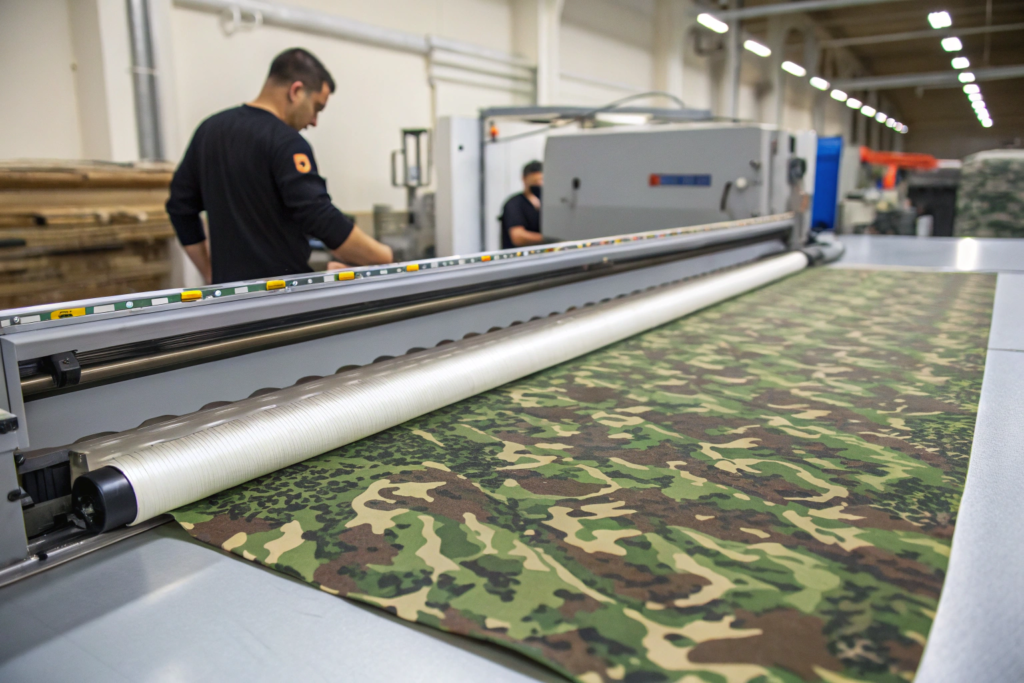
Fabric spreading for camo patterns must be "face up, one-way" with nap, meticulously aligned ply-by-ply using notches or print registration marks, and performed on a computerized spreader or by highly trained operators to ensure every layer of fabric is identical in pattern placement before cutting begins.
Why is "Face Up, One-Way" Spreading Non-Negotiable?
Camo patterns are directional, just like fabric with a nap (e.g., corduroy). "Face up" ensures the right side of the print is visible for alignment on every ply. "One-way" means all fabric layers run in the same direction. If fabric is turned or flipped, the pattern will be inverted or offset between layers, making consistent matching across all garments in the batch impossible.
- Technical Action: Our SOP mandates that the spreading team identifies a dominant, repeatable element in the pattern (e.g., a specific leaf shape) and aligns it to a fixed laser line on the table for every single ply.
- Client Impact: A brand learned this painfully with another factory. Their "woodland camo" pants had some legs where the leaves pointed up and others where they pointed down, creating a chaotic look. Our controlled spreading eliminates this.
This meticulous start is more time-consuming and uses slightly more fabric, but it is the non-negotiable cost of top quality for camo apparel. It’s the first filter separating a true technical apparel factory from a basic garment assembler.
How Do You Handle Fabric with Large Pattern Repeats?
Large, dramatic repeats (common in modern camo) are the ultimate test. Here, the marker making (digital layout of pattern pieces) becomes an artistic and technical challenge.
- We analyze the repeat cycle (e.g., the pattern repeats every 24 inches vertically).
- Our pattern engineers design the marker to strategically "waste" fabric between major pieces to ensure that when two pieces are sewn together (like a jacket center front), their patterns will flow seamlessly.
- We create a "master alignment map" for the cutter, showing exactly where on the pattern roll to begin spreading for each marker section to maintain continuity.
For a recent order of high-end hunting jackets with a large-scale digital camo, we increased fabric utilization planning time by 30% to achieve perfect shoulder and sleeve matches. The client was able to use the flawless matching as a key marketing point, justifying a premium price.
How Does Pattern Engineering and Cutting Precision Achieve Consistency?
Even with perfectly spread fabric, inaccurate cutting will ruin the match. This stage translates the digital plan into physical precision. The tolerance here is often less than 1/16 of an inch.
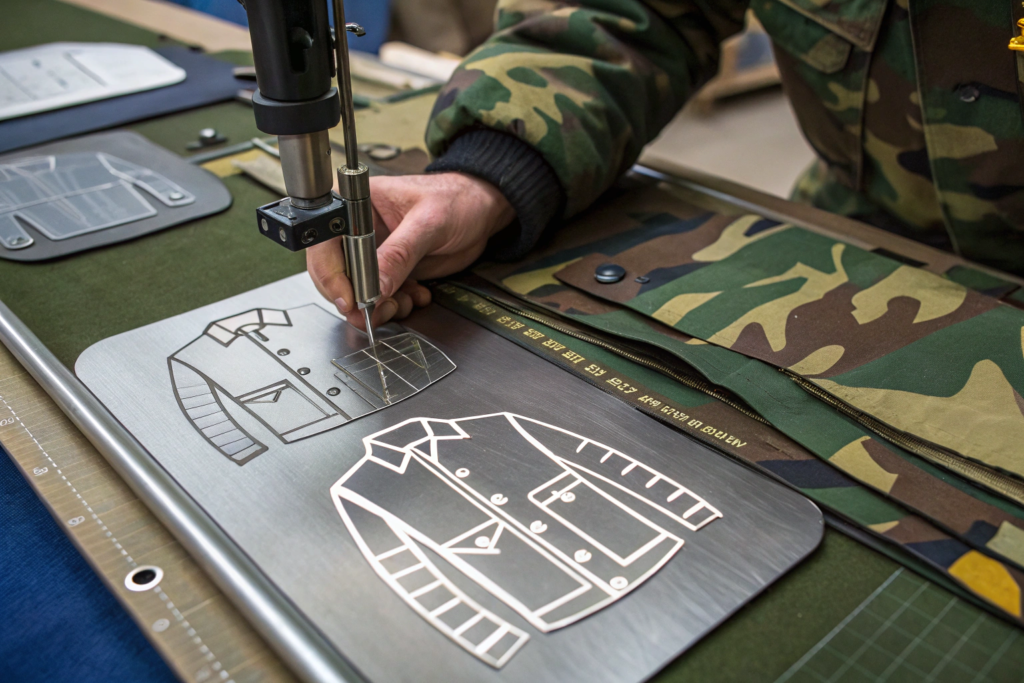
Precision is achieved through the use of computerized pattern grading and marker software that prioritizes pattern alignment, followed by cutting with either highly calibrated automated cutters (laser/waterjet) or manual cutting using dies and templates under strict supervision for each piece.
What Specific Cutting Techniques Guarantee Alignment?
We employ a hybrid approach depending on volume and complexity:
- For High Volume & Complex Shapes: We use computer-controlled cutting machines. The pattern pieces are cut simultaneously through all layers, guaranteeing that piece #1 from the top ply is identical to piece #1 from the bottom ply.
- For Critical, Small-Batch, or Intricate Items: Skilled cutters use metal or plastic templates. The template is placed over a specific, aligned section of the pattern on the top ply, cut, then that same cut piece is used as the template for the next ply, ensuring absolute consistency.
A critical step is "notching and marking." As each piece is cut, we make small notches or use soluble pens to mark key matching points (e.g., where the sleeve cap aligns with the shoulder seam). These guides are indispensable for the sewing operators. A distributor we partnered with had previously received jackets where sleeves were rotated incorrectly, breaking the pattern flow. Our notching system eradicated this error completely.
How is the Cutting Team Trained and Managed?
Cutting camo is a specialized skill. Our cutting team undergoes specific training on:
- Pattern Recognition: Identifying the repeat and dominant lines in different camo designs.
- Template Handling: Proper use and maintenance of alignment templates.
- Bundle Management: Immediately organizing cut pieces into numbered bundles to keep matched parts (like left and right front panels) together.
This management is part of our broader quality control system, where the cutting department is the first official inspection point. Any layer with a pattern flaw or misalignment is removed before cutting proceeds.
What In-Line Controls During Sewing Ensure Matches Are Maintained?
The sewing line is where the matched pieces are assembled. Without clear instructions and checks, all the previous precision can be lost in minutes. Effective in-line control turns individual operators into guardians of consistency.
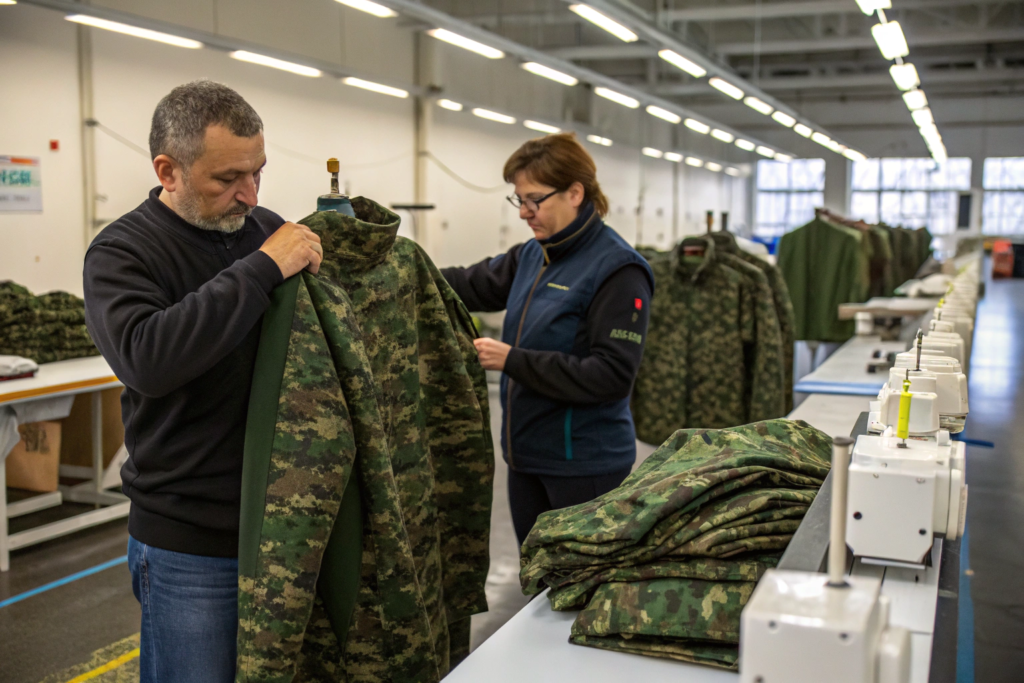
In-line controls include: 1) Providing sewing lines with "reference samples" that show correct matching, 2) Implementing a "first-piece check" system for each new bundle, and 3) Empowering floor supervisors to stop production if a mismatch is detected, ensuring immediate correction.
What is a "Reference Sample" and How is it Used?
For each style, we create one or two golden samples that exemplify perfect pattern matching at all critical seams (center front, shoulders, sleeves, pockets). These samples are not for the client; they are for the factory floor.
- They are mounted at the start of each relevant sewing station.
- The operator compares their work to the reference sample after sewing each critical match point.
- The floor supervisor uses it during the mandatory "first-piece check" when a new bundle of cut parts arrives at the station.
This visual standard is constant and unambiguous. It solves the problem of inefficient communication by replacing verbal instructions with a clear, physical benchmark.
How Does the "First-Piece Check" System Work?
This is a formal pause point that prevents errors from scaling.
- When a new bundle of 50 jacket fronts and backs arrives at the assembly station, the operator sews one complete unit.
- This "first piece" is immediately presented to the line supervisor.
- The supervisor examines the pattern matching against the reference sample using a checklist.
- Only after the supervisor signs off can the operator proceed with the remaining 49 units in the bundle.
This system caught a potential issue for a client's order of camo hunting vests. The cutter had slightly mis-marked a bundle. The first-piece check revealed a 1cm misalignment at the side seam. The bundle was sent back for re-cutting, preventing 49 defective vests from being made. This proactive check is a cornerstone of preventing delayed shipments caused by mass rework.
Conclusion
Consistent camo pattern matching is not a happy accident; it is the direct result of a factory's disciplined investment in process, technology, and training. It requires a holistic approach that integrates careful fabric spreading, precision cutting, intelligent pattern engineering, and vigilant sewing-line controls. Each stage builds upon the last, creating a chain of custody for quality that ensures every garment in the batch meets the same high standard.
For brands whose customers have a keen eye for detail and demand authenticity, this level of technical control is what separates market leaders from the rest. It transforms a functional garment into a trusted piece of gear.
At Shanghai Fumao, we have built our production lines and SOPs around this philosophy. We understand that for camo apparel, consistency is quality. If you are looking for a manufacturing partner who respects the craft of pattern matching as much as you do, and who has the systems to deliver it at scale, let us demonstrate our capability. To discuss how we can ensure flawless consistency for your next camo apparel line, please contact our Business Director Elaine at: elaine@fumaoclothing.com.