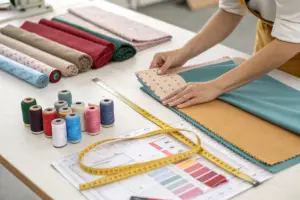
Communication breakdowns with overseas sales representatives are one of the most common and costly pain points for apparel brand owners. Misunderstandings about specifications, delays in responses, and unclear updates can derail production timelines, compromise quality, and ultimately hurt your profitability. The question isn't whether you'll face communication challenges, but how you can systematically prevent them from impacting your business.
The most effective way to avoid communication issues is to establish a structured, transparent, and documented partnership from the outset. This involves choosing a partner with a clear process, utilizing specific tools and protocols, and fostering a proactive, collaborative relationship rather than a reactive, transactional one.
At Shanghai Fumao, we understand that for a business owner like you, time is money and clarity is everything. We've built our client communication model to directly address the frustrations you've likely experienced: unanswered emails, vague promises, and last-minute surprises. The goal is to make you feel in control and informed at every stage.
How to establish clear communication protocols from day one?
The foundation of smooth communication is set before the first sample is even made. Rushing into production without agreed-upon rules of engagement is a recipe for frustration.
From the initial inquiry, observe how the sales rep communicates. Do they ask detailed questions about your needs, or just reply with a generic price list? A professional partner will seek to understand your brand, target market, and specific quality requirements. We mandate that our project managers create a Shared Single Source of Truth document for every new client. This living document includes tech packs, approved samples, fabric specs, and all correspondence, stored on a cloud platform you can access 24/7. Last year, a client from Seattle shared how their previous supplier in South Asia lost their only tech pack PDF, causing a two-week delay. With our system, that risk is eliminated because everything is centralized and version-controlled.

What key questions should you ask a potential sales rep?
Don't just talk about price. Interview them about their process. Ask: "What is your standard response time for urgent queries?" and "Can you walk me through your step-by-step process from sampling to shipment?" Inquire about their primary communication tools—do they rely solely on email, or use professional platforms? Their answers will reveal their operational maturity. Also, ask for a fixed point of contact. A major red flag is being passed between multiple salespeople. At our factory, you are assigned a dedicated Project Manager who is your single point of contact, backed by a team. This person understands your entire order history and brand ethos.
Why is a detailed Technical Pack non-negotiable?
A vague idea or a reference sample is not enough. A comprehensive technical pack is the universal language of apparel manufacturing. It eliminates subjective interpretation. Your tech pack must include:
- Detailed flat sketches with multiple views.
- Precise point-of-measure (POM) specifications for every garment size.
- Bill of Materials (BOM) listing every component (fabric, thread, zipper, button) with supplier references or International Organization for Standardization (ISO) quality grades if applicable.
- Clear construction details (stitch types, seams, reinforcements).
- Print/embroidery artwork with Pantone color codes and size placement.
Providing this level of detail upfront forces clarity and becomes the benchmark for all quality checks.
What tools and practices ensure ongoing transparency?
Once production begins, consistent and transparent updates are critical to avoid the "black box" feeling, where you have no visibility into your order's status.
We moved beyond sporadic email updates years ago. For all our clients, we provide access to a real-time production dashboard. This dashboard shows the live status of each order: "Fabric Sourced," "Cutting," "Sewing Line 3," "Quality Control," "Packed." It's like tracking a package, but for your entire production run. Additionally, we schedule weekly 15-minute video call updates. These are not sales calls; they are operational syncs to review progress, tackle any minor issues immediately, and confirm next steps. This practice alone helped a sportswear brand from Miami prevent a wrong fabric dye lot from being cut, saving them over $20,000 in potential losses.

How can scheduled video calls prevent misunderstandings?
Email and text are great for data, but terrible for tone and complex problem-solving. A brief, regular video call bridges the cultural and linguistic gap. It allows for screen-sharing to review documents, lets you see the body language of your contact, and fosters a more human, collaborative relationship. It turns a distant "supplier" into a tangible "partner." We encourage clients to use these calls to do virtual walk-throughs of the production floor or inspect sample details via the camera, creating shared context that text cannot.
What is the role of centralized communication platforms?
Relying on long email chains, WeChat, and WhatsApp for different topics fragments information. We centralize project-specific communication on platforms like Slack or Microsoft Teams (based on client preference). This creates dedicated channels for each order where messages, files, and approvals are logged sequentially. It stops critical information from getting buried in a personal inbox and allows for continuity if a team member is unavailable. The search function also means you can instantly find past decisions.
How to handle feedback and changes effectively?
Even with perfect planning, changes and feedback are inevitable. How these are communicated determines whether they cause a minor adjustment or a major disruption.
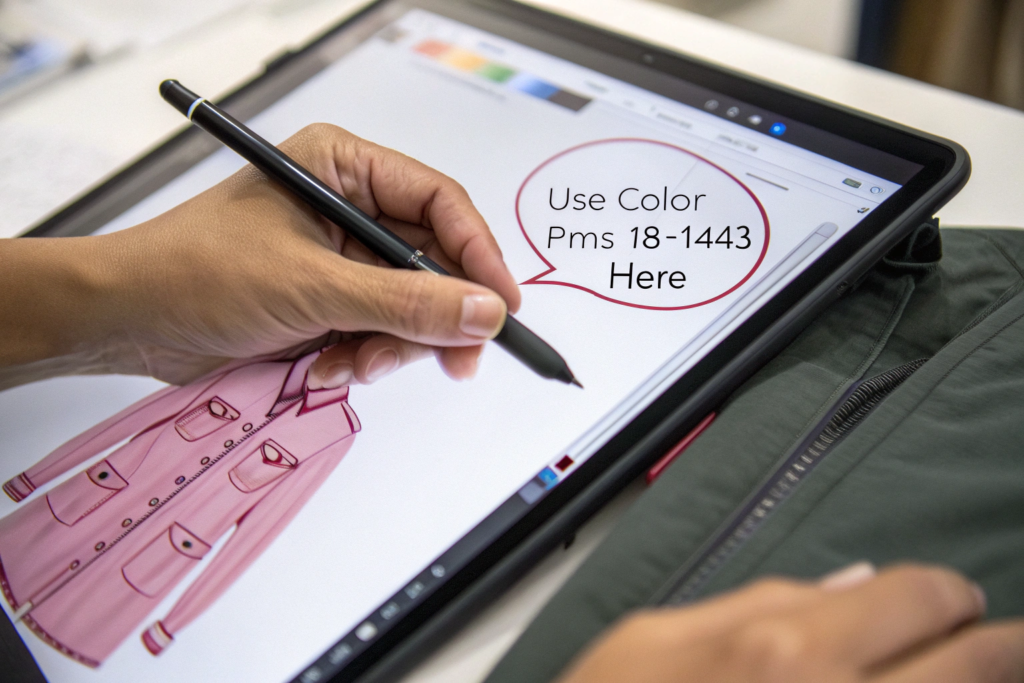
The rule is: All changes must be formalized. A casual voice note saying "make the logo a bit bigger" is unacceptable. We require all design feedback and change requests to be marked up directly on the digital tech pack or sample image, with clear text notes. This annotated file is then uploaded to the shared project folder, triggering an official change request process. This process automatically evaluates the impact on cost and timeline before implementation, so there are no surprises. For example, a client once requested a last-minute stitch color change after cutting had begun. Because it was processed as a formal change request, we could immediately calculate the extra cost for new thread and re-threading machines, and the client could make an informed decision.
What's the best way to provide sample feedback?
Never give feedback like "I don't like it." Be specific and actionable. Use the "PPP" method: Praise, Problem, Proposal. For instance: "The fabric quality is excellent (Praise). However, the fit on the shoulder is too tight compared to our spec sheet (Problem). Please adjust the pattern to add 0.5 inches across the shoulder seam for the next sample (Proposal)." This method is respectful, clear, and directs the factory team toward a specific solution, drastically reducing revision rounds.
How should you manage time zone differences proactively?
Time zone differences don't have to mean delays. They can be leveraged for a near-24-hour workflow. The key is to set clear expectations for "active overlap" hours. With our U.S. clients, we establish a 2-3 hour window in our morning (which is their late afternoon/evening) for live communication. For non-urgent matters, we use asynchronous tools like the shared dashboard or message platforms. We also provide a clear escalation path for true emergencies outside of overlap hours. This structured approach ensures progress continues daily.
How to build a true partnership beyond transactions?
Ultimately, avoiding communication issues is about viewing your factory not as a vendor, but as an extension of your team. This mindset shift encourages openness and proactive problem-solving.
Invest time in building the relationship. Share your brand's vision and challenges. When your factory understands why you need a certain quality level or deadline, they can better help you achieve it. We invite our key clients to visit our facility, and we make annual trips to key markets. This face-to-face interaction builds invaluable trust. One of our longest-standing clients, an outdoor brand from Oregon, shares their annual sales forecasts with us. This allows Shanghai Fumao to proactively reserve production capacity and source fabric for them, ensuring they never miss their key selling season. This deep collaboration is the ultimate defense against communication failures.
Why is sharing your business calendar beneficial?
Syncing major milestones can align your entire supply chain. Share your key dates: product launch, marketing campaigns, store delivery deadlines. This helps your factory rep prioritize your projects and understand the real-world impact of any potential delay. They become invested in your success, moving from simply taking orders to actively managing risks to hit your critical dates.
What defines a partner versus a supplier?
A supplier waits for instructions. A partner offers solutions. A good sales rep will alert you to potential fabric price increases they've heard about from mills and suggest alternatives. They will point out if a design feature might be expensive to produce at volume and propose a more cost-effective method that maintains the look. This proactive communication is the hallmark of a true partner like Shanghai Fumao, focused on your long-term success.
Conclusion
Avoiding communication issues with overseas apparel sales reps requires intentional strategy, not luck. It starts with selecting a partner committed to transparency, continues through the disciplined use of tech packs and digital tools, thrives on clear and structured feedback, and matures into a genuine business partnership built on shared goals.
By implementing these practices, you transform a potential source of stress into a competitive advantage: a reliable, responsive, and collaborative extension of your production team. You gain peace of mind, protect your timelines, and safeguard your product quality.
If you are tired of chasing updates and decoding vague responses, it's time to experience a different way of working. Let Shanghai Fumao demonstrate how clear, proactive, and professional communication can streamline your apparel sourcing. Reach out to our Business Director, Elaine, at elaine@fumaoclothing.com to start a conversation where you are always heard, informed, and in control.