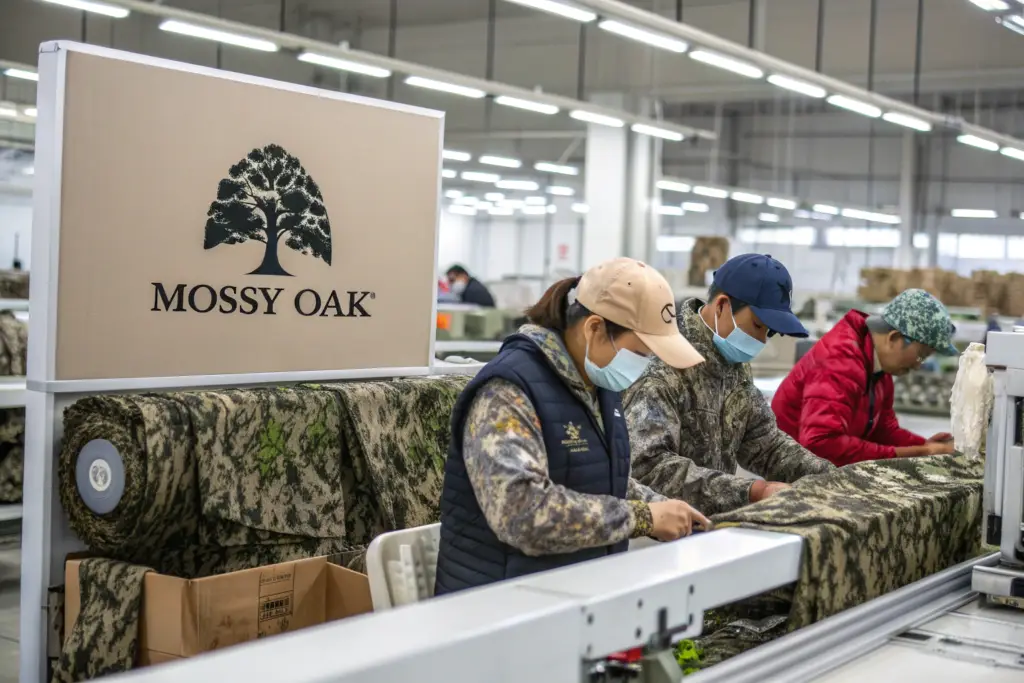
For American brands in the outdoor and hunting apparel market, finding the right manufacturing partner is a strategic decision. It is not just about making clothes. It is about creating products that resonate deeply with a loyal and knowledgeable customer base. A key question we often hear is about the real advantages of working with a factory that holds an official license for major outdoor patterns like Mossy Oak. Beyond just accessing a popular camouflage, what tangible benefits does this partnership bring to a brand's bottom line and market position?
Sourcing apparel from a factory with an official Mossy Oak license provides significant legal, operational, and brand-building advantages. It ensures full legal compliance, grants direct access to authentic, high-quality patterns, streamlines production and logistics, and ultimately enhances your brand's credibility and customer trust in the competitive outdoor market.
Many brand owners think that sourcing camouflage apparel is simply about finding a supplier who can print a similar-looking pattern. This approach carries hidden risks. We have seen brands face legal challenges and inventory seizures due to copyright infringement. Choosing a licensed partner like us, Shanghai Fumao, transforms this risk into a structured, professional supply chain asset. It is a decision that protects your business and accelerates its growth.
How does Mossy Oak licensing ensure legal compliance and brand safety?
Navigating intellectual property law in the apparel industry can be a minefield, especially with highly recognizable and legally protected patterns like Mossy Oak. For brand owners, the primary benefit of sourcing from a licensed factory is comprehensive risk mitigation.
When you partner with a factory that holds the official license, you are not just buying fabric with a pattern; you are entering a pre-approved, legal framework. The license is a contract between the factory and the pattern owner (Mossy Oak). This contract authorizes the factory to produce garments using that specific intellectual property. For you, the brand, this means immediate and guaranteed legal compliance. You eliminate the risk of costly lawsuits, customs seizures, or cease-and-desist orders that can cripple a business. We have a client, a mid-sized hunting apparel brand from Texas, who came to us after a previous supplier in another country provided counterfeit Mossy Oak fabric. Their shipment was held by U.S. Customs and Border Protection, leading to a total loss and a missed crucial hunting season. Since switching to Shanghai Fumao as their licensed manufacturer, they have had zero legal issues, and their focus has fully returned to sales and marketing.
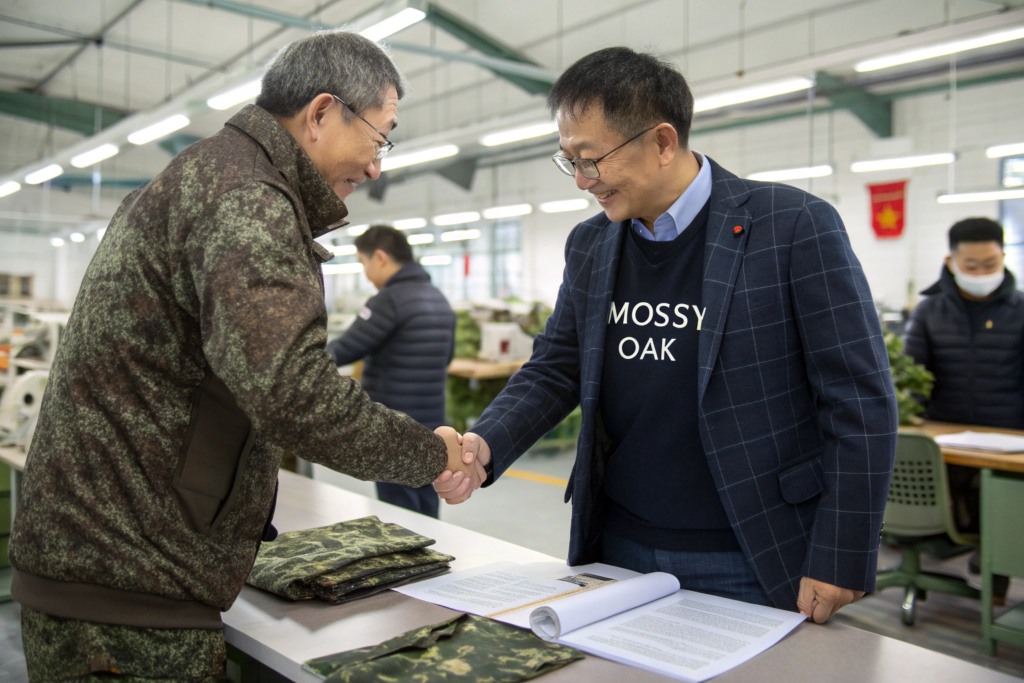
What are the legal risks of using unlicensed camouflage patterns?
The risks are severe and multi-faceted. First, you face direct legal action from the intellectual property holder. Companies like Mossy Oak actively monitor the market and enforce their trademarks and copyrights through organizations like the International AntiCounterfeiting Coalition. Lawsuits can result in hefty financial damages, legal fees, and court-ordered destruction of your inventory. Second, your supply chain is vulnerable. Customs authorities worldwide are trained to identify counterfeit goods. Under regulations enforced by U.S. Customs and Border Protection, infringing shipments can be detained and destroyed, leaving you with no product and lost payments. The financial loss extends beyond the goods to include lost sales, brand reputation damage, and eroded customer trust.
How does the licensing process streamline your product development?
Working with a licensed factory integrates legal compliance directly into the production workflow. There is no need for you to negotiate a separate license, which can be a complex and expensive process for individual brands. The factory has already secured the rights. At Shanghai Fumao, our license gives us direct access to Mossy Oak's official pattern library and technical specifications. This means the patterns we use are authentic, up-to-date, and meet the exact color and detailing standards required. For product development, this is a huge efficiency gain. For instance, last year, we helped a startup brand launch a new line of Mossy Oak Break-Up Country jackets. Because we had the official digital files and color codes, we matched the pattern perfectly across three different fabric types—shell, lining, and mesh—saving nearly three weeks of sampling time and achieving approval on the first prototype.
Does a licensed partner guarantee higher quality and authentic patterns?
Absolutely. Quality in camouflage apparel is not just about stitch density or fabric weight; it is fundamentally about the accuracy and authenticity of the pattern itself. A licensed factory is contractually obligated to maintain these standards.
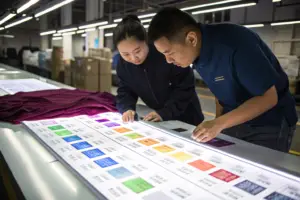
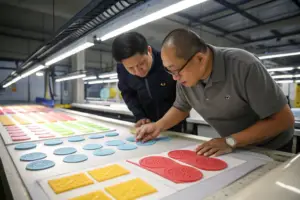
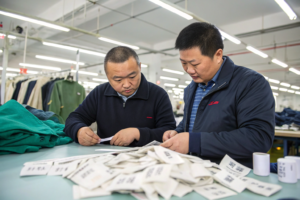
Mossy Oak and other major pattern developers have strict quality control guidelines for how their patterns are applied. This includes specifications for color fidelity, print clarity, pattern alignment (especially at seams), and fabric durability. An unlicensed supplier has no accountability to these standards. The result is often faded colors, blurred details, and patterns that do not match at the sleeves or seams—flaws that serious outdoor enthusiasts will immediately notice. Our licensing agreement requires us to source inks and follow printing techniques that ensure the pattern remains vibrant and effective after repeated washes and extended field use. This direct pipeline to authentic patterns is a core part of our full-package manufacturing service.
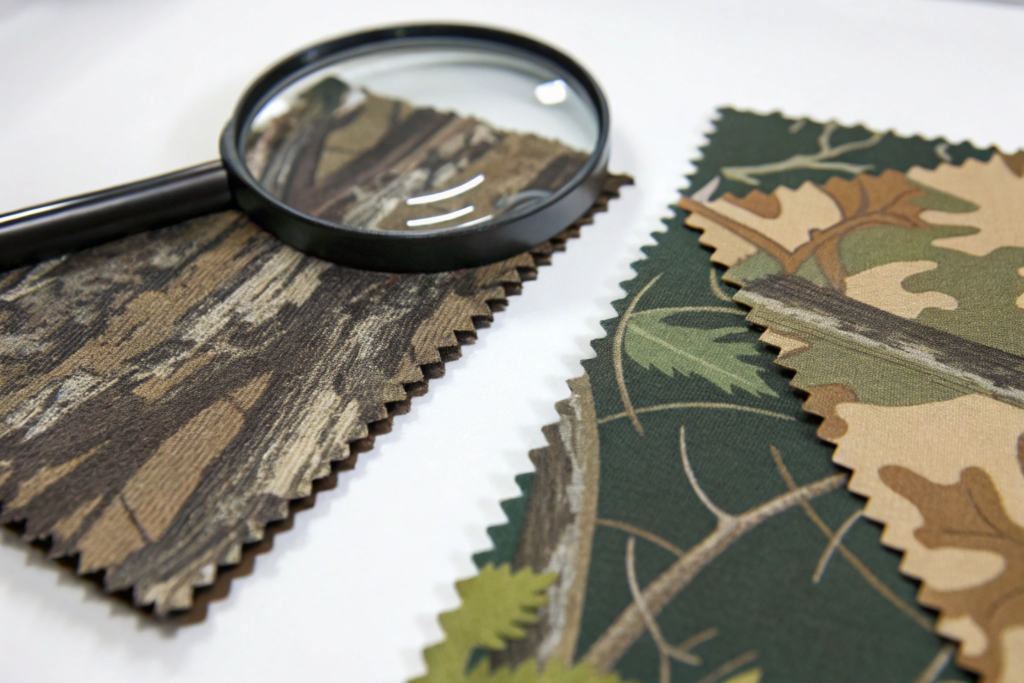
Why is pattern accuracy critical for the end-user?
For the hunter or outdoor enthusiast, camouflage is a functional tool, not just a fashion statement. The science behind patterns like Mossy Oak is based on extensive research into light disruption, depth, and natural background blending. An inaccurate pattern loses its effectiveness. Colors that are off by a few shades or details that are poorly defined can make the wearer more visible to game. By guaranteeing pattern authenticity, a licensed factory ensures the product performs its intended function. This builds tremendous loyalty. A brand that sells products with true, effective camouflage earns repeat customers. We measure this through our clients' feedback; one of our partners reported a 25% increase in repeat customer rate after switching to our licensed production, as their customers recognized the superior field performance.
How does licensing impact material sourcing and testing?
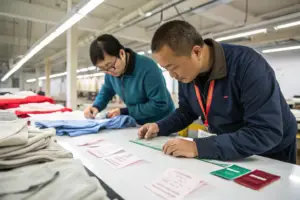
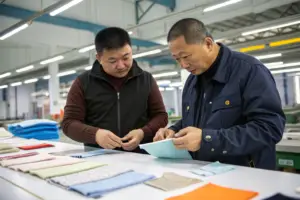
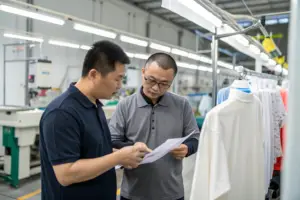
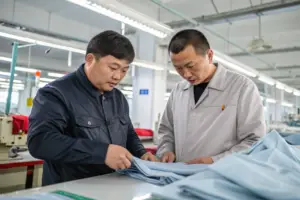
Licensing often goes hand-in-hand with access to better materials and rigorous testing protocols. To meet the performance standards associated with a premium pattern, the base fabric must be suitable. As a licensed factory, we have established relationships with fabric mills that produce technical materials suitable for outdoor use. Furthermore, we conduct comprehensive testing in-house and through third-party labs. For example, we test colorfastness to washing and light, crocking (rubbing), and durable water repellent (DWR) performance on finished garments. This end-to-end control is something an unlicensed, transactional supplier typically cannot offer. The table below outlines key tests we perform on licensed camouflage apparel:
| Test Type | Standard Method | Purpose for Licensed Apparel |
|---|---|---|
| Colorfastness to Washing | AATCC 61 | Ensures the licensed pattern does not fade or bleed improperly. |
| Colorfastness to Light | AATCC 16 | Guarantees the pattern resists fading from UV exposure during outdoor use. |
| Crocking (Dry & Wet) | AATCC 8 | Verifies the printed pattern does not rub off onto other surfaces. |
| Tensile Strength | ASTM D5034 | Confirms the fabric integrity is maintained after printing/dyeing. |
| DWR Performance | AATCC 22 | Ensures water repellency treatment is effective and durable. |
Can it improve supply chain efficiency and speed-to-market?
Yes, significantly. A licensed factory acts as a consolidated, expert source, removing multiple potential bottlenecks from your supply chain. This efficiency is a major competitive advantage.
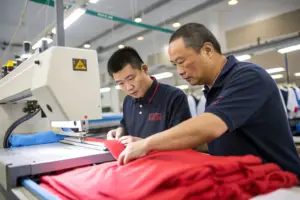
Consider the alternative: you might source fabric from one supplier, arrange printing with another (who may not be licensed), then send the printed fabric to a garment factory. This multi-vendor approach increases lead times, communication errors, transportation costs, and quality variables. At a licensed factory like ours, the entire process—from sourcing base fabric, to applying the authorized pattern, to cutting, sewing, and finishing—is done under one roof. This vertical integration drastically reduces lead times. For example, our typical production timeline for a licensed camouflage order is 15-20% faster than if a client managed the fabric and garment production separately. We also handle all export and logistics under a secure DDP (Delivered Duty Paid) model, ensuring the legally compliant goods move smoothly to your U.S. warehouse.
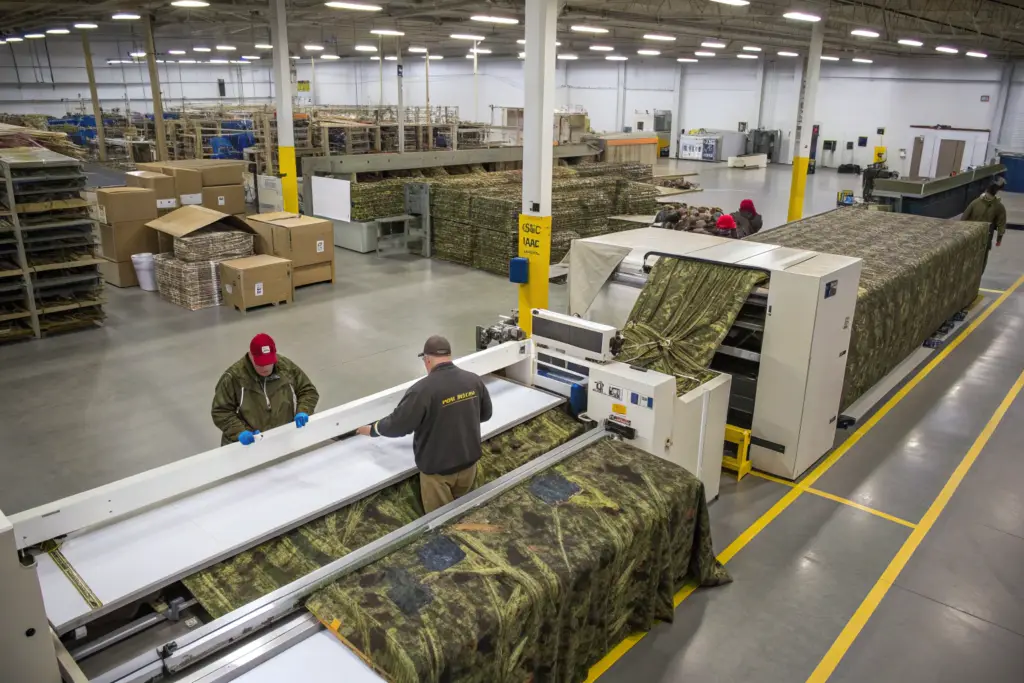
How does vertical integration reduce communication errors?
Inefficient communication is a common pain point. When dealing with a single, licensed full-package provider, you have one point of contact for the entire order. This simplifies everything. Specifications, changes, and quality standards are communicated once, to one team that manages the entire process. There is no risk of the printer blaming the fabric mill, or the garment factory blaming the printer. Accountability is clear. We use a dedicated project management system for each client, providing real-time updates at each stage. This transparency was a game-changer for a brand from Colorado that previously worked with three different suppliers. They reported a 70% reduction in email traffic and problem-solving time, allowing them to focus on design and sales.
What is the impact on managing minimum order quantities (MOQs)?
Licensing can actually provide more flexibility. While some might think licensed production comes with prohibitively high MOQs, that is not always the case. Because we produce the pattern in-house for multiple clients, we can often aggregate base fabric purchases and pattern print runs. This allows us to offer more competitive and accessible MOQs for individual brands compared to if they tried to source printed fabric alone. For a new brand, this can mean the difference between testing the market with 500 units or being forced to order 3000. Our flexible model supports brand growth at every stage.
Does it enhance brand credibility and customer trust?
Ultimately, this is the most powerful benefit. In today's market, consumers are savvy. They look for official hangtags, trademarks, and authentic branding. Selling products made with officially licensed Mossy Oak patterns is a strong market signal.
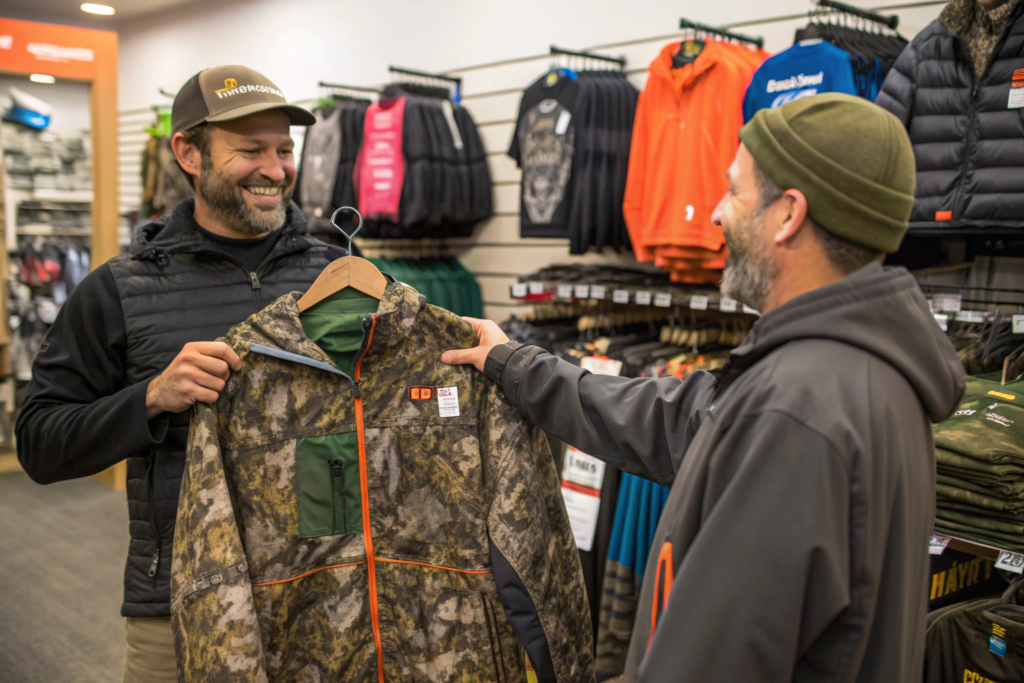
It tells your customers that you are a legitimate, professional brand that respects intellectual property and is committed to delivering authentic, high-performance gear. You can confidently market your products as "Featuring Genuine Mossy Oak Camouflage," which carries immediate weight. This credibility directly translates to customer trust, which drives sales and reduces returns. It also builds a stronger relationship with retailers, who are cautious about stocking products that might carry legal risks. We enable our clients to use official branding and tags, which is a powerful tool at the point of sale.
How can you market this partnership effectively?
You should actively promote your licensed manufacturing partnership. Include it in your brand story: "We partner with an officially licensed Mossy Oak manufacturer to bring you authentic, high-quality gear." Use this on your website, in product descriptions, and in marketing materials. It differentiates you from competitors who may be using generic or unlicensed patterns. This clear messaging helped one of our e-commerce brand partners improve their online conversion rate by 18%, as customers felt more confident in the product's authenticity and quality.
What long-term strategic advantage does it provide?
Building a brand on a foundation of authentic, licensed products creates a sustainable business model. It protects you from market volatility caused by legal crackdowns on counterfeit goods. It aligns you with the reputation and heritage of Mossy Oak. This strategic partnership allows you to focus on what you do best—building your brand and connecting with customers—while we ensure the production is legally sound, high-quality, and efficient. It is about becoming a permanent player in the market, not just a short-term reseller.
Conclusion
Sourcing from a factory with Mossy Oak licensing is far more than a procurement decision; it is a strategic investment in your brand's legality, quality, efficiency, and reputation. The benefits are clear: ironclad legal protection, guaranteed access to authentic and high-performing patterns, a streamlined and reliable supply chain, and enhanced credibility that resonates with retailers and end-consumers alike. In the competitive outdoor apparel arena, these advantages are not just nice-to-haves; they are essential for sustainable growth and risk management.
The complexities of international manufacturing and intellectual property make it crucial to choose a partner who simplifies the process while upholding the highest standards. If you are looking to build or scale your line of camouflage and outdoor apparel with the authority and authenticity that only official licensing can provide, let's talk. We at Shanghai Fumao are ready to be your trusted, licensed manufacturing partner. For a detailed discussion on how we can help bring your vision to market securely and successfully, please reach out to our Business Director, Elaine, at elaine@fumaoclothing.com.