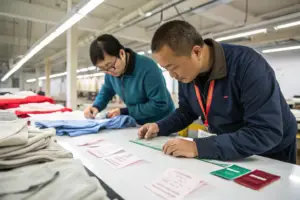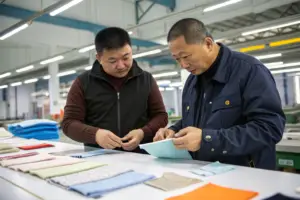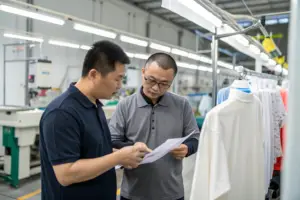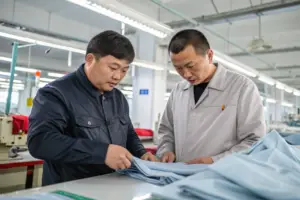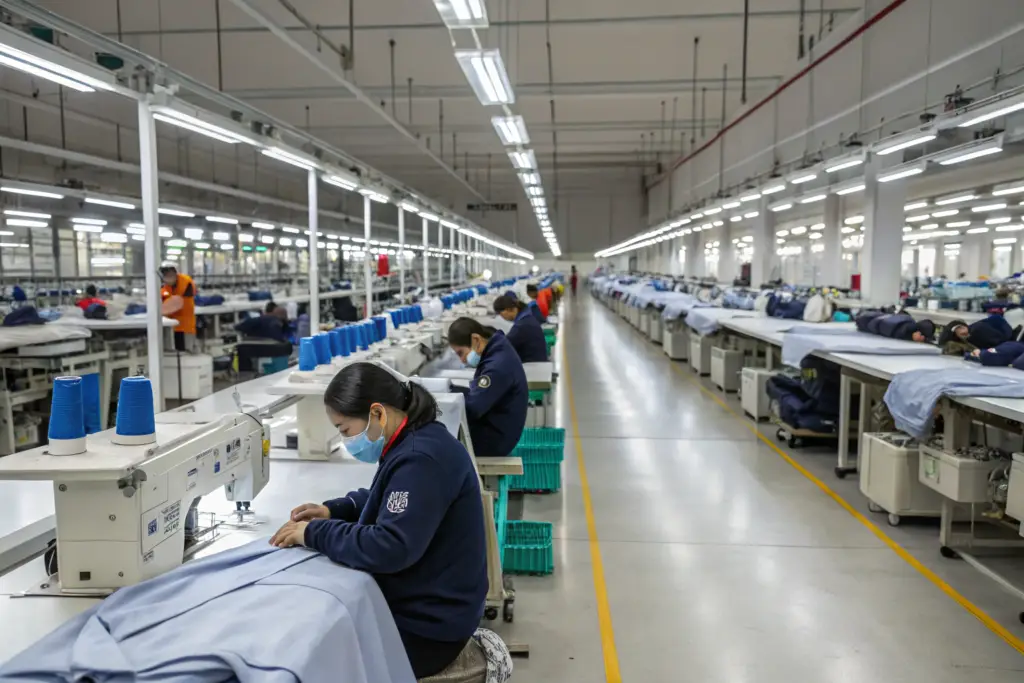
For apparel brand owners and buyers, quality is the non-negotiable foundation of brand reputation and customer loyalty. In an era of widespread outsourcing, a critical question arises: can you truly control what you do not own? While partnering with third-party factories is common, there is a compelling case that owning your manufacturing facilities—or partnering with a manufacturer that owns its facilities—provides an unmatched level of direct control over the entire production process, which is fundamental to achieving and maintaining exceptional garment quality.
Owning manufacturing facilities is key to controlling garment quality because it allows for direct, vertical integration of every stage of production—from fabric inspection to final sewing. This eliminates the disconnect and conflicting priorities that often exist with third-party contractors, enabling immediate implementation of standards, rapid problem-solving, and deep investment in specialized skills and technology that directly align with your brand's quality vision.
Quality control is not just inspection at the end; it is a culture and a process embedded in every stitch. Ownership makes this culture enforceable and consistent. Let's explore the concrete advantages this vertical integration delivers.
How does ownership eliminate communication barriers and delays?
When you outsource to a third-party factory, your quality team’s instructions must pass through the factory’s management, then to line supervisors, and finally to operators. Each layer can dilute or misinterpret the message. When issues arise, the feedback loop is slow, involving blame-shifting and negotiations. Ownership collapses this chain of command.
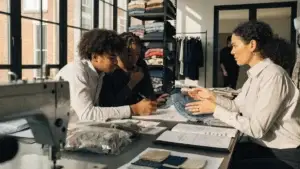
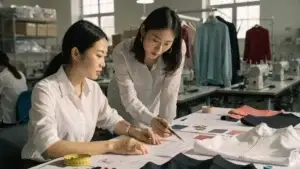
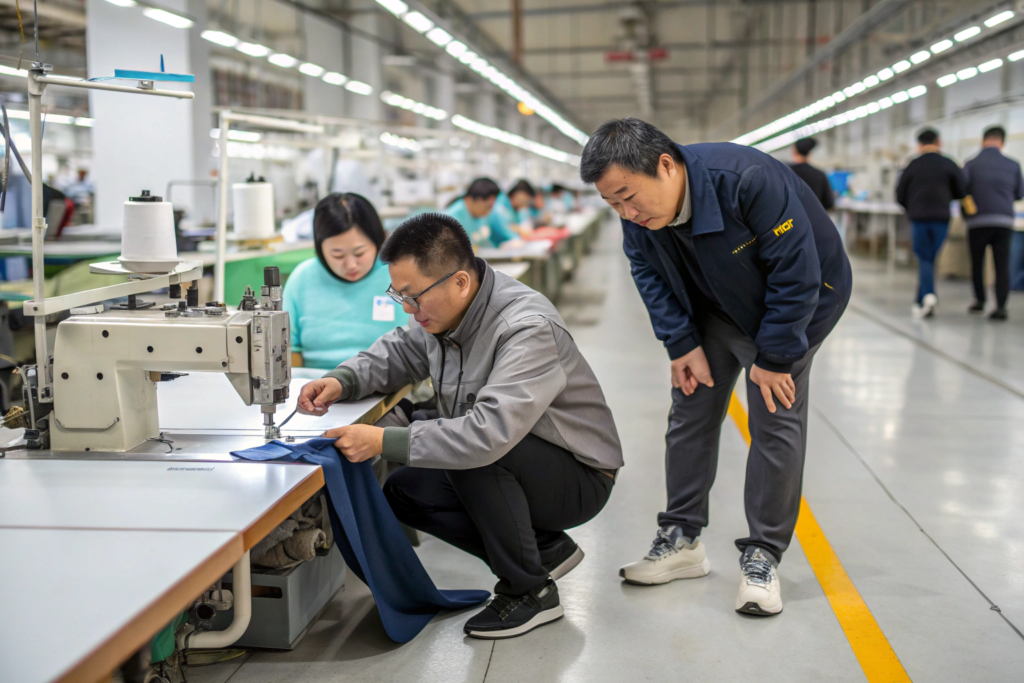
At Shanghai Fumao, because we own and operate our five production lines, we have a direct line from our clients’ tech packs to our sewing operators. Last year, a client provided a new performance jacket design with a complex, waterproof zipper insertion. The first sample from a typical outsourced factory might take weeks with multiple errors. Because our R&D team and production line supervisors work in the same building, they gathered at the sampling station within an hour of a question. They created a custom jig for the zipper foot that same afternoon, ensuring perfect alignment on the very first prototype. This speed and precision are only possible with direct, unfiltered control.
What is the impact on sample development and approvals?
The sample stage is where quality is designed into the product. In an owned facility:
- Iterations are Faster: Changes can be made on the spot without waiting for external factory approval or dealing with separate costing negotiations.
- Feedback is Direct: The pattern maker can watch the sewer construct the sample and immediately see where a seam is too tight or a notch is confusing.
- Cost of Failure is Lower: Encourages more experimentation to find the optimal construction method without fear of incurring extra charges from a contractor.
This results in a higher-quality, more production-ready prototype, which sets the standard for the entire bulk order.
How does it affect daily production problem-solving?
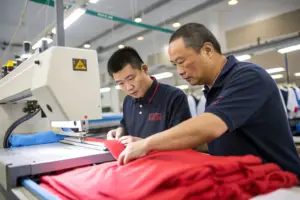
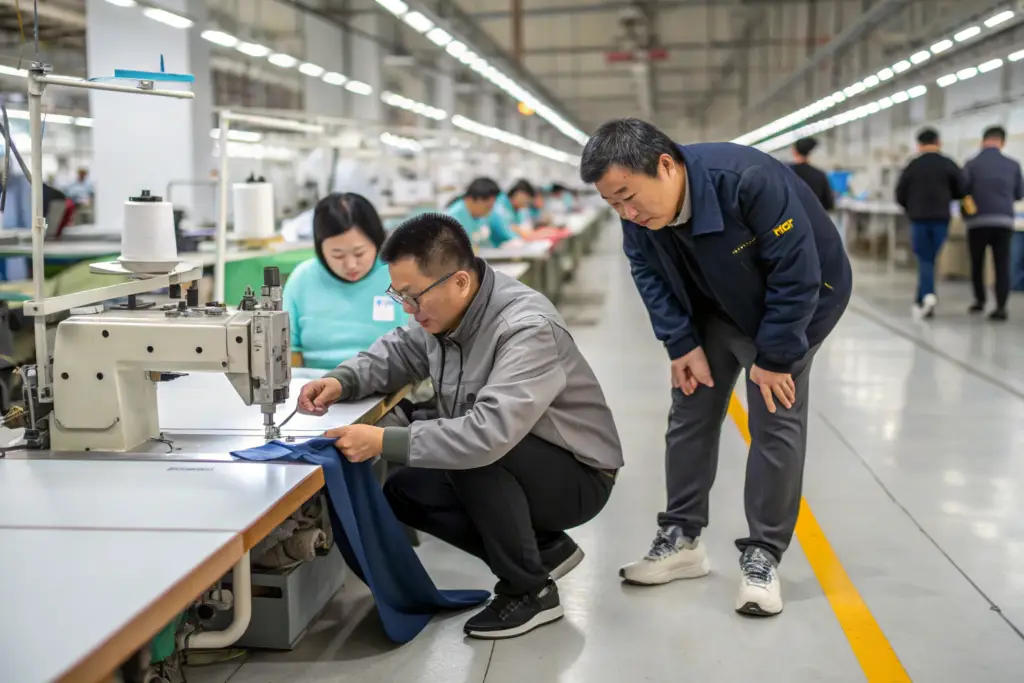
On the production line, issues like thread tension variation, slight fabric shading, or buttonhole alignment appear constantly. In an owned facility, the quality inspector can stop the line, call the mechanic and supervisor, and implement a corrective action within minutes. In a third-party factory, stopping the line costs the owner money, creating resistance. The problem may be “patched” rather than solved at the root, leading to inconsistencies in the final cartons.
How does vertical integration ensure material and process consistency?
Quality begins with raw materials. Owning the manufacturing process often goes hand-in-hand with greater control over upstream stages, such as fabric sourcing and inspection, or even in-house knitting/washing. This control over inputs is a decisive factor in output consistency.
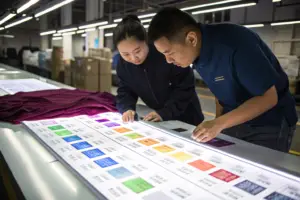
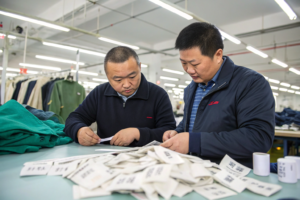
We work with a brand that had chronic issues with color fastness on their dyed polyester shorts. When they were using various subcontractors, each factory would source fabric from different mills, leading to batch-to-batch color variation and poor wash performance. When they shifted their order to our owned facility, we leveraged our direct relationships with a select few, high-performance mills. We instituted a mandatory pre-production testing protocol for every fabric roll: testing for color bleed, shrinkage, and pilling before cutting. Because we own the warehouse and the lab equipment, we absorb this cost and time as part of our quality commitment. The result was a 60% reduction in customer returns for color-related issues.
Can owned facilities control the entire washing and finishing process?
Yes, and this is a major quality differentiator. Garments like denim, knitwear, and vintage-style apparel depend on washing for hand-feel and appearance. Owning an on-site washing facility allows for:
- Precise Recipe Control: Consistency in enzyme washes, stone washes, or softener applications.
- Real-Time Adjustments: If a shade is not hitting the standard after the first wash cycle, the recipe can be adjusted immediately for the next batch.
- Quality Inspection Post-Wash: Garments can be checked for issues (seam integrity, color) immediately after washing, before moving to packing.
Third-party factories often outsource washing, losing control over timing, consistency, and handling.
How is inventory of components managed for consistency?
Owned facilities maintain tight control over trim inventory. For example, the same brand of zipper, the same dye-lot of thread, and the same buttons are used from the first to the last unit of an order. In a subcontracting model, a factory might run out of the specified thread and substitute a similar one without notification, leading to weakness in seams or slight color mismatch under certain lighting.
How does ownership foster a dedicated quality culture and investment?
Quality is ultimately delivered by people. An owned facility allows a company to directly hire, train, and incentivize its workforce around a singular quality ethos. It also justifies long-term investment in specialized machinery and technology that directly serve the brand’s needs, rather than the generic needs of multiple anonymous clients.
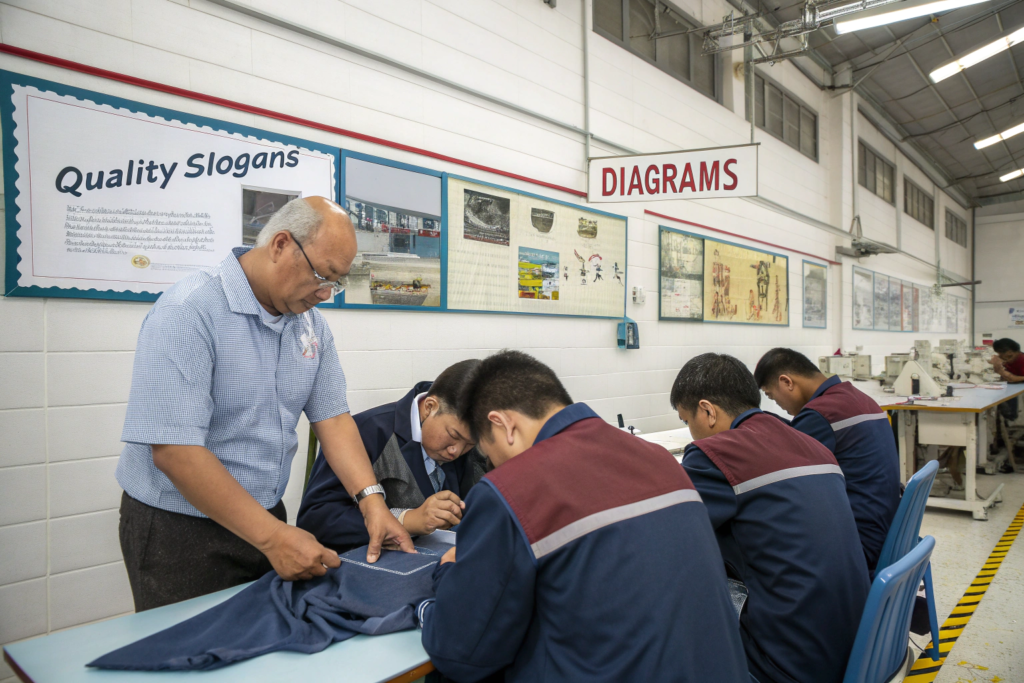
Our company culture revolves around “ownership of quality.” Each of our line operators is not just a sewer; they are trained to be the first inspector of their own work. We run monthly quality Olympics with rewards for the best-performing teams. This culture is possible because we manage the employees directly. Conversely, in a third-party factory, worker turnover is often high, and training is minimal, focused solely on speed. The workforce has little connection to the final brand’s reputation.
What kind of specialized investments do owned facilities make?
Because the return on investment is measured in long-term client retention and brand equity, owned factories invest in:
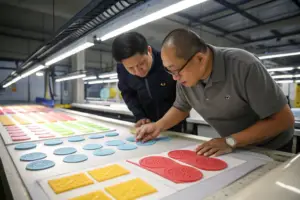
- Advanced Machinery: Such as automated pattern spreading machines that reduce fabric tension, or CNC laser cutters for perfect precision in complex shapes.
- Specialized Attachments: Custom sewing foot attachments, guides, and jigs for specific, recurring operations in a client’s product line.
- In-House Testing Labs: As mentioned earlier, which are a capital expense but provide invaluable data.
A subcontractor working on thin margins is unlikely to make such client-specific investments.
How does ownership affect accountability and traceability?
When a quality issue is found, traceability is instant. We can trace a defective garment back to the specific production line, shift, and even operator bundle. This allows for targeted re-training and precise correction of the root cause. In a multi-tiered subcontracting environment, especially one involving unauthorized outsourcing, traceability is lost. You cannot fix what you cannot find.
What are the limitations and strategic considerations?
Owning manufacturing facilities requires significant capital, management focus, and limits geographic flexibility. It is not the right strategy for every brand or every type of product. The key is to identify which products in your line are quality-critical and where the investment in control delivers the highest return.
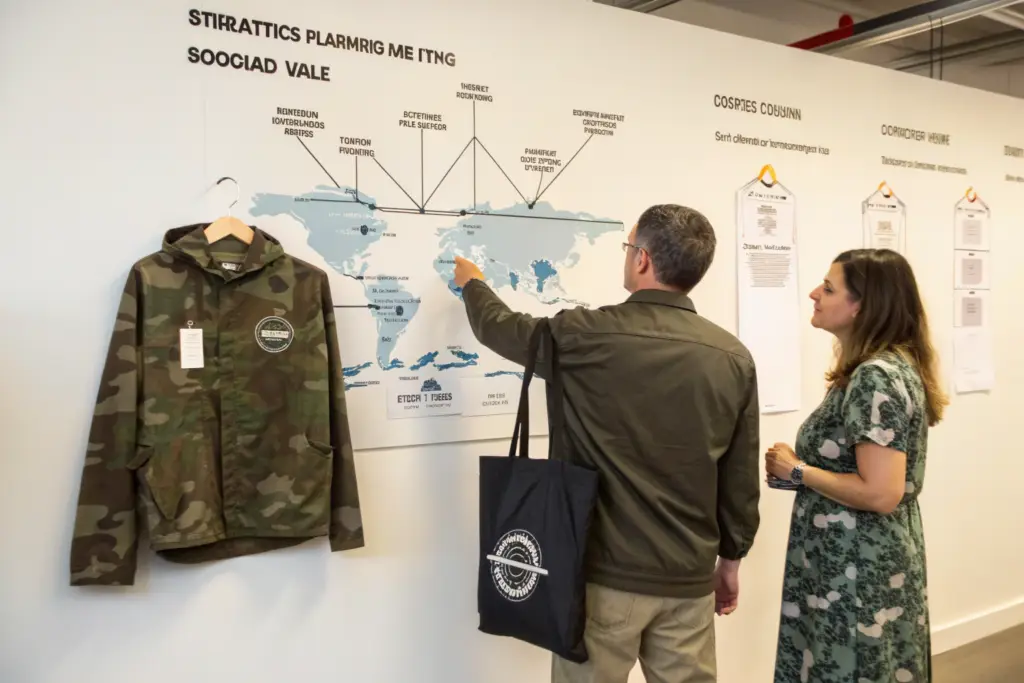
For fast-fashion, high-volatility items, the agility of using multiple third-party contractors may outweigh the benefits of ownership. However, for core products, signature items, or technically complex apparel (like waterproof jackets, tailored blazers, or licensed camo hunting gear), the quality assurance of an owned or deeply partnered facility is irreplaceable.
Can a brand achieve similar control without ownership?
Yes, through an exclusive or strategic partnership with a factory that itself owns its facilities and treats your account as a core, integrated partner. This is the model we offer at Shanghai Fumao. You gain the benefits of vertical integration—direct communication, embedded quality culture, and dedicated processes—without the capital burden of building your own factory. The key is the factory’s mindset and operational structure.
How should a buyer evaluate a factory's "ownership" advantage?
Look for:
- Single Location Operations: Does the sales rep you work with have direct, daily access to the production floor?
- Investment in Client-Specific Tools: Ask if they have ever created custom equipment for a client’s product.
- Low Turnover of Key Staff: Long-tenured production managers and technicians indicate a stable culture conducive to quality.
- Transparency: Will they show you their in-house lab, their training records, and their internal quality audit reports?
Conclusion
Owning manufacturing facilities provides the most direct and effective path to controlling garment quality. It enables seamless communication, ensures consistency from material to finish, and fosters a culture and capability for excellence that is difficult to replicate through arm’s-length contracting. For brands where quality is the primary competitive advantage, this vertical integration—or a partnership that closely mirrors it—is not just an operational choice; it is a strategic imperative.
While not without its challenges and costs, the return manifests in superior products, stronger brand equity, and ultimately, greater customer trust and loyalty.
If you are seeking a manufacturing partnership that offers the control, commitment, and quality assurance of an owned facility without the capital investment, Shanghai Fumao operates on this deeply integrated model. We own our production lines and invest in quality as our core business. Contact our Business Director, Elaine, at elaine@fumaoclothing.com to build a quality-driven partnership for your brand.