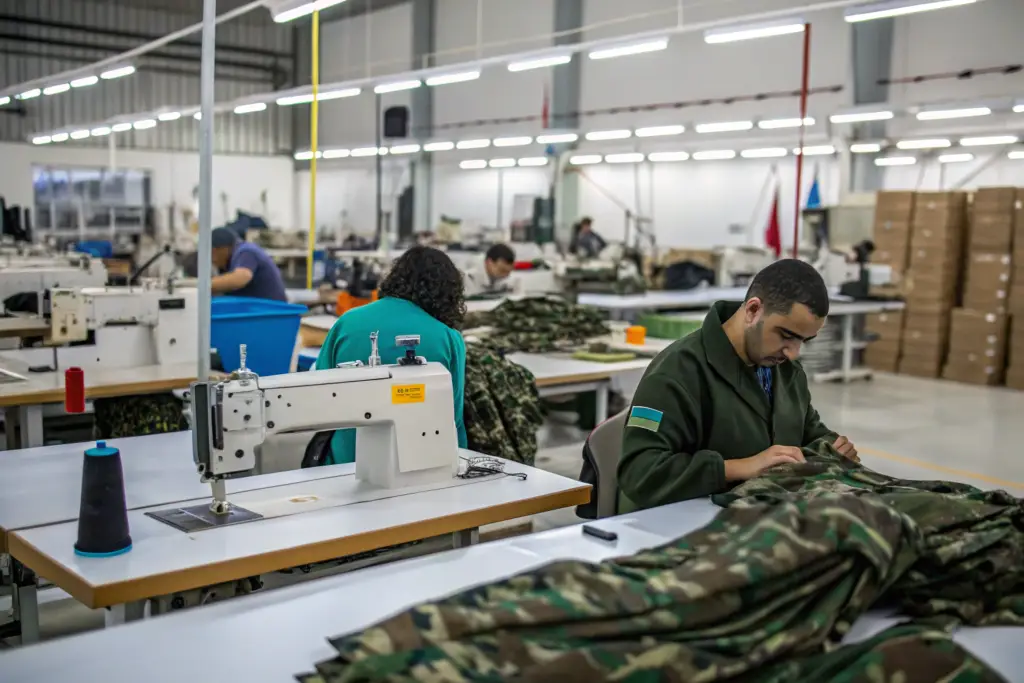
When US and European brands consider sourcing Realtree, Mossy Oak, or other licensed camouflage apparel, China and Vietnam often dominate the conversation. However, Jordan has emerged as a strategic, albeit niche, manufacturing hub, especially for markets with preferential trade agreements. But what specific role do long-term contracted factories in Jordan play in the global camouflage production ecosystem? They are not typically volume leaders, but they serve as critical partners for risk diversification, rapid response to regional markets, and compliance with complex "Made in Jordan" rules of origin for duty-free access to the US and EU.
Long-term contracted factories in Jordan play a specialized role as compliance and duty-advantage specialists for camouflage production. They leverage the Qualifying Industrial Zones (QIZ) agreement and other trade pacts to offer duty-free access to the US market, while providing a politically stable, mid-volume production base closer to European and Middle Eastern markets. Their role is about strategic advantage, not just cost.
For a brand dealing with licensed, high-value hunting and tactical apparel, understanding this role is key to building a resilient, multi-country sourcing strategy. Let’s explore the unique value proposition these factories offer.
How do trade agreements define Jordan's manufacturing role?
The core of Jordan's appeal is anchored in international trade agreements that reduce or eliminate import tariffs. The most significant is the US-Jordan Qualifying Industrial Zones (QIZ) Agreement, which allows goods manufactured in designated zones in Jordan to enter the United States duty-free and quota-free, provided they meet specific rules of origin.
We collaborated with a US tactical brand that was facing stiff 17-28% import duties on their Chinese-made Mossy Oak tactical pants. By establishing a long-term contract with a QIZ-approved factory in Jordan, they shifted a portion of their production. The Jordanian factory sourced Israeli-specified components (as required by QIZ rules) and assembled the final garments. This allowed the brand to ship those units duty-free to the US, dramatically improving margins on that line and offering a more competitive retail price. The factory’s role was that of a tariff engineering partner.

What are the key rules of origin for camo apparel under QIZ?
To qualify for duty-free access, camo apparel must meet a minimum value-added requirement within the QIZ. Crucially, the rules require a percentage of the product’s value to originate from Jordan, Israel, the West Bank, or Gaza Strip. This often means:
- Fabric may be sourced from Israel or other approved partners.
- All cutting, sewing, and finishing must occur in the QIZ factory.
- The licensed pattern (e.g., Realtree) must be printed on fabric before it arrives in Jordan, as the printing process itself is rarely done there. The factory’s role is cut-make-trim (CMT) or full-package assembly with compliant materials.
This makes Jordanian factories experts in navigating this bureaucratic process, a value beyond just labor.
How does this differ from AGOA or other agreements?
Unlike the African Growth and Opportunity Act (AGOA), which offers duty-free access for sub-Saharan African countries, the QIZ agreement has specific tripartite requirements involving Jordan, Israel, and the US. This creates a unique, stable trade corridor that is less susceptible to the periodic renewals and eligibility reviews that can affect AGOA nations. For a brand, this means predictability—a key reason to establish a long-term contract.
Why choose Jordan over Asia for mid-volume and rapid response?
While Asia excels at high-volume, low-cost production, Jordanian factories carve out a role in the mid-volume, higher-mix, and faster-reaction segment. Their geographic location offers logistical advantages for serving Europe and the Middle East.
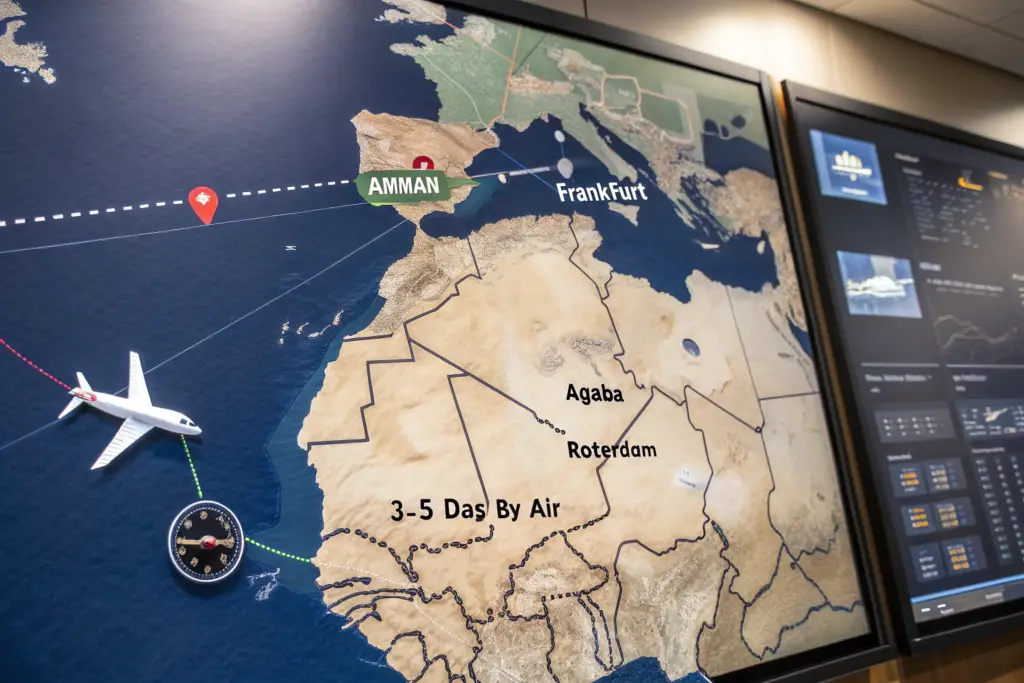
A European outdoor brand we know uses a long-term partner in Jordan for their seasonal replenishment of best-selling Realtree items. For bestsellers identified early in the European selling season, they can airship fabric from Turkey to Jordan, have the factory produce a top-up order of 2,000-5,000 units, and ship by sea or even air freight to EU warehouses in 5-7 weeks total—significantly faster than a 12+ week cycle from Asia. The factory acts as a regional buffer and speed hub.
What are the lead time and flexibility advantages?
- Shorter Transit Time: Sea freight from Jordan’s port of Aqaba to Southern Europe is about 7-10 days faster than from Shanghai.
- Easier Communication: Time zone alignment with Europe facilitates real-time problem-solving.
- Lower Minimum Order Quantities (MOQs): Jordanian factories often accept smaller production runs than massive Asian conglomerates, ideal for testing new camo styles or producing limited editions.
This makes them a perfect complement to a primary Asian supply base, not a replacement.
How does political stability factor in?
Jordan is an oasis of political stability in a volatile region. For brands, a long-term contract there represents risk mitigation. While labor costs are higher than in Bangladesh or parts of India, they are offset by the duty savings and the reduced risk of political disruption, strikes, or extreme supply chain volatility that can affect other regions. This stability is a tangible asset.
What are the compliance and quality expectations?
Long-term contracted factories in Jordan that serve Western brands are typically highly compliant with international labor and safety standards. They are routinely audited by their clients and third parties, as any compliance failure could jeopardize the duty-free status and the brand’s reputation.
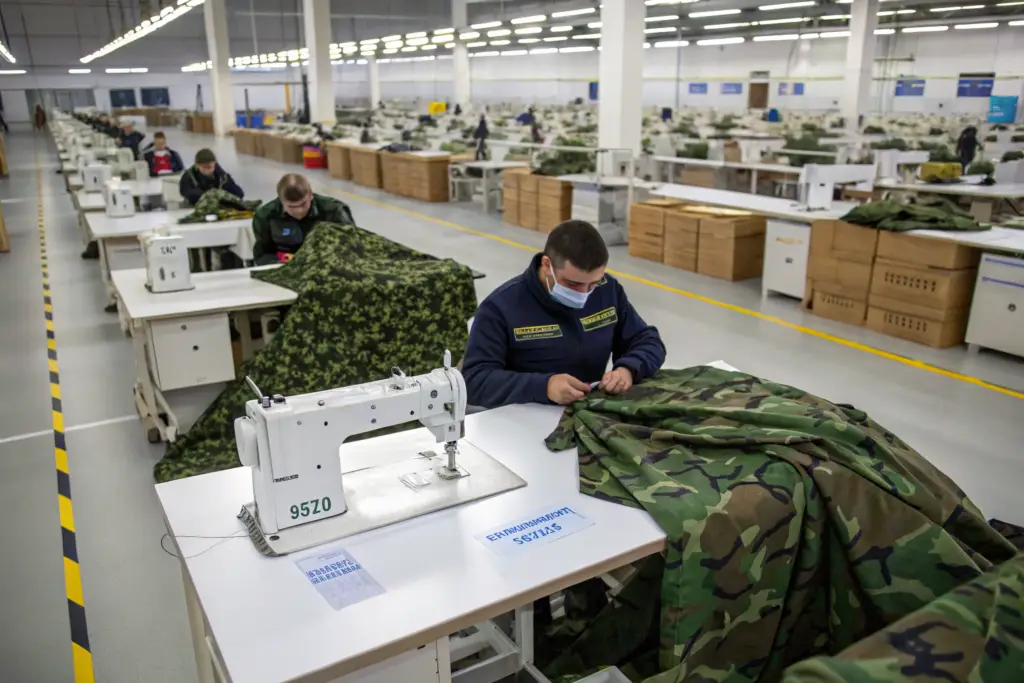
Our internal audits of potential Jordanian partners have shown strong adherence to standards like ISO 9001 and WRAP (Worldwide Responsible Accredited Production). One factory we visited had exceptional traceability systems; each bale of incoming camo fabric was logged with its mill certificate and linked to the licensee number, and every finished garment could be traced back to the sewing operator and fabric lot. This level of meticulousness is standard for factories targeting the US/EU branded market and is a core part of their value proposition.
How does licensing compliance work in Jordan?
The IP compliance chain remains strict. The Jordanian factory must still be an approved producer under the brand client’s Realtree or Mossy Oak license. They cannot source generic camo fabric. The licensed fabric must be shipped to them from an authorized mill, with all documentation intact. Their role is to safeguard this IP through production, ensuring no unauthorized use or leakage. Their experience with QIZ documentation makes them adept at handling the parallel paperwork for IP compliance.
What is the typical product scope?
Jordanian factories excel at woven apparel—the core of many hunting and tactical lines. This includes:
- Hunting shirts and pants
- Tactical jackets and vests
- Cargo shorts
Complex technical outerwear with advanced lamination may still be anchored in Asia due to specialized supply chains, but Jordan is increasingly capable of mid-tier insulated jackets.
What are the challenges and strategic considerations?
Choosing Jordan is not without its trade-offs. A strategic approach is required to maximize the benefits while mitigating the limitations.
Labor, while stable, is not the cheapest. Skilled operator wages are higher than in Southeast Asia. Furthermore, the entire textile ecosystem is limited. Factories rely heavily on imported fabrics, threads, trims, and even some packaging. This can affect raw material lead times and cost. A brand must factor this in and often needs to manage fabric sourcing separately, treating the Jordanian factory as a CMT partner.

How should a brand structure a long-term contract?
A successful contract should be flexible and partnership-oriented. It should include:
- Clear Terms on Duty Documentation: The factory is responsible for providing all QIZ certificates of origin (Form JZ-10).
- Shared Responsibility for Material Lead Times: Acknowledge that fabric imports add time; use forecast sharing to mitigate.
- Pricing Stability: Agree on a pricing formula that accounts for potential fluctuations in shipping costs for raw materials.
This structure aligns incentives and recognizes the factory’s specialized role.
Is Jordan a viable alternative to China for camouflage?
It’s a complement, not a full alternative. A diversified sourcing portfolio might look like this:
- China/Vietnam: High-volume, cost-sensitive baseline production, complex technical items.
- Jordan: Mid-volume, duty-advantaged production for the US market, fast-response for Europe, politically stable backup.
This multi-hub strategy, often called China Plus One, builds resilience. A factory like Shanghai Fumao can be your anchor in Asia, while a partner in Jordan handles your duty-advantaged lines.
Conclusion
Long-term contracted factories in Jordan play a sophisticated, strategic role in global camouflage production. They are duty-specialists, compliance experts, and regional speed hubs. Their value is calculated not in the lowest cost per unit, but in the total landed cost savings from duty avoidance, reduced risk, and enhanced supply chain agility. For brands focused on licensed apparel, integrating a Jordanian partner into a broader Asia-centric supply chain is a smart move for diversification, margin protection, and market responsiveness.
Leveraging this role requires understanding the trade agreements, recognizing the factory’s core competencies in compliance and quality, and structuring a collaborative, long-term partnership.
If you are building a resilient, multi-geography sourcing strategy for your camouflage line and want to explore how a partner in Jordan could complement your primary production in Asia, Shanghai Fumao can provide insights and connections. We understand the global landscape. Contact our Business Director, Elaine, at elaine@fumaoclothing.com to discuss building a robust, diversified supply chain.